

This guide explains how to structure multi-image prompts in the RunDifussion platform. Explore RunDifussion's product catalog.
News
How to Prompt and Annotate Multiple Images with AI
| Sponsored Content
https://www.archdaily.comhttps://www.archdaily.com/catalog/us/products/38860/how-to-prompt-and-annotate-multiple-images-with-ai-rundiffusion
MVRDV Obtains Construction Permit for Low-Carbon Mixed-Use Tour & Taxis Towers in Brussels

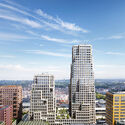
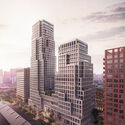
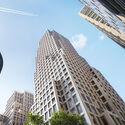
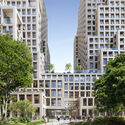
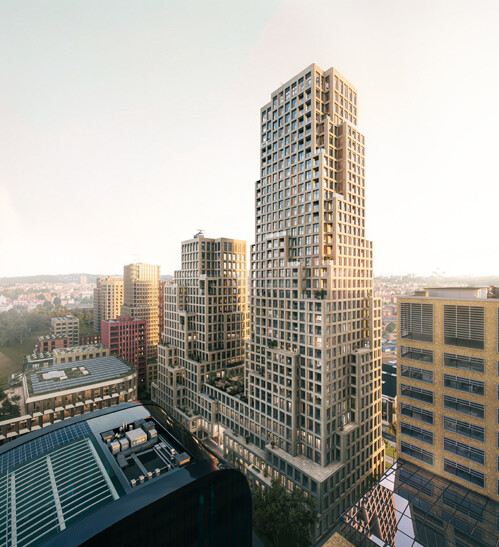
Rotterdam-based firm MVRDV has announced a new milestone in the development of its Tour & Taxis Towers, a mixed-use project in Brussels, Belgium. The design was commissioned by real estate investor and developer Nextensa in 2021, within the framework of a site-specific land use masterplan also designed by MVRDV. The two-tower project combines offices, housing, and public amenities across 58,000 m², forming a landmark in the neighbourhood and reaching 126 metres at its highest point. Recently granted construction permission, the project is designed to reduce embodied carbon through the use of a hybrid structure and lightweight façade elements, aiming to minimize the use of concrete in both the structure and foundations. From the early stages, the firm has employed its CarbonSpace software to guide these decisions.
https://www.archdaily.com/1041065/mvrdv-obtains-construction-permit-for-low-carbon-mixed-use-tour-and-taxis-towers-in-brusselsAntonia Piñeiro
Memory of the Earth: 4 Adaptive Reuse Projects Transforming Ceramic Factories

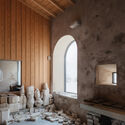
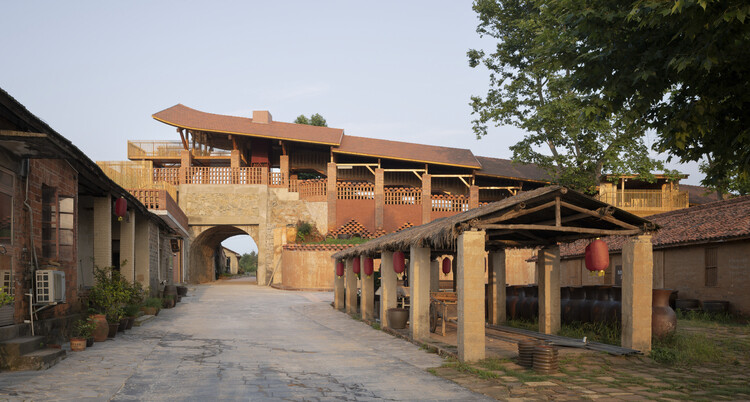
There is an ancestral gesture in shaping earth. Long before architecture was established as a discipline, clay was already being molded by hand and transformed by fire, turning raw matter into domestic utensils and cultural objects. Within the history of this craft, ceramic factories mark the transition from manual knowledge to serial production, expanding its scale without entirely severing its material origins. Scattered across different territories, these structures record the relationship between technique, landscape, and time. Over the decades, however, many of them lost their original function, replaced by more technological processes or absorbed by the urban development around them, entering an intermediate state between permanence and obsolescence.
https://www.archdaily.com/1040780/memory-of-the-earth-4-adaptive-reuse-projects-transforming-ceramic-factoriesCamilla Ghisleni
Transparent Lightness: When Pneumatic Architecture Connects with the Environment

In Six Memos for the Next Millennium, Italo Calvino explores lightness from a literary perspective and argues, "Opposed to lightness is weight. Removing weight produces lightness; it is a value, not a defect." Drawing on Greek mythology, he reflects on one of Perseus's feats after severing the head of the terrible Gorgon Medusa without being turned to stone. Assisted by the gods Hades, Hermes, and Athena, Perseus flies with his winged sandals and uses a bronze shield as a mirror to reflect her image. Relying, like many architects, on what is lightest—the wind and the clouds—he also fixes his gaze on what is revealed through indirect vision: an image reflected in a mirror.
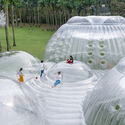
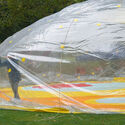
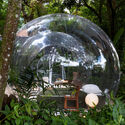
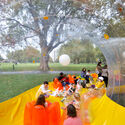
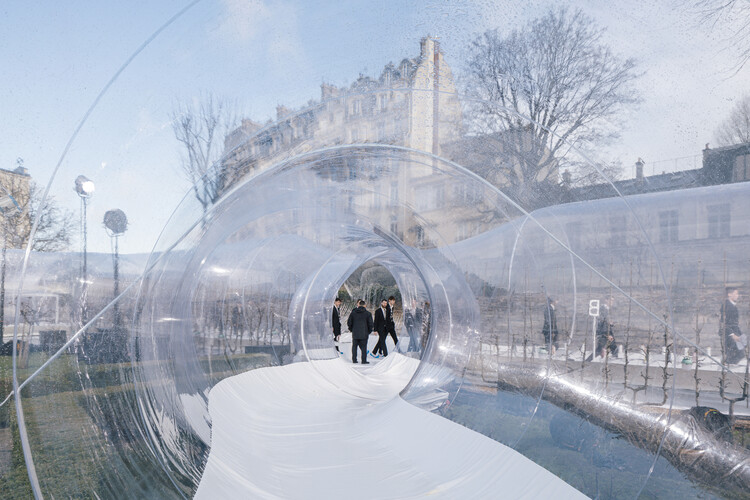
Historically, transparency has been naturalized as an inherent condition of modern architecture. With the shift from the heavy load-bearing wall to the lightweight glass envelope, glass was introduced into the discipline, blurring the boundaries between interior and exterior spaces. In connection with inflatable architecture, transparency is linked to lightness and impermanence, leaving temporary traces on the landscapes it inhabits. By using textiles or plastics as main materials and air as a structural system, the search for lightness in the built environment now recognizes more than a single atmosphere of application.
https://www.archdaily.com/1040799/transparent-lightness-when-pneumatic-architecture-connects-with-the-environmentAgustina Iñiguez
UIA 2026 Barcelona Announces Full Program, Detailing Formats, Exhibitions, and City-Wide Itineraries

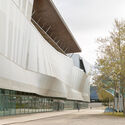
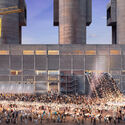
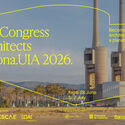
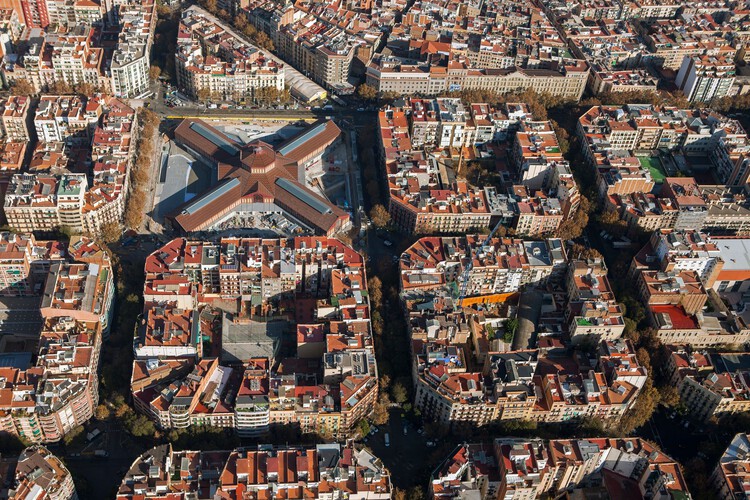
The UIA World Congress of Architects 2026 Barcelona has released its full program, outlining the structure, participants, and range of activities scheduled to take place from June 28 to July 2, 2026. Expanding on the previously introduced theme, Becoming. Architectures for a Planet in Transition, the Congress is conceived as a distributed event across multiple venues and urban contexts rather than a single-site conference. Organized by the International Union of Architects (UIA) in collaboration with the Higher Council of the Colleges of Architects of Spain (CSCAE) and the Architects' Association of Catalonia (COAC), the event is expected to gather approximately 10,000 participants and 250 speakers from more than 130 countries.
https://www.archdaily.com/1041025/uia-2026-barcelona-announces-full-program-detailing-formats-exhibitions-and-city-wide-itinerariesReyyan Dogan
Bofill Taller de Arquitectura Unveils Landscape-Inspired Resort in Dhërmi, Albania

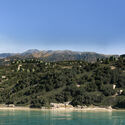
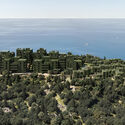
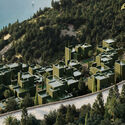
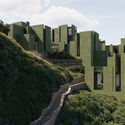
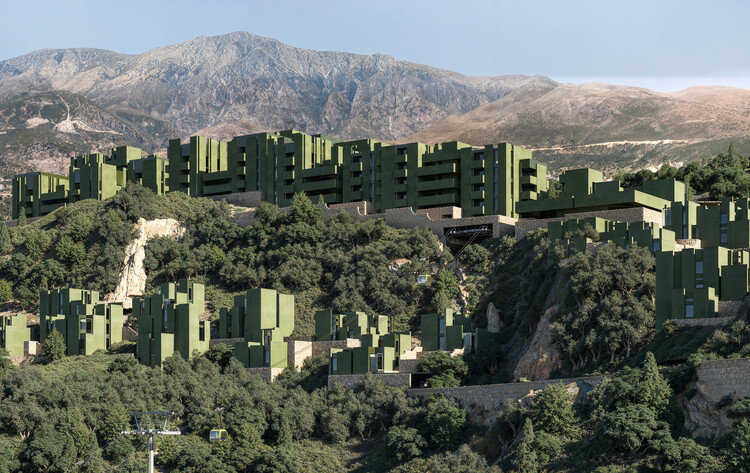
Bofill Taller de Arquitectura has revealed the final images of a new resort in Dhërmi, Albania, currently under construction. The project was first announced in 2024, in the context of the numerous developments proposed across the country over the past decade. This time, the project is neither a skyscraper nor an institutional building in Tirana, but a resort set along the mountainous coastline in the south of the country. The design responds to the existing landscape conditions, a coastal, mountainous area surrounded by forests that cover a significant portion of Albania's land surface. The project aims to preserve the character of the forest while engaging with the rugged terrain, jagged rocks, steep mountainsides, and dense pine and cypress forests.
https://www.archdaily.com/1041015/bofill-taller-de-arquitectura-unveils-landscape-inspired-resort-in-dhermi-albaniaAntonia Piñeiro
Design Intelligence and Workflow Continuity: Autodesk Advances Forma and Revit Integration
| Sponsored Content

Design teams are not short on tools; they're short on continuity. Project data remains fragmented across files, and decisions often lose context as work moves from planning to design to construction. As a result, teams spend valuable time reconnecting information instead of advancing projects.
This points to the need for workflows that preserve design intent and carry knowledge forward across each stage of the process. Within this framework, the idea of "design and make intelligence" can be understood as a shift toward continuity, where data, decisions, and lessons from planning, design, construction, and operations remain embedded in the project rather than stopping at handover. In this context, AI and automation operate with greater relevance, building on accumulated information instead of isolated inputs.
https://www.archdaily.com/1040501/design-intelligence-and-workflow-continuity-autodesk-advances-forma-and-revit-integrationEduardo Souza
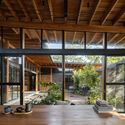
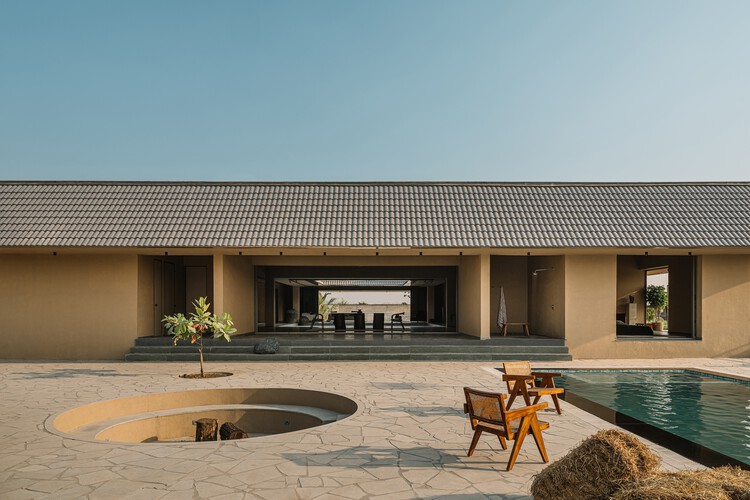
The Courtyard as Architecture’s Lightest Cooling System

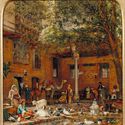
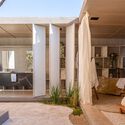
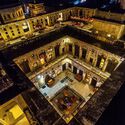
The courtyard is often remembered as a figure from the past, an inward-looking space of nostalgia, culture, and domestic ritual. But this framing misses its primary role. Before it was symbolic, the courtyard was operational. It organized air, moderated light, and absorbed heat. It did not decorate architecture; it made it habitable. In contemporary housing, these functions are normally delegated to mechanical systems, applied after form is fixed. In courtyard houses, they are resolved spatially, before a wall is even built.
What appears as a recurring typology across regions is, in fact, a set of highly specific responses to climate. The courtyard in Egypt does not behave like the courtyard in Morocco, nor like the courtyard in India. Each is calibrated to a different environmental problem, using the same spatial device. To read them as a single type is to flatten their intelligence. To compare them is to understand how climate can be embedded directly into form.
https://www.archdaily.com/1040845/the-courtyard-as-architectures-lightest-cooling-systemAnanya Nayak
ArchDaily’s Selection: 15 Installations and Exhibitions from Milan Design Week 2026

Bringing together a week of exhibitions, installations, and industry exchange, Milan Design Week 2026 and the 64th edition of Salone del Mobile.Milano concluded on April 26, following six days of programming across the fairgrounds and the city. Held from April 20 to 26, this year's events reaffirmed Milan's central role within the global design calendar. The Salone itself drew over 316,000 visitors from 167 countries. With 1,900 brands represented and a strong international presence, the week once again operated as both a cultural platform and an economic engine, navigating a context marked by market uncertainty while maintaining its capacity to convene designers, institutions, and industry leaders at a global scale.
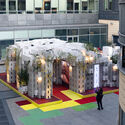
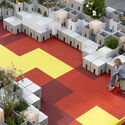
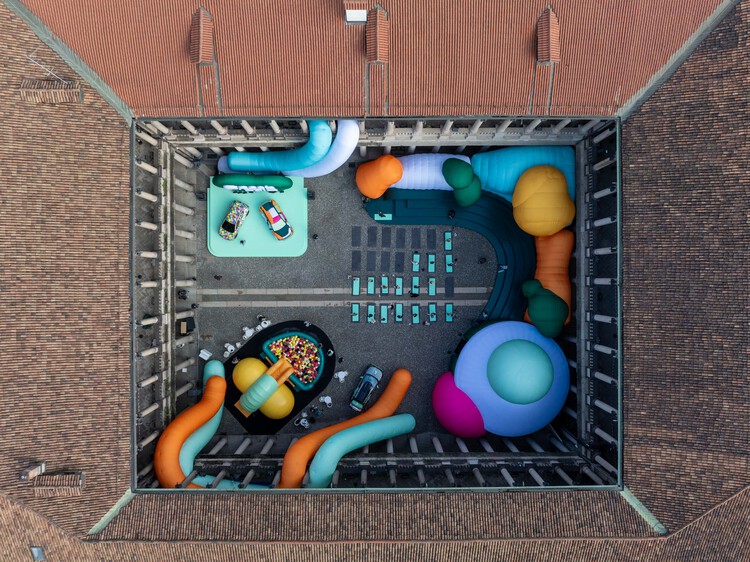
https://www.archdaily.com/1040989/15-architectural-installations-and-exhibitions-at-the-2026-milan-design-weekReyyan Dogan
STARTT Designs New Access to the Archaeological Areas Behind the Pantheon in Rome

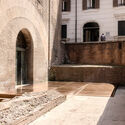
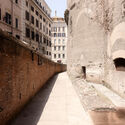
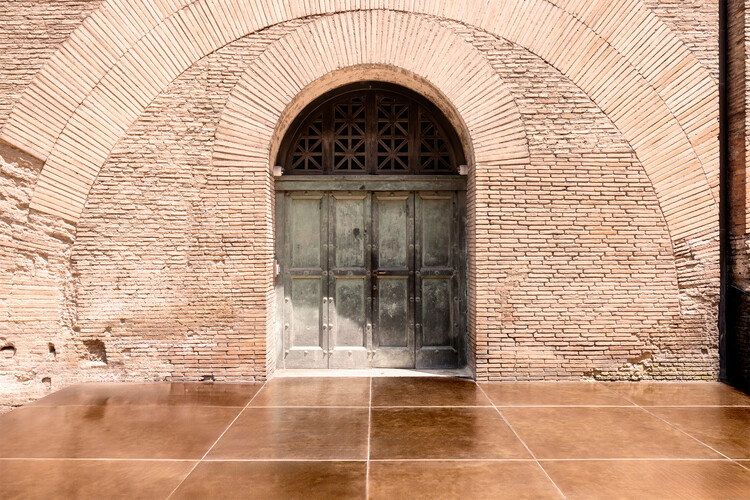
The Pantheon in Rome is globally known as a major tourist and architectural icon, a built testimony to both Greek culture and Roman technique, and a symbol of the Roman Empire. The monument was recently intervened upon by the Italian architecture studio STARTT (Studio of Architecture and Territorial Transformations). The project, titled Pantheon – Micro Architectures for Archaeology, was promoted by the Italian Ministry of Culture as part of a program of interventions initiated in 2019 to open public access to the archaeological areas of the Pantheon. STARTT's project represents the first phase of the program, focusing on opening a new entrance from the Pozzo del Diavolo, an area located behind the monument's Rotunda, allowing visitors to access parts of the building's archaeological fabric that were previously reserved for technical functions.
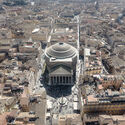

https://www.archdaily.com/1040964/startt-designs-new-access-to-the-archaeological-areas-behind-the-pantheon-in-romeAntonia Piñeiro
Public Space in Use: Región Austral and the Architecture of Everyday Life

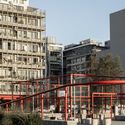
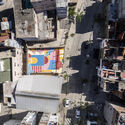
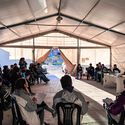
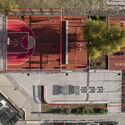
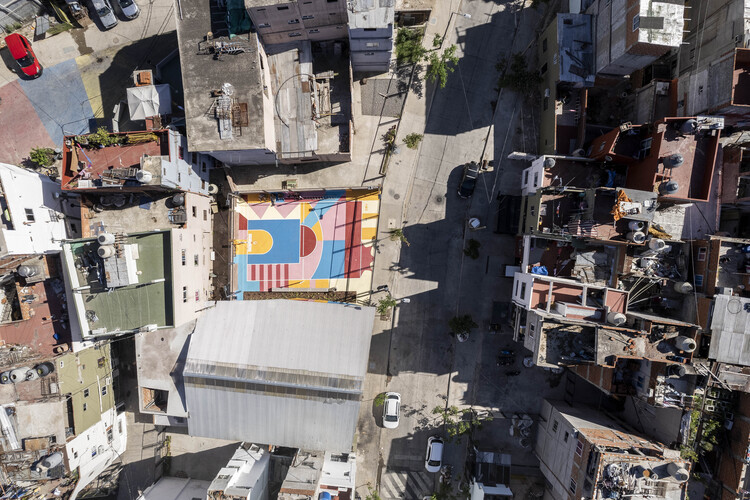
Architecture is often evaluated through what gets built. But in many cases, what matters happens after: how spaces are used, adapted, and made part of everyday life. For Región Austral, winner of ArchDaily's 2025 Next Practices Awards, this is where design really begins. Working across many contexts, the practice approaches public space not as a single object, but as something that needs to be activated, negotiated, and sustained over time. Their projects focus less on defining form and more on creating the conditions for use, with design serving as the starting point.
This approach can be seen across different contexts, from the Olympic Neighborhood Square to the Playón de Chacarita network. While each project responds to a specific situation, both explore how public space can support collective life in areas marked by fragmentation and inequality. Instead of following a predefined approach, the work adapts to different urban conditions, using participation and incremental strategies to shape how spaces function over time.
https://www.archdaily.com/1040709/public-space-in-use-region-austral-and-the-architecture-of-everyday-lifeDaniela Andino
Why Do We Want to Float? The Psychology of Lightness in Architecture

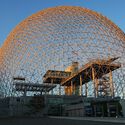
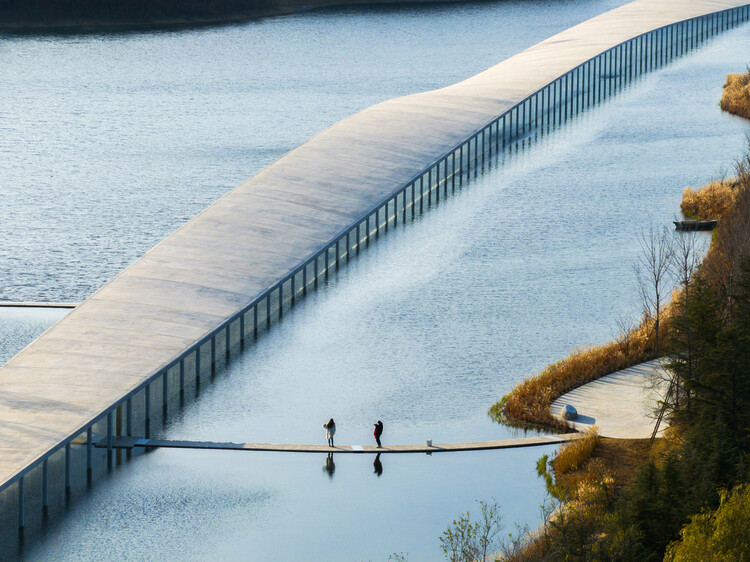
In 1962, the architect Buckminster Fuller envisioned a floating city that would free humanity from its dependence on the Earth. The speculative project consisted of enormous geodesic spheres that would naturally levitate in air warmed by the sun and be anchored to mountaintops. Designed to house thousands of people, Fuller’s Cloud Nine aimed to ease land ownership pressures, address housing shortages, and contribute to environmental preservation.
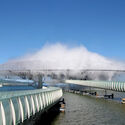
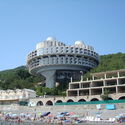
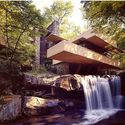
More than half a century later, we remain far from realizing Fuller’s vision. Creating a truly floating structure on the Earth’s surface is still, for now, an unattainable ideal. While supports continue to be necessary, we manipulate their position, intensity, and number, developing structural “acrobatics” to at least approach the idea of overcoming gravity — a desire that has long fascinated humanity.
https://www.archdaily.com/1040611/why-do-we-want-to-float-the-psychology-of-lightness-in-architectureCamilla Ghisleni
Hôtel de la Paix: An Alternative Approach to Modern Heritage in Togo

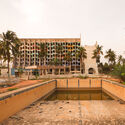
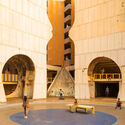
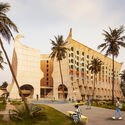
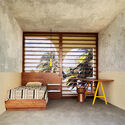
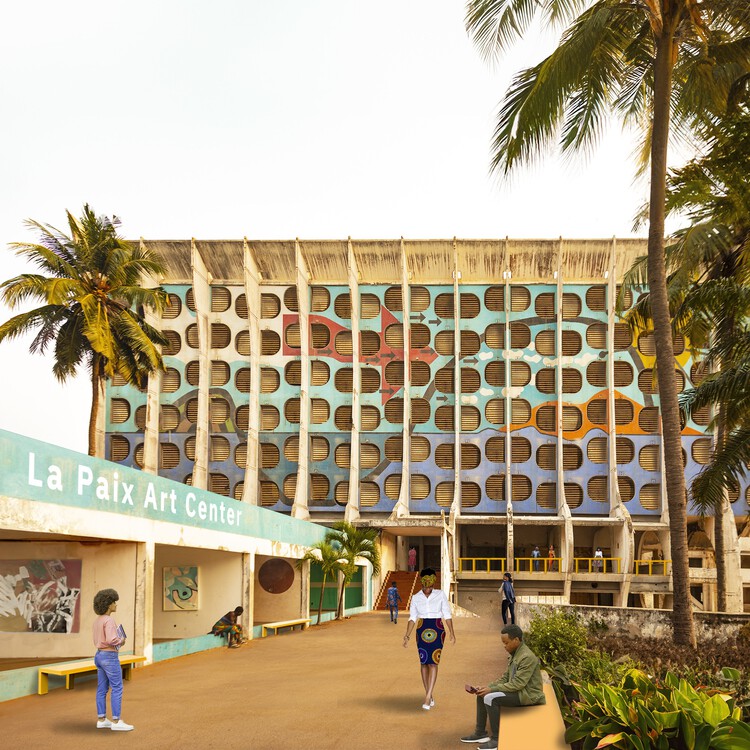
In late 2024, an event was held in the grounds of the recently refurbished colonial-era Palais de Lomé in the capital of Togo. Students from the architecture university of Lomé were attending the first Lomé Architecture Encounters (RAL #1), curated by the transdisciplinary Studio NEiDA, and which involved lectures, film screenings, workshops, and building visits. A parallel exhibition displayed the country's most significant architecture through history. The purpose of the event was to explore the architectural heritage of Togo, and it would be the start of a journey that crosses borders, asking questions about the conservation of modern heritage. Unlike colonial buildings like the Palais de Lomé itself, which are more appreciated and readily restored, neglected modern buildings like the Hôtel de la Paix require creative, bottom-up approaches to return them to their former vitality.
https://www.archdaily.com/1040704/hotel-de-la-paix-an-alternative-approach-to-modern-heritage-in-togoMohieldin Gamal
Moving Beyond Metrics Toward Neuroinclusive Daylighting
| In Collaboration

Loud noises, the continuous hum of equipment, abrupt changes in light, or intense reflections often go unnoticed. For neurodivergent individuals, these stimuli can provoke significant discomfort or even intense physical and cognitive reactions. The term "neurodivergent" refers to people whose neurological functioning differs from what is considered typical, encompassing conditions such as autism, ADHD, and dyslexia, as their brain processes information differently, particularly in relation to sensory input, attention and emotional regulation.
Yet light is not only visual, it is neurological. How it enters a space, moves across surfaces, and changes over time can profoundly affect cognitive comfort. Extreme contrasts, glare, direct beam penetration, and rapid variations in brightness require constant adjustment from the visual systems and, for individuals with greater sensory sensitivity, this effort can translate into fatigue, distraction, or discomfort.
https://www.archdaily.com/1040441/moving-beyond-metrics-toward-neuroinclusive-daylightingEduardo Souza
The Bass Museum of Art Commissions Johnston Marklee for Campus Expansion in Collins Park, Miami Beach

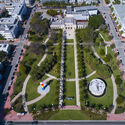
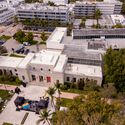
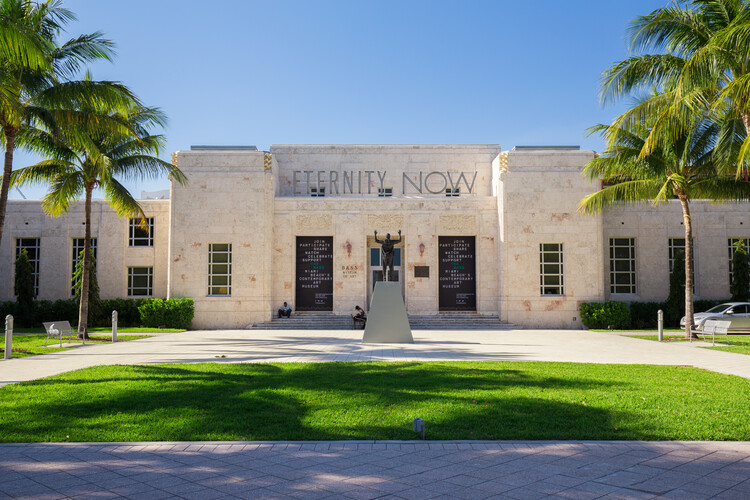
The Bass Museum of Art has appointed the Los Angeles-based architecture practice Johnston Marklee to lead the expansion of its campus in Collins Park, Miami Beach, advancing a long-term vision that integrates architecture, landscape, and contemporary art. Founded in 1964 following the donation of the John and Johanna Bass collection, the museum is housed within a 1930s Art Deco building originally designed by Russell Pancoast as the Miami Beach Public Library and Art Center. Over time, the institution has evolved through architectural interventions, most notably the campus framework introduced by Arata Isozaki, which establishes a dialogue between the historic fabric and contemporary additions.

https://www.archdaily.com/1040912/the-bass-museum-of-art-commissions-johnston-marklee-for-campus-expansion-in-collins-park-miami-beachReyyan Dogan
MVRDV, Diamond Schmitt, and Two Row Architect Reveal Design for the Temerty Building at the University of Toronto

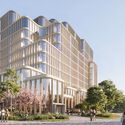
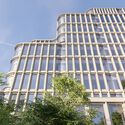
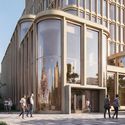
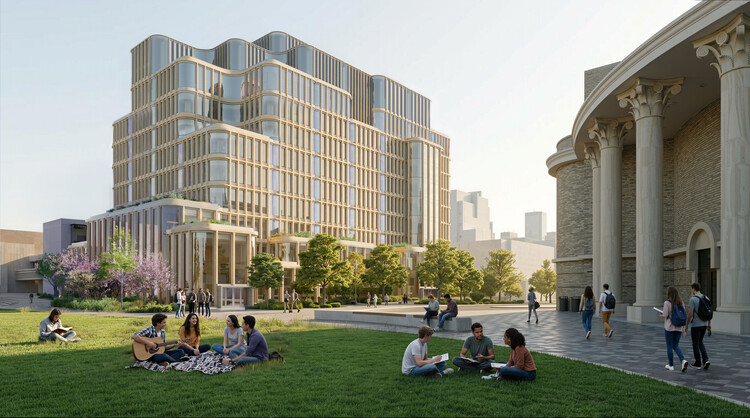
The University of Toronto has revealed the design for the Temerty Building, a new facility for health research and education at the heart of the university campus. The project was designed by MVRDV and Diamond Schmitt Architects in collaboration with Two Row Architect. It builds on a previous collaboration between the first two offices at the University of Toronto Scarborough campus, scheduled for completion in late 2026. The project was first introduced in Temerty Medicine's 2018-2023 Academic Strategic Plan and envisions a 36,000-square-metre extension to the university's Medical Sciences Building, including laboratories for higher education, classrooms, and shared spaces. Work on site is expected to begin in the second half of 2026, starting with preparatory work in July.
https://www.archdaily.com/1040922/mvrdv-diamond-schmitt-and-two-row-architect-reveal-design-for-the-temerty-building-at-the-university-of-torontoAntonia Piñeiro
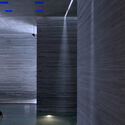
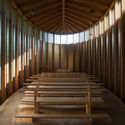
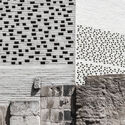
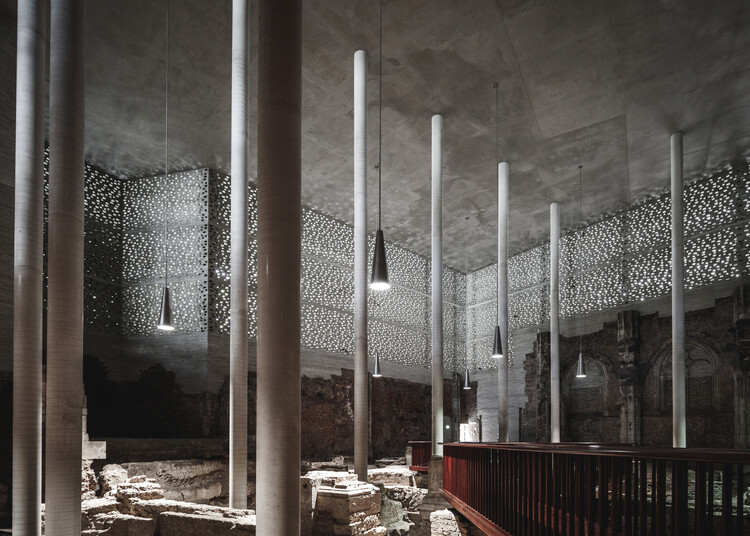
The Alchemy of Mass: Peter Zumthor and the Perception of Lightness

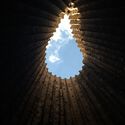
Architecture begins as an encounter with gravity. It is the ancient act of placing weight upon the earth, of persuading matter to stand, hold, and shelter. Within this fundamental condition of heaviness, however, lies a quieter possibility: density itself can generate a sense of lightness—a perceptual condition in which the body, fully convinced of matter's weight, begins to experience space as suspension.
Much of contemporary architecture has pursued lightness through reduction: thinner structures, smoother surfaces, increasingly seamless transitions between interior and exterior. Here, lightness is equated with disappearance, as if gravity could be overcome by withdrawing material presence. Yet there exists another register in which lightness is not the result of absence, but of intensification. It emerges when material presence becomes so precise, so fully asserted, that it begins to alter perception itself—when mass remains heavy, but no longer behaves as simply inert.
https://www.archdaily.com/1040865/the-alchemy-of-mass-peter-zumthor-and-the-perception-of-lightnessValentina Díaz
Ideology of Performance: Sustainability and the Limits of Efficiency

This article is part of our new Opinion section, a format for argument-driven essays on critical questions shaping our field.
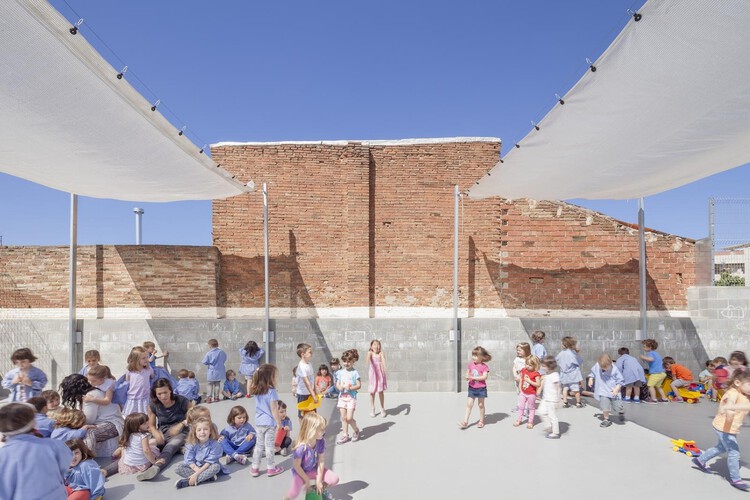
The modern sustainability project is built on the promise that evolving technologies can reconcile urban and economic growth with ecological responsibility. By the metrics developed by the built environment professions and the policies adopted by governments, progress is tangible and accelerating: buildings consume less energy per square foot than they did a generation ago, vehicles emit fewer pollutants per mile, and urban infrastructure is more integrated and measurably cleaner in many cities. And yet total resource consumption continues to rise. Sustainability, as currently practiced across the built environment professions, has become a strategy for optimizing consumption rather than reducing it. Until the profession is willing to question the scale and structure of demand rather than the efficiency with which that demand is met, its most celebrated achievements will continue to fall short of the problem they claim to address.
https://www.archdaily.com/1040795/ideology-of-performance-sustainability-and-the-limits-of-efficiencyOlivia Poston
Building Lightness Through Glass and Frames
| In Collaboration

Throughout much of history, weight has been closely associated with the very idea of architecture. Vitruvius, whose notion of firmitas linked construction to stability and permanence, understood solidity as one of its fundamental qualities, and building largely meant resisting the effects of time, gravity, and natural forces. In Greek and Roman architecture, monumentality depended on the available construction systems and materials, such as stone and solid masonry, whose expression was defined by mass, thickness, and structural repetition. Columns, walls, and podiums, beyond supporting buildings, asserted their presence in the territory, communicating order, durability, and power. Architecture met the ground with weight.
https://www.archdaily.com/1040165/building-lightness-through-glass-and-framesEduardo Souza
Atelier Tsuyoshi Tane Architects Designs Sea of Time – TOHOKU in Fukushima, Japan

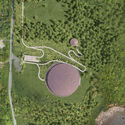
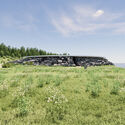
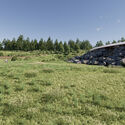
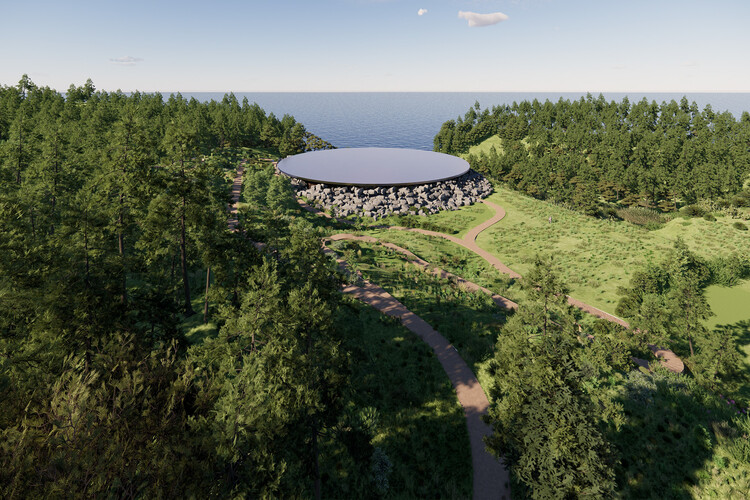
Located in Tomioka, Fukushima Prefecture, Sea of Time – TOHOKU is both an artwork by Tatsuo Miyajima and an architectural project commissioned by the artist. Designed by Japanese architect Tsuyoshi Tane of Atelier Tsuyoshi Tane Architects (ATTA), the project envisions a permanent museum to house Miyajima's artwork. Currently under development from 2024 to 2027, with an anticipated opening in spring 2028. Positioned on a cliff overlooking the Pacific Ocean, the proposal brings together architecture and installation within a site shaped by the memory of the 2011 Tōhoku earthquake and tsunami, framing both the landscape and its historical context as integral components of the design.

https://www.archdaily.com/1040899/atelier-tsuyoshi-tane-architects-designs-sea-of-time-tohoku-in-fukushima-japanReyyan Dogan
A New Centre Pompidou in Seoul and the UN House of No Waste (HØW) Competition Winners: This Week’s Review

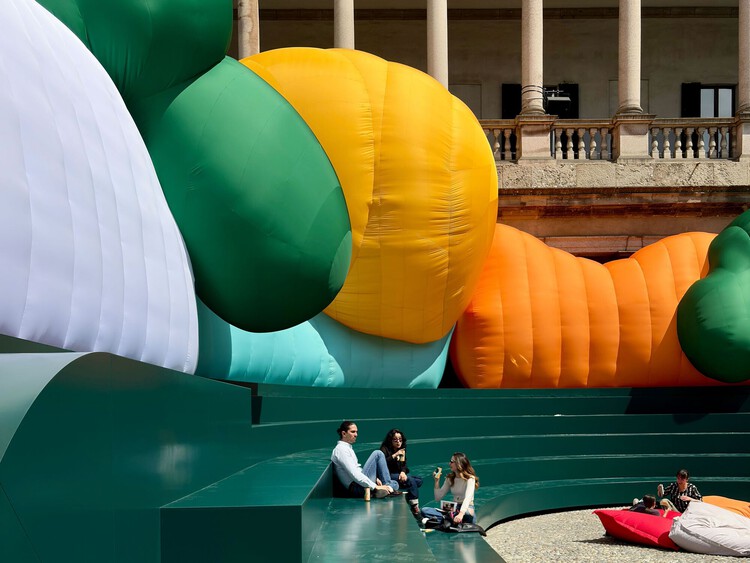
Observed annually on April 22, International Mother Earth Day frames this week's architectural discourse through an urgent call to rethink the relationship between the built environment and natural systems, foregrounding themes such as urban rewilding, the restoration of aquatic ecosystems, and the integration of ancestral knowledge into contemporary design practices. On another note, the opening of Salone del Mobile.Milano 2026 and Milan Design Week 2026 seek to reinforce the global relevance of design as a platform for exchange and experimentation, activating the city of Milan through a network of exhibitions and installations that engage both industry and public audiences. Among the announcements of award-winning architectural projects this week, the United Nations' House of No Waste (HØW) Competition highlights emerging architectural responses to climate and resource challenges. The awarded projects demonstrate scalable strategies for reducing material waste and embodied carbon while promoting adaptable, socially responsive, and resource-conscious public infrastructure.

https://www.archdaily.com/1040886/a-new-centre-pompidou-in-seoul-and-the-un-house-of-no-waste-how-competition-winners-this-weeks-reviewAntonia Piñeiro
Podium–Tower Urbanism in Southeast Asia: Density, Management, and the Disappearing Street

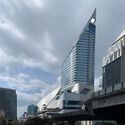
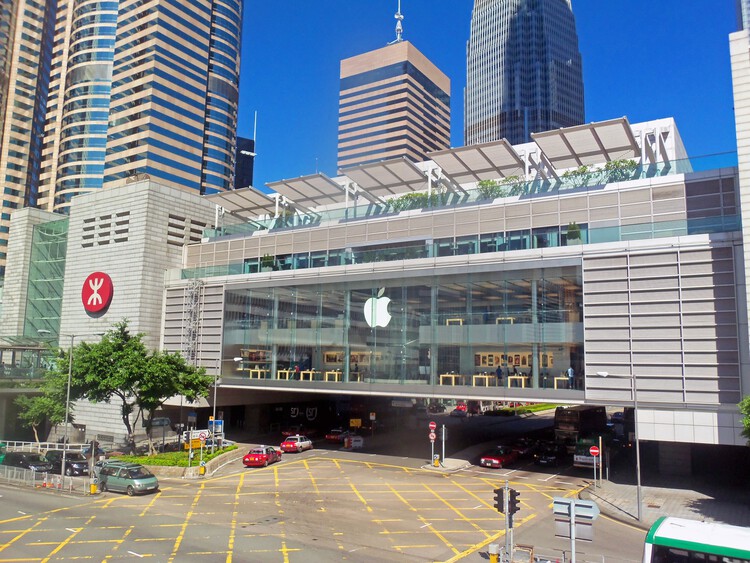
If elevated networks reveal a city that increasingly walks above the street, the podium–tower is the typology that often makes that condition feel inevitable. Across Southeast Asia, podium–tower projects have become one of the dominant languages of metropolitan growth: a system that concentrates housing, jobs, retail, and transit connections into highly legible and managed parcels. From an urban planning perspective, the model can be remarkably effective—absorbing congestion, formalizing circulation, and delivering density quickly. Yet as it spreads, the typology also raises a quieter question: what does it optimize for, and what does it erode—especially at the level of the street, where urban life is meant to be negotiated rather than curated?
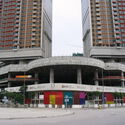
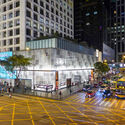
At its simplest, the podium–tower is a hybrid structure consisting of a high-coverage, low-rise podium supporting one or more slender vertical towers. The podium typically carries the logistical and commercial weight of the development—retail, parking, loading, drop-offs, back-of-house services, and often amenity decks—while the tower stacks private programs above, whether residential, office, hotel, or mixed use. The promise is twofold: maximize urban density while maintaining a "human-scaled" street wall, and separate the messy logistics of city life from the quieter domain of living and work.
https://www.archdaily.com/1040825/podium-tower-urbanism-in-southeast-asia-density-management-and-the-disappearing-streetJonathan Yeung
Reclaiming the Street: Alejandra Ferrera on Architecture and Urban Life in Honduras

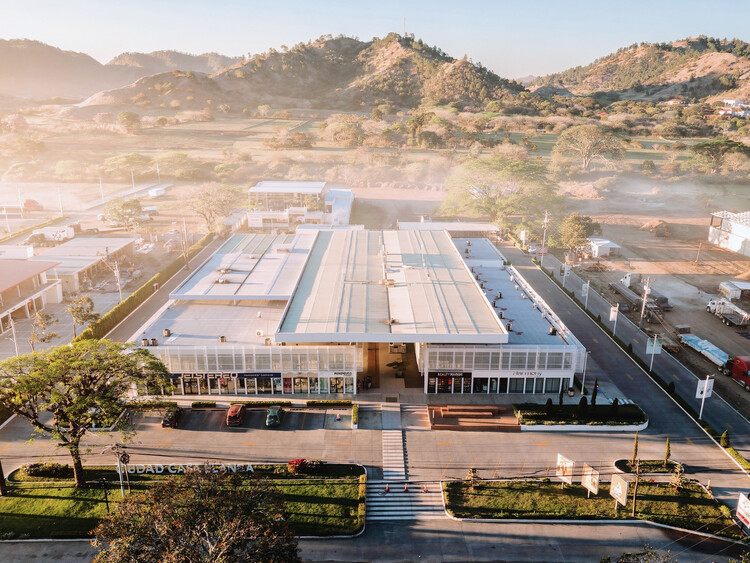
Honduras is the second-largest country in Central America, both in territory and population. Today, its urban fabric remains heavily influenced by modernist principles from the 1970s that prioritised high-speed arterial corridors and automobile-dependent "point-to-point" mobility. In addition, the country faced many challenges regarding public safety during the 2010s, which contributed to creating an urban space characterised by blind facades, high perimeter walls, and gated enclosures designed to isolate the interior from the public realm.
We had the opportunity to talk to Alejandra Ferrera, a Honduran architect raised in Danlí, a city in eastern Honduras. With over 15 years of practice across Brazil, the Netherlands, and Australia, she argues that while the security-driven design was a functional necessity of its time, it has resulted in a fragmented urban experience where the street serves only as a transit void rather than a place for social encounter. She suggests that even though this isolation was a justified safety measure, it created detachment between the inhabitants and the city. She also argues that overall, the public safety situation contributed to the creation of a wounded national identity that often looks outward for quality, dismissing the potential of its own context.



https://www.archdaily.com/1039699/reclaiming-the-street-alejandra-ferrera-on-architecture-and-urban-life-in-hondurasMoises Carrasco
Salone del Mobile.Milano and Milan Design Week 2026 Open Across the City and Fairgrounds

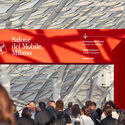
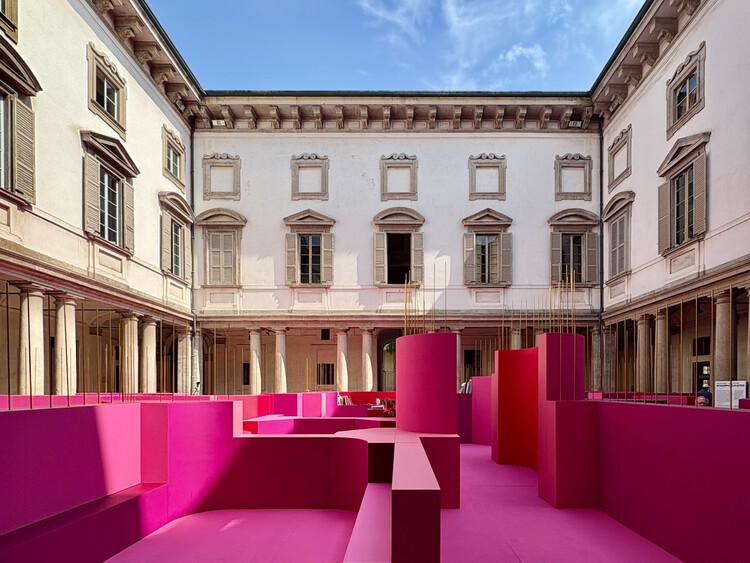
Milan reactivates its role as a global design capital this week as Milan Design Week 2026 has began on April 20, followed by the opening of the 64th edition of Salone del Mobile.Milano on April 21 at Fiera Milano, Rho. Rather than a single event, the week unfolds as a layered system in which the fair and the city operate through different temporalities and spatial conditions. From early openings across urban districts to the formal start of the fairgrounds program, the staggered calendar reinforces a continuous flow of activity that extends across institutions, infrastructures, and public space.



https://www.archdaily.com/1040861/salone-del-mobililano-and-milan-design-week-2026-open-across-the-city-and-fairgroundsReyyan Dogan
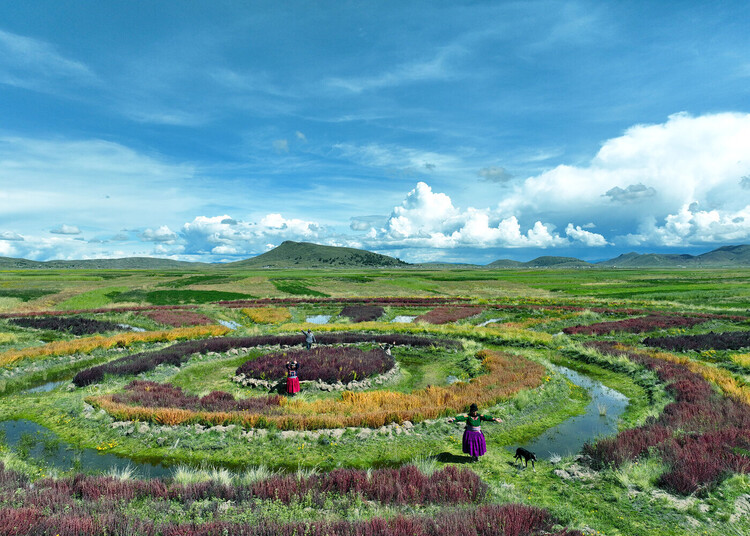
On International Mother Earth Day: Urban Rewilding, Aquatic Ecosystems, and Ancestral Practices for Biodiversity

The United Nations' International Mother Earth Day, observed annually on April 22, aims to "promote harmony with nature and the Earth." In light of the urgency posed by climate change, it seeks to raise awareness of the challenges of preserving all forms of life supported by the planet. It is a call to the global community to safeguard biodiversity while striving to balance economic, social, and ecological systems. Crimes against biodiversity include large-scale practices such as deforestation, land-use change, intensified agriculture, livestock production, and illegal wildlife trade, all considered by the UN to be accelerating factors in the destruction of the planet.

https://www.archdaily.com/1040850/on-international-mother-earth-day-urban-rewilding-aquatic-ecosystems-and-ancestral-practices-for-biodiversityAntonia Piñeiro