Architecture begins as an encounter with gravity. It is the ancient act of placing weight upon the earth, of persuading matter to stand, hold, and shelter. Within this fundamental condition of heaviness, however, lies a quieter possibility: density itself can generate a sense of lightness—a perceptual condition in which the body, fully convinced of matter's weight, begins to experience space as suspension.
Much of contemporary architecture has pursued lightness through reduction: thinner structures, smoother surfaces, increasingly seamless transitions between interior and exterior. Here, lightness is equated with disappearance, as if gravity could be overcome by withdrawing material presence. Yet there exists another register in which lightness is not the result of absence, but of intensification. It emerges when material presence becomes so precise, so fully asserted, that it begins to alter perception itself—when mass remains heavy, but no longer behaves as simply inert.
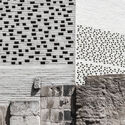
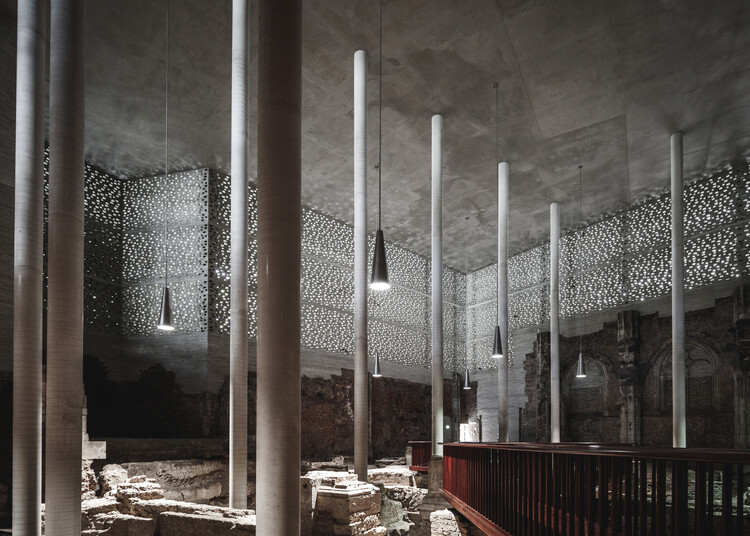
This condition is not visual alone. It is somatic. The body registers space before thought intervenes—through shifts in temperature, pressure, balance, and orientation that precede conscious interpretation. Thick walls cool the skin and slow perception, as if time itself were thickened by matter, while enclosed volumes compress breath and draw attention inward. The ground ceases to be a neutral support and becomes an active point of reference, recalibrating balance and posture. In this pre-reflective exchange between body and matter, space is first endured, and only later understood.
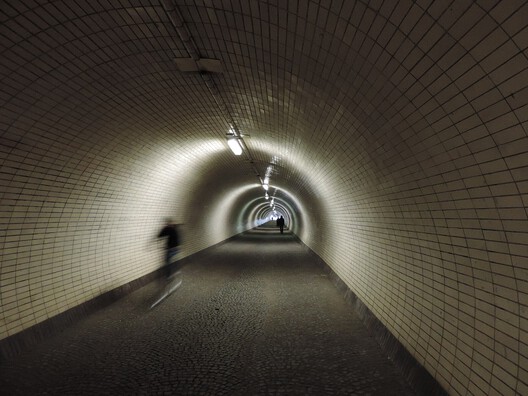
It is precisely at this threshold of material conviction that lightness becomes possible. When weight is not denied but fully asserted, light ceases to behave as pure absence and begins to operate as an event—an interruption capable of unsettling the visual logic of support. A narrow fissure in mass, a calibrated void, or a sudden breach in enclosure introduces doubt into what seemed structurally certain. What matters is not that gravity disappears, but that it hesitates. The body continues to register mass, while the eye encounters a subtle contradiction in its logic.
In that dissonance, matter seems to loosen from gravity without ever denying it. What emerges is not spectacle, but a quieter miracle: the possibility that heaviness itself can carry an impression of lift.
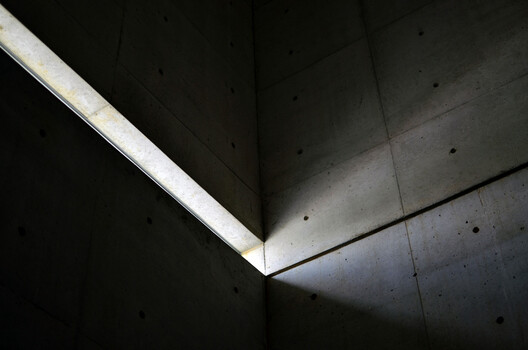
If lightness emerges not from the reduction of weight but from its perceptual transformation, then the work of Peter Zumthor does not simply illustrate this condition—it complicates it. His architecture does not resolve the tension between mass and light; it sustains it, holding the body in a continuous negotiation between what is felt and what is seen.
In his buildings, matter is never neutral. Stone, concrete, and timber are brought to a level of presence that resists immediate interpretation, slowing perception and intensifying the body's awareness of weight. But it is precisely within this insistence that light begins to act—as incision, separation, and delay, not illumination. Rather than lifting matter, it rearticulates its limits, introducing moments where structure appears momentarily ungrounded, where enclosure begins to loosen, and where gravity is no longer a stable certainty but a condition under question.
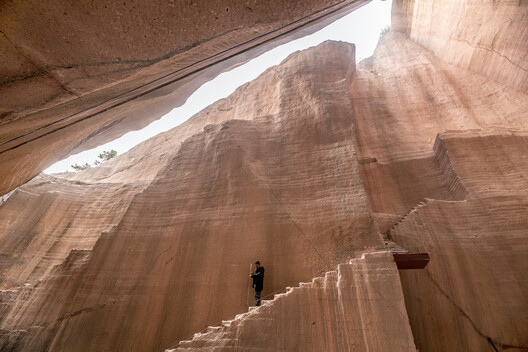
The Suspended Monolith
At the Therme Vals, the dialogue with gravity begins in the mountain's own language. Sixty thousand slabs of quartzite are assembled into a geological density that feels less composed than quarried into place. Moisture, thermal mass, and the cool tactility of stone slow the body's movement and sharpen its awareness of weight. This is not a space grasped through quick visual readings, but through duration—through touch, temperature, and the measured pacing the baths impose.
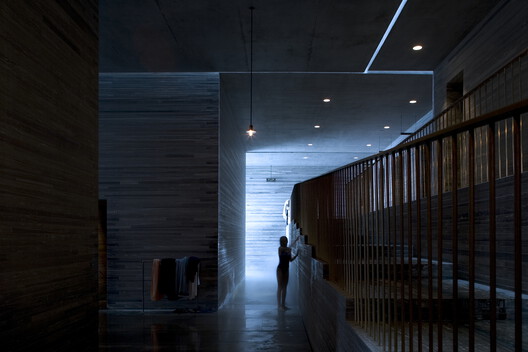
What matters is not simply the heaviness of the material, but the degree to which it calibrates bodily perception. The stone produces permanence as sensation. Through this somatic grounding, the building prepares the condition in which any later impression of suspension can be felt as real rather than optical.
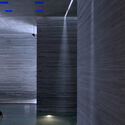
It is within this material certainty that Zumthor introduces doubt. Thin horizontal fissures separate roof slabs from wall surfaces, obscuring the visual evidence of support. The gesture is slight, almost reticent, yet it alters the reading of weight entirely. The ceiling does not cease to feel heavy; its heaviness appears momentarily suspended. This is levitation as perceptual hesitation.
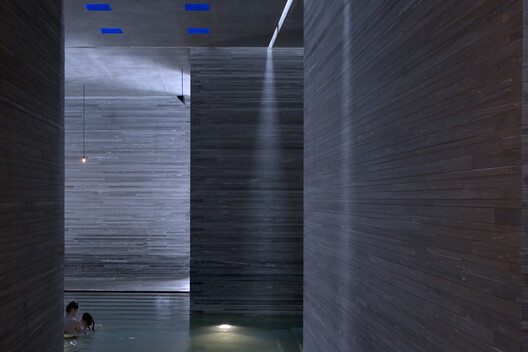
The body continues to register mass, while the eye encounters a subtle contradiction in its logic. In that dissonance, stone seems to loosen from gravity without ever denying it. What emerges is the quiet suspension of heaviness carrying its own impression of lift.
The Buoyant Hull
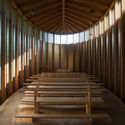
At the Saint Benedict Chapel, mass shifts from the geological to the tectonic. Clad in weathered larch shingles, the chapel presents itself as a dark vessel set against the Alpine slope, compact and almost mute in its material presence. Inside, that weight becomes atmospheric rather than monumental. The dark wood gathers sound, light, and movement into a compressed interior that feels protective without becoming inert.
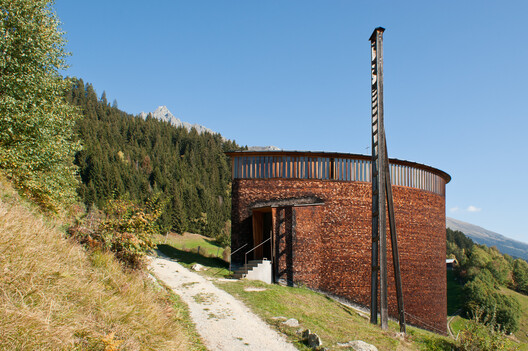
Its lightness emerges through separation. A continuous ring of clerestory light detaches the timber hull from its roof, interrupting the expected continuity of load and enclosure. Because the structure is carried internally, the perimeter appears released from the burden it seems to bear. The effect is less one of weight overcome than of weight made buoyant.
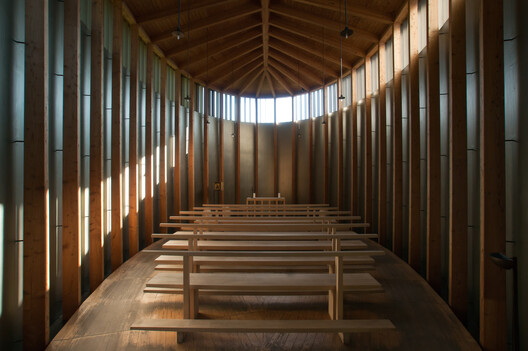
The chapel does not appear to float; it seems lightly unmoored. Light operates here as halo, producing an architecture whose heaviness remains intact even as it acquires a sense of lift.
The Porous Monolith
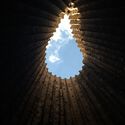
At the Bruder Klaus Field Chapel, the field chapel at Mechernich presents mass in its most uncompromising form. A monolithic volume of rammed concrete rises as enclosure before it reads as building, asserting weight through silence, thickness, and compression. Its interior narrows upward toward a single oculus, drawing the body into a heightened awareness of pressure and vertical orientation.
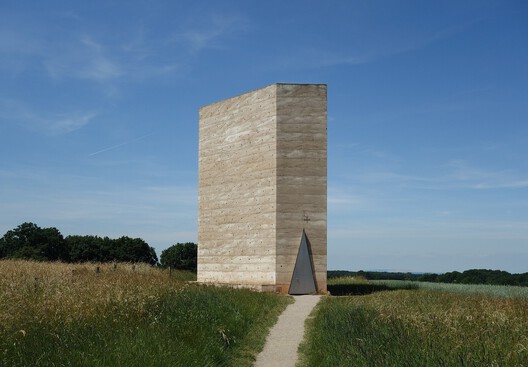
Here heaviness is experienced less as burden than as concentration. The charred cavity left by the burned timber formwork intensifies this condition, producing an interior that feels gathered, almost pressurized.
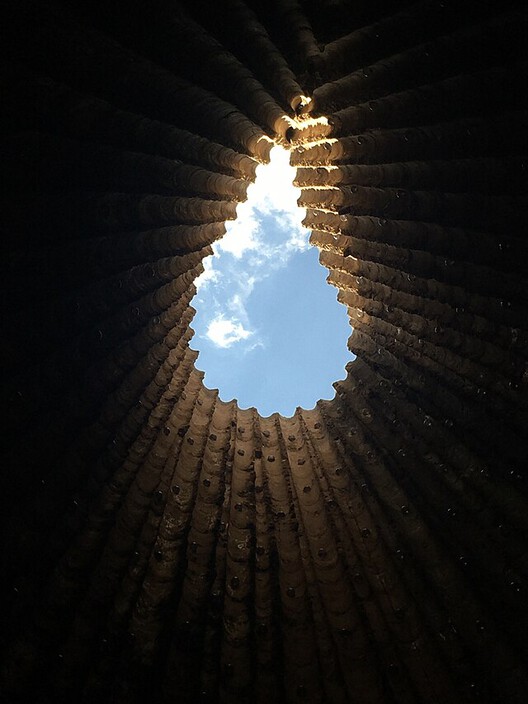
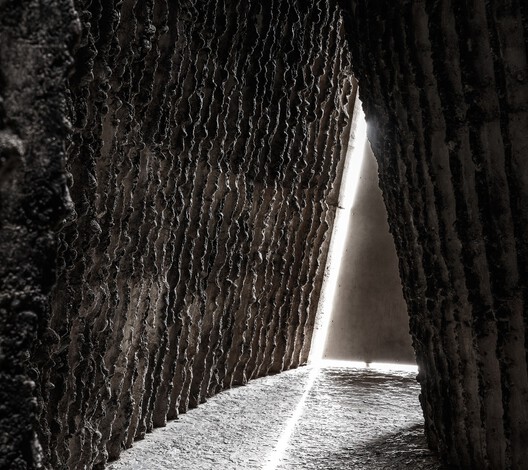
The transformation occurs through puncture. Small formwork openings, sealed with glass plugs, admit points of light that do not dissolve the wall's mass, but unsettle its certainty. The concrete remains thick, cool, and resistant, beginning to register as permeable. Here, light infiltrates mass. The effect is porosity: an architecture still grounded in compression, opened from within toward a cosmic dimension.
The Diffuse Veil
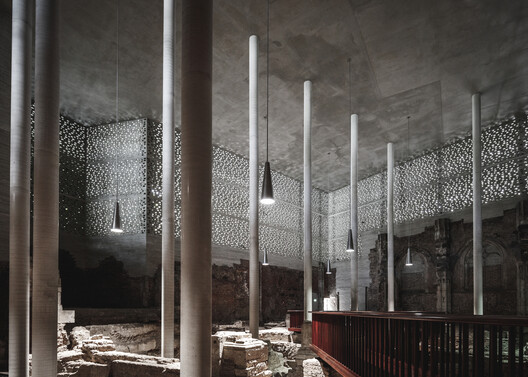
In the Kolumba Museum, mass appears less as monolith than as persistence. Built over the ruins of a bombed Gothic church, its long, slender brick forms a continuous enclosure that seems to grow from the layered history of the site itself. From the street, the building reads as wall before building—dense, mute, and reticent.
Its weight is registered through duration. The cool thermal presence of masonry, the measured cadence of brickwork, and the slowness imposed by the ruins give mass a temporal character instead of a monumental one.
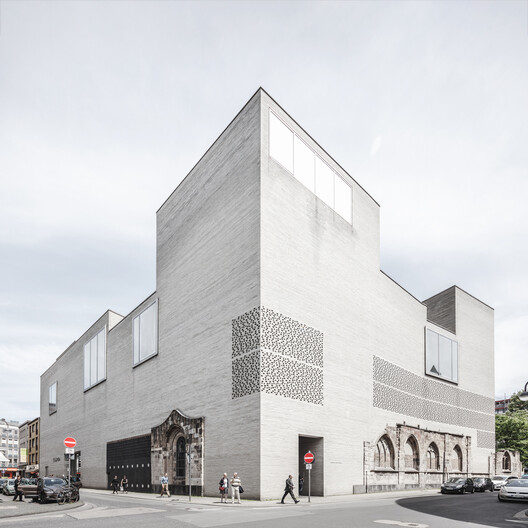
Through perforated filigree brickwork, however, the wall begins to alter its own solidity. Light does not enter through incision or puncture, but seeps through the material itself, diffused into a soft atmospheric presence. Lightness arrives as attenuation—a gradual softening of mass into veil.
Gravity as Grace
Fundamentally, the architecture of Peter Zumthor suggests that lightness is not a condition apart from matter, but one latent within it. Through precision, density acquires ambiguity; mass begins to hover, loosen, breathe.
Grace emerges in these subtle shifts—in the hesitation of support, the buoyancy of enclosure, the diffusion of light through heavy walls. Here, lightness is an inner condition of matter, through which weight discloses unexpected degrees of lift.
This article is part of the ArchDaily Topic: Light, Lighter, Lightest: Redefining How Architecture Touches the Earth, proudly presented by Vitrocsa, the original minimalist windows since 1992.
Vitrocsa designed the original minimalist window systems, a unique range of solutions, dedicated to the frameless window boasting the narrowest sightline barriers in the world. Manufactured in line with the renowned Swiss Made tradition for 30 years, Vitrocsa's systems "are the product of unrivaled expertise and a constant quest for innovation, enabling us to meet the most ambitious architectural visions."
Every month we explore a topic in-depth through articles, interviews, news, and architecture projects. We invite you to learn more about our ArchDaily Topics. And, as always, at ArchDaily we welcome the contributions of our readers; if you want to submit an article or project, contact us.