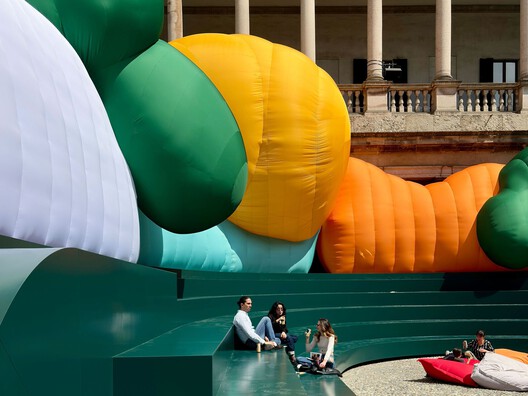
Observed annually on April 22, International Mother Earth Day frames this week's architectural discourse through an urgent call to rethink the relationship between the built environment and natural systems, foregrounding themes such as urban rewilding, the restoration of aquatic ecosystems, and the integration of ancestral knowledge into contemporary design practices. On another note, the opening of Salone del Mobile.Milano 2026 and Milan Design Week 2026 seek to reinforce the global relevance of design as a platform for exchange and experimentation, activating the city of Milan through a network of exhibitions and installations that engage both industry and public audiences. Among the announcements of award-winning architectural projects this week, the United Nations' House of No Waste (HØW) Competition highlights emerging architectural responses to climate and resource challenges. The awarded projects demonstrate scalable strategies for reducing material waste and embodied carbon while promoting adaptable, socially responsive, and resource-conscious public infrastructure.
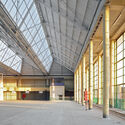

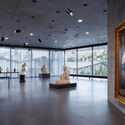
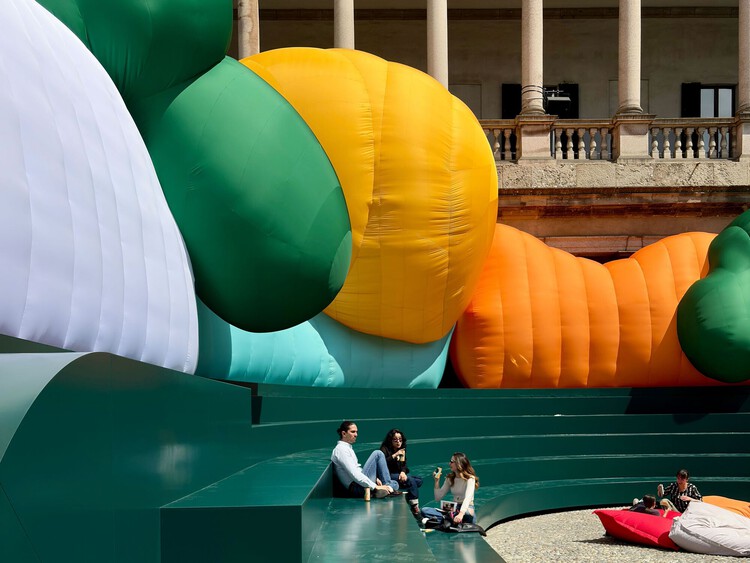
New Horizons in Cultural Architecture: Major Museum Expansions and Civic Institutions Unveiled Globally
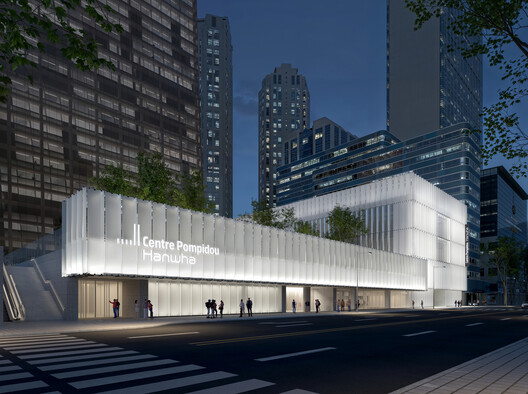
Significant developments in cultural architecture have been announced, with new projects and openings taking place in Asia and the United States. In South Korea, the Centre Pompidou expands its international presence with a new outpost in Seoul, designed by Wilmotte & Associés as part of the Hanwha Center, extending the museum's curatorial and architectural reach into East Asia. In the United States, Peter Zumthor's David Geffen Galleries at the Los Angeles County Museum of Art have opened, introducing a reconfigured exhibition model through a continuous, elevated gallery structure. Also in Los Angeles, ZGF Architects is nearing completion of the Air and Space Center, a purpose-built facility designed to house and display the Space Shuttle Endeavour, advancing new approaches to large-scale exhibition and preservation. Meanwhile, Bjarke Ingels Group has revealed its design for the Tennessee Performing Arts Center in Nashville, proposing a contemporary venue that integrates performance spaces with public urban amenities.
Related Article
On International Mother Earth Day: Urban Rewilding, Aquatic Ecosystems, and Ancestral Practices for BiodiversityGlobal Architecture Events and Awards 2026: Major Exhibitions and International Prize Winners
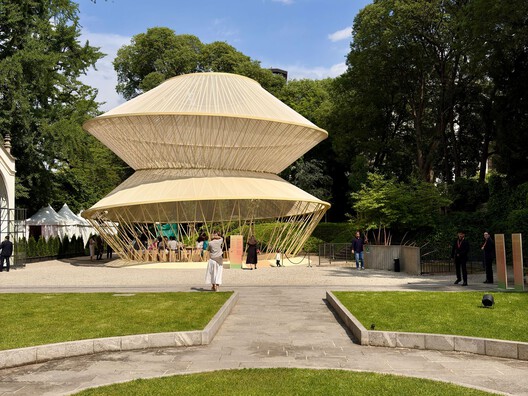
This week brings together major international architecture and design events alongside the announcement of key awards recognizing excellence across disciplines. Salone del Mobile.Milano 2026 and Milan Design Week 2026 have opened across the Italian city, and its fairgrounds, activating a network of exhibitions, installations, and industry showcases. In the United Arab Emirates, the Sharjah Architecture Triennial presents "A Journey into Architecture Archives," an exhibition centered on Baghdad, Damascus, and Tunis, foregrounding archival practices as tools to reinterpret architectural histories and regional narratives. Meanwhile, the EU Mies Awards 2026 announced its winners, highlighting built works across Europe that demonstrate innovation, social relevance, and technical rigor. Complementing these recognitions, the Sony World Photography Awards 2026 has revealed the winners of its Architecture & Design category, showcasing photographic practices that engage critically with the built environment.
On the Radar
United Nations House of No Waste (HØW) Competition Announces Winners Evolving Resource-Efficient Design
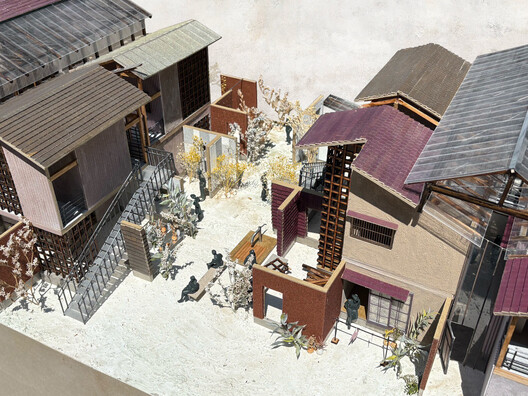
The United Nations University Institute for Integrated Management of Material Fluxes and of Resources has announced the winners of the House of No Waste (HØW) Competition, a global initiative calling for innovative approaches to public architecture grounded in circularity, sustainability, and the Resource Nexus. The competition received 927 submissions from 1,005 participants across 112 countries, spanning building proposals, urban strategies, material systems, and construction technologies. The winning projects were selected by an international jury comprising Tatiana Bilbao, Barbara Buser, Momoyo Kaijima, Mark Lee, Zegeye Cherenet Mamo, and Jane Wernick, recognizing proposals that combine environmental performance with social and economic value. The three main award-winning projects include "Better Save Than Sorry," which introduces rural reuse hubs for salvaged building components; "VALPLAST," a modular brick system fabricated from locally sourced plastic waste; and "Transcriptive Dwelling," a phased adaptive reuse strategy for a historic neighborhood in Osaka. Four additional acknowledgement prizes highlight proposals focused on waterfront regeneration, offshore waste recycling infrastructures, construction systems using textile waste, and community-led rebuilding initiatives.
Perkins&Will Advances Adaptive Transformation of 3.9 Million Square Feet of Historic Buildings in San Francisco
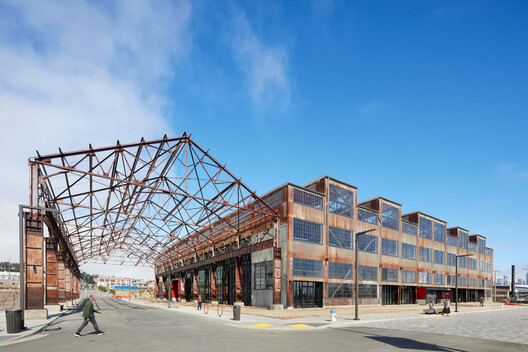
Perkins&Will's San Francisco studio is advancing a large-scale adaptive transformation strategy across the city, reconverting nearly 3.9 million square feet of historic real estate in response to converging pressures, including zoning reforms, seismic upgrades, economic shifts, and carbon reduction mandates. Documented in a newly published portfolio, the work spans diverse building typologies, from shipyards and warehouses to hotels and civic facilities, and is guided by a methodology based on varying scales of intervention. Notable projects include the seismic retrofit and residential conversion of UC Law SF – 100 McAllister, the elevation and reuse of Building 12 at Pier 70 into a public market and maker space, the transformation of a 1940s Army warehouse into the 525,000-square-foot Bay Area Metro Center, and the repositioning of the Art Deco McClintock Building with a new operable glass atrium. Across the portfolio, adaptive reuse achieves an average 39% reduction in global warming potential compared to new construction, preventing an estimated 109,000 metric tons of carbon emissions while supporting shorter construction timelines, reduced operational demands, and the preservation of both material and cultural heritage.
Powerhouse Company Wins Competition for VISTA College Campus Renewal in Maastricht
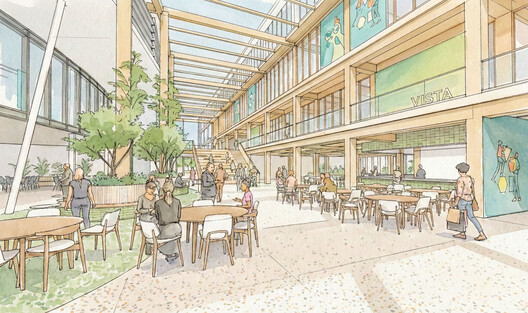
Powerhouse Company has won the competition to transform the existing VISTA College Sibema Campus in Maastricht, Netherlands, into a future-ready educational environment. The project, announced on April 14, 2026, restructures a currently fragmented site, characterized by dispersed volumes, unclear circulation, and multiple access points, into a single, legible ensemble organized along a central north-south axis. A compact footprint and a new primary entrance improve orientation, accessibility, and daily usability, while strengthening the campus's relationship to its urban context. One of the most important interventions is the insertion of a new cross-laminated timber (CLT) volume that introduces three atria, each supporting distinct programmatic functions, including collective gathering, informal learning, and practice-based education. These atria enhance spatial connectivity, bring daylight deep into the interior, and enable visual continuity across levels through open floors and bridging elements. The design prioritizes adaptability through a flexible 6 × 6 meter structural grid, while sustainability strategies include the upgrading of existing structures, integration of infrastructure such as bicycle parking, and passive environmental systems.
This article is part of our new This Week in Architecture series, bringing together featured articles this week and emerging stories shaping the conversation right now. Explore more architecture news, projects, and insights on ArchDaily.


