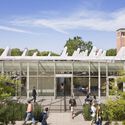
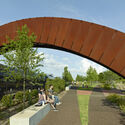
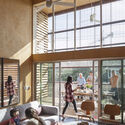
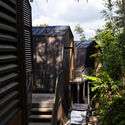
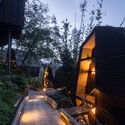
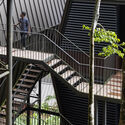
Breidablikk Gården / Asplan Viak and Facade Cladding by SolarLab. Image Courtesy of SolarLab
Solar panels are often treated as equipment added to a building. What happens when they become part of the architecture itself? Once integrated into the envelope, photovoltaics can generate energy while also influencing the building's form, construction, and environmental performance.
Roofs are often the most obvious location for photovoltaic panels, yet other parts of the building can generate power while performing additional architectural functions. Facades can provide shading, louvers can control sunlight, and ventilated rainscreens can combine weather protection with energy generation. Their orientation, position, and integration into the building envelope therefore become part of the architectural design rather than a separate technical decision.
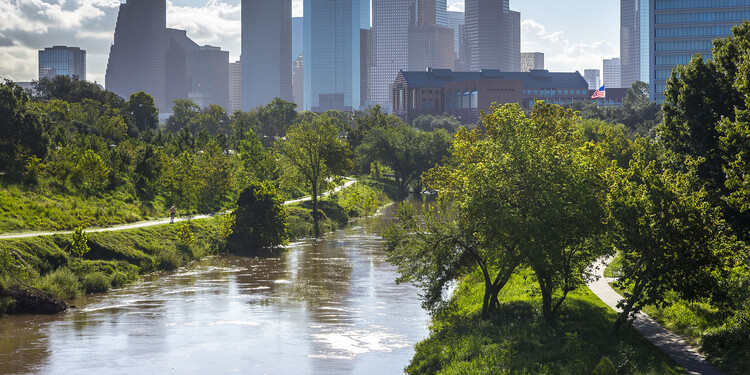
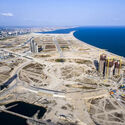
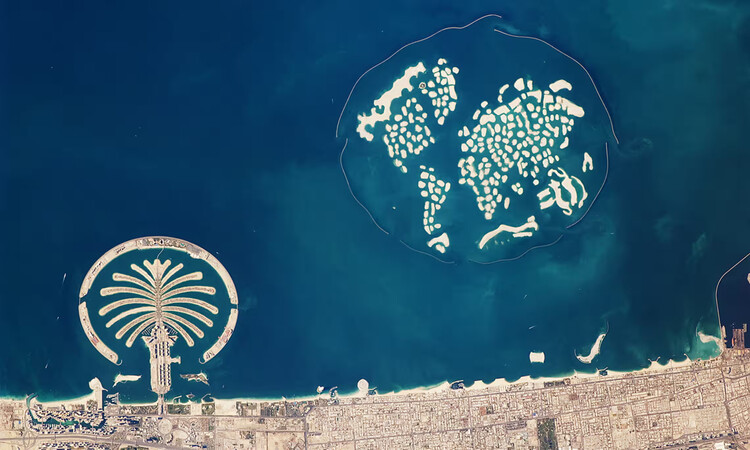
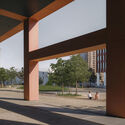
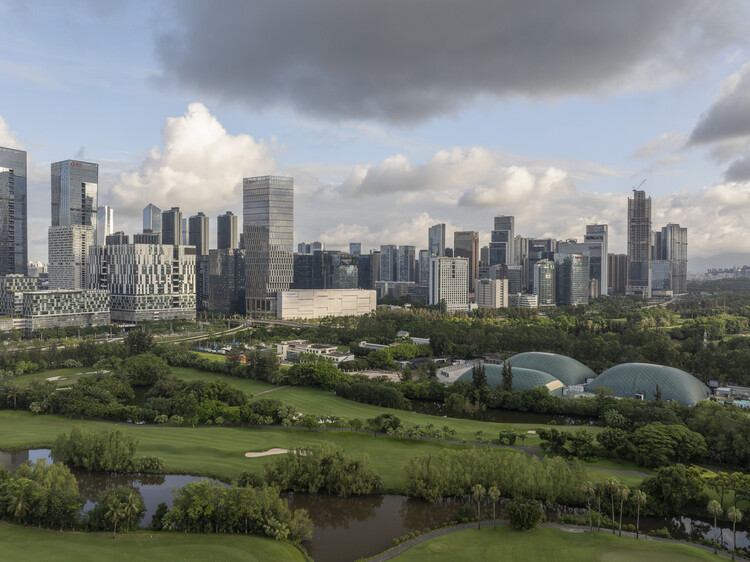
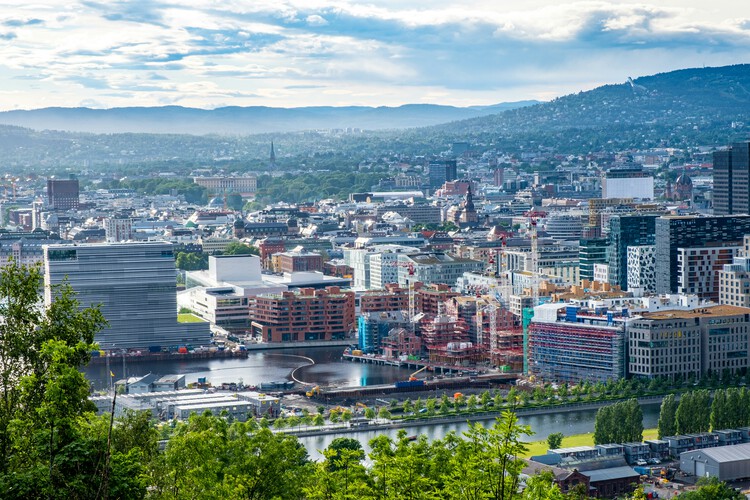
Reclaimed land is often presented as new ground: flat, available, and ready for architecture. It promises cities more space where space is scarce, allowing them to extend waterfronts and build cultural districts. Sometimes, these newly claimed lands may also develop into financial centers, create parks, and imagine futures beyond the limits of existing land. Yet reclaimed land is never simply land. It is an engineered surface, produced through fill, seawalls, drainage, and soil stabilization — a long-term negotiation with the water it claims to have displaced.
This makes reclamation one of architecture's most powerful and ambiguous spatial fantasies. On one hand, it offers freedom: a tabula rasa where streets and buildings can be planned almost from scratch. On the other, this apparent freedom conceals dependency. Made land must constantly prove itself as ground. It has to resist flooding, support foundations, grow trees, and hold public life above a terrain that did not previously exist.
Architecture firm HENN has launched CarbonBudget, a digital tool that calculates project-specific CO2 budgets for buildings. The new platform, free of charge, is a contribution for designers to help reach the 1.5°C target, a global goal from the Paris Agreement to limit long-term global warming to 1.5°C above pre-industrial levels. As the construction industry is responsible for around one-third of global CO2 emissions, architectural design decisions can effectively contribute to containing global warming. The tool is designed to calculate whether the emissions of a building project located in Europe are compatible with the Paris Agreement target, based on specific inputs such as location and building area. The new platform joins other projects from international offices such as MVRDV NEXT's CarbonSpace, Grimshaw's Minoro, and Henning Larsen's OpenDetail, addressing decarbonization through shared digital information.
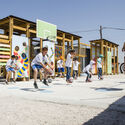
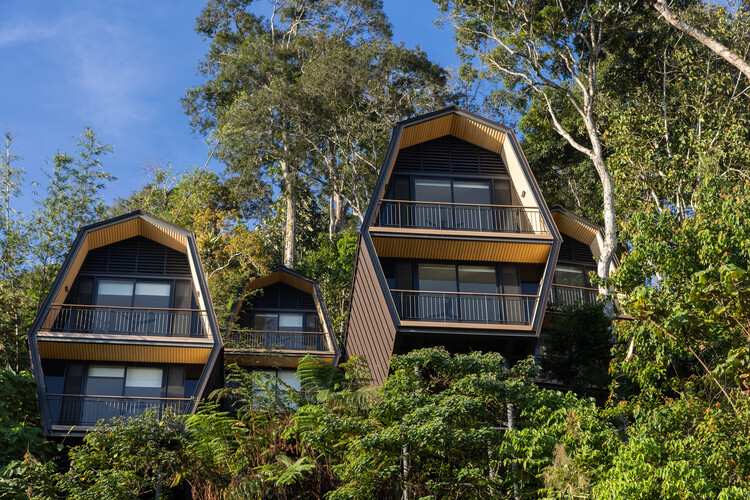
Can Gio Pavilions / DE-SO Asia. Image Courtesy of NS BlueScope
The Steel Architectural Awards ASEAN 2026, presented by BlueScope, has announced the 12 finalist projects selected to advance to the ASEAN-level appraisal. Representing outstanding achievements in architecture across Indonesia, Malaysia, Thailand, and Vietnam, the finalists were selected through the Country Awards programs and now move forward to regional evaluation by an international judging panel.
Now in its second ASEAN edition, the program celebrates architectural projects that demonstrate excellence in design, innovation, sustainability, and the creative application of coated steel solutions. Under the 2026 theme, "Shaping Resilient Futures: Timeless Design with Coated Steel," the Awards highlight projects that respond meaningfully to their context while delivering enduring value for future generations.
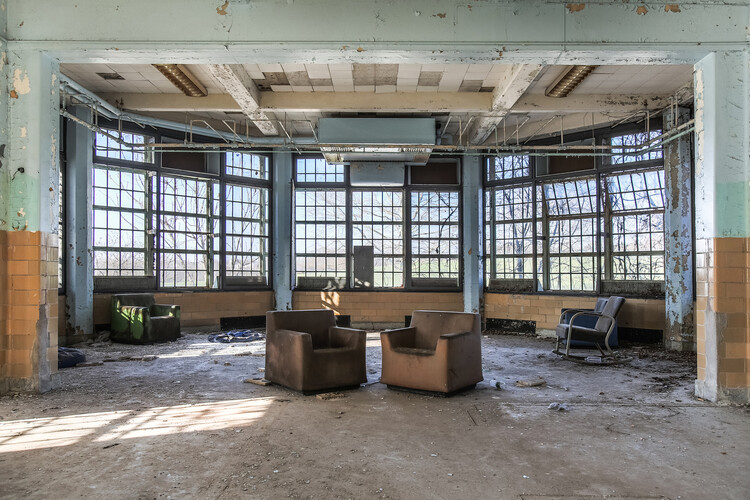
Obsolete buildings. Image Courtesy of Matt Van der Velde
Sustainability in architecture is often discussed as though it were a universal standard—and, in principle, it should be. Buildings are increasingly evaluated through energy performance, embodied carbon, certification systems, material efficiency, biodiversity, and whole-life impact. Yet the rules determining what must actually be done remain highly local. A project designed in London, New York, or Copenhagen may be shaped by stringent energy codes, environmental review, disclosure requirements, planning controls, and increasingly ambitious carbon targets. The same practice working elsewhere may encounter a very different regulatory landscape.
This creates a difficult question for international architecture: when sustainability is not enforced to the same degree by law, what standards should architects carry with them?
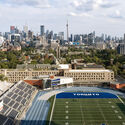
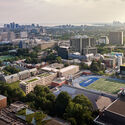
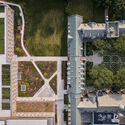
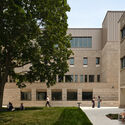
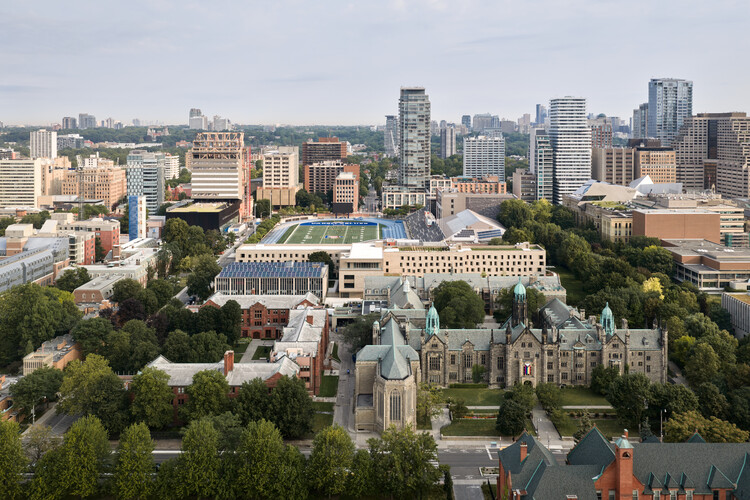
Mecanoo's Lawson Centre for Sustainability is the first new building for Trinity College since 1979. One of the most anticipated projects of 2026, it was designed to be one of Canada's most advanced sustainability-driven academic and residential buildings. Mecanoo worked in collaboration with Toronto architecture firm RDHA to design a sustainable community and "living lab," building on the College's traditions around shared meals and communal gatherings. Instead of the fourteen-story high-rise tower originally envisioned by the College, the team designed a walkable building that frames the existing campus and creates new landscapes for food production and social encounters. The broader campus vision included food, nature, work with local materials, and hands-on learning about sustainable living.
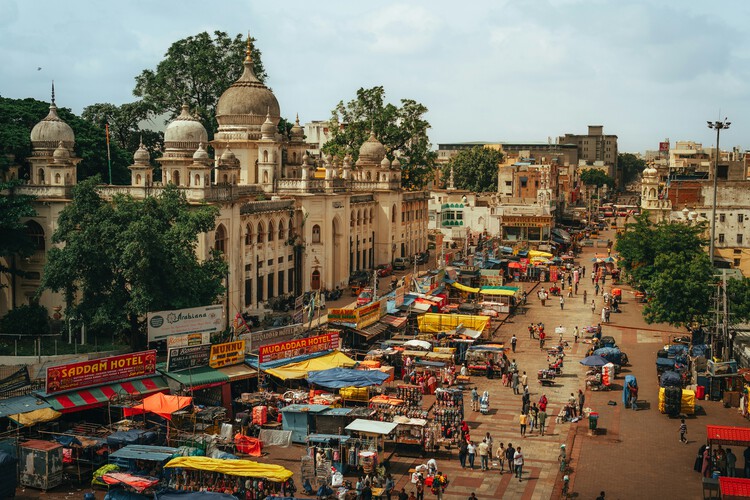
Bazaar in Hyderabad, India. Photo by Kanishq Kancharla on Unsplash
This article is part of "Thresholds", a special edition printed newspaper by Cobe Notes x ArchDaily.
Architecture is most often represented as a stable object: a building captured at a moment of visual clarity, isolated from surrounding contingencies. Plans, sections, and photographs promise legibility by suspending time. Yet many of the world's most enduring public environments resist this mode of representation altogether. They are not designed to be read instantaneously, nor do they reveal their logic through form alone. Their spatial intelligence emerges gradually, through repetition, occupation, and duration.
The bazaar belongs firmly within this category. It cannot be understood through a single drawing or a finished elevation. Its organization is not fixed but rehearsed. What sustains it is not purely architectural composition, but shared timing, collective memory, and long-standing patterns of use. Togetherness in the bazaar does not arise from formal design decisions; it is produced through repeated encounters, negotiated proximities, and social familiarity accumulated over time.
Google Earth. Leganés Tecnológico Business Association. Leganés City Council.
The Community of Madrid and the Leganés City Council have launched an urban planning project competition to solicit the best planning proposals for the sustainable and innovative development of the new "Puerta de Madrid" neighborhood, which borders the established Leganés Norte neighborhood to the north and east. This urban development will be managed through a consortium involving both administrations.
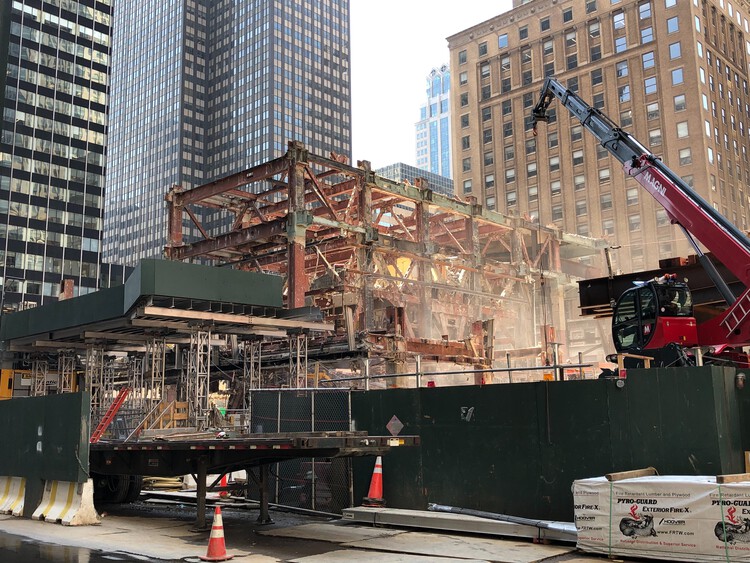
During the last week of August, the New York City government announced a new project for the MADE Bush Terminal in Sunset Park, Brooklyn. It involves the transformation of the old industrial building into a center for the recovery, storage, sorting, and redistribution of construction materials during a one-year pilot program. The initiative echoes a wave of similar circular construction hubs recently launched or announced across Europe: a converted warehouse in Brussels, an industrial site adaptation in East London's Royal Docks, and a cross-border network supported by CirCoFin spanning Munich, Copenhagen, Lisbon, and Scotland, each repurposing industrial buildings and infrastructure to support the reuse of construction materials.
The 2026 Oslo Architecture Triennale will take place from September 17 to October 1 at Sofienberg Church in Oslo, bringing together more than 30 international architecture projects around the question "What if Nature Comes First?" For its ninth edition, the Triennale will adopt a two-week festival format, combining an exhibition with conferences, seminars, workshops, film screenings and guided walks. Curated by Line Ramstad, the programme will examine how placing nature at the starting point of architectural decision-making could influence what is built, preserved, transformed or left untouched.
sauerbruch hutton and Studio Gang have been selected to renovate the German House in New York following an international competition organized by the Federal Republic of Germany. Located on United Nations Plaza in Manhattan, the building houses the Consulate General of Germany, the Permanent Mission of Germany to the United Nations, and several affiliated cultural institutions. The project marks the first collaboration between the two practices. Berlin-based sauerbruch hutton will serve as Lead Designer, while Studio Gang will act as General Planner and Architect of Record, overseeing project delivery and implementation. The proposal focuses on adapting the existing building, with the stated goal of extending its lifespan while improving its operational and environmental performance.
Aulets Arquitectura en Corto invites you to the Espacio Arquia in Madrid (c/ Tutor, 16) on Thursday, September 17, at 7:00 PM for the screening of the short film Amarar. The title refers to a traditional Mallorcan technique of treating wood by immersing it in water to increase its durability. This term has become the name of a sustainable design project that transforms native pine trees into contemporary furniture of high artisanal value. In collaboration with the University of the Balearic Islands, the project also researches the use of this wood in construction. The initiative is led by Francisco Cifuentes and Sebastián Martorell, founding partners of the Palma de Mallorca-based firm Aulets Arquitectes. "We have a vast forest mass on the islands," explains Cifuentes, "but 95% of the forests are abandoned. At the same time, we are importing 70,000 tons of wood for construction. Architects must build with materials that can regenerate local ecosystems. A change in the model is necessary." Directed by Marc Hierro, the short film presents several solutions proposed by Aulets Arquitectes and other project collaborators to promote responsible forest management and utilize wood as a durable, recyclable material with full traceability. Following the screening, a discussion will feature Francisco Cifuentes, Sebastián Martorell, and Albert Cuchí, author of the article "Construir el territorio," recently published in the El Croquis monograph dedicated to the architectural work of Aulets Arquitectes. "What Aulets pursues," asserts Cuchí, "is the recovery of the territory as the authentic field of action for architecture, maintaining an appropriate relationship with resources, ensuring the renewability of extraction processes, and weaving construction together with other social activities to build an ecological society."
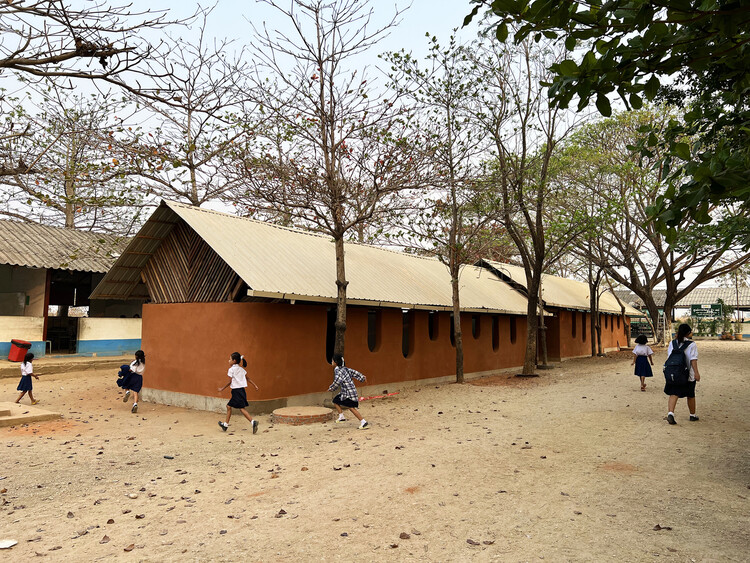
For millions of displaced children and young people, education unfolds amid conditions of forced mobility, administrative uncertainty, and prolonged precarity. Schools situated in borderlands, refugee settlements, and sites of climate-induced displacement therefore operate as more than educational facilities. They become spatial infrastructures that negotiate the contradictory demands of emergency and continuity, offering environments where learning persists despite the instability of legal status, living conditions, and the very feeling of being at home.
According to UNHCR, approximately 45 million of the world's 117.8 million forcibly displaced people were children under the age of eighteen at the end of 2025. As displacement increasingly results from armed conflict, political persecution, environmental crises, and economic instability, humanitarian architecture faces a growing challenge: not simply how to construct more schools rapidly, but how to create educational environments capable of supporting continuity, safety, and belonging amid uncertain futures.
What will the future of steel be?How can this material build the foundation for sustainable economic development and the transition to a low-carbon society?
Steel plays an essential role in modern societies, shaping countless aspects of daily life and supporting sustainable development through its contribution to the built environment, transportation, and energy infrastructure. From automobiles and buildings to cargo ships and refrigerators, steel is a durable and versatile engineering and construction material with a distinctive strength-to-weight ratio compared with other building materials. By offering fast, durable, and flexible solutions with temperature control and resistance to extreme weather conditions, steel has become an integral part of modern construction systems. Its long-term performance also places it at the center of the debate on how to transition toward a lower-carbon world.
Barcelona has just become the first city in the history of the UIA World Congress of Architects to host the event twice. Thirty years separate the two editions, and the distance between them says as much about architecture's changing self-understanding as anything spoken from a stage. In 1996, the congress placed the city at the center of the debate, consolidating a post-Olympic urban model that would go on to be studied and contested for decades.
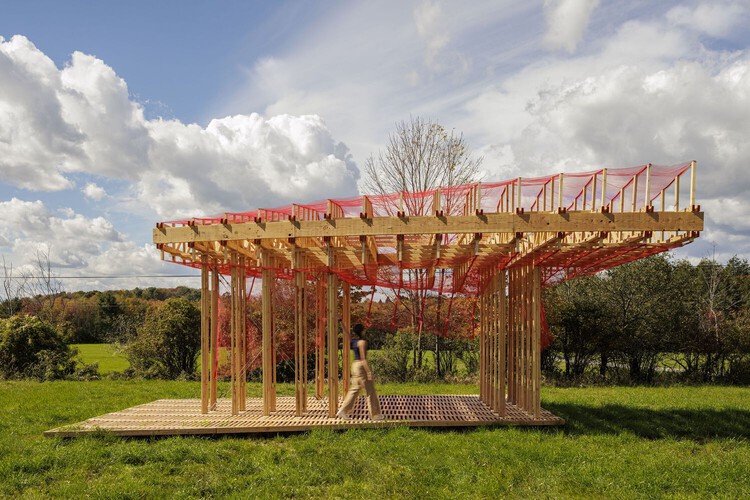
Wood is among architecture's oldest and most familiar materials, yet its contemporary use raises complex questions about environmental impact, resource availability, material provenance, and circularity in relation to local economies. At the same time, advances in computational design, CNC machining, and robotic fabrication are also reshaping how timber is designed and assembled, opening new possibilities for structural innovation and formal expression while redefining the balance between automation, labor, and efficiency.
There is growing awareness around sustainability—and the environmental cost of prematurely demolishing safe, structurally sound buildings only to replace them with new construction. In the broader race to reduce carbon emissions, corporations and institutions are placing greater emphasis on ESG performance (environmental impact, social responsibility, and governance). Many now require carbon accounting, set "carbon-neutral" targets, or purchase carbon credits to offset footprints.
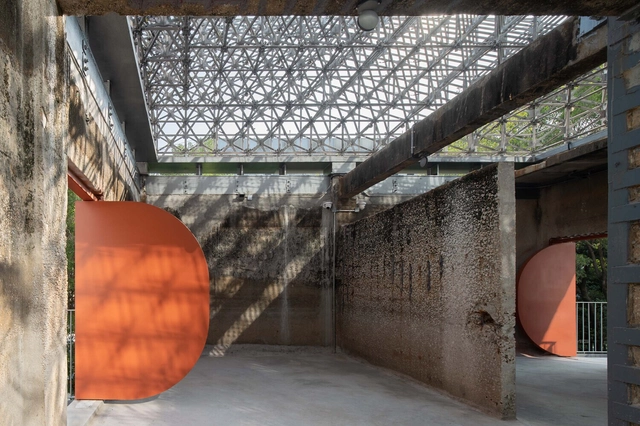
This shift, together with a wave of exemplary adaptive-reuse projects worldwide—Herzog & de Meuron's Tai Kwun in Hong Kong, Powerhouse Arts in Brooklyn, David Chipperfield's The Ned Doha, and Xu Tiantian's transformations of factories, quarries, and rammed-earth fortresses in China—has accelerated serious reconsideration of reuse as a primary development strategy. Yet despite its many benefits, adaptive reuse is still not as prevalent as it could be. Why and what might be the main obstacles and tensions?