1. ArchDaily
  2. Architecture

Architecture: The Latest Architecture and News

PREVI Lima and the Politics of Resident Authorship in Social Housing

Subscriber Access | 

Architects are accustomed to being credited for buildings long after construction ends. Names remain attached to projects through photographs, publications, and histories, often decades after the original drawings were produced. Buildings, on the other hand, rarely remain faithful to that narrative for long. Families grow, technologies change, businesses emerge, and daily life introduces demands that no plan can fully anticipate. Over time, architecture accumulates modifications, repairs, additions, and improvisations that gradually distance it from its original form.

Few projects confront this question as directly as PREVI Lima. Conceived in the late 1960s as Peru's Experimental Housing Project, PREVI invited an international group of architects to develop housing prototypes capable of accommodating growth over time. The project is often remembered for its ambitious roster of designers, which included figures such as James Stirling, Aldo van Eyck, and Christopher Alexander. More than fifty years later, the neighborhood has become a record of resident decisions, revealing a form of architecture designed to remain unfinished.

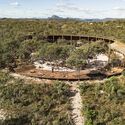
PREVI Lima and the Politics of Resident Authorship in Social Housing - Image 1 of 4PREVI Lima and the Politics of Resident Authorship in Social Housing - Image 2 of 4PREVI Lima and the Politics of Resident Authorship in Social Housing - Image 3 of 4PREVI Lima and the Politics of Resident Authorship in Social Housing - Image 4 of 4PREVI Lima and the Politics of Resident Authorship in Social Housing - More Images+ 14

OMA Completes Hangzhou Prism Mixed-Use Development in China's Future Tech City

OMA has completed the Hangzhou Prism, a large-scale mixed-use development in Hangzhou's Future Tech City district, China, following a design and development process that began in 2016. Commissioned by Xinhu Real Estate Group and led by OMA Partner Chris van Duijn, with Michael Hadjistyllis serving as project architect, the project combines residential units, a hotel, offices, commercial spaces, and public amenities within a single building volume. Marking OMA's first completed project in Hangzhou, the development occupies a central site within one of the city's emerging innovation and business districts.
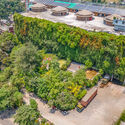
OMA Completes Hangzhou Prism Mixed-Use Development in China's Future Tech City - Image 1 of 4OMA Completes Hangzhou Prism Mixed-Use Development in China's Future Tech City - Image 2 of 4OMA Completes Hangzhou Prism Mixed-Use Development in China's Future Tech City - Image 3 of 4OMA Completes Hangzhou Prism Mixed-Use Development in China's Future Tech City - Image 4 of 4OMA Completes Hangzhou Prism Mixed-Use Development in China's Future Tech City - More Images+ 5

"The Century of Gehry": Frank Gehry Retrospective Opens at the Serralves Museum in Porto

From June 12 to December 20, 2026, the Serralves Museum of Contemporary Art in Porto, Portugal, will be hosting a retrospective exhibition dedicated to the career of Frank Gehry (1929-2025). Titled The Century of Gehry, the exhibition presents to the public original large-scale models, sculptures, drawings, furniture, and other works documenting the architect's notable, and at times controversial, postmodern architecture. The exhibit covers from early experiments to iconic buildings such as the architect's house in Santa Mónica, the Guggenheim Museum in Bilbao, the Fondation Louis Vuitton in Paris, and the Walt Disney Concert Hall in Los Angeles. The Serralves Museum occupies a building designed by the Portuguese architect Álvaro Siza Vieira in 1991. The exhibition is housed in the new wing that bears his name.
"The Century of Gehry": Frank Gehry Retrospective Opens at the Serralves Museum in Porto - Image 1 of 4"The Century of Gehry": Frank Gehry Retrospective Opens at the Serralves Museum in Porto - Image 2 of 4"The Century of Gehry": Frank Gehry Retrospective Opens at the Serralves Museum in Porto - Image 3 of 4"The Century of Gehry": Frank Gehry Retrospective Opens at the Serralves Museum in Porto - Image 4 of 4The Century of Gehry: Frank Gehry Retrospective Opens at the Serralves Museum in Porto - More Images+ 12

Contemplative Drama: How Gaudí Shaped Light and Color at Sagrada Família

Subscriber Access | 

It is afternoon in the summer, and the nave of the Sagrada Família is saturated with warm colors. Shafts of amber and crimson sweep across the stone floor, shift as a cloud passes over Barcelona, then deepen again. Around you, visitors slow without quite realizing it. Some raise their phones — not to capture the architecture, but to step into the light itself, positioning themselves in a pool of orange or gold as if the colours were something you could wear.

They are, without knowing it, doing exactly what Gaudí intended: surrendering, however briefly, to the sensation of being bathed in something larger than themselves.

Contemplative Drama: How Gaudí Shaped Light and Color at Sagrada Família - Image 1 of 4Contemplative Drama: How Gaudí Shaped Light and Color at Sagrada Família - Image 2 of 4Contemplative Drama: How Gaudí Shaped Light and Color at Sagrada Família - Image 3 of 4Contemplative Drama: How Gaudí Shaped Light and Color at Sagrada Família - Image 4 of 4Contemplative Drama: How Gaudí Shaped Light and Color at Sagrada Família - More Images+ 14

Ecologies of Repair: Reconciling Our Relationship with Water

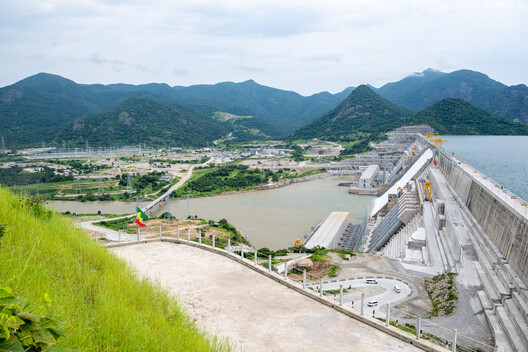
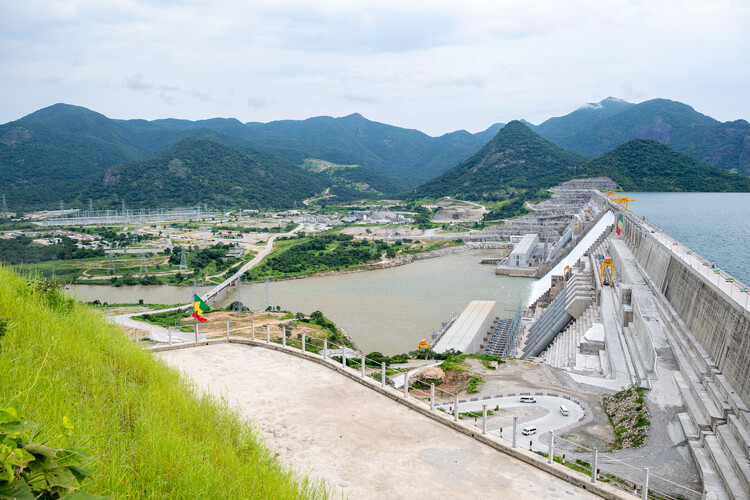
Ola Hassanain is a Sudanese architect and artist operating in the Netherlands, and will be exhibiting at the Pan-African Architecture Biennale in Nairobi, Kenya, later in 2026. All three locations tell stories of the built environment's relationship with water. These illustrate the continuous battles between the amorphous forces of nature that are the rivers and seas, and human attempts to shape and control them. In most cases, they are attempts at extraction. Catastrophes happen as a result of the overreach of these attempts or of their mismanagement, or both.

Ecologies of Repair: Reconciling Our Relationship with Water - Image 1 of 4Ecologies of Repair: Reconciling Our Relationship with Water - Image 2 of 4Ecologies of Repair: Reconciling Our Relationship with Water - Image 3 of 4Ecologies of Repair: Reconciling Our Relationship with Water - Image 4 of 4Ecologies of Repair: Reconciling Our Relationship with Water - More Images+ 10

3daysofdesign 2026 Returns to Copenhagen With City-Wide Exhibitions and Events

From June 10-12, 2026, 3daysofdesign returns to Copenhagen with a city-wide program of exhibitions, installations, talks, and showroom presentations organized around the theme "Make This Moment Matter." Taking place across eight Design Districts throughout the Danish capital, this year's festival brings together design brands, cultural institutions, studios, and practitioners to explore contemporary questions shaping design and the built environment. As part of the program, Cobe and ArchDaily will host the public launch of a guest-edited edition of Cobe Notes, under the theme Thresholds, at the Cobe Bookcafé, Nordhavn on June 10.

3daysofdesign 2026 Returns to Copenhagen With City-Wide Exhibitions and Events - Image 1 of 43daysofdesign 2026 Returns to Copenhagen With City-Wide Exhibitions and Events - Image 2 of 43daysofdesign 2026 Returns to Copenhagen With City-Wide Exhibitions and Events - Image 3 of 43daysofdesign 2026 Returns to Copenhagen With City-Wide Exhibitions and Events - Image 4 of 43daysofdesign 2026 Returns to Copenhagen With City-Wide Exhibitions and Events - More Images+ 2

"My Solutions Are Not Polite:" Liam Young on Architecture in the Age of Polycrisis in Louisiana Channel Interview

Australian artist, director, and BAFTA-nominated producer Liam Young creates imaginary worlds as a way of thinking through the futures we fear, desire, and are already making. As a creator and designer of atmospheres, he proposes speculative landscapes reflecting the possibilities of a world to come, whether ideal or truthfully unsettling. In his worldbuilding practice across the film, television, and video game industries, fiction becomes a tool for navigating the environmental urgencies of the present. He is considered a "futurist" working across design strategies, technological scenarios, and collective imaginations, grounded in his academic research yet reaching a wider audience in exhibitions such as "In Other Worlds" at the Barbican Centre in London and "Age of Nature" at the Danish Architecture Center in Copenhagen. In February 2026, he was interviewed by Marc-Christoph Wagner for Louisiana Channel, where he shares his visions of our future: from architecture consolidating as a boutique industry to the need for a new kind of planetary punk at the scale of the climate crisis.

"My Solutions Are Not Polite:" Liam Young on Architecture in the Age of Polycrisis in Louisiana Channel Interview - Image 1 of 4"My Solutions Are Not Polite:" Liam Young on Architecture in the Age of Polycrisis in Louisiana Channel Interview - Image 2 of 4"My Solutions Are Not Polite:" Liam Young on Architecture in the Age of Polycrisis in Louisiana Channel Interview - Image 3 of 4"My Solutions Are Not Polite:" Liam Young on Architecture in the Age of Polycrisis in Louisiana Channel Interview - Image 4 of 4My Solutions Are Not Polite: Liam Young on Architecture in the Age of Polycrisis in Louisiana Channel Interview - More Images+ 3

Thick Walls and Deep Openings: When Architecture Rediscovers Mass

For much of the twentieth century, architectural culture was shaped by the pursuit of lightness. Steel structures and curtain walls reduced the building envelope to a thin layer separating interior from exterior, while façades became smooth, continuous surfaces where windows were cut as precise openings within an abstract plane. But for centuries, buildings were conceived as bodies of mass; walls possessed depth, windows were recessed within thick masonry, and space was often experienced as something carved from the solidity of construction. In recent years, several contemporary projects appear to revisit this older spatial logic, reintroducing thickness as an architectural condition through deep openings, monolithic volumes, and heavy envelopes.

This shift does not imply a rejection of modern construction technologies, nor does it represent a nostalgic return to historical forms. Instead, it reflects a renewed interest in the fundamental relationship between material, mass, and void. By reintroducing thickness into the architectural vocabulary, these buildings reconnect contemporary practice with long-standing traditions in which space was inseparable from the weight and depth of construction.

Thick Walls and Deep Openings: When Architecture Rediscovers Mass - Image 1 of 4Thick Walls and Deep Openings: When Architecture Rediscovers Mass - Image 2 of 4Thick Walls and Deep Openings: When Architecture Rediscovers Mass - Image 3 of 4Thick Walls and Deep Openings: When Architecture Rediscovers Mass - Image 4 of 4Thick Walls and Deep Openings: When Architecture Rediscovers Mass - More Images+ 19

Designed to Repeat, Forced to Adapt: The Parallel Architecture of Socialist Housing

A housing block in New Belgrade appears orderly from a distance. Concrete slabs repeat with disciplined consistency, windows align into measured grids, and balconies stack with the confidence of a system certain of itself. However, proximity changes the reading. One balcony is enclosed in aluminum glazing, another softened with improvised shading. Insulation thickens part of a façade while laundry frames another edge like an accidental elevation study. The district still reads as planned, though occupation has made its order less uniform. Within that order, repetition has gradually been rewritten through occupation.

Designed to Repeat, Forced to Adapt: The Parallel Architecture of Socialist Housing - Image 1 of 4Designed to Repeat, Forced to Adapt: The Parallel Architecture of Socialist Housing - Image 2 of 4Designed to Repeat, Forced to Adapt: The Parallel Architecture of Socialist Housing - Image 3 of 4Designed to Repeat, Forced to Adapt: The Parallel Architecture of Socialist Housing - Image 4 of 4Designed to Repeat, Forced to Adapt: The Parallel Architecture of Socialist Housing - More Images+ 10

World Environment Day 2026 Coincides with Record Heatwaves, Renewing Focus on Climate Adaptation in Cities

As Europe experiences one of its earliest and most intense heatwaves in recent years, World Environment Day 2026 arrives amid renewed discussions about climate adaptation, urban resilience, and the capacity of cities to respond to increasingly extreme temperatures. Across Portugal, France, Italy, Spain, Germany, Switzerland, Ireland, and the United Kingdom, temperatures have surged well above seasonal averages, prompting heat alerts, school closures, emergency planning measures, and growing concerns about the performance of buildings and public infrastructure under prolonged heat stress. The convergence of these highlights a reality that is becoming increasingly worldwide: climate change is no longer solely an environmental concern but an issue that is fundamentally reshaping the spaces where people live, work, and gather.

World Environment Day 2026 Coincides with Record Heatwaves, Renewing Focus on Climate Adaptation in Cities - Image 1 of 4World Environment Day 2026 Coincides with Record Heatwaves, Renewing Focus on Climate Adaptation in Cities - Image 2 of 4World Environment Day 2026 Coincides with Record Heatwaves, Renewing Focus on Climate Adaptation in Cities - Image 3 of 4World Environment Day 2026 Coincides with Record Heatwaves, Renewing Focus on Climate Adaptation in Cities - Image 4 of 4World Environment Day 2026 Coincides with Record Heatwaves, Renewing Focus on Climate Adaptation in Cities - More Images+ 3

BIG Designs Dual-Volume EVE Music Hall Amid Agricultural Landscape in Čepin, Croatia

BIG – Bjarke Ingels Group is nearing completion of the EVE Music Hall in Čepin, eastern Croatia, designed in collaboration with SIRRAH projekt and Theatre Projects. The 10,000 m² project contains a live music venue, congress facilities, exhibition spaces, a café, and rooftop event spaces. The venue is expected to host concerts, conferences, exhibitions, and cultural activities, accommodating nearly 4,000 guests indoors and up to 25,000 outdoors. The new cultural building marks the office's first project in Croatia and is expected to become its first completed music performance venue in early 2027.

The Metrics We Use Decide the Cities We Build: Urban Indicators and Lived Experience

Subscriber Access | 

Modern cities are running on performance indicators. They move millions of people each day, concentrate capital, separate land uses, and sustain complex systems of logistics and consumption. In that sense, the city functions as a system to be continually adjusted and optimized.

Today's dominant metrics are familiar and widely witnessed: vehicles per hour, average commute times, floor area ratios, parking turnover, housing starts, and tax revenue per parcel of land. These figures describe a city that is legible through efficiency. They are inherited from an industrial logic, where urban space is treated more like a production mechanism than a lived-in environment. In this framing, cities begin to mimic the needs and metrics of a machine.

The Metrics We Use Decide the Cities We Build: Urban Indicators and Lived Experience - Image 1 of 4The Metrics We Use Decide the Cities We Build: Urban Indicators and Lived Experience - Image 2 of 4The Metrics We Use Decide the Cities We Build: Urban Indicators and Lived Experience - Image 3 of 4The Metrics We Use Decide the Cities We Build: Urban Indicators and Lived Experience - Image 4 of 4The Metrics We Use Decide the Cities We Build: Urban Indicators and Lived Experience - More Images+ 2

Spanish Design Pavilion Explores Reversibility, Craft and Public Space in Frankfurt 2026

 | In Collaboration

What happens when materiality becomes the driving force of design? How can a cultural infrastructure express its own identity? The Spanish Design Pavilion for World Design Capital Frankfurt Rhein-Main 2026 brings together the country's creative innovation to address contemporary challenges through a reinterpretation of Gaudí's architectural legacy. Conceived as a reversible cultural infrastructure, the project activates public space while expanding the conversation around material use, circularity, and reuse. Rather than reproducing historical forms, the pavilion adopts a contemporary, operational approach. It highlights collaboration among Spanish industry, design and culture, exploring structural and constructive principles rooted in geometry, material efficiency, and the relationship between form and system.

Spanish Design Pavilion Explores Reversibility, Craft and Public Space in Frankfurt 2026 - Image 1 of 4Spanish Design Pavilion Explores Reversibility, Craft and Public Space in Frankfurt 2026 - Image 2 of 4Spanish Design Pavilion Explores Reversibility, Craft and Public Space in Frankfurt 2026 - Image 3 of 4Spanish Design Pavilion Explores Reversibility, Craft and Public Space in Frankfurt 2026 - Image 4 of 4Spanish Design Pavilion Explores Reversibility, Craft and Public Space in Frankfurt 2026 - More Images+ 13

First Look at the Serpentine Pavilion and Getty Center Modernization Plans Revealed: This Week’s Review

This week, architecture's cultural dimension took center stage through a series of new platforms, institutional developments, and public-facing projects that expand how the discipline is discussed, preserved, and experienced. From the announcement of participants for the inaugural Pan-African Biennale in Nairobi and the unveiling of Concéntrico Festival's urban interventions across Logroño, to the opening of La Biennale di Venezia's new archival headquarters at the Arsenale, architecture emerged as a vehicle for research, exchange, and collective reflection. Alongside these initiatives, projects such as the expansion of Crystal Bridges Museum in Arkansas and the opening of the 2026 Serpentine Pavilion demonstrate how cultural institutions continue to invest in new spaces for gathering and engagement. This week's selection spans Kenya, Spain, Albania, Saudi Arabia, Italy, Lebanon, the United Kingdom, and the United States, reflecting the diverse contexts in which cultural institutions, public events, and architectural initiatives continue to evolve.

First Look at the Serpentine Pavilion and Getty Center Modernization Plans Revealed: This Week’s Review - Image 1 of 4First Look at the Serpentine Pavilion and Getty Center Modernization Plans Revealed: This Week’s Review - Image 2 of 4First Look at the Serpentine Pavilion and Getty Center Modernization Plans Revealed: This Week’s Review - Image 3 of 4First Look at the Serpentine Pavilion and Getty Center Modernization Plans Revealed: This Week’s Review - Image 4 of 4First Look at the Serpentine Pavilion and Getty Center Modernization Plans Revealed: This Week’s Review - More Images+ 10

Design as Repair: How Architecture Is Advancing Environmental Justice

Subscriber Access | 

Environmental justice confronts a simple but uncomfortable truth: the benefits and burdens of the environment are not shared equally. Marginalized communities bear a disproportionate share of polluted air, unsafe water, toxic land uses, extreme heat, and the accelerating risks of climate change in cities around the world. These are the consequential products of decades of policy decisions, investment patterns, exclusionary planning practices, and planning choices that have consistently favored certain communities over others.

In cities and landscapes alike, these injustices are written into the physical fabric of places, even revealing extreme differences in environmental conditions between neighborhoods and districts. Dense neighborhoods with little tree canopy, for example, absorb and hold heat, exposing residents to higher rates of heat-related illness. Highways, industrial corridors, ports, and waste facilities cluster near low-income neighborhoods and communities of color, shaping conditions of health, air and soil quality, and long-term safety.

Design as Repair: How Architecture Is Advancing Environmental Justice - Image 1 of 4Design as Repair: How Architecture Is Advancing Environmental Justice - Image 2 of 4Design as Repair: How Architecture Is Advancing Environmental Justice - Image 3 of 4Design as Repair: How Architecture Is Advancing Environmental Justice - Image 4 of 4Design as Repair: How Architecture Is Advancing Environmental Justice - More Images+ 35

Diriyah Biennale Foundation Announces Four Studios Shortlisted for the 2027 AlMusalla Prize

The Diriyah Biennale Foundation has revealed the four architecture studios shortlisted for the 2027 AlMusalla Prize, an international competition that commissions the design of a musalla, a space for prayer and contemplation, for the third edition of the Islamic Arts Biennale. Opening on November 1, 2027, at the Western Hajj Terminal in Jeddah, Saudi Arabia, the Biennale will feature a new prayer structure designed by one of the shortlisted teams: Al-Jawad Pike (United Kingdom), Civil Architecture (Bahrain/Kuwait), MILLIØNS (United States), or NEW SOUTH (France). The winning proposal will be announced in March 2027 and realized as part of the exhibition before being permanently relocated to JAX District in Diriyah.

Diriyah Biennale Foundation Announces Four Studios Shortlisted for the 2027 AlMusalla Prize - Image 1 of 4Diriyah Biennale Foundation Announces Four Studios Shortlisted for the 2027 AlMusalla Prize - Image 2 of 4Diriyah Biennale Foundation Announces Four Studios Shortlisted for the 2027 AlMusalla Prize - Image 3 of 4Diriyah Biennale Foundation Announces Four Studios Shortlisted for the 2027 AlMusalla Prize - Image 4 of 4Diriyah Biennale Foundation Announces Four Studios Shortlisted for the 2027 AlMusalla Prize - More Images+ 7

Bread & Heart Festival 2026 Gathers International Architects in Tirana to Explore Albania's "Landscapes of Abundance"

The second edition of The Bread & Heart Festival will be held in Tirana, Albania, from June 3 to 5, 2026. The annual event is organised by The Bread & Heart Foundation and co-curated with the NEWROPE Chair of Architecture and Urban Transformation at ETH Zürich. The Foundation's objective is to offer an open platform for dialogue on architecture, landscape, and development in Albania, a country undergoing rapid transformation and becoming one of the most active urban environments in Southeast Europe. The purpose of the event is to connect international figures from the architectural community, such as Francis Kéré, Jeanne Gang, Ma Yansong, and Sumayya Vally, with local practitioners, institutions, and a broader audience. As in 2025, the festival will take place at 51N4E's Book Building on Skanderbeg Square, bringing together participants under the theme "Landscapes of Abundance."

Bread & Heart Festival 2026 Gathers International Architects in Tirana to Explore Albania's "Landscapes of Abundance" - Image 1 of 4Bread & Heart Festival 2026 Gathers International Architects in Tirana to Explore Albania's "Landscapes of Abundance" - Image 2 of 4Bread & Heart Festival 2026 Gathers International Architects in Tirana to Explore Albania's "Landscapes of Abundance" - Image 3 of 4Bread & Heart Festival 2026 Gathers International Architects in Tirana to Explore Albania's "Landscapes of Abundance" - Image 4 of 4Bread & Heart Festival 2026 Gathers International Architects in Tirana to Explore Albania's Landscapes of Abundance - More Images+ 4

The 25th Serpentine Pavilion Designed by LANZA atelier Opens to the Public on June 6th, 2026

The 2026 Serpentine Pavilion, titled "a serpentine," designed by Mexico City-based architecture studio LANZA atelier, will open to the public on 6 June 2026 at Serpentine South in London. Newly released preview-days images show the completed structure ahead of its seasonal activation, which will run through 25 October 2026 and include Serpentine's annual programme of public events. Now in its 25th edition, the Serpentine Pavilion marks a milestone for the annual commission first launched in 2000 with Zaha Hadid's inaugural project. To commemorate the anniversary, Serpentine Galleries will also collaborate with the Zaha Hadid Foundation and the Architectural Association on a parallel programme reflecting on the Pavilion's legacy and its role in contemporary architectural discourse.

The 25th Serpentine Pavilion Designed by LANZA atelier Opens to the Public on June 6th, 2026 - Image 1 of 4The 25th Serpentine Pavilion Designed by LANZA atelier Opens to the Public on June 6th, 2026 - Image 2 of 4The 25th Serpentine Pavilion Designed by LANZA atelier Opens to the Public on June 6th, 2026 - Image 3 of 4The 25th Serpentine Pavilion Designed by LANZA atelier Opens to the Public on June 6th, 2026 - Image 4 of 4The 25th Serpentine Pavilion Designed by LANZA atelier Opens to the Public on June 6th, 2026 - More Images+ 2