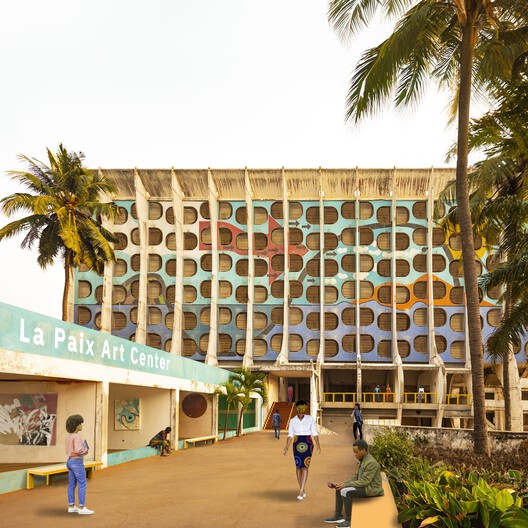
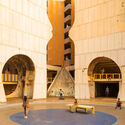
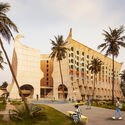
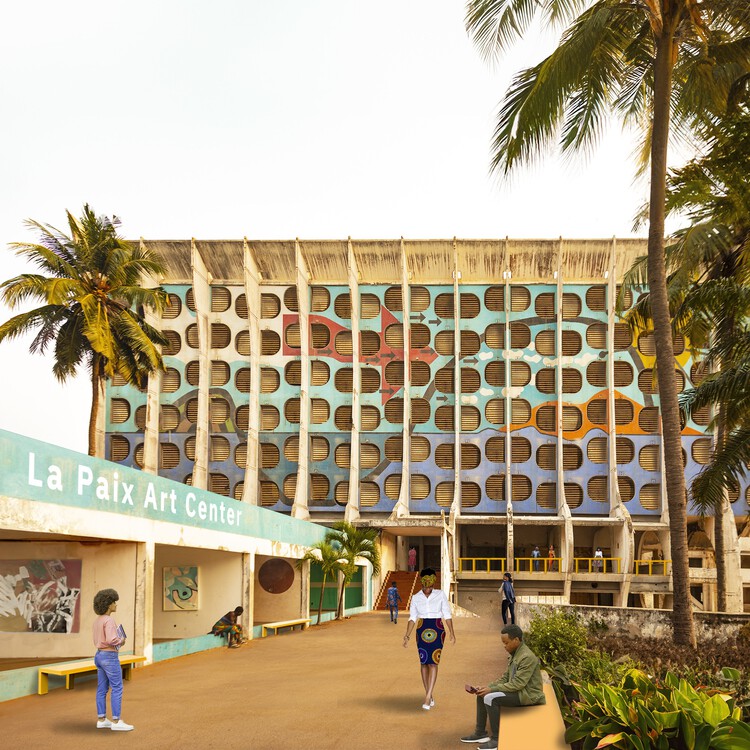
In late 2024, an event was held in the grounds of the recently refurbished colonial-era Palais de Lomé in the capital of Togo. Students from the architecture university of Lomé were attending the first Lomé Architecture Encounters (RAL #1), curated by the transdisciplinary Studio NEiDA, and which involved lectures, film screenings, workshops, and building visits. A parallel exhibition displayed the country's most significant architecture through history. The purpose of the event was to explore the architectural heritage of Togo, and it would be the start of a journey that crosses borders, asking questions about the conservation of modern heritage. Unlike colonial buildings like the Palais de Lomé itself, which are more appreciated and readily restored, neglected modern buildings like the Hôtel de la Paix require creative, bottom-up approaches to return them to their former vitality.
Togo gained its independence from France in 1960. The Palais de Lomé was built in 1905 under the previous German colonial administration as the governor's palace, continuing this function as the presidential palace after independence, before falling into disrepair in the 1990s. A painstaking five-year restoration process led by Segond-Guyon Architectes brought the palace back to life, and it opened in 2019, offering an exhibition space, a restaurant, and educational spaces. It was clearly an ideal site for RAL#1, being a recently conserved heritage building.


