What makes a building worth preserving? Age is the most common answer, but not always the best one. A building from the 1950s or 70s may carry as much historical significance as a medieval cathedral; it simply demands a different framework, one that weighs political context, cultural meaning, and architectural innovation over the mere passage of time. This is especially true for modernist architecture across the so-called Global South, where the movement took on unique forms of expression.
It is precisely this conversation that ArchDaily and World Monuments Fund are now opening together. WMF brings on-the-ground conservation expertise across the world, and ArchDaily brings the editorial capacity to contextualize that work and connect it to a global audience. The goal is to do both at once: preserve places and tell their stories, shaping how modernist heritage is understood far beyond the field of preservation itself.
To mark the start of this collaboration, we spoke with Javier Ors Ausín, Director of Thematic Programs at World Monuments Fund, and Christele Harrouk, Editor-in-Chief of ArchDaily. Read the full conversation below.
Related Article
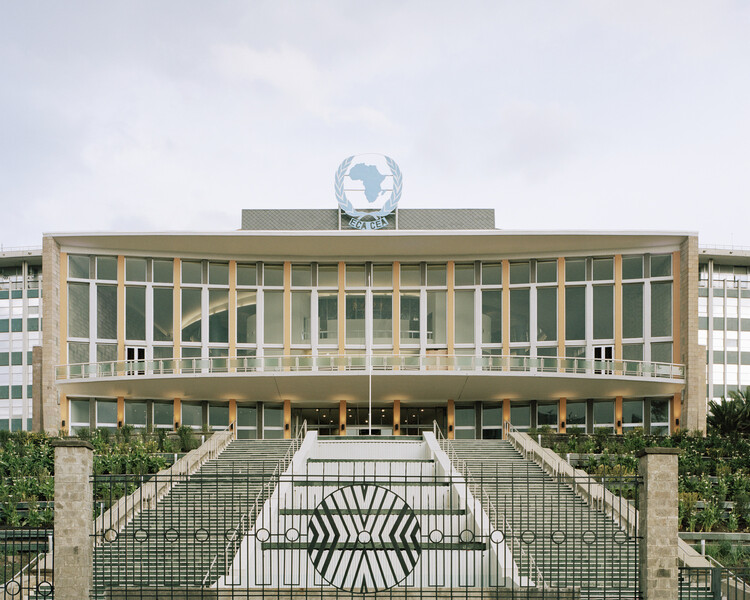
United Nations’ Africa Hall Restoration in Ethiopia Receives 2026 World Monuments Fund/Knoll Modernism Prize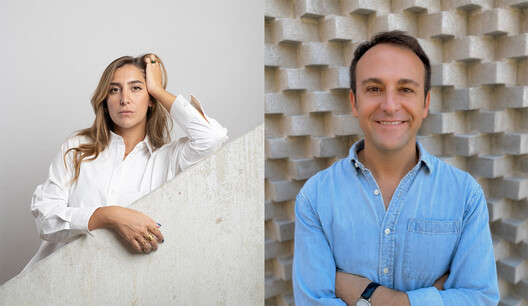
Romullo Baratto [Managing Editor]: What does this partnership mean to World Monuments Fund and ArchDaily? Javier, would you like to begin?
Javier Ors Ausín: This is a new partnership for World Monuments Fund, and we are genuinely exploring what it means as it unfolds. But what strikes me as particularly special is how complementary our roles are. At WMF, we engage directly with sites, implementing conservation projects, advocacy initiatives, and documentation of heritage preservation work. We work with governments, communities, local NGOs, and professionals in the field. Having ArchDaily as a partner — a platform that communicates architecture to an international audience through a broad network — means we can both engage with sites and preserve them, while also explaining why this work matters and why these places are globally relevant. The ability to pursue preservation and narration in parallel is very valuable.
Christele Harrouk: I really like what Javier said about this complementarity. We represent two complementary forms of responsibility toward architecture. WMF works with communities, places, and physical conservation. We work on narration, giving the world access to these stories. What makes this collaboration so meaningful is that it brings both capacities together and makes the work accessible to a global audience, while also contributing to safeguarding it.
Because talking about something, documenting it, is itself a form of conservation. For ArchDaily, this partnership is particularly significant because we see ourselves as active participants in architectural culture. This collaboration gives us a chance to reflect that — to help shape what conservation is, what heritage is, and how people understand and engage with it.
JOA: Exactly. By doing the editorial and communication work, you are making communication itself part of the conservation process. In the conservation field, we sometimes limit ourselves to before-and-after photographs. But communicating the work from beginning to end is also conservation; it builds visibility, awareness, and ultimately support for the initiatives and field projects we undertake.
RB: Christele, why World Monuments Fund, and why now?
CH: ArchDaily has been around for 18 years. Almost two decades documenting and doing more than what a platform typically does. Our role goes beyond documentation and narration: we contextualize, connect information, make knowledge available, and we explain why it matters. Over those years, heritage has been a recurring thread. So when WMF came along, the timing felt exactly right — we had, in some sense, built everything toward it. They brought conservation knowledge, on-the-ground expertise, and active projects. We brought our editorial team, our global audience, and our archive. It was the best timing.
JOA: When I joined World Monuments Fund as an architect, almost ten years ago, I realized how segregated our field was. A lot of experts working in heritage preservation were not really part of the broader architectural conversations and discourses. Partnering with ArchDaily is a way of reconnecting the specialized discussions happening in the heritage field with the broader architectural discourse. There is no better partner for that: ArchDaily is genuinely shaping and actively participating in the global architectural conversation.
CH: I'd add one more dimension: what World Monuments Fund and ArchDaily together make possible is not just ensuring that the architecture that matters survives physically, but that the knowledge around it also survives. That, for me, is the core of this partnership.
RB: One of the defining features of the partnership is the focus on modernist architecture, with a particular emphasis on the Global South. Javier, why do you think that is the right frame for this collaboration?
JOA: What initially drew me to the field of preservation and documentation of modernist architecture was the opportunity to tell a larger story about 20th-century architecture. In my experience as an architect, the established narrative around modern architecture heritage remains quite narrow, focused primarily on the United States and Europe.
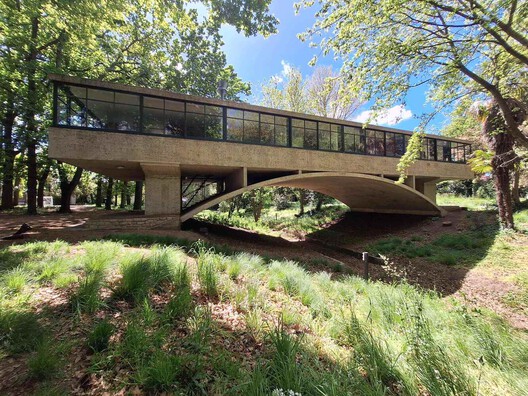
But modernism was not confined to those regions. It took different shapes in South America, Sub-Saharan Africa, South Asia, and the Middle East, adapting to different climates, materials, and technologies. Since joining WMF, part of my mission has been to tell that larger story through our sites and projects.
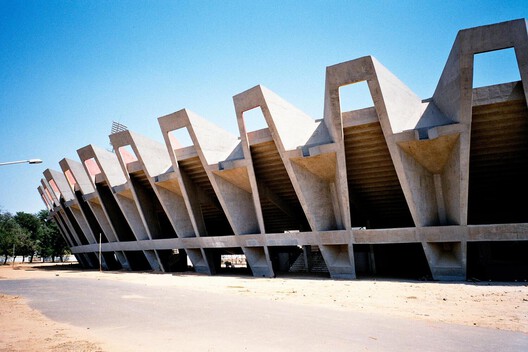
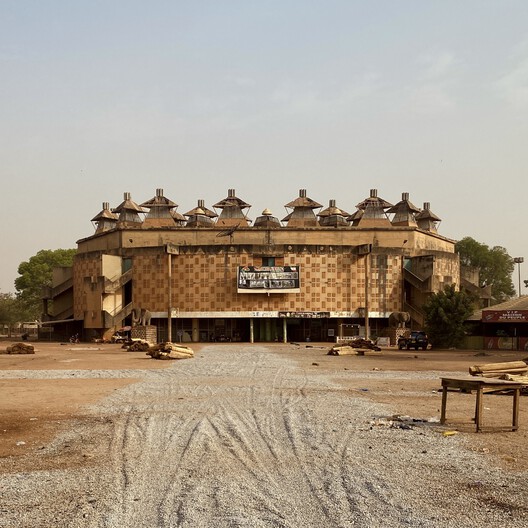
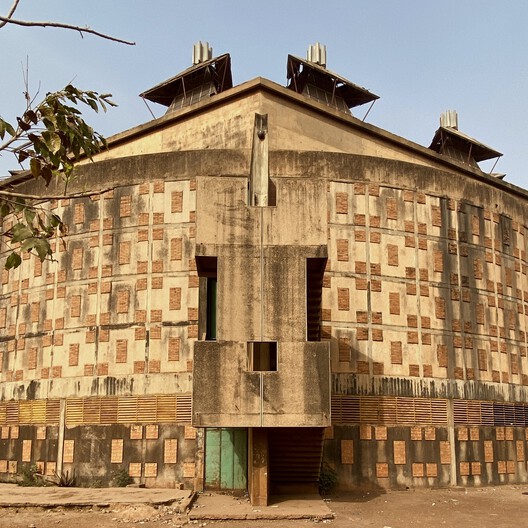
To give concrete examples: we developed a conservation management plan for the Sardar Vallabhbhai Patel Stadium in India, a brutalist structure designed by Charles Correa and Mahendra Raj during the post-independence period. The urgency was heightened after the demolition of modernist sites in India, but also because these buildings are aging and require expert conservation management. In Africa, we are currently working in Ouagadougou, Burkina Faso, in a remarkable and relatively unknown example of modernist architecture deeply grounded in the local climate and vernacular construction traditions, using earthen materials and natural ventilation. The partnership with ArchDaily is an opportunity to expand that global narrative while also addressing the real technical challenges these buildings face.
RB: Christele, you've mentioned ArchDaily's coverage on heritage throughout the years. How do you see WMF's work fitting into ArchDaily's agenda?
CH: Being global is foundational for ArchDaily, but what we've been working toward is becoming more intentional about what "global" actually means. It is not just about publishing projects from many countries. It is about understanding architecture in its full context: shaped by climate, culture, politics, materials, economies, communities, and histories. That applies directly to modernism. We have long questioned the idea that architectural movements radiated, unchanged, from one center outward. We know that they were transformed, became hybrid, were appropriated, and challenged. Africa, the Middle East, Latin America, Central Asia — all of these places produced distinct histories of modernism.
When we choose what to publish and how to contextualize it, we are participating in the construction of architectural history. We are adjusting the narrative. That has been central to our work for at least a decade.
With WMF, we have the opportunity to take it further: to discover more places, more contexts, more projects, and to push forward the idea that preserving modernism also means shaping what becomes visible and what is taken as a reference.
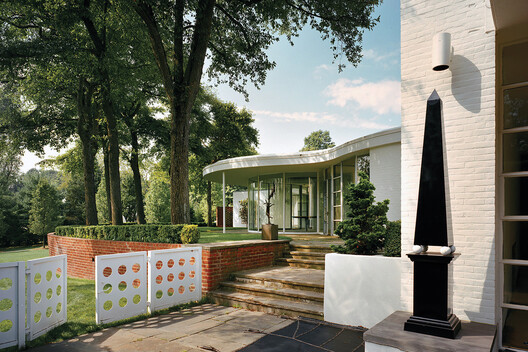
RB: When we think about heritage, modernist buildings don't enjoy the same prestige as, for instance, a Gothic cathedral or a medieval town when it comes to preservation. Javier, how do you build the case for this kind of work? How do you approach governments, communities, and other stakeholders?
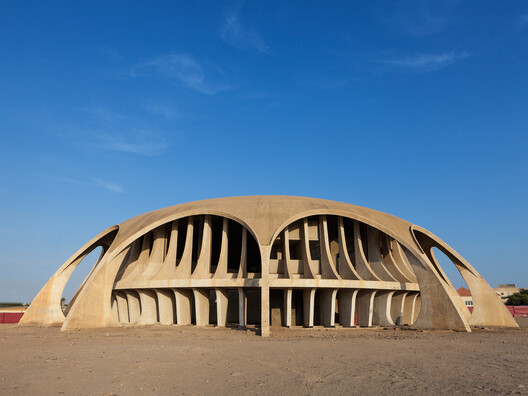
JOA: That is the fundamental challenge. A medieval building, a castle, a cathedral, a mosque, is automatically recognized as a place of historical value and significance. A building from the 1950s, 60s, or 70s has to constantly prove that it embodies heritage values, historical significance, and architectural innovation. That is frustrating for anyone working in this field, but it is also the central challenge we all contribute to overcoming.
Our approach is grounded in interpretation and education. We work to show — to communities living near these sites, to governments, to the broader public — that the value of these places is not based solely on age, but on the political and historical context in which they were built and the architectural innovation they represent.
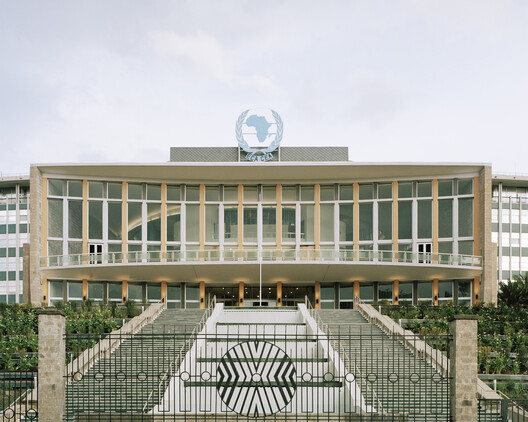
Take the United Nations' Africa Hall in Addis Ababa, recognized by WMF in 2026 for its restoration project. Its importance is not that it dates to a particular decade. It lies in what it represents: decolonization, institution-building in Africa, the creation of a continental platform for political discussion. The fact that it was built in Ethiopia — the only African country never colonized — is, itself, a layer of historical significance. There is also remarkable architectural innovation in its use of reinforced concrete. Much remains to be done in terms of interpretation and knowledge dissemination to overcome the perception that these buildings are too recent to be preserved. In fact, many of them are approaching a century of age. Interpretation, ultimately, is where the opportunity lies.
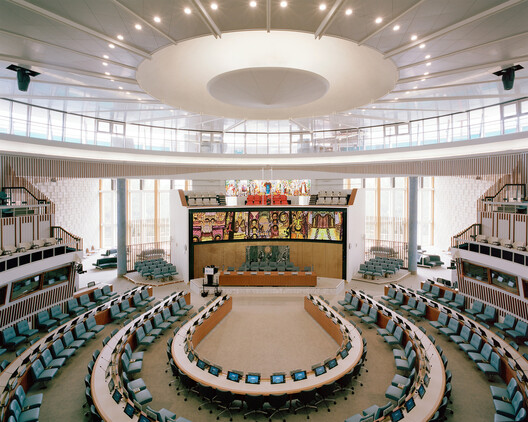
RB: Many of the cities where these buildings are located are facing rapid urban growth. How do conservation and urban development coexist? How do we balance civic interest, land value, and the preservation of buildings that, as you've said, are not measured by age alone?
CH: I don't see them as opposing forces. We tend to forget that cities are living systems, and that heritage, the buildings we're discussing, was always part of those systems and evolved alongside them. The question we should always be asking is how we allow our cities to change, to grow, to evolve, while also understanding what they already carry culturally, socially, and in terms of heritage value.
And not just what that value is, but who gets to define it. That question is crucial. WMF is doing important work in redefining which buildings can be considered to carry value, not necessarily because of specific construction techniques, but because of their place in the urban fabric, the stories they hold, and how they are embedded in the lives of the communities around them. In rapidly changing cities, the communities living in these places must be part of determining their future. Heritage cannot be defined only institutionally or architecturally, without understanding its collective and lived value. It is not a question of conservation or urban growth — it is a question of how our cities can evolve with a greater awareness of what already exists, what we need to preserve, and what we might lose in the process.
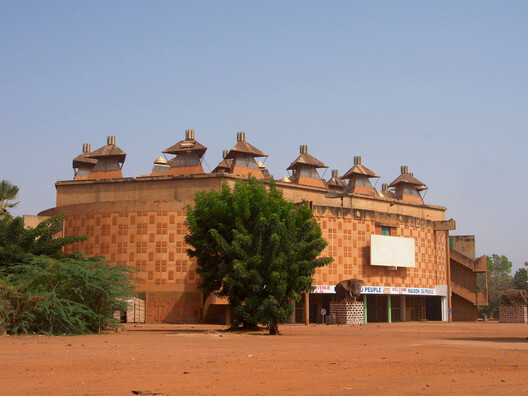
JOA: I agree entirely. People tend to see conservation and development as opposing forces, but they shouldn't. The question for me is: how can architecture and conservation serve as vehicles for informing the decisions we make about how our cities grow? Cities have always changed — and modernism itself was a force of urban transformation in the 20th century. So the question is not conservation versus growth, but rather how heritage preservation can provide the tools to ensure that when cities change, those decisions are informed by community needs, by the cultural and historical places embedded in the built environment.
Conservation, rather than being imposed, should be one more tool in the toolkit — helping us make informed, sustainable decisions. I prefer to see it as a tool to manage change, not resist it.
This is also why I advocate for architects to be more actively involved in government, in institutions like WMF, in platforms like ArchDaily — because that is where these ideas need to be present to have real impact.
CH: That's something I say constantly: architects need to be in decision-making positions, especially in politics. Change happens faster, and with greater impact, when it comes from there.
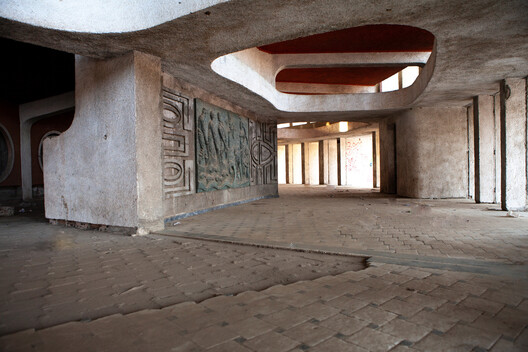
RB: What will ArchDaily readers find on the platform that they wouldn't without this partnership?
CH: We're digitizing WMF's projects and creating an online library that will document them through project features, narratives, interviews, stories, and accounts of specific conservation processes. What we want to do is turn WMF's archive into active architectural knowledge and situate it within ArchDaily's ecosystem of architectural knowledge.
JOA: This is a genuine opportunity for WMF to present our work in a completely different way: to tell a comprehensive story about what we've been doing in modern architecture since the early 2000s, not just through completed projects but through new material we'll generate together. We will speak about projects currently underway and begin working on a new project next year, with ArchDaily as a partner. What excites me most is the idea that the editorial angle can be an integrated part of our work — not something that happens after the fact, but something that runs alongside the conservation process from the beginning.
RB: Could you tell us more about this new project for next year?
CH: This is the most exciting part. We always say architecture matters, and this is our chance to demonstrate that in practice. This will be the first ArchDaily-supported conservation project, and the financial commitment matters because it marks a shift from documenting value to actively supporting it.
We'll follow the process from beginning to end, showcasing how the project evolves — the stages, the phases, the story behind it. It's an educational process in itself. It extends what ArchDaily is already doing; I see it as the next step, a natural continuation.
JOA: Absolutely. This is really an opportunity to go beyond a conventional communications partnership and put everything we've been discussing into real practice. WMF is constantly engaging new sites, and the scope varies enormously — from physical restoration to conservation planning, adaptive reuse, advocacy campaigns for sites under threat. We don't yet know exactly what shape this project will take with ArchDaily, but that's also part of the excitement: exploring how editorial and communications expertise can be integrated into a project from the very beginning. Knowledge sharing and visibility are also forms of advocacy — and many of these sites urgently need that.
CH: What I find most compelling is using an individual site as a reference point for larger questions. How has modernism been transformed across continents? How have political and social histories shaped architecture, and how do they continue to shape it today? How have communities changed these buildings, and what can those transformations teach us? How might all of this change our contemporary practice? Using this site to answer larger questions — about heritage, about modernism, about the world, about the narratives we tell — that is what this is really about.