1. ArchDaily
  2. South America

South America: The Latest Architecture and News

Regenerative Salt Landscapes: An ArchDaily Student Project Awards Winner Rethinking Extraction in Argentina

Subscriber Access | 

When people think of Argentina, they often picture landmarks like the Obelisk of Buenos Aires. Yet the country spans over 2,780,400 km², making it one of the largest in South America and home to a wide range of landscapes and realities that frequently go unnoticed. In fact, the province of Jujuy in northern Argentina lies within the Lithium Triangle: a high-altitude region shared with Bolivia and Chile that contains roughly 54% of the world's lithium reserves. Within this territory sits the Olaroz Salt Flat, a site where today two competing dynamics converge: the expansion of industrial lithium extraction and the preservation of ancestral culture and lands inhabited by Kolla and Atacama communities, creating a clash of high-capacity industrial extraction and traditional, low-impact agrarian practices.

In light of this problem, one of the winning teams of the ArchDaily Student Project Awards, made up of Ezequiel Lopez, Maria Victoria Echegaray, and Agustina Durandez, decided to look into the issue. This was done as part of their thesis project for the Bachelor's in Architecture program at the National University of Córdoba. Their work stems from an interest in engaging with territories that remain peripheral to architectural discourse, using the thesis as an opportunity for sustained, in-depth research. This allowed them to formulate informed design responses grounded in both territorial and socio-economic realities. Rejecting the binary between extraction and preservation, the project approaches the territory as a system where both can coexist through spatial and technical mediation.

Regenerative Salt Landscapes: An ArchDaily Student Project Awards Winner Rethinking Extraction in Argentina - Image 1 of 4Regenerative Salt Landscapes: An ArchDaily Student Project Awards Winner Rethinking Extraction in Argentina - Image 2 of 4Regenerative Salt Landscapes: An ArchDaily Student Project Awards Winner Rethinking Extraction in Argentina - Image 3 of 4Regenerative Salt Landscapes: An ArchDaily Student Project Awards Winner Rethinking Extraction in Argentina - Image 4 of 4Regenerative Salt Landscapes: An ArchDaily Student Project Awards Winner Rethinking Extraction in Argentina - More Images+ 13

Public Space in Use: Región Austral and the Architecture of Everyday Life

Architecture is often evaluated through what gets built. But in many cases, what matters happens after: how spaces are used, adapted, and made part of everyday life. For Región Austral, winner of ArchDaily's 2025 Next Practices Awards, this is where design really begins. Working across many contexts, the practice approaches public space not as a single object, but as something that needs to be activated, negotiated, and sustained over time. Their projects focus less on defining form and more on creating the conditions for use, with design serving as the starting point.
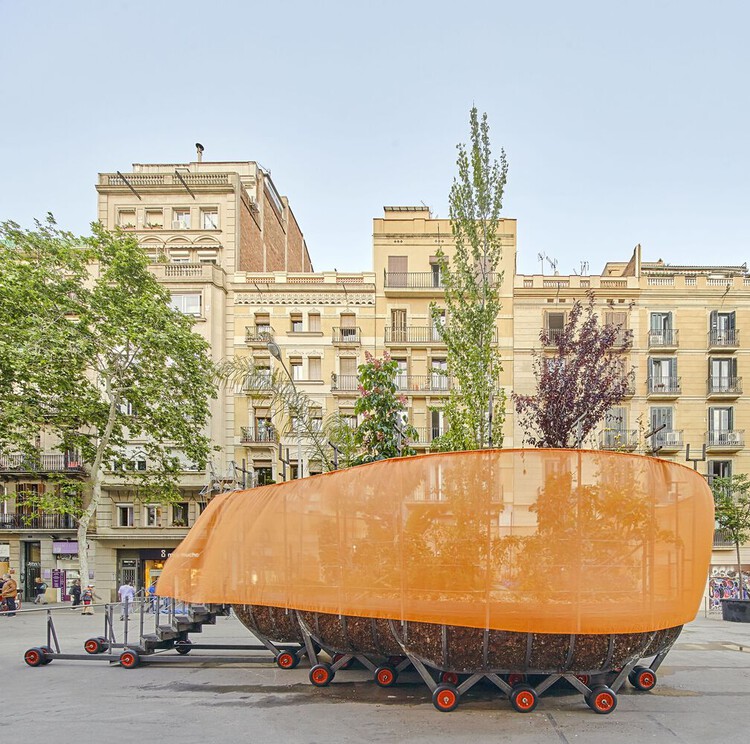
This approach can be seen across different contexts, from the Olympic Neighborhood Square to the Playón de Chacarita network. While each project responds to a specific situation, both explore how public space can support collective life in areas marked by fragmentation and inequality. Instead of following a predefined approach, the work adapts to different urban conditions, using participation and incremental strategies to shape how spaces function over time.

Public Space in Use: Región Austral and the Architecture of Everyday Life - Image 1 of 4Public Space in Use: Región Austral and the Architecture of Everyday Life - Featured ImagePublic Space in Use: Región Austral and the Architecture of Everyday Life - Image 2 of 4Public Space in Use: Región Austral and the Architecture of Everyday Life - Image 3 of 4Public Space in Use: Región Austral and the Architecture of Everyday Life - More Images+ 14

Kengo Kuma & Associates Unveils Its First Project in Ecuador with Qapital Tower

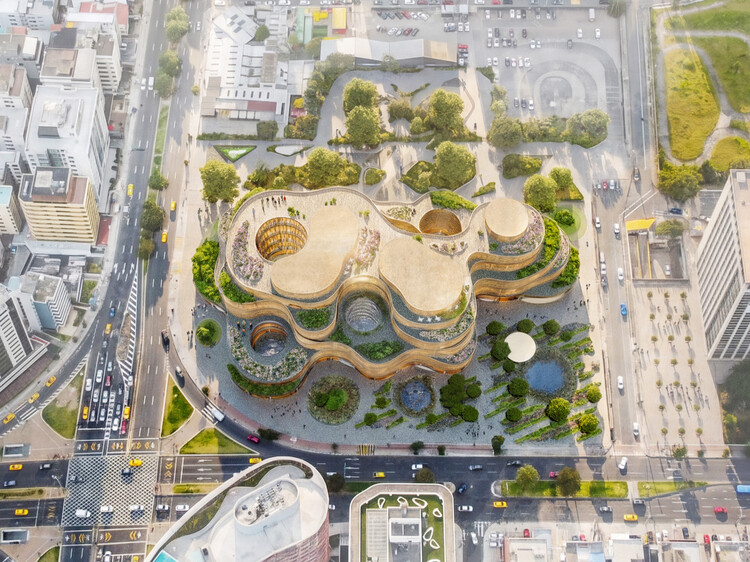
Kengo Kuma & Associates has unveiled plans for Qapital, a 32-story mixed-use tower set to rise in Quito, Ecuador, in collaboration with local developer Uribe Schwarzkopf. Scheduled for completion in 2029, the project marks Japanese architect Kengo Kuma's first work in the country, extending the studio's international portfolio into the South American context. Located opposite La Carolina Park in Quito's central business district, the 125.8-meter tower introduces a vertically organized program that brings together residential, commercial, and shared amenities.

Kengo Kuma & Associates Unveils Its First Project in Ecuador with Qapital Tower - Image 1 of 4Kengo Kuma & Associates Unveils Its First Project in Ecuador with Qapital Tower - Image 2 of 4Kengo Kuma & Associates Unveils Its First Project in Ecuador with Qapital Tower - Image 3 of 4Kengo Kuma & Associates Unveils Its First Project in Ecuador with Qapital Tower - Image 4 of 4Kengo Kuma & Associates Unveils Its First Project in Ecuador with Qapital Tower - More Images+ 5

Contemporary Ecuadorian Architecture: Connecting Materials, Environment, and Culture

Subscriber Access | 

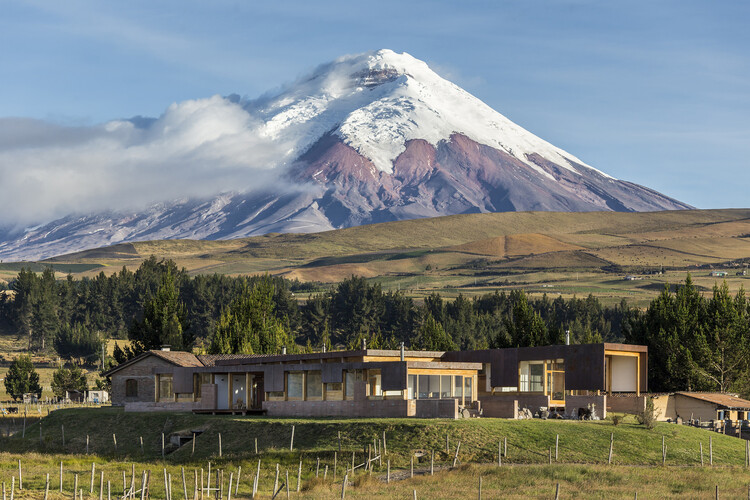
Ecuador's territory embraces a remarkable diversity of landscapes, ranging from the Pacific Coast to the peaks of the Andes, the vast expanse of the Amazon rainforest, and the volcanic Galápagos Islands. Each region of the country presents its own distinctive characteristics, reflected in its varied environmental, cultural, and social contexts. While Latin American architecture is rooted in rich ancestral traditions, native construction techniques, and local materials, contemporary Ecuadorian architecture expresses an evolving identity that blends these elements with actual demands. Tradition and innovation, local resources and modern techniques, along with social responsibility and aesthetics, interact with the natural environment, urban conditions, and social contexts.

Contemporary Ecuadorian Architecture: Connecting Materials, Environment, and Culture - Image 1 of 4Contemporary Ecuadorian Architecture: Connecting Materials, Environment, and Culture - Image 2 of 4Contemporary Ecuadorian Architecture: Connecting Materials, Environment, and Culture - Image 3 of 4Contemporary Ecuadorian Architecture: Connecting Materials, Environment, and Culture - Image 4 of 4Contemporary Ecuadorian Architecture: Connecting Materials, Environment, and Culture - More Images+ 20

40+ Contemporary Architectural Works Across Ecuador Captured by Francesco Russo and Luca Piffaretti

Between 2023 and 2024, photographers Francesco Russo and Luca Piffaretti documented architecture and landscapes across Ecuador's coast, the Andes Mountains, the Amazon rainforest, the Galápagos Islands, and cities such as Quito, Guayaquil, and Cuenca. The photographic documentation explores Ecuador's evolving identity through its contemporary architecture, examining how it engages with natural surroundings, urban conditions, and social contexts. The resulting archive includes more than 40 projects by renowned local practices such as Al Borde, Durán & Hermida, Emilio López, José María Sáez, La Cabina de la Curiosidad, MCM+A, Natura Futura, and RAMA Estudio, among many others. The selection demonstrates how architecture can create high-quality spaces that respond to contemporary demands for sustainability and environmental responsibility by combining creativity and technology with renewable resources, despite ongoing economic, climatic, and political challenges in Latin America and beyond.

 40+ Contemporary Architectural Works Across Ecuador Captured by Francesco Russo and Luca Piffaretti - Image 1 of 4 40+ Contemporary Architectural Works Across Ecuador Captured by Francesco Russo and Luca Piffaretti - Image 2 of 4 40+ Contemporary Architectural Works Across Ecuador Captured by Francesco Russo and Luca Piffaretti - Image 3 of 4 40+ Contemporary Architectural Works Across Ecuador Captured by Francesco Russo and Luca Piffaretti - Image 4 of 4 40+ Contemporary Architectural Works Across Ecuador Captured by Francesco Russo and Luca Piffaretti - More Images+ 35

Energy Landscapes: How Infrastructure Reshapes Territory in South America

Some of the most significant transformations of South American landscapes have been produced not by cities, but by large infrastructures built to extract and distribute natural resources. Mining operations, energy systems, and transport networks have connected remote landscapes to broader economic structures while transforming rural territories and urban settlements throughout the continent. These infrastructures do not simply occupy space; they reorganize it. They have not only supported economic growth but also reconfigured territories in ways that continue to generate political, environmental, and social debate across the continent. From this perspective, territories can be understood not as fixed geographic areas but as socio-ecological systems shaped by cultural, environmental, and political relations, a point emphasized by anthropologist Arturo Escobar in his work on territorial thinking in Latin America.

Energy Landscapes: How Infrastructure Reshapes Territory in South America - Image 1 of 4Energy Landscapes: How Infrastructure Reshapes Territory in South America - Image 2 of 4Energy Landscapes: How Infrastructure Reshapes Territory in South America - Image 3 of 4Energy Landscapes: How Infrastructure Reshapes Territory in South America - Image 4 of 4Energy Landscapes: How Infrastructure Reshapes Territory in South America - More Images+ 7

Legacy in Matter: Material Traditions in South American Architecture

Across South America, architecture endures through the materials it uses, those that persist over time. Bamboo, brick, wood, and concrete appear across regions, connecting climate, labor, and culture in ways that ensure their persistence through generations. Their continuity does not depend solely on preservation or heritage. It depends on use.

In this context, cultural memory does not reside primarily in monuments or images, but in practice. It survives in repeated gestures: laying bricks, tying guadua joints, assembling wood frames, casting slabs that anticipate another floor. These actions are transmitted less through manuals than through participation. Over time, they form systems of knowledge embedded in habit and necessity. Materials endure not because they symbolize the past, but because they continue to work.
Legacy in Matter: Material Traditions in South American Architecture - Image 1 of 4Legacy in Matter: Material Traditions in South American Architecture - Image 2 of 4Legacy in Matter: Material Traditions in South American Architecture - Image 3 of 4Legacy in Matter: Material Traditions in South American Architecture - Image 4 of 4Legacy in Matter: Material Traditions in South American Architecture - More Images+ 12

Environmental Comfort as an Interior Condition in South American Architecture

Subscriber Access | 

Across South America, environmental comfort is understood not as an interior condition, but as one shaped through space. In regions marked by heat, humidity, intense sunlight, and seasonal variation, architecture has long relied on spatial decisions to moderate climate and support daily life. Comfort emerges from how interiors are opened, shaded, ventilated, and inhabited over time.

Rather than isolating interior spaces from their surroundings, many contemporary projects across the region cultivate comfort through depth, porosity, and intermediate zones. Light is filtered rather than maximized, air is guided through aligned openings and voids, and thresholds become active spaces of use rather than residual edges. These strategies do not seek uniform environmental control, but produce interiors that remain temperate, adaptable, and closely attuned to changing climatic conditions. In this context, environmental comfort becomes inseparable from spatial experience.

Environmental Comfort as an Interior Condition in South American Architecture - Image 1 of 4Environmental Comfort as an Interior Condition in South American Architecture - Image 2 of 4Environmental Comfort as an Interior Condition in South American Architecture - Image 3 of 4Environmental Comfort as an Interior Condition in South American Architecture - Image 4 of 4Environmental Comfort as an Interior Condition in South American Architecture - More Images+ 12

Community-Centered Architecture: Redefining the Role of Architects in South America

Subscriber Access | 

Across South America, architecture is increasingly being understood as a collective act. Rather than imposing external views, many studios and designers are building with and for communities, learning from their local practices, materials, and ways of inhabiting. These projects are repositioning the architect's role from an author to a facilitator, transforming design into a participatory process that centers collaboration, care, and mutual respect.

What unites these efforts is not style or scale, but a shared belief: architecture emerges from collective dialogue, not imposition. From rural Ecuador to the urban peripheries of Brazil, Colombia, and Paraguay, these projects reveal how social engagement and local making produce spaces that are sustainable not only environmentally but also socially. They respond to inequality not through top-down solutions, but through co-authorship, offering spaces that reflect the needs, knowledge, and agency of the people who use them.

Community-Centered Architecture: Redefining the Role of Architects in South America - Image 1 of 4Community-Centered Architecture: Redefining the Role of Architects in South America - Image 2 of 4Community-Centered Architecture: Redefining the Role of Architects in South America - Image 3 of 4Community-Centered Architecture: Redefining the Role of Architects in South America - Image 4 of 4Community-Centered Architecture: Redefining the Role of Architects in South America - More Images+ 15

Ammodo Architecture Awards 2025 Announces 26 Recipients for Socially and Ecologically Responsible Design

The second edition of the Ammodo Architecture Award has recognized 26 recipients for their contributions to socially and ecologically responsible design. Selected from 168 submissions spanning over 60 countries, the laureates represent a wide range of practices, from established offices to emerging collectives and community-led initiatives. Each recipient receives a grant ranging from €10,000 to €150,000 to support the continued development of their projects. Beyond recognition and financial support, the Ammodo Architecture initiative also functions as a knowledge platform, connecting awardees across regions and facilitating the exchange of ideas on key themes identified by the advisory committee.

Ammodo Architecture Awards 2025 Announces 26 Recipients for Socially and Ecologically Responsible Design  - Image 1 of 4Ammodo Architecture Awards 2025 Announces 26 Recipients for Socially and Ecologically Responsible Design  - Image 2 of 4Ammodo Architecture Awards 2025 Announces 26 Recipients for Socially and Ecologically Responsible Design  - Image 3 of 4Ammodo Architecture Awards 2025 Announces 26 Recipients for Socially and Ecologically Responsible Design  - Image 4 of 4Ammodo Architecture Awards 2025 Announces 26 Recipients for Socially and Ecologically Responsible Design  - More Images+ 21

Childhood and Ancestry: What South American Indigenous Communities Can Teach Us About Environments for Children

In South American Indigenous communities, a child’s place is wherever they choose to be. Babies crawl on the earthen floor, approach the fire, investigate anthills, and experience the world with their whole bodies. They learn by feeling: discovering limits, recognizing dangers, and gathering lessons no manual could ever teach. In urban contexts, by contrast, children are often confined to spaces designed for adults, filled with rules that—though well-intentioned—tend to distance them from essential experiences. Rather than judging which model is “better,” what matters is recognizing that when cultures observe one another, there is always room for learning.

From an architectural perspective, this childhood with little freedom of time and movement challenges us to rethink how we shape daily environments. Why restrict spontaneous exploration to controlled settings? Why create physical and symbolic barriers between children and the natural world? And, above all, how might contemporary architecture break away from this paradigm and, inspired by Indigenous childhoods, design environments that restore to children their wild, curious, and complete dimension?

Childhood and Ancestry: What South American Indigenous Communities Can Teach Us About Environments for Children - Image 1 of 4Childhood and Ancestry: What South American Indigenous Communities Can Teach Us About Environments for Children - Image 2 of 4Childhood and Ancestry: What South American Indigenous Communities Can Teach Us About Environments for Children - Image 3 of 4Childhood and Ancestry: What South American Indigenous Communities Can Teach Us About Environments for Children - Image 4 of 4Childhood and Ancestry: What South American Indigenous Communities Can Teach Us About Environments for Children - More Images+ 15

Lessons from Roberto Burle Marx: Designing Resilient and Evolving Urban Landscapes

Roberto Burle Marx is often celebrated as a pioneering figure in landscape architecture, particularly for his innovative approach to integrating nature within urban environments. His work, characterized by a deep respect for native flora and a commitment to ecological balance, offers valuable lessons for contemporary landscape architects. At a time when climate change and biodiversity loss are pressing global concerns, revisiting Burle Marx's principles provides insight into creating urban spaces that are not only functional and aesthetically pleasing but also resilient and sustainable.

From the 1930s to the 1990s, Burle Marx's work anticipated many of today's concerns about sustainability and urban well-being. Long before terms like "sustainable design" or "green infrastructure" became commonplace, Burle Marx was already advocating for the use of native plants, recognizing their role in creating self-sustaining ecosystems that required minimal intervention. His projects often transformed neglected urban areas into vibrant, ecologically balanced spaces that not only improved the environment but also enhanced the quality of life for city dwellers.

Lessons from Roberto Burle Marx: Designing Resilient and Evolving Urban Landscapes - Image 26 of 4Lessons from Roberto Burle Marx: Designing Resilient and Evolving Urban Landscapes - Image 1 of 4Lessons from Roberto Burle Marx: Designing Resilient and Evolving Urban Landscapes - Image 3 of 4Lessons from Roberto Burle Marx: Designing Resilient and Evolving Urban Landscapes - Image 7 of 4Lessons from Roberto Burle Marx: Designing Resilient and Evolving Urban Landscapes - More Images+ 23

The New Stone Age: 12 Contemporary Houses in Latin America and the Diversity of Their Natural Stones

Subscriber Access | 

Latin American architecture is rich and diverse. This is reflected in the various stones used across different regions over the centuries. These materials highlight the varied geology of Latin America and illustrate how local cultures have adapted their construction methods to natural conditions, resulting in unique and meaningful architecture. In contemporary architecture, stone aligns with sustainability principles due to its durability, low carbon footprint, and local availability. Additionally, stone's aesthetic appeal enhances the creation of timeless spaces that strengthen the connection with nature and the surrounding landscape.

The New Stone Age: 12 Contemporary Houses in Latin America and the Diversity of Their Natural Stones - Image 1 of 4The New Stone Age: 12 Contemporary Houses in Latin America and the Diversity of Their Natural Stones - Image 2 of 4The New Stone Age: 12 Contemporary Houses in Latin America and the Diversity of Their Natural Stones - Image 3 of 4The New Stone Age: 12 Contemporary Houses in Latin America and the Diversity of Their Natural Stones - Image 4 of 4The New Stone Age: 12 Contemporary Houses in Latin America and the Diversity of Their Natural Stones - More Images+ 12

Building Stronger Communities: The Role of Regional Identity in 7 Multi-Purpose Projects

A region's identity is deeply tied to its community spaces. These spaces—whether parks, public squares, or community centers—reflect their users' culture, history, and values. They don't just preserve regional identity; they actively shape how communities engage with their environment, fostering a dynamic relationship between place and people. Community spaces are more than just physical locations; they are vital social hubs that foster engagement, cultural expression, and a sense of belonging. These spaces symbolize a shared identity and purpose.

Building Stronger Communities: The Role of Regional Identity in 7 Multi-Purpose Projects - Image 1 of 4Building Stronger Communities: The Role of Regional Identity in 7 Multi-Purpose Projects - Image 10 of 4Building Stronger Communities: The Role of Regional Identity in 7 Multi-Purpose Projects - Image 22 of 4Building Stronger Communities: The Role of Regional Identity in 7 Multi-Purpose Projects - Image 3 of 4Building Stronger Communities: The Role of Regional Identity in 7 Multi-Purpose Projects - More Images+ 20

What Can African Cities Learn from South America?

Subscriber Access | 

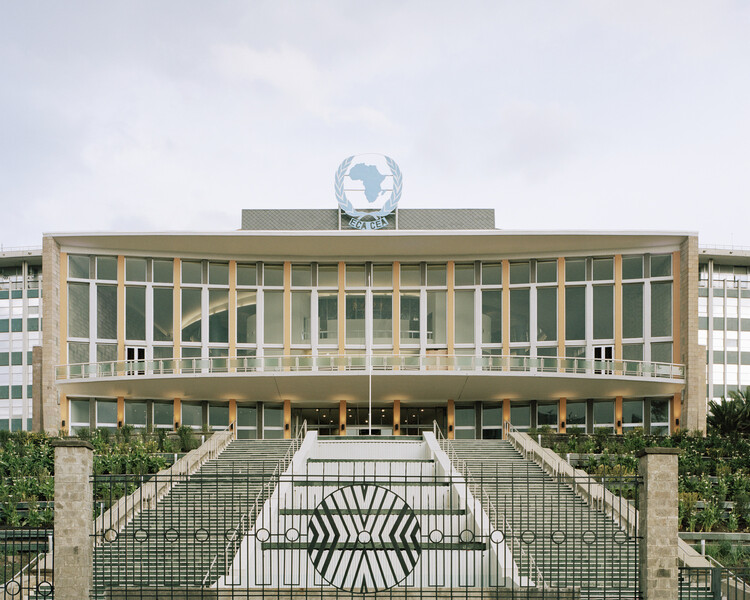
Recent news headlines from the African continent show a variety of urgent issues affecting urban centers: severe flooding threatens Kenya's capital, Nairobi; the light rail system in Addis Ababa, Ethiopia, is faltering after a successful start. Meanwhile, in Egypt's capital, Cairo, new infrastructure and housing expenditures proved too steep and necessitated a government bailout. African cities face a plethora of problems but they also hold the potential to improve countless lives. As South America shares stark similarities in its history with that of Africa, it could provide both a point of reference and a positive example for tackling these concerns at an urban level.

Houses in Peru: 5 Projects That Use Cement Blocks in Their Construction

Subscriber Access | 

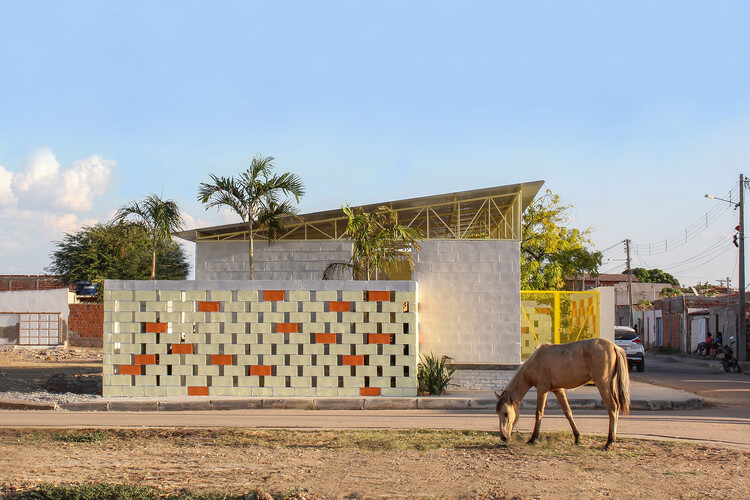
Beyond being a prefabricated material currently produced in large quantities, the use of concrete blocks in architecture continues to evolve to meet the demands and needs of contemporary societies that are constantly changing. Whether in interior or exterior spaces, their use can align with concepts of circular economy, resource efficiency, sustainability, and more, with the goal of creating habitable spaces while also understanding their constructive advantages and disadvantages, their expressive and aesthetic qualities, and so on.

Julio Vargas Neumann on the Future of Materials: 'Today's Reinforced Concrete will Disappear'

Subscriber Access | 

With an air of simplicity and wisdom, engineer Julio Vargas Neumann welcomes us. His two dogs accompany us as we descend after the necessary ascent to enter, and we are also accompanied by the stone walls defining the lot. We sit down and begin - or continue - the interview and conversation regarding the value of 'shicras', local materials, and earth construction. We also discuss criticisms of cement, aluminum, and steel, as well as perspectives on the future of materials in Peru and the world. Likewise, we delve into the long-neglected and recurrent rural problem in South America, discussing the inexorable need to change paradigms and priorities.

Julio Vargas Neumann on the Future of Materials: 'Today's Reinforced Concrete will Disappear' - Image 1 of 4Julio Vargas Neumann on the Future of Materials: 'Today's Reinforced Concrete will Disappear' - Image 2 of 4Julio Vargas Neumann on the Future of Materials: 'Today's Reinforced Concrete will Disappear' - Image 3 of 4Julio Vargas Neumann on the Future of Materials: 'Today's Reinforced Concrete will Disappear' - Image 4 of 4Julio Vargas Neumann on the Future of Materials: 'Today's Reinforced Concrete will Disappear' - More Images+ 23

On the Hottest Month on Record and How Cities Are Mitigating the Effects of Rising Temperatures

The NASA Goddard Institute for Space Studies (GISS) in New York has just announced that the month of July 2023 was hotter than any other month ever recorded in terms of global temperature. Spiking to 1.12 degrees Celsius above the 20th-century July average, this month was warmer than any month since 1850 when the NOAA database began. The climate crisis at large has made heat waves more prevalent, putting millions of people in danger. These growing effects of the climate crisis also severely affect cities worldwide, posing a threat to urban inhabitants globally.

On the Hottest Month on Record and How Cities Are Mitigating the Effects of Rising Temperatures - Image 1 of 4On the Hottest Month on Record and How Cities Are Mitigating the Effects of Rising Temperatures - Featured ImageOn the Hottest Month on Record and How Cities Are Mitigating the Effects of Rising Temperatures - Image 2 of 4On the Hottest Month on Record and How Cities Are Mitigating the Effects of Rising Temperatures - Image 3 of 4On the Hottest Month on Record and How Cities Are Mitigating the Effects of Rising Temperatures - More Images+ 1