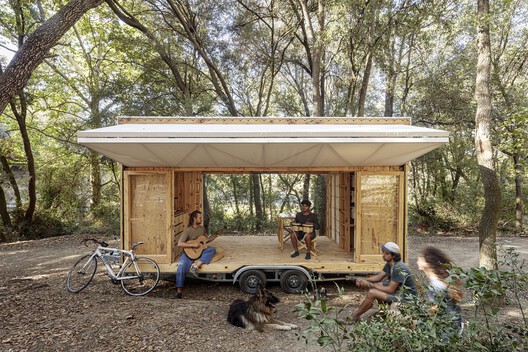
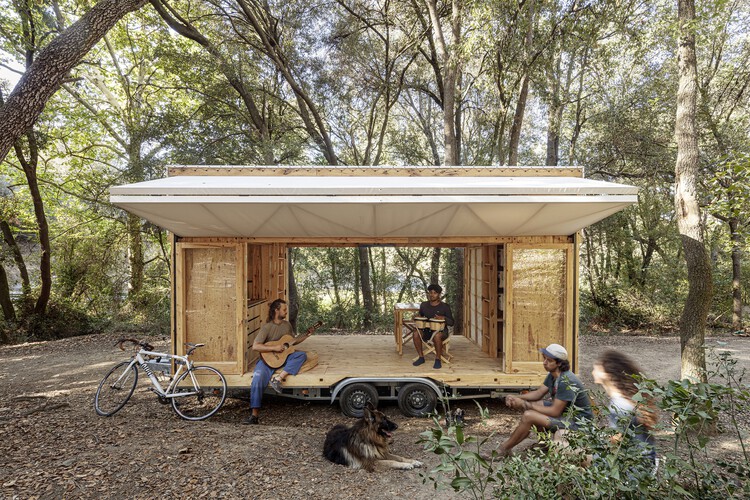
Few conditions have shaped contemporary architectural discourse as profoundly as uncertainty. Across international biennials, exhibitions, and forums, architecture increasingly imagines its relationship to the world through flexibility, reversibility, and responsiveness—qualities intended to engage with climate emergencies, political instability, and unprecedented human mobility. Buildings are designed to transform, infrastructures to evolve, and cities to accommodate conditions that appear increasingly unpredictable. This emphasis on agility has expanded the discipline's capacity to engage with environmental change, offering valuable strategies for a world in constant transformation.
Yet this evolution points to a deeper shift in how architecture mediates the human condition. Architecture has long functioned as a mechanism for existential orientation—a way for human consciousness to carve an intelligible coordinate out of an indifferent cosmos, anchoring memory and identity to a fixed point. Within much contemporary architectural discourse, uncertainty increasingly appears less as an external condition to be mitigated than as the horizon from which architectural thinking begins. Spatial experience is increasingly shaped by environments designed around the persistence of flux, where static reference points give way to conditions of continuous transformation.
The Rise of Adaptive Thinking
Related Article
How Architecture Responds to DisplacementsAs adaptability becomes a dominant design paradigm, conditions requiring flexible responses can begin to appear less as specific circumstances than as the general horizon of inhabitation. Mobility, however, is not a singular experience. Voluntary movement, forced displacement, seasonal migration, and housing precarity emerge from profoundly different political, economic, and environmental realities. Reading them through a single conceptual framework risks flattening distinctions that remain fundamental to how people actually inhabit the world.
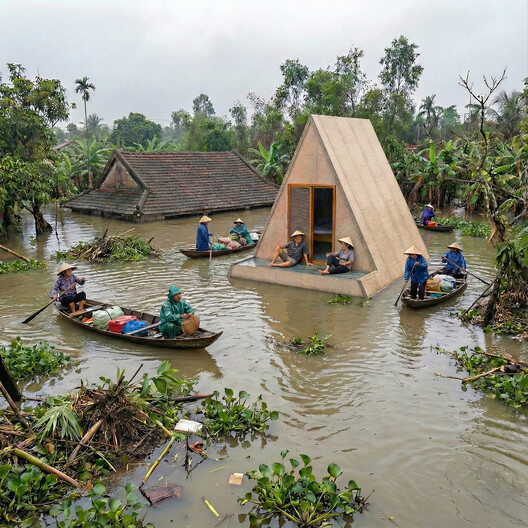
If uncertainty defines the operational terrain of contemporary architecture, the question is no longer simply how buildings adapt to change, but what forms of continuity remain necessary for places to take root over time. Continuity does not depend on permanence or resistance to flux. It describes the capacity for relationships between bodies, memory, material environments, and time to evolve without being continually severed. As architecture grows ever more proficient at designing for instability, a crucial question remains: can the discipline engage a volatile world without adopting instability as the sole horizon of human belonging?
Territorial Anchors and Belonging
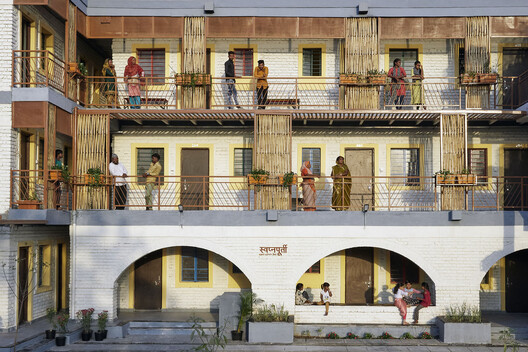
Architecture acquires meaning when its spatial conditions allow people to establish a relationship with their surroundings. The relationship between interior and exterior, degrees of privacy, circulation, and the possibility of transforming a space create references through which people organize everyday life and develop bonds with the places they inhabit. The spaces we inhabit are not neutral settings. Through use, perception, and memory, certain places acquire meanings that exceed their initial configuration. They become part of individual and collective experiences, shaped by the ways people occupy, transform, and relate to them.
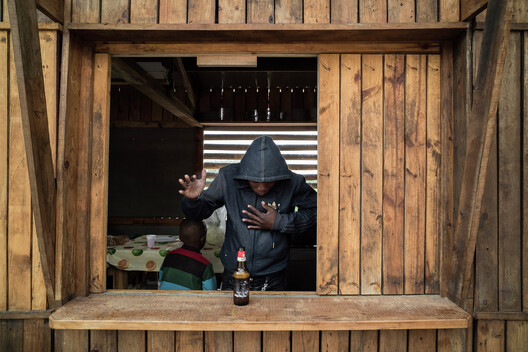
Yet the value of permanence does not lie simply in the physical duration of a structure. A building may remain for decades without generating a meaningful relationship with those who inhabit it, while a temporary space may produce strong community bonds. The architectural question is not how long an object remains, but what conditions allow a space to be appropriated, transformed, and recognized as one's own. This relationship between space and belonging also has a territorial dimension. As Edward Casey argues, human beings do not inhabit abstract spaces, but places shaped by relationships between body, memory, and environment. Architecture participates in this transformation by establishing a physical connection between a construction and the geography where it exists.
Beyond its structural role, the foundation connects a building to a specific territory, allowing architecture to participate in a continuity of time and place. Its value lies not only in supporting a structure, but in enabling a more stable relationship between those who inhabit a space and the place they inhabit.
Temporary Systems and the Suspended Place
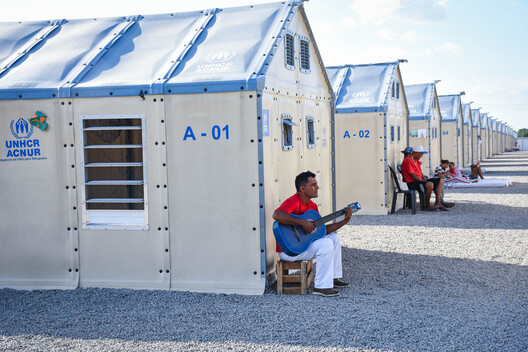
The capacity to adapt is one of contemporary architecture's most vital tools. Flexibility allows spaces to respond to social, environmental, and programmatic shifts, expanding their transformative potential. However, this condition takes on a vastly different meaning when flexibility is no longer an agency chosen by inhabitants, but a circumstance imposed by external forces. Reversible systems, modular shelters, and rapidly deployable structures offer essential responses to acute crisis scenarios, yet as forced displacement becomes increasingly extended, the operational reality of these spaces shifts from immediate relief to long-term habitation.
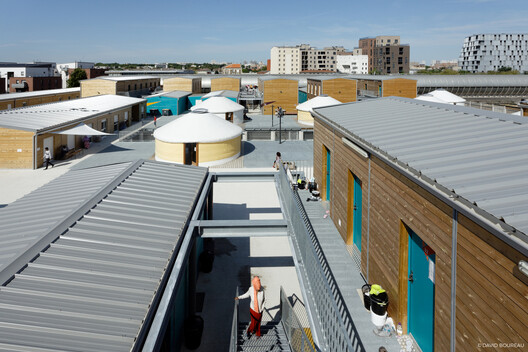
According to UNHCR, around 70% of refugees live in protracted displacement situations, where displacement extends beyond five years without immediate prospects of durable solutions. What begins as a temporary response can therefore become the setting of everyday life, transforming provisional environments into long-term places of inhabitation. Bans on permanent materials, land modification, or structural expansion can reduce inhabitants' ability to adapt spaces to their evolving needs and establish deeper roots within the territory. Temporariness can move beyond its role as a provisional bridge and become a prolonged state of spatial uncertainty. When people are denied the ability to alter, expand, or leave physical traces within their environment, space is prevented from becoming place.
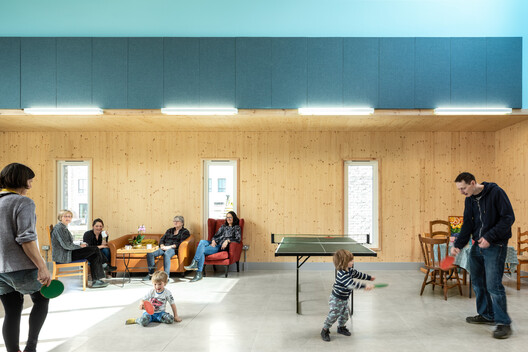
Although radically different in origin and consequence, a parallel logic can be observed across recent transformations in market-rate housing. Typologies like co-living and flex-living respond to genuine shifts in contemporary life: labor mobility, changing family structures, and dynamic urban routines. In specific contexts, these models offer genuine adaptability. Yet within a broader context of housing transformation, they also raise questions about the increasing normalization of residential environments organized around temporariness, flexibility, and rapid turnover. Across both contexts, architecture develops increasingly sophisticated tools to respond to mobility, while revealing broader questions about how adaptability relates to the human need to establish lasting relationships with place.
Beyond flexibility as an architectural technique lies a broader consideration: the conditions through which people establish meaningful relationships with the places they inhabit. If uncertainty has become an unavoidable horizon of contemporary life, architecture is called to reconsider how environments can accommodate transformation while sustaining the references through which memory, identity, and belonging are formed. Perhaps the question is how places can remain meaningful through change while sustaining the continuity, memory, and attachment through which human relationships with space are formed.
This article is part of the ArchDaily Topic: Architectures of Movement: Land, Borders, and the Politics of Belonging. Every month we explore a topic in-depth through articles, interviews, news, and architecture projects. We invite you to learn more about our ArchDaily Topics. And, as always, at ArchDaily we welcome the contributions of our readers; if you want to submit an article or project, contact us.