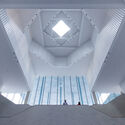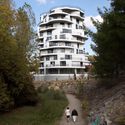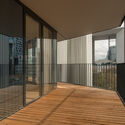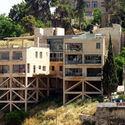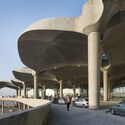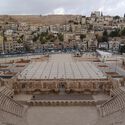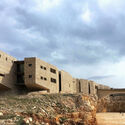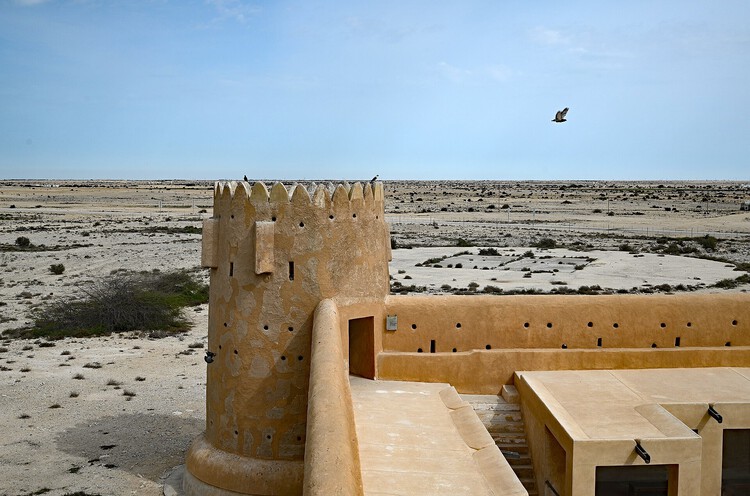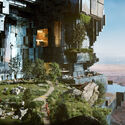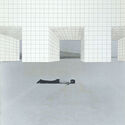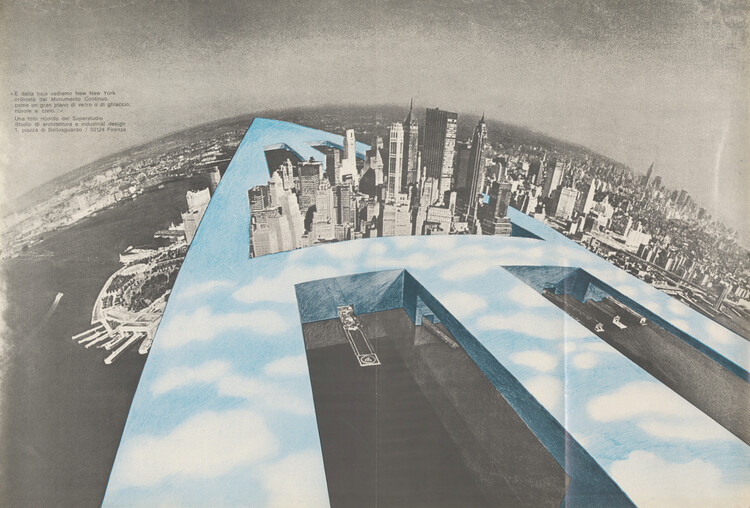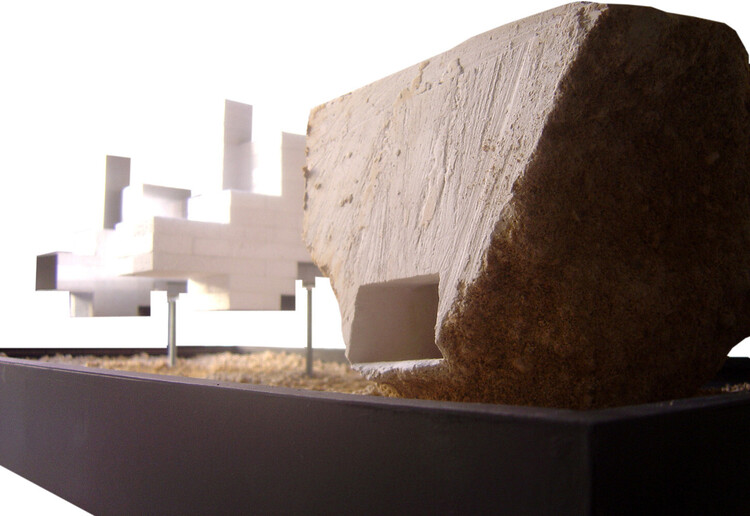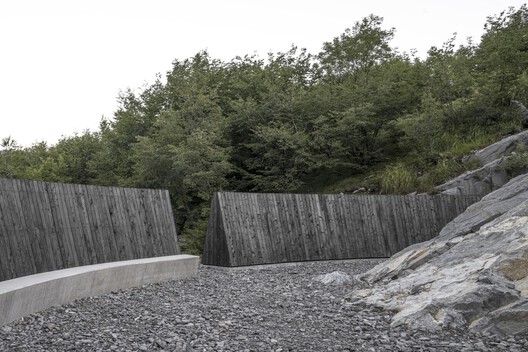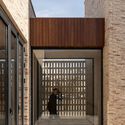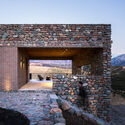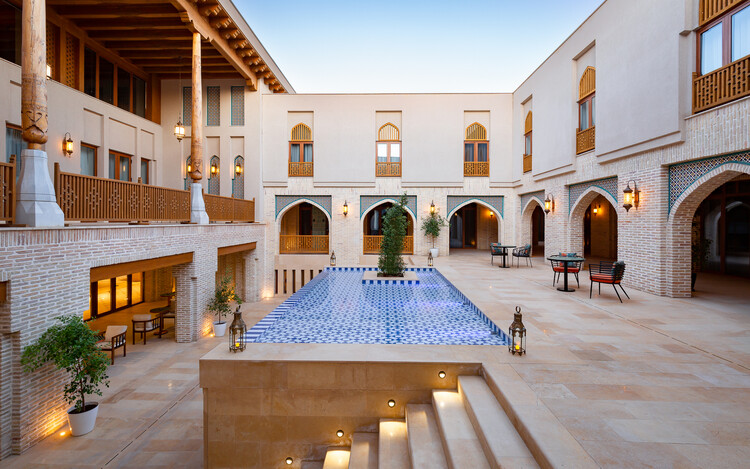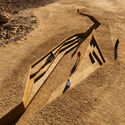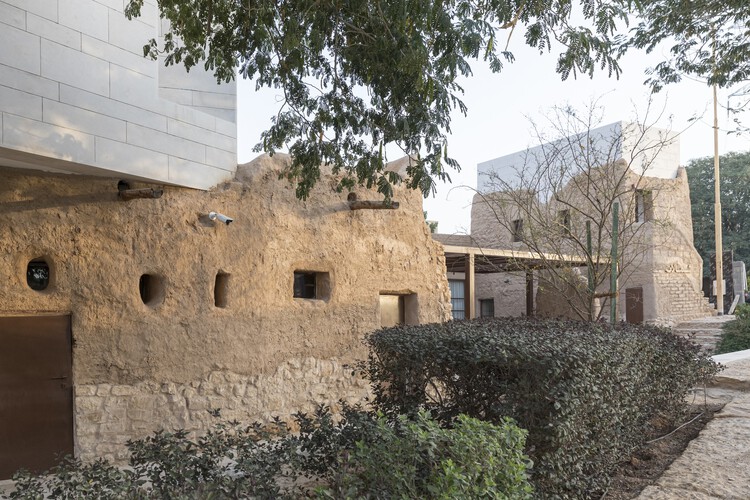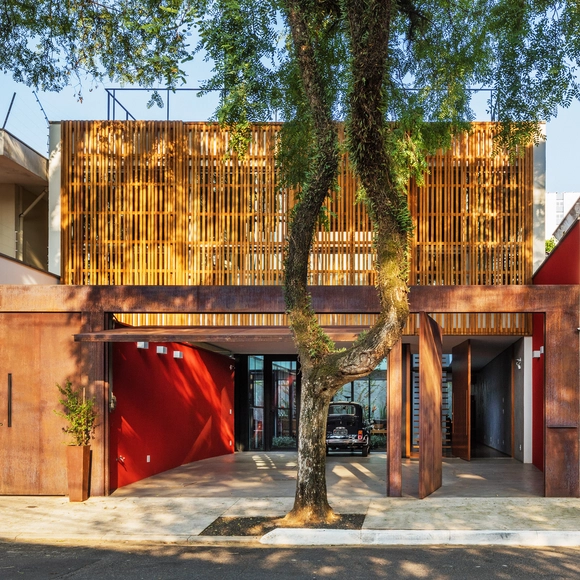
For much of the twentieth century, architectural culture was shaped by the pursuit of lightness. Steel structures and curtain walls reduced the building envelope to a thin layer separating interior from exterior, while façades became smooth, continuous surfaces where windows were cut as precise openings within an abstract plane. But for centuries, buildings were conceived as bodies of mass; walls possessed depth, windows were recessed within thick masonry, and space was often experienced as something carved from the solidity of construction. In recent years, several contemporary projects appear to revisit this older spatial logic, reintroducing thickness as an architectural condition through deep openings, monolithic volumes, and heavy envelopes.
This shift does not imply a rejection of modern construction technologies, nor does it represent a nostalgic return to historical forms. Instead, it reflects a renewed interest in the fundamental relationship between material, mass, and void. By reintroducing thickness into the architectural vocabulary, these buildings reconnect contemporary practice with long-standing traditions in which space was inseparable from the weight and depth of construction.
Copenhagen, Denmark. Image Courtesy of Lindsay Martin via Unsplash
Copenhagen is long famous as the global capital of human-scale design and livability. Today, the city has widened its focus and is an active space where mid-century Scandinavian modernism meets the modern demands of climate adaptability, material circularity, radical conservation, and neighborhood density. During the first-ever Copenhagen Architecture Biennial, in 2025, the city transformed into a global platform for dialogue under the theme "Slow Down," exploring how architecture can respond to global pressures by rethinking the pace of change. And this year's 13th edition of the 3daysofdesign Festival will explore the theme of "Make This Moment Matter", encouraging the global design community to step away from digital noise and mass production to focus on the present.
The conversion of disused religious temples through cultural programs constitutes one of the most compelling adaptive reuse strategies in contemporary urban planning. This functional compatibility seems to be rooted in the specific characteristics of churches: their central naves offer large-scale, clear floor plans and monumental cross-sections that easily accommodate the volumetric requirements of museums, theaters, or community hubs. Furthermore, the acoustic properties inherent to their vaulted ceilings, combined with intentional natural lighting filtered through stained glass windows or domes, create the spatial conditions for activities ranging from the performing arts to the exhibition of cultural artifacts. By assuming a public and cultural role, these buildings not only avoid demolition or physical abandonment but also preserve their status as urban and identity landmarks within the city fabric, revitalizing their immediate surroundings without altering their historical significance.
How can the most structured elements in architecture give rise to unplanned forms of everyday life? "Spontaneous order" describes how structured systems can generate unplanned but coherent patterns of behavior. In urban discourse, it is often used to describe cities: frameworks of streets, plots, and buildings that are designed, while everyday life is not. Movement, encounters, routines, and informal uses emerge from simple spatial rules rather than explicit programming. In cities, this is visible in how sidewalks, stations, and thresholds operate. The structure is fixed, but the social order is fluid, setting conditions for behavior rather than defining it.
A similar logic can be observed in architectural micro-infrastructures such as locker systems. Like cities, lockers rely on structured frameworks that do not prescribe how life unfolds within them. A locker system is highly controlled in architectural terms: repetitive modules, strict grids, standardized dimensions, controlled access. Yet once in use, it produces spontaneous behaviors. People pause in corridors, return at irregular times, linger near locker zones, or briefly interact with others doing the same. What appears to be a strictly infrastructural storage system begins to generate informal social and spatial behavior.
Over the years, cinema architecture has continually reinvented itself. From cinematic experiences that engage multiple senses to material technologies that reinterpret the aesthetics of past eras, the concept of the movie theater has enabled the recovery, revitalization, and renewal of numerous obsolete, ruined, or even historically protected spaces. Just as the Majestic Cinema reflects an important community function in Zanzibar, Tanzania, many twentieth-century buildings have found in adaptive reuse an opportunity to restore and preserve cultures, memories, and traditions that remain meaningful to their communities.
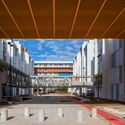
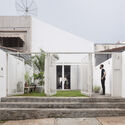
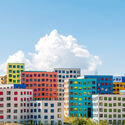
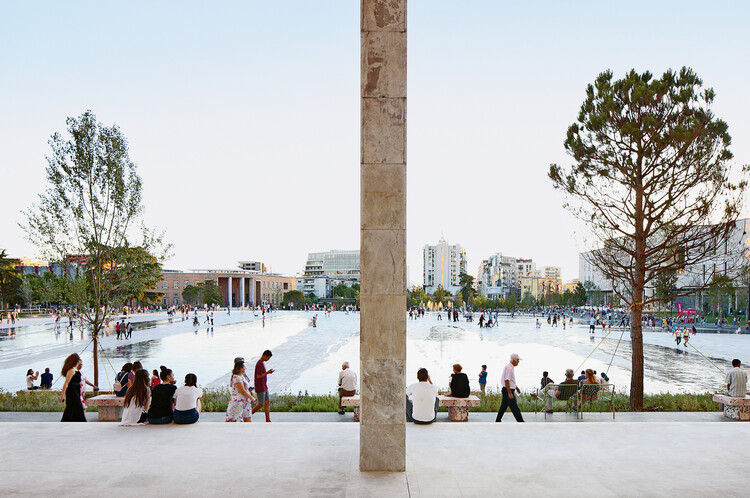
Located at the intersection of Adriatic landscapes and Balkan geopolitics, Tirana has undergone one of the most accelerated urban transformations in Europe over the last three decades. Once defined by rigid socialist planning and political isolation, the city has progressively reoriented itself through a combination of informal growth, international investment, and strategic urban interventions that seek to redefine its public image and spatial structure.
Since the early 2000s, a series of urban policies, most notably those initiated during the mayoral tenure of Edi Rama (now Albania prime minister), have promoted the use of color, public space, and architectural experimentation as tools for civic reactivation. Rather than relying solely on masterplans, Tirana's development has operated through interventions, where individual buildings and public spaces act as catalysts within a fragmented urban fabric.
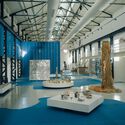
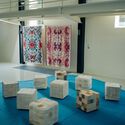
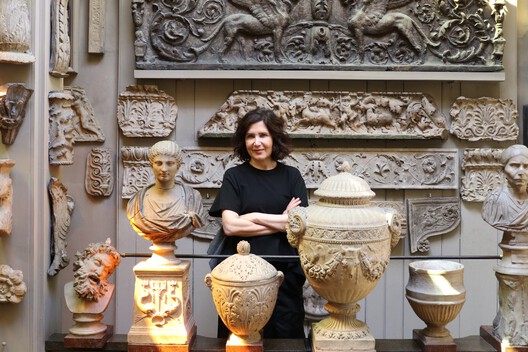
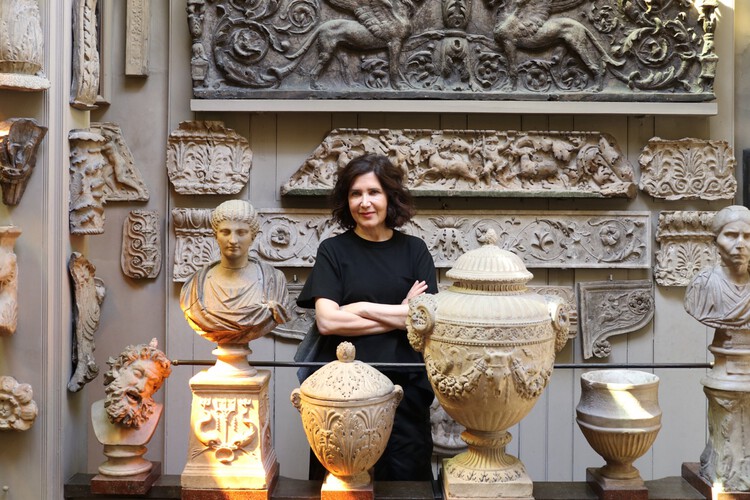
The curatorial direction reflects many of the ideas developed through the work of Amateur Architecture Studio, founded by Wang Shu and Lu Wenyu in 1997. Their projects have consistently explored the reuse of salvaged materials, regional construction techniques, and the continuity between historic and contemporary forms of building. Across both urban and rural contexts, the studio's work often emphasizes craft traditions, collective memory, and the spatial qualities embedded within everyday environments.
Mexican architecture practice LANZA atelier has unveiled new details for the 2026 Serpentine Pavilion, titled "a serpentine," which will open to the public on 6 June 2026 at Serpentine South. Designed by studio founders Isabel Abascal and Alessandro Arienzo, the project reinterprets the historic serpentine or crinkle-crankle wall through a lightweight brick structure integrated into the landscape of Hyde Park. Marking the 25th edition of the annual commission, the pavilion will remain on view through October 2026 and serve as a venue for Serpentine's public programme of performances, talks, screenings, and community events.
The 8th edition of the Tallinn Architecture Biennale 2026 (TAB 2026) has announced the winners of its Installation Programme Competition and Vision Competition, both developed within the curatorial framework titled "How Much?". Organized by the Estonian Centre for Architecture, the biennale will take place from September 9 to November 30, 2026, with its Opening Week scheduled from September 9 to 13. Curated by Stuudio TÄNA, Mark Aleksander Fischer, and Mira Samonig, TAB 2026 explores the role of money, affordability, and resource allocation in shaping architecture and the built environment, while examining how contemporary practice negotiates economic constraints and cultural value.
In 2026, Apple marked fifty years since its founding. Over the past two decades, Apple has developed a consistent architectural language that extends its brand into the built environment, transforming stores, workplaces, and public-facing spaces into active components of its identity. These environments guide movement, frame interaction, and condition the ways in which users encounter both products and the company itself.
From the handheld device to the urban interior, Apple has sought to maintain a high degree of control over form, material, and experience. Architecture becomes part of this system when the company begins to define how it is perceived and engaged with in physical space. Research on retail environments has shown how spatial layout, visibility, and circulation patterns can shape behavior and interaction, turning architecture into an interface between brand and user.
Modernism in architecture was perhaps the first truly global building design philosophy. Established at the beginning of the twentieth century, its early proponents were heavyweights from Europe, such as Le Corbusier, Walter Gropius, and Mies van der Rohe. In 1923, Le Corbusier published his seminal written work, usually translated into English as Towards a New Architecture. Newness, and a rejection of history, was one of the central tenets of modernism. This manifested itself in the use of new materials such as steel and concrete, which gave rise to an unprecedented freedom of formal expression.
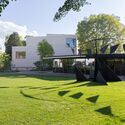
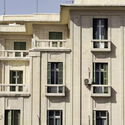
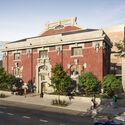
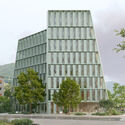
By the middle of the twentieth century, Modernism was adopted across the world by countries recovering from the Second World War and overcoming the legacy of colonialism. It became the language of reconstruction and of nation-building, reinforced by its rejection of the past. Its emphasis on technology suited this brave new world of industry, large-scale development, and new building types. Fast-forwarding to a century after its birth, Modernism itself has become the legacy. As buildings progressively become obsolete or reach the end of their design lives, there is an appreciation of the heritage value of these structures, both as designed items and as symbols of the spirit of the age in which they were built. Here, we look at five Modernist buildings from five regions going through adaptive reuse proposals. Where form once followed function, here, the function must follow the form.
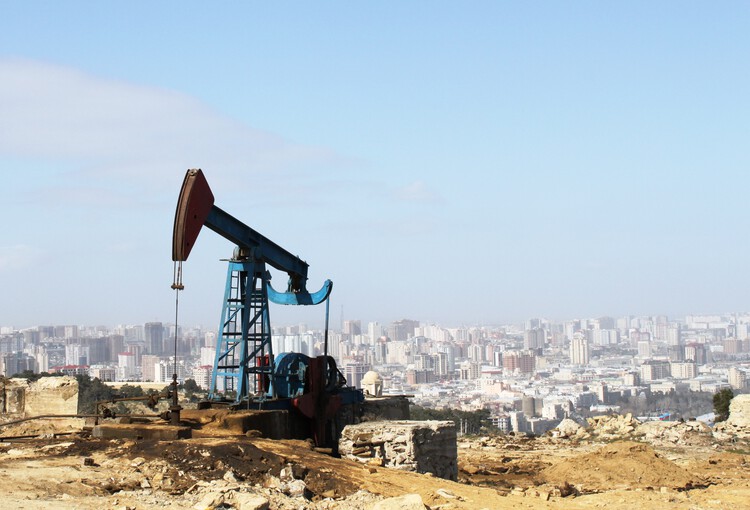
Some cities grow through continuity, others construct themselves through moments of acceleration. Baku, in Azerbaijan, seems to operate somewhere in between. Its historic core, the Icherisheher, still holds a spatial logic that resists expansion: dense, enclosed, defined by proximity and repetition. But just beyond its walls, the city begins to shift. Scale increases, distances expand, and the relationship between buildings becomes less about continuity and more about visibility.
Over the past two decades, Baku has been the site of a deliberate effort to construct an image of itself. Oil wealth provided the means, but architecture became one of its primary tools. Projects such as the Heydar Aliyev Center by Zaha Hadid Architects or the Flame Towers are symbols of this transformation, their forms designed to circulate as much through media as through the city itself. They are precise, controlled, and highly resolved objects. But they also introduce a different urban logic, one that privileges singularity over continuity and positions architecture as an agent of representation.
Blur Building, Lake Neuchatel, Yverdon-les-Bains, Switzerland, 2002. Image Courtesy of Diller Scofidio + Renfro
Architecture is traditionally chronicled through the persistence of the solid. We define the discipline by the weight of the lintel, the mass of the pier, and the resistance of the wall. Even when lightness is invoked, it is usually understood as a subtractive act, the thinning of a section or the precarious reduction of a load. Yet there is a parallel history, less visible and harder to isolate, in which the primary material of construction is not what occupies space, but what moves through it.
To treat air as a medium is to move past the binary of the envelope. The boundary between the interior and the world ceases to be a line of absolute separation and becomes, instead, a site of filtration and pressure. We begin to see the building as a thermal valve, a series of gradients where moisture, velocity, and heat are not merely background "conditions" to be mitigated by mechanical systems, but are the very substances being shaped.
Barcelona House - Strom Architects - Sliding - Helena Lee Photography
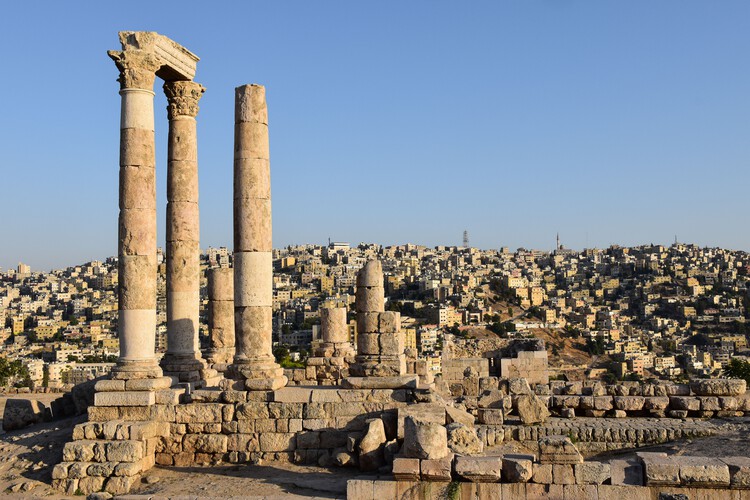
Throughout much of history, weight has been closely associated with the very idea of architecture. Vitruvius, whose notion of firmitas linked construction to stability and permanence, understood solidity as one of its fundamental qualities, and building largely meant resisting the effects of time, gravity, and natural forces. In Greek and Roman architecture, monumentality depended on the available construction systems and materials, such as stone and solid masonry, whose expression was defined by mass, thickness, and structural repetition. Columns, walls, and podiums, beyond supporting buildings, asserted their presence in the territory, communicating order, durability, and power. Architecture met the ground with weight.
Ecuador's territory embraces a remarkable diversity of landscapes, ranging from the Pacific Coast to the peaks of the Andes, the vast expanse of the Amazon rainforest, and the volcanic Galápagos Islands. Each region of the country presents its own distinctive characteristics, reflected in its varied environmental, cultural, and social contexts. While Latin American architecture is rooted in rich ancestral traditions, native construction techniques, and local materials, contemporary Ecuadorian architecture expresses an evolving identity that blends these elements with actual demands. Tradition and innovation, local resources and modern techniques, along with social responsibility and aesthetics, interact with the natural environment, urban conditions, and social contexts.
Photographer Paul Clemence documented the International Gateway Centre (IGC) in West Kowloon, a mixed-use development by Zaha Hadid Architects in Hong Kong, as it approaches completion. The photo series captures the project at a stage where its overall massing, facade systems, and spatial organization are largely realized, while final works continue across public and interior areas. Clemence's close-range views highlight the vertical shading pleats, the curvature of the glazed envelope, and the transitions between structural and environmental elements, underscoring how the building's formal language is resolved through construction.