1. ArchDaily
  2. Latin America

Latin America: The Latest Architecture and News

PREVI Lima and the Politics of Resident Authorship in Social Housing

Subscriber Access | 

Architects are accustomed to being credited for buildings long after construction ends. Names remain attached to projects through photographs, publications, and histories, often decades after the original drawings were produced. Buildings, on the other hand, rarely remain faithful to that narrative for long. Families grow, technologies change, businesses emerge, and daily life introduces demands that no plan can fully anticipate. Over time, architecture accumulates modifications, repairs, additions, and improvisations that gradually distance it from its original form.

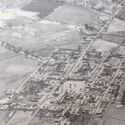
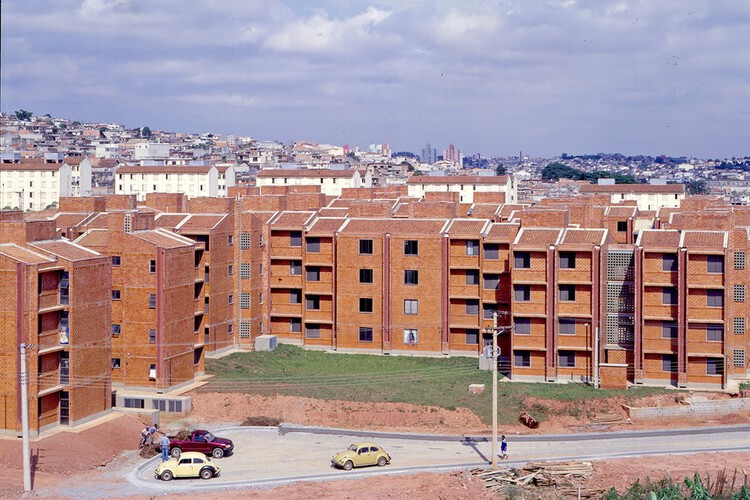
Few projects confront this question as directly as PREVI Lima. Conceived in the late 1960s as Peru's Experimental Housing Project, PREVI invited an international group of architects to develop housing prototypes capable of accommodating growth over time. The project is often remembered for its ambitious roster of designers, which included figures such as James Stirling, Aldo van Eyck, and Christopher Alexander. More than fifty years later, the neighborhood has become a record of resident decisions, revealing a form of architecture designed to remain unfinished.

PREVI Lima and the Politics of Resident Authorship in Social Housing - Image 1 of 4PREVI Lima and the Politics of Resident Authorship in Social Housing - Image 2 of 4PREVI Lima and the Politics of Resident Authorship in Social Housing - Image 3 of 4PREVI Lima and the Politics of Resident Authorship in Social Housing - Image 4 of 4PREVI Lima and the Politics of Resident Authorship in Social Housing - More Images+ 14

Designed to Repeat, Forced to Adapt: The Parallel Architecture of Socialist Housing

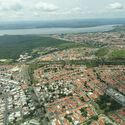
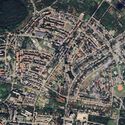
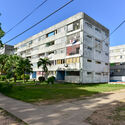
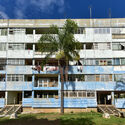
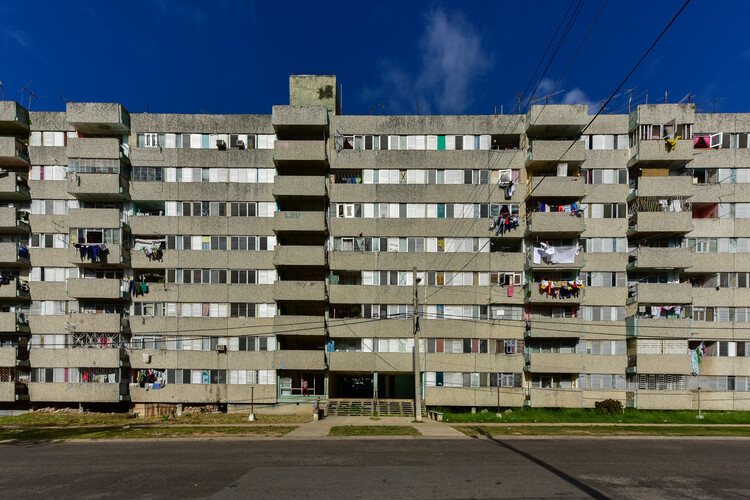
A housing block in New Belgrade appears orderly from a distance. Concrete slabs repeat with disciplined consistency, windows align into measured grids, and balconies stack with the confidence of a system certain of itself. However, proximity changes the reading. One balcony is enclosed in aluminum glazing, another softened with improvised shading. Insulation thickens part of a façade while laundry frames another edge like an accidental elevation study. The district still reads as planned, though occupation has made its order less uniform. Within that order, repetition has gradually been rewritten through occupation.

Designed to Repeat, Forced to Adapt: The Parallel Architecture of Socialist Housing - Image 1 of 4Designed to Repeat, Forced to Adapt: The Parallel Architecture of Socialist Housing - Image 2 of 4Designed to Repeat, Forced to Adapt: The Parallel Architecture of Socialist Housing - Image 3 of 4Designed to Repeat, Forced to Adapt: The Parallel Architecture of Socialist Housing - Image 4 of 4Designed to Repeat, Forced to Adapt: The Parallel Architecture of Socialist Housing - More Images+ 10

Brasília and Chandigarh: Two Modernist Utopias an Ocean Apart

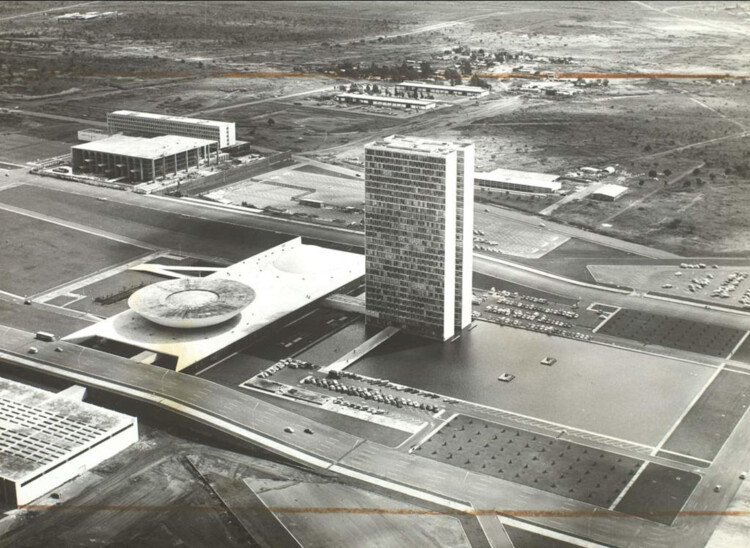
Between the 1950s and 1960s, two cities were built that would leave a lasting mark on the history of architecture and urbanism. Born from a shared vision yet separated by more than 14,000 kilometers, Brasília in Brazil and Chandigarh in India were both planned and constructed from scratch, deeply shaped by modernist principles.

Emerging during a period of profound political and social transformation, when many nations sought to redefine their capitals as symbols of progress, both cities assumed a strategic role. Through their architectural language, they reinforced ideological and national narratives closely tied to state power.

These were cities conceived in the abstract, guided by a utopian vision. They were intended to be avant-garde urban centers, free from the deficiencies that plagued mid-twentieth-century cities, embodying aesthetic principles aligned with progressive political ideals and embracing new technologies—most notably the automobile.

Yet this promise of the future also generated significant challenges. While these difficulties undoubtedly reflect the social and economic realities of their respective countries, they were also shaped by a modernist vision that is increasingly being reassessed today.

Brasília and Chandigarh: Two Modernist Utopias an Ocean Apart - Image 1 of 4Brasília and Chandigarh: Two Modernist Utopias an Ocean Apart - Image 2 of 4Brasília and Chandigarh: Two Modernist Utopias an Ocean Apart - Image 3 of 4Brasília and Chandigarh: Two Modernist Utopias an Ocean Apart - Image 4 of 4Brasília and Chandigarh: Two Modernist Utopias an Ocean Apart - More Images+ 19

AD Classics: Palmas 555 / Sordo Madaleno Arquitectos

Ciudad de México, Mexico

Palmas 555 is a building that stands out in the urban landscape of Mexico City due to its special volumetry and innovative design. This corporate office building was designed and constructed by Juan Sordo Madaleno together with José Adolfo Wiechers and José Ignacio de Abiega as Associate Architects in 1975.

AD Classics: Palmas 555 / Sordo Madaleno Arquitectos - Commercial ArchitectureAD Classics: Palmas 555 / Sordo Madaleno Arquitectos - Commercial ArchitectureAD Classics: Palmas 555 / Sordo Madaleno Arquitectos - Commercial ArchitectureAD Classics: Palmas 555 / Sordo Madaleno Arquitectos - Commercial ArchitectureAD Classics: Palmas 555 / Sordo Madaleno Arquitectos - More Images+ 1

Reading the Territory: The Landscapes of Estudio Ome

Based in Mexico City, Estudio Ome, founded by Susana Rojas Saviñón and Hortense Blanchard, is an architectural and landscape practice working across forests, volcanic terrains, urban fragments, and former industrial sites. Winner of the ArchDaily 2025 Next Practices Awards, the studio develops projects through sustained observation of ecological and territorial conditions, where design decisions arise directly from the behavior of soil, water, vegetation, and ground.

Each project begins with repeated encounters. The terrain is first approached through walking and prolonged observation, letting drainage patterns, erosion, and seasonal shifts become legible before any formal measurement occurs. These visits form the basis for interpreting both visible and subterranean layers—hydrology and historical transformations that continue to exert force on the surface.

Reading the Territory: The Landscapes of Estudio Ome - Image 1 of 4Reading the Territory: The Landscapes of Estudio Ome - Image 2 of 4Reading the Territory: The Landscapes of Estudio Ome - Image 3 of 4Reading the Territory: The Landscapes of Estudio Ome - Image 4 of 4Reading the Territory: The Landscapes of Estudio Ome - More Images+ 31

Beyond the Shell: Félix Candela’s Palacio de los Deportes for the 1968 Mexico Olympics

When Mexico City hosted the Olympics in 1968, it was the first time the Games had been awarded to a Latin American country as well as the first time for a Spanish-speaking nation to host them. This made the games a good opportunity to project Mexico and its culture internationally, thus prompting the government to constitute an organizing committee with prominent local talent. They appointed Pedro Ramírez Vázquez as its president, a Mexican architect who held significant influence over the state's mid-century building program. His approach was explicit: architecture as a synthesis of international modernist technique with Pre-Columbian references and local material culture. Under his direction, the committee would oversee the construction and adaptation of venues distributed across the southern districts of Mexico City, nearly all designed and built by local architects, engineers, and technicians.
Beyond the Shell: Félix Candela’s Palacio de los Deportes for the 1968 Mexico Olympics - Image 1 of 4Beyond the Shell: Félix Candela’s Palacio de los Deportes for the 1968 Mexico Olympics - Image 2 of 4Beyond the Shell: Félix Candela’s Palacio de los Deportes for the 1968 Mexico Olympics - Image 3 of 4Beyond the Shell: Félix Candela’s Palacio de los Deportes for the 1968 Mexico Olympics - Image 4 of 4Beyond the Shell: Félix Candela’s Palacio de los Deportes for the 1968 Mexico Olympics - More Images+ 7

Climate and Collective Use: Architectural Permeability in Latin America

Architecture is often understood as a matter of enclosure. Walls define space, separating interior from exterior and establishing clear limits. Yet across many projects in Latin America, this distinction becomes less precise. Rather than operating as closed objects, buildings often remain open, allowing air, light, and movement to pass through them.

This condition is tied to more than form. Across the region, architecture has long responded to climates marked by heat, humidity, strong solar exposure, and seasonal rainfall, as well as to building cultures shaped by adaptation, collective labor, and direct engagement with the environment. In these contexts, fully sealed interiors are not always the most effective response. Space is often organized through shade, ventilation, and intermediate zones that regulate rather than isolate.

Climate and Collective Use: Architectural Permeability in Latin America - Image 1 of 4Climate and Collective Use: Architectural Permeability in Latin America - Image 2 of 4Climate and Collective Use: Architectural Permeability in Latin America - Image 3 of 4Climate and Collective Use: Architectural Permeability in Latin America - Image 4 of 4Climate and Collective Use: Architectural Permeability in Latin America - More Images+ 8

Public Space in Use: Región Austral and the Architecture of Everyday Life

Architecture is often evaluated through what gets built. But in many cases, what matters happens after: how spaces are used, adapted, and made part of everyday life. For Región Austral, winner of ArchDaily's 2025 Next Practices Awards, this is where design really begins. Working across many contexts, the practice approaches public space not as a single object, but as something that needs to be activated, negotiated, and sustained over time. Their projects focus less on defining form and more on creating the conditions for use, with design serving as the starting point.

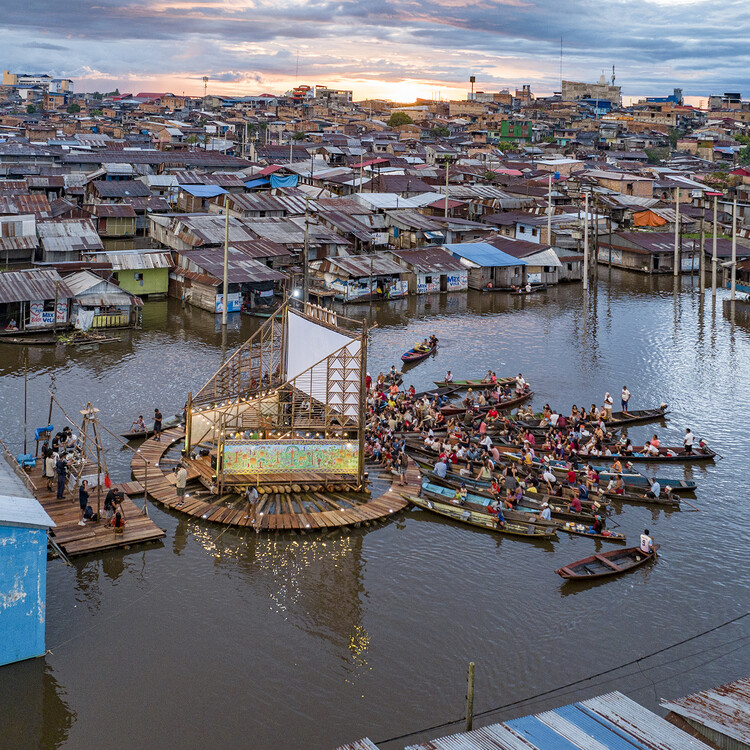
This approach can be seen across different contexts, from the Olympic Neighborhood Square to the Playón de Chacarita network. While each project responds to a specific situation, both explore how public space can support collective life in areas marked by fragmentation and inequality. Instead of following a predefined approach, the work adapts to different urban conditions, using participation and incremental strategies to shape how spaces function over time.

Public Space in Use: Región Austral and the Architecture of Everyday Life - Image 1 of 4Public Space in Use: Región Austral and the Architecture of Everyday Life - Featured ImagePublic Space in Use: Región Austral and the Architecture of Everyday Life - Image 2 of 4Public Space in Use: Región Austral and the Architecture of Everyday Life - Image 3 of 4Public Space in Use: Región Austral and the Architecture of Everyday Life - More Images+ 14

Reclaiming the Street: Alejandra Ferrera on Architecture and Urban Life in Honduras

Subscriber Access | 

Honduras is the second-largest country in Central America, both in territory and population. Today, its urban fabric remains heavily influenced by modernist principles from the 1970s that prioritised high-speed arterial corridors and automobile-dependent "point-to-point" mobility. In addition, the country faced many challenges regarding public safety during the 2010s, which contributed to creating an urban space characterised by blind facades, high perimeter walls, and gated enclosures designed to isolate the interior from the public realm.

We had the opportunity to talk to Alejandra Ferrera, a Honduran architect raised in Danlí, a city in eastern Honduras. With over 15 years of practice across Brazil, the Netherlands, and Australia, she argues that while the security-driven design was a functional necessity of its time, it has resulted in a fragmented urban experience where the street serves only as a transit void rather than a place for social encounter. She suggests that even though this isolation was a justified safety measure, it created detachment between the inhabitants and the city. She also argues that overall, the public safety situation contributed to the creation of a wounded national identity that often looks outward for quality, dismissing the potential of its own context.

Reclaiming the Street: Alejandra Ferrera on Architecture and Urban Life in Honduras - Image 1 of 4Reclaiming the Street: Alejandra Ferrera on Architecture and Urban Life in Honduras - Image 2 of 4Reclaiming the Street: Alejandra Ferrera on Architecture and Urban Life in Honduras - Image 3 of 4Reclaiming the Street: Alejandra Ferrera on Architecture and Urban Life in Honduras - Image 4 of 4Reclaiming the Street: Alejandra Ferrera on Architecture and Urban Life in Honduras - More Images+ 10

Contemporary Ecuadorian Architecture: Connecting Materials, Environment, and Culture

Subscriber Access | 

Ecuador's territory embraces a remarkable diversity of landscapes, ranging from the Pacific Coast to the peaks of the Andes, the vast expanse of the Amazon rainforest, and the volcanic Galápagos Islands. Each region of the country presents its own distinctive characteristics, reflected in its varied environmental, cultural, and social contexts. While Latin American architecture is rooted in rich ancestral traditions, native construction techniques, and local materials, contemporary Ecuadorian architecture expresses an evolving identity that blends these elements with actual demands. Tradition and innovation, local resources and modern techniques, along with social responsibility and aesthetics, interact with the natural environment, urban conditions, and social contexts.

Contemporary Ecuadorian Architecture: Connecting Materials, Environment, and Culture - Image 1 of 4Contemporary Ecuadorian Architecture: Connecting Materials, Environment, and Culture - Image 2 of 4Contemporary Ecuadorian Architecture: Connecting Materials, Environment, and Culture - Image 3 of 4Contemporary Ecuadorian Architecture: Connecting Materials, Environment, and Culture - Image 4 of 4Contemporary Ecuadorian Architecture: Connecting Materials, Environment, and Culture - More Images+ 20

40+ Contemporary Architectural Works Across Ecuador Captured by Francesco Russo and Luca Piffaretti

Between 2023 and 2024, photographers Francesco Russo and Luca Piffaretti documented architecture and landscapes across Ecuador's coast, the Andes Mountains, the Amazon rainforest, the Galápagos Islands, and cities such as Quito, Guayaquil, and Cuenca. The photographic documentation explores Ecuador's evolving identity through its contemporary architecture, examining how it engages with natural surroundings, urban conditions, and social contexts. The resulting archive includes more than 40 projects by renowned local practices such as Al Borde, Durán & Hermida, Emilio López, José María Sáez, La Cabina de la Curiosidad, MCM+A, Natura Futura, and RAMA Estudio, among many others. The selection demonstrates how architecture can create high-quality spaces that respond to contemporary demands for sustainability and environmental responsibility by combining creativity and technology with renewable resources, despite ongoing economic, climatic, and political challenges in Latin America and beyond.

 40+ Contemporary Architectural Works Across Ecuador Captured by Francesco Russo and Luca Piffaretti - Image 1 of 4 40+ Contemporary Architectural Works Across Ecuador Captured by Francesco Russo and Luca Piffaretti - Image 2 of 4 40+ Contemporary Architectural Works Across Ecuador Captured by Francesco Russo and Luca Piffaretti - Image 3 of 4 40+ Contemporary Architectural Works Across Ecuador Captured by Francesco Russo and Luca Piffaretti - Image 4 of 4 40+ Contemporary Architectural Works Across Ecuador Captured by Francesco Russo and Luca Piffaretti - More Images+ 35

Who Decides What Is Worth Preserving? Power and Heritage in Latin America

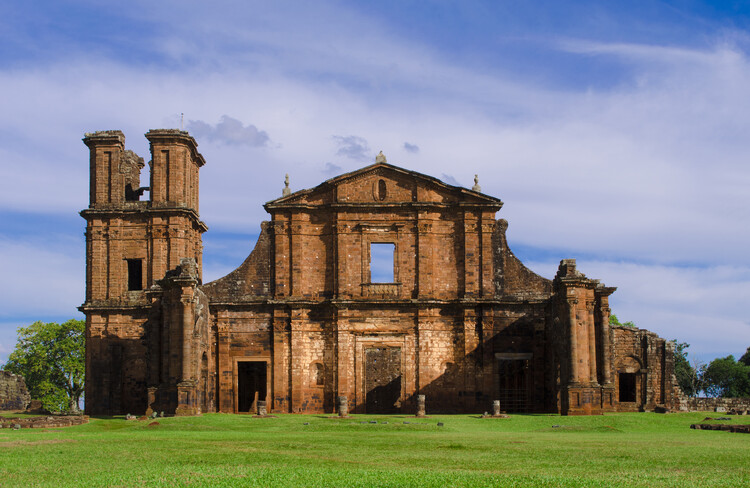
When we enter a museum, walk through a historic center, or review a country’s list of protected heritage sites, we rarely think about the process behind those choices. Who decided, on behalf of all of us, that certain objects, places, and architectures deserved to be preserved and disseminated, while others were discarded?

In most cases, the power of decision lies with specialized professionals—historians, museologists, architects, geographers. But on what basis are these decisions made? Can the complexity of history be reduced to a checklist? Or, more fundamentally, which version of history underlies these choices?

Who Decides What Is Worth Preserving? Power and Heritage in Latin America - Image 1 of 4Who Decides What Is Worth Preserving? Power and Heritage in Latin America - Image 2 of 4Who Decides What Is Worth Preserving? Power and Heritage in Latin America - Image 3 of 4Who Decides What Is Worth Preserving? Power and Heritage in Latin America - Image 4 of 4Who Decides What Is Worth Preserving? Power and Heritage in Latin America - More Images+ 13

From the Courtyard to the Neighborhood: Latin American Lessons on Collective Placemaking

In Latin America, encounters do not necessarily arise from grand architectural gestures or monumental urban plans. They emerge from the in-between, from intermediate spaces: the courtyard, the veranda, the sidewalk, the shared corridor. These areas, often considered residual or informal by the traditional architectural discipline, are precisely where everyday life builds bonds.

From this Latin American culture comes a spatial logic in which daily life is organized in a relational and expansive way. Practices such as sitting at the front door, occupying the sidewalk, and playing in the street produce a lived city that extends beyond the formal limits of design.

From the Courtyard to the Neighborhood: Latin American Lessons on Collective Placemaking - Image 1 of 4From the Courtyard to the Neighborhood: Latin American Lessons on Collective Placemaking - Image 2 of 4From the Courtyard to the Neighborhood: Latin American Lessons on Collective Placemaking - Image 3 of 4From the Courtyard to the Neighborhood: Latin American Lessons on Collective Placemaking - Image 4 of 4From the Courtyard to the Neighborhood: Latin American Lessons on Collective Placemaking - More Images+ 5

From Diplomacy to Mobility: Six Legislative Responses Cities Are Using to Confront Climate Change

From building codes to mobility restrictions and new diplomatic roles within city governments, climate policy is increasingly being shaped at the local level through a widening range of legislative and institutional tools. Cities as varied as Sydney, Boston, New York, Paris, Miami, and dozens across Latin America are adopting targeted strategies that reflect their distinct environmental pressures and governance structures. These initiatives range from all-electric and net-zero construction requirements, to traffic-control measures designed to curb the social costs of private vehicle use, to emerging forms of urban diplomacy that coordinate responses to rising temperatures and biodiversity loss. Together, these approaches illustrate how territorial management is evolving in response to the accelerating climate crisis, and how local governments are experimenting with regulation and collaboration to confront challenges that are at once global and deeply place-specific.

From Diplomacy to Mobility: Six Legislative Responses Cities Are Using to Confront Climate Change - Image 1 of 4From Diplomacy to Mobility: Six Legislative Responses Cities Are Using to Confront Climate Change - Image 2 of 4From Diplomacy to Mobility: Six Legislative Responses Cities Are Using to Confront Climate Change - Image 3 of 4From Diplomacy to Mobility: Six Legislative Responses Cities Are Using to Confront Climate Change - Image 4 of 4From Diplomacy to Mobility: Six Legislative Responses Cities Are Using to Confront Climate Change - More Images+ 1

The 100 Best Latin American Houses of 2025

Each year, the ArchDaily Curatorial team reviews the projects that resonated most with our readers, identifying the architectural trends and design approaches that captured the greatest attention throughout the year. Across our local sites – ArchDaily Brasil and ArchDaily en Español – residential architecture remains the most popular category, with projects built in Latin America standing out year after year.

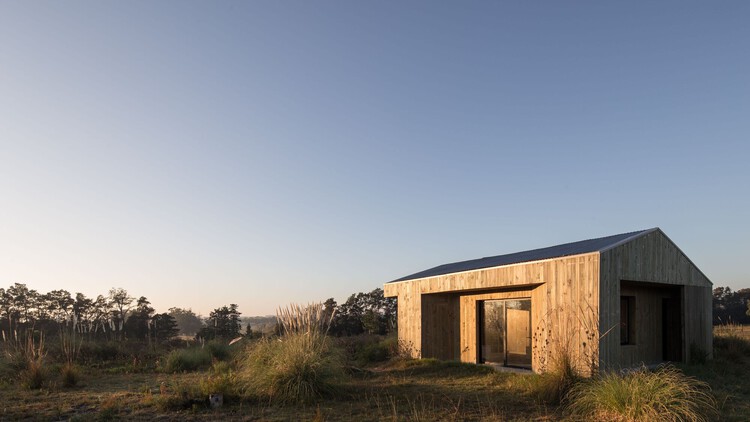
This year's selection of Best Latin American Houses brings together both renovations and ground-up projects, covering reinterpretations of local construction techniques and innovative architectural responses. The works are set in a wide range of contexts, from dense urban environments to rural and coastal landscapes.

The 100 Best Latin American Houses of 2025 - Image 1 of 4The 100 Best Latin American Houses of 2025 - Image 2 of 4The 100 Best Latin American Houses of 2025 - Image 3 of 4The 100 Best Latin American Houses of 2025 - Image 4 of 4The 100 Best Latin American Houses of 2025 - More Images+ 97

Grand Prize Winners Announced for the 2025 Holcim Foundation Awards

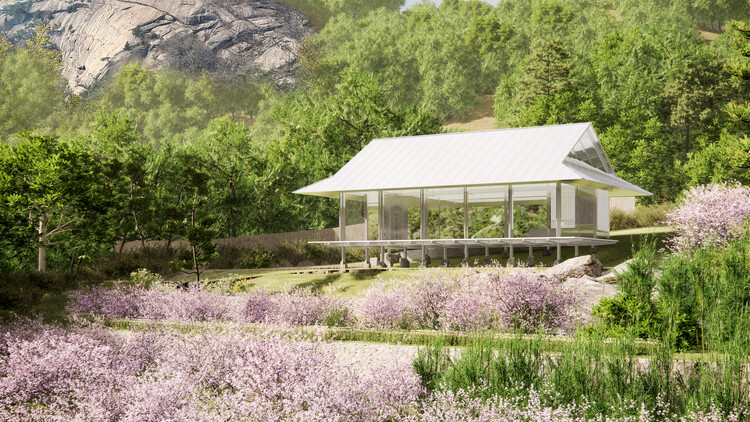
The Holcim Foundation for Sustainable Construction has announced the Grand Prize Winners of the 2025 Holcim Awards, selecting one project from each global region to represent the most impactful approaches to sustainable design in this cycle. This edition marks the introduction of the Grand Prize format, replacing the previous tiered distinctions to better acknowledge diverse regional contexts and avoid hierarchical rankings. Evaluated by juries chaired by Sou Fujimoto (Asia Pacific), Kjetil Trædal Thorsen (Europe), Sandra Barclay (Latin America), Lina Ghotmeh (Middle East and Africa), and Jeanne Gang (North America), the winning projects reflect the Foundation's principles of holistic, transformational, and transferable design.

Grand Prize Winners Announced for the 2025 Holcim Foundation Awards - Image 1 of 4Grand Prize Winners Announced for the 2025 Holcim Foundation Awards - Image 2 of 4Grand Prize Winners Announced for the 2025 Holcim Foundation Awards - Image 4 of 4Grand Prize Winners Announced for the 2025 Holcim Foundation Awards - Image 3 of 4Grand Prize Winners Announced for the 2025 Holcim Foundation Awards - More Images+ 10

Watch Live the 2025 Holcim Foundation Awards Ceremony and Discover the 5 Grand Prize Winners

Watch live the Holcim Foundation Awards 2025 Ceremony on November 20, broadcast from Venice, Italy, during the closing week of the 19th International Architecture Exhibition, to discover the regional Grand Prize winners. The Holcim Foundation for Sustainable Construction has announced the 20 winning projects of this cycle, selected across five regions: Asia Pacific, Europe, Latin America, the Middle East and Africa, and North America. This edition introduces a new Grand Prize format, replacing the Gold, Silver, and Bronze distinctions to highlight excellence without comparison and reflect the varied contexts in which sustainable design operates.

Community-Centered Architecture: Redefining the Role of Architects in South America

Subscriber Access | 

Across South America, architecture is increasingly being understood as a collective act. Rather than imposing external views, many studios and designers are building with and for communities, learning from their local practices, materials, and ways of inhabiting. These projects are repositioning the architect's role from an author to a facilitator, transforming design into a participatory process that centers collaboration, care, and mutual respect.

What unites these efforts is not style or scale, but a shared belief: architecture emerges from collective dialogue, not imposition. From rural Ecuador to the urban peripheries of Brazil, Colombia, and Paraguay, these projects reveal how social engagement and local making produce spaces that are sustainable not only environmentally but also socially. They respond to inequality not through top-down solutions, but through co-authorship, offering spaces that reflect the needs, knowledge, and agency of the people who use them.

Community-Centered Architecture: Redefining the Role of Architects in South America - Image 1 of 4Community-Centered Architecture: Redefining the Role of Architects in South America - Image 2 of 4Community-Centered Architecture: Redefining the Role of Architects in South America - Image 3 of 4Community-Centered Architecture: Redefining the Role of Architects in South America - Image 4 of 4Community-Centered Architecture: Redefining the Role of Architects in South America - More Images+ 15