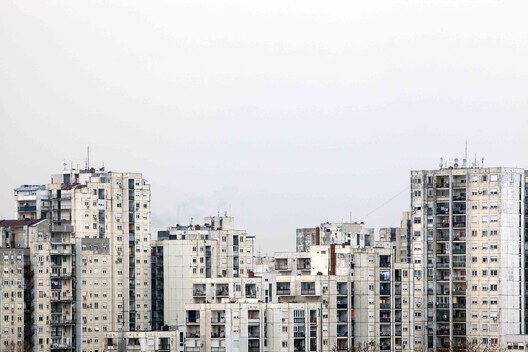
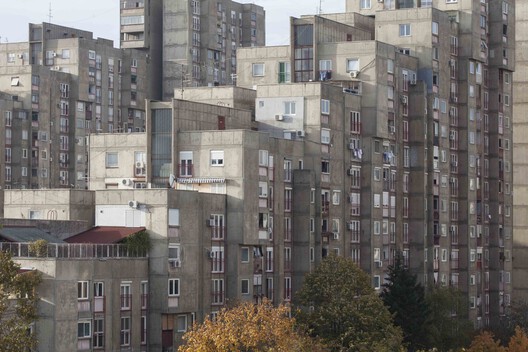
A housing block in New Belgrade appears orderly from a distance. Concrete slabs repeat with disciplined consistency, windows align into measured grids, and balconies stack with the confidence of a system certain of itself. However, proximity changes the reading. One balcony is enclosed in aluminum glazing, another softened with improvised shading. Insulation thickens part of a façade while laundry frames another edge like an accidental elevation study. The district still reads as planned, though occupation has made its order less uniform. Within that order, repetition has gradually been rewritten through occupation.
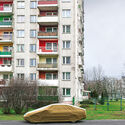

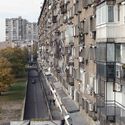
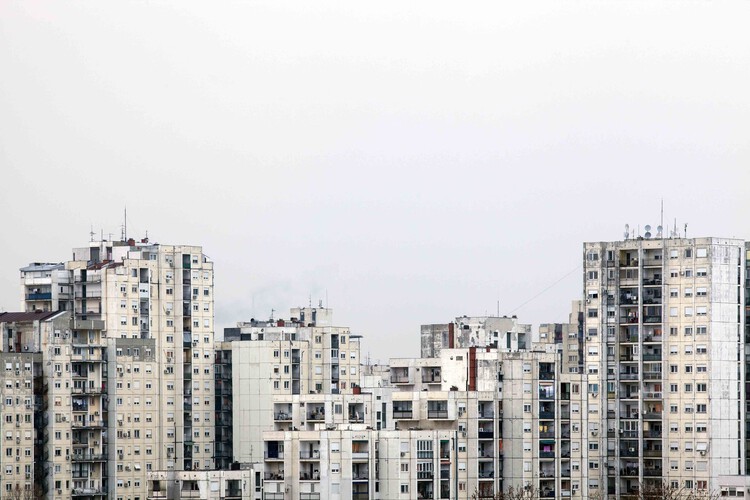
The socialist city imagined housing as a system rather than an object. Across much of Eastern Europe and the former Soviet sphere, mass housing emerged through planning models built on repetition, industrial construction, and coordinated urban growth. Superblocks organized circulation and collective amenities, prefabricated panels accelerated construction, and apartment layouts followed standardized templates intended to deliver dignified housing quickly and equitably. In places shaped by the logic of the microrayon or large-scale modernist planning, architecture operated as infrastructure that is reproducible, rational, and legible across scales.
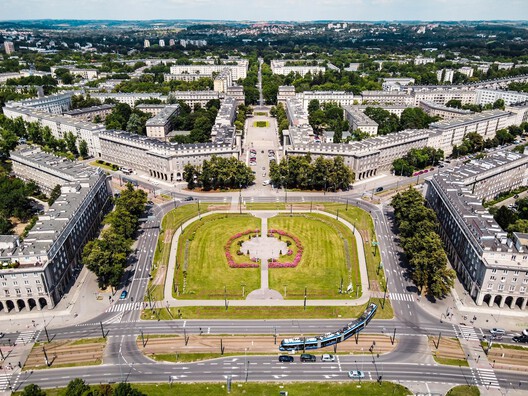
New Belgrade offers one of the clearest expressions of this ambition. Conceived after the Second World War as part of socialist Yugoslavia's modernization project, the district was organized through large residential blocks separated by open landscapes, civic facilities, and transport systems. Buildings repeated in pursuit of efficiency. Apartment layouts followed standardized assumptions about domestic life, governance, and provision. At the scale of the city, the system still feels durable. Streets remain intelligible, housing blocks continue to structure collective life, and the logic of coordinated planning remains visible decades after its political origins shifted.
Related Article
Concrete Estates: The Legacy of Soviet-Era Housing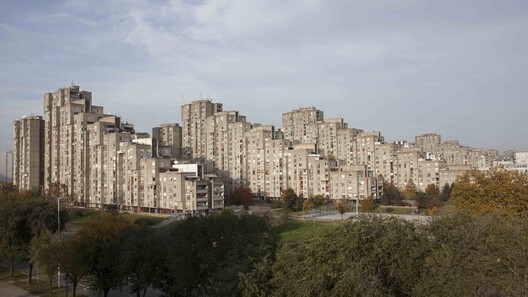
Their afterlife unfolded elsewhere. Residents did not redraw masterplans or reorganize urban grids. They rarely altered the infrastructural coherence of the city itself. Instead, transformation concentrated where daily life became difficult to standardize: balconies, façades, thresholds, and interiors. Socialist planning aspired to consistency across scales, from urban organization to domestic layouts, but occupation unfolded unevenly. At the scale of the city, coherence endured; at the scale of living, occupation introduced unevenness.
The mismatch becomes visible where centralized systems encounter everyday variability. Cities can organize circulation, density, and housing provision, but everyday life introduces variability that planning struggles to anticipate. Climate shifts across seasons, families expand, work enters domestic space, and buildings age in ways policy diagrams cannot predict. Architecture designed as a complete whole gradually encounters pressures that require adjustment, revision, and informal negotiation.
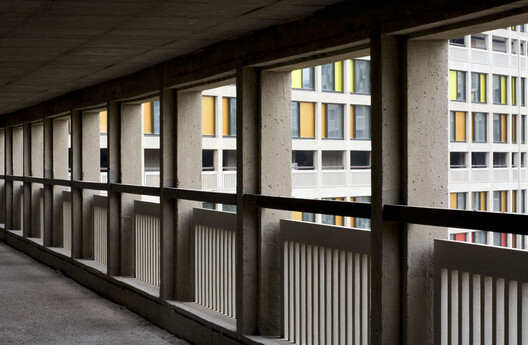
Balconies became early sites of negotiation. Originally conceived as an outdoor threshold, they acquired new responsibilities through use. In many post-socialist housing environments, residents enclosed balconies with glazing, improvised shading, or lightweight partitions, transforming exposed edges into thermal buffers, storage zones, workspaces, or extensions of living rooms. These interventions often read as improvised, yet they respond to practical environmental conditions. Balconies are increasingly understood as adaptable interfaces where climate, occupation, and domestic flexibility intersect. An enclosed balcony reduces exposure in winter, expands usable area, and mediates between exterior instability and interior comfort.
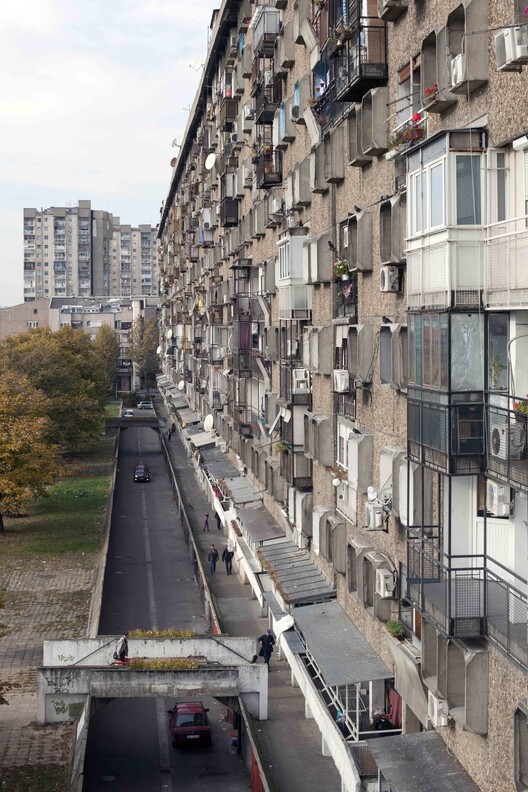
In New Belgrade, these adjustments accumulated into a second architectural language layered onto the first. Once-uniform façades became visibly uneven as balconies disappeared behind glass, shading devices punctuated elevations, and thresholds thickened through everyday adaptation. From a distance, such changes can resemble visual disorder. Yet the coherence of the urban system remained largely intact while improvisation concentrated at another scale.
Residents renegotiated how the district performed in daily life. Privacy, storage, climate control, and changing household needs demanded responses that standardized housing could not entirely provide. Unevenness becomes revealing here. Socialist housing proved remarkably durable at the scale of infrastructure and urban organization, yet less capable of accommodating domestic variability without informal participation. The city retained its standardized logic while occupation unfolded more unevenly.
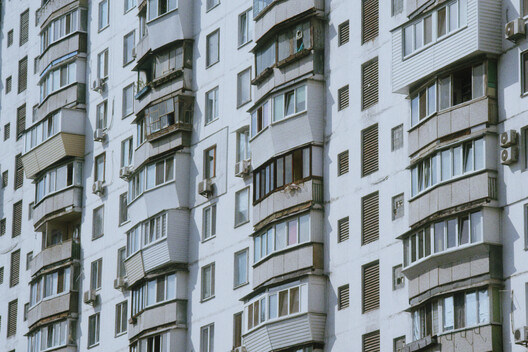
A similar tension unfolds within the vast landscape of Soviet-era apartment housing known as Khrushchyovka. Built rapidly from the late 1950s onward, these apartment blocks prioritized speed, affordability, and minimum standards of provision. Thin construction, modest dimensions, and repetitive layouts enabled mass delivery during periods of acute housing shortage. Efficiency came with limits. Decades later, many residents inherited buildings increasingly mismatched with contemporary expectations of thermal comfort and domestic flexibility.
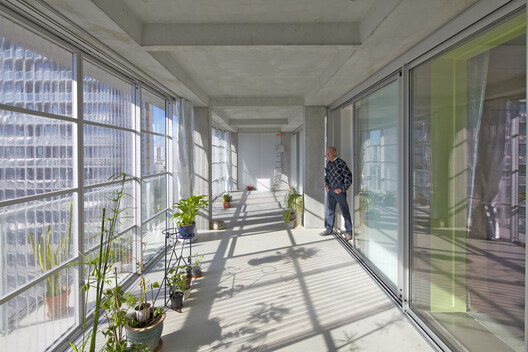
The response was often incremental rather than institutional. Windows were replaced, insulation layers added, loggias enclosed, and façades thickened through piecemeal retrofits. Studies of Soviet-era housing repeatedly identify poor thermal performance and significant heat loss as persistent problems, helping explain why resident-led modifications became widespread. These transformations largely responded to environmental performance rather than aesthetics. They functioned as environmental correction, attempts to improve winter comfort, reduce inefficiency, and adapt rigid housing stock to changing material realities.
Scale becomes especially visible here. The infrastructural system survived, but adaptation emerged through thousands of localized decisions. Residents could not redesign cities, yet they continuously adjusted how buildings performed. Through enclosure, shading, retrofit, and extension, buildings moved from fixed provision toward ongoing adjustment.
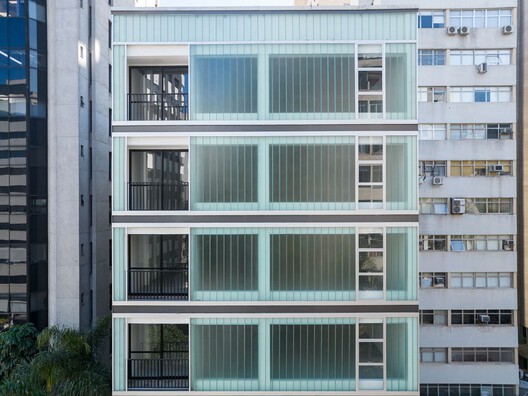
Across thousands of accumulated changes, another architecture becomes visible. Neither master planning nor outright resistance, these adjustments formed an ongoing calibration between formal systems and lived realities. Residents responded to overheating, cold, economic pressure, family growth, and everyday inconvenience with spatial decisions that accumulated over time. The resulting environments remain fragmented, uneven, and visually inconsistent, exposing that in revision, design meets daily life most directly. At first glance, this story can be read as a critique of socialist planning, evidence that standardized housing failed to accommodate change. Yet another interpretation becomes possible. The deeper issue lies in assumptions of fixity.
This is where PREVI Lima offers an instructive counterpoint. Developed in the late 1960s as an experimental housing project, PREVI approached domestic change as inevitable rather than disruptive. Architects, including Christopher Alexander, proposed expandable housing systems structured around serviced cores and incremental growth. The project anticipated addition by treating domestic change as inevitable. Families expanded homes vertically and horizontally, adapted layouts to shifting domestic needs, and absorbed work, commerce, and generational change into architecture designed to evolve.
PREVI becomes useful here because it reframes the question of scale. Rather than separating large-scale planning from small-scale inhabitation, it suggests another possibility: stable frameworks that anticipate transformation. The system remains legible, with adaptation anticipated rather than left to informal revision.
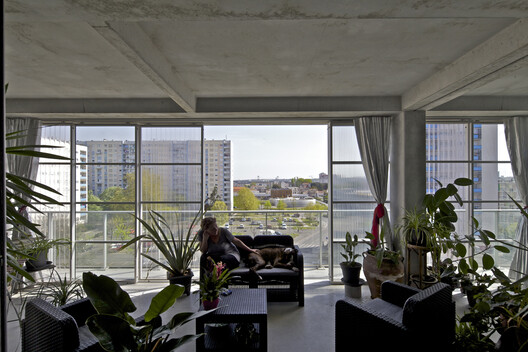
The legacy of socialist housing appears most clearly in what happened after construction. From afar, the grid survives. Housing blocks continue to organize cities, infrastructures still shape everyday movement, and the ambition of coordinated planning remains visible. Closer inspection reveals another architecture layered within the first that is quieter, improvised, and continually revised. The city retained standardized systems while everyday life unfolded more unevenly. These environments reveal how systems endure at the scale of cities while remaining unfinished at the scale of living. Architecture appears most durable where revision remains possible.
This article is part of the ArchDaily Topic: 20th Century Design in Flux: A Global Reinterpretation of Architectural History. Every month we explore a topic in-depth through articles, interviews, news, and architecture projects. We invite you to learn more about our ArchDaily Topics. And, as always, at ArchDaily we welcome the contributions of our readers; if you want to submit an article or project, contact us.