1. ArchDaily
  2. Socialist Architecture

Socialist Architecture: The Latest Architecture and News

Designed to Repeat, Forced to Adapt: The Parallel Architecture of Socialist Housing

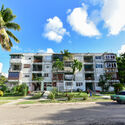
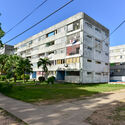
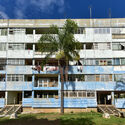
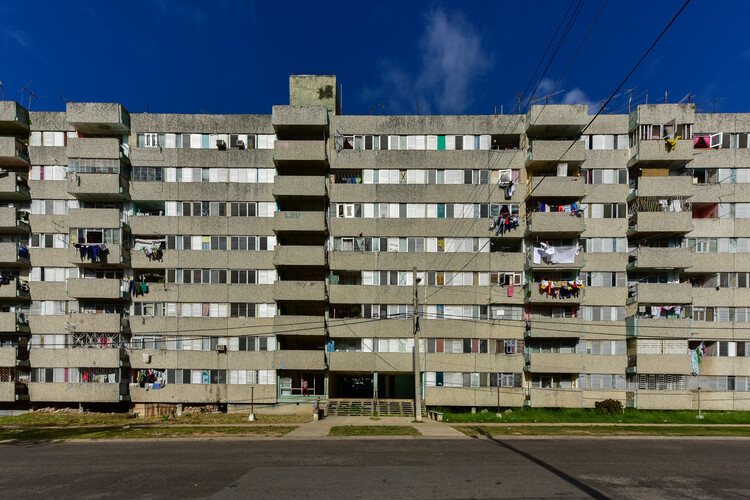
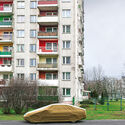
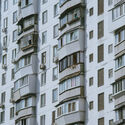
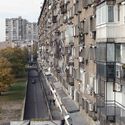
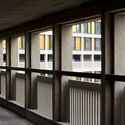
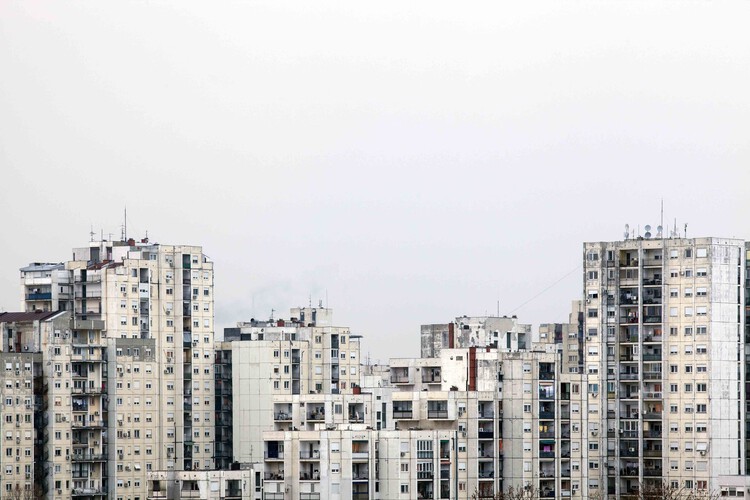
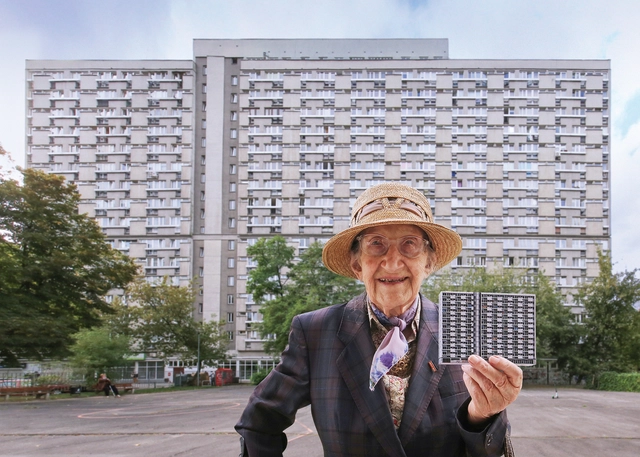
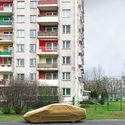
A housing block in New Belgrade appears orderly from a distance. Concrete slabs repeat with disciplined consistency, windows align into measured grids, and balconies stack with the confidence of a system certain of itself. However, proximity changes the reading. One balcony is enclosed in aluminum glazing, another softened with improvised shading. Insulation thickens part of a façade while laundry frames another edge like an accidental elevation study. The district still reads as planned, though occupation has made its order less uniform. Within that order, repetition has gradually been rewritten through occupation.

Designed to Repeat, Forced to Adapt: The Parallel Architecture of Socialist Housing - Image 1 of 4Designed to Repeat, Forced to Adapt: The Parallel Architecture of Socialist Housing - Image 2 of 4Designed to Repeat, Forced to Adapt: The Parallel Architecture of Socialist Housing - Image 3 of 4Designed to Repeat, Forced to Adapt: The Parallel Architecture of Socialist Housing - Image 4 of 4Designed to Repeat, Forced to Adapt: The Parallel Architecture of Socialist Housing - More Images+ 10

Tirana Architecture City Guide: Negotiating Identity Between Socialism and Urban Reinvention

Subscriber Access | 

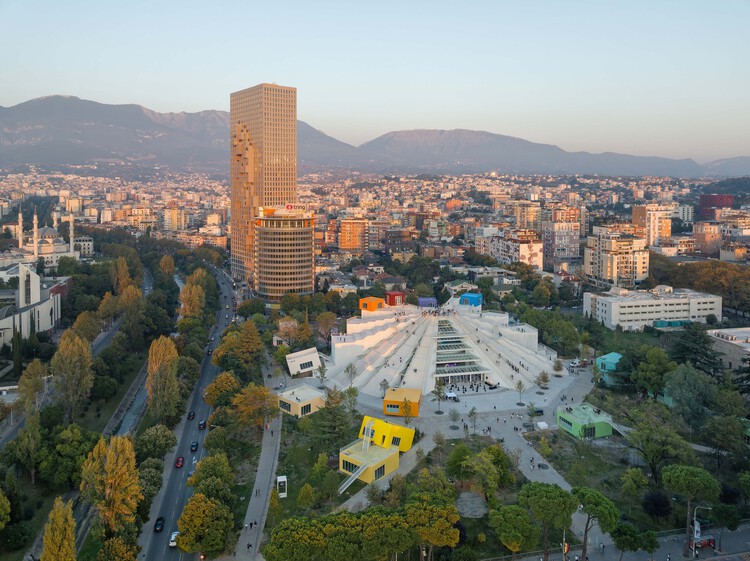
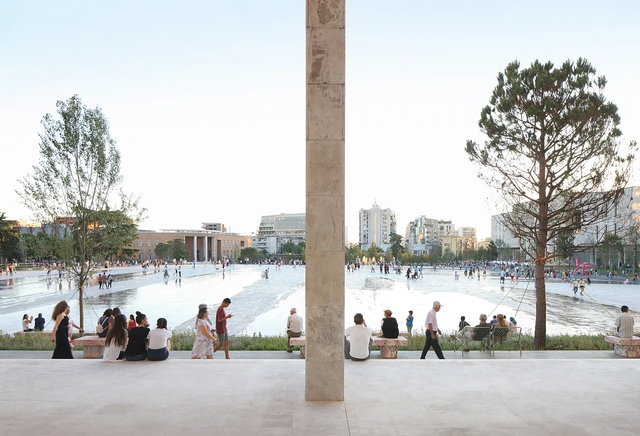
Located at the intersection of Adriatic landscapes and Balkan geopolitics, Tirana has undergone one of the most accelerated urban transformations in Europe over the last three decades. Once defined by rigid socialist planning and political isolation, the city has progressively reoriented itself through a combination of informal growth, international investment, and strategic urban interventions that seek to redefine its public image and spatial structure.

Since the early 2000s, a series of urban policies, most notably those initiated during the mayoral tenure of Edi Rama (now Albania prime minister), have promoted the use of color, public space, and architectural experimentation as tools for civic reactivation. Rather than relying solely on masterplans, Tirana's development has operated through interventions, where individual buildings and public spaces act as catalysts within a fragmented urban fabric.

Tirana Architecture City Guide: Negotiating Identity Between Socialism and Urban Reinvention - Image 1 of 4Tirana Architecture City Guide: Negotiating Identity Between Socialism and Urban Reinvention - Image 2 of 4Tirana Architecture City Guide: Negotiating Identity Between Socialism and Urban Reinvention - Image 3 of 4Tirana Architecture City Guide: Negotiating Identity Between Socialism and Urban Reinvention - Image 4 of 4Tirana Architecture City Guide: Negotiating Identity Between Socialism and Urban Reinvention - More Images+ 15

Tashkent Architecture City Guide: Ten Buildings of Soviet Hybrid Modernism

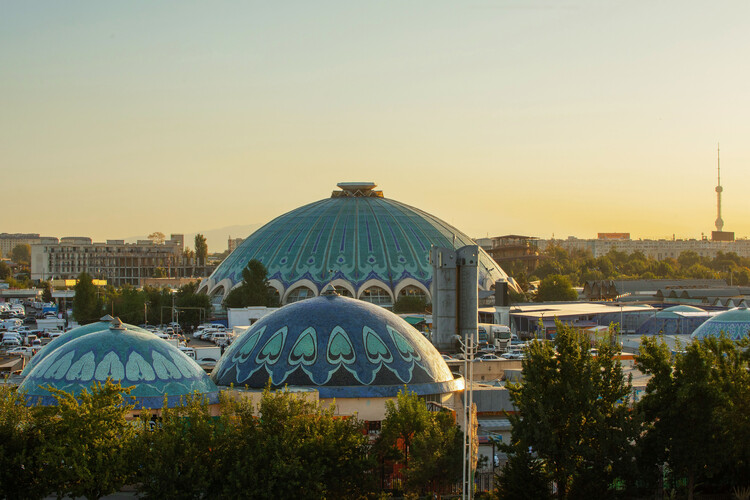
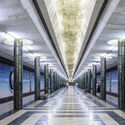
Situated along the historic Silk Road in Central Asia, Tashkent is a city with a long history spanning thousands of years. Its historic architecture is known for its courtyards, domes, and blue ceramics, typical of its Timurid heritage. The capital of Uzbekistan today, it was absorbed into the Russian Empire in the 19th century, before becoming a Soviet republic. While part of the Soviet Union, the city became an example of modernization, celebrating socialist achievements in Asia. A devastating earthquake in 1966 accelerated this modernization as the city was reconstructed, leading to many of the modernist monuments for which Tashkent is known today.
Tashkent Architecture City Guide: Ten Buildings of Soviet Hybrid Modernism - Image 1 of 4Tashkent Architecture City Guide: Ten Buildings of Soviet Hybrid Modernism - Image 2 of 4Tashkent Architecture City Guide: Ten Buildings of Soviet Hybrid Modernism - Image 3 of 4Tashkent Architecture City Guide: Ten Buildings of Soviet Hybrid Modernism - Image 4 of 4Tashkent Architecture City Guide: Ten Buildings of Soviet Hybrid Modernism - More Images+ 12

The Aesthetics of Power: Soviet Modernism Meets Uzbek Tradition in Tashkent’s Palace of Peoples’ Friendship

Subscriber Access | 

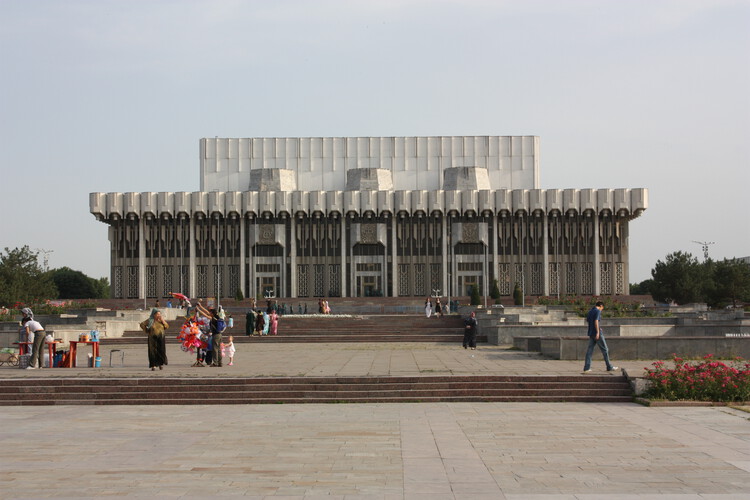
Tashkent, the capital of Uzbekistan and one of the oldest cities in Central Asia, has long been shaped by a hybrid culture. Located at a strategic point along the Silk Road, the city developed an architectural tradition defined by inner courtyards, domes, decorative ceramics, and Islamic geometric patterns. The annexation by the Russian Empire in the 19th century introduced administrative buildings, orthogonal squares, and straight avenues, creating a dual urban fabric — between the “old” Eastern city and the “new” European one — in which contrasts and overlaps became the norm.

During the Soviet period, when Tashkent became the capital of the Uzbek Soviet Socialist Republic and received intense migration from across the union, the city was transformed into a modernist showcase. The coexistence between Islamic heritage and the ideology of socialist progress found a new inflection point with the 1966 earthquake, whose destruction triggered a large-scale reconstruction effort involving architects from across the USSR. Massive housing complexes, cultural institutions, and monumental buildings emerged, reinterpreting local motifs through ideological and technological language. It was in this context that the Palace of Peoples’ Friendship took shape.

The Aesthetics of Power: Soviet Modernism Meets Uzbek Tradition in Tashkent’s Palace of Peoples’ Friendship - Image 1 of 4The Aesthetics of Power: Soviet Modernism Meets Uzbek Tradition in Tashkent’s Palace of Peoples’ Friendship - Image 2 of 4The Aesthetics of Power: Soviet Modernism Meets Uzbek Tradition in Tashkent’s Palace of Peoples’ Friendship - Image 3 of 4The Aesthetics of Power: Soviet Modernism Meets Uzbek Tradition in Tashkent’s Palace of Peoples’ Friendship - Image 4 of 4The Aesthetics of Power: Soviet Modernism Meets Uzbek Tradition in Tashkent’s Palace of Peoples’ Friendship - More Images+ 3

Form, Function - Freedom? Modernism, Ocean Liners, and Class

Subscriber Access | 

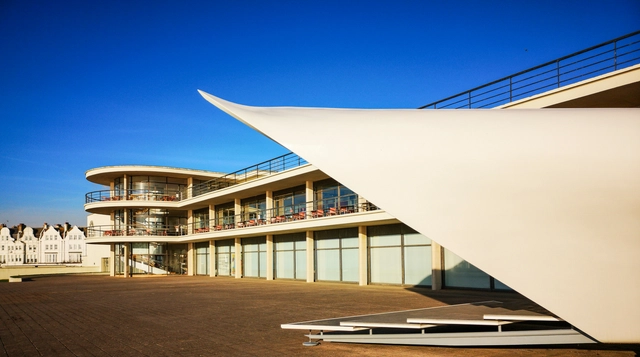
The early 20th century saw the birth of Modernist architecture. It brought with it a central architectural movement that in turn birthed off-shoots of its own. A figure often seen as the defining face of this movement is Le Corbusier, whose 1923 treatise Toward an Architecture was influential to his Modernist contemporaries – a manifesto including the phrase “a house is a machine for living in” where good architecture would have to be intrinsically linked to function and the demands of industry.

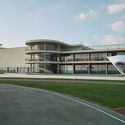
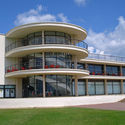
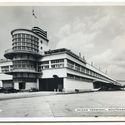
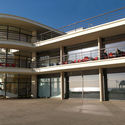
Form, Function - Freedom? Modernism, Ocean Liners, and Class - Image 1 of 4Form, Function - Freedom? Modernism, Ocean Liners, and Class - Image 2 of 4Form, Function - Freedom? Modernism, Ocean Liners, and Class - Image 3 of 4Form, Function - Freedom? Modernism, Ocean Liners, and Class - Image 4 of 4Form, Function - Freedom? Modernism, Ocean Liners, and Class - More Images+ 11

The Hungarian Pavilion at the 2021 Venice Biennale Explores Ways of Managing the Socialist Architectural Heritage

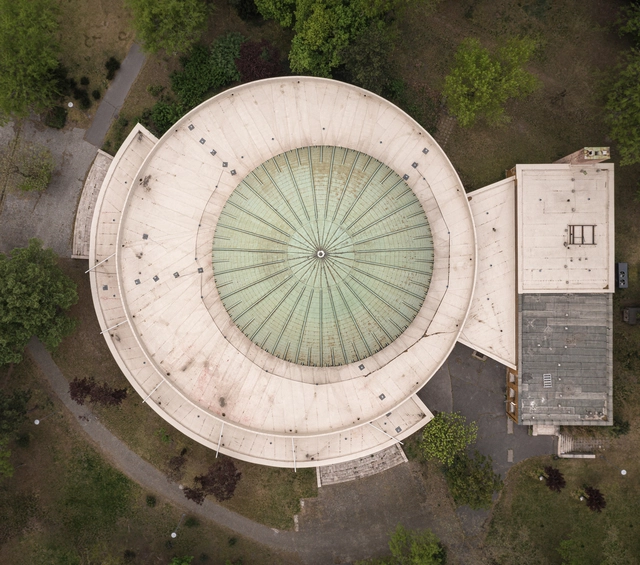
The Hungarian Pavilion at the 17th Venice Biennale explores the often challenging socialist architecture and looks at how this heritage could be reconsidered and given a new future. Titled Othernity – Reconditioning our Modern Heritage, the exhibition curated by Dániel Kovács presents twelve iconic modern buildings of Budapest and the visions of twelve architecture practices from Central and Eastern Europe for their reconditioning. The Hungarian Pavilion's project looks into how architecture can build on its past to foster resilience, sustainability and strong cultural identities.

The Hungarian Pavilion at the 2021 Venice Biennale Explores Ways of Managing the Socialist Architectural Heritage - Image 1 of 4The Hungarian Pavilion at the 2021 Venice Biennale Explores Ways of Managing the Socialist Architectural Heritage - Image 2 of 4The Hungarian Pavilion at the 2021 Venice Biennale Explores Ways of Managing the Socialist Architectural Heritage - Image 3 of 4The Hungarian Pavilion at the 2021 Venice Biennale Explores Ways of Managing the Socialist Architectural Heritage - Image 4 of 4The Hungarian Pavilion at the 2021 Venice Biennale Explores Ways of Managing the Socialist Architectural Heritage - More Images+ 20

The Brutalist Architecture that Shaped Poland's Urban Landscapes

Subscriber Access | 

Recent years have prompted a rediscovery and a re-framing of some of the more controversial architectural phenomenons of the past century, with Brutalist architecture coagulating significant interest through its sheer scale, powerful expression and purist forms. Brutalist architecture across the former Eastern Bloc is inextricably associated with the totalitarian regimes that marked the history of this part of Europe during the last half of the 20th century. Following in line with the architecture of the Eastern Bloc, Poland’s urban landscape is dotted with large-scale prefab housing estates and stark brutalist public buildings constructed during the country’s Communist rule.

The Brutalist Architecture that Shaped Poland's Urban Landscapes - Films & ArchitectureThe Brutalist Architecture that Shaped Poland's Urban Landscapes - Films & ArchitectureThe Brutalist Architecture that Shaped Poland's Urban Landscapes - Films & ArchitectureThe Brutalist Architecture that Shaped Poland's Urban Landscapes - Films & ArchitectureThe Brutalist Architecture that Shaped Poland's Urban Landscapes - More Images+ 6

Reframing the Monumental: Reclaiming the Architecture and Public Spaces of the Former Eastern European Bloc

Remnants of the Socialist era, the large-scale architecture and urban spaces of the Eastern European Bloc still constitute a challenging legacy, at odds with contemporary urban environments and the values shaping cities today. This ideologically charged architecture is being reclaimed either through the reconciliation of the public opinion with this part of history, adaptive re-use, renovation, or through its re-contextualization as architectural heritage. By (re)introducing the human scale within these monumental architecture projects and public spaces, these entities are being restored to the urban and cultural life of cities.
Reframing the Monumental: Reclaiming the Architecture and Public Spaces of the Former Eastern European Bloc - Image 10 of 4Reframing the Monumental: Reclaiming the Architecture and Public Spaces of the Former Eastern European Bloc - Image 2 of 4Reframing the Monumental: Reclaiming the Architecture and Public Spaces of the Former Eastern European Bloc - Image 1 of 4Reframing the Monumental: Reclaiming the Architecture and Public Spaces of the Former Eastern European Bloc - Image 3 of 4Reframing the Monumental: Reclaiming the Architecture and Public Spaces of the Former Eastern European Bloc - More Images+ 9

MoMA to Host Exhibit Celebrating the Radical Brutalist Architecture of Socialist Yugoslavia

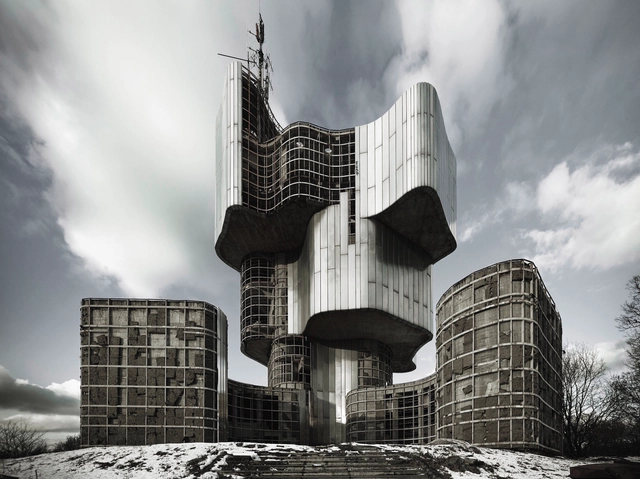
The Museum of Modern Art (MoMA) is set to open a new exhibition exploring the architecture of the former country of Yugoslavia. Toward a Concrete Utopia: Architecture in Yugoslavia, 1948–1980 will be the first exhibition in the United States to honor the peculiar architecture of the former socialist nation.

More than 400 drawings, models, photographs, and film reels culled from an array of municipal archives, family-held collections, and museums across the region will be presented to an international audience for the first time. Toward a Concrete Utopia will feature works by many of Yugoslavia's leading architects. It will explore "large-scale urbanization, technological experimentation and its application in everyday life, consumerism, monuments and memorialization, and the global reach of Yugoslav architecture."

Read on for more about the exhibition and Yugoslav brutalism.

MoMA to Host Exhibit Celebrating the Radical Brutalist Architecture of Socialist Yugoslavia - Image 1 of 4MoMA to Host Exhibit Celebrating the Radical Brutalist Architecture of Socialist Yugoslavia - Image 2 of 4MoMA to Host Exhibit Celebrating the Radical Brutalist Architecture of Socialist Yugoslavia - Image 3 of 4MoMA to Host Exhibit Celebrating the Radical Brutalist Architecture of Socialist Yugoslavia - Image 4 of 4MoMA to Host Exhibit Celebrating the Radical Brutalist Architecture of Socialist Yugoslavia - More Images+ 10

Photographer Raphael Olivier Explores the Suspended Reality of North Korea’s Socialist Architecture

Subscriber Access | 

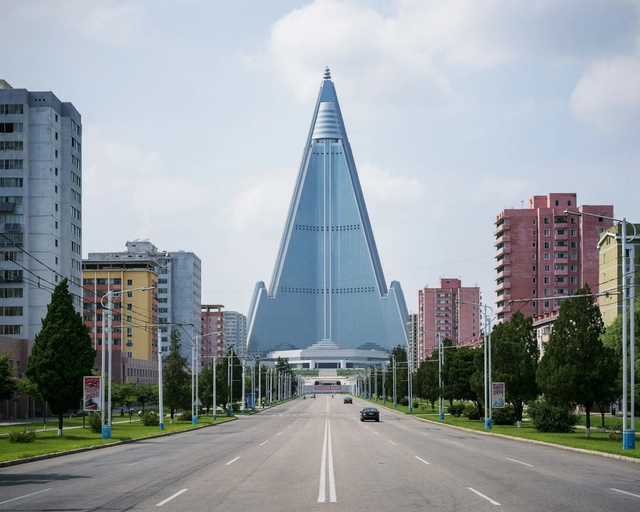
North Korea is one of the few countries still under communist rule, and probably the most isolated and unknown worldwide. This is a result of the philosophy of Juche – a political system based on national self-reliance which was partly influenced by principles of Marxism and Leninism.

In recent years though, the country has loosened its restrictions on tourism, allowing access to a limited number of visitors. With his personal photo series “North Korea – Vintage Socialist Architecture,” French photographer Raphael Olivier reports on Pyongyang’s largely unseen architectural heritage. ArchDaily interviewed Olivier about the project, the architecture he captured, and what he understood of North Korea’s architecture and way of life.

Photographer Raphael Olivier Explores the Suspended Reality of North Korea’s Socialist Architecture - Image 1 of 4Photographer Raphael Olivier Explores the Suspended Reality of North Korea’s Socialist Architecture - Image 2 of 4Photographer Raphael Olivier Explores the Suspended Reality of North Korea’s Socialist Architecture - Image 3 of 4Photographer Raphael Olivier Explores the Suspended Reality of North Korea’s Socialist Architecture - Image 4 of 4Photographer Raphael Olivier Explores the Suspended Reality of North Korea’s Socialist Architecture - More Images+ 16