This article is part of "Thresholds", a special edition printed newspaper by Cobe Notes x ArchDaily.
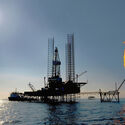
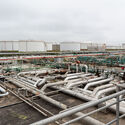
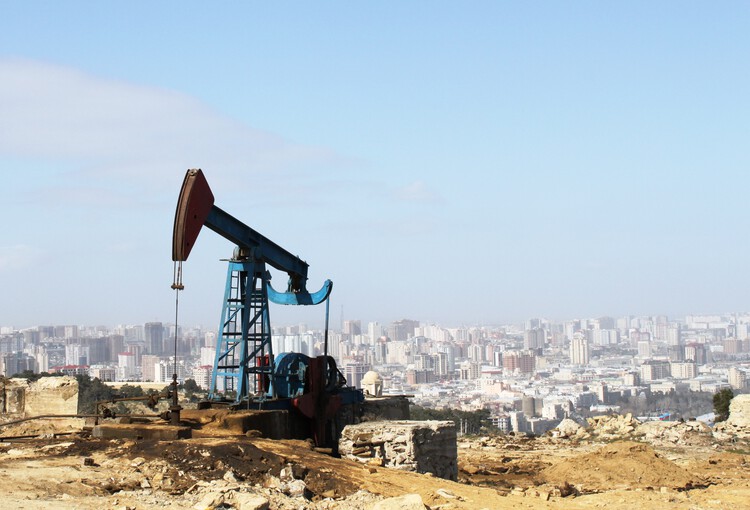
Beneath the ground lies a material that has quietly shaped the architecture of the modern world. Petroleum is rarely discussed within architectural discourse, yet the extraction, circulation, and consumption of oil have profoundly reorganized the spatial logic of territories. Pipelines, refineries, drilling platforms, ports, highways, and petrochemical complexes form a vast infrastructural landscape that sustains contemporary life, composing a dispersed architecture of energy.
Throughout the twentieth and twenty-first centuries, oil became the material foundation of industrial society. It fueled transportation, powered factories, and supported the growth of cities whose spatial organisation depended on continuous energy flows. Yet the infrastructures that enable these flows rarely become objects of architectural inquiry. Attention remains largely directed toward form, typology, or urban density, while the material systems that sustain these environments tend to remain displaced within the discipline.
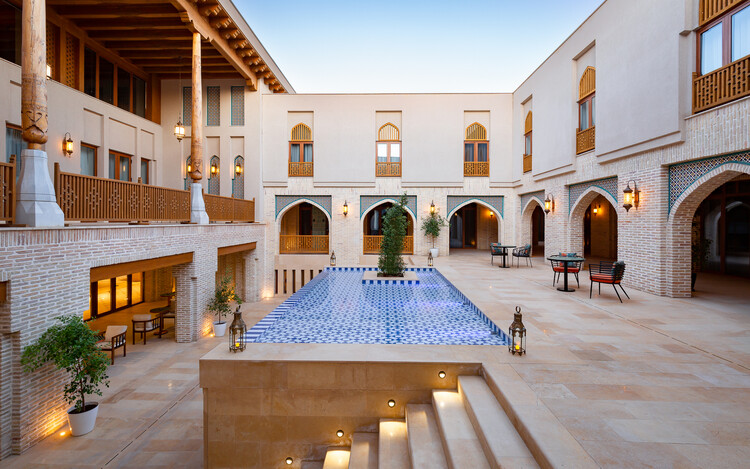
Amid the transformation of Uzbekistan's cities, ARC Architects develops an architecture that seeks to connect past and present. Founded in 2017 by Bobir Klichev, the studio emerged from Bukhara's architectural community and remains closely connected to the country's cultural and climatic particularities. With offices in Tashkent and Bukhara, ARC combines minimalism and ethnic references to develop a contemporary language rooted in its context.
Rather than reproducing a traditional image of Uzbek architecture, the studio seeks to understand how this heritage can be reinterpreted today, an exercise that necessarily engages with the overlapping historical layers across the country. For centuries, cities such as Samarkand and Bukhara were important commercial and cultural centers of Central Asia. Their architecture developed around inner courtyards and narrow streets, forming urban fabrics in which buildings and collective spaces are inseparable.
Throughout 2025 and early 2026, numerous museum projects were announced, advanced, or broke ground across multiple regions, with completion timelines largely extending from 2026 to 2030. Located across Asia, Europe, North America, and Central Asia, these developments reflect ongoing shifts in the role of cultural institutions within contemporary cities. Increasingly, museums are conceived not only as exhibition venues but as public-facing environments that accommodate education, research, and civic engagement. This expanded programmatic scope is often accompanied by architectural strategies that respond to urban conditions, spatial continuity, and the integration of cultural infrastructure into broader city-making processes.
On March 5, 2026, Skidmore, Owings & Merrill (SOM) revealed images of a new landmark project in Kazakhstan, in Central Asia. The project consists of two towers, the "Iconic Complex," and a master plan for the area, the "Gateway District." The complex is located in Alatau, a new city along the Almaty–Qonaev highway planned to become an international investment hub. A strategic project for the country, the city's master plan extends through 2050, with the first phase of major infrastructure projects scheduled for completion by 2030. Within this context, SOM's design is expected to serve as the city's economic and administrative nucleus, establishing the central business district of Alatau City and setting a benchmark for future investment projects in the area.
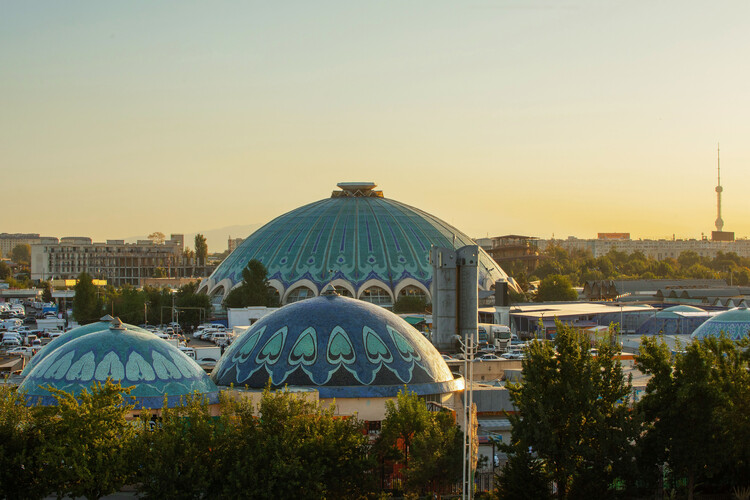
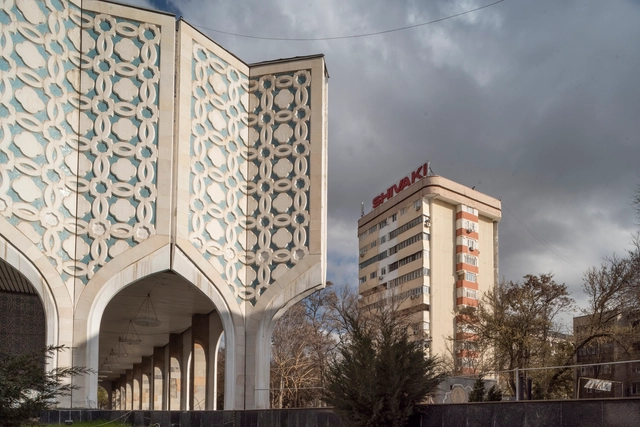
Situated along the historic Silk Road in Central Asia, Tashkent is a city with a long history spanning thousands of years. Its historic architecture is known for its courtyards, domes, and blue ceramics, typical of its Timurid heritage. The capital of Uzbekistan today, it was absorbed into the Russian Empire in the 19th century, before becoming a Soviet republic. While part of the Soviet Union, the city became an example of modernization, celebrating socialist achievements in Asia. A devastating earthquake in 1966 accelerated this modernization as the city was reconstructed, leading to many of the modernist monuments for which Tashkent is known today.
Tashkent, the capital of Uzbekistan and one of the oldest cities in Central Asia, has long been shaped by a hybrid culture. Located at a strategic point along the Silk Road, the city developed an architectural tradition defined by inner courtyards, domes, decorative ceramics, and Islamic geometric patterns. The annexation by the Russian Empire in the 19th century introduced administrative buildings, orthogonal squares, and straight avenues, creating a dual urban fabric — between the “old” Eastern city and the “new” European one — in which contrasts and overlaps became the norm.
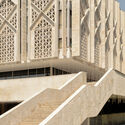
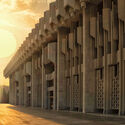
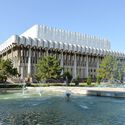
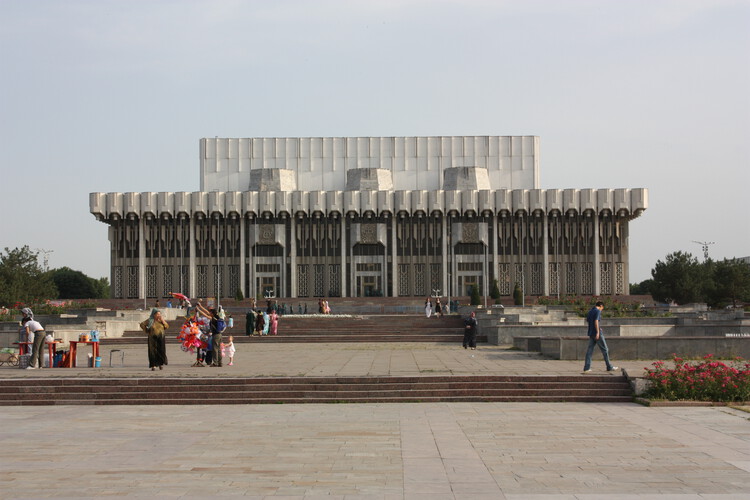
During the Soviet period, when Tashkent became the capital of the Uzbek Soviet Socialist Republic and received intense migration from across the union, the city was transformed into a modernist showcase. The coexistence between Islamic heritage and the ideology of socialist progress found a new inflection point with the 1966 earthquake, whose destruction triggered a large-scale reconstruction effort involving architects from across the USSR. Massive housing complexes, cultural institutions, and monumental buildings emerged, reinterpreting local motifs through ideological and technological language. It was in this context that the Palace of Peoples’ Friendship took shape.
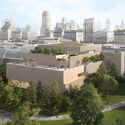
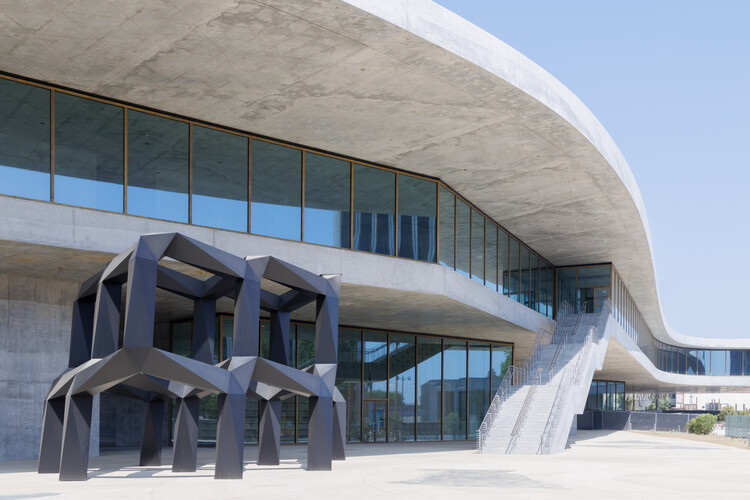
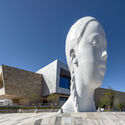
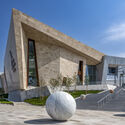
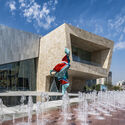
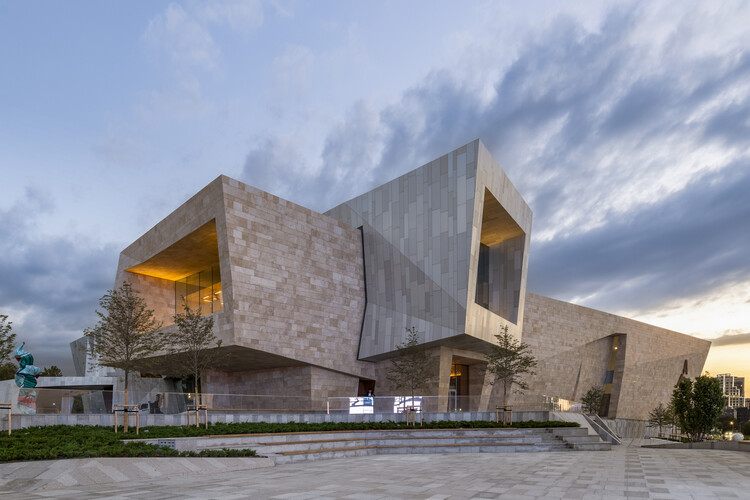
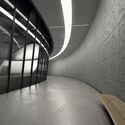
The AlmatyMuseum of Arts has opened in Kazakhstan, establishing a new cultural institution dedicated to contemporary art in Central Asia and internationally. Designed by Chapman Taylor, the museum is located at the foothills of the Tian Shan mountains and encompasses 10,060 square meters. The design draws inspiration from the contrast between the city of Almaty and its mountainous surroundings, a relationship expressed through two interconnecting limestone and aluminium-clad volumes. These are organized around a central, light-filled atrium referred to as the "Art Street," which serves as the primary circulation and gathering space.
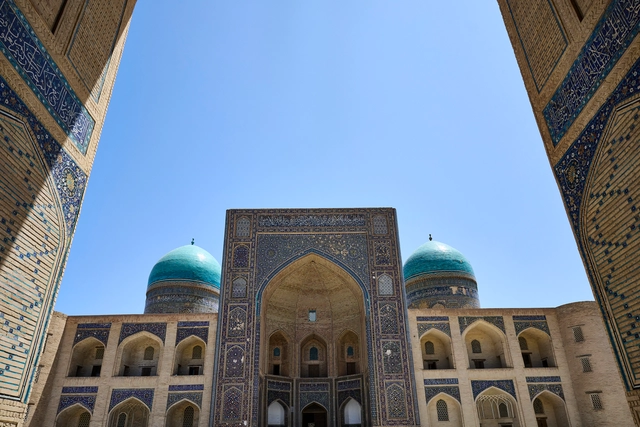
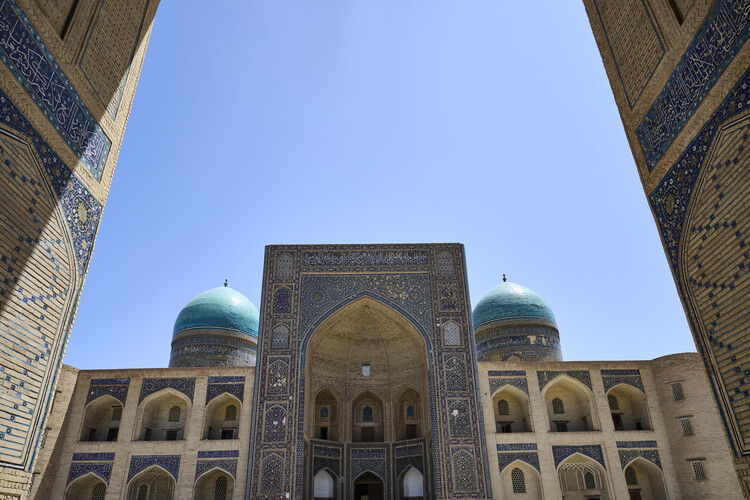
The Mir-i-Arab Madrasa. Image Courtesy of Uzbekistan Art and Culture Development Foundation
The inaugural edition of the Bukhara Biennial opened on September 5, 2025, bringing over 70 site-specific commissions by more than 200 participants from 39 countries to the historic core of the Uzbek city. Commissioned by the UzbekistanArt and Culture Development Foundation (ACDF) and Commissioner Gayane Umerova, the Biennial is described as the largest and most diverse cultural event in Central Asia to date. Curated by Diana Campbell under the theme Recipes for Broken Hearts, the ten-week event is staged across a constellation of newly restored sites, including madrassas, caravanserais, and mosques, all part of Bukhara's UNESCOWorld Heritage listing. Beyond an exhibition platform, the biennial is framed as part of a broader master plan, positioning culture as a catalyst for urban transformation and heritage renewal.
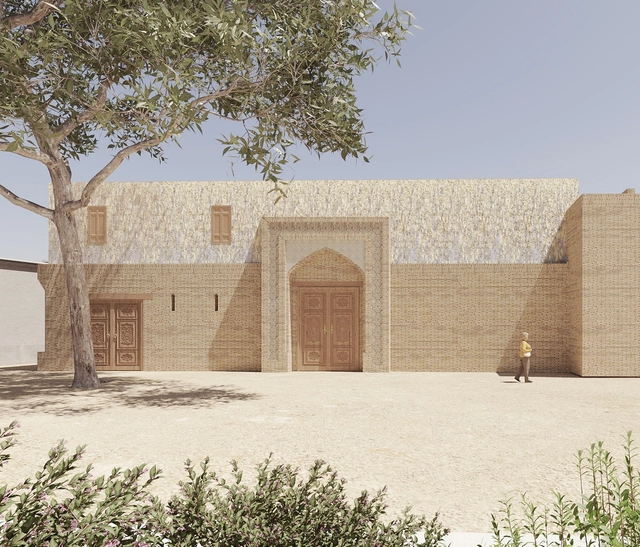
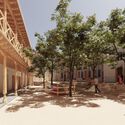
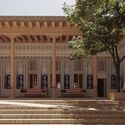
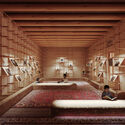
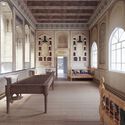
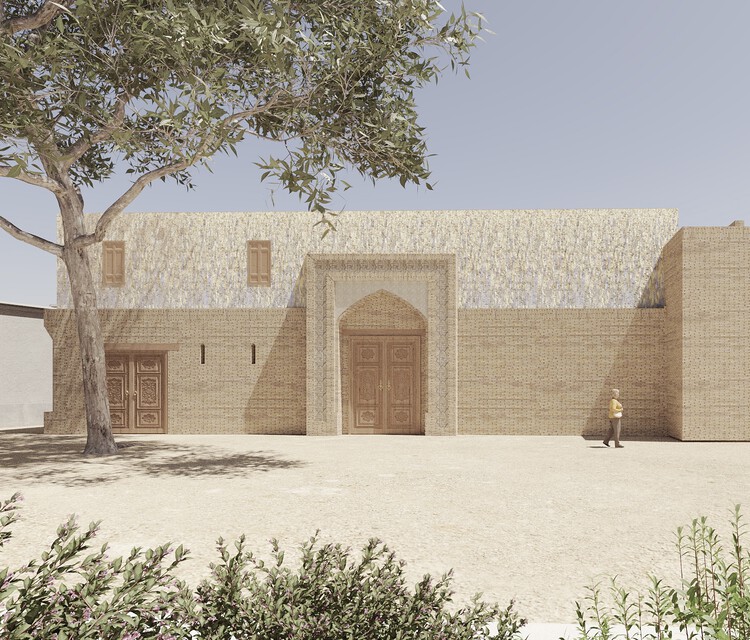
Lina Ghotmeh — Architecture has recently unveiled images of a project to transform a historic residence in Bukhara, Uzbekistan, into a "21st-century cultural destination." The proposal envisions a museum dedicated to the ideas and influence of Jadidism, a Muslim reform movement that advocated for the modernization of education across Central Asia during the late 19th and early 20th centuries.
The project was commissioned by the Uzbekistan Art and Culture Development Foundation (ACDF), established in 2017 to preserve, promote, and nurture the country's heritage, arts, and culture, while integrating them into the global art world and cultural landscape. Scheduled to open to the public in 2027, the museum is part of the ACDF's broader efforts to create landmark cultural institutions that engage audiences worldwide.
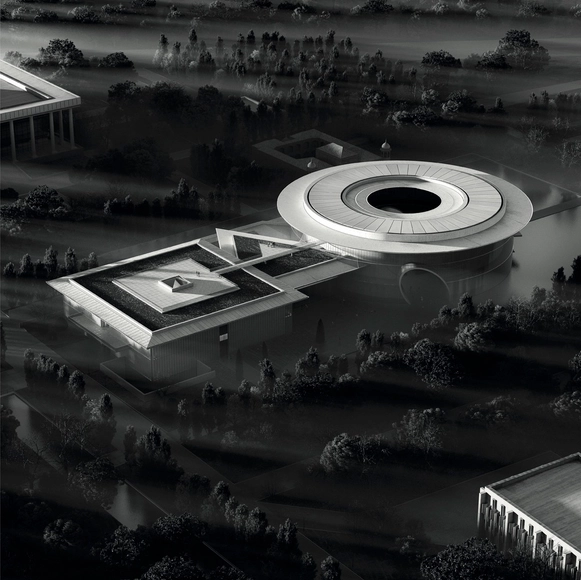
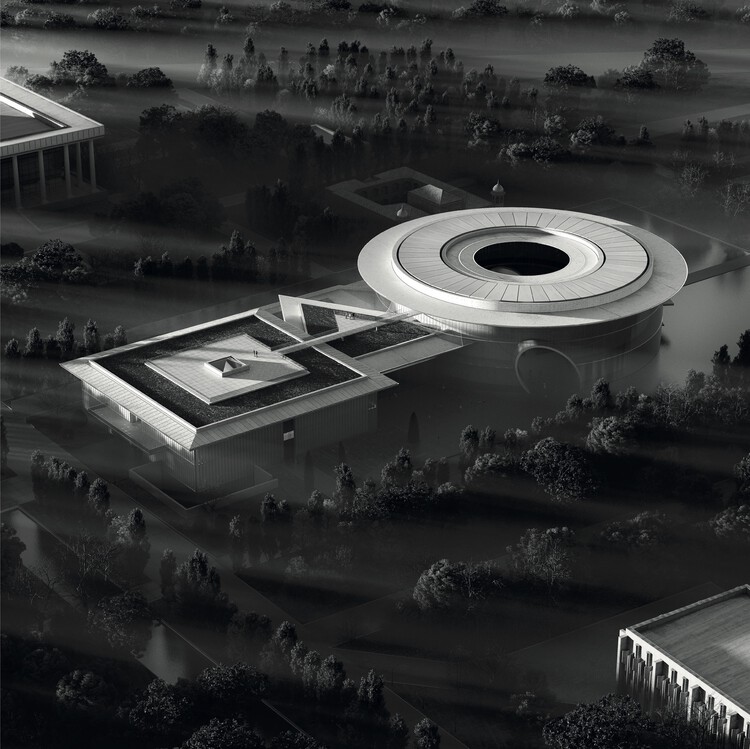
National Museum of Uzbekistan, Render by Tadao Ando Architect & Associates. Image Courtesy of The Uzbekistan Art and Culture Development Foundation
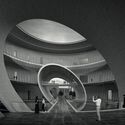
The Uzbekistan Art and Culture Development Foundation (ACDF) has announced the groundbreaking of the National Museum of Uzbekistan, designed by Japanese architect Tadao Ando. Marking Ando's first major project in Central Asia, the museum is envisioned as both an architectural and culturallandmark in Tashkent. Planned to open in March 2028, the building reflects Ando's minimalist architectural language, integrating references to Uzbekistan's heritage with his characteristic use of geometry, natural light, and spatial clarity.
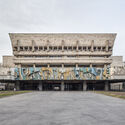
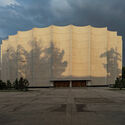
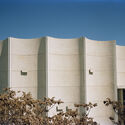
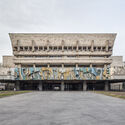
Exhibition Hall of the Union of Artists, Tashkent, Uzbekistan, 2022. Image Courtesy of Armin Linke
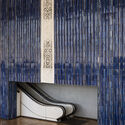
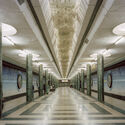
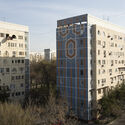
Tashkent, the capital city of Uzbekistan, stands as one of the most populous cities in Central Asia. Situated in the northeastern part of the country, near the border with Kazakhstan, Tashkent has been profoundly shaped and influenced by diverse cultures throughout its history. The most significant transformation of its urban landscape occurred during the Soviet era when the city was rebuilt as a model Soviet city, following the 1966 earthquake that caused substantial damage. During this reconstruction, architects from various regions of the Soviet Union collaborated with local experts, resulting in a unique form of architectural modernism that harmoniously integrated elements of Islamic architecture, indigenous creativity, and cutting-edge engineering achievements of that era. At that time, Tashkent held the esteemed status of a prominent international city in the East.
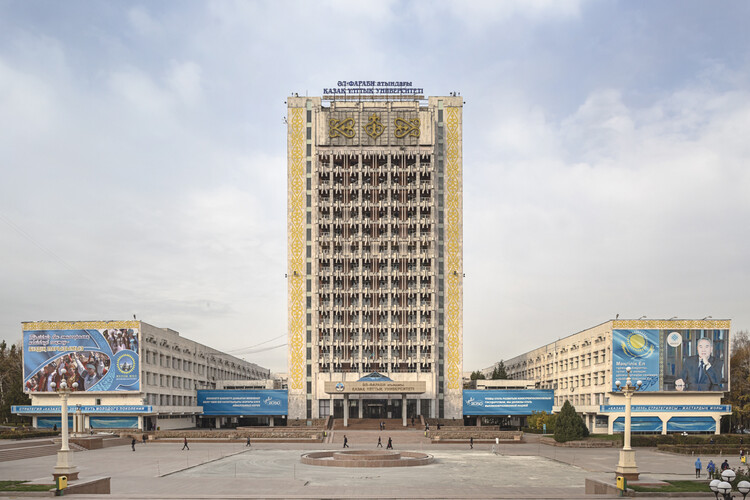
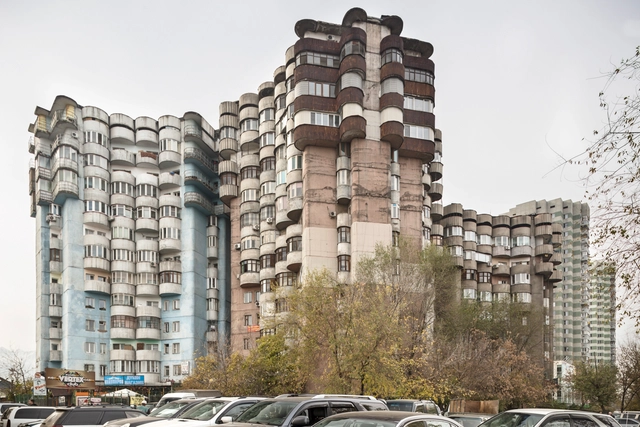
In the second half of the 20th century, Soviet architecture has spread a common aesthetic across highly diverse environments, being an integral part in promoting the totalitarian ideology that disregarded local cultures, envisioning a unified, homogenous society. Nevertheless, in practice, the architecture proved itself susceptible to adaptations and local influences, perhaps nowhere more than in Central Asia. The article looks at the architectural heritage of a geographical area largely excluded from the Western-centric narratives on Soviet Modernism, encouraging a re-reading of a layered and nuanced urban landscape, with images by Roberto Conte and Stefano Perego.