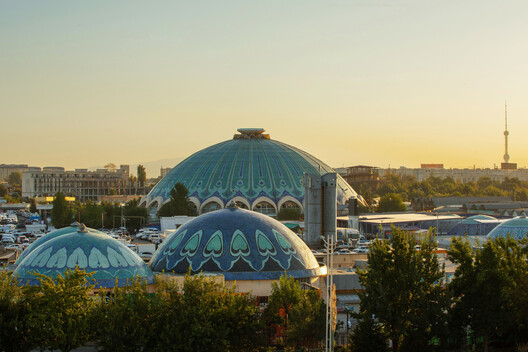
Situated along the historic Silk Road in Central Asia, Tashkent is a city with a long history spanning thousands of years. Its historic architecture is known for its courtyards, domes, and blue ceramics, typical of its Timurid heritage. The capital of Uzbekistan today, it was absorbed into the Russian Empire in the 19th century, before becoming a Soviet republic. While part of the Soviet Union, the city became an example of modernization, celebrating socialist achievements in Asia. A devastating earthquake in 1966 accelerated this modernization as the city was reconstructed, leading to many of the modernist monuments for which Tashkent is known today.
Efforts to rebuild after the earthquake attracted architects and specialists from various regions of the USSR. The plan for the city involved key layout strategies arranged along two main axes. A governmental core was situated at the intersection, while cultural buildings extended to the east and west. Thus, the new Modernist buildings were intended to be placed on prominent points in the city. Furthermore, their forms and functionality were designed to connect them to their contexts. Many buildings were positioned facing public squares, reflecting the socialist ideal of collective gathering.
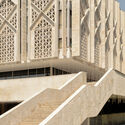
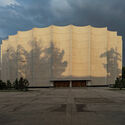
The reconstruction of Tashkent brought together three concepts pursued by the Soviet leaders: Modernism, international socialism, and the local culture of Central Asia. The universal intentions of Modernism were appreciated, but an alternative to Western Modernism was sought throughout the 60s, 70s, and 80s. This can be seen when comparing an earlier modern example, such as the Panoramic Cinema, with its purer, geometric form, and a later one, such as the State Museum of History. Here, ornament is not a crime, and patterning from historic Uzbek architecture can be seen. Thus, the use of technology and materials associated with Modernism, as well as its bold forms, is coupled with a contextual and climatic anchoring in Central Asia.
Related Article
Tashkent Modernism XX/XXI: A Research and Preservation Project for Uzbekistan's Architectural HeritageWith the dissolution of the Soviet Union, many buildings from this era faced neglect, disrepair, and demolition. Their appreciation waned with the end of the ideology that produced them. Whilst some countries purposefully removed their Soviet legacy, Uzbekistan did less of this, and much of its heritage has survived. The demolition of the House of Cinema in 2017, however, raised alarm bells. This led to the Uzbekistan Art and Culture Development Foundation (ACDF) launching the Tashkent Modernism XX/XXI initiative, "an extensive research project that documents, reinterprets, and preserves the legacy of architectural modernism in the capital of Uzbekistan."
The initiative brought together architects, researchers, and specialists from around the world, including a team from the Department of Architecture and Urban Studies at Politecnico di Milano, and was coordinated by the Milan-based architecture studio Grace. Extensive studies were made on 24 sites. Building structures were assessed, and original drawings were studied. Interviews were conducted, including with social groups and the living architects of the projects. An inaugural conference, Where in the World is Tashkent?, was held in 2023, involving a keynote lecture by Rem Koolhaas and prominent Uzbek and international experts. An exhibition was held in both Milan and Tashkent covering two years' worth of research, and the project was presented at the Sharjah Architecture Triennale.
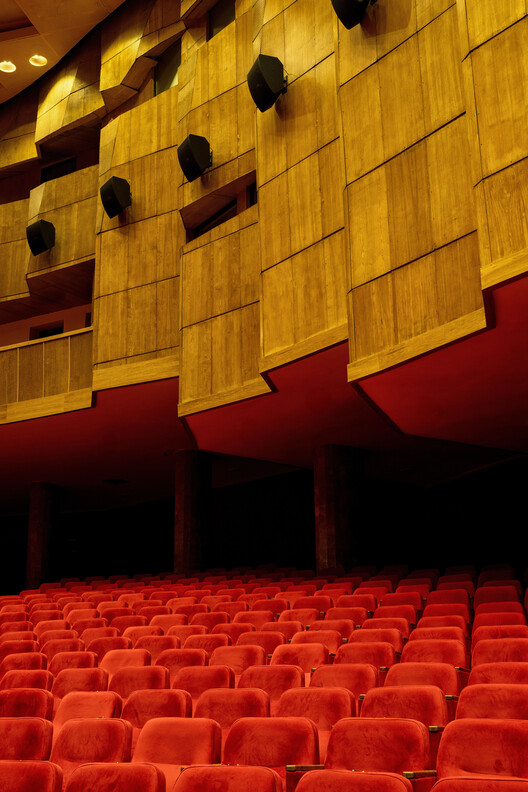
The initiative was successful in raising awareness of the importance of Tashkent's Modernist treasures and their vulnerability to disrepair, alterations, and demolition. Its efforts resulted in 20 buildings being listed as national heritage sites, as well as the rescue from demolition and rehabilitation of the Republican House of Tourism, which is being transformed into the French Cultural Center and Restoration Center. There are also plans to restore the State Museum of Arts to its original state before a glazed facade was added in the 90s.
Tashkent Modern XX/XXI illustrated the city's unique position in the history of Modernism and urbanism, gathering ideas from a global perspective to regional solutions. The research project brought together various parties and individuals, including the government, activists, and specialists from multiple countries. It culminated in a proposal to list Tashkent Modernism as a UNESCO World Heritage Site, as well as a book published under the same title. In 2024, a photography book, Tashkent: A Modernist Capital, was edited by the ACDF and published by Rizzoli. Below is a sample of the city's landmark modern buildings that give the city its character.
Palace of Peoples' Friendship
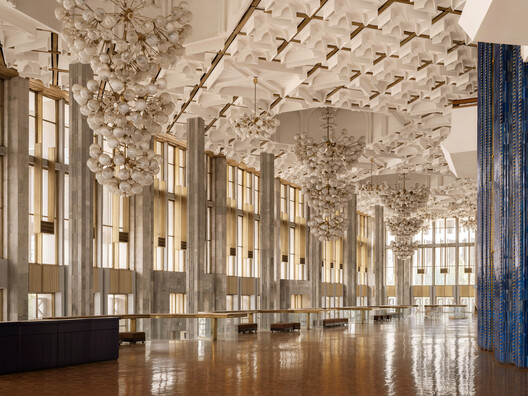
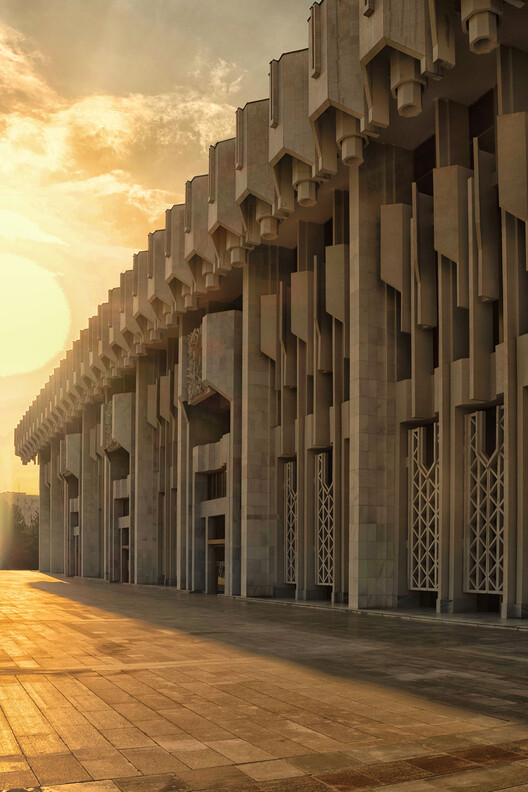
Designed by the USSR's Central Scientific Research and Experimental Design Institute, architects Yevgeny Rozanov and Elena Sukhanova, specifically, the Palace was completed in 1981 to provide several functions that a new society called for. It is a concert hall, a cinema, and a space for political gatherings, positioned on a large public plaza. Its basic form follows a typical Modernist approach, but it is characterized by a facade made of Uzbek panjara screens reimagined in concrete and stone and acting as solar shading.
Big Solar Furnace
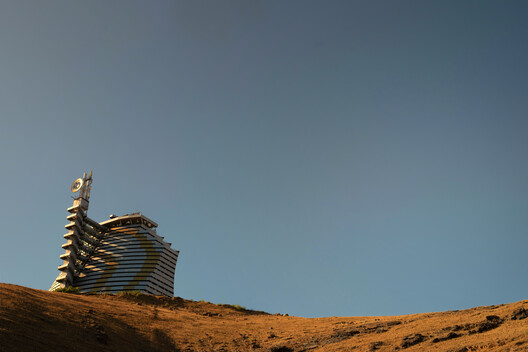
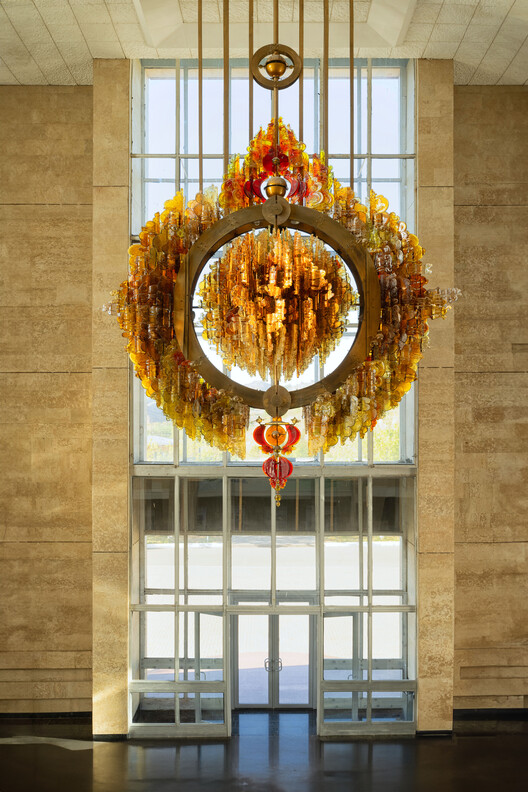
Also known as the heliocomplex "Sun", the Big Solar Furnace was completed in 1987 with the purpose of harnessing clean energy for the production of metals and heat-resistant materials used in the space program. It consists of five main elements: 62 heliostats, the concentrator, the manufacturing tower, and the main building. Its architecture is notable, with its semitransparent shading, the brutalist facade, the conference hall, and several pieces of sun-inspired artworks by Irena Lipene.
Chorsu Market
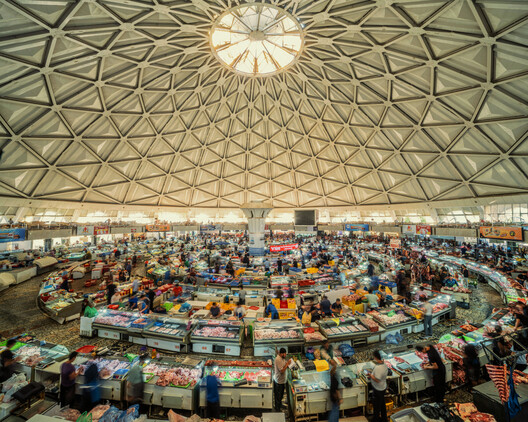
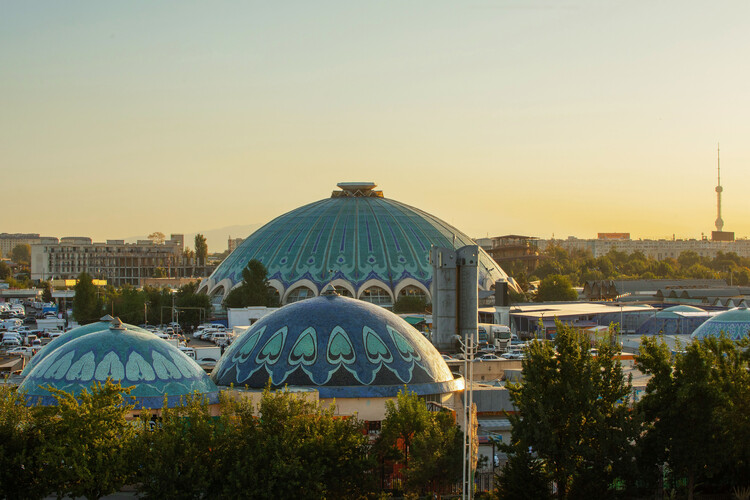
Situated in one of Tashkent's old neighborhoods, Chorsu Market's architect, Vladimir Azimov, sought to reference the domed buildings of the city's historic architecture. The result is a market hall covered by a gigantic dome constructed in reinforced concrete, surrounded by seven smaller domes for other trading functions. The domes' decoration in blue tiles is a striking example of the introduction of Central Asian aesthetics to a modern structure.
State Museum of History
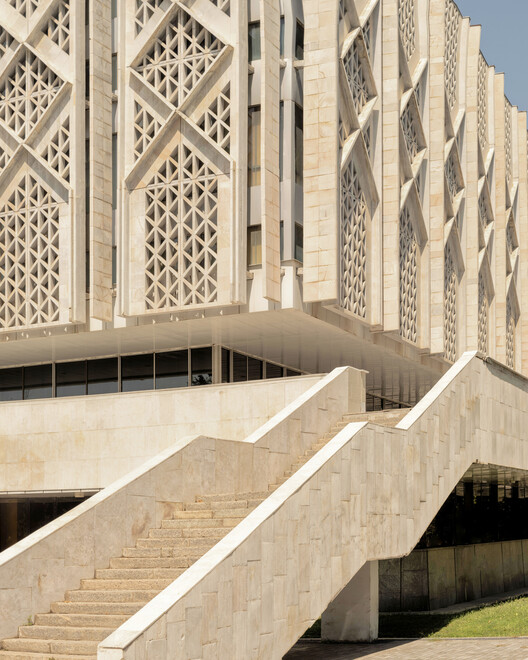
Designed by architects Yevgeny Rozanov and Vsevolod Shestopalov in 1970, the museum building has a simple modernist form of a cube with four near-identical facades elevated above a platform. The repetitive prefabricated panels echo Islamic motifs of historical architecture found in the ancient cities of Central Asia and beyond. It was originally conceived and opened as the Museum of Lenin, marking the centennial of the former leader's birth.
Kosmonavtlar Station
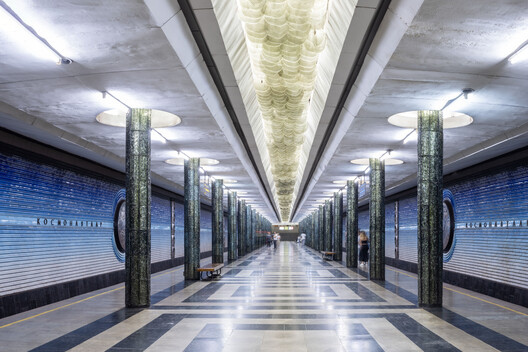
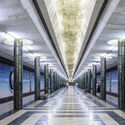
The Tashkent metro opened in 1977 as part of the city's modernization, the first in Central Asia and the seventh in the Soviet Union. Named after Cosmonauts Avenue, where it is sited, the Kosmonavtlar Metro Station takes inspiration from the USSR's space program. Its architects, Sergo Sutyagin and Sergei Sokolov, created an interior dedicated to the cosmos, with linear chandeliers representing the Milky Way and frescoes illustrating themes in historic astronomy and modern space travel.
State Museum of Arts
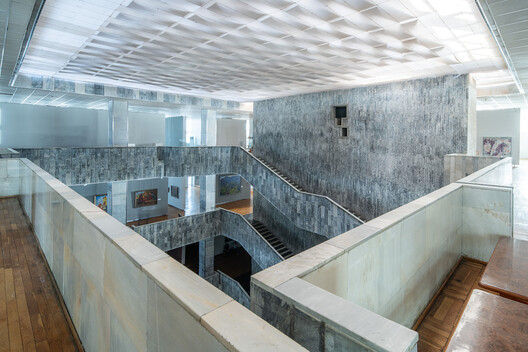
Like the Central Exhibition Hall of the Academy of Arts and the Museum of History, the State Museum of Arts is composed of a square plan, an elevated volume, and a large atrium with a staircase offering a visual connection between floors. The original facade of the building, however, was clad in a minimalist grid of gray granite, unlike its later decorative facade addition. It replaces a previous museum deemed too damaged for repair after the 1966 earthquake.
Alisher Navoi Cinema Palace
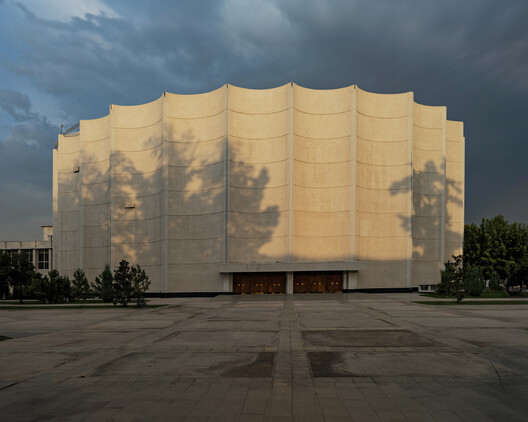
The Alisher Navoi Cinema Palace is also known as the Panoramic Cinema after the new technology of giant, curved movie screens at the time. This curve gives the Cinema Palace its cylindrical form, which is clad in concave curved panels, giving the appearance of a fluted column. Built in 1964, it also functions as a theater and a host for various events. Its importance is reflected in being set back from the street, forming a plaza, and being visible from a distance.
Zhemchug Residential Building
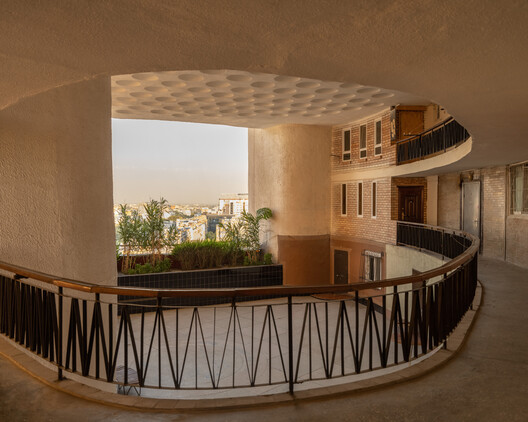
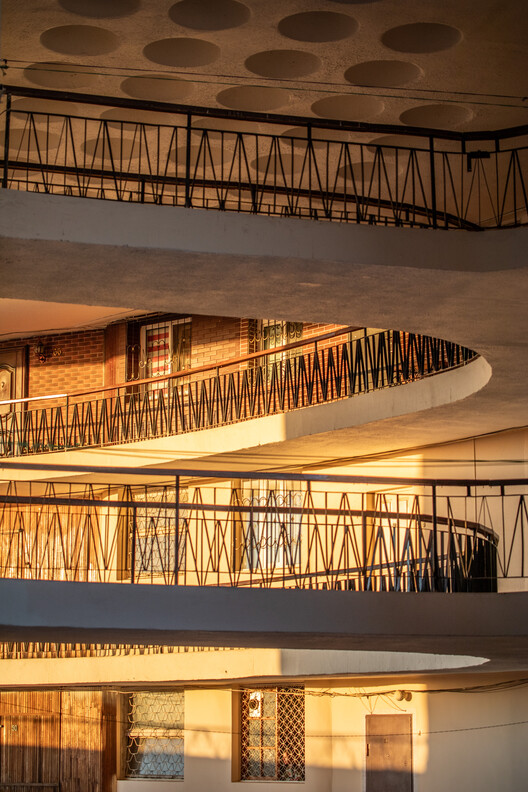
Tashkent's vernacular architecture is characterized by the mahalla districts, residential areas with inner courtyard homes that encourage multi-family living. At times, these districts are prized and celebrated, while at others they are seen as a relic of the past. The Zhemchug Residential Building is a unique experiment in bringing the mahalla concept into a multi-story residential tower. Architect Ophelia Aydinova's proposal of 1985 included a communal courtyard for every three-story section of the building, fostering community engagement between residents.
Central Exhibition Hall of the Academy of Arts
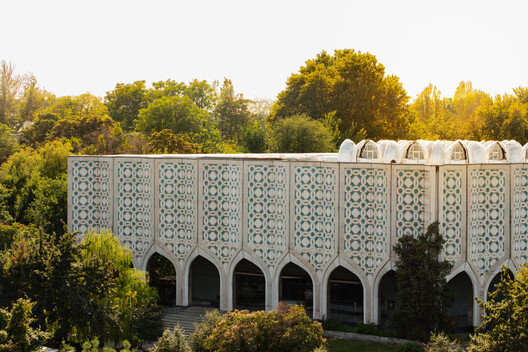
Despite following similar modernist design principles as the State Museum of Arts and being built at the same time (1974), the surface treatments contrast sharply. Here, patterning derived from historic regional Islamic architecture is applied extensively, most notably on the facade and entrance portico.
Hotel Uzbekistan
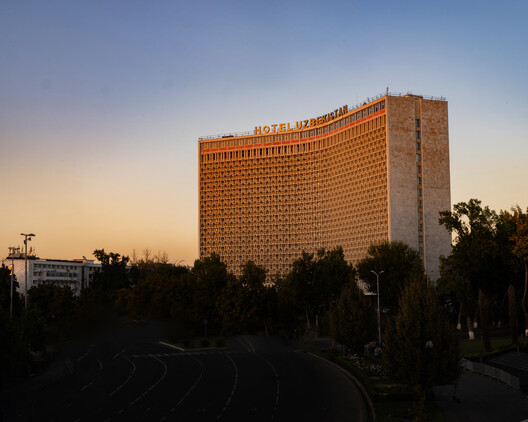
The Hotel Uzbekistan is one of Tashkent's most recognizable landmarks, a 17-story building that towers above one of the city's main roads. Its striking, curved facade is formed of a single repetitive treatment across its entirety, apart from the very top and very bottom. The hotel played an important role in Tashkent's designation as an exemplar city of the Soviet East, hosting visitors from around the world, including delegates from newly independent countries.
This article is part of the ArchDaily Topic: Rethinking Heritage: How Today's Architecture Shapes Tomorrow's Memory. Every month we explore a topic in-depth through articles, interviews, news, and architecture projects. We invite you to learn more about our ArchDaily Topics. And, as always, at ArchDaily we welcome the contributions of our readers; if you want to submit an article or project, contact us.


