1. ArchDaily
  2. Modernist

Modernist: The Latest Architecture and News

Plattform: A Spotlight on Modernist Residential Architecture in Norway

Subscriber Access | 

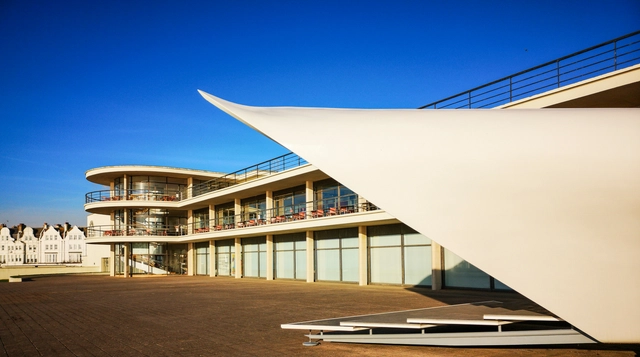
Modernist architecture came about in the early 20th century as a response to large-scale changes in technology, construction, and society; particularly through the use of glass, steel, and reinforced concrete. The style was typically associated with the function of buildings from an analytical viewpoint, rational use of materials, the elimination of ornamentation, and openness to structural innovation.

Paul Tunge is a Norwegian writer, director, and cinematographer of Arthouse Films who has been involved in film production since the early 2000s. Having written, directed, shot, and produced four independent films, alongside 3 documentaries, each of his projects has been featured during major film festivals across all continents, in galleries, and various national cinemas and cinematheques.

Plattform: A Spotlight on Modernist Residential Architecture in Norway - Image 1 of 4Plattform: A Spotlight on Modernist Residential Architecture in Norway - Image 2 of 4Plattform: A Spotlight on Modernist Residential Architecture in Norway - Image 3 of 4Plattform: A Spotlight on Modernist Residential Architecture in Norway - Image 4 of 4Plattform: A Spotlight on Modernist Residential Architecture in Norway - More Images+ 1

Kampala on a Global Stage: Doreen Adengo’s Cross-Disciplinary Legacy

Subscriber Access | 

Doreen Adengo, Ugandan architect and trailblazer, passed away on July the 22nd of this year, after battling a long-term illness. She founded Adengo Architecture, a studio based out of her home city of Kampala. A designer who studied in the United States, worked in firms in New York, Washington, and London, and was teaching at Uganda Martyrs University – her legacy is nothing short of extraordinary. It is a legacy that spans disciplines and geographies – but a legacy, too, that is deeply rooted in the context of Africa, Uganda, and Kampala.

Kampala on a Global Stage: Doreen Adengo’s Cross-Disciplinary Legacy - Image 1 of 4Kampala on a Global Stage: Doreen Adengo’s Cross-Disciplinary Legacy - Image 2 of 4Kampala on a Global Stage: Doreen Adengo’s Cross-Disciplinary Legacy - Image 3 of 4Kampala on a Global Stage: Doreen Adengo’s Cross-Disciplinary Legacy - Image 4 of 4Kampala on a Global Stage: Doreen Adengo’s Cross-Disciplinary Legacy - More Images+ 7

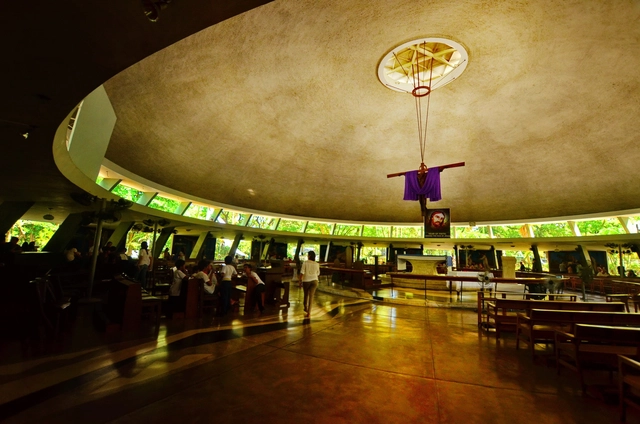
Sacred Modernity: An Exploration of the Modernist Movement in Mid-Century Holy Architecture

Subscriber Access | 

If one were asked to picture a Catholic Church, the first image to come to mind would probably resemble a medieval gothic cathedral with buttresses, pointed arches, and a spire pointing toward the sky. On second thought, many more styles could easily be identified as catholic architecture: the simple yet grandiose structures of the Romanesque or maybe the ornate styles of Baroque and Rococo. An image more difficult to associate with sacred architecture is that of Modernism. The Roman Catholic Church is a particularly conservative establishment. Modernism, on the other hand, is revolutionary; it is rational, functional, and technical; it rejects ornaments and embraces innovation. Surprisingly, in the years after the end of the Second World War, places of worship defied expectations. Blocks of concrete, raw materials, angular shapes, and exposed structures have all been employed to break from tradition and create churches that barely resemble a church. This article will explore Modernist mid-century Church architecture with the support of images from Jamie McGregor Smith.

Sacred Modernity: An Exploration of the Modernist Movement in Mid-Century Holy Architecture - Image 1 of 4Sacred Modernity: An Exploration of the Modernist Movement in Mid-Century Holy Architecture - Image 2 of 4Sacred Modernity: An Exploration of the Modernist Movement in Mid-Century Holy Architecture - Image 3 of 4Sacred Modernity: An Exploration of the Modernist Movement in Mid-Century Holy Architecture - Image 4 of 4Sacred Modernity: An Exploration of the Modernist Movement in Mid-Century Holy Architecture - More Images+ 5

Exploring the Architecture of Star Wars: In a Galaxy Far Away, Using the Tangible for Futuristic Visualizations

Depicting architectural visualizations of the future is no easy feat, so it makes much sense for designers to use aspects of our existing architecture as a foundation for these fictional worlds. Despite recent advancements in terms of animation technologies and CGI, there is still substantial use of existing architecture to provide tangible structural elements in film.

In terms of recycling architectural aesthetics, elements of the past and future are often integrated to create a hybridized style, an amalgamation of Retro, Dystopian, Modernist and Futuristic themes. From the resurgence of ancient pyramids and temples, to skylines reminiscent of the city of New York, visualizations vary depending on different notions of what our future may look like.
Exploring the Architecture of Star Wars: In a Galaxy Far Away, Using the Tangible for Futuristic Visualizations - Image 1 of 4Exploring the Architecture of Star Wars: In a Galaxy Far Away, Using the Tangible for Futuristic Visualizations - Image 2 of 4Exploring the Architecture of Star Wars: In a Galaxy Far Away, Using the Tangible for Futuristic Visualizations - Image 3 of 4Exploring the Architecture of Star Wars: In a Galaxy Far Away, Using the Tangible for Futuristic Visualizations - Image 4 of 4Exploring the Architecture of Star Wars: In a Galaxy Far Away, Using the Tangible for Futuristic Visualizations - More Images+ 8

Form, Function - Freedom? Modernism, Ocean Liners, and Class

Subscriber Access | 

The early 20th century saw the birth of Modernist architecture. It brought with it a central architectural movement that in turn birthed off-shoots of its own. A figure often seen as the defining face of this movement is Le Corbusier, whose 1923 treatise Toward an Architecture was influential to his Modernist contemporaries – a manifesto including the phrase “a house is a machine for living in” where good architecture would have to be intrinsically linked to function and the demands of industry.

Form, Function - Freedom? Modernism, Ocean Liners, and Class - Image 1 of 4Form, Function - Freedom? Modernism, Ocean Liners, and Class - Image 2 of 4Form, Function - Freedom? Modernism, Ocean Liners, and Class - Image 3 of 4Form, Function - Freedom? Modernism, Ocean Liners, and Class - Image 4 of 4Form, Function - Freedom? Modernism, Ocean Liners, and Class - More Images+ 11

Community Uproar Preserves One of Kyiv's Most Famous Modernist Building Facades

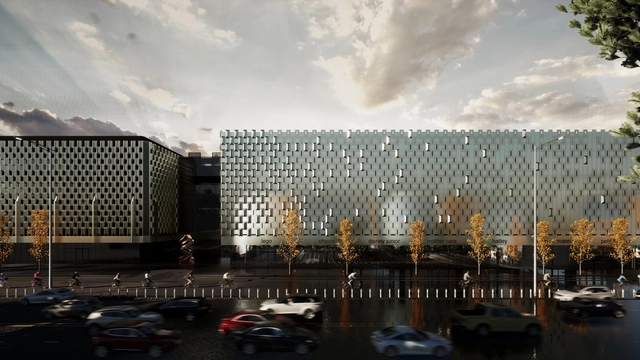
Following news of Edelburg Development's plans to completely remodel the modernist facade of Dytiachyi Svit (Kids’ World), one of Kyiv's most notable modernist buildings from the Soviet era, and replace it with an "unrecognizable" vibrant and contemporary design, members of the community and activists protested against the intervention, forcing all parties to agree on a design competition to restore the historical facade. Dmytro Aranchii Architects was selected as the winner of the competition, with a proposal that "traces the transition from the original building to the new one" in a minimalistic and recognizable stylization, preserving the original facade and complimenting it with a contemporary intervention.

Community Uproar Preserves One of Kyiv's Most Famous Modernist Building Facades - Image 1 of 4Community Uproar Preserves One of Kyiv's Most Famous Modernist Building Facades - Image 2 of 4Community Uproar Preserves One of Kyiv's Most Famous Modernist Building Facades - Image 3 of 4Community Uproar Preserves One of Kyiv's Most Famous Modernist Building Facades - Image 4 of 4Community Uproar Preserves One of Kyiv's Most Famous Modernist Building Facades - More Images+ 8

Ground Level: The Mixed-Use Typology

Subscriber Access | 

Buildings around the world are getting taller. Since the year 2000, global skyscraper construction has increased by 402%. Cities like Dubai are home to nearly 1000 high-rise buildings, and New York’s vibrant luxury real estate market has shown no signs of slowing down, with more high-rise additions slated to be added to its already towering skyline. There’s good in this – high-rises create much-needed space in already dense cities and can reduce urban sprawl in city centres, allowing for better preservation of natural areas.

Ground Level: The Mixed-Use Typology - Image 1 of 4Ground Level: The Mixed-Use Typology - Image 2 of 4Ground Level: The Mixed-Use Typology - Image 3 of 4Ground Level: The Mixed-Use Typology - Image 4 of 4Ground Level: The Mixed-Use Typology - More Images+ 5

"I Believe in Buildings Like This, in the Physical Quality of Architecture": David Chipperfield Discusses Neue Nationalgalerie and the Work of Mies Van der Rohe

The Neue Nationalgalerie, designed by Mies van der Rohe, reopened to the public after an extensive renovation project carried out by the practice of David Chipperfield. In this video created by Mies van der Rohe House, Chipperfield shares his thoughts on the design language of Mies van der Rohe while also discussing the qualities of Neue Nationalgalerie and the future role of architectural monuments. The interview is part of the film and exhibition project Mies Goes Future, which invites artists, architects, and historians to explore the work of the renowned Modernist architect as a source of inspiration for contemporary practice.
"I Believe in Buildings Like This, in the Physical Quality of Architecture": David Chipperfield Discusses Neue Nationalgalerie and the Work of Mies Van der Rohe - Image 1 of 4"I Believe in Buildings Like This, in the Physical Quality of Architecture": David Chipperfield Discusses Neue Nationalgalerie and the Work of Mies Van der Rohe - Image 2 of 4"I Believe in Buildings Like This, in the Physical Quality of Architecture": David Chipperfield Discusses Neue Nationalgalerie and the Work of Mies Van der Rohe - Image 3 of 4"I Believe in Buildings Like This, in the Physical Quality of Architecture": David Chipperfield Discusses Neue Nationalgalerie and the Work of Mies Van der Rohe - Image 4 of 4I Believe in Buildings Like This, in the Physical Quality of Architecture: David Chipperfield Discusses Neue Nationalgalerie and the Work of Mies Van der Rohe - More Images+ 5

Less is More: Mies van der Rohe, a Pioneer of the Modern Movement

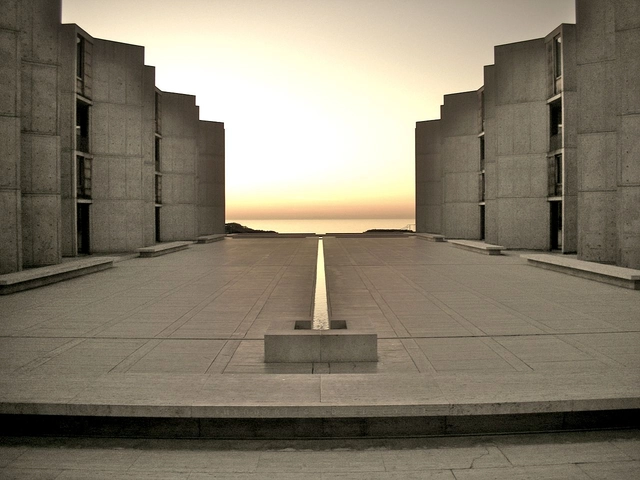
Ludwig Mies van der Rohe (27 March 1886 – 17 August 1969) is one of the most influential architects of the 20th century, known for his role in the development of the most enduring architectural style of the era: modernism. Born in Aachen, Germany, Mies' career began in the influential studio of Peter Behrens, where Mies worked alongside two other titans of modernism, Walter Gropius and Le Corbusier. For almost a century, Mies' minimalist style has proved very popular; his famous aphorism "less is more" is still widely used, even by those who are unaware of its origins.

Less is More: Mies van der Rohe, a Pioneer of the Modern Movement - Image 1 of 4Less is More: Mies van der Rohe, a Pioneer of the Modern Movement - Image 2 of 4Less is More: Mies van der Rohe, a Pioneer of the Modern Movement - Image 5 of 4Less is More: Mies van der Rohe, a Pioneer of the Modern Movement - Image 6 of 4Less is More: Mies van der Rohe, a Pioneer of the Modern Movement - More Images+ 3

The Creative Process of the Four Pioneers of Modern Architecture

The Architectural realm has always been torn between artistic and rational cosmos. During our architectural studies, we are rarely given one specific methodology with which we can approach a project, resulting in diverse outcomes and methods of designing. However, in order for us to discover our personal stand, we must look back at the logic and philosophy of the great pioneers who influenced architecture before us.

Le Corbusier, Mies van der Rohe, Frank Lloyd Wright, and Louis Kahn are four of the most notable architects to date. Read on to find out more about the creative process of these four leaders of the modern era, and why their projects and practices are still influential to our modern times.

CRA Reveals BIOTIC, a 1-Million Square Meter Extension of Brasilia's Historical Master Plan

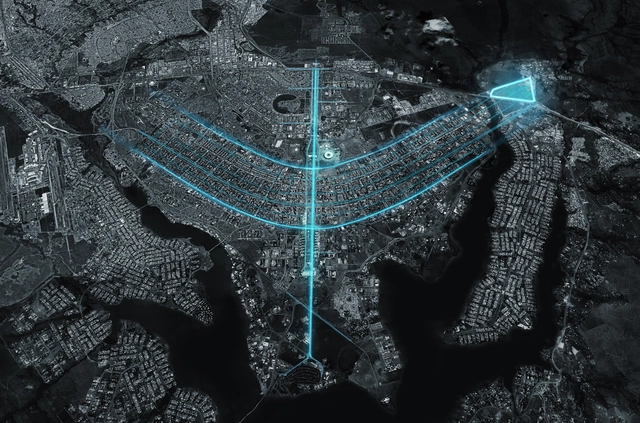
CRA - Carlo Ratti Associati has unveiled a major extension for Brazilia, reinterpreting “Lúcio Costa and Oscar Niemeyer’s modernist master plan for Biotic - a high-tech innovation district immersed in nature”. Developed in collaboration with Ernst&Young, the project that started in 2018 reimagines primarily the superblocks.

CRA Reveals BIOTIC, a 1-Million Square Meter Extension of Brasilia's Historical Master Plan - Image 1 of 4CRA Reveals BIOTIC, a 1-Million Square Meter Extension of Brasilia's Historical Master Plan - Image 2 of 4CRA Reveals BIOTIC, a 1-Million Square Meter Extension of Brasilia's Historical Master Plan - Image 3 of 4CRA Reveals BIOTIC, a 1-Million Square Meter Extension of Brasilia's Historical Master Plan - Image 4 of 4CRA Reveals BIOTIC, a 1-Million Square Meter Extension of Brasilia's Historical Master Plan - More Images+ 1

Floodwaters Threaten Once More The Farnsworth House

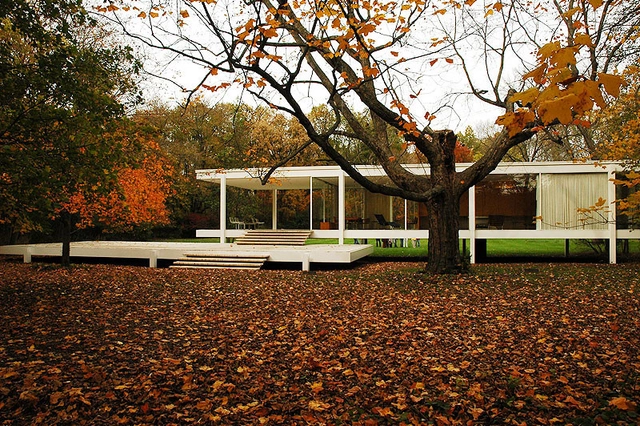
Built in a flood plain along the Fox River, the Farnsworth House, designed by Ludwig Mies van der Rohe is endangered again. Floodwaters are threatening the modernist house once more, as water levels are rising to reach the top of the house’s steel columns, covering its lower terrace.

Modernist San Francisco Map: Guide to Modernist Architecture in Bay Area

Description via Amazon. Guide map to Modernist architecture across San Francisco and the Bay Area. This two-sided folded map with original photography by Jason Woods is edited by Mitchell Schwarzer, Professor at California College of the Arts, and author of numerous books about architecture. The guide features over fifty influential examples of Modernist and Brutalist architecture from Berkeley and Oakland to Palo Alto and San Mateo. Details for individual buildings are supported by an introduction to Modernism in the Bay Area by Schwarzer. Architects featured include Vernon de Mars, Beverley Thorne, Skidmore, Owings & Merrill, Frank Lloyd Wright, Richard Neutra, Pier Luigi Nervi, Mario Ciampi, Kevin Roche and John Dinkeloo and many others.

Eastern Blocks: Concrete Landscapes of the Former Eastern Bloc

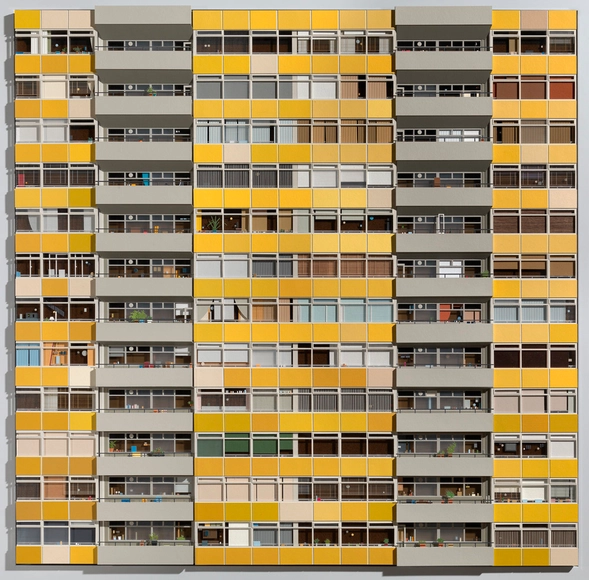
‘Sleeping districts’ of Moscow, Plattenbauten of East Berlin, modernist estates of Warsaw, Kyiv`s Brezhnevki: although these are home to the vast majority of city dwellers, post-war suburbs of central and eastern Europe have been invisible for decades.

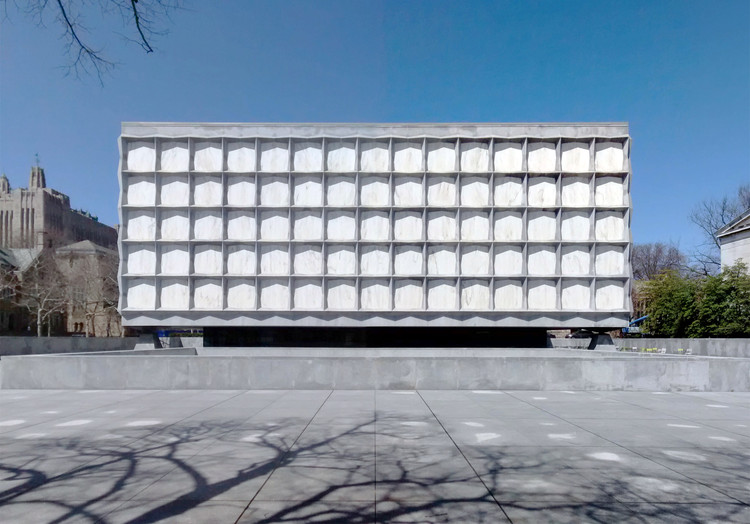
AD Classics: Beinecke Rare Book & Manuscript Library / SOM

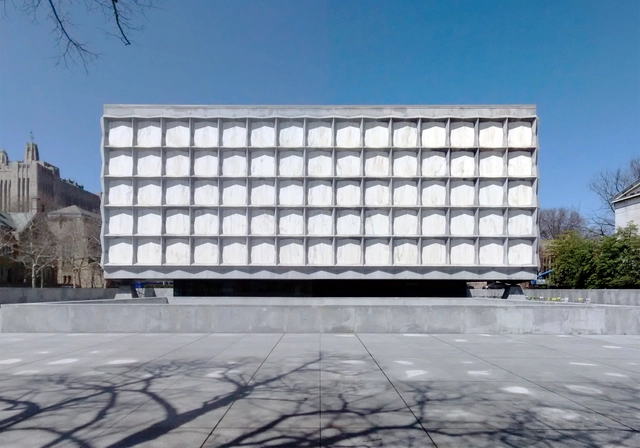
Cloistered by a protective shell of stone, the Beinecke Rare Book and Manuscript Library is one of the world’s foremost collections of rare manuscripts. Opened in 1963, the library is renowned for its translucent marble façade and the world-renowned glass book tower sheltered within – a dramatic arrangement resulting from the particular requirements of a repository for literary artifacts. This unique design, very much in the Modernist lineage but in contrast to the revivalist styles of the rest of Yale’s campus, has only become appreciated thanks to the passage of time; the same bold choices which are now celebrated were once seen as a cause for contempt and outrage.

AD Classics: Beinecke Rare Book & Manuscript Library / SOM - University, FacadeAD Classics: Beinecke Rare Book & Manuscript Library / SOM - University, FacadeAD Classics: Beinecke Rare Book & Manuscript Library / SOM - University, FacadeAD Classics: Beinecke Rare Book & Manuscript Library / SOM - UniversityAD Classics: Beinecke Rare Book & Manuscript Library / SOM - More Images+ 10

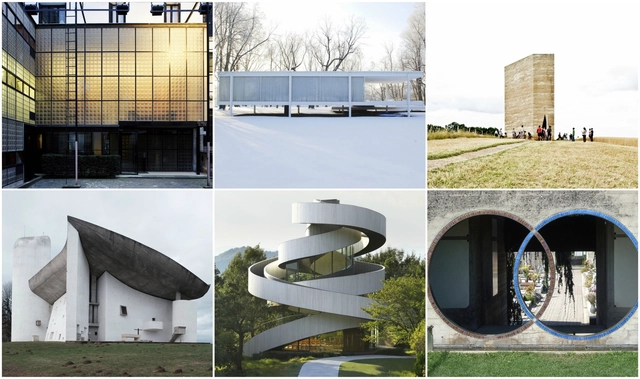
10 Hard-To-Reach Masterpieces And How To Get There

Visiting architectural masterpieces by the greats can often feel like a pilgrimage of sorts, especially when they are far away and hard to find. Not everyone takes the time to visit these buildings when traveling, which makes getting there all the more special. With weird opening hours, hard-to-reach locations and elusive tours we thought we’d show a selection from our archives of masterpieces (modernist to contemporary) and what it takes to make it through their doors. Don’t forget your camera! 

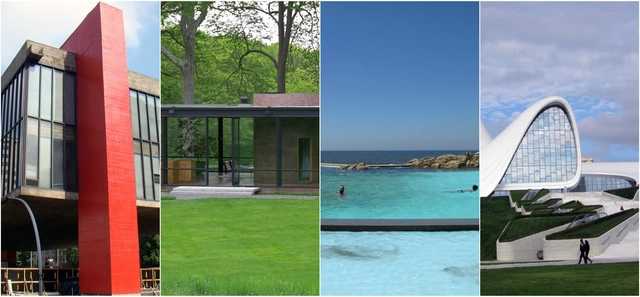
6 Unique Long Weekend Travel Ideas for Architects

Subscriber Access | 

The "architectural pilgrimage" is much more than just everyday tourism. Studying and admiring a building through text and images often creates a hunger in architects, thanks to the space between the limitations of 2D representation and the true experience of the building. Seeing a building in person that one has long loved from a distance can become something of a spiritual experience, and architects often plan vacations around favorite or important spaces. But too often, architects become transfixed by a need to visit the same dozen European cities that have come to make up the traveling architect's bucket list.

The list here shares some sites that may not have made your list just yet. Although somewhat less well known than the canonical cities, the architecture of these six cities is sure to hold its ground against the world's best. The locations here make ideal long weekend trips (depending of course on where you are traveling from), although it never hurts to have more than a few days to really become immersed in a city. We have selected a few must-see buildings from each location, but each has even more to offer than what you see here—so don't be afraid to explore!