1. ArchDaily
  2. Carlo Ratti

Carlo Ratti: The Latest Architecture and News

Frida Escobedo and Ma Yansong Among 11 International Architects Named 2026 AIA Honorary Fellows

The American Institute of Architects (AIA) has elevated 78 architects to its College of Fellows, recognizing members whose work has demonstrated a sustained impact on the discipline and on society. Fellowship is described as one of the Institute's highest honors and is conferred upon architects who have advanced design excellence, strengthened professional practice, expanded architectural education, or contributed to public service. Selected by a nine-member Jury of Fellows chaired by Sanford Garner of RG Collaborative, this year's cohort reflects a wide range of geographic and professional backgrounds, with honorees representing firms, public agencies, and academic institutions across the United States.

Frida Escobedo and Ma Yansong Among 11 International Architects Named 2026 AIA Honorary Fellows - Image 1 of 4Frida Escobedo and Ma Yansong Among 11 International Architects Named 2026 AIA Honorary Fellows - Image 2 of 4Frida Escobedo and Ma Yansong Among 11 International Architects Named 2026 AIA Honorary Fellows - Image 3 of 4Frida Escobedo and Ma Yansong Among 11 International Architects Named 2026 AIA Honorary Fellows - Image 4 of 4Frida Escobedo and Ma Yansong Among 11 International Architects Named 2026 AIA Honorary Fellows - More Images+ 9

The Venice Biennale Over Time: Classic Projects and Stories from Architecture’s Most Iconic Exhibition

Since 1895, the Venice Biennale has invited the world to witness the evolving landscape of contemporary art. In 1980, the event expanded its reach with the launch of the Architecture Biennale, which quickly became one of the discipline’s most influential global platforms. Today, alternating annually between contemporary art and architecture, the Biennale affirms itself as a space where disciplines and ideas intersect. Always timely and provocative, it fuels essential debates on the role of art and architecture in the contemporary world. Among its most recent editions are the 17th Architecture Biennale, themed How Will We Live Together? (2021), curated by Hashim Sarkis; The Laboratory of the Future (2023), by Lesley Lokko; and Intelligens. Natural. Artificial. Collective (2025), curated by Carlo Ratti and open to the public until the end of November.

The Venice Biennale Over Time: Classic Projects and Stories from Architecture’s Most Iconic Exhibition - Image 1 of 4The Venice Biennale Over Time: Classic Projects and Stories from Architecture’s Most Iconic Exhibition - Image 2 of 4The Venice Biennale Over Time: Classic Projects and Stories from Architecture’s Most Iconic Exhibition - Image 3 of 4The Venice Biennale Over Time: Classic Projects and Stories from Architecture’s Most Iconic Exhibition - Image 4 of 4The Venice Biennale Over Time: Classic Projects and Stories from Architecture’s Most Iconic Exhibition - More Images+ 10

The 2025 Venice Architecture Biennale Ends, Marking the Event’s Most Visited Edition

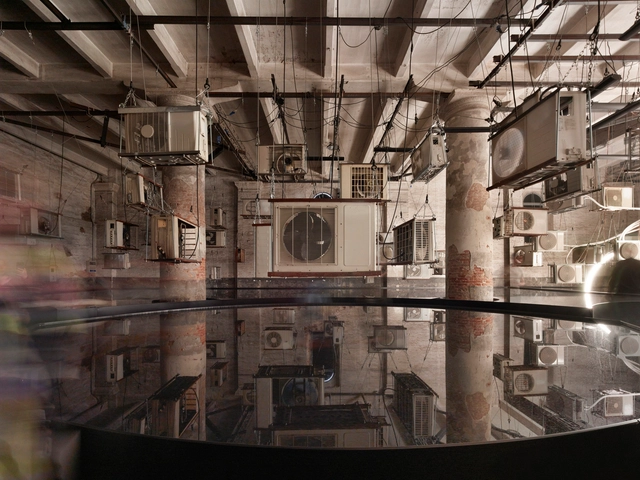
The 19th International Architecture Exhibition of La Biennale di Venezia, "Intelligens. Natural. Artificial. Collective.," curated by Carlo Ratti, closed on 23 November 2025 as the most visited Architecture Biennale to date. The exhibition recorded 298,000 visitors, in addition to 17,584 preview attendees, surpassing previous editions despite the temporary closure of the Central Pavilion for restoration. Bringing together 303 projects and 758 invited architects, along with 66 National Participations and 11 Collateral Events, the edition extended across the Giardini, Arsenale, and multiple sites throughout Venice.

The 2025 Venice Architecture Biennale Ends, Marking the Event’s Most Visited Edition - Image 1 of 4The 2025 Venice Architecture Biennale Ends, Marking the Event’s Most Visited Edition - Image 2 of 4The 2025 Venice Architecture Biennale Ends, Marking the Event’s Most Visited Edition - Image 3 of 4The 2025 Venice Architecture Biennale Ends, Marking the Event’s Most Visited Edition - Image 4 of 4The 2025 Venice Architecture Biennale Ends, Marking the Event’s Most Visited Edition - More Images+ 3

ArchDaily Interviews From the 2025 Venice Architecture Biennale as the Exhibition Enters Its Final Week

As the 19th International Architecture Exhibition enters its final week before closing on November 23, the 2025 Venice Architecture Biennale offers a lens through which to revisit the ideas and experiments that have shaped this year's global architectural conversation. Curated by Carlo Ratti under the theme "Intelligens. Natural. Artificial. Collective.", the Biennale brings together more than 750 participants across national pavilions, collateral events, and city-wide installations. Framed around interconnected forms of intelligence, this edition examines architecture's role in navigating climatic instability, evolving technologies, and emerging forms of collaboration.

ArchDaily Interviews From the 2025 Venice Architecture Biennale as the Exhibition Enters Its Final Week - Image 1 of 4ArchDaily Interviews From the 2025 Venice Architecture Biennale as the Exhibition Enters Its Final Week - Image 2 of 4ArchDaily Interviews From the 2025 Venice Architecture Biennale as the Exhibition Enters Its Final Week - Image 3 of 4ArchDaily Interviews From the 2025 Venice Architecture Biennale as the Exhibition Enters Its Final Week - Image 4 of 4ArchDaily Interviews From the 2025 Venice Architecture Biennale as the Exhibition Enters Its Final Week - More Images+ 7

The Intelligens Biennale Gathers the Data, But Fails to Synthesize It

This article introduces our new Opinion section, a format for argument-driven essays on critical questions shaping our field.

The Venice Architecture Biennale has always been larger than itself. Never content with merely being an exhibition, it has always carried ambitions that expand beyond the grounds of Arsenale and Giardini. Rem Koolhaas's Fundamentals sought to deconstruct architecture into a universal grammar; Alejandro Aravena's Reporting from the Front reframed it as a tool for social justice on the ground; Lesley Lokko's The Laboratory of the Future set out to decolonize and decarbonize the architectural canon.

The Intelligens Biennale Gathers the Data, But Fails to Synthesize It  - Image 1 of 4The Intelligens Biennale Gathers the Data, But Fails to Synthesize It  - Image 2 of 4The Intelligens Biennale Gathers the Data, But Fails to Synthesize It  - Image 3 of 4The Intelligens Biennale Gathers the Data, But Fails to Synthesize It  - Image 4 of 4The Intelligens Biennale Gathers the Data, But Fails to Synthesize It  - More Images+ 13

Architecture on Water: Adaptive and Ecological Approaches from Venice 2025

This curated selection of projects from the 2025 Venice Architecture Biennale explores how architects and designers are rethinking the relationship between the built environment and water in response to the global climate crisis. As sea levels rise and extreme weather events increase, water is no longer a distant threat but an immediate design condition. Rather than resisting it, these projects look at how architecture can coexist with, adapt to, and even regenerate through natural forces. Together, they suggest a shift toward working with the elements, acknowledging water not as a limit to construction but as an active participant in shaping future environments.

Architecture on Water: Adaptive and Ecological Approaches from Venice 2025 - Image 1 of 4Architecture on Water: Adaptive and Ecological Approaches from Venice 2025 - Image 2 of 4Architecture on Water: Adaptive and Ecological Approaches from Venice 2025 - Image 3 of 4Architecture on Water: Adaptive and Ecological Approaches from Venice 2025 - Image 4 of 4Architecture on Water: Adaptive and Ecological Approaches from Venice 2025 - More Images+ 10

CRA–Carlo Ratti Associati Designs Self-Sufficient Bivouac Pavilion for the 2026 Milano Cortina Winter Olympics

CRA–Carlo Ratti Associati, in collaboration with Salone del Mobile.Milano, recently unveiled the design of a digitally fabricated bivouac set to debut as an urban pavilion during the 2026 Winter Olympics in Milan. The digitally fabricated wooden structure is designed to be self-sufficient, incorporating systems for energy production and storage, as well as water harvesting through air condensation. After its debut at Milano Cortina 2026, the structure is planned to be airlifted by helicopter to its permanent high-altitude location in the Italian Alps, where it will serve as a refuge for mountaineers.

CRA–Carlo Ratti Associati Designs Self-Sufficient Bivouac Pavilion for the 2026 Milano Cortina Winter Olympics - Image 1 of 4CRA–Carlo Ratti Associati Designs Self-Sufficient Bivouac Pavilion for the 2026 Milano Cortina Winter Olympics - Image 2 of 4CRA–Carlo Ratti Associati Designs Self-Sufficient Bivouac Pavilion for the 2026 Milano Cortina Winter Olympics - Image 3 of 4CRA–Carlo Ratti Associati Designs Self-Sufficient Bivouac Pavilion for the 2026 Milano Cortina Winter Olympics - Featured ImageCRA–Carlo Ratti Associati Designs Self-Sufficient Bivouac Pavilion for the 2026 Milano Cortina Winter Olympics - More Images+ 1

The Brazilian Pavilion Examines the Amazon’s Ancestral Infrastructures at the 2025 Venice Biennale

The Brazilian Pavilion at the 19th International Architecture Exhibition – La Biennale di Venezia, open since May 10, 2025, is curated by Plano Coletivo, a group formed by architects Luciana Saboia, Eder Alencar, and Matheus Seco. Titled "(RE)INVENTION," the exhibition represents Brazil through a multidisciplinary approach that connects architecture, nature, and social infrastructure. Presented at the Giardini pavilion, the project is organized by the Fundação Bienal de São Paulo in collaboration with Brazil's Ministry of Culture and Ministry of Foreign Affairs. The exhibition reflects on the recent archaeological discovery of ancestral infrastructure in the Amazon to examine the socio-environmental contradictions of contemporary cities. It invites visitors to learn from ancestral knowledge and explore the interdependence between humans, land, and nature as a foundation for more sustainable futures.

The Brazilian Pavilion Examines the Amazon’s Ancestral Infrastructures at the 2025 Venice Biennale - Image 1 of 4The Brazilian Pavilion Examines the Amazon’s Ancestral Infrastructures at the 2025 Venice Biennale - Image 13 of 4The Brazilian Pavilion Examines the Amazon’s Ancestral Infrastructures at the 2025 Venice Biennale - Image 3 of 4The Brazilian Pavilion Examines the Amazon’s Ancestral Infrastructures at the 2025 Venice Biennale - Image 4 of 4The Brazilian Pavilion Examines the Amazon’s Ancestral Infrastructures at the 2025 Venice Biennale - More Images+ 30

Carlo Ratti Associati and Höweler + Yoon Launch Floating Plaza "AquaPraça" in Venice on Its Way to COP30

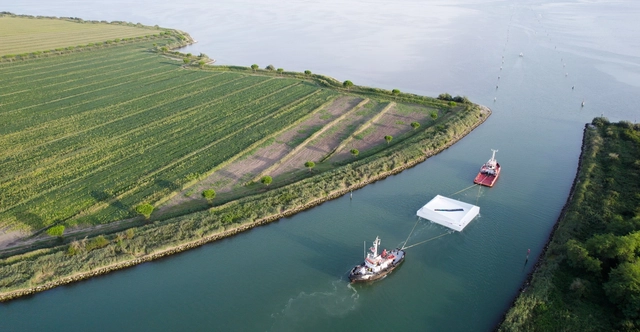
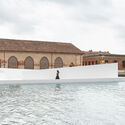
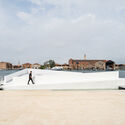
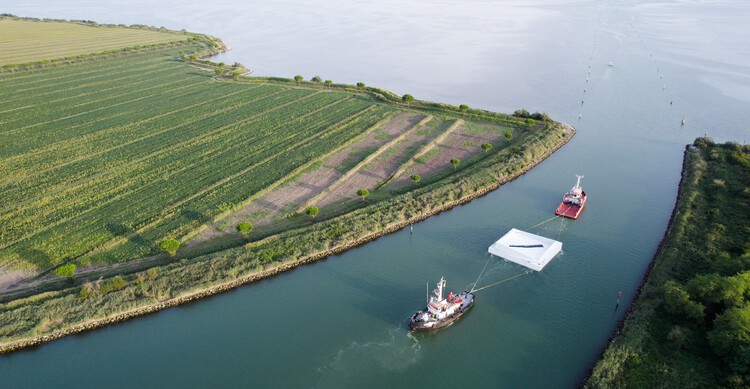
CRA–Carlo Ratti Associati and Höweler + Yoon designed AquaPraça, a floating gathering space for global climate dialogue set to anchor COP30 in Belém, Brazil, making its debut at the 19th International Architecture Exhibition of La Biennale di Venezia on 5 September 2025. It will then embark on a transatlantic journey to Brazil, where it will form part of the Italian Pavilion at COP30, held from November 10 to 21, 2025. Following the event, it is intended to become a permanent floating landmark in the Amazon as part of Belém's cultural infrastructure.

Carlo Ratti Associati and Höweler + Yoon Launch Floating Plaza "AquaPraça" in Venice on Its Way to COP30 - Featured ImageCarlo Ratti Associati and Höweler + Yoon Launch Floating Plaza "AquaPraça" in Venice on Its Way to COP30 - Image 1 of 4Carlo Ratti Associati and Höweler + Yoon Launch Floating Plaza "AquaPraça" in Venice on Its Way to COP30 - Image 2 of 4Carlo Ratti Associati and Höweler + Yoon Launch Floating Plaza "AquaPraça" in Venice on Its Way to COP30 - Image 3 of 4Carlo Ratti Associati and Höweler + Yoon Launch Floating Plaza AquaPraça in Venice on Its Way to COP30 - More Images+ 17

From Acapulco to Copenhagen: 8 Projects Exhibited at the Venice Biennale 2025 Reclaiming Existing Architecture for Regenerative Cities

This curated selection of projects from the 2025 Venice Architecture Biennale explores regeneration as a deliberate, intelligent process rooted in the specific conditions of a place. For decades, the Biennale has been a testing ground for architecture's most urgent ideas, allowing designers, researchers, and institutions to present visions that address evolving environmental, cultural, and social challenges. This year's projects reveal how regeneration, whether of an entire coastal city, a disused industrial site, or a neglected public space, requires more than replacing the old with the new. It calls for a precise reading of existing contexts, the preservation of embedded knowledge, and the careful integration of contemporary needs.

The eight selected works show that regeneration can emerge from multiple starting points: reactivating heritage through adaptive reuse, restoring ecological systems as part of urban planning, developing open and modular strategies for social housing renewal, or layering technological innovation onto historically rooted practices. While the scale of intervention varies, each project demonstrates a sensitivity to what is already there and existing, be it material resources, urban patterns, or cultural memory, and a willingness to work with these assets as catalysts for transformation. Together, they suggest that regeneration must start somewhere, and that its success lies in balancing innovation with the intelligence of what already exists.

From Acapulco to Copenhagen: 8 Projects Exhibited at the Venice Biennale 2025 Reclaiming Existing Architecture for Regenerative Cities - Image 1 of 4From Acapulco to Copenhagen: 8 Projects Exhibited at the Venice Biennale 2025 Reclaiming Existing Architecture for Regenerative Cities - Image 2 of 4From Acapulco to Copenhagen: 8 Projects Exhibited at the Venice Biennale 2025 Reclaiming Existing Architecture for Regenerative Cities - Image 3 of 4From Acapulco to Copenhagen: 8 Projects Exhibited at the Venice Biennale 2025 Reclaiming Existing Architecture for Regenerative Cities - Image 4 of 4From Acapulco to Copenhagen: 8 Projects Exhibited at the Venice Biennale 2025 Reclaiming Existing Architecture for Regenerative Cities - More Images+ 16

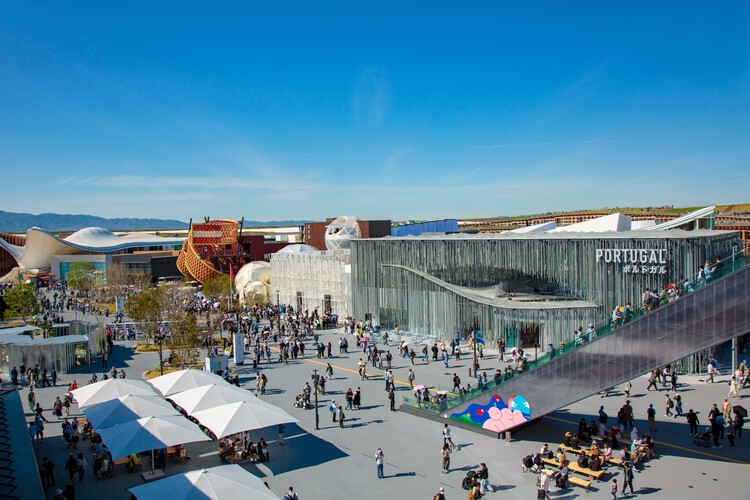
Halfway Through Expo 2025 Osaka: 10 Must-Visit Pavilions

As Expo 2025 Osaka passes the midpoint of its six-month duration on July 13, the international exposition continues to serve as a global platform for architectural experimentation, cultural exchange, and technological innovation. Officially opened on April 13 on the reclaimed island of Yumeshima, the event is organized under the theme "Designing Future Society for Our Lives," and has already welcomed more than 13 million visitors as of late July. Conceived as a space for collaboration across disciplines and borders, the Expo brings together more than 150 national, thematic, and corporate pavilions.

Halfway Through Expo 2025 Osaka: 10 Must-Visit Pavilions - Image 1 of 4Halfway Through Expo 2025 Osaka: 10 Must-Visit Pavilions - Image 2 of 4Halfway Through Expo 2025 Osaka: 10 Must-Visit Pavilions - Image 3 of 4Halfway Through Expo 2025 Osaka: 10 Must-Visit Pavilions - Image 4 of 4Halfway Through Expo 2025 Osaka: 10 Must-Visit Pavilions - More Images+ 6

From Martian Hydrospheres to Forest-Like Cities: 6 Radical Urban Visions Unveiled at the Venice 2025 Architecture Biennale

Cities today are being reimagined as living, evolving organisms, combining digital intelligence, ecological systems, and new materials to shape radical futures. At Carlo Ratti's "Intelligens. Natural. Artificial. Collective." biennial, over 750 participants challenge established boundaries between architecture, landscape, and technology. Several conceptual projects showcased in the main exhibition challenge conventional boundaries between architecture, landscape, and technology. From bio-adaptive urban systems and Martian water-based settlements to immersive symphonies of satellite data, these works collectively envision new models for cohabitation, resilience, and planetary awareness.

This month's Unbuilt selection presents six speculative projects, presented as part of the 2025 Venice Architecture Biennale exhibition, as provocations for rethinking the future of cities and human settlement. While some proposals transform architecture into self-sustaining, living infrastructures, others explore how data and sensory interfaces can redefine our relationship with natural and urban environments. Together, they offer a cross-section of how architects and designers are using unbuilt work to imagine new possibilities for life on Earth and beyond.

From Martian Hydrospheres to Forest-Like Cities: 6 Radical Urban Visions Unveiled at the Venice 2025 Architecture Biennale - Image 1 of 4From Martian Hydrospheres to Forest-Like Cities: 6 Radical Urban Visions Unveiled at the Venice 2025 Architecture Biennale - Image 2 of 4From Martian Hydrospheres to Forest-Like Cities: 6 Radical Urban Visions Unveiled at the Venice 2025 Architecture Biennale - Image 3 of 4From Martian Hydrospheres to Forest-Like Cities: 6 Radical Urban Visions Unveiled at the Venice 2025 Architecture Biennale - Featured ImageFrom Martian Hydrospheres to Forest-Like Cities: 6 Radical Urban Visions Unveiled at the Venice 2025 Architecture Biennale - More Images+ 21

An Unfolding Crisis with a Hopeful Outlook: Highlights from the Projects Exhibited at Venice Architecture Biennale 2025

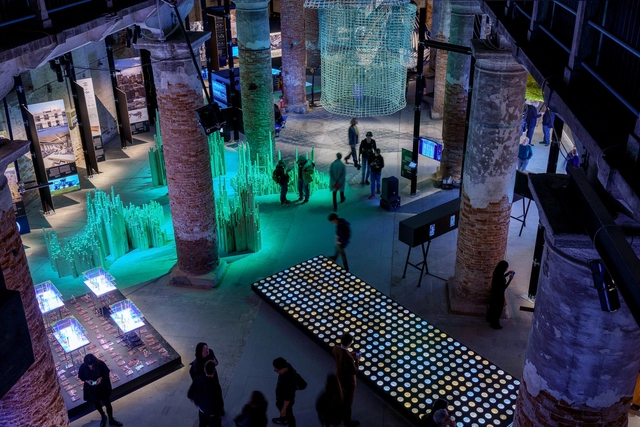
Under Carlo Ratti's curatorship, the Venice Biennale's 19th International Architecture Exhibition delves into the theme "Intelligens. Natural. Artificial. Collective," with the explicit aim of transforming the city of Venice into a "Living Laboratory." In addition to the 65 national participations and a wide range of educational and collateral events, the exhibition features independent projects that directly respond to the overarching theme. With most of the exhibits showcased in the historic Corderie building, stretching along the south side of the Arsenale, the event offers a dynamic exploration of emerging architectural ideas and urban strategies.

An Unfolding Crisis with a Hopeful Outlook: Highlights from the Projects Exhibited at Venice Architecture Biennale 2025 - Image 1 of 4An Unfolding Crisis with a Hopeful Outlook: Highlights from the Projects Exhibited at Venice Architecture Biennale 2025 - Image 2 of 4An Unfolding Crisis with a Hopeful Outlook: Highlights from the Projects Exhibited at Venice Architecture Biennale 2025 - Image 3 of 4An Unfolding Crisis with a Hopeful Outlook: Highlights from the Projects Exhibited at Venice Architecture Biennale 2025 - Image 4 of 4An Unfolding Crisis with a Hopeful Outlook: Highlights from the Projects Exhibited at Venice Architecture Biennale 2025 - More Images+ 41

Ma Yansong Curates China’s Pavilion at the Venice Architecture Biennale 2025, Exploring Coexistence Through Nature and Technology

The Pavilion of China at the 19th International Architecture Exhibition - La Biennale di Venezia presents the exhibition CO-EXIST, curated by Ma Yansong, founder of MAD Architects, and organized by the Ministry of Culture and Tourism of the People's Republic of China at the Arsenale. Through ten works by twelve interdisciplinary groups, the pavilion examines how traditional Chinese philosophical thought can inform architectural responses in the age of advanced technology and artificial intelligence.

Ma Yansong Curates China’s Pavilion at the Venice Architecture Biennale 2025, Exploring Coexistence Through Nature and Technology - Image 1 of 4Ma Yansong Curates China’s Pavilion at the Venice Architecture Biennale 2025, Exploring Coexistence Through Nature and Technology - Image 2 of 4Ma Yansong Curates China’s Pavilion at the Venice Architecture Biennale 2025, Exploring Coexistence Through Nature and Technology - Image 3 of 4Ma Yansong Curates China’s Pavilion at the Venice Architecture Biennale 2025, Exploring Coexistence Through Nature and Technology - Image 4 of 4Ma Yansong Curates China’s Pavilion at the Venice Architecture Biennale 2025, Exploring Coexistence Through Nature and Technology - More Images+ 29

From Smart to Intelligent: Evolution in Architecture and Cities

"The limits of our design language are the limits of our design thinking". Patrik Schumacher's statement subtly hints at a shift occurring in the built environment, moving beyond technological integration to embrace intelligence in the spaces and cities we occupy. The future proposes a possibility of buildings serving functions beyond housing human activity to actively participate in shaping urban life.

From Smart to Intelligent: Evolution in Architecture and Cities  - Image 1 of 4From Smart to Intelligent: Evolution in Architecture and Cities  - Image 2 of 4From Smart to Intelligent: Evolution in Architecture and Cities  - Image 3 of 4From Smart to Intelligent: Evolution in Architecture and Cities  - Image 4 of 4From Smart to Intelligent: Evolution in Architecture and Cities  - More Images+ 2

Between Algorithms and Ancestral Knowledge: Expanding the Concept of Architectural Intelligence

Artificial intelligence (AI) is no longer a futuristic idea in architecture — it is a concrete reality that is reshaping how we design. In seconds, computational systems can process and evaluate a wide range of variables — formal, programmatic, contextual, and regulatory — guiding architects toward highly optimized solutions. But as we embrace this algorithmic revolution, a critical question arises: can architectural intelligence be reduced to data-driven logic? In response, alternative approaches are gaining momentum — ones that value ways of building grounded in sensory experience, adaptation to place, and the intergenerational transmission of knowledge. In the exchange between artificial and ancestral forms of intelligence, a deeper understanding begins to take shape. Intelligence does not reside in the tools themselves, but in the intention and sensitivity with which we use them to navigate complex realities.


Between Algorithms and Ancestral Knowledge: Expanding the Concept of Architectural Intelligence - Image 1 of 4Between Algorithms and Ancestral Knowledge: Expanding the Concept of Architectural Intelligence - Image 2 of 4Between Algorithms and Ancestral Knowledge: Expanding the Concept of Architectural Intelligence - Image 3 of 4Between Algorithms and Ancestral Knowledge: Expanding the Concept of Architectural Intelligence - Image 4 of 4Between Algorithms and Ancestral Knowledge: Expanding the Concept of Architectural Intelligence - More Images+ 8

“Architecture is Survival”: In Conversation with Curator Carlo Ratti at the 2025 Venice Architecture Biennale

The 2025 Venice Architecture Biennale, titled Intelligens. Natural. Artificial. Collective. and curated by Carlo Ratti, has just opened for previews. Following the public opening on Saturday, May 10, the exhibition will run through November 23, 2025. While on site in Venice, ArchDaily had the chance to meet with the curator Carlo Ratti to discuss the first impressions and the main themes of this edition of the Biennale. Featuring 65 national pavilions, 11 collateral events, and over 300 contributions from more than 700 participants, the 2025 Venice Architecture Biennale is set to be the largest in the Biennale's history.

The 2025 Venice Architecture Biennale Opens on Saturday, May 10th

The 19th edition of one of the world's most renowned architectural events opens to the public this week. The 2025 Venice Architecture Biennale, titled Intelligens. Natural. Artificial. Collective. and curated by Carlo Ratti, will run from Saturday, May 10, to Sunday, November 23, 2025. This year's edition stands out for both its scale and its expanded range of venues, partly due to the ongoing renovation of traditional sites such as the Central Pavilion in the Giardini. The event is set to transform Venice into what the curator describes as "a living laboratory."

The inauguration ceremony, to be held on May 10, will also feature the announcement of the official awards by the International Jury, chaired by Hans Ulrich Obrist and composed of Paola Antonelli and Mpho Matsipa. On this occasion, the Golden Lion for Lifetime Achievement will be presented to philosopher Donna Haraway, while the Special Golden Lion in Memoriam will honor the late architect Italo Rota. Alongside the international exhibition, national participations and a broad range of special events will explore the Biennale's invitation, making this one of the most extensive architecture exhibitions in the Biennale's history.

The 2025 Venice Architecture Biennale Opens on Saturday, May 10th - Image 1 of 4The 2025 Venice Architecture Biennale Opens on Saturday, May 10th - Image 2 of 4The 2025 Venice Architecture Biennale Opens on Saturday, May 10th - Image 3 of 4The 2025 Venice Architecture Biennale Opens on Saturday, May 10th - Image 4 of 4The 2025 Venice Architecture Biennale Opens on Saturday, May 10th - More Images+ 12