1. ArchDaily
  2. Frank Lloyd Wright

Frank Lloyd Wright: The Latest Architecture and News

Why Do We Want to Float? The Psychology of Lightness in Architecture

In 1962, the architect Buckminster Fuller envisioned a floating city that would free humanity from its dependence on the Earth. The speculative project consisted of enormous geodesic spheres that would naturally levitate in air warmed by the sun and be anchored to mountaintops. Designed to house thousands of people, Fuller’s Cloud Nine aimed to ease land ownership pressures, address housing shortages, and contribute to environmental preservation.

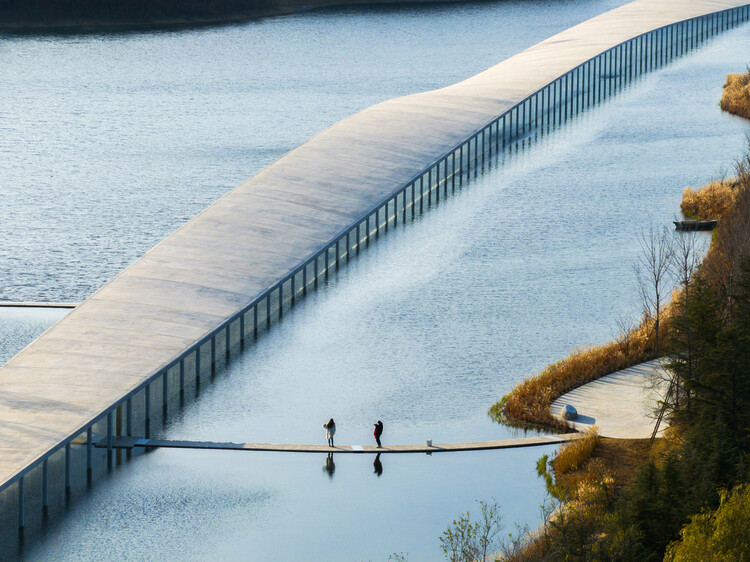
More than half a century later, we remain far from realizing Fuller’s vision. Creating a truly floating structure on the Earth’s surface is still, for now, an unattainable ideal. While supports continue to be necessary, we manipulate their position, intensity, and number, developing structural “acrobatics” to at least approach the idea of overcoming gravity — a desire that has long fascinated humanity.

Why Do We Want to Float? The Psychology of Lightness in Architecture - Image 1 of 4Why Do We Want to Float? The Psychology of Lightness in Architecture - Image 2 of 4Why Do We Want to Float? The Psychology of Lightness in Architecture - Image 3 of 4Why Do We Want to Float? The Psychology of Lightness in Architecture - Image 4 of 4Why Do We Want to Float? The Psychology of Lightness in Architecture - More Images+ 17

Frank Lloyd Wright’s Fallingwater Restoration and Salone del Mobile.Milano 2026: This Week’s Review

This week marked World Health Day, observed annually on April 7 by the World Health Organization. This year's edition issued the call to "Stand with science," inviting renewed engagement with scientific knowledge as a foundation for collective action across disciplines. In architecture and urban design, this imperative resonates through projects that translate research into spatial strategies: from the deployment of digital twins to inform urban planning and decision-making, to rewilding initiatives that integrate biodiversity as a tool to mitigate climate change, and materially informed practices that engage resource-conscious construction. Within this broader framework, recent works also foreground architecture's social agency at multiple scales, including a landscape-driven cancer support center in Kent that aligns wellbeing with environmental sensitivity, an urban installation in Brescia operating as a civic awareness device around life in prison and pathways to reintegration, and the transformation of a street in Mantua into a pedestrian-oriented, biodiversity-rich public space.

Frank Lloyd Wright’s Fallingwater Restoration and Salone del Mobile.Milano 2026: This Week’s Review - Image 1 of 4Frank Lloyd Wright’s Fallingwater Restoration and Salone del Mobile.Milano 2026: This Week’s Review - Image 2 of 4Frank Lloyd Wright’s Fallingwater Restoration and Salone del Mobile.Milano 2026: This Week’s Review - Image 3 of 4Frank Lloyd Wright’s Fallingwater Restoration and Salone del Mobile.Milano 2026: This Week’s Review - Image 4 of 4Frank Lloyd Wright’s Fallingwater Restoration and Salone del Mobile.Milano 2026: This Week’s Review - More Images+ 30

Frank Lloyd Wright’s Fallingwater Reopens After Restoration, Celebrating Its 90th Anniversary

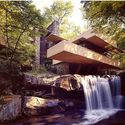
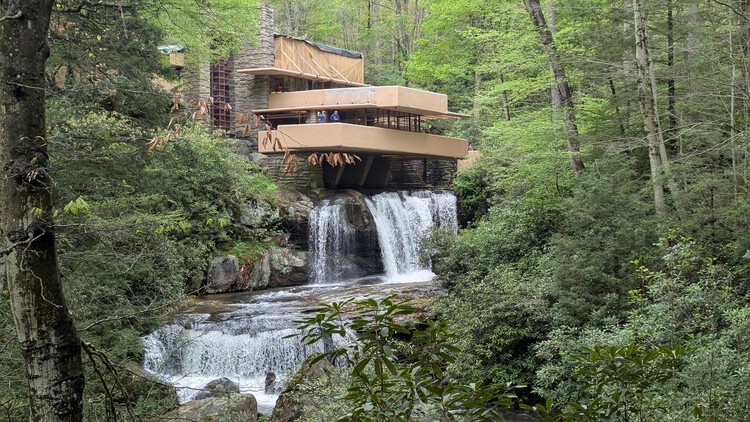
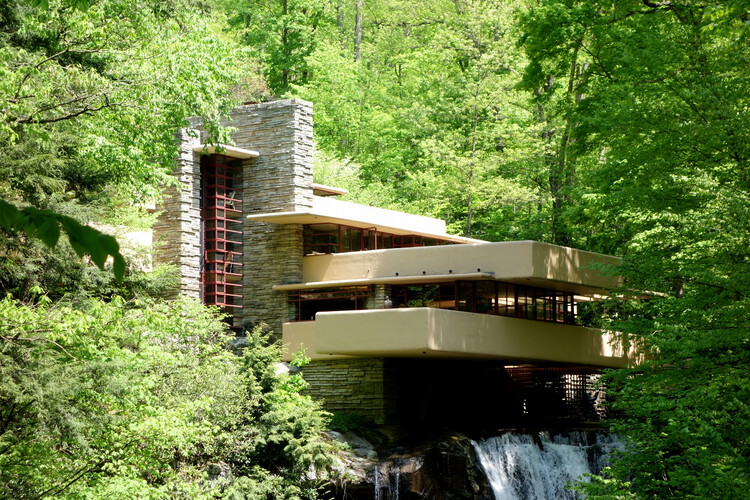
Fallingwater, the iconic residence designed by Frank Lloyd Wright, has reopened to the public following the completion of a three-year preservation project. The reopening coincides with the building's 90th anniversary and the start of its 63rd tour season, marking a key moment in the ongoing conservation of one of the most widely recognized works of modern architecture. The intervention, led by the Western Pennsylvania Conservancy, focused on addressing structural and environmental challenges while maintaining the integrity of Wright's original design.

Frank Lloyd Wright’s Fallingwater Reopens After Restoration, Celebrating Its 90th Anniversary - Image 1 of 4Frank Lloyd Wright’s Fallingwater Reopens After Restoration, Celebrating Its 90th Anniversary - Image 2 of 4Frank Lloyd Wright’s Fallingwater Reopens After Restoration, Celebrating Its 90th Anniversary - Image 3 of 4Frank Lloyd Wright’s Fallingwater Reopens After Restoration, Celebrating Its 90th Anniversary - Image 4 of 4Frank Lloyd Wright’s Fallingwater Reopens After Restoration, Celebrating Its 90th Anniversary - More Images

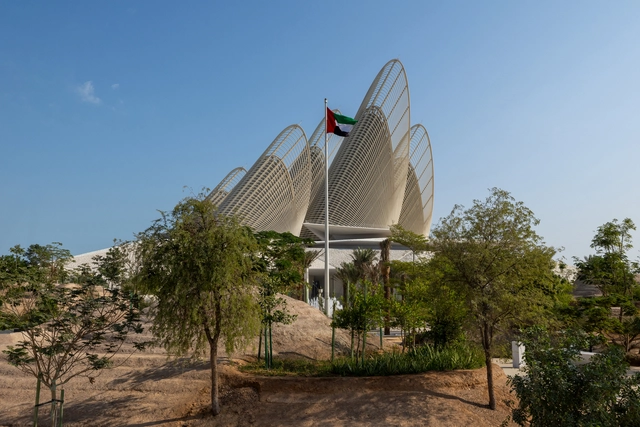
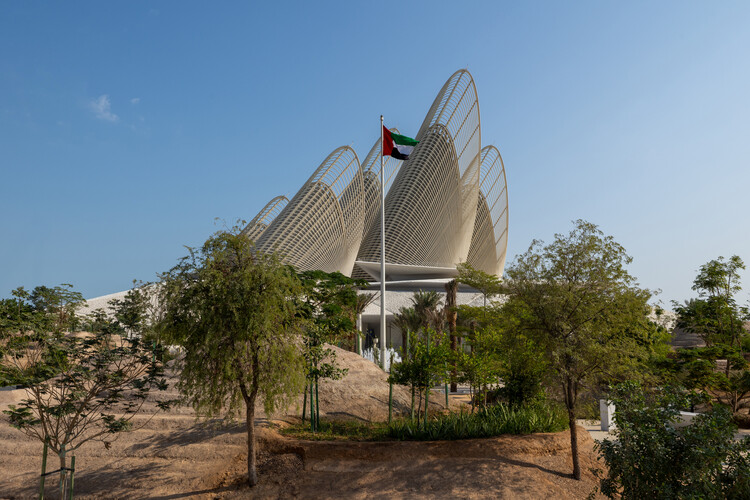
New National Museum in Abu Dhabi and The Nomadic Library: This Week’s Review

As cultural institutions advanced major preservation projects and new demographic data reframed understandings of urban growth, this week's architectural discussions centred on how cities and museums adapt to evolving social, environmental, and infrastructural conditions. Efforts to safeguard modern heritage, developments in long-term urban planning, and reflections on architectural legacy intersect with global observances such as the International Day of Persons with Disabilities, highlighting the ongoing need for more inclusive and accessible environments within the built landscape.

New National Museum in Abu Dhabi and The Nomadic Library: This Week’s Review - Image 1 of 4New National Museum in Abu Dhabi and The Nomadic Library: This Week’s Review - Image 2 of 4New National Museum in Abu Dhabi and The Nomadic Library: This Week’s Review - Image 3 of 4New National Museum in Abu Dhabi and The Nomadic Library: This Week’s Review - Image 4 of 4New National Museum in Abu Dhabi and The Nomadic Library: This Week’s Review - More Images+ 4

Frank Lloyd Wright’s Fountainhead Residence Purchased by the Mississippi Museum of Art and Prepared for Public Tours

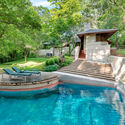
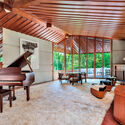
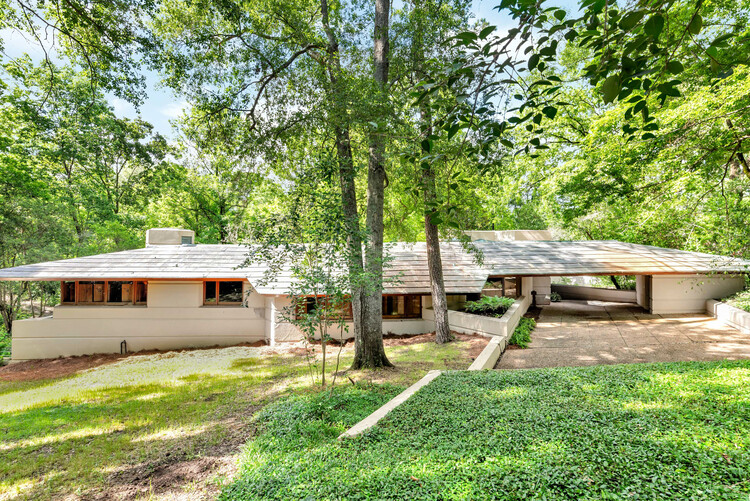
On November 20, 2025, the Mississippi Museum of Art (MMA) confirmed the purchase of Fountainhead, a house designed by Frank Lloyd Wright in 1948 and completed in 1954. The renowned modernist architect designed the residence and its furnishings for oil businessman J. Willis Hughes, who lived there with his family until 1980. Established in 1911, the MMA is the largest art museum in the state of Mississippi, offering exhibitions, public programs, artistic and community partnerships, educational initiatives, and opportunities for exchange year-round through a permanent collection of paintings, photography, multimedia works, and sculpture. The purchase is part of the Museum's goal to embed itself in neighborhoods across the city in ways that support its community-building priorities, making the architectural landmark available to the public for tours with reservations. The initiative is inspired by institutions such as the Crystal Bridges Museum of American Art, which acquired the Wright-designed Bachman-Wilson House in 2015.

Frank Lloyd Wright’s Fountainhead Residence Purchased by the Mississippi Museum of Art and Prepared for Public Tours - Image 1 of 4Frank Lloyd Wright’s Fountainhead Residence Purchased by the Mississippi Museum of Art and Prepared for Public Tours - Image 2 of 4Frank Lloyd Wright’s Fountainhead Residence Purchased by the Mississippi Museum of Art and Prepared for Public Tours - Image 3 of 4Frank Lloyd Wright’s Fountainhead Residence Purchased by the Mississippi Museum of Art and Prepared for Public Tours - Image 4 of 4Frank Lloyd Wright’s Fountainhead Residence Purchased by the Mississippi Museum of Art and Prepared for Public Tours - More Images+ 65

Rethinking the Flat Datum: Designing Space with Incline and Intent

Subscriber Access | 

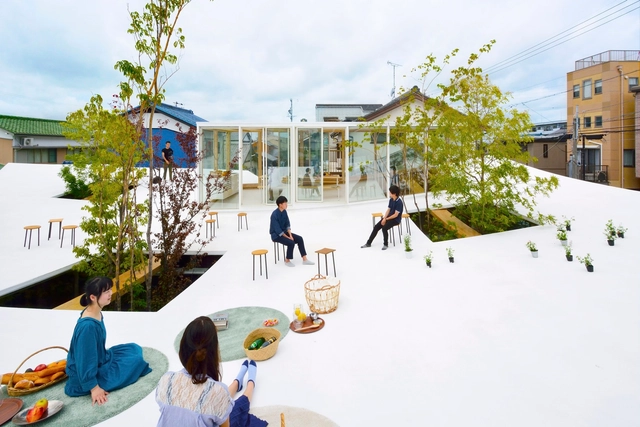
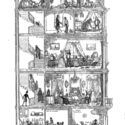
Historically, architecture and the built environment have insisted on creating flat, hard surfaces. In earlier eras, walking without paved ground meant mud-caked shoes, uneven footing, tripping hazards, standing water after rain, and high maintenance. Hence, as we shaped cities, we prioritized a smooth, continuous, solid horizontal datum. The benefits are real: easier walking, simpler cleaning, and straightforward programming—furniture, equipment, and partitions all prefer a level base. This universal preference for building on flat ground remains the norm and, for many practical reasons, will likely continue to be.

What's less recognized is that making a truly flat surface is surprisingly difficult—and many well-executed "flat" floors aren't perfectly flat at all. They are often gently sloped, calibrated to precise gradients for drainage. While interior spaces do not always require this, many ground floors and wet areas do incorporate subtle inclines as a safeguard—whether for minor flooding or to manage water that overflows from the street or plumbing when one of the discharge systems is malfunctioning.

Rethinking the Flat Datum: Designing Space with Incline and Intent - Image 1 of 4Rethinking the Flat Datum: Designing Space with Incline and Intent - Image 2 of 4Rethinking the Flat Datum: Designing Space with Incline and Intent - Image 3 of 4Rethinking the Flat Datum: Designing Space with Incline and Intent - Image 4 of 4Rethinking the Flat Datum: Designing Space with Incline and Intent - More Images+ 49

Hilversum Town Hall: Willem Dudok’s Monument to Civic Architecture

Subscriber Access | 

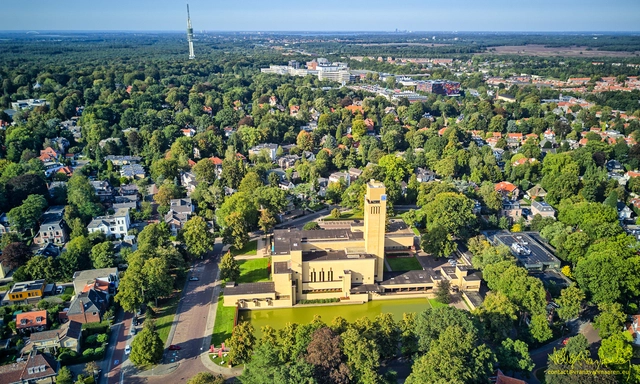
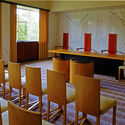
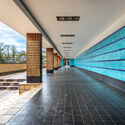
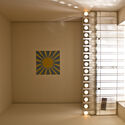
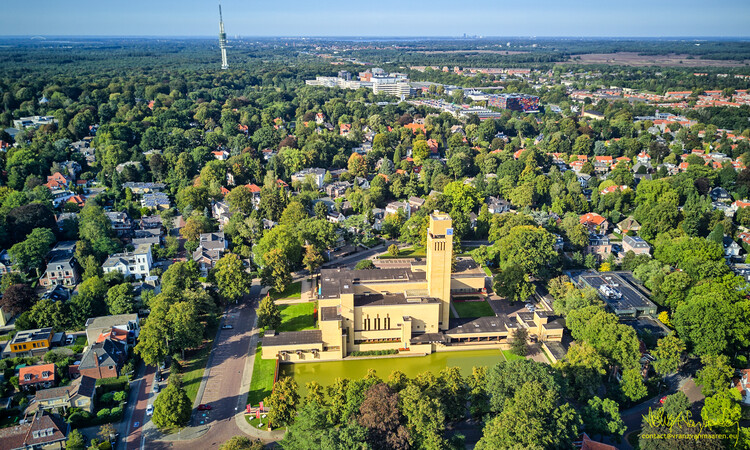
In the Dutch city of Hilversum, a municipal building completed in 1931 redefined the very idea of what a town hall could be. More than a house for local administration, the Hilversum Town Hall became the architectural expression of a community in transformation. With its tower rising above reflective ponds, its brick masses composed around courtyards, and its carefully detailed interiors, the building asserted that civic architecture could unite function with symbolism, efficiency with ceremony.

The architect behind this vision, Willem Marinus Dudok, was not only responsible for individual buildings but for the broader shaping of Hilversum itself. As a city architect and planner, he designed schools, housing districts, and parks, developing a language that fused Dutch craftsmanship with Modernist clarity. The town hall represented the culmination of this trajectory: a civic centerpiece where urban ambition, material refinement, and human scale converged in a single, coherent form.

Hilversum Town Hall: Willem Dudok’s Monument to Civic Architecture - Image 1 of 4Hilversum Town Hall: Willem Dudok’s Monument to Civic Architecture - Image 2 of 4Hilversum Town Hall: Willem Dudok’s Monument to Civic Architecture - Image 3 of 4Hilversum Town Hall: Willem Dudok’s Monument to Civic Architecture - Image 4 of 4Hilversum Town Hall: Willem Dudok’s Monument to Civic Architecture - More Images+ 24

Eliminating the Barrier Between Indoor Spaces and Nature

 | Sponsored Content
Eliminating the Barrier Between Indoor Spaces and Nature - Featured Image
Detached House in Bavaria Visualization © xoio

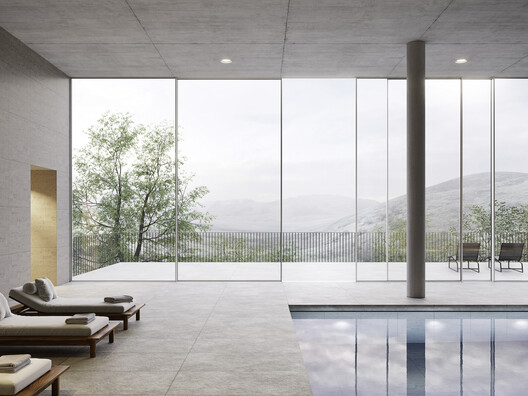
For centuries, architecture has been shaped by the aspiration to create a smooth transition between the indoors and the outdoors. Today, technologically sophisticated window and facade systems allow architects to design open, light-flooded room concepts without losing heat. The Solarlux cero maximum sliding window can eliminate the boundaries between spaces, demonstrated most impressively when large-format elements replace building corners. This is a technical achievement accomplished entirely without supports that disrupt the view. cero creates a direct, immediate connection to nature that goes far beyond what standard solutions can offer.

Framing Interiors and Landscapes in Aluminum and Glass to Master the View

 | Sponsored Content

Windows have long held an ambivalent role in architecture, as they both define and enclose interiors while simultaneously creating a link to the outdoors. This dual function goes beyond simply meeting construction needs or providing daylight, directly influencing how occupants experience and engage with the views. The 20th century saw the introduction of materials such as steel, aluminum, and glass, which enabled different types of windows with thinner frames and expansive panes, enhancing transparency and reinforcing the visual connection with the surrounding setting.

American architects such as Frank Lloyd Wright and Philip Johnson explored these possibilities to harmonize architecture with landscape. In Fallingwater House, windows and terraces seamlessly connect the house to the waterfall and surrounding forest, whereas the Glass House's minimal framing nearly dissolves the boundary between interior and exterior, bringing the natural environment to life inside the house. Through its evolution, windows have become an element that unites space, materials, and perception, opening new pathways for exploring the relationship between architecture and its environment.

Shaping Spaces: The History and Impact of Fireplaces in Architecture

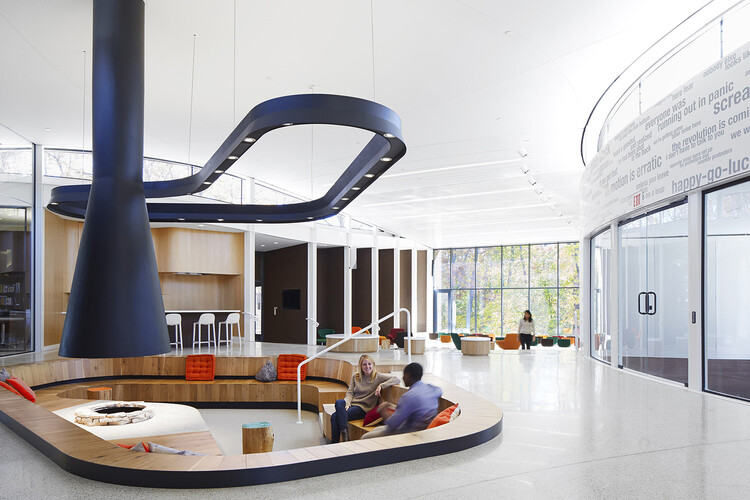
Fireplaces have profoundly shaped architectural design, influencing how spaces are organized, experienced, and perceived. More than merely functional elements, they represent symbols of power, community, comfort, and culture, tracing humanity's evolving relationship with the built environment. From the primitive hearths that characterized early human settlements to the sophisticated ecological designs of contemporary architecture, fireplaces have reflected broader cultural, social, and technological changes, serving as enduring focal points in the spatial narrative of architecture. Scholars have frequently explored the intimate relationship between architecture and fire. Luis Fernández-Galiano, in his seminal work "Fire and Memory: On Architecture and Energy" argues that architecture fundamentally mediates the relationship between humanity and energy. By understanding how these structures have shaped spaces, symbolized cultural values, and driven technological innovation, we gain deeper insight into architecture's complex interplay between form, function, and meaning.

Shaping Spaces: The History and Impact of Fireplaces in Architecture - Image 1 of 4Shaping Spaces: The History and Impact of Fireplaces in Architecture - Image 2 of 4Shaping Spaces: The History and Impact of Fireplaces in Architecture - Image 3 of 4Shaping Spaces: The History and Impact of Fireplaces in Architecture - Image 4 of 4Shaping Spaces: The History and Impact of Fireplaces in Architecture - More Images+ 21

Mid-Century & Mid-Western: Tracing the Modernist Movement in America’s Industrial Corridor

Subscriber Access | 

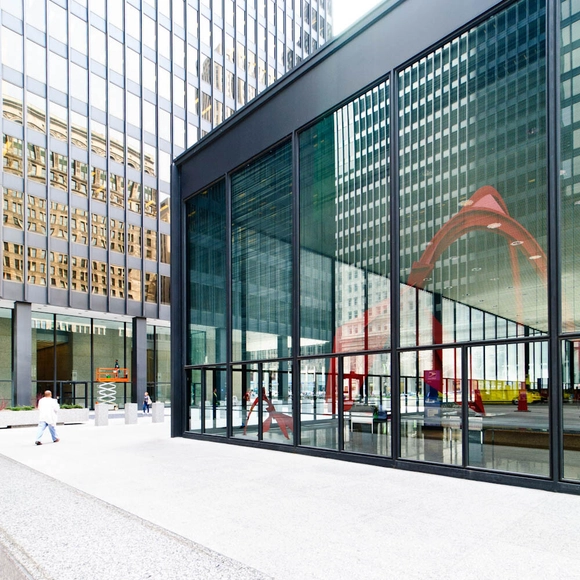
The Mid-Century Modernist movement was more than an aesthetic or material shift in the United States, as it was a response to a rapidly changing world. Emerging after World War II, this architectural revolution rejected ornate, traditional styles of the past in favor of clean lines, functional design, and incorporation of flashy materials like steel, glass, and concrete. Modernism was a break from tradition, focusing instead on simplicity, efficiency, and a vision for the future. It reflected the optimism of a nation rebuilding itself, where technology and innovation shaped everything from cityscapes to suburban homes.

Mid-Century & Mid-Western: Tracing the Modernist Movement in America’s Industrial Corridor - Image 1 of 4Mid-Century & Mid-Western: Tracing the Modernist Movement in America’s Industrial Corridor - Image 2 of 4Mid-Century & Mid-Western: Tracing the Modernist Movement in America’s Industrial Corridor - Image 3 of 4Mid-Century & Mid-Western: Tracing the Modernist Movement in America’s Industrial Corridor - Image 4 of 4Mid-Century & Mid-Western: Tracing the Modernist Movement in America’s Industrial Corridor - More Images+ 10

The Evolution of Gas Stations: From Roadside Stops to Architectural Landmarks

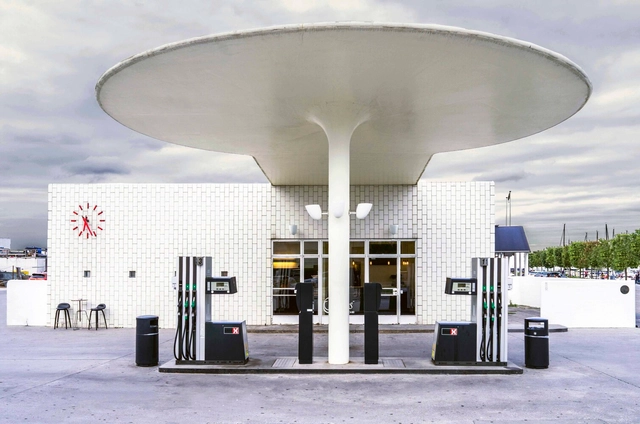
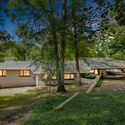
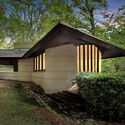
The gas station is an architectural typology that has undergone significant transformations since its inception. Initially, these structures were simple roadside refueling points designed for functionality rather than aesthetics. As automobile culture expanded, gas stations evolved to accommodate new technologies, shifting urban landscapes and changing consumer behaviors. Over time, they became more than just utilitarian stops — they developed into service hubs, integrating restaurants, motels, and leisure spaces, responding to contemporary transportation increasing demands.

By the late 20th century, however, the widespread standardization of gas stations led them to be perceived as "non-places", a concept defined by anthropologist Marc Augé to describe transient spaces that lack social or cultural significance. With uniform designs and a focus on efficiency, gas stations became interchangeable, reinforcing their role as purely functional infrastructure rather than meaningful architectural interventions. This standardization also departed from the era when fuel stations served as recognizable landmarks, contributing to a homogenized landscape devoid of local identity.
The Evolution of Gas Stations: From Roadside Stops to Architectural Landmarks - Image 1 of 4The Evolution of Gas Stations: From Roadside Stops to Architectural Landmarks - Image 2 of 4The Evolution of Gas Stations: From Roadside Stops to Architectural Landmarks - Image 3 of 4The Evolution of Gas Stations: From Roadside Stops to Architectural Landmarks - Image 4 of 4The Evolution of Gas Stations: From Roadside Stops to Architectural Landmarks - More Images+ 41

Frank Lloyd Wright’s Mayan Revival Houses in Los Angeles: Creating Atmosphere and Perception of Space

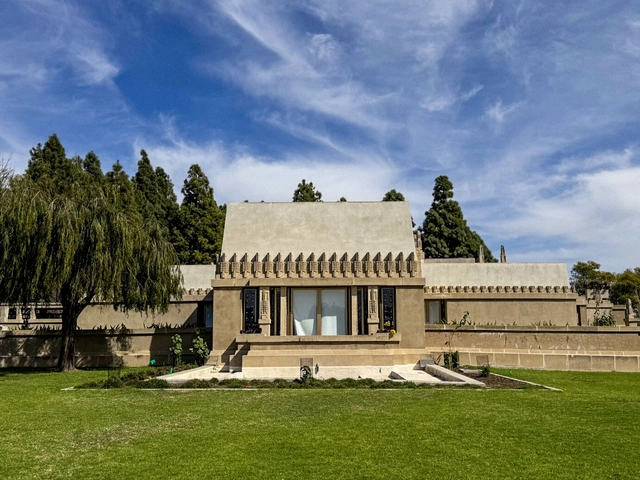
Frank Lloyd Wright's architectural legacy is vast, but among his most enigmatic and atmospheric works are his Mayan Revival houses in Los Angeles, California. Residences such as the Hollyhock House redefine the interplay of light, materiality, constructive innovation, and spatial perception. By using modular concrete blocks in an ornamental and structural way, Wright developed a unique aesthetic deeply rooted in both the past and the future.

Frank Lloyd Wright’s Mayan Revival Houses in Los Angeles: Creating Atmosphere and Perception of Space - Image 1 of 4Frank Lloyd Wright’s Mayan Revival Houses in Los Angeles: Creating Atmosphere and Perception of Space - Image 2 of 4Frank Lloyd Wright’s Mayan Revival Houses in Los Angeles: Creating Atmosphere and Perception of Space - Image 3 of 4Frank Lloyd Wright’s Mayan Revival Houses in Los Angeles: Creating Atmosphere and Perception of Space - Image 4 of 4Frank Lloyd Wright’s Mayan Revival Houses in Los Angeles: Creating Atmosphere and Perception of Space - More Images+ 6