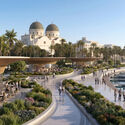
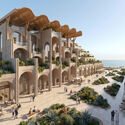
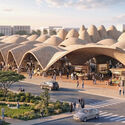
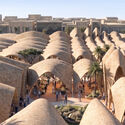
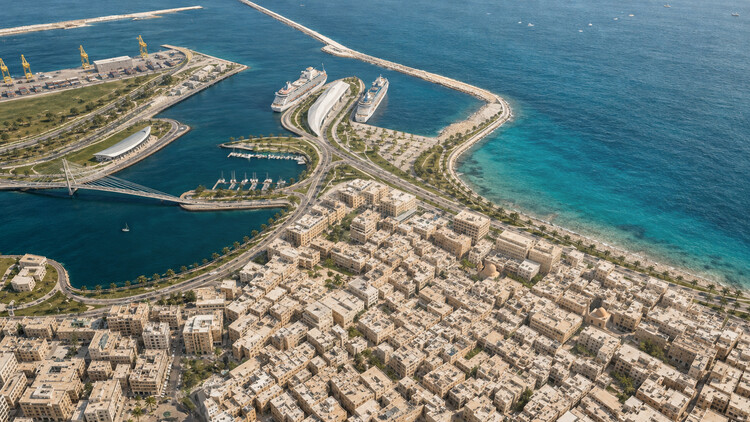
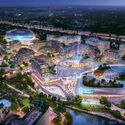
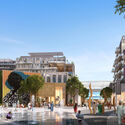
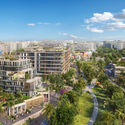
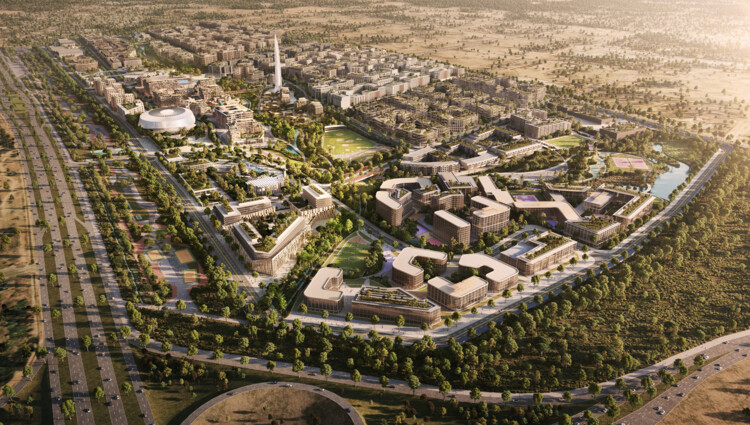
Benghazi 2050: Vision and Digital Planning Hub. Old Town. Image Courtesy of ZHA
A team composed of ZHA, A&O TEC, Prior + Partners, Homa, Buro Happold, Systematica, and Fichtner recently unveiled its concept proposal for the "Next Generation City Plan" for Benghazi, Libya. The project aims to bring together the historic port city's identity-defining features with the planning technologies required to guide its development toward 2050, in a context of rapid urbanization. The proposal, developed for A&O TEC, includes a Vision and Spatial Strategy, which consists of an interpretation of the city's character and collective memory translated into an adaptable framework for development, and a Digital Planning Hub, an evidence-based model mapping the city to identify its potential and the phenomena shaping its growth.
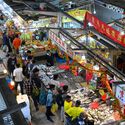
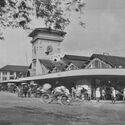
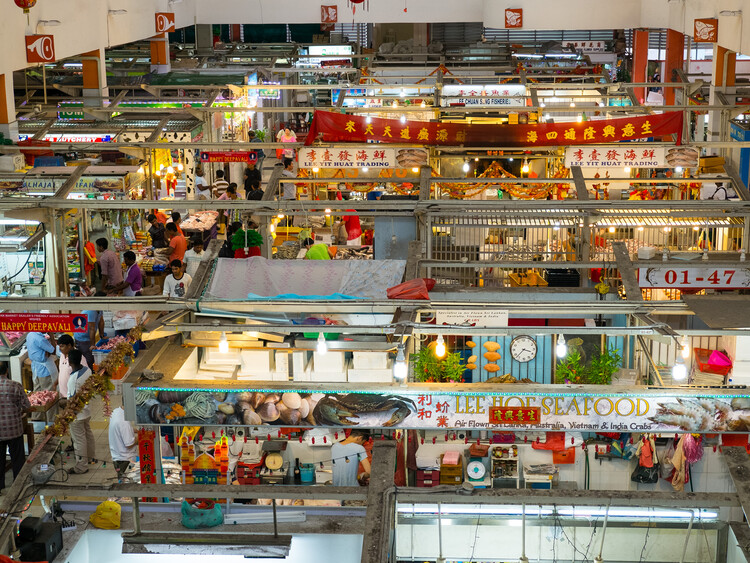
In many Asian cities, eating has never belonged entirely to the private home. It spills into markets, hawker centers, street stalls, and wholesale districts embedded within larger buildings or areas. These are places where the city exchanges information and watches other people pass through. They are not restaurants in the conventional sense, nor are they simply markets. In some way, their vibrancy and usage reflect the society's conditions at that moment. They are public kitchens: shared infrastructures where domestic routines are partially transferred into collective space.
Hong Kong's Municipal Services Buildings and curbside dining are where food is understood not only as culture, but as urban organization. The cooked-food center in the city folds eating into a larger civic machine of wet markets, libraries, and sports halls. The dai pai dong and street-side table, meanwhile, transform the curb into a temporary dining room. Looking beyond Hong Kong, similar questions emerge across the region. How do cities make room for social eating? Where does cooking happen when domestic space is limited? What kind of architecture supports the mess and heat of everyday food?
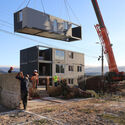
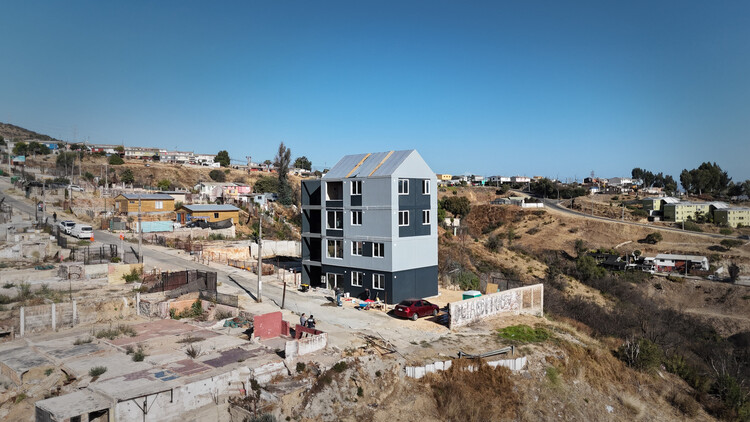
Prefabricated Building Viña del Mar by ELEMENTAL. Image Courtesy of ELEMENTAL
Displacement is usually understood through movement: the moment people are forced to move from one place to another. Yet from an architectural perspective, that movement is only the beginning of what comes next. A house may need to be rebuilt, an entire community relocated, or everyday life reestablished somewhere completely new. What is lost through displacement is not always something architecture can simply replace.
This question is particularly relevant in Latin America, where displacement has shaped communities under different circumstances and at different scales. What happens afterward depends on why people were forced to move, whether they can return, and what remains of the places they inhabited. Some communities rebuild within familiar surroundings. Others must establish everyday life somewhere new. These differences shape what architecture is being asked to do.
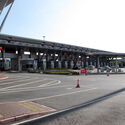
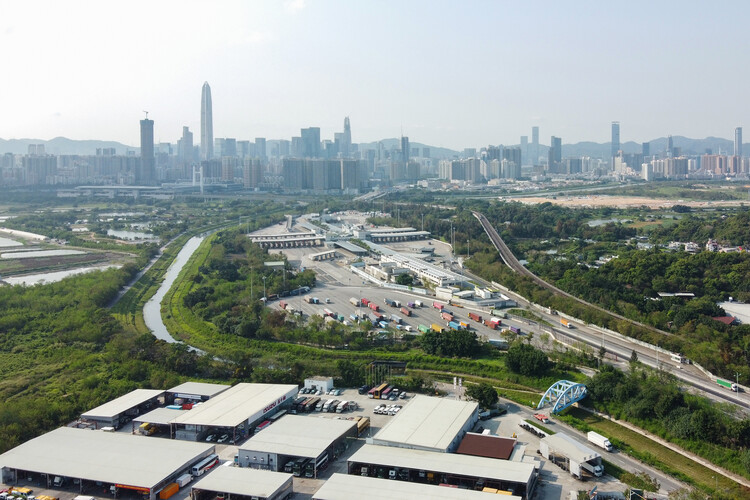
For most children, the journey to school is an everyday geography of street life and traffic, repeated so often that it becomes almost invisible, folded into the background of childhood and growing up. Yet for cross-boundary students who live in Shenzhen and attend school in Hong Kong, the school day begins much earlier, and much farther from the classroom. It begins at the border.
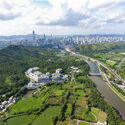
Their commute is not simply a matter of distance. It is shaped by two legal systems, two administrative cultures, and a set of infrastructures designed to make daily crossing a little bit more feasible for individuals under 18. On a typical morning, the route to school may pass through a boundary control point before it reaches a classroom. It may involve a government-approved school coach, a restricted access road, an immigration hall, a fingerprint scanner, or a clearance procedure that takes place while the child remains seated on the bus. What appears from a distance as a school commute is, in spatial terms, a carefully managed architectural corridor between two cities.
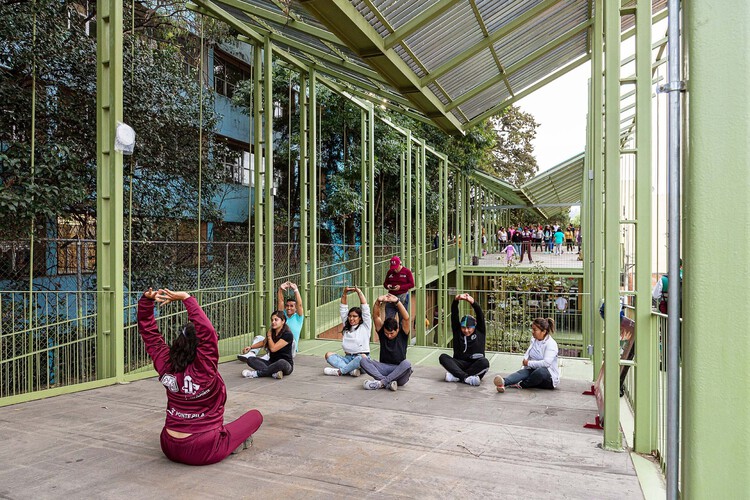
In many Latin American cities, peripheral neighborhoods have historically had less access to the resources that make urban life more than just livable. Housing, transportation, and public services are the usual markers of that gap. But there is another gap that is harder to quantify: the absence of places where people can gather, learn, rest, and participate in collective life. When those spaces do not exist, the city not only fails to provide a service. It fails to acknowledge a presence.
In recent decades, a growing number of projects have tried to address that absence directly. Rather than focusing only on physical infrastructure, they invest in spaces designed to support education, culture, recreation, and community, often merging several of those functions within a single building in neighborhoods where those spaces are otherwise limited.
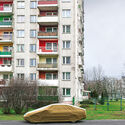
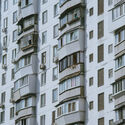
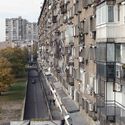
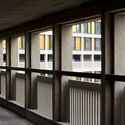
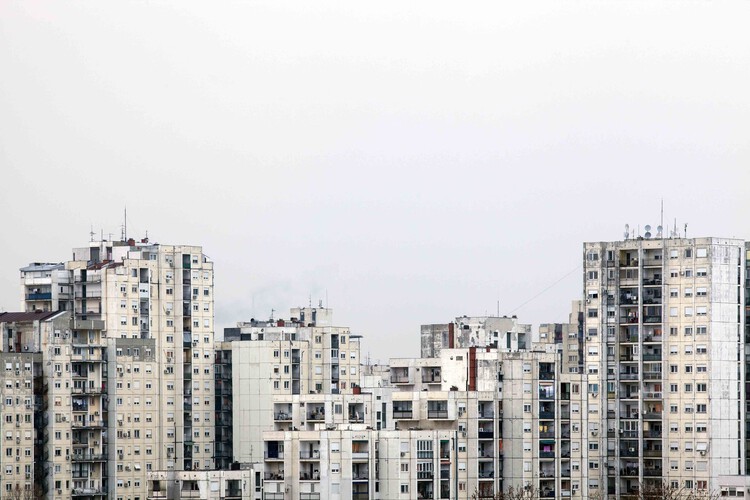
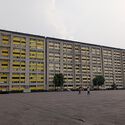
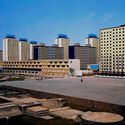
A housing block in New Belgrade appears orderly from a distance. Concrete slabs repeat with disciplined consistency, windows align into measured grids, and balconies stack with the confidence of a system certain of itself. However, proximity changes the reading. One balcony is enclosed in aluminum glazing, another softened with improvised shading. Insulation thickens part of a façade while laundry frames another edge like an accidental elevation study. The district still reads as planned, though occupation has made its order less uniform. Within that order, repetition has gradually been rewritten through occupation.
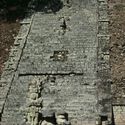
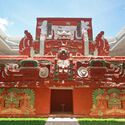
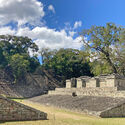
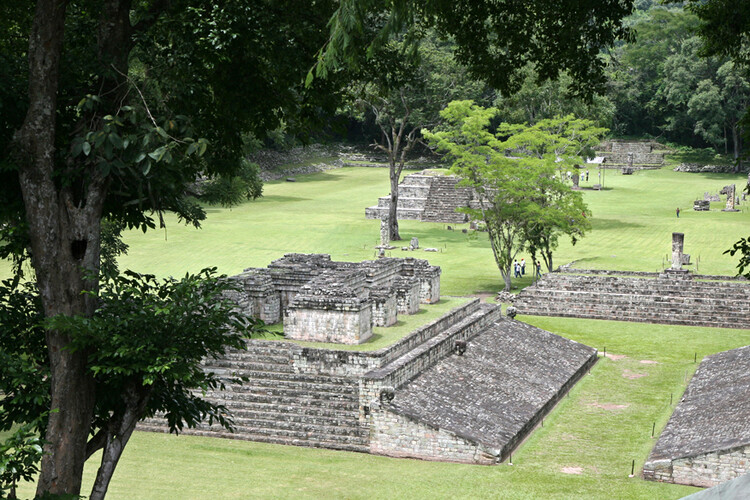
Deep in western Honduras, within a valley near the Guatemalan border, lies the ancient Maya city of Copán. Flourishing during the Classic period between the fifth and ninth centuries CE, the city developed as a regional epicenter through trade networks, dynastic politics, and monumental architecture. Today, the site is designated a UNESCO World Heritage Site due to its extensive architectural remains, including stepped pyramids, sculpted stelae, and ceremonial core. Over a century of systematic archaeological research has documented its urban morphology, revealing distinct residential districts, civic spaces, and systems of movement and visibility.
This analysis examines the spatial organization of Copán through the framework of urban theorist Kevin Lynch and "The Image of the City". By applying Lynch's five structural elements — edges, districts, paths, nodes, and landmarks — it is possible to analyze how Copán functioned not only as a ritual center but as a legible urban landscape designed to reinforce political hierarchy and regulate collective movement. Historical data for this analysis was taken from books and articles linked throughout the text, and was possible thanks to the collaboration of historian Arnulfo Ramirez de la Costa, professor and coordinator of the History program in the Department of History at the National Autonomous University of Honduras (UNAH) in Tegucigalpa.
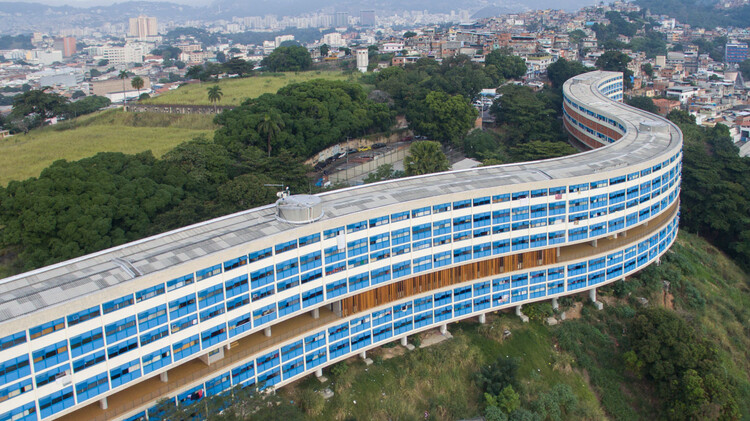
Modern housing was one of the places where modernism made its boldest promise: that architecture could reshape not only the city, but the way people lived within it. As Argentine architectural historian Ramón Gutiérrez has argued, popular housing is "the great unresolved subject, one that usually does not appear in histories of architecture." In Latin America, this absence is significant. Across the 20th century, expanding cities turned housing into one of the clearest ways to imagine urban change, and modernism entered not only plans and drawings, but apartments, neighborhoods, streets, and domestic routines.
Yet once built, these projects entered cities shaped by politics, memory, inequality, and changing ways of occupation. Their meanings no longer belonged only to the original plan, but to the ways they were inhabited, altered, and transformed over time. What this history reveals is not adaptation, but friction: the moment when architecture stops being an ideal model and meets the city it cannot fully control.
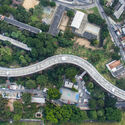
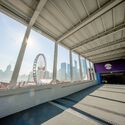
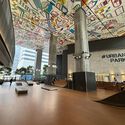
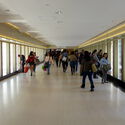
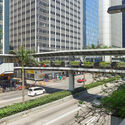
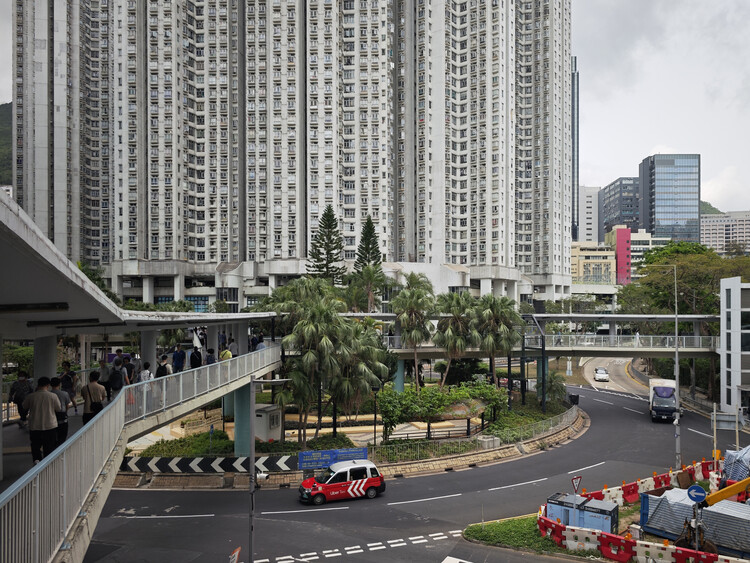
In 2012, Cities Without Ground: A Hong Kong Guidebook offered one of the clearest documentations of a condition that many residents experience intuitively but rarely name: Hong Kong's dependence on elevated, second-storey urbanism. Through drawings and careful mapping, the book captured how the city's pedestrian networks are routinely lifted above the street—separating people from traffic, extending commercial frontage beyond ground level, and negotiating a hilly topography where "flat" circulation is often an engineered achievement. Since its publication, these systems have only grown in prominence—not only for their sheer spatial complexity, but for the way they recast public space as something continuous yet selective, connective yet curated.
This fascination, however, has always carried a parallel unease. Elevated passages can be generous and effective, offering sheltered movement and reliable connectivity. Yet they also raise persistent questions: where do these routes lead, who gets to connect, and what kinds of programs are invited—or excluded—by this "privileged" level of circulation? The second-storey city does not simply bypass vehicles; it can also bypass the street as a civic stage. Over time, it risks shifting architectural attention away from ground-level public life, relieving designers from having to negotiate pedestrian scale, frontage, and the messy reciprocity of the street. In its worst moments, the result is a landscape of podium clusters and sealed megastructures—buildings that perform connectivity at Level 2 while remaining indifferent to the neighborhood at Level 0.
In recent years, Albania has undergone a rapid and visible transformation, emerging as one of the most active urban environments in Southeast Europe. This growth is not only reflected in the expansion of its built fabric but also in the scale and ambition of new architectural interventions that seek to redefine the country's image. Across its territory, a series of large developments, cultural institutions, and infrastructural projects are being introduced as part of a broader effort to reposition Albania and its capital, Tirana, within regional and international networks.
A significant number of these interventions are being designed by internationally recognized architectural offices, whose presence has become a defining characteristic of the city's current phase of development. Rather than relying primarily on incremental or locally embedded processes, Tirana's transformation is increasingly shaped through externally authored visions that introduce new formal languages, typologies, and urban strategies. These projects often operate as singular objects or large-scale fragments, contributing to a landscape where the city is assembled through distinct and highly visible gestures.
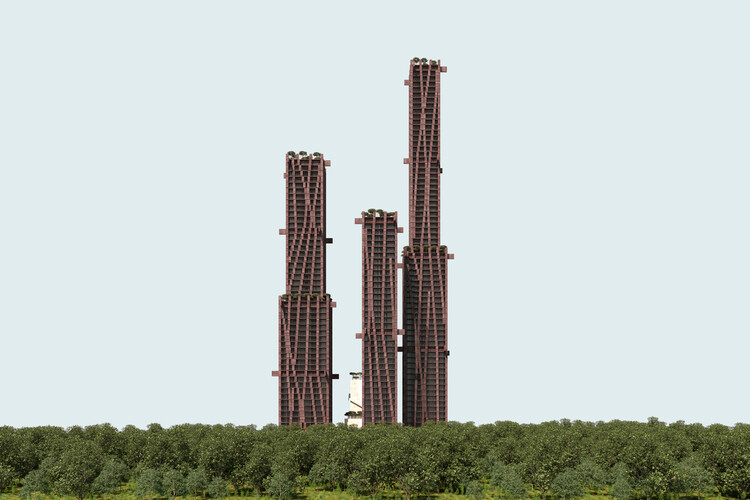
Abuja was named the capital city of Nigeria on December 12, 1991. Located in the central Federal Capital Territory (FCT), it replaced the most populous coastal city of Lagos in a process of structural reform aimed at national integration and more balanced regional development. Like other capital relocations, Nigeria's capital was moved for strategic reasons to transform Abuja into the country's new administrative center, often referred to as "the center of unity." It was envisioned as a planned city based on a master plan developed by the United States-based consortium International Planning Associates (IPA). More than three decades later, a new master plan titled "City Walk" has been developed by MAG International Links Limited and designed by Benoy as a mixed-use district integrating hotels, offices, residential, retail, cultural, educational, and healthcare facilities, alongside a 450-meter tower and a 13,000-seat indoor arena across 250 hectares.
Amid the rapid build-out of data centres and AI economies across the Greater Bay Area—and alongside the celebration of AI as a tool and "author," as featured in 2025 Hong Kong–Shenzhen Bi-City Biennale of Urbanism\Architecture (Hong Kong)—a parallel question becomes unavoidable: how do the planning and construction of AI infrastructure actually begin to shape everyday life? Many of the facilities already built remain intentionally distant from daily experience. The "cloud" may be marketed as immaterial, but its architecture is profoundly physical: high-power, high-heat, service-heavy environments that are often sited in remote or low-density areas to take advantage of lower land costs and to minimize friction with nearby communities. Security and risk management further reinforce this logic. Data centres hold sensitive, privileged information—corporate assets, legal records, government and institutional data—and remoteness becomes part of their operating model, keeping the infrastructures of AI both spatially and socially out of sight.
Urban renewal is inherently fraught—financially complex, politically exposed, stakeholder-dense, and almost guaranteed to leave someone dissatisfied. Precisely for these reasons, many cities default to inertia rather than risk the upheaval that comes with reworking entrenched urban fabrics, their residences, and their dynamics; once the "sleeping bear" is prodded, unexpected complications tend to multiply.
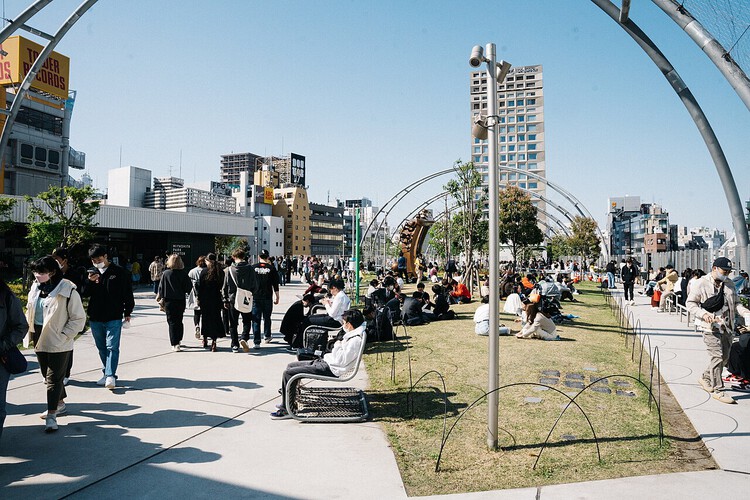
Miyashita Park (Miyashita Kōen), located in Shibuya, Tokyo, crystallizes this dilemma. Its current form—a layered, mixed-use complex balancing commercial activity with a publicly accessible park—emerged from years of negotiation, critique, and recalibration. The result is a distinctive example of a public-private partnership that seeks to align urban amenity, everyday leisure, and economic viability, producing a new piece of city that hosts public life while underwriting its own upkeep.
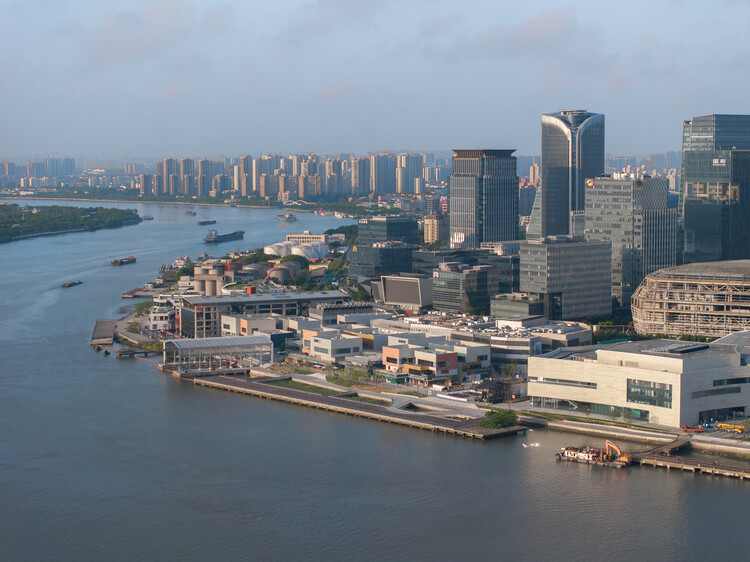
Amidst global economic adjustments and a domestic focus on high-quality development, Shanghai has implemented a strategic shift in its urban development approach—moving from 'incremental expansion' to 'connotative enhancement.' Guided by the concept of a "people-oriented city", Shanghai has elevated urban construction from mere physical space aggregation to a comprehensive endeavor aimed at optimizing functional quality, revitalizing spatial vitality, and boosting residential resilience through urban renewal initiatives. This transformation is framed not merely as a response to resource constraints but also as an intentional approach to urban development principles. Its core proposition lies in: under the policy framework of strictly controlling incremental land use, how to unleash development potential through the "reproduction" of existing spaces.
According to several recent studies, noise in cities has become an increasing hazard to health. Environmental noise, that is, noise from traffic, industrial activities, or amplified music, which reaches internal spaces, is not merely an annoyance. It has been linked to cardiovascular disease, diabetes, dementia, and mental health. As the world urbanizes, more people are exposed to excessive levels of noise. How can urban design and architectural strategies help to prevent this?
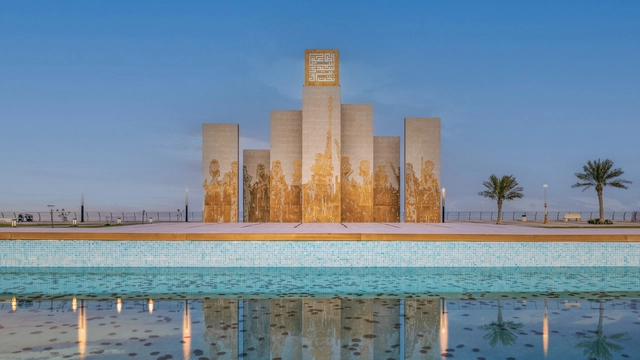
Saudi Arabia is undergoing a remarkable transformation, guided by Vision 2030, with investments in tourism, culture, technology, and sustainability reshaping the Kingdom's identity. As part of this cultural evolution, the Mujassam Watan Urban Sculpture Challenge, organized by Buildner in partnership with the Mujassam Watan Initiative (an initiative by Al Fozan Social Foundation), invites architects and artists to shape Saudi Arabia's evolving public spaces through contemporary sculptural design.
What urban and social transformations do our cities require today? How can urban planning and design contribute to improving the experience of their inhabitants in urban spaces? As Andreea Cutieru explains, urban acupuncture refers to the improvement of social and urban issues through precise interventions capable of revitalizing specific areas of cities and consolidating urban planning strategies. The +VIDA program represents a comprehensive strategy for urban and social transformation in territories, strategically focused on vulnerable populations in the Colombian Caribbean. It encourages the collective construction of cities through the exchange of knowledge, intelligence, and expertise, with the aim of transforming the habitat in an integrated manner.