
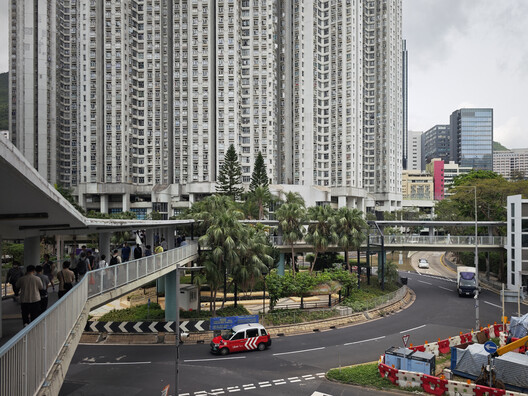
In 2012, Cities Without Ground: A Hong Kong Guidebook offered one of the clearest documentations of a condition that many residents experience intuitively but rarely name: Hong Kong's dependence on elevated, second-storey urbanism. Through drawings and careful mapping, the book captured how the city's pedestrian networks are routinely lifted above the street—separating people from traffic, extending commercial frontage beyond ground level, and negotiating a hilly topography where "flat" circulation is often an engineered achievement. Since its publication, these systems have only grown in prominence—not only for their sheer spatial complexity, but for the way they recast public space as something continuous yet selective, connective yet curated.
This fascination, however, has always carried a parallel unease. Elevated passages can be generous and effective, offering sheltered movement and reliable connectivity. Yet they also raise persistent questions: where do these routes lead, who gets to connect, and what kinds of programs are invited—or excluded—by this "privileged" level of circulation? The second-storey city does not simply bypass vehicles; it can also bypass the street as a civic stage. Over time, it risks shifting architectural attention away from ground-level public life, relieving designers from having to negotiate pedestrian scale, frontage, and the messy reciprocity of the street. In its worst moments, the result is a landscape of podium clusters and sealed megastructures—buildings that perform connectivity at Level 2 while remaining indifferent to the neighborhood at Level 0.
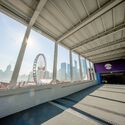
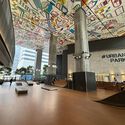
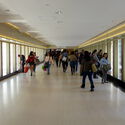
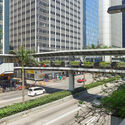
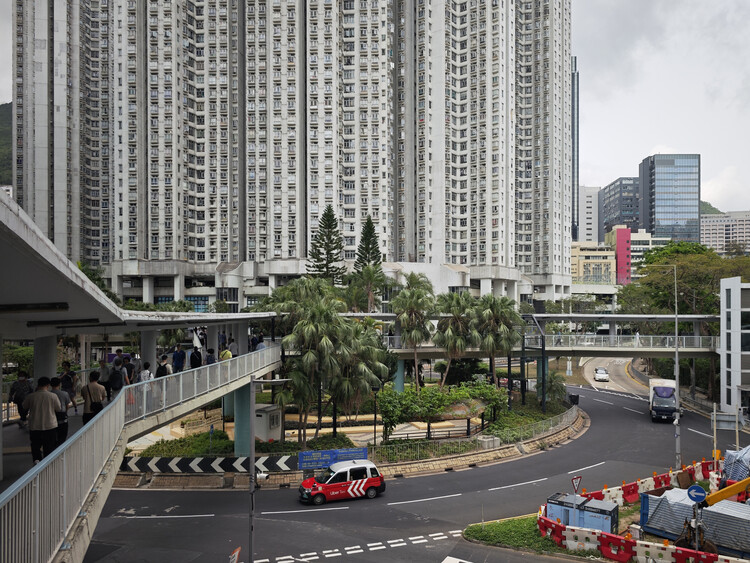
Fourteen years on, it is worth revisiting the book's diagnosis as a live question rather than a historical snapshot. How has Hong Kong's attitude toward this tiered urbanism evolved? Have the critiques of a disappearing streetscape translated into different design approaches, new policies, or new kinds of ground-making? Has the elevated network expanded further—and if so, has it learned to engage the street more deliberately, stitching back down through stairs, ramps, and public rooms rather than hovering above as a parallel world? By looking at a set of recent extensions and urban moments, Hong Kong is here revisited as a city without ground—raising the question of what it now means to live, move, and design within a metropolis increasingly organized by levels.
Related Article
Cities Without Ground: A Guide to Hong Kong's Elevated Walkways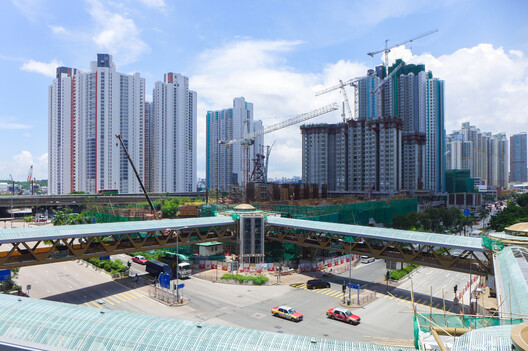
It Didn't Slow Down: Thermal Relief and Why Hong Kong Keeps Walking Above Ground
Since 2012, it has been difficult to argue that Hong Kong's above-ground pedestrian networks have slowed. If anything, the expansion of skybridges and elevated circulation has continued steadily—often driven by the same force that originally made the second-storey city so compelling: commercial clustering. In the central business districts around Central, Admiralty, and adjacent Sheung Wan, the elevated network keeps thickening as office and retail ecosystems compete on seamless connectivity. With the addition of the forthcoming Central Yard "groundscraper," the area is poised to receive yet another round of linkages. Most recently, Henderson Land has introduced a new temporary pedestrian connection associated with the Central Yard development, reinforcing the pattern in which major projects arrive not as isolated buildings, but as expansions of an already stratified circulation system. Similar dynamics are visible elsewhere. In Causeway Bay, competing developers continue to stitch their portfolios into legible networks of access; Hysan Development's Lee Gardens cluster—seven buildings, soon eight—is being reworked as a more continuous elevated pedestrian system as well.
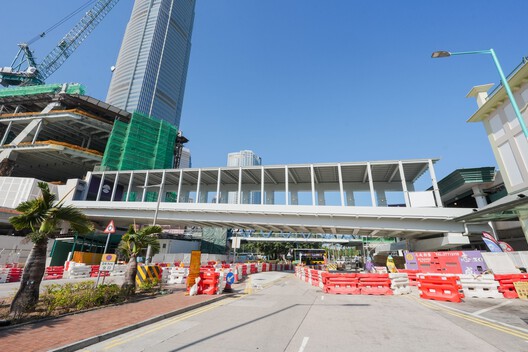
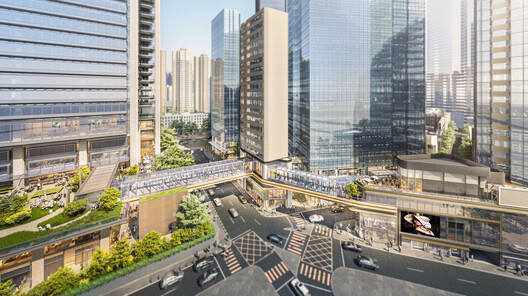
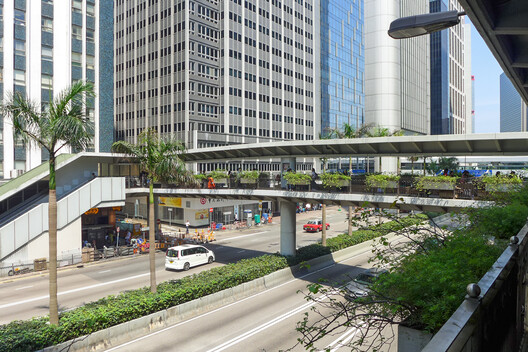
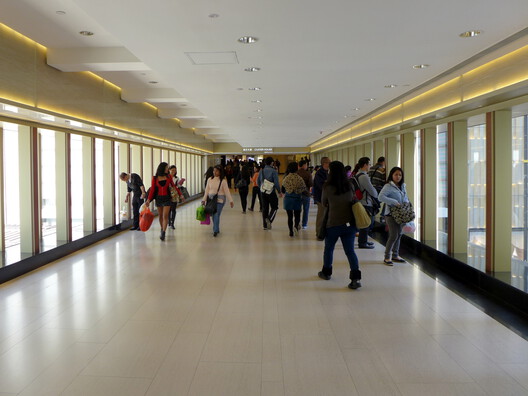
A number of these passageways have remained largely public over time, though their everyday demographics are uneven. On weekdays, they primarily serve white-collar office workers and higher-income professionals moving between meetings, lunches, and errands without touching the ground. Part of this is simply convenience—avoiding traffic light cycles, congested sidewalks, and, more recently, the friction of delivery riders and informal mobility on limited footpath width. But it is also by design: many commercial and office towers calibrate their "main" arrival experience to the elevated level, where lobbies and retail interfaces are positioned to meet the footbridge network as if it were the true street. On weekends, however, these same structures become something else. They often operate as a de facto public realm—offering shelter, seating-like edges, and long spans of covered space in a city where ground-level public comfort remains scarce and expensive.
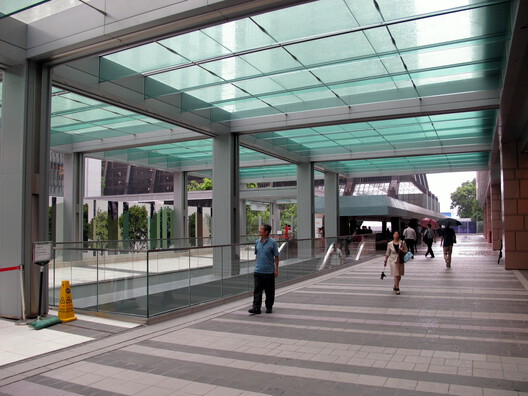
Climate helps explain why this elevated publicness persists. Hong Kong's hot, humid conditions make breezes and air movement central to everyday comfort, and underground circulation—while extensive in some districts—can feel heavy, damp, and mechanically dependent. Elevated bridges, by contrast, often perform as a passive climatic device even when unconditioned. They sit above the heat and exhaust of street traffic, benefit from building shade and overhangs, and can feel several degrees cooler than the ground during certain hours. Their height also places them within wind corridors formed by major streets, allowing cross-breezes to move more freely and making the experience of lingering notably more tolerable. This is one reason the city's underrepresented communities—most visibly domestic workers on their weekly day off—have long occupied footbridges as gathering space. In a city short on shaded, comfortable public territory, the second-storey network becomes not only an infrastructure of efficiency, but an inadvertent infrastructure of thermal relief.
From Skywalk to Waterfront: Elevation Reoriented Toward the Harbour
Since 2012, the experience of "walking without the ground" has extended well beyond Central's commercial footbridge ecology and the familiar clusters of transit-oriented development. While elevated networks still concentrate most visibly around major subway and railway interchanges—where they perform a clear infrastructural function by dispersing pedestrian "point loads" and reducing ground-level congestion—the logic of the elevated passageway has begun to migrate into a broader civic register. In other words, the footbridge is no longer only a device of connectivity. Increasingly, it is being mobilized as a deliberate instrument of public-space making—an institutionally planned, designed, and programmed layer of social territory, rather than an ad hoc appendage between private developments.
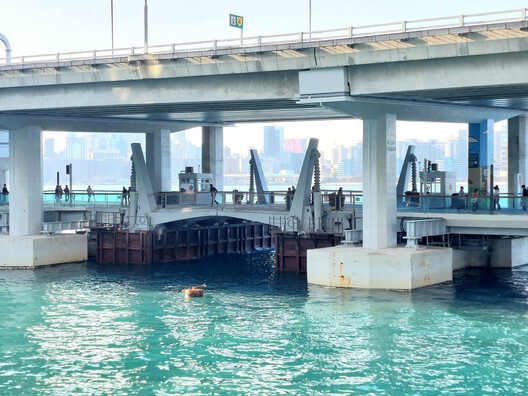
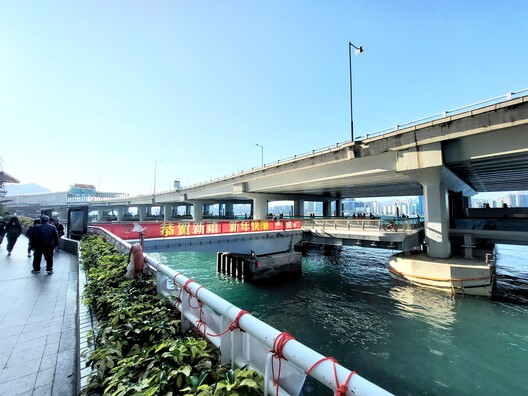
The recently opened East Coast Promenade makes this shift legible at an urban scale. Stretching along the northern edge of Hong Kong Island as part of a larger harbourfront walking network—now framed as a 13-kilometer continuous path—the promenade adopts an all-too-familiar strategy of elevation, but reorients it away from traffic and toward the water. Here, the passageway becomes a waterfront promenade that operates almost like adaptive reuse: it latches onto existing highway infrastructure, piggybacking beneath and alongside the Island Eastern Corridor to create an additional pedestrian layer where continuous ground-level access was previously fragmented or impossible. The gesture is infrastructural, yet the ambition is civic: rather than simply moving people efficiently, the scheme intentionally inserts pauses, overlooks, and community-oriented pockets that acknowledge how Hong Kong residents have historically claimed elevated spaces as places to linger, gather, and occupy.
And yet, the promenade also reveals a key difference between civic elevation and commercial elevation: the role of climatic comfort. Typical footbridges succeed partly because they are often covered, producing shade and a passively tolerable microclimate in a hot, humid city. Large portions of the East Coast Promenade, by contrast, remain open to sun and weather, and their experience can shift dramatically by time of day and season. It is in the segments that run directly under the highway—where shade is continuous, and the air feels cooler—that the promenade's public life intensifies most noticeably. In those shaded clusters, the project begins to operate like a true second-storey public realm: not merely a route along the harbour, but a space where people stop, sit, meet, and turn infrastructure into social ground.
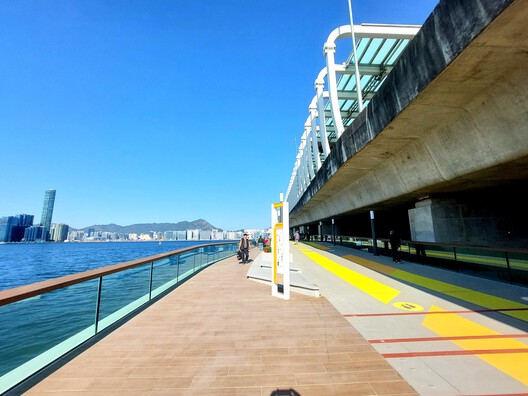
Elevated Urbanism as Necessity: Slope, Shoreline, and Circulation
The strategy of disengaging pedestrian movement from the ground in Hong Kong is not entirely surprising. The city has long been defined by an uneasy, continual effort to manufacture "ground" where none is easily given: building along the harbour's edge, extending the city through reclamation, carving into mountain slopes, stepping over steep hillsides, and stitching circulation across abrupt grade changes. Here, ground has never been a fixed datum so much as a dynamic construct—reshaped by infrastructure, reclaimed land, podiums, footbridges, and terraces. While not as multi-levelled or systematized as larger mainland precedents such as Chongqing, Hong Kong has nonetheless developed a distinctive elevated urbanism: one that negotiates slope and shoreline, supports commercial clustering, and—at its best—offers a passively comfortable public layer above the exhaust and heat of the street.
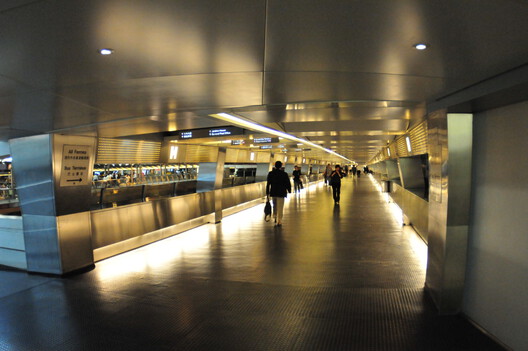
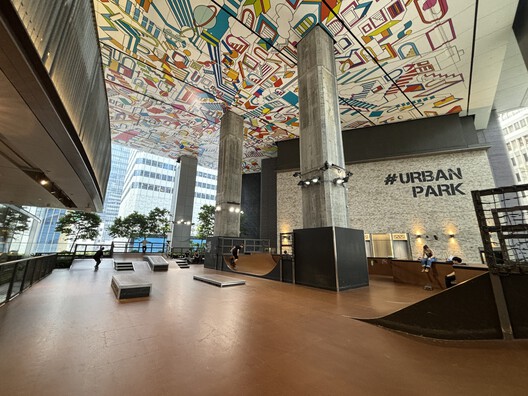
Yet as these networks continue to expand, a parallel shift is becoming more visible. More and more elevated links are being enclosed and sealed, relying on mechanical ventilation and air-conditioning to deliver a 24/7, all-season interior comfort—often calibrated to the routines of office workers in shirts and suits. In doing so, the elevated passageway risks losing one of its original intelligences: its ability to function as a climatic device, producing shade, breeze, and relief through section, exposure, and openness rather than through consumption-heavy systems. As Hong Kong's second-storey city becomes more extensive, more diverse in program, and more intentionally public, the hope is that it does not slide into the same logic that has shaped many contemporary commercial environments—where orientation, porosity, and passive comfort are treated as secondary, and where bridges and tunnels are reduced to generic, conditioned boxes.
This article is part of the ArchDaily Topic: Light, Lighter, Lightest: Redefining How Architecture Touches the Earth, proudly presented by Vitrocsa, the original minimalist windows since 1992.
Vitrocsa designed the original minimalist window systems, a unique range of solutions, dedicated to the frameless window boasting the narrowest sightline barriers in the world. Manufactured in line with the renowned Swiss Made tradition for 30 years, Vitrocsa's systems "are the product of unrivaled expertise and a constant quest for innovation, enabling us to meet the most ambitious architectural visions."
Every month we explore a topic in-depth through articles, interviews, news, and architecture projects. We invite you to learn more about our ArchDaily Topics. And, as always, at ArchDaily we welcome the contributions of our readers; if you want to submit an article or project, contact us.


