1. ArchDaily
  2. dining

dining: The Latest Architecture and News

The Kitchen Edge: Service, Storage, and Domestic Boundaries in Compact Interiors

Subscriber Access | 
Audio available

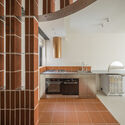
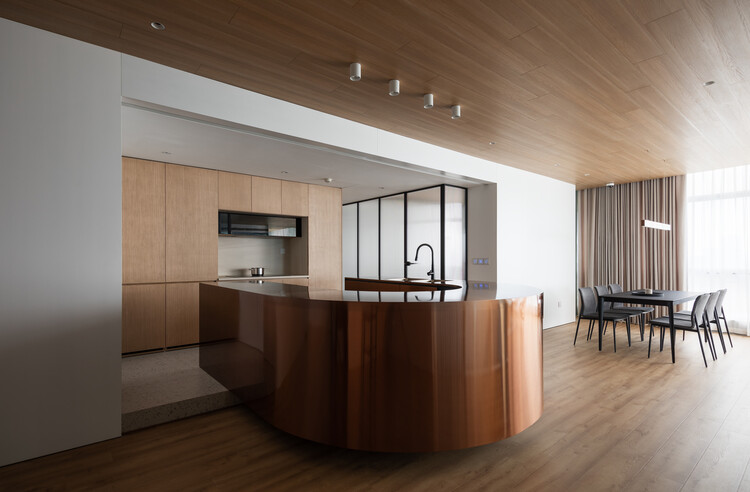
In compact homes, the kitchen is rarely only a room for cooking. It often operates as an edge: a service wall or a boundary between domestic work and social life. Its importance lies not only in food preparation, but in how it organizes the rest of the home, particularly due to limitations of plumbing and ventilation requirements. Before a living room can feel open, the kitchen often has to absorb the practical intensity of daily life: water, heat, smell, appliances, groceries, and storage.

This is especially visible in dense East Asian interiors, where domestic space is frequently shaped by limited area, changing family structures, hybrid work, and the cultural specificity of cooking. The open kitchen may be framed as a lifestyle feature, but in many apartments it is also a planning problem. It has to negotiate domestic labor, support informal gathering, and sometimes, as space-saving strategies, replace the hallway or foyer. More than a design gesture, the kitchen edge is therefore a spatial agreement between service and living.

The Kitchen Edge: Service, Storage, and Domestic Boundaries in Compact Interiors  - Imagen 1 de 4The Kitchen Edge: Service, Storage, and Domestic Boundaries in Compact Interiors  - Imagen 2 de 4The Kitchen Edge: Service, Storage, and Domestic Boundaries in Compact Interiors  - Imagen 3 de 4The Kitchen Edge: Service, Storage, and Domestic Boundaries in Compact Interiors  - Imagen 4 de 4The Kitchen Edge: Service, Storage, and Domestic Boundaries in Compact Interiors  - More Images+ 15

The Public Kitchen: How Asian Markets Turn Eating Into Civic Life

Subscriber Access | 
Audio available

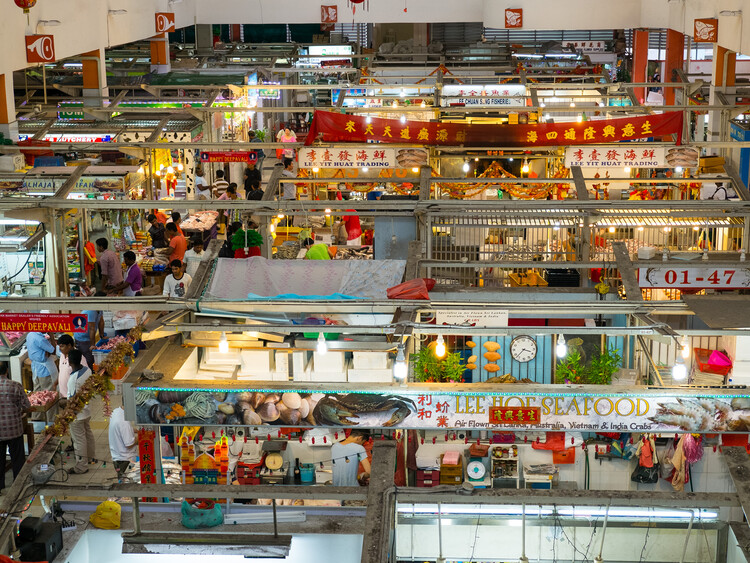
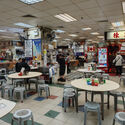
In many Asian cities, eating has never belonged entirely to the private home. It spills into markets, hawker centers, street stalls, and wholesale districts embedded within larger buildings or areas. These are places where the city exchanges information and watches other people pass through. They are not restaurants in the conventional sense, nor are they simply markets. In some way, their vibrancy and usage reflect the society's conditions at that moment. They are public kitchens: shared infrastructures where domestic routines are partially transferred into collective space.

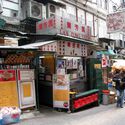
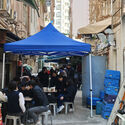
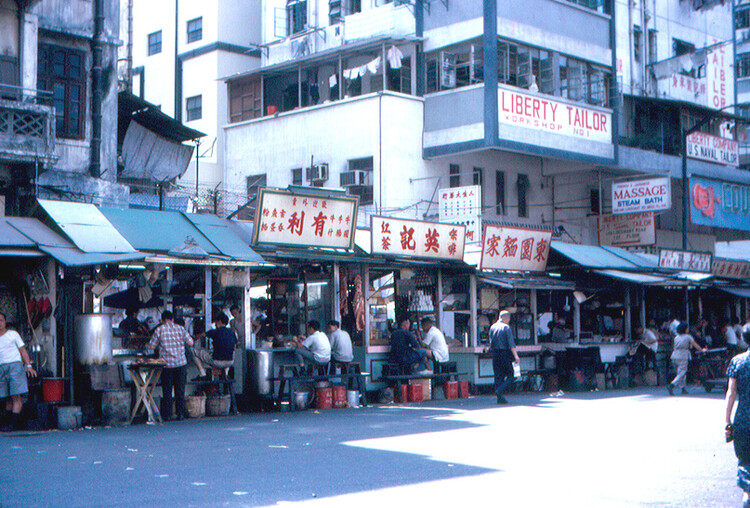
Hong Kong's Municipal Services Buildings and curbside dining are where food is understood not only as culture, but as urban organization. The cooked-food center in the city folds eating into a larger civic machine of wet markets, libraries, and sports halls. The dai pai dong and street-side table, meanwhile, transform the curb into a temporary dining room. Looking beyond Hong Kong, similar questions emerge across the region. How do cities make room for social eating? Where does cooking happen when domestic space is limited? What kind of architecture supports the mess and heat of everyday food?

The Public Kitchen: How Asian Markets Turn Eating Into Civic Life - Image 1 of 4The Public Kitchen: How Asian Markets Turn Eating Into Civic Life - Image 2 of 4The Public Kitchen: How Asian Markets Turn Eating Into Civic Life - Image 3 of 4The Public Kitchen: How Asian Markets Turn Eating Into Civic Life - Image 4 of 4The Public Kitchen: How Asian Markets Turn Eating Into Civic Life - More Images+ 12

Urban Banquet at the Curb: Hong Kong’s Third-Space Dining

Audio available

Across cities worldwide, architecture unfolds continuously at the scale of people and community—not only through new buildings, renovations, or monumental works. "Third spaces" are especially revealing. Consider the street-side culinary realm: how seating, serving, and lingering occupy the edge of the street often discloses a city's cultural codes and spatial habits. What forms of dining and inhabitation have emerged in response to local climate, regulation, and social custom—and how have they evolved over time?

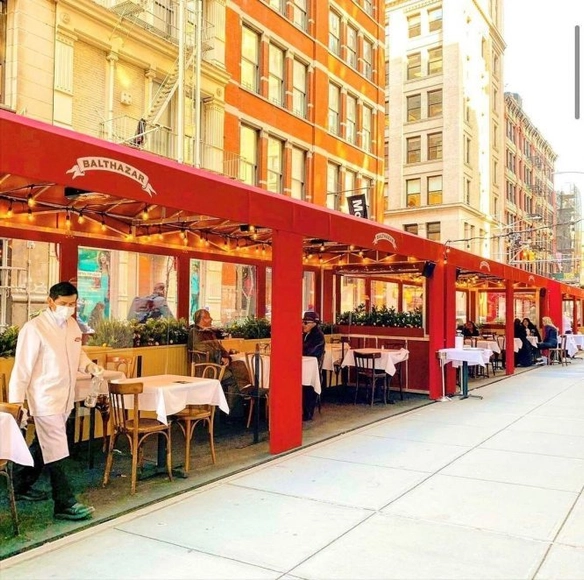
In parts of Europe, for instance, al fresco in Italy and en terrasse in France name culturally specific ways of dining in public, drawing the meal into the urban field—attuned to weather, air, and the passive sociability of people-watching. Since COVID-19, New York City has similarly expanded outdoor dining, reflecting a community-driven desire to engage the streetscape while eating—an everyday, street-level "third place" within a dense metropolis.

Urban Banquet at the Curb: Hong Kong’s Third-Space Dining - Image 1 of 4Urban Banquet at the Curb: Hong Kong’s Third-Space Dining - Image 2 of 4Urban Banquet at the Curb: Hong Kong’s Third-Space Dining - Image 3 of 4Urban Banquet at the Curb: Hong Kong’s Third-Space Dining - Image 4 of 4Urban Banquet at the Curb: Hong Kong’s Third-Space Dining - More Images+ 7

The Singapore Pavilion at the Venice Architecture Biennale Reimagines the City-State as a Dining Table

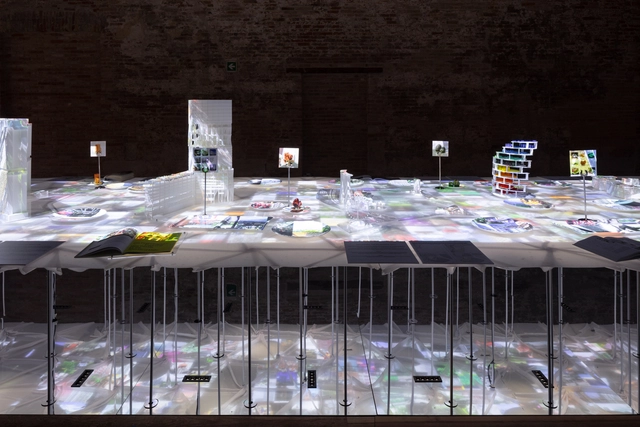
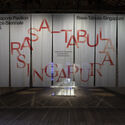
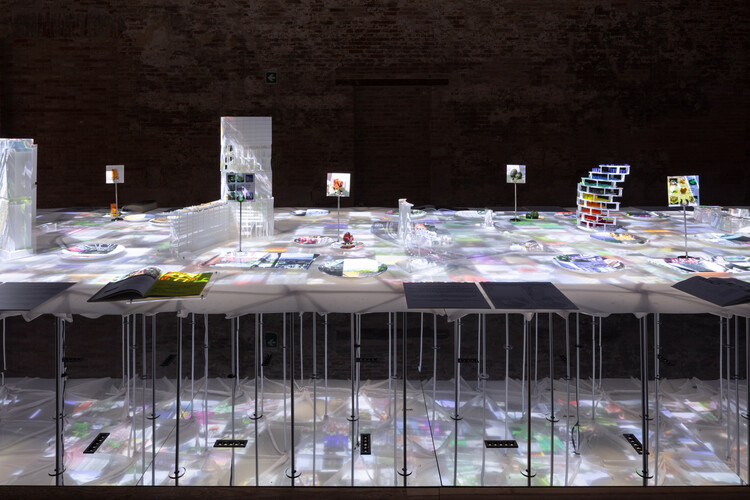
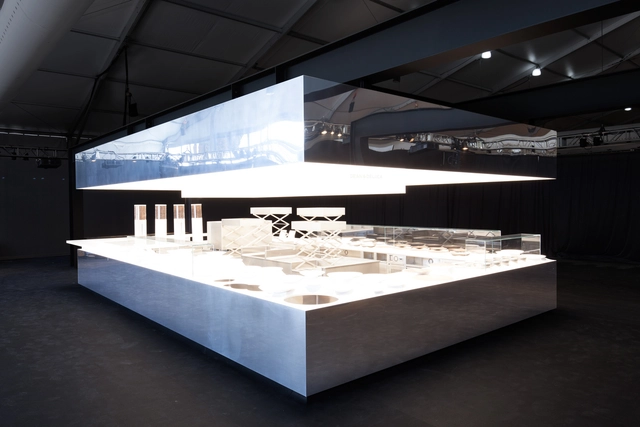
2025 marks the 60th anniversary of Singapore's independence, commemorating its separation from Malaysia on August 9, 1965. The occasion is celebrated in the country's national pavilion at the 19th Venice Architecture Biennale with a multisensory installation that honors Singapore's diversity and reimagines city-making through food, culture, and collective design. Titled RASA–TABULA–SINGAPURA, the installation invites visitors to take a seat at the Table of Superdiversity: an enticing reimagining of city-making and nation-building through the universal act of dining. According to the curatorial team from the Singapore University of Technology and Design (SUTD), the purpose of the installation is to showcase how the convergence of multicultural differences, collective histories, design, and new technology creates opportunities for more inclusive and adaptive urban futures.

The Singapore Pavilion at the Venice Architecture Biennale Reimagines the City-State as a Dining Table - Imagem 1 de 4The Singapore Pavilion at the Venice Architecture Biennale Reimagines the City-State as a Dining Table - Imagem 2 de 4The Singapore Pavilion at the Venice Architecture Biennale Reimagines the City-State as a Dining Table - Imagem 3 de 4The Singapore Pavilion at the Venice Architecture Biennale Reimagines the City-State as a Dining Table - Imagem 4 de 4The Singapore Pavilion at the Venice Architecture Biennale Reimagines the City-State as a Dining Table - More Images+ 20

What Cities Get Wrong About Making Outdoor Dining Permanent

Subscriber Access | 

Over the last 18 months of the COVID-19 pandemic, restaurant owners around the globe have continuously suffered over the past year- especially small, independent establishments. If there’s one glimmer of hope that many of them have experienced, as public health guidelines continue to evolve, it’s that many cities have relaxed their policies and allowed restaurants to construct temporary shelters on sidewalks and in streets as a means to keep their businesses afloat. But in life after the pandemic, how should we address these setups? Should we turn them into something more permanent and allow outdoor dining to stay?

In Southern California, Outdoor Dining Changes the Hospitality Landscape

Subscriber Access | 

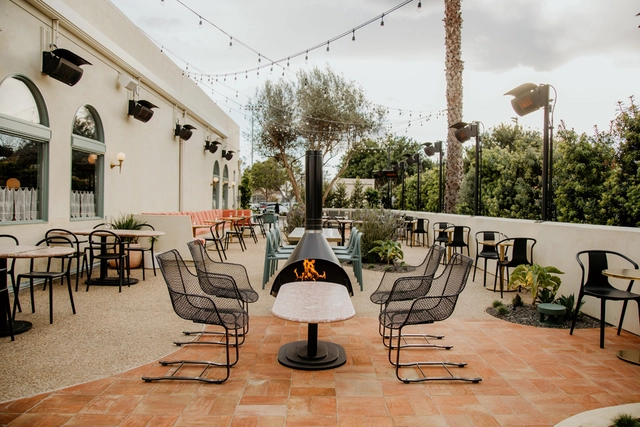
"The explosion of outdoor dining is both a survival tool for restaurants and a welcome cultural shift that may be here to stay", states Jessica Ritz, in her article originally published on Metropolis. In fact, the author explores hospitality trends that have emerged during the pandemic in California, mainly outdoor dining, and that are likely to last or be present for a long time.

Dean & Deluca's STAGE by Ole Scheeren Debuts at Design Miami 2016

STAGE, a protoype for a new chef-led fast food concept, has debuted last week at Design Miami. Designed by internationally renowned architect Ole Scheeren for New York-based gourmet market and food supplier Dean & DeLuca, STAGE highlights interactive preparation, presentation, and consumption of food as a dynamic cultural and social experience. The new service format will become part of Dean & DeLuca’s expansion throughout key north American cities in 2017.

Dean & Deluca's STAGE by Ole Scheeren Debuts at Design Miami 2016 - Image 1 of 4Dean & Deluca's STAGE by Ole Scheeren Debuts at Design Miami 2016 - Image 2 of 4Dean & Deluca's STAGE by Ole Scheeren Debuts at Design Miami 2016 - Image 3 of 4Dean & Deluca's STAGE by Ole Scheeren Debuts at Design Miami 2016 - Image 4 of 4Dean & Deluca's STAGE by Ole Scheeren Debuts at Design Miami 2016 - More Images+ 21