Architectures of Movement

ArchDaily Topic

A curated selection of articles, interviews, and essays exploring land, borders, and the politics of belonging.

Responding to Displacement: Architectural Strategies Across Latin America
Responding to Displacement: Architectural Strategies Across Latin America

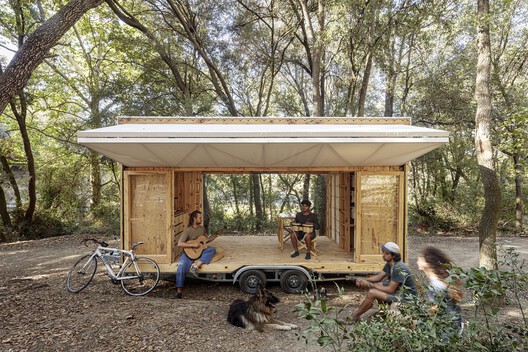
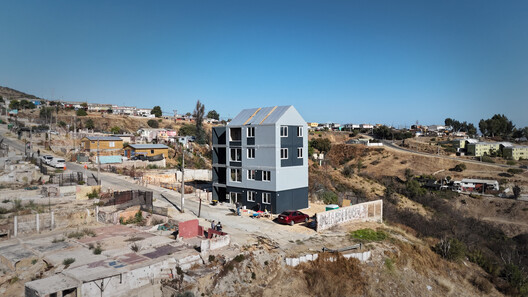
Displacement is usually understood through movement: the moment people are forced to move from one place to another. Yet from an architectural perspective, that movement is only the beginning of what comes next. A house may need to be rebuilt, an entire community relocated, or everyday life reestablished somewhere completely new. What is lost through displacement is not always something architecture can simply replace.

Read more »
Where Is the Border? How Architecture Controls and Reimagines Mobility

Where Is the Border? How Architecture Controls and Reimagines Mobility

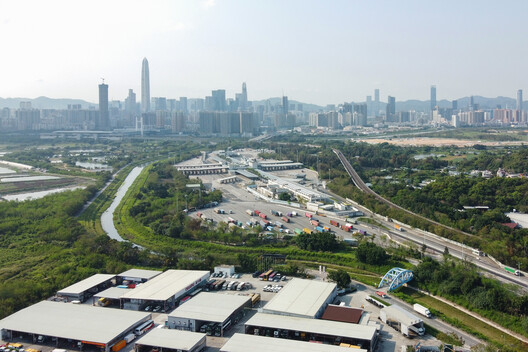
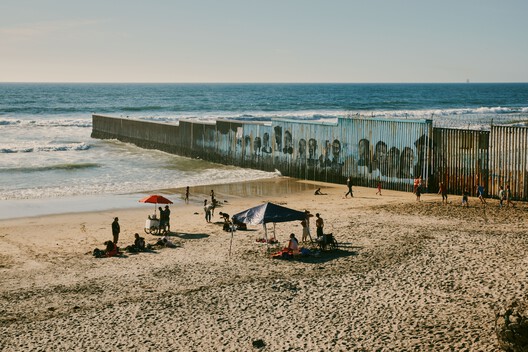
Imagine a corridor. Concrete walls two meters apart, a low ceiling, artificial lighting with neither shadow nor gradation. At the far end, a bulletproof glass window, and on the other side, a uniformed officer. You are at a port of entry. It could be in Calais, El Paso, or Lampedusa. An anonymous space, yet far from neutral. Designed so that anyone can understand: passage is not a right; it is a concession.

Read more »

Schools at the Border: How Architecture Supports Learning in Conditions of Displacement

Schools at the Border: How Architecture Supports Learning in Conditions of Displacement

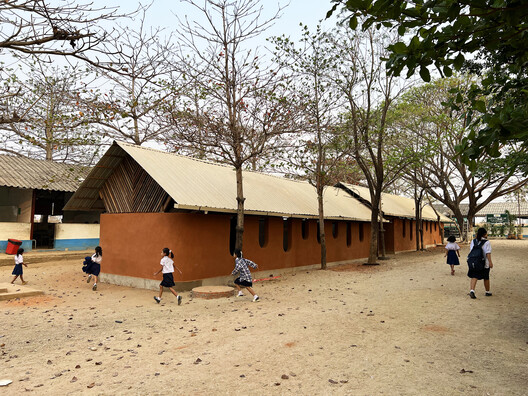
For millions of displaced children and young people, education unfolds amid conditions of forced mobility, administrative uncertainty, and prolonged precarity. Schools situated in borderlands, refugee settlements, and sites of climate-induced displacement therefore operate as more than educational facilities. They become spatial infrastructures that negotiate the contradictory demands of emergency and continuity, offering environments where learning persists despite the instability of legal status, living conditions, and the very feeling of being at home.

Read more »

The Oasis Is Not a Destination: Architecture Along the Routes of the Desert

The Oasis Is Not a Destination: Architecture Along the Routes of the Desert

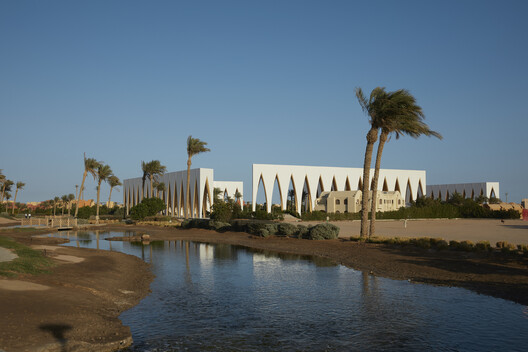
Architecture has long been defined by permanence. Buildings are celebrated because they endure, cities because they establish permanence against uncertainty, and monuments because they resist the passage of time. Some of humanity's oldest urban traditions emerged in landscapes where permanence alone could never guarantee survival. Across the deserts of North Africa and the Arabian Peninsula, oasis settlements developed not as isolated refuges from an empty wilderness, but as carefully maintained pauses within landscapes already shaped by movement. Long before highways and airports connected continents, caravans, pilgrims, pastoralists, and merchants traversed these territories through networks of wells, irrigation systems, cultivated groves, and market towns. The oasis was never the end of a journey. Wells, shaded palm groves, irrigated fields, and caravan markets allowed the next stage of the journey to begin.

Read more »

Inside Hostels: How Shared Spaces Reshape the Rhythm of Nomads' Lives

Inside Hostels: How Shared Spaces Reshape the Rhythm of Nomads' Lives

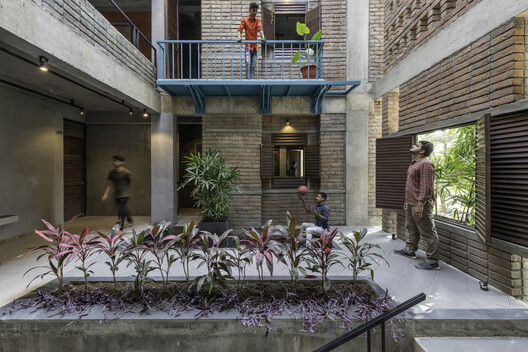
Examining the evolution of dwelling throughout history reveals that concepts of space, time, identity, and home extend far beyond architecture itself. From the early twentieth century to the present, human development has been shaped by accelerating economic, social, cultural, and technological transformations. Advances in information and communication technologies have fostered a world of constant connectivity, a phenomenon that can, at times, disconnect individuals from the physical spaces they inhabit. Amid an ever-growing flow of stimuli, interactions, and digital platforms, shared living across multiple architectural scales and programs presents both a challenge and an opportunity to reconnect people with their surroundings through design strategies that support the freedom of movement and flexibility demanded by contemporary life.

Read more »

A Wooden Bench and the Geography of Materials

A Wooden Bench and the Geography of Materials

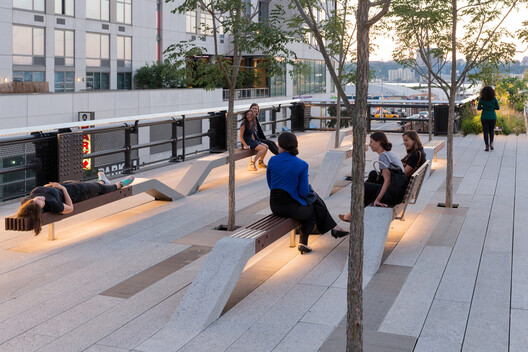
Images of the benches at New York City's High Line Park spread around the world when the project opened in 2009. Emerging diagonally from the same material and modular pattern as the paving, they transition seamlessly from concrete to wood, evoking the railway tracks that once occupied the site. To withstand decades of exposure to the elements, the project required a wood species of exceptional durability, and ipe, harvested from the Brazilian Amazon, was selected. Its slow growth produces a dense, low-porosity hardwood that is naturally resistant to wear, moisture, and biological decay. The choice, however, sparked controversy at the time amid concerns over the certification of the timber's forest management. This broader view changes how we think about materials. Their origin still matters, but so does what happens after the building's life comes to an end.

Read more »

When Mobility Becomes the Ground: Architecture, Adaptation, and the Search for Continuity

When Mobility Becomes the Ground: Architecture, Adaptation, and the Search for Continuity

Few conditions have shaped contemporary architectural discourse as profoundly as uncertainty. Across international biennials, exhibitions, and forums, architecture increasingly imagines its relationship to the world through flexibility, reversibility, and responsiveness—qualities intended to engage with climate emergencies, political instability, and unprecedented human mobility. Buildings are designed to transform, infrastructures to evolve, and cities to accommodate conditions that appear increasingly unpredictable. This emphasis on agility has expanded the discipline's capacity to engage with environmental change, offering valuable strategies for a world in constant transformation.

Read more »

Caribbean Urbanism: From Garífuna Roots to the Layered City of La Ceiba, Honduras

Caribbean Urbanism: From Garífuna Roots to the Layered City of La Ceiba, Honduras

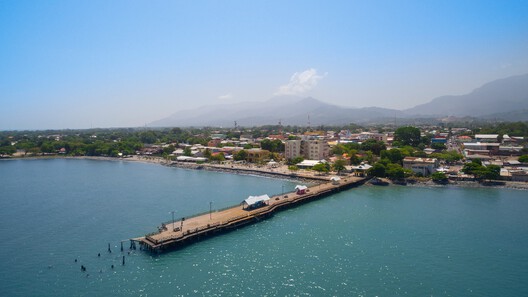
On the Caribbean coast of Honduras, lies the Leán valley, a narrow coastal strip lined by the Nombre de Dios Mountain Range to the South and the Caribbean Sea to the North. For a long time, this was the last frontier: dense jungle, swamps, no infrastructure, and difficult inland access. However, all of that started to change with the arrival of the Garífuna, who settled the area between the Danto and Cangrejal Rivers, setting the foundations of what would become the City of La Ceiba. An urban hub in the Honduran Caribbean whose history has been defined by migration waves: Central Americans, Afro-Caribbean people, Europeans, and corporate North America. These movements from all around the world did not merely contribute to economic growth, but actively produced the city's spatial logic, identity, and architectural form.

Read more »

Rivers Before Roads: How Southeast Asia's Waterways Produced an Alternative Urbanism

Rivers Before Roads: How Southeast Asia's Waterways Produced an Alternative Urbanism

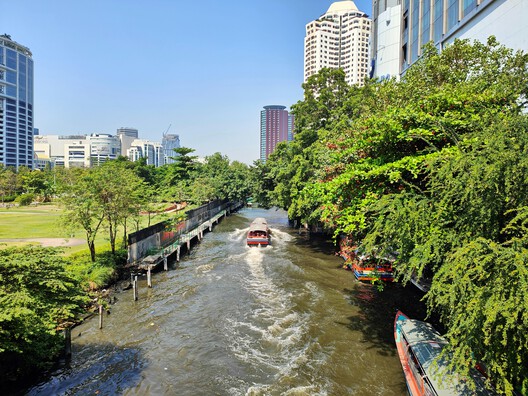
For most of the twentieth century, architecture has learned to read cities through roads. Street hierarchies define urban plans, intersections organize movement, and buildings are understood by the façades they present to sidewalks. Roads appear so fundamental to urban life that they are often mistaken for a universal condition. Across much of Southeast Asia, cities developed according to an entirely different spatial logic. Long before automobiles reordered urban landscapes, rivers served as streets, marketplaces, civic spaces, and public infrastructure. Movement occurred primarily by boat, commerce unfolded along waterfronts, and architecture addressed water rather than asphalt. Reading these cities through their waterways changes how architecture itself is understood. Infrastructure, in this case, is not the road but the river.

Read more »

Unearthing the Ground: Architecture and the Politics of Extraction

Unearthing the Ground: Architecture and the Politics of Extraction

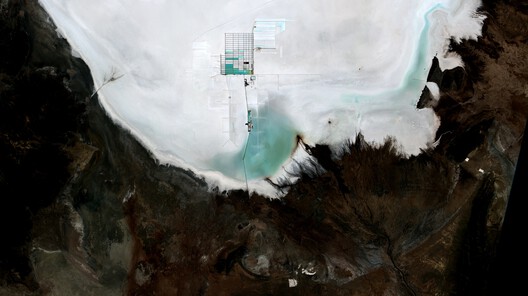
Every building begins somewhere else. The sand in its concrete, the stone on its façade, the lithium that may one day power its systems. It arrives, already stripped from a mountain, a riverbed, or a salt flat thousands of kilometers away, having passed through a chain of trucks, ships, and customs declarations that erase almost everything about where it came from. Architecture tends to treat material as a starting condition, something simply available, but extraction is where construction actually begins.

Read more »

Movement, Innovation, and Memory: The Bizkaia Bridge Between Engineering and Heritage

Movement, Innovation, and Memory: The Bizkaia Bridge Between Engineering and Heritage

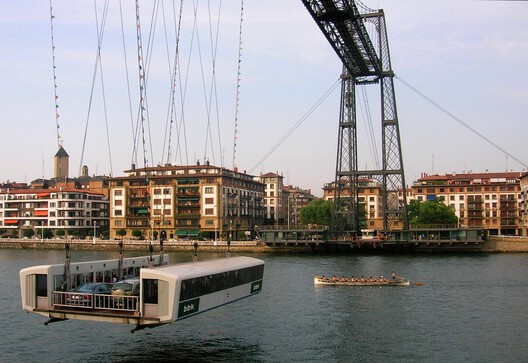
What role do transportation infrastructures play in shaping the culture and economy of societies? How do they bridge cultural, ideological, and geographic divides while transforming the lives of the communities they serve? One of the most remarkable iron structures of the European Industrial Revolution stands west of Bilbao, spanning the Nervión River at the mouth of the Ibaizabal Estuary. It is the Bizkaia Bridge, which combines nineteenth-century ironworking traditions with the innovative use of lightweight alternating-twist steel cables. Recognized as the world's first transporter bridge, it became a model for similar structures built throughout Europe, Africa, and the Americas.

Read more »

When Movement Becomes Sacred Space: The Architecture of India’s Pilgrimage Landscapes

When Movement Becomes Sacred Space: The Architecture of India’s Pilgrimage Landscapes

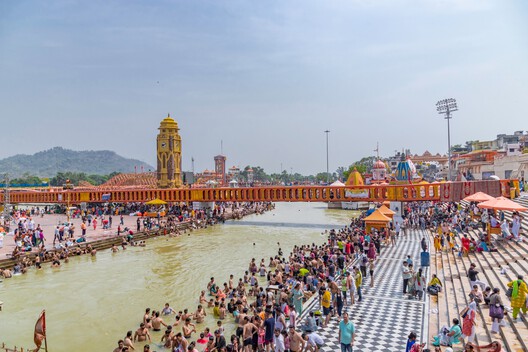
At the helm of architectural discourse on sacred architecture, attention almost always settles on the monument. Temples, mosques, monasteries, and churches dominate architectural histories, design criticism, and photography alike, becoming the physical symbols through which faith is understood. For millions of pilgrims across India, the most consequential architectural experience begins long before the shrine comes into view. It unfolds across mountain roads, river ghats, shaded streets, temporary camps, queue systems, bridges, water kiosks, medical stations, and countless ordinary pieces of infrastructure through which pilgrimage actually takes place. The architectural work of pilgrimage may lie less in the shrine itself than in the environments that allow millions of people to reach it.

Read more »

Architectures of Movement: ArchDaily's July Editorial Focus

Architectures of Movement: ArchDaily's July Editorial Focus

Every twelve years, the banks of the Ganges at Prayagraj become one of the largest cities on Earth — and then disappear. The Maha Kumbh Mela draws over 400 million pilgrims across six weeks, requiring the construction of a full urban infrastructure: pontoon bridges, field hospitals, kilometers of temporary roads, a grid of tent cities visible from space. When the festival ends, it is dismantled entirely. No gathering in human history produces a more complete architecture of movement; built for arrival, engineered for transience, and designed to leave no permanent trace. The Kumbh Mela is exceptional in scale, but not in condition: movement has become a defining spatial problem of the century.

Read more »