1. ArchDaily
  2. Movement

Movement: The Latest Architecture and News

When Architecture Moves: Kinetic Design and the Rituals of Space

Subscriber Access | 

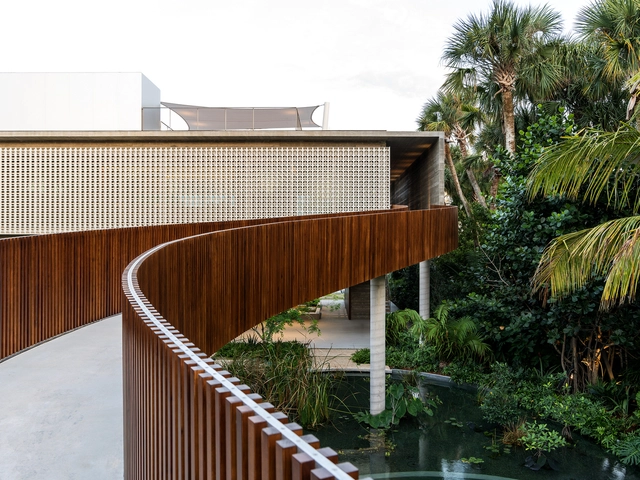
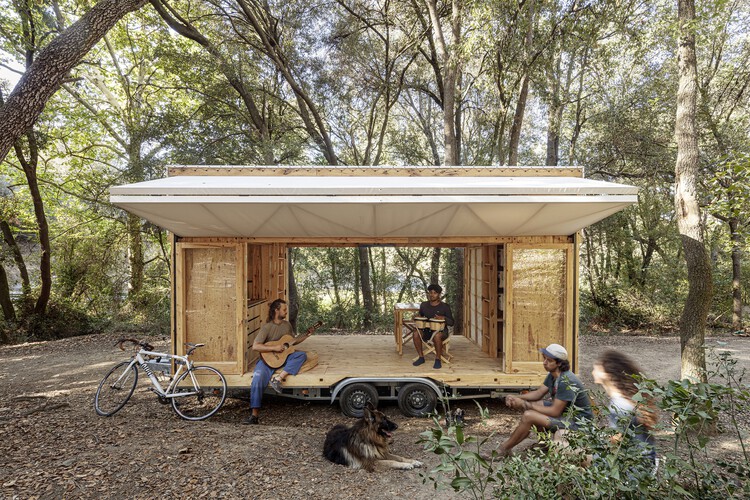
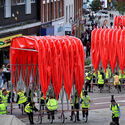
For centuries, architecture has been defined by unmoving permanence. A building is assumed to be fixed, its walls and foundation immobile in space. A growing number of architects are now challenging this assumption by incorporating movement into the very fabric and tectonic structures of buildings.

When roofs hinge, walls slide, and entire structures respond to their occupants, something remarkable happens: the architectural spaces become an active component of daily rituals. These moments of opening, closing, shifting, and translating spaces ground buildings in the present moment and demand active engagement from users. The architecture becomes less of an object or a monument and more of a choreography of participation.

When Architecture Moves: Kinetic Design and the Rituals of Space - Image 1 of 4When Architecture Moves: Kinetic Design and the Rituals of Space - Image 2 of 4When Architecture Moves: Kinetic Design and the Rituals of Space - Image 3 of 4When Architecture Moves: Kinetic Design and the Rituals of Space - Image 4 of 4When Architecture Moves: Kinetic Design and the Rituals of Space - More Images+ 36

Rural Transportation Hubs: Infrastructure Design, Access, and Regional Mobility

Subscriber Access | 

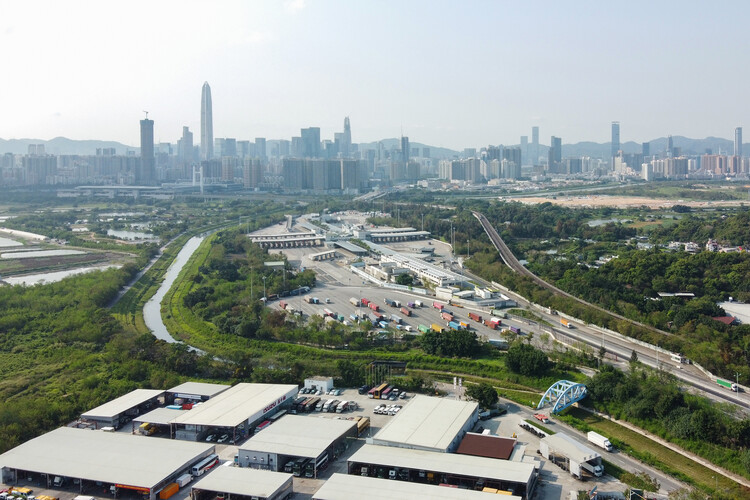
The future of transportation hubs in the United States will not be defined by iconic metropolitan airport terminals and expansive central train stations. Rural communities contain the majority of the nation's road miles, carry nearly half of all truck vehicle miles traveled, and originate two-thirds of rail freight. These realities position rural transportation hubs as vital regional access points and distribution centers that shape national mobility outside models of urban extensions.

Rural transportation hubs in the United States are essential civic and logistical anchors whose success cannot be measured against urban metrics. Instead of replicating transport hubs of dense urban typologies, designers are developing architectural models that reflect rural realities: dispersed populations, freight-dominant infrastructure, modest multimodality, safety challenges, and social access needs. In many rural regions, a modest airport terminal sustains economic viability, a rail transfer facility connects resource-based industries to national markets, and a regional bus depot provides access to employment, education, and essential services.

Rural Transportation Hubs: Infrastructure Design, Access, and Regional Mobility - Image 1 of 4Rural Transportation Hubs: Infrastructure Design, Access, and Regional Mobility - Image 2 of 4Rural Transportation Hubs: Infrastructure Design, Access, and Regional Mobility - Image 3 of 4Rural Transportation Hubs: Infrastructure Design, Access, and Regional Mobility - Image 4 of 4Rural Transportation Hubs: Infrastructure Design, Access, and Regional Mobility - More Images+ 44

Leisure Architecture: 13 Projects Shaping Togetherness Across Generations

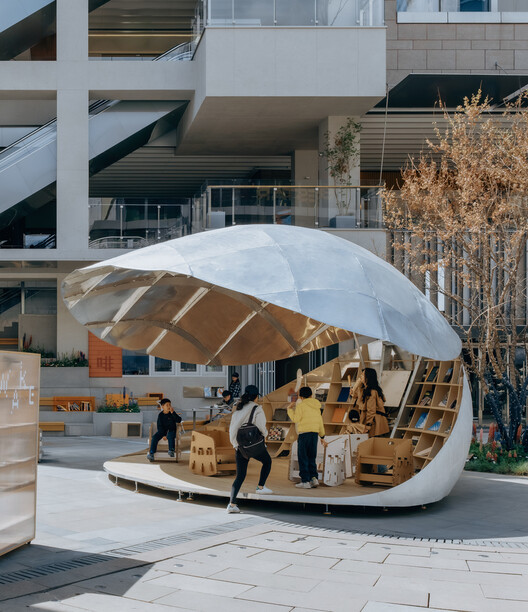
Leisure spaces are often where different generations cross paths. Without formal programs or assigned roles, they allow people to move, pause, and remain together, each engaging space in their own way. In a built environment increasingly shaped by specialization and separation, these shared spatial grounds have become less common, giving leisure-oriented architecture a renewed relevance.
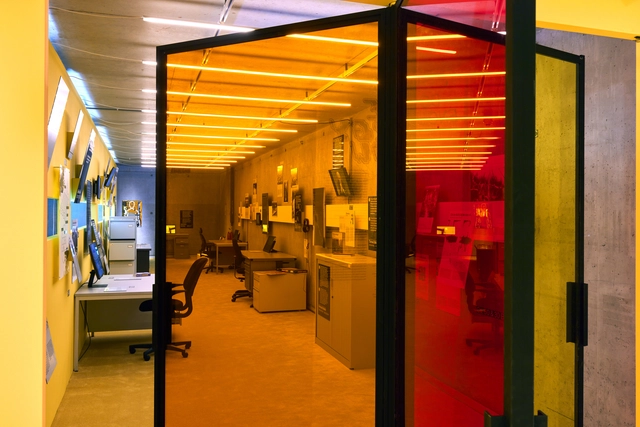
Discussions around public space have repeatedly pointed to the value of openness and flexibility in supporting collective life. As architect Herman Hertzberger has noted, "the more a space can be interpreted in different ways, the more people it can accommodate." Rather than attempting to create interaction, architecture shapes the conditions that make togetherness possible.

Leisure Architecture: 13 Projects Shaping Togetherness Across Generations - Image 1 of 4Leisure Architecture: 13 Projects Shaping Togetherness Across Generations - Image 2 of 4Leisure Architecture: 13 Projects Shaping Togetherness Across Generations - Image 3 of 4Leisure Architecture: 13 Projects Shaping Togetherness Across Generations - Image 4 of 4Leisure Architecture: 13 Projects Shaping Togetherness Across Generations - More Images+ 10

Promenade Architecturale: How the Modernist Concept Continues to Inspire Contemporary Architecture

Subscriber Access | 

In modernist architecture, promenade architecturale emerged as a key design strategy, embodying the principles of functionality, aesthetics, and integration with the urban context. Le Corbusier’s iconic projects, such as Villa La Roche (1925) and Villa Savoye (1929), exemplify this idea by guiding visitors through an ascending journey that culminates in the rooftop garden—a space where the building and nature seamlessly interact. A century later, this concept remains influential, continuing to shape contemporary designs that explore the relationship between movement and space in various architectural typologies, including houses, museums, libraries, and parks.

Promenade Architecturale: How the Modernist Concept Continues to Inspire Contemporary Architecture - Image 1 of 4Promenade Architecturale: How the Modernist Concept Continues to Inspire Contemporary Architecture - Image 2 of 4Promenade Architecturale: How the Modernist Concept Continues to Inspire Contemporary Architecture - Image 3 of 4Promenade Architecturale: How the Modernist Concept Continues to Inspire Contemporary Architecture - Image 4 of 4Promenade Architecturale: How the Modernist Concept Continues to Inspire Contemporary Architecture - More Images+ 14

Revitalizing Shanghai's Waterfront: MVRDV's West Bund Dream Center Transforms Industrial Buildings into Cultural Hub

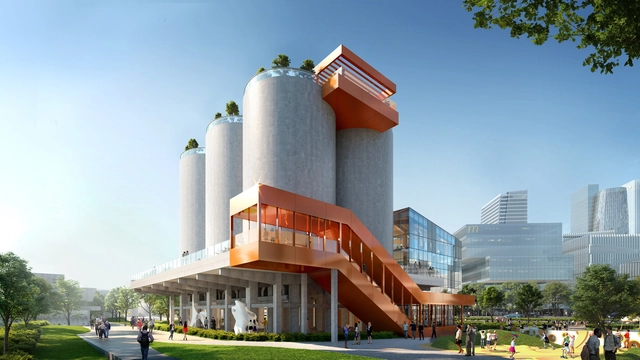
MVRDV has just introduced its comprehensive plan and architectural vision for the construction of the Gate M West Bund Dream Center in Shanghai. Formerly home to a cement plant factory, the design uses the existing structures for cultural programs and combines them with new structures to house new functions. The Dream Center aims to revitalize the riverbank area into a thriving cultural and recreational district.

Revitalizing Shanghai's Waterfront: MVRDV's West Bund Dream Center Transforms Industrial Buildings into Cultural Hub - Image 1 of 4Revitalizing Shanghai's Waterfront: MVRDV's West Bund Dream Center Transforms Industrial Buildings into Cultural Hub - Image 2 of 4Revitalizing Shanghai's Waterfront: MVRDV's West Bund Dream Center Transforms Industrial Buildings into Cultural Hub - Image 3 of 4Revitalizing Shanghai's Waterfront: MVRDV's West Bund Dream Center Transforms Industrial Buildings into Cultural Hub - Image 4 of 4Revitalizing Shanghai's Waterfront: MVRDV's West Bund Dream Center Transforms Industrial Buildings into Cultural Hub - More Images

The Pavilion of the Czech Republic for the 2025 Osaka Expo Explores Movement and Spirituality

TheCzech Republic Pavilion at EXPO 2025 Osaka embodies the concept of life energy and continuous growth through its thoughtful architectural design. Created by Apropos Architects, the pavilion is centered around the motif of a spiral. Visitors experience a 260-meter-long pathway that wraps around the building, ascending gradually across four floors before culminating on the observation roof. This dynamic journey reflects the passage of time, individual development, and broader themes of personal and social progress.

The  Pavilion of the Czech Republic for the 2025 Osaka Expo Explores Movement and Spirituality - Image 1 of 4The  Pavilion of the Czech Republic for the 2025 Osaka Expo Explores Movement and Spirituality - Image 2 of 4The  Pavilion of the Czech Republic for the 2025 Osaka Expo Explores Movement and Spirituality - Image 3 of 4The  Pavilion of the Czech Republic for the 2025 Osaka Expo Explores Movement and Spirituality - Image 4 of 4The  Pavilion of the Czech Republic for the 2025 Osaka Expo Explores Movement and Spirituality - More Images+ 16

The World's First Solar Biennale and Energy Show Exhibition Opens in Rotterdam on September 9

The Het Nieuwe Instituut in Rotterdam, The Netherlands, opens The Energy Show and the Solar Biennale on Friday, September 9, 2022. In collaboration with The Solar Biennale designer and curator Matylda Krzykowski and solar designers Marjan van Aubel and Pauline van Dongen, the exhibition presents a series of projects that explores the sun's meaning and possibilities in society, the environment, and design. With Europe in the midst of an energy crisis, The Energy Show and the Solar Biennale is an opportunity for designers and the general public to examine the transition to solar energy and technology as we move towards a post-carbon future.

The World's First Solar Biennale and Energy Show Exhibition Opens in Rotterdam on September 9 - Image 1 of 4The World's First Solar Biennale and Energy Show Exhibition Opens in Rotterdam on September 9 - Image 2 of 4The World's First Solar Biennale and Energy Show Exhibition Opens in Rotterdam on September 9 - Image 3 of 4The World's First Solar Biennale and Energy Show Exhibition Opens in Rotterdam on September 9 - Image 4 of 4The World's First Solar Biennale and Energy Show Exhibition Opens in Rotterdam on September 9 - More Images+ 14

A Brief History of the Vienna Secession Design Movement

Subscriber Access | 

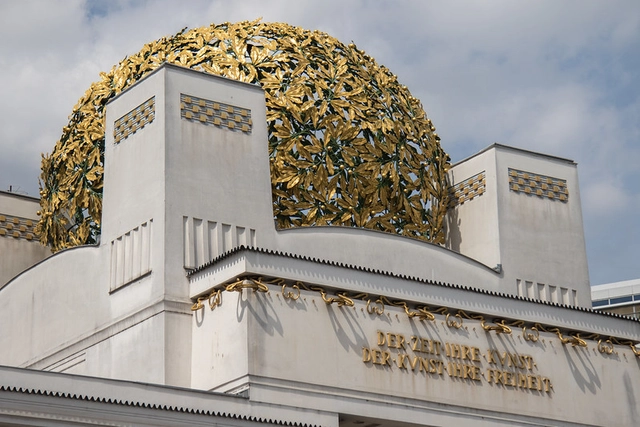
All architecture movements throughout history spur from shifts in society that demand a new style that better reflects the way that technology has advanced the practice and how people express their political, religious, and moral beliefs and practices. While some shifts occur over a period of several years, others are experienced as a sudden revolt. The Vienna Secession was undoubtedly the latter. At the end of the 19th century, a group of artists and architects aimed to explore what art should be as it pertained to filtering global influences in a way that could introduce new modernism.

The City as a Tile-Based Game

Subscriber Access | 

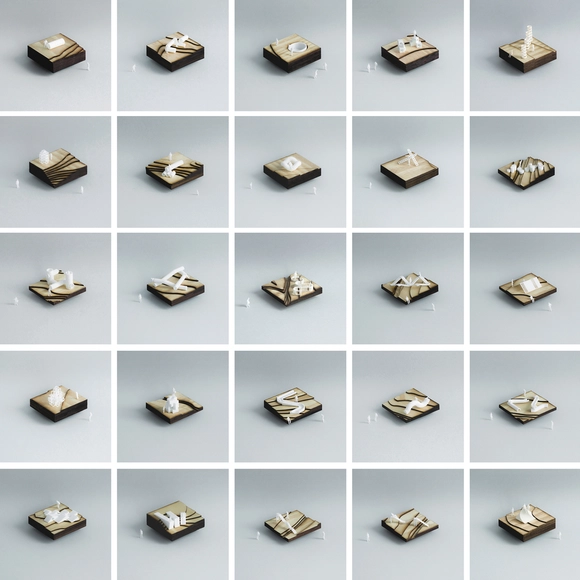
Alterity is essential to human development. If deprived of a variety of stimuli, the brain is unable to develop, losing plasticity and deteriorating like an atrophied muscle. This reasoning is widely accepted when it comes to social relations or cognitive and physical activities. But what about the stimuli promoted by the built environment?

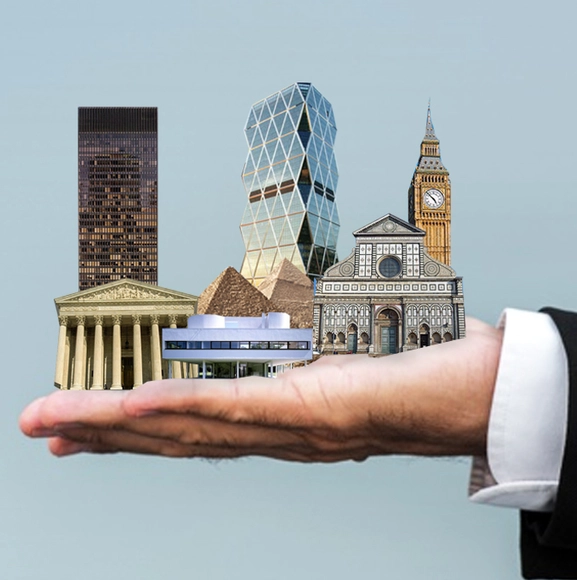
The Birth of Design Movements: Where Are We Now?

Architecture, and all aspects of the design world, has experienced numerous movements throughout time that have defined the way we express ourselves through buildings, art, and other mediums. Created out of a dissatisfaction with the status quo or the emergence of new technology, there have been particularly notable design shifts and emerging ideologies over the last 100 years. This leaves us to ask the question- what design moment are we in now, and what characterizes it? How will we retroactively reflect on this moment of time in design, and will the COVID-19 pandemic accelerate innovation to bring us to our next design era?

A TUDelft Student Asks: "Can We Live With Zero Wasted Space?"

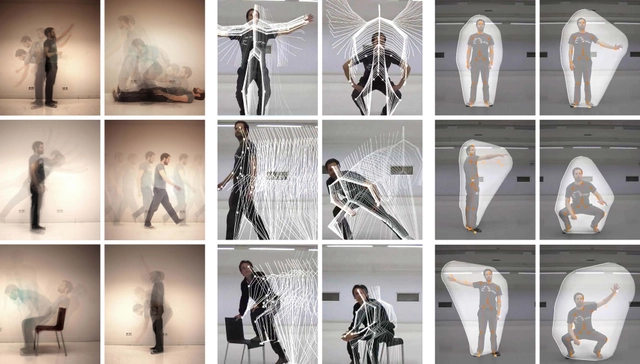
Architectural space as we know it is left largely empty even when it is inhabited. We have become accustomed to this empty space, take it for granted, and most likely could not imagine a life in which we are forced to occupy only the space that we use. Through cataloguing our everyday activities and analyzing our body movements, Stavros Gargaretas of Why Factory studio at TUDelft sought to examine the question of ultimate space efficiency with a project entitled “The Evolving Room: Inhabiting Zero Wasted Space.” The work was completed under the supervision of Ulf Hackauf, Adrian Ravon and Huib Plomp, along with Why Factroy founder Winy Maas and won TUDelft's Best Graduation Project of the Faculty of Architecture award.

A TUDelft Student Asks: "Can We Live With Zero Wasted Space?" - Image 1 of 4A TUDelft Student Asks: "Can We Live With Zero Wasted Space?" - Image 2 of 4A TUDelft Student Asks: "Can We Live With Zero Wasted Space?" - Image 3 of 4A TUDelft Student Asks: "Can We Live With Zero Wasted Space?" - Image 4 of 4A TUDelft Student Asks: Can We Live With Zero Wasted Space? - More Images+ 20