1. ArchDaily
  2. Historic Preservation

Historic Preservation: The Latest Architecture and News

From Sacred to Public: 5 Disused Churches Reimagined as Cultural Spaces

Subscriber Access | 

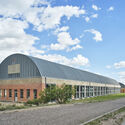
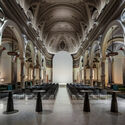
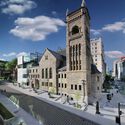
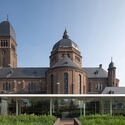
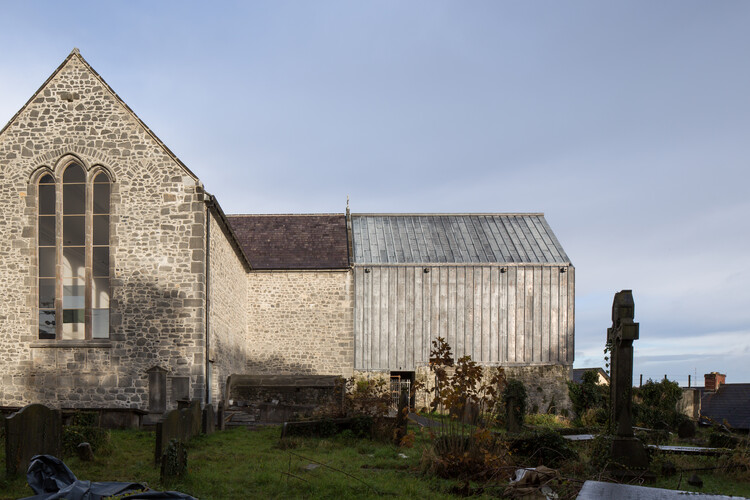
The conversion of disused religious temples through cultural programs constitutes one of the most compelling adaptive reuse strategies in contemporary urban planning. This functional compatibility seems to be rooted in the specific characteristics of churches: their central naves offer large-scale, clear floor plans and monumental cross-sections that easily accommodate the volumetric requirements of museums, theaters, or community hubs. Furthermore, the acoustic properties inherent to their vaulted ceilings, combined with intentional natural lighting filtered through stained glass windows or domes, create the spatial conditions for activities ranging from the performing arts to the exhibition of cultural artifacts. By assuming a public and cultural role, these buildings not only avoid demolition or physical abandonment but also preserve their status as urban and identity landmarks within the city fabric, revitalizing their immediate surroundings without altering their historical significance.

From Sacred to Public: 5 Disused Churches Reimagined as Cultural Spaces  - Image 1 of 4From Sacred to Public: 5 Disused Churches Reimagined as Cultural Spaces  - Image 2 of 4From Sacred to Public: 5 Disused Churches Reimagined as Cultural Spaces  - Image 3 of 4From Sacred to Public: 5 Disused Churches Reimagined as Cultural Spaces  - Image 4 of 4From Sacred to Public: 5 Disused Churches Reimagined as Cultural Spaces  - More Images+ 8

Reconsidering the Shotgun House: Between Preservation, Experimentation, and Displacement

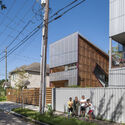
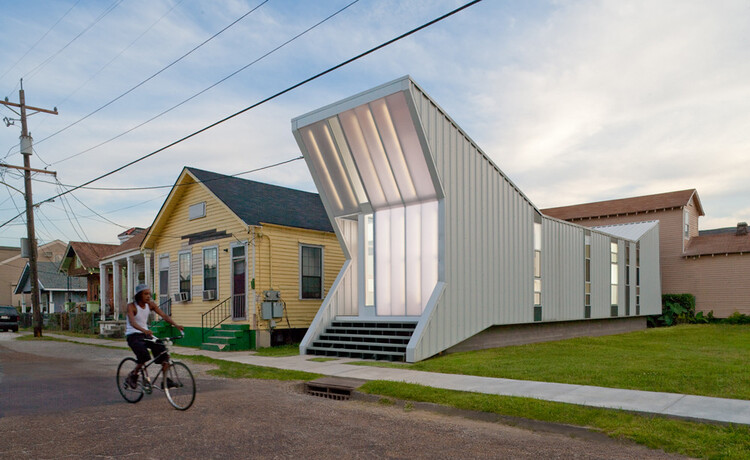
Emerging in port cities and working-class neighborhoods throughout the nineteenth century, the shotgun house became a durable response to density, climate, and constrained urban parcels, becoming one of the defining domestic forms of the Southern United States. Its narrow footprint, sequential plan, and deeply shaded porches produced a spatial logic that was economical and environmentally responsive before either term became central to architectural discourse. From New Orleans and Mobile to Houston and Louisville, shotgun houses formed the physical fabric of neighborhoods shaped by migration, labor, community, and cultural life. Though often dismissed as ordinary, vernacular construction, the housing typology has long embodied sophisticated ideas about climate adaptation, social adjacency, and incremental urban growth, making it one of the most influential domestic forms in the history of the American city.

Reconsidering the Shotgun House: Between Preservation, Experimentation, and Displacement - Image 1 of 4Reconsidering the Shotgun House: Between Preservation, Experimentation, and Displacement - Image 2 of 4Reconsidering the Shotgun House: Between Preservation, Experimentation, and Displacement - Image 3 of 4Reconsidering the Shotgun House: Between Preservation, Experimentation, and Displacement - Image 4 of 4Reconsidering the Shotgun House: Between Preservation, Experimentation, and Displacement - More Images+ 20

From Spanish Presidio to the American Grid: The Hispanic Roots of San Diego’s Urban Core

Subscriber Access | 

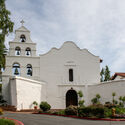
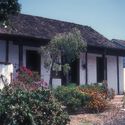
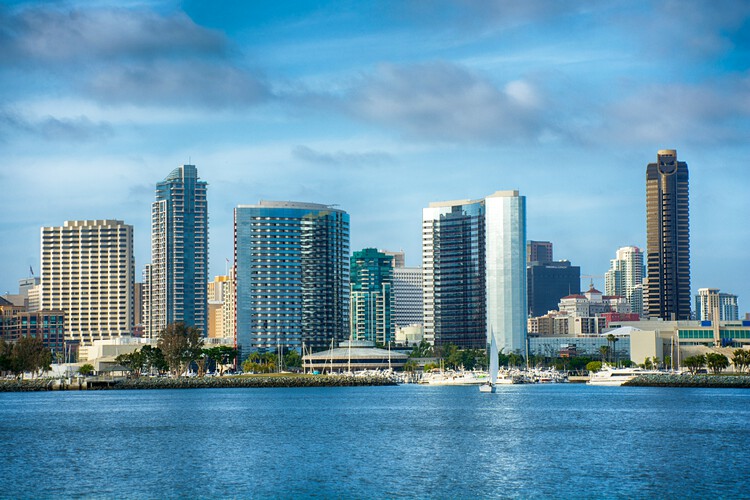
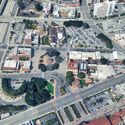
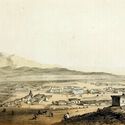
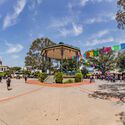
Very close to the Mexican border, in the southwest corner of the United States, lies the city of San Diego. Its urban history began in 1769 with the arrival of a Spanish military expedition commanded by Gaspar de Portola, which marked the first permanent settlement in the territory that was known as Alta California. However, unlike the more formally urbanized administrative capitals and towns of Mexico and Central America, San Diego was conceived as a frontier outpost. Today, it has become the second-largest city in California, just after Los Angeles, and its urban grid tells a story about the Hispanic heritage that is intertwined with the contemporary cultural environment of the United States.

From Spanish Presidio to the American Grid: The Hispanic Roots of San Diego’s Urban Core - Image 1 of 4From Spanish Presidio to the American Grid: The Hispanic Roots of San Diego’s Urban Core - Image 2 of 4From Spanish Presidio to the American Grid: The Hispanic Roots of San Diego’s Urban Core - Image 3 of 4From Spanish Presidio to the American Grid: The Hispanic Roots of San Diego’s Urban Core - Image 6 of 4From Spanish Presidio to the American Grid: The Hispanic Roots of San Diego’s Urban Core - More Images+ 7

Casanova+Hernandez Architects Advances Renovation of Albania’s National Historical Museum

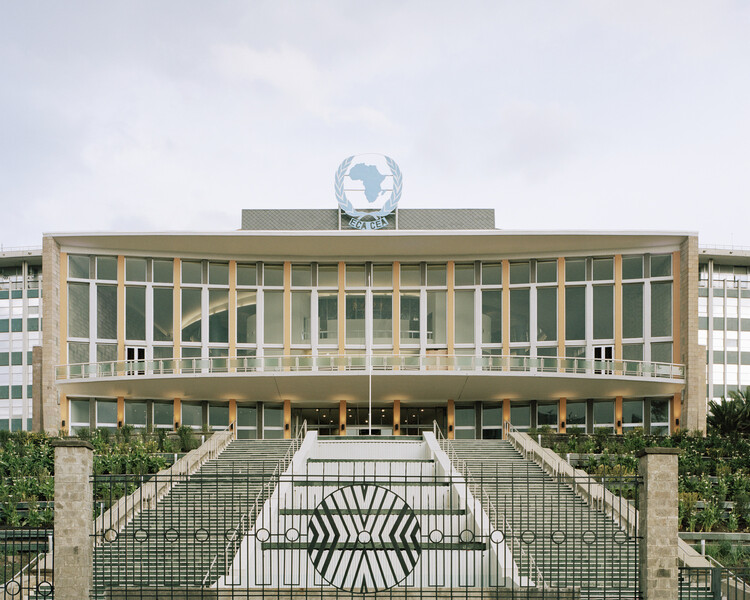
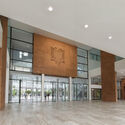
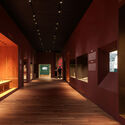
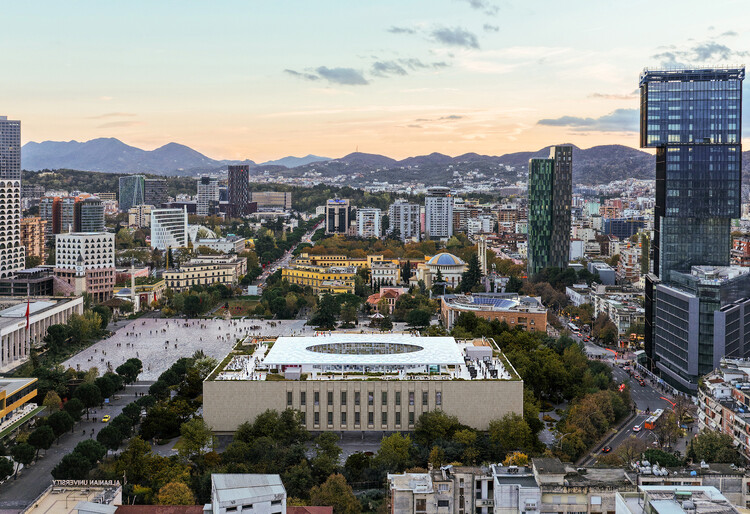
The initial phase of the complete renovation project for the National Historical Museum in Tirana is approaching completion. The project was commissioned by the Ministry of Economy, Culture, and Innovation of Albania and UNOPS, and financed by the European Commission through the EU for Culture (EU4C) program in Albania. The full restoration of the museum's 21,400 square meters is planned in two phases, led by Rotterdam-based Casanova + Hernandez Architects in collaboration with local partner iRI. The first phase consists of restoring the existing building in Skanderbeg Square and is expected to be completed this year, enabling the immediate start of the second phase, focused on implementing the new design for all interior spaces, the courtyard, and the roof.

Casanova+Hernandez Architects Advances Renovation of Albania’s National Historical Museum - Image 1 of 4Casanova+Hernandez Architects Advances Renovation of Albania’s National Historical Museum - Image 2 of 4Casanova+Hernandez Architects Advances Renovation of Albania’s National Historical Museum - Image 3 of 4Casanova+Hernandez Architects Advances Renovation of Albania’s National Historical Museum - Image 4 of 4Casanova+Hernandez Architects Advances Renovation of Albania’s National Historical Museum - More Images+ 19

Baku Architecture City Guide: 15 Projects Reframing Azerbaijan’s Capital

Subscriber Access | 

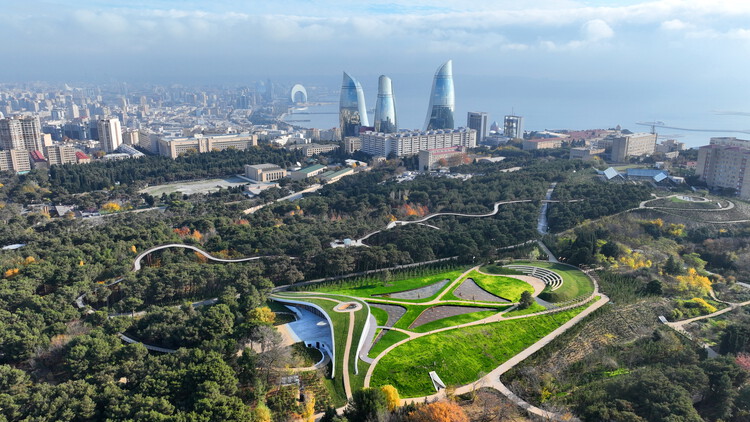
Some cities grow through continuity, others construct themselves through moments of acceleration. Baku, in Azerbaijan, seems to operate somewhere in between. Its historic core, the Icherisheher, still holds a spatial logic that resists expansion: dense, enclosed, defined by proximity and repetition. But just beyond its walls, the city begins to shift. Scale increases, distances expand, and the relationship between buildings becomes less about continuity and more about visibility.
Over the past two decades, Baku has been the site of a deliberate effort to construct an image of itself. Oil wealth provided the means, but architecture became one of its primary tools. Projects such as the Heydar Aliyev Center by Zaha Hadid Architects or the Flame Towers are symbols of this transformation, their forms designed to circulate as much through media as through the city itself. They are precise, controlled, and highly resolved objects. But they also introduce a different urban logic, one that privileges singularity over continuity and positions architecture as an agent of representation.

Baku Architecture City Guide: 15 Projects Reframing Azerbaijan’s Capital - Image 1 of 4Baku Architecture City Guide: 15 Projects Reframing Azerbaijan’s Capital - Image 2 of 4Baku Architecture City Guide: 15 Projects Reframing Azerbaijan’s Capital - Image 3 of 4Baku Architecture City Guide: 15 Projects Reframing Azerbaijan’s Capital - Image 4 of 4Baku Architecture City Guide: 15 Projects Reframing Azerbaijan’s Capital - More Images+ 12

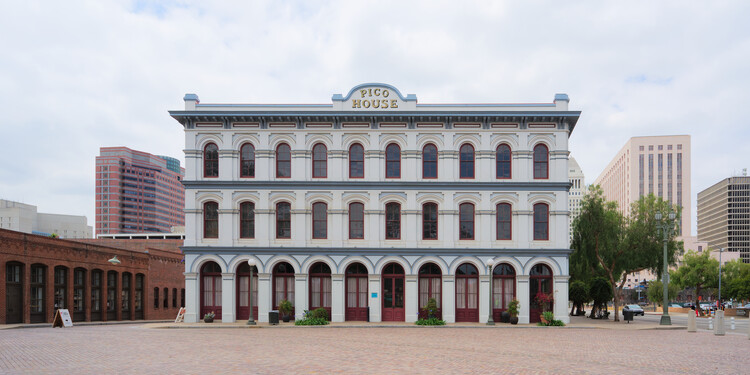
El Pueblo de Los Angeles: The Spanish Origins of LA’s Urban Grid

Subscriber Access | 

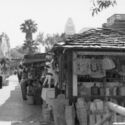
Today, the urban form of Los Angeles is characterized by 20th-century sprawl and extensive automotive infrastructure. However, the physical reality of the city's original core reveals a more complex history that is deeply rooted in Hispanic heritage. In fact, Los Angeles did not originate from the standardized American land system that defines most of the United States' territory. Instead, it is a product of the Spanish urban tradition in the Americas, which followed a structure repeated across major cities on the continent. The intersection of these systems created a layered urban geometry and history that remains visible in the city's contemporary street patterns.

When Los Angeles was founded in 1781 as a pueblo by Felipe de Neve, it was an outpost of the Viceroyalty of New Spain. Viceroyalties were political divisions of the Spanish territories in America, and by the late 18th century, New Spain was vast. It stretched from southern Costa Rica, all the way north to Alta California, bordering the east at the Mississippi River and the newly independent United States of America. At this time, Mexico City functioned as the primary administrative and economic hub, leaving frontier regions like Alta California to rely on a specific triad of settlements: missions (religious), presidios (military), and pueblos (civilian).

El Pueblo de Los Angeles: The Spanish Origins of LA’s Urban Grid - Image 1 of 4El Pueblo de Los Angeles: The Spanish Origins of LA’s Urban Grid - Image 2 of 4El Pueblo de Los Angeles: The Spanish Origins of LA’s Urban Grid - Image 3 of 4El Pueblo de Los Angeles: The Spanish Origins of LA’s Urban Grid - Image 4 of 4El Pueblo de Los Angeles: The Spanish Origins of LA’s Urban Grid - More Images+ 5

First Aid for Endangered Heritage: An Interview with Ambulance for Monuments

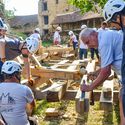
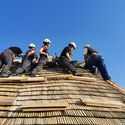
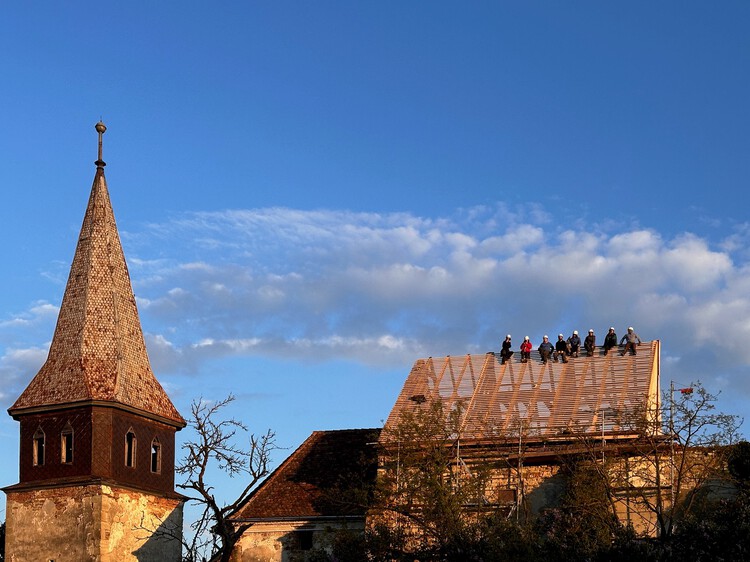
Ambulance for Monuments is a first-aid initiative dedicated to safeguarding Romania's endangered built heritage, operating in a race against time to prevent collapse and irreversible loss. The project responds to the growing vulnerability of historic structures, from Saxon fortified churches and manor houses to wooden churches and rural landmarks, many of which no longer benefit from the community networks that once sustained them. In a country deeply affected by emigration since 1990, where nearly half the population still lives in rural areas, entire villages have lost the people, skills, and everyday care that once kept these monuments standing.

Built around a mobile intervention unit, an "Ambulance" equipped with tools, scaffolding, and on-site equipment, the initiative delivers urgent stabilization works that buy time for endangered buildings. Rather than replacing full restoration, these strategic interventions preserve historic fabric, ensure structural safety, and keep long-term conservation and adaptive reuse possible. 

First Aid for Endangered Heritage: An Interview with Ambulance for Monuments - Image 1 of 4First Aid for Endangered Heritage: An Interview with Ambulance for Monuments - Image 2 of 4First Aid for Endangered Heritage: An Interview with Ambulance for Monuments - Image 3 of 4First Aid for Endangered Heritage: An Interview with Ambulance for Monuments - Image 4 of 4First Aid for Endangered Heritage: An Interview with Ambulance for Monuments - More Images+ 15

Limbo Museum Reactivates Unfinished Spaces and Eden Project Morecambe Moves Forward: This Week’s Review

As housing shortages and affordability challenges intensify across global cities, this week's architectural discourse centers on how design, policy, and adaptive strategies intersect to shape the future of urban living. Initiatives range from grassroots movements and legislative reforms aimed at expanding access to housing to innovative models that rethink ownership, development, and community engagement. At the same time, architects are reimagining existing structures and districts, transforming underused offices, historic landmarks, and unfinished buildings into mixed-use, culturally significant, or publicly accessible spaces. Across scales, these stories illustrate how architecture negotiates scarcity, value, and social priorities, demonstrating its capacity not only to produce new buildings but also to recalibrate urban environments in ways that balance heritage, sustainability, and human experience.

Limbo Museum Reactivates Unfinished Spaces and Eden Project Morecambe Moves Forward: This Week’s Review - Image 1 of 4Limbo Museum Reactivates Unfinished Spaces and Eden Project Morecambe Moves Forward: This Week’s Review - Image 2 of 4Limbo Museum Reactivates Unfinished Spaces and Eden Project Morecambe Moves Forward: This Week’s Review - Image 3 of 4Limbo Museum Reactivates Unfinished Spaces and Eden Project Morecambe Moves Forward: This Week’s Review - Image 4 of 4Limbo Museum Reactivates Unfinished Spaces and Eden Project Morecambe Moves Forward: This Week’s Review - More Images+ 2

Dispatched: Architecture of the American Post Office and the Privatization of Civic Space

Post offices stand among the most enduring monuments of civic life in the United States. Across towns and city centers, they carry the shifting architectural ambitions of the nineteenth and twentieth centuries, from Greek Revival formality to Beaux-Arts monumentality and Art Deco ornament. Architects and federal planners would give these buildings a clear public role and a powerful physical presence. Stone façades, monumental halls, and crafted interiors projected stability, trust, and permanence. The post office placed the federal government directly into the everyday landscape of American life.

Dispatched: Architecture of the American Post Office and the Privatization of Civic Space - Image 4 of 4Dispatched: Architecture of the American Post Office and the Privatization of Civic Space - Image 6 of 4Dispatched: Architecture of the American Post Office and the Privatization of Civic Space - Image 7 of 4Dispatched: Architecture of the American Post Office and the Privatization of Civic Space - Featured ImageDispatched: Architecture of the American Post Office and the Privatization of Civic Space - More Images+ 10

When Do Buildings Begin to Matter? Rethinking Heritage in Local Time

A building still being adjusted, repaired, and debated is declared World Heritage. Another, equally influential, must survive five centuries before anyone considers protecting it. This is not an anomaly in the heritage system; it is the system. Across the world, architecture does not age at the same pace because time itself is not neutral. It is cultural, political, and deeply uneven. What we call "heritage" is not simply old architecture; it is architecture that has reached the right moment in a particular place.

When Do Buildings Begin to Matter? Rethinking Heritage in Local Time - Image 1 of 4When Do Buildings Begin to Matter? Rethinking Heritage in Local Time - Image 2 of 4When Do Buildings Begin to Matter? Rethinking Heritage in Local Time - Image 3 of 4When Do Buildings Begin to Matter? Rethinking Heritage in Local Time - Image 4 of 4When Do Buildings Begin to Matter? Rethinking Heritage in Local Time - More Images+ 6

Material Mediation and Architectural Heritage

Preserving historic buildings requires simultaneously addressing technical, environmental, and regulatory demands while maintaining the material, cultural, and symbolic continuity of what already exists. As the understanding consolidates that the most sustainable building is the one that is already standing, and that preservation also involves construction knowledge, material traditions, and the social fabrics from which they emerged, these same buildings are increasingly confronted with more rigorous contemporary parameters. Energy efficiency, safety, carbon emission reduction, and regulatory compliance have become unavoidable references, placing architecture before a central tension: how to update what already exists without breaking the continuity that sustains its heritage value.

Níall McLaughlin Architects Wins International Competition for Museum of Jesus’ Baptism at Bethany, Jordan

Following the release of seven shortlisted proposals in 2025 through an online gallery, the Foundation for the Development of the Lands Adjacent to the Baptism Site has announced the winner of the international design competition for the Museum of Jesus' Baptism at Bethany, Jordan. Managed by Malcolm Reading Consultants, the six-month invited competition brought together architect-led multidisciplinary teams to design a museum and landscape project responding to the sacred character of Al-Maghtas, a UNESCO World Heritage Site. After finalist interviews conducted by an international Advisory Panel, the team led by Níall McLaughlin Architects (NMLA) was selected as the competition winner.

Níall McLaughlin Architects Wins International Competition for Museum of Jesus’ Baptism at Bethany, Jordan - Image 1 of 4Níall McLaughlin Architects Wins International Competition for Museum of Jesus’ Baptism at Bethany, Jordan - Image 2 of 4Níall McLaughlin Architects Wins International Competition for Museum of Jesus’ Baptism at Bethany, Jordan - Image 3 of 4Níall McLaughlin Architects Wins International Competition for Museum of Jesus’ Baptism at Bethany, Jordan - Image 4 of 4Níall McLaughlin Architects Wins International Competition for Museum of Jesus’ Baptism at Bethany, Jordan - More Images+ 4

NYC 2026 Paul Mellon Lecture: An Architect’s Journey through the Indian Landscape Conserving the Old, Building the New

In 2026, the annual Paul Mellon Lecture will be given by architect and urban conservationist Brinda Somaya. Drawing on decades of experience, she will explore the idea that architecture is not just about buildings and aesthetics but also about people, politics and social responsibility.

Urban Transformation of San Salvador: Contemporary Placemaking in Central America

Historic center renewal has become a recurring strategy in Central American cities seeking to reassert the symbolic, economic, and functional relevance of their traditional cores. These processes often combine physical rehabilitation, institutional investment, and stricter control over public space. San Salvador offers a recent and instructive case, which allows for understanding of how interventions in inherited civic spaces balance infrastructure improvement with heritage conservation and social regulation. It also enables the assessment of how these choices resonate within broader debates on urban transformation in the region.

Urban Transformation of San Salvador: Contemporary Placemaking in Central America - Image 1 of 4Urban Transformation of San Salvador: Contemporary Placemaking in Central America - Image 2 of 4Urban Transformation of San Salvador: Contemporary Placemaking in Central America - Image 3 of 4Urban Transformation of San Salvador: Contemporary Placemaking in Central America - Image 4 of 4Urban Transformation of San Salvador: Contemporary Placemaking in Central America - More Images+ 5

"Full of People and Alive Once Again": In Conversation With Holcim Award Grand Prize Winner RIWAQ – Centre for Architectural Conservation

Qalandiya: the Green Historic Maze, developed by RIWAQ – Centre for Architectural Conservation, has been awarded the Grand Prize at the Holcim Foundation Awards 2025, recognizing its sensitive and deeply contextual approach to heritage conservation in Palestine, selected among the 20 winners of this year's edition. Located in Qalandiya, north of Jerusalem, the project reactivates a historic village center long affected by political fragmentation, neglect, and spatial disconnection. Through an incremental rehabilitation strategy, the project restores deteriorated structures using traditional knowledge, local stone masonry, and native materials, transforming abandoned fabric into active public spaces while reinforcing environmental resilience through passive climate strategies and landscape-based infrastructure.

"Full of People and Alive Once Again": In Conversation With Holcim Award Grand Prize Winner RIWAQ – Centre for Architectural Conservation - Image 1 of 4"Full of People and Alive Once Again": In Conversation With Holcim Award Grand Prize Winner RIWAQ – Centre for Architectural Conservation - Image 2 of 4"Full of People and Alive Once Again": In Conversation With Holcim Award Grand Prize Winner RIWAQ – Centre for Architectural Conservation - Image 3 of 4"Full of People and Alive Once Again": In Conversation With Holcim Award Grand Prize Winner RIWAQ – Centre for Architectural Conservation - Image 4 of 4Full of People and Alive Once Again: In Conversation With Holcim Award Grand Prize Winner RIWAQ – Centre for Architectural Conservation - More Images+ 5

Historic Materials in the Digital Age: How Digitally Assisted Stone Carving Adds a New Dimension to Heritage Restoration

Heritage restoration has always been an intricate process that requires delicate balancing between preserving the integrity of historic materials while integrating contemporary techniques that can enhance accuracy, efficiency, and resilience. With the restoration process of Parliament Hill in Ottawa, Canada's capital city, this intersection of tradition and technology is now on full display. The East Block, built in 1865, offers a compelling example of how digital tools can support the efforts of heritage restoration and contribute to a centuries-old craft such as stone carving.

Historic Materials in the Digital Age: How Digitally Assisted Stone Carving Adds a New Dimension to Heritage Restoration  - Image 4 of 4Historic Materials in the Digital Age: How Digitally Assisted Stone Carving Adds a New Dimension to Heritage Restoration  - Image 6 of 4Historic Materials in the Digital Age: How Digitally Assisted Stone Carving Adds a New Dimension to Heritage Restoration  - Image 5 of 4Historic Materials in the Digital Age: How Digitally Assisted Stone Carving Adds a New Dimension to Heritage Restoration  - Image 2 of 4Historic Materials in the Digital Age: How Digitally Assisted Stone Carving Adds a New Dimension to Heritage Restoration  - More Images+ 8

From Factories to Futures: Adaptive Reuse in the Post-Industrial City

In cities across the world, the relics of industrial production have become the laboratories of a new urban condition. Warehouses, power plants, and shipyards, once symbols of labor and progress, now stand as vast empty shells, waiting to be reimagined. Rather than erasing these structures, architects are finding creative ways to adapt them to contemporary needs, transforming spaces of manufacture into spaces of culture, education, and community life.

This shift reflects a broader change in architectural priorities: building less and reusing more. The practice of adaptive reuse responds simultaneously to environmental urgency and to the need for cultural continuity in urban environments.

From Factories to Futures: Adaptive Reuse in the Post-Industrial City - Image 1 of 4From Factories to Futures: Adaptive Reuse in the Post-Industrial City - Image 2 of 4From Factories to Futures: Adaptive Reuse in the Post-Industrial City - Image 3 of 4From Factories to Futures: Adaptive Reuse in the Post-Industrial City - Image 4 of 4From Factories to Futures: Adaptive Reuse in the Post-Industrial City - More Images+ 17

Visualizing an Art Deco Icon: The Reimagined Waldorf Astoria

 | Sponsored Content

The quintessential symbol of Manhattan, Waldorf Astoria New York officially reopened for the public this year after an extensive renovation. Over its long history, the property has undergone numerous transformations, from its 19th-century beginnings to the modern landmark that stands between Park Avenue and Lexington Avenue.

Reimagining a building that pioneered modern hospitality—a jewel in New York's skyline—posed a challenge that required close collaboration between preservationists, 3D visualizers, architects, and designers. Together, they worked to preserve its protected architectural heritage while meeting contemporary expectations for craftsmanship and comfort.