1. ArchDaily
  2. Heritage Restoration

Heritage Restoration: The Latest Architecture and News

The Spirit of Space: 10 Distillery Projects Where Production Shapes Architecture

Subscriber Access | 

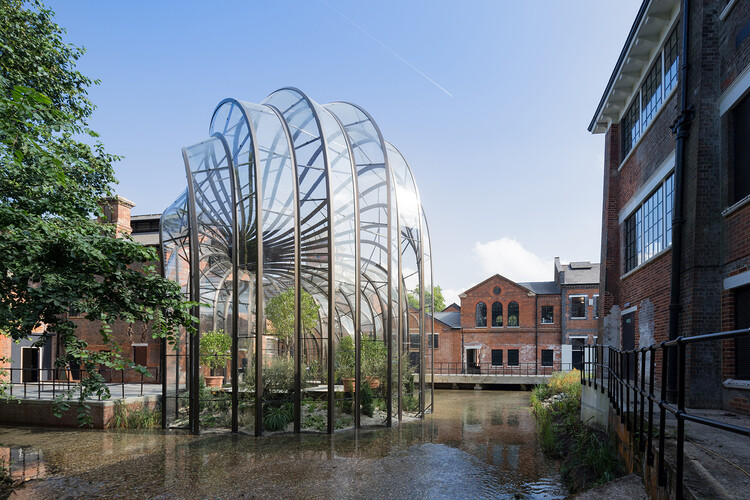
Unlike many industrial programs traditionally concealed behind neutral façades and hermetic spaces, contemporary distilleries often expose their production processes as an essential part of the architectural experience. The heat of the stills, the vapors of distillation, and the paths traced by raw materials cease to function merely as technical operations and instead assume spatial prominence.

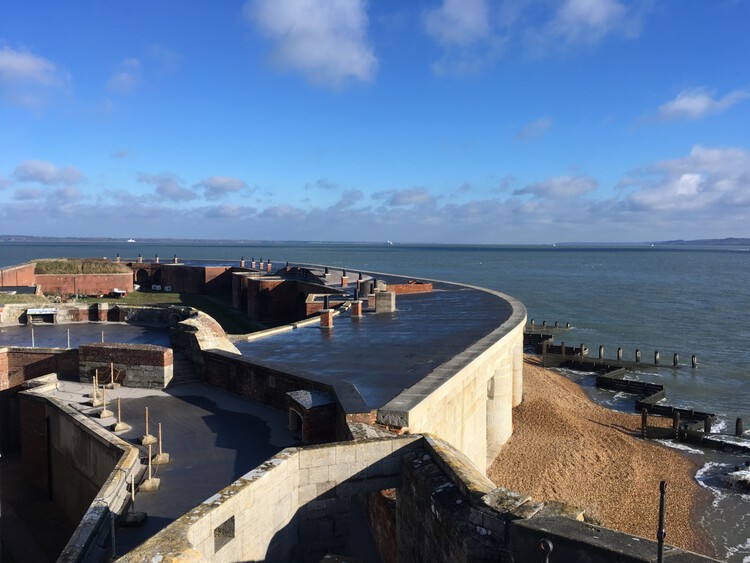
Although they produce different spirits, the projects selected below share similar architectural challenges. All must organize industrial flows, control specific conditions of temperature, ventilation, and storage, and reconcile technical areas with public visitation routes. At the same time, each distillery develops particular responses to its territory, revealing different ways of relating production to landscape.

The Spirit of Space: 10 Distillery Projects Where Production Shapes Architecture - Image 1 of 4The Spirit of Space: 10 Distillery Projects Where Production Shapes Architecture - Image 2 of 4The Spirit of Space: 10 Distillery Projects Where Production Shapes Architecture - Image 3 of 4The Spirit of Space: 10 Distillery Projects Where Production Shapes Architecture - Image 4 of 4The Spirit of Space: 10 Distillery Projects Where Production Shapes Architecture - More Images+ 21

Selldorf Architects, STUDIOS Architecture, and BASE Paysagiste Selected to Renovate the Louvre Museum

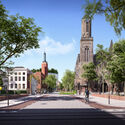
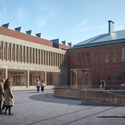
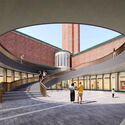
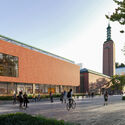
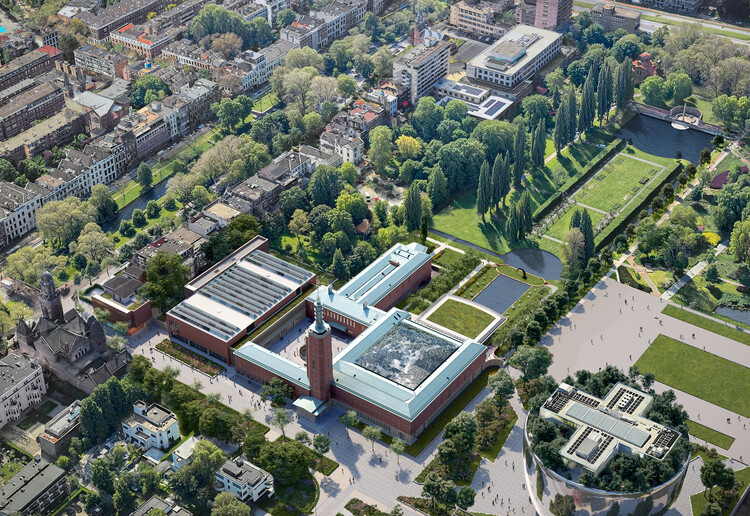
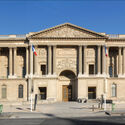
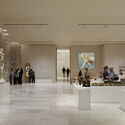
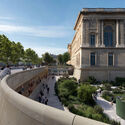
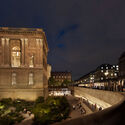
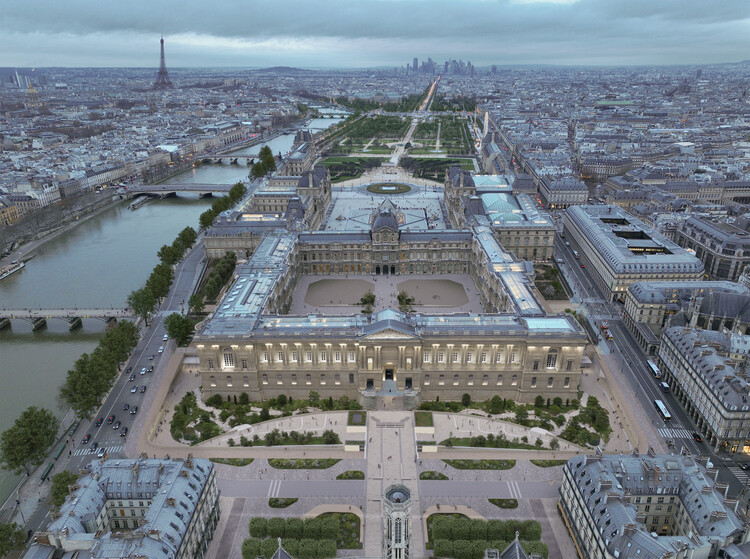
The French Minister of Culture announced on Monday, May 18, 2026, the winner of the "Louvre–Nouvelle Renaissance" competition. The team selected to transform the world-renowned Musée du Louvre is led by STUDIOS Architecture, New York-based Selldorf Architects, and landscape architecture firm BASE Paysagiste. The renovation initiative was announced in January 2025 as a major intervention for the historic complex following concerns expressed by the museum's director regarding its deteriorating condition. The first round of the competition took place in June, with a shortlist of five teams revealed in October. According to French authorities, the project has a dual objective: to repair and transform the building to preserve its collections while updating it to meet contemporary public expectations, including sustainability requirements that will pose significant challenges for the museum in the coming decades.

Selldorf Architects, STUDIOS Architecture, and BASE Paysagiste Selected to Renovate the Louvre Museum - Image 1 of 4Selldorf Architects, STUDIOS Architecture, and BASE Paysagiste Selected to Renovate the Louvre Museum - Image 2 of 4Selldorf Architects, STUDIOS Architecture, and BASE Paysagiste Selected to Renovate the Louvre Museum - Image 3 of 4Selldorf Architects, STUDIOS Architecture, and BASE Paysagiste Selected to Renovate the Louvre Museum - Image 4 of 4Selldorf Architects, STUDIOS Architecture, and BASE Paysagiste Selected to Renovate the Louvre Museum - More Images

Antoni Gaudí’s Last Original Residence at Casa Batlló Opens Following Three-Year Restoration

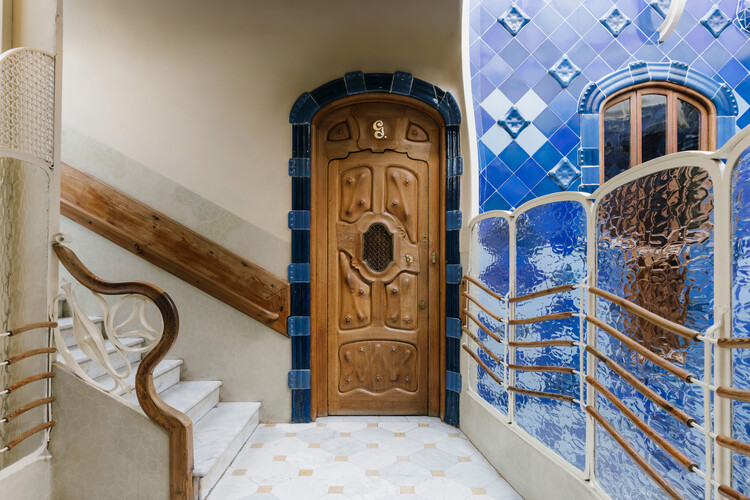
Casa Batlló in Barcelona has unveiled the restored Third Floor of the building, opening the last original residence preserved from Antoni Gaudí's 1904-1906 transformation of the property to the public for the first time. Led by restoration architect Xavier Villanueva and developed over three years through an archaeological-style conservation process, the intervention recovers a largely intact domestic environment that had remained inhabited by descendants of the Batlló family for more than a century. Adapted into a series of private rooms for gatherings, cultural events, and experiences, the restored apartment combines heritage preservation with a contemporary interior design intervention by Paola Navone – OTTO Studio, establishing a new program for one of Barcelona's most recognized architectural landmarks.

Antoni Gaudí’s Last Original Residence at Casa Batlló Opens Following Three-Year Restoration - Image 1 of 4Antoni Gaudí’s Last Original Residence at Casa Batlló Opens Following Three-Year Restoration - Image 2 of 4Antoni Gaudí’s Last Original Residence at Casa Batlló Opens Following Three-Year Restoration - Image 3 of 4Antoni Gaudí’s Last Original Residence at Casa Batlló Opens Following Three-Year Restoration - Image 4 of 4Antoni Gaudí’s Last Original Residence at Casa Batlló Opens Following Three-Year Restoration - More Images+ 9

Milan Design Week 2026 Selection and Wasl Tower in Dubai: This Week’s Review

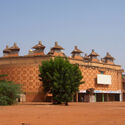
Across cultural platforms, heritage sites, and institutional developments, this week's news reflects how the built environment is reshaped through processes of transformation, reinterpretation, and public engagement. From archaeological reactivations and adaptive reuse strategies to museum expansions and large-scale international gatherings, architecture operates across multiple temporalities, balancing preservation with contemporary use and spatial continuity with evolving cultural programs. Within this context, ArchDaily's selection of installations and exhibitions from Milan Design Week 2026 highlights how design weeks increasingly function as curatorial frameworks for experimentation, while global events and institutional projects continue to expand the formats through which architecture is produced, shared, and debated.
Milan Design Week 2026 Selection and Wasl Tower in Dubai: This Week’s Review - Image 1 of 4Milan Design Week 2026 Selection and Wasl Tower in Dubai: This Week’s Review - Image 2 of 4Milan Design Week 2026 Selection and Wasl Tower in Dubai: This Week’s Review - Image 3 of 4Milan Design Week 2026 Selection and Wasl Tower in Dubai: This Week’s Review - Image 4 of 4Milan Design Week 2026 Selection and Wasl Tower in Dubai: This Week’s Review - More Images+ 6

Memory of the Earth: 4 Adaptive Reuse Projects Transforming Ceramic Factories

Subscriber Access | 

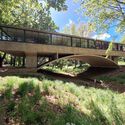
There is an ancestral gesture in shaping earth. Long before architecture was established as a discipline, clay was already being molded by hand and transformed by fire, turning raw matter into domestic utensils and cultural objects. Within the history of this craft, ceramic factories mark the transition from manual knowledge to serial production, expanding its scale without entirely severing its material origins. Scattered across different territories, these structures record the relationship between technique, landscape, and time. Over the decades, however, many of them lost their original function, replaced by more technological processes or absorbed by the urban development around them, entering an intermediate state between permanence and obsolescence.
Memory of the Earth: 4 Adaptive Reuse Projects Transforming Ceramic Factories - Image 1 of 4Memory of the Earth: 4 Adaptive Reuse Projects Transforming Ceramic Factories - Image 2 of 4Memory of the Earth: 4 Adaptive Reuse Projects Transforming Ceramic Factories - Image 3 of 4Memory of the Earth: 4 Adaptive Reuse Projects Transforming Ceramic Factories - Image 4 of 4Memory of the Earth: 4 Adaptive Reuse Projects Transforming Ceramic Factories - More Images+ 14

STARTT Designs New Access to the Archaeological Areas Behind the Pantheon in Rome

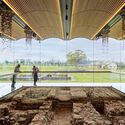
The Pantheon in Rome is globally known as a major tourist and architectural icon, a built testimony to both Greek culture and Roman technique, and a symbol of the Roman Empire. The monument was recently intervened upon by the Italian architecture studio STARTT (Studio of Architecture and Territorial Transformations). The project, titled Pantheon – Micro Architectures for Archaeology, was promoted by the Italian Ministry of Culture as part of a program of interventions initiated in 2019 to open public access to the archaeological areas of the Pantheon. STARTT's project represents the first phase of the program, focusing on opening a new entrance from the Pozzo del Diavolo, an area located behind the monument's Rotunda, allowing visitors to access parts of the building's archaeological fabric that were previously reserved for technical functions.

STARTT Designs New Access to the Archaeological Areas Behind the Pantheon in Rome - Image 1 of 4STARTT Designs New Access to the Archaeological Areas Behind the Pantheon in Rome - Image 2 of 4STARTT Designs New Access to the Archaeological Areas Behind the Pantheon in Rome - Image 3 of 4STARTT Designs New Access to the Archaeological Areas Behind the Pantheon in Rome - Image 4 of 4STARTT Designs New Access to the Archaeological Areas Behind the Pantheon in Rome - More Images+ 12

"Artisans of the Reiwa Era" Documentary Showcases Traditional Japanese Wood Construction and Craftsmanship

Rinshunkaku is a notable example of early Edo-period residential architecture. Originally built in the Wakayama Prefecture by the Kishu Tokugawa family, the villa was relocated to Sankeien, a traditional Japanese garden in the city of Yokohama, during the Taisho era (1912-1926). The garden was created in the early 20th century by businessman and art patron Sankei Hara and features a number of historic buildings relocated from Kyoto, Kamakura, and other areas of Japan. Rinshunkaku, one of the garden's gems, is a prime example of traditional Japanese architecture and wood construction. Its historical value motivated a large-scale restoration project in 2019, documented in the film Artisans of the Reiwa Era (Reiwa no Shokunin-tachi), filmed and edited by Katsumasa Tanaka and Hiroshi Fujiki. The documentary offers a close, detailed view of Japanese craftsmanship and wood expertise, highlighting rare traditional techniques and paying tribute to the artisans who preserve them.

"Artisans of the Reiwa Era" Documentary Showcases Traditional Japanese Wood Construction and Craftsmanship - Image 1 of 4"Artisans of the Reiwa Era" Documentary Showcases Traditional Japanese Wood Construction and Craftsmanship - Image 2 of 4"Artisans of the Reiwa Era" Documentary Showcases Traditional Japanese Wood Construction and Craftsmanship - Image 3 of 4"Artisans of the Reiwa Era" Documentary Showcases Traditional Japanese Wood Construction and Craftsmanship - Image 4 of 4Artisans of the Reiwa Era Documentary Showcases Traditional Japanese Wood Construction and Craftsmanship - More Images+ 7

First Aid for Endangered Heritage: An Interview with Ambulance for Monuments

Ambulance for Monuments is a first-aid initiative dedicated to safeguarding Romania's endangered built heritage, operating in a race against time to prevent collapse and irreversible loss. The project responds to the growing vulnerability of historic structures, from Saxon fortified churches and manor houses to wooden churches and rural landmarks, many of which no longer benefit from the community networks that once sustained them. In a country deeply affected by emigration since 1990, where nearly half the population still lives in rural areas, entire villages have lost the people, skills, and everyday care that once kept these monuments standing.

Built around a mobile intervention unit, an "Ambulance" equipped with tools, scaffolding, and on-site equipment, the initiative delivers urgent stabilization works that buy time for endangered buildings. Rather than replacing full restoration, these strategic interventions preserve historic fabric, ensure structural safety, and keep long-term conservation and adaptive reuse possible. 

First Aid for Endangered Heritage: An Interview with Ambulance for Monuments - Image 1 of 4First Aid for Endangered Heritage: An Interview with Ambulance for Monuments - Image 2 of 4First Aid for Endangered Heritage: An Interview with Ambulance for Monuments - Image 3 of 4First Aid for Endangered Heritage: An Interview with Ambulance for Monuments - Image 4 of 4First Aid for Endangered Heritage: An Interview with Ambulance for Monuments - More Images+ 15

Deir ez-Zor: Raising Hope Through Heritage Documentation

The historic city of Deir ez-Zor in eastern Syria has had more than its fair share of calamity after the outbreak of the war in 2011. After seeing destruction caused by fierce battles between armed groups and the central government, as well as occupation by ISIL, the earthquake in February 2023 brought further damage. Behind the headlines, however, is an ancient city tracing its founding to the dawn of civilization on the banks of the Euphrates River, with living architecture from the Ottoman and French Mandate periods. A winner of the ArchDaily 2025 Next Practices Awards, the Deir ez-Zor Heritage Library aims to revitalize the city and support sensitive reconstruction by documenting and promoting its built heritage.

Deir ez-Zor: Raising Hope Through Heritage Documentation - Image 1 of 4Deir ez-Zor: Raising Hope Through Heritage Documentation - Image 2 of 4Deir ez-Zor: Raising Hope Through Heritage Documentation - Image 3 of 4Deir ez-Zor: Raising Hope Through Heritage Documentation - Image 4 of 4Deir ez-Zor: Raising Hope Through Heritage Documentation - More Images+ 9

Stefano Boeri Interiors Restores Southern Ambulatory Areas of the Colosseum in Rome

The southern ambulatory of the Colosseum in Rome has been restored through an intervention led by Stefano Boeri Interiors, a multidisciplinary studio founded by architects Stefano Boeri and Giorgio Donà, for the Parco Archeologico del Colosseo, focusing on the reconstruction of the crepidine and the repaving of missing sections to reinstate the monument's original ground levels and improve the legibility of its southern perimeter. The project builds on an archaeological investigation campaign that informed both the geometric definition of the intervention and its material articulation.

Stefano Boeri Interiors Restores Southern Ambulatory Areas of the Colosseum in Rome - Image 1 of 4Stefano Boeri Interiors Restores Southern Ambulatory Areas of the Colosseum in Rome - Image 2 of 4Stefano Boeri Interiors Restores Southern Ambulatory Areas of the Colosseum in Rome - Image 3 of 4Stefano Boeri Interiors Restores Southern Ambulatory Areas of the Colosseum in Rome - Image 4 of 4Stefano Boeri Interiors Restores Southern Ambulatory Areas of the Colosseum in Rome - More Images+ 7

Who Decides What Is Worth Preserving? Power and Heritage in Latin America

When we enter a museum, walk through a historic center, or review a country’s list of protected heritage sites, we rarely think about the process behind those choices. Who decided, on behalf of all of us, that certain objects, places, and architectures deserved to be preserved and disseminated, while others were discarded?

In most cases, the power of decision lies with specialized professionals—historians, museologists, architects, geographers. But on what basis are these decisions made? Can the complexity of history be reduced to a checklist? Or, more fundamentally, which version of history underlies these choices?

Who Decides What Is Worth Preserving? Power and Heritage in Latin America - Image 1 of 4Who Decides What Is Worth Preserving? Power and Heritage in Latin America - Image 2 of 4Who Decides What Is Worth Preserving? Power and Heritage in Latin America - Image 3 of 4Who Decides What Is Worth Preserving? Power and Heritage in Latin America - Image 4 of 4Who Decides What Is Worth Preserving? Power and Heritage in Latin America - More Images+ 13

Between Materials and Memory: Three Madrid Architecture Practices on Heritage Rehabilitation

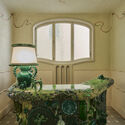
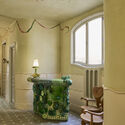
The role of heritage rehabilitation in the contemporary architectural landscape is shaped by a wide range of research, beliefs, memories, and efforts aimed at redefining and strengthening our built environment. When undertaking a transformation, renovation, or preservation project, architects can employ diverse strategies and tools to encourage a meaningful coexistence between what already exists and what is newly introduced. Together with three Madrid-based architecture practices—SOLAR, Pachón-Paredes, and BA-RRO—we set out to engage in conversation and explore their creative processes and ideals, recognizing the complexity and value of historic buildings as repositories of materials, structures, and construction techniques from other eras.
Between Materials and Memory: Three Madrid Architecture Practices on Heritage Rehabilitation - Image 1 of 4Between Materials and Memory: Three Madrid Architecture Practices on Heritage Rehabilitation - Image 2 of 4Between Materials and Memory: Three Madrid Architecture Practices on Heritage Rehabilitation - Image 3 of 4Between Materials and Memory: Three Madrid Architecture Practices on Heritage Rehabilitation - Image 4 of 4Between Materials and Memory: Three Madrid Architecture Practices on Heritage Rehabilitation - More Images+ 22

Shaping Architectural Continuity: 25 Revitalization Projects Across Historic, Industrial, and Natural Sites

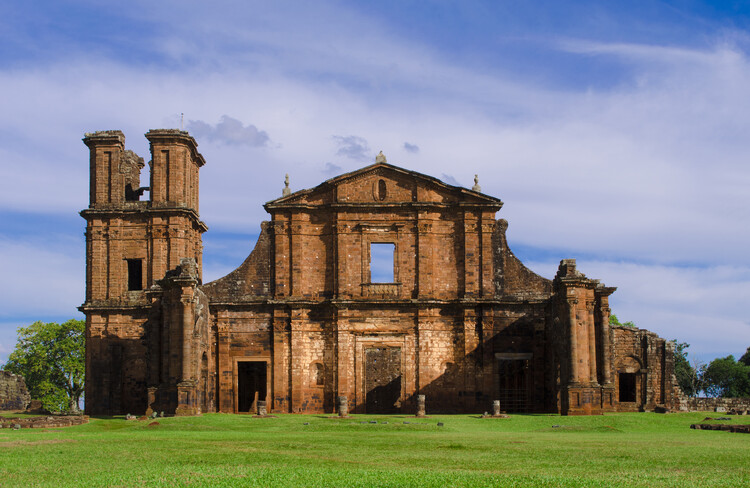
Heritage sites constitute complex spatial archives in which architecture, history, and collective memory converge. They encompass a wide spectrum of contexts—from archaeological remains, ancient and historic townscapes, UNESCO-listed landscapes, to early modern civic structures and industrial infrastructures. Yet these environments confront challenges: climate change, urban transformation, disaster, shifting social needs, and the gradual erosion of material fabric. Revitalization and restoration projects respond to these conditions by positioning architectural and spatial practice as an active mediator between preservation and the contemporary topologies.

In current practice, conservation is understood as a creative process of adaptation and reinterpretation that serves both communities and inhabitants. At the same time, monumental architecture continues to define the identity and landscape of a place for wider audiences and future generations. Architects and planners are called upon to negotiate sensitive historic contexts while introducing new programs, techniques, and spatial experiences. They exemplify diverse design approaches, including precise structural interventions, climate-responsive strategies, and meticulous material restoration, alongside the thoughtful insertion of new architectural elements. Equally important is their engagement with vernacular knowledge and materiality, which preserves the locality and cultural specificity of each site.

Shaping Architectural Continuity: 25 Revitalization Projects Across Historic, Industrial, and Natural Sites - Image 1 of 4Shaping Architectural Continuity: 25 Revitalization Projects Across Historic, Industrial, and Natural Sites - Image 2 of 4Shaping Architectural Continuity: 25 Revitalization Projects Across Historic, Industrial, and Natural Sites - Image 3 of 4Shaping Architectural Continuity: 25 Revitalization Projects Across Historic, Industrial, and Natural Sites - Image 4 of 4Shaping Architectural Continuity: 25 Revitalization Projects Across Historic, Industrial, and Natural Sites - More Images+ 21

World Monuments Fund Backs 21 Locally Led Heritage Projects Addressing Climate Risks and Indigenous Knowledge Loss

World Monuments Fund (WMF) is an independent organization dedicated to safeguarding treasured places around the world that enrich lives and foster mutual understanding across cultures and communities. On February 10, WMF announced a $7 million commitment to support 21 heritage preservation projects launching in 2026. These investments advance work at sites included on the 2025 World Monuments Watch, WMF's nomination-based advocacy program, while also supporting new phases of conservation, planning, and training at additional heritage sites across five continents. The selected sites reflect a wide chronological and geographic range, from ancient cultural landscapes to modern architectural landmarks. The projects highlight the diversity of global heritage, spanning Mughal gardens and Ottoman religious complexes to modernist cinemas, industrial mining landscapes, Indigenous cultural routes, and sacred shrines, and point to the long-term cultural knowledge embedded in its preservation.

World Monuments Fund Backs 21 Locally Led Heritage Projects Addressing Climate Risks and Indigenous Knowledge Loss - Image 1 of 4World Monuments Fund Backs 21 Locally Led Heritage Projects Addressing Climate Risks and Indigenous Knowledge Loss - Image 2 of 4World Monuments Fund Backs 21 Locally Led Heritage Projects Addressing Climate Risks and Indigenous Knowledge Loss - Image 3 of 4World Monuments Fund Backs 21 Locally Led Heritage Projects Addressing Climate Risks and Indigenous Knowledge Loss - Image 4 of 4World Monuments Fund Backs 21 Locally Led Heritage Projects Addressing Climate Risks and Indigenous Knowledge Loss - More Images+ 69

Heritage After Failure: What We Will Keep From Today’s Architectural Mistakes

Architectural heritage is often described as what survives time. Yet survival does not explain why certain buildings are preserved while others disappear. Many works now protected as cultural heritage were once criticized, contested, or openly rejected; they were accused of being socially misguided, materially flawed, or symbolically excessive. Over time, however, these same shortcomings have become central to their meaning as heritage emerges as a slow and unstable process of interpretation.

Contemporary architecture operates under intense scrutiny, pressured by environmental responsibility, social equity, economic volatility, and accelerated technological change. Buildings are expected to perform ethically, efficiently, and symbolically, often simultaneously. As a result, architectural failure is no longer an exception but an increasingly common condition. Projects age faster, materials reveal limitations sooner, and urban strategies quickly fall out of sync with shifting political, social, and environmental realities.

Heritage After Failure: What We Will Keep From Today’s Architectural Mistakes - Image 1 of 4Heritage After Failure: What We Will Keep From Today’s Architectural Mistakes - Image 2 of 4Heritage After Failure: What We Will Keep From Today’s Architectural Mistakes - Image 3 of 4Heritage After Failure: What We Will Keep From Today’s Architectural Mistakes - Image 4 of 4Heritage After Failure: What We Will Keep From Today’s Architectural Mistakes - More Images+ 28

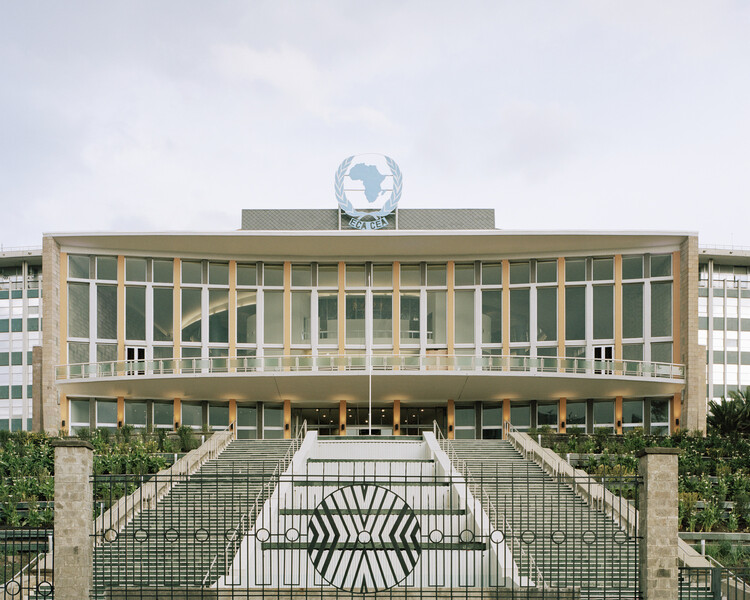
United Nations’ Africa Hall Restoration in Ethiopia Receives 2026 World Monuments Fund/Knoll Modernism Prize

World Monuments Fund (WMF) is an independent organization dedicated to safeguarding significant places that enrich people's lives and foster mutual understanding across cultures and communities. Since 2008, the World Monuments Fund/Knoll Modernism Prize has been a biennial award recognizing outstanding achievements in the conservation of buildings emblematic of the modernist architectural movement. The prize honors individuals and organizations that revitalize modern built heritage through innovative and sensitive architectural interventions.

On January 22, 2026, WMF and Knoll announced the Australia-based architecture firm Architectus as the recipient of the 2026 World Monuments Fund/Knoll Modernism Prize for its conservation of the United Nations' Historic Africa Hall in Addis Ababa, Ethiopia. The jury recognized the project for reestablishing a significant work of African modernism as an active venue for diplomacy and cultural exchange. In addition to the main prize, the jury also awarded Paul Rudolph's Umbrella House in Sarasota, Florida, United States, with the Stewardship Award for Modernist Homes.

United Nations’ Africa Hall Restoration in Ethiopia Receives 2026 World Monuments Fund/Knoll Modernism Prize - Image 1 of 4United Nations’ Africa Hall Restoration in Ethiopia Receives 2026 World Monuments Fund/Knoll Modernism Prize - Image 2 of 4United Nations’ Africa Hall Restoration in Ethiopia Receives 2026 World Monuments Fund/Knoll Modernism Prize - Image 3 of 4United Nations’ Africa Hall Restoration in Ethiopia Receives 2026 World Monuments Fund/Knoll Modernism Prize - Image 4 of 4United Nations’ Africa Hall Restoration in Ethiopia Receives 2026 World Monuments Fund/Knoll Modernism Prize - More Images+ 13

The Egg Performing Arts Center Reopens Following Six-Month Restoration in Albany, New York

The Egg is a performing arts centre located in Albany, within New York's Empire State Plaza, designed by the North American firm Harrison & Abramovitz. Construction began in 1966 and was completed twelve years later, in 1978, with the aim of hosting a broad range of cultural events and performances for New York State residents. Drawing inspiration from Brazilian modernism, the domed, egg-like concrete structure stands out as a striking counterpoint within an otherwise rational urban ensemble. Surrounded by state government towers set in an open plaza and clad in stone, the building's exposed concrete, its seemingly suspended form, and pronounced curved geometry position it as a late example of modernist Brutalism. The venue is currently undergoing restoration and, after six months of renovations, is set to reopen on January 8, 2026, in what has been described as a "refreshed and reimagined" space.

The Egg Performing Arts Center Reopens Following Six-Month Restoration in Albany, New York - Image 1 of 4The Egg Performing Arts Center Reopens Following Six-Month Restoration in Albany, New York - Image 2 of 4The Egg Performing Arts Center Reopens Following Six-Month Restoration in Albany, New York - Image 3 of 4The Egg Performing Arts Center Reopens Following Six-Month Restoration in Albany, New York - Image 4 of 4The Egg Performing Arts Center Reopens Following Six-Month Restoration in Albany, New York - More Images

Contextual Interventions and an Embrace of Heritage: Explore the Architecture of 24 Grados in Honduras

Subscriber Access | 

How can architecture restore relevance to forgotten places? What dialogues can emerge when buildings and landscapes are treated not as blank slates, but as layers of memory, identity, and potential? For the Honduran architecture firm 24 Grados, these questions shape an approach rooted in adaptation, reuse, and contextual design. Their projects range from the restoration of old Spanish plazas and cultural centers to interventions in natural parks and coastal villages in Honduras. Each one is grounded in the belief that design can reweave relationships between people, place, and heritage.

Contextual Interventions and an Embrace of Heritage: Explore the Architecture of 24 Grados in Honduras - Image 1 of 4Contextual Interventions and an Embrace of Heritage: Explore the Architecture of 24 Grados in Honduras - Image 2 of 4Contextual Interventions and an Embrace of Heritage: Explore the Architecture of 24 Grados in Honduras - Image 3 of 4Contextual Interventions and an Embrace of Heritage: Explore the Architecture of 24 Grados in Honduras - Image 4 of 4Contextual Interventions and an Embrace of Heritage: Explore the Architecture of 24 Grados in Honduras - More Images+ 18