1. ArchDaily
  2. Architectural Preservation

Architectural Preservation: The Latest Architecture and News

First Look at the Serpentine Pavilion and Getty Center Modernization Plans Revealed: This Week’s Review

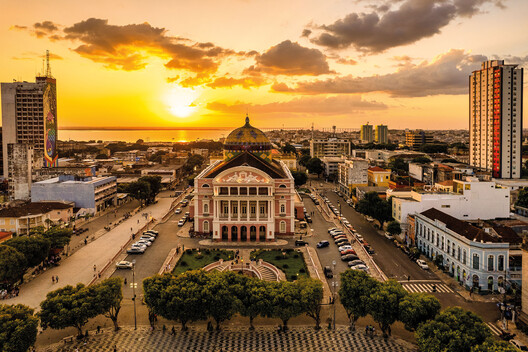
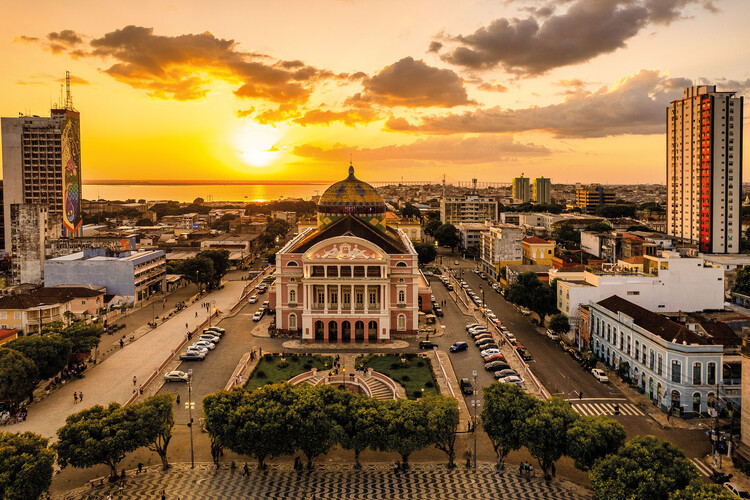
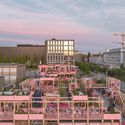
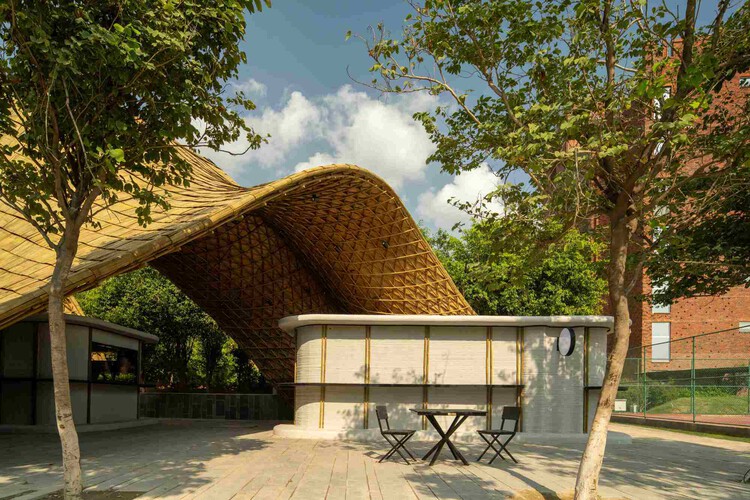
This week, architecture's cultural dimension took center stage through a series of new platforms, institutional developments, and public-facing projects that expand how the discipline is discussed, preserved, and experienced. From the announcement of participants for the inaugural Pan-African Biennale in Nairobi and the unveiling of Concéntrico Festival's urban interventions across Logroño, to the opening of La Biennale di Venezia's new archival headquarters at the Arsenale, architecture emerged as a vehicle for research, exchange, and collective reflection. Alongside these initiatives, projects such as the expansion of Crystal Bridges Museum in Arkansas and the opening of the 2026 Serpentine Pavilion demonstrate how cultural institutions continue to invest in new spaces for gathering and engagement. This week's selection spans Kenya, Spain, Albania, Saudi Arabia, Italy, Lebanon, the United Kingdom, and the United States, reflecting the diverse contexts in which cultural institutions, public events, and architectural initiatives continue to evolve.

First Look at the Serpentine Pavilion and Getty Center Modernization Plans Revealed: This Week’s Review - Image 1 of 4First Look at the Serpentine Pavilion and Getty Center Modernization Plans Revealed: This Week’s Review - Image 2 of 4First Look at the Serpentine Pavilion and Getty Center Modernization Plans Revealed: This Week’s Review - Image 3 of 4First Look at the Serpentine Pavilion and Getty Center Modernization Plans Revealed: This Week’s Review - Image 4 of 4First Look at the Serpentine Pavilion and Getty Center Modernization Plans Revealed: This Week’s Review - More Images+ 10

Reconsidering the Shotgun House: Between Preservation, Experimentation, and Displacement

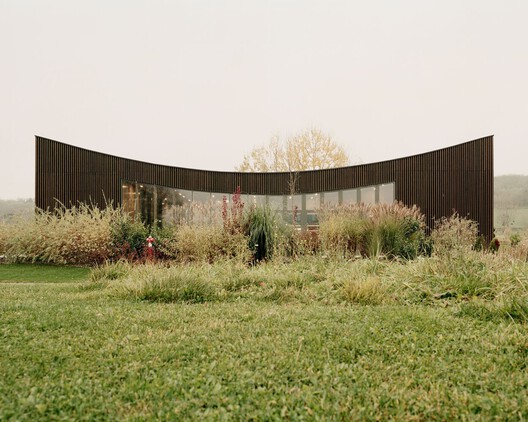
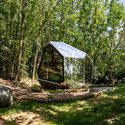
Emerging in port cities and working-class neighborhoods throughout the nineteenth century, the shotgun house became a durable response to density, climate, and constrained urban parcels, becoming one of the defining domestic forms of the Southern United States. Its narrow footprint, sequential plan, and deeply shaded porches produced a spatial logic that was economical and environmentally responsive before either term became central to architectural discourse. From New Orleans and Mobile to Houston and Louisville, shotgun houses formed the physical fabric of neighborhoods shaped by migration, labor, community, and cultural life. Though often dismissed as ordinary, vernacular construction, the housing typology has long embodied sophisticated ideas about climate adaptation, social adjacency, and incremental urban growth, making it one of the most influential domestic forms in the history of the American city.

Reconsidering the Shotgun House: Between Preservation, Experimentation, and Displacement - Image 1 of 4Reconsidering the Shotgun House: Between Preservation, Experimentation, and Displacement - Image 2 of 4Reconsidering the Shotgun House: Between Preservation, Experimentation, and Displacement - Image 3 of 4Reconsidering the Shotgun House: Between Preservation, Experimentation, and Displacement - Image 4 of 4Reconsidering the Shotgun House: Between Preservation, Experimentation, and Displacement - More Images+ 20

Dogtrot House: Vernacular Knowledge and Climate-Responsive Design

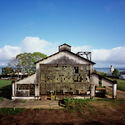
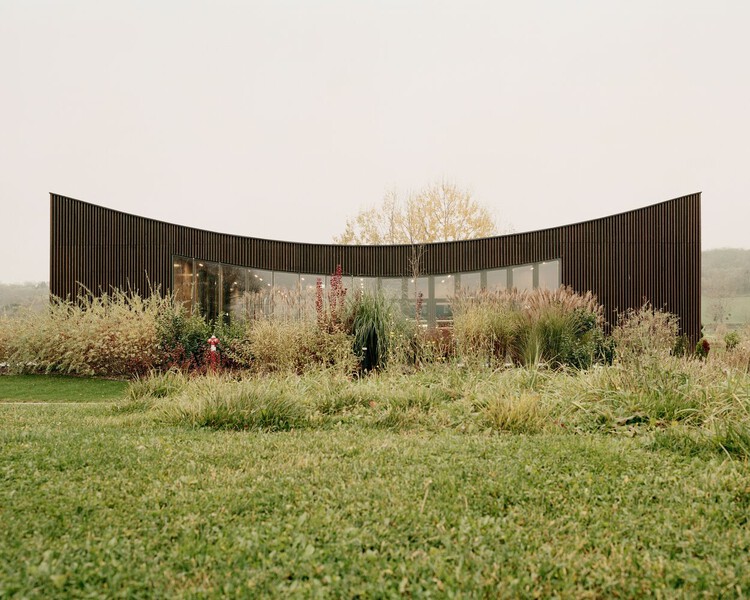
The dogtrot house emerged across the South of the United States during the late nineteenth century as a direct response to humid climates, material availability, and patterns of rural habitation. Found throughout the Appalachian Mountains, coastal Carolinas, and lowlands of Louisiana, the dogtrot house appeared in numerous regional variations, yet its fundamental spatial logic remained remarkably consistent. Two enclosed living masses are separated by an open central passage and unified beneath a continuous roof, creating a dwelling that is simultaneously economical and responsive to long, hot summers. Although architectural historians continue to debate the precise geographic origins of the dogtrot, the typology represents a broader vernacular intelligence that emerged through the convergence of environmental necessity, local construction practices, and rural living.

Dogtrot House: Vernacular Knowledge and Climate-Responsive Design - Image 1 of 4Dogtrot House: Vernacular Knowledge and Climate-Responsive Design - Image 2 of 4Dogtrot House: Vernacular Knowledge and Climate-Responsive Design - Image 3 of 4Dogtrot House: Vernacular Knowledge and Climate-Responsive Design - Image 4 of 4Dogtrot House: Vernacular Knowledge and Climate-Responsive Design - More Images+ 36

Alternate Futures: Five Modernist Landmarks Reimagined for the 21st Century

Modernism in architecture was perhaps the first truly global building design philosophy. Established at the beginning of the twentieth century, its early proponents were heavyweights from Europe, such as Le Corbusier, Walter Gropius, and Mies van der Rohe. In 1923, Le Corbusier published his seminal written work, usually translated into English as Towards a New Architecture. Newness, and a rejection of history, was one of the central tenets of modernism. This manifested itself in the use of new materials such as steel and concrete, which gave rise to an unprecedented freedom of formal expression.

By the middle of the twentieth century, Modernism was adopted across the world by countries recovering from the Second World War and overcoming the legacy of colonialism. It became the language of reconstruction and of nation-building, reinforced by its rejection of the past. Its emphasis on technology suited this brave new world of industry, large-scale development, and new building types. Fast-forwarding to a century after its birth, Modernism itself has become the legacy. As buildings progressively become obsolete or reach the end of their design lives, there is an appreciation of the heritage value of these structures, both as designed items and as symbols of the spirit of the age in which they were built. Here, we look at five Modernist buildings from five regions going through adaptive reuse proposals. Where form once followed function, here, the function must follow the form.

Alternate Futures: Five Modernist Landmarks Reimagined for the 21st Century - Image 1 of 4Alternate Futures: Five Modernist Landmarks Reimagined for the 21st Century - Image 2 of 4Alternate Futures: Five Modernist Landmarks Reimagined for the 21st Century - Image 3 of 4Alternate Futures: Five Modernist Landmarks Reimagined for the 21st Century - Image 4 of 4Alternate Futures: Five Modernist Landmarks Reimagined for the 21st Century - More Images+ 3

Sharjah Architecture Triennial Presents "A Journey into Architecture Archives" Focused on Baghdad, Damascus, and Tunis

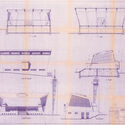
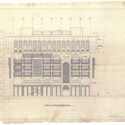
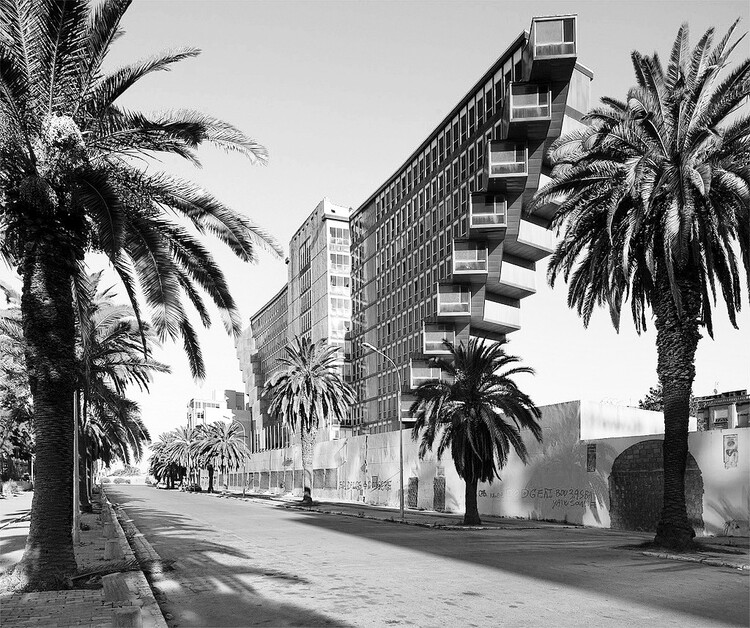
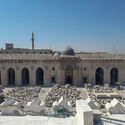
The Sharjah Architecture Triennial (SAT) presents A Journey into Architecture Archives: Baghdad, Damascus, Tunis, curated by George Arbid, on view from May 2 to July 12, 2026, at Al Qasimiyah School. Developed as part of SAT's long-term research program, the project continues the institution's commitment to documenting and safeguarding architectural archives across the Arab world. Bringing together archival materials, physical models, and newly commissioned films, the exhibition examines how architectural histories are constructed, preserved, and revisited over time.

Sharjah Architecture Triennial Presents "A Journey into Architecture Archives" Focused on Baghdad, Damascus, and Tunis - Image 1 of 4Sharjah Architecture Triennial Presents "A Journey into Architecture Archives" Focused on Baghdad, Damascus, and Tunis - Image 2 of 4Sharjah Architecture Triennial Presents "A Journey into Architecture Archives" Focused on Baghdad, Damascus, and Tunis - Image 3 of 4Sharjah Architecture Triennial Presents "A Journey into Architecture Archives" Focused on Baghdad, Damascus, and Tunis - Image 4 of 4Sharjah Architecture Triennial Presents A Journey into Architecture Archives Focused on Baghdad, Damascus, and Tunis - More Images+ 8

Frank Lloyd Wright’s Fallingwater Reopens After Restoration, Celebrating Its 90th Anniversary

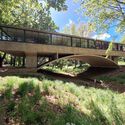
Fallingwater, the iconic residence designed by Frank Lloyd Wright, has reopened to the public following the completion of a three-year preservation project. The reopening coincides with the building's 90th anniversary and the start of its 63rd tour season, marking a key moment in the ongoing conservation of one of the most widely recognized works of modern architecture. The intervention, led by the Western Pennsylvania Conservancy, focused on addressing structural and environmental challenges while maintaining the integrity of Wright's original design.

Frank Lloyd Wright’s Fallingwater Reopens After Restoration, Celebrating Its 90th Anniversary - Image 1 of 4Frank Lloyd Wright’s Fallingwater Reopens After Restoration, Celebrating Its 90th Anniversary - Image 2 of 4Frank Lloyd Wright’s Fallingwater Reopens After Restoration, Celebrating Its 90th Anniversary - Image 3 of 4Frank Lloyd Wright’s Fallingwater Reopens After Restoration, Celebrating Its 90th Anniversary - Image 4 of 4Frank Lloyd Wright’s Fallingwater Reopens After Restoration, Celebrating Its 90th Anniversary - More Images

First Aid for Endangered Heritage: An Interview with Ambulance for Monuments

Ambulance for Monuments is a first-aid initiative dedicated to safeguarding Romania's endangered built heritage, operating in a race against time to prevent collapse and irreversible loss. The project responds to the growing vulnerability of historic structures, from Saxon fortified churches and manor houses to wooden churches and rural landmarks, many of which no longer benefit from the community networks that once sustained them. In a country deeply affected by emigration since 1990, where nearly half the population still lives in rural areas, entire villages have lost the people, skills, and everyday care that once kept these monuments standing.

Built around a mobile intervention unit, an "Ambulance" equipped with tools, scaffolding, and on-site equipment, the initiative delivers urgent stabilization works that buy time for endangered buildings. Rather than replacing full restoration, these strategic interventions preserve historic fabric, ensure structural safety, and keep long-term conservation and adaptive reuse possible. 

First Aid for Endangered Heritage: An Interview with Ambulance for Monuments - Image 1 of 4First Aid for Endangered Heritage: An Interview with Ambulance for Monuments - Image 2 of 4First Aid for Endangered Heritage: An Interview with Ambulance for Monuments - Image 3 of 4First Aid for Endangered Heritage: An Interview with Ambulance for Monuments - Image 4 of 4First Aid for Endangered Heritage: An Interview with Ambulance for Monuments - More Images+ 15

Ethiopian Modernism: Mid-Century Architecture of Africa's Capital

Subscriber Access | 

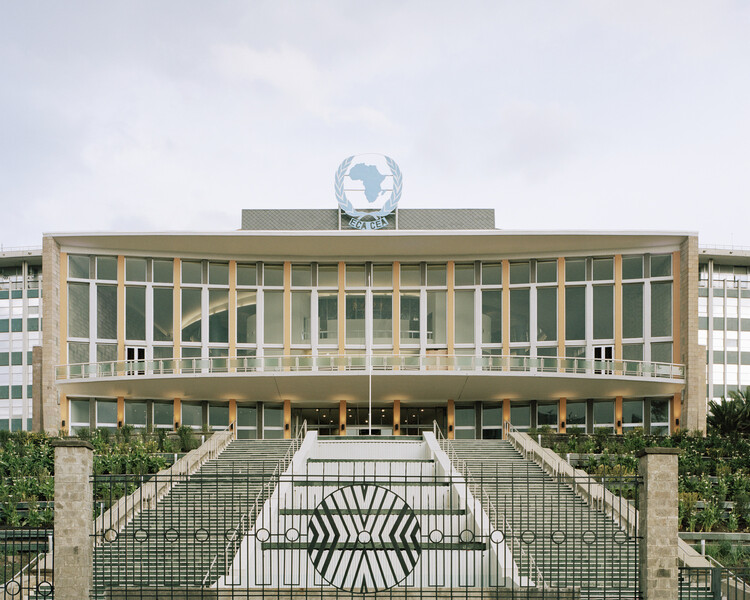
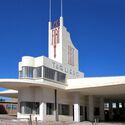
In January 2026, the World Monuments Fund/Knoll Modernism Prize was awarded to Australian firm Architectus for their conservation of the Africa Hall in Addis Ababa, Ethiopia. The award recognizes that Modernist buildings, once seen as a vanguard of architecture, are falling into disrepair and are underappreciated by the public. The situation in Africa is typical of this global sentiment, and this was the first time a building on the continent was graced with this award. The prize also spotlights Ethiopia's rich Modernist inventory, which marks its continental role in the mid and late twentieth century.

Ethiopian Modernism: Mid-Century Architecture of Africa's Capital - Image 1 of 4Ethiopian Modernism: Mid-Century Architecture of Africa's Capital - Image 2 of 4Ethiopian Modernism: Mid-Century Architecture of Africa's Capital - Image 3 of 4Ethiopian Modernism: Mid-Century Architecture of Africa's Capital - Image 4 of 4Ethiopian Modernism: Mid-Century Architecture of Africa's Capital - More Images+ 13

Dispatched: Architecture of the American Post Office and the Privatization of Civic Space

Post offices stand among the most enduring monuments of civic life in the United States. Across towns and city centers, they carry the shifting architectural ambitions of the nineteenth and twentieth centuries, from Greek Revival formality to Beaux-Arts monumentality and Art Deco ornament. Architects and federal planners would give these buildings a clear public role and a powerful physical presence. Stone façades, monumental halls, and crafted interiors projected stability, trust, and permanence. The post office placed the federal government directly into the everyday landscape of American life.

Dispatched: Architecture of the American Post Office and the Privatization of Civic Space - Image 4 of 4Dispatched: Architecture of the American Post Office and the Privatization of Civic Space - Image 6 of 4Dispatched: Architecture of the American Post Office and the Privatization of Civic Space - Image 7 of 4Dispatched: Architecture of the American Post Office and the Privatization of Civic Space - Featured ImageDispatched: Architecture of the American Post Office and the Privatization of Civic Space - More Images+ 10

Shaping Architectural Continuity: 25 Revitalization Projects Across Historic, Industrial, and Natural Sites

Heritage sites constitute complex spatial archives in which architecture, history, and collective memory converge. They encompass a wide spectrum of contexts—from archaeological remains, ancient and historic townscapes, UNESCO-listed landscapes, to early modern civic structures and industrial infrastructures. Yet these environments confront challenges: climate change, urban transformation, disaster, shifting social needs, and the gradual erosion of material fabric. Revitalization and restoration projects respond to these conditions by positioning architectural and spatial practice as an active mediator between preservation and the contemporary topologies.

In current practice, conservation is understood as a creative process of adaptation and reinterpretation that serves both communities and inhabitants. At the same time, monumental architecture continues to define the identity and landscape of a place for wider audiences and future generations. Architects and planners are called upon to negotiate sensitive historic contexts while introducing new programs, techniques, and spatial experiences. They exemplify diverse design approaches, including precise structural interventions, climate-responsive strategies, and meticulous material restoration, alongside the thoughtful insertion of new architectural elements. Equally important is their engagement with vernacular knowledge and materiality, which preserves the locality and cultural specificity of each site.

Shaping Architectural Continuity: 25 Revitalization Projects Across Historic, Industrial, and Natural Sites - Image 1 of 4Shaping Architectural Continuity: 25 Revitalization Projects Across Historic, Industrial, and Natural Sites - Image 2 of 4Shaping Architectural Continuity: 25 Revitalization Projects Across Historic, Industrial, and Natural Sites - Image 3 of 4Shaping Architectural Continuity: 25 Revitalization Projects Across Historic, Industrial, and Natural Sites - Image 4 of 4Shaping Architectural Continuity: 25 Revitalization Projects Across Historic, Industrial, and Natural Sites - More Images+ 21

Tashkent Architecture City Guide: Ten Buildings of Soviet Hybrid Modernism

Situated along the historic Silk Road in Central Asia, Tashkent is a city with a long history spanning thousands of years. Its historic architecture is known for its courtyards, domes, and blue ceramics, typical of its Timurid heritage. The capital of Uzbekistan today, it was absorbed into the Russian Empire in the 19th century, before becoming a Soviet republic. While part of the Soviet Union, the city became an example of modernization, celebrating socialist achievements in Asia. A devastating earthquake in 1966 accelerated this modernization as the city was reconstructed, leading to many of the modernist monuments for which Tashkent is known today.
Tashkent Architecture City Guide: Ten Buildings of Soviet Hybrid Modernism - Image 1 of 4Tashkent Architecture City Guide: Ten Buildings of Soviet Hybrid Modernism - Image 2 of 4Tashkent Architecture City Guide: Ten Buildings of Soviet Hybrid Modernism - Image 3 of 4Tashkent Architecture City Guide: Ten Buildings of Soviet Hybrid Modernism - Image 4 of 4Tashkent Architecture City Guide: Ten Buildings of Soviet Hybrid Modernism - More Images+ 12

"Full of People and Alive Once Again": In Conversation With Holcim Award Grand Prize Winner RIWAQ – Centre for Architectural Conservation

Qalandiya: the Green Historic Maze, developed by RIWAQ – Centre for Architectural Conservation, has been awarded the Grand Prize at the Holcim Foundation Awards 2025, recognizing its sensitive and deeply contextual approach to heritage conservation in Palestine, selected among the 20 winners of this year's edition. Located in Qalandiya, north of Jerusalem, the project reactivates a historic village center long affected by political fragmentation, neglect, and spatial disconnection. Through an incremental rehabilitation strategy, the project restores deteriorated structures using traditional knowledge, local stone masonry, and native materials, transforming abandoned fabric into active public spaces while reinforcing environmental resilience through passive climate strategies and landscape-based infrastructure.

"Full of People and Alive Once Again": In Conversation With Holcim Award Grand Prize Winner RIWAQ – Centre for Architectural Conservation - Image 1 of 4"Full of People and Alive Once Again": In Conversation With Holcim Award Grand Prize Winner RIWAQ – Centre for Architectural Conservation - Image 2 of 4"Full of People and Alive Once Again": In Conversation With Holcim Award Grand Prize Winner RIWAQ – Centre for Architectural Conservation - Image 3 of 4"Full of People and Alive Once Again": In Conversation With Holcim Award Grand Prize Winner RIWAQ – Centre for Architectural Conservation - Image 4 of 4Full of People and Alive Once Again: In Conversation With Holcim Award Grand Prize Winner RIWAQ – Centre for Architectural Conservation - More Images+ 5

Howard Waterfall Retreat Competition: Buildner’s Winners Explore Multigenerational Living and Topography

 | Sponsored Content

Buildner has announced the results of the Howard Waterfall Retreat architecture competition, an international design challenge developed in close collaboration with the Howard Family Trust. The competition invited architects and designers to propose a multi-generational family retreat set within a privately owned, forested landscape in Northwestern Pennsylvania, centered on the dramatic presence of Howard Falls and the surrounding gorge.

Rather than prescribing a singular architectural solution, the brief emphasized a careful dialogue between architecture and nature. Participants were asked to consider how a retreat could balance shared and private living, respond to steep topography and water systems, and integrate sustainably within a sensitive ecological setting. The project also called for an interpretation of family legacy, encouraging designers to acknowledge the history of the site and the original summer cottage while imagining a retreat capable of evolving across generations.

Narratives of Syrian Modernism: Rediscovering the Center for Marine Research

Subscriber Access | 

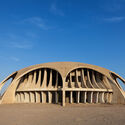
As Syria is emerging from over a decade of conflict at the time of writing, it is an opportunity to rediscover its architectural gems. Just to the north of the country's principal port city of Latakia is a Modernist creation that is the Center for Marine Research. Its pyramidal structure is situated on a prominent headland surrounded by sea on three sides. To the east is a bay with hotels and beaches while to the north and west is the open Mediterranean Sea reaching Turkey and Cyprus beyond. Despite its importance both as a research institution and as a piece of architecture, it lies abandoned and isolated today.

Narratives of Syrian Modernism: Rediscovering the Center for Marine Research - Image 1 of 4Narratives of Syrian Modernism: Rediscovering the Center for Marine Research - Image 2 of 4Narratives of Syrian Modernism: Rediscovering the Center for Marine Research - Image 3 of 4Narratives of Syrian Modernism: Rediscovering the Center for Marine Research - Image 4 of 4Narratives of Syrian Modernism: Rediscovering the Center for Marine Research - More Images+ 9

From Factories to Futures: Adaptive Reuse in the Post-Industrial City

In cities across the world, the relics of industrial production have become the laboratories of a new urban condition. Warehouses, power plants, and shipyards, once symbols of labor and progress, now stand as vast empty shells, waiting to be reimagined. Rather than erasing these structures, architects are finding creative ways to adapt them to contemporary needs, transforming spaces of manufacture into spaces of culture, education, and community life.

This shift reflects a broader change in architectural priorities: building less and reusing more. The practice of adaptive reuse responds simultaneously to environmental urgency and to the need for cultural continuity in urban environments.

From Factories to Futures: Adaptive Reuse in the Post-Industrial City - Image 1 of 4From Factories to Futures: Adaptive Reuse in the Post-Industrial City - Image 2 of 4From Factories to Futures: Adaptive Reuse in the Post-Industrial City - Image 3 of 4From Factories to Futures: Adaptive Reuse in the Post-Industrial City - Image 4 of 4From Factories to Futures: Adaptive Reuse in the Post-Industrial City - More Images+ 17

How Open-Source Toolkits Are Democratizing Built Heritage

For monuments worthy of sustained admiration, conservation practices have been selectively mobilized to reinforce their prestige and secure their place at the center of heritage narratives. Structures whose vernacular ought to be passed down miss the discerning eye of the experts. Rowhouses, shopfronts, and neighborhood structures that form the fabric of our cities are often left to deteriorate beyond repair. Much more is lost, apart from aesthetics.

How Open-Source Toolkits Are Democratizing Built Heritage - Image 1 of 4How Open-Source Toolkits Are Democratizing Built Heritage - Image 2 of 4How Open-Source Toolkits Are Democratizing Built Heritage - Image 3 of 4How Open-Source Toolkits Are Democratizing Built Heritage - Image 4 of 4How Open-Source Toolkits Are Democratizing Built Heritage - More Images+ 4

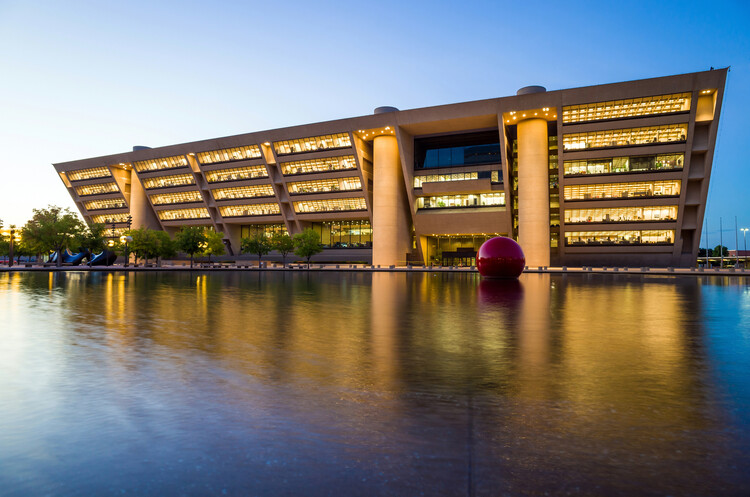
Dallas City Hall Debate and ZHA’s Symphony Tower in Dubai: This Week’s Review

Across cultural districts and civic centers, this week's architectural developments highlight how institutions and city governments are reshaping their futures amid shifting environmental, social, and economic pressures. New museum and opera projects signal ongoing commitments to expanding public cultural infrastructure, while the debate surrounding Dallas' modernist City Hall illustrates the tensions that arise when questions of heritage meet rising maintenance demands and redevelopment pressures. At the same time, municipalities are advancing new regulatory tools to confront climate challenges, from electrification standards in Sydney and Boston to mobility restrictions and emerging forms of urban diplomacy. These developments reflect an increasingly complex landscape in which architectural environments evolve through a combination of cultural ambition, environmental targets, and shifting models of public decision-making.

Dallas City Hall Debate and ZHA’s Symphony Tower in Dubai: This Week’s Review - Image 1 of 4Dallas City Hall Debate and ZHA’s Symphony Tower in Dubai: This Week’s Review - Image 2 of 4Dallas City Hall Debate and ZHA’s Symphony Tower in Dubai: This Week’s Review - Image 3 of 4Dallas City Hall Debate and ZHA’s Symphony Tower in Dubai: This Week’s Review - Image 4 of 4Dallas City Hall Debate and ZHA’s Symphony Tower in Dubai: This Week’s Review - More Images+ 3

The Architecture of Restraint: When Choosing Not to Build Becomes Design

In a world facing ecological exhaustion and spatial saturation, the act of building has come to represent both creation and consumption. For decades, architectural progress was measured by the new: new materials, new technologies, new monuments of ambition. Yet today, the discipline is increasingly shaped by another form of intelligence, one that values what already exists. Architects are learning that doing less can mean designing more, and this shift marks the emergence of what might be called an architecture of restraint: a practice defined by care, maintenance, and the deliberate choice not to build.

The principle recognizes that the most sustainable building is often the one that already stands, and that transformation can occur through preservation, repair, or even absence. Choosing not to build becomes a political and creative act, a response to the material limits of the planet and to the ethical limits of endless growth. That Architecture moves beyond the production of new forms to embrace continuity, extending the life of structures, materials, and memories that already inhabit the world.

The Architecture of Restraint: When Choosing Not to Build Becomes Design - Image 1 of 4The Architecture of Restraint: When Choosing Not to Build Becomes Design - Image 2 of 4The Architecture of Restraint: When Choosing Not to Build Becomes Design - Image 3 of 4The Architecture of Restraint: When Choosing Not to Build Becomes Design - Image 4 of 4The Architecture of Restraint: When Choosing Not to Build Becomes Design - More Images+ 33