Architecture in Brazil this month highlights the country's diverse approaches to cultural production, heritage, and the transformation of its built environment. From the curatorial formation of the 15th São Paulo International Architecture Biennial to the recognition of Amazonia Theaters on the UNESCO World Heritage List, recent developments bring questions of representation, preservation, and cultural identity into focus. New projects in Rio de Janeiro, São Paulo, and Rondônia meanwhile explore adaptive reuse, relationships between architecture and landscape, and new approaches to materiality and sustainability. Alongside these developments, ongoing discussions surrounding Fordlândia and the archive of Lucio Costa revisit how Brazil's architectural heritage is preserved, interpreted, and understood today.
15th São Paulo Architecture Biennial Expands Its Curatorial Team Ahead of 2027
The 15th São Paulo International Architecture Biennial has announced its full curatorial team ahead of its 2027 edition, expanding the previously announced leadership of Gabriela de Matos and Pedro Rossi with assistant curators Raphael Bento and América da Conceição, alongside five regional curators: Varusa for the North, Vilma Patricia for the Northeast, Melissa Alves for the Center-West, Letícia Notini for the Southeast, and Germana Konrath for the South. Selected through a national open call that received 102 applications from 37 municipalities, the expanded team brings together practices connected to Indigenous and Afro-Brazilian cultures, popular movements, heritage, housing, climate justice, education, and urban policy. Working under the theme Architecture, Culture, and Sovereignty, the committee will now develop the Biennial's curatorial concept, research agenda, exhibitions, public programs, and educational initiatives. Scheduled for September through November 2027 at São Paulo's Oca in Ibirapuera Park, the Biennial aims to broaden architectural debate by grounding an international conversation in Brazil's territorial and cultural diversity.
Brazil's Amazonia Theaters Added to the UNESCO World Heritage List
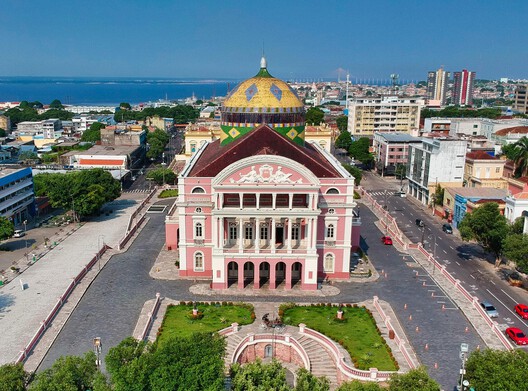
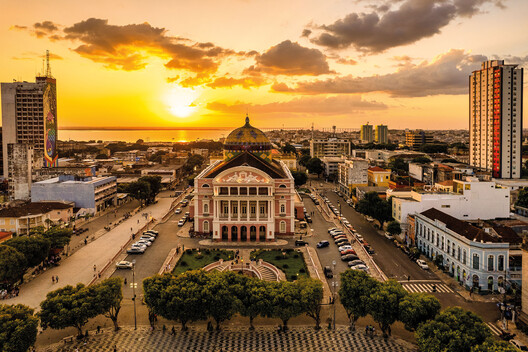
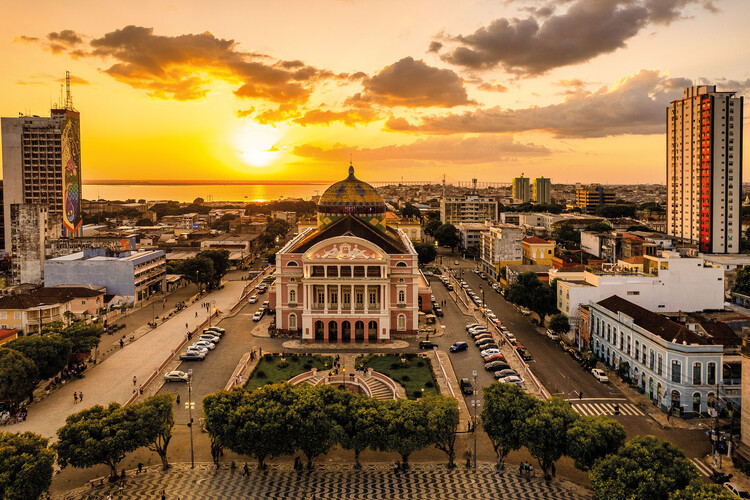
Brazil's Amazonia Theaters have been inscribed on the UNESCO World Heritage List as part of the 48th session of the World Heritage Committee, bringing international recognition to two pairs of historic cultural landmarks: Theatro da Paz and Praça da República in Belém, and Teatro Amazonas and Largo de São Sebastião in Manaus. Constructed during the economic expansion generated by the Amazon rubber boom in the late nineteenth and early twentieth centuries, the ensembles reflect the ambitions of two rapidly growing cities seeking to establish themselves as cosmopolitan centers connected to international trade. Their architecture combines European influences with decorative references to the Amazon, while their surrounding public spaces demonstrate the relationship between cultural institutions and urban development.
Featured Projects
Mercado Central / Tadu Arquitetura
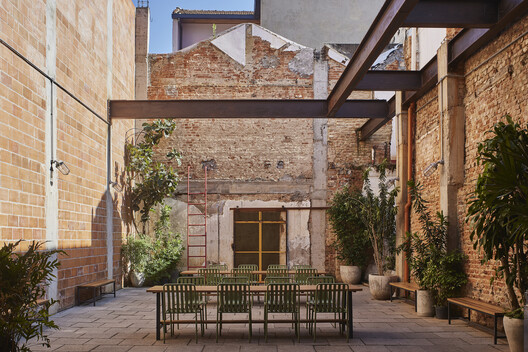
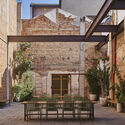
Tadu Arquitetura transformed a complex of five historic buildings in downtown Rio de Janeiro, once home to the first Granado factory opened in 1903, into Mercado Central, a new destination for gastronomy, art, culture, and urban life. Rather than erasing the industrial character of the existing structures, the project preserves ornamented facades, brick masonry, metal structures, ceramic roofs, and traces of previous interventions as part of the site's architectural memory. New additions in steel, concrete, exposed ceramic blocks, and industrial finishes are deliberately distinguished from the historic fabric. A sequence of passages, courtyards, halls, and covered areas connects different restaurants and cultural uses, while open kitchens and large openings strengthen the relationship with the street.
Light of Amazonia Chapel / Rogoski Arquitetura
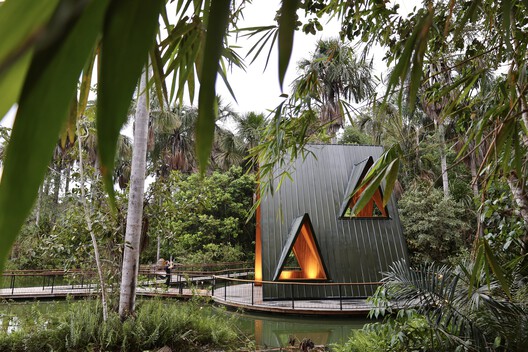
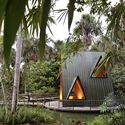
Located beside a lake within a remnant of native forest in Cacoal, Rondônia, the Light of Amazonia Chapel by Rogoski Arquitetura establishes a deliberately lightweight relationship with its surroundings. Elevated on a wooden deck and supported by a steel structure, the 61-square-meter chapel uses insulated metal roof panels and a wood interior to minimize its impact on the terrain while providing thermal comfort. The volume takes inspiration from the forms of Amazonian water lilies, while triangular openings frame different views of the surrounding landscape and allow natural light to shift throughout the day. At the rear, an altar carved from dried roots reinforces the project's connection to local natural materials. The small intervention places landscape, light, and contemplation at the center of the architectural experience.
Knowledge Arena / SENAC São Paulo + Estudio Guto Requena
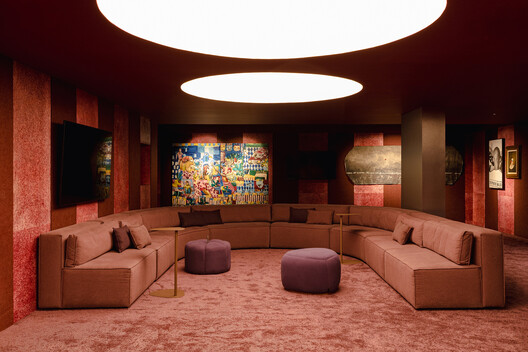
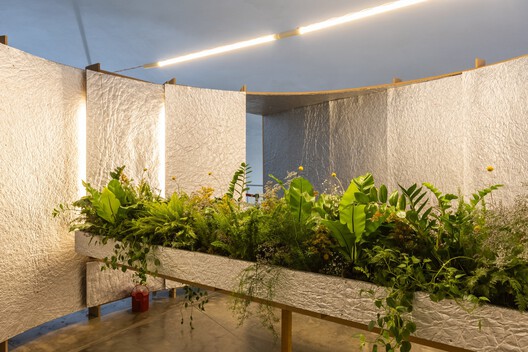
Developed by faculty and students from Centro Universitário Senac's Architecture and Urbanism program together with Estudio Guto Requena, the Knowledge Arena in São Paulo explores architecture as a space for learning, exchange, and experimentation. Conceived around a circular configuration, the 119-square-meter installation uses a continuous sofa to encourage different forms of occupation while challenging the hierarchy of conventional lecture spaces. Sustainability is embedded into the design through the reuse of more than 400 kilograms of post-consumer plastic waste, equivalent to approximately 11,428 shampoo bottles, alongside recycled PET acoustic materials and fabrics. Lighting follows a simulated circadian rhythm, gradually shifting color temperature throughout the day. Bringing together students, educators, and practitioners, the project positions collaborative construction and material experimentation as part of the architectural and educational experience.
On the Radar
Brazilian Court Orders Government to Rescue Fordlândia
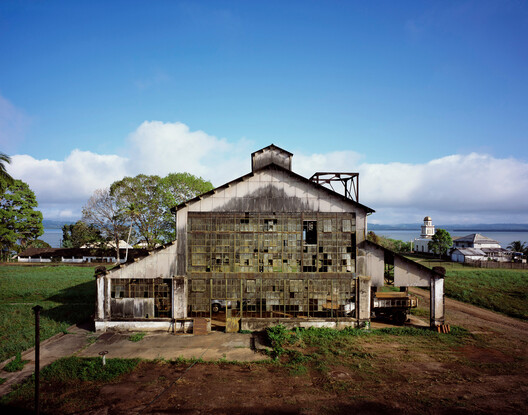
A federal court in Pará has ordered Brazilian authorities to develop a plan to preserve Fordlândia, the former company town established by the Ford Motor Company in the Amazon nearly a century ago. The ruling gives four government bodies deadlines to inspect the town's remaining structures and produce a restoration plan, with fines applicable for delays. Established in the late 1920s as Henry Ford's attempt to secure a private rubber supply, Fordlândia introduced a Midwestern American urban model into the Amazon, including a street grid, hospital, golf course, industrial facilities, and housing for American staff. The experiment failed due to unsuitable cultivation methods, labor conflicts, and disease, and Ford sold the settlement back to Brazil in 1945. Today, many of its buildings remain in use or in decay. The court's decision brings renewed attention to questions of heritage, ownership, and the future of the historic settlement.
Lucio Costa Archive Reexamines the Architect Behind Brasília
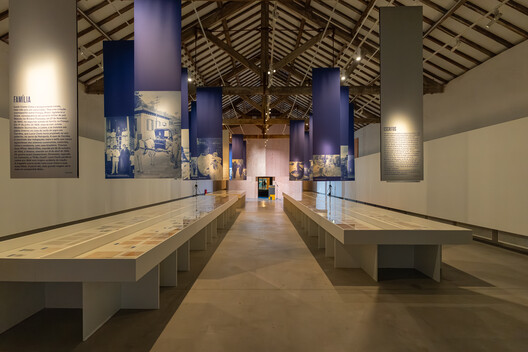
An exhibition at Casa da Arquitetura in Matosinhos, Portugal, is offering a new reading of Brazilian architect and urban planner Lucio Costa through an archive of approximately 11,000 documents donated by his family in 2021. Lucio Costa Archive, curated by Ana Vaz Milheiro, brings together drawings, photographs, correspondence, writings, films, travel documents, and other personal materials across six sections: Family, Writings, Portugal, Pilot Plan, Brasília, and Drawing. Original materials related to the Pilot Plan of Brasília form a central part of the exhibition, while the archive also sheds light on Costa's relationship with Portugal and on aspects of his personal and professional life beyond his best-known projects. Running through September 13, it is accompanied by two publications.
This article is part of our Regional Focus series, bringing together recent architecture news, projects, and emerging developments from across Brazil. Explore more architecture news and projects from the region on ArchDaily.