1. ArchDaily
  2. Cultural Heritage

Cultural Heritage: The Latest Architecture and News

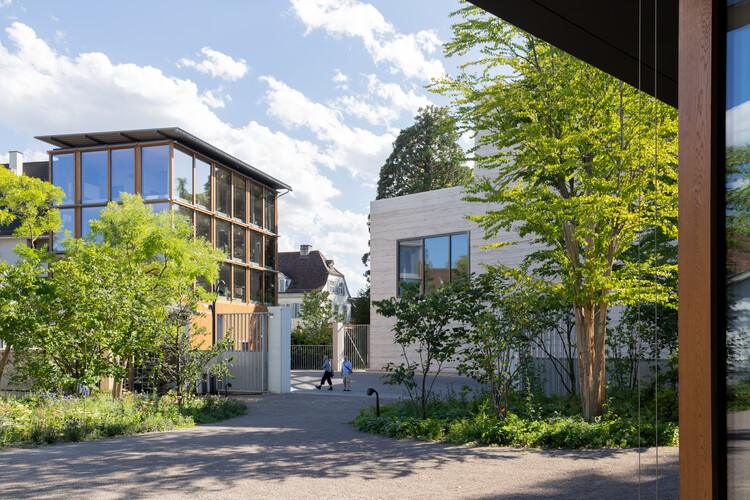
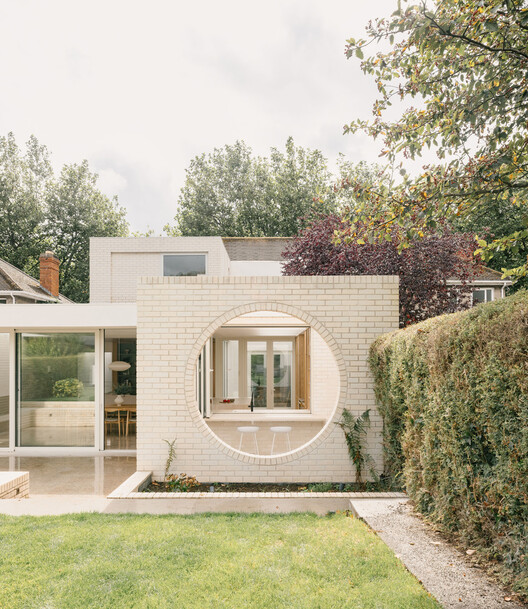
Ecologies of Repair: Reconciling Our Relationship with Water

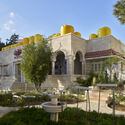
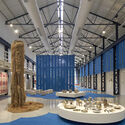
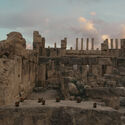
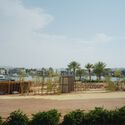
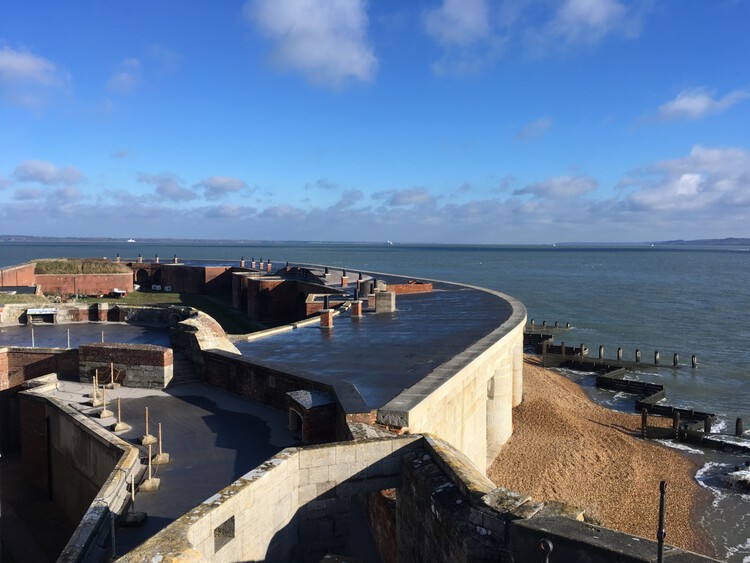
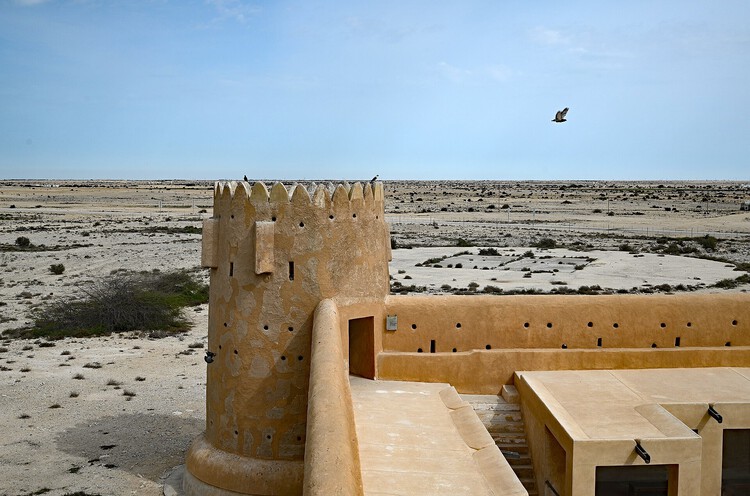
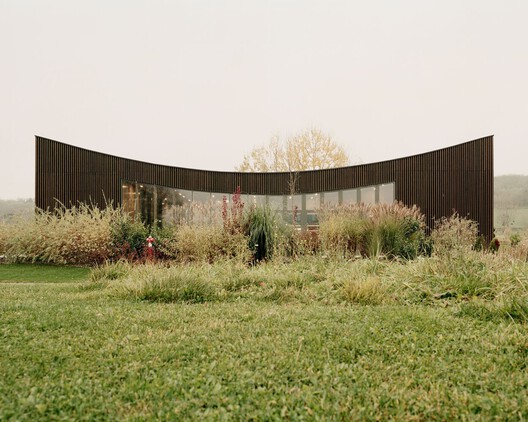
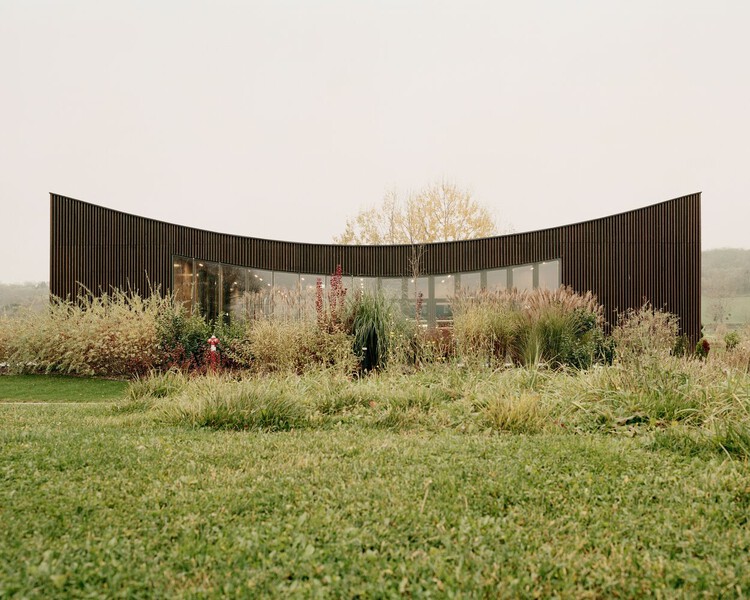
Ola Hassanain is a Sudanese architect and artist operating in the Netherlands, and will be exhibiting at the Pan-African Architecture Biennale in Nairobi, Kenya, later in 2026. All three locations tell stories of the built environment's relationship with water. These illustrate the continuous battles between the amorphous forces of nature that are the rivers and seas, and human attempts to shape and control them. In most cases, they are attempts at extraction. Catastrophes happen as a result of the overreach of these attempts or of their mismanagement, or both.

Ecologies of Repair: Reconciling Our Relationship with Water - Image 1 of 4Ecologies of Repair: Reconciling Our Relationship with Water - Image 2 of 4Ecologies of Repair: Reconciling Our Relationship with Water - Image 3 of 4Ecologies of Repair: Reconciling Our Relationship with Water - Image 4 of 4Ecologies of Repair: Reconciling Our Relationship with Water - More Images+ 10

Lebanon's World Heritage Sites Endangered Amid Ongoing War

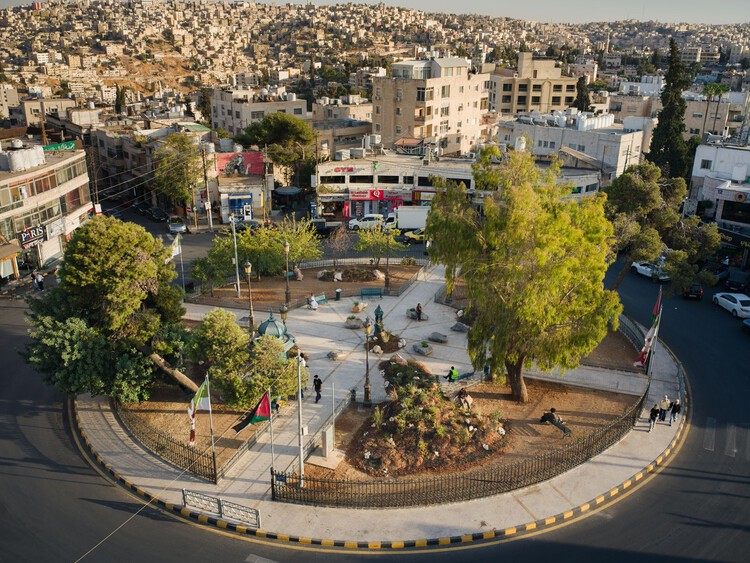
Following over two years of systematic destruction of life, habitat, and essential facilities in the Gaza Strip, a new front of war in Southwest Asia was announced on February 28th, 2026. Since then, US-Israeli military attacks have had a human and infrastructural impact on Lebanon, Syria, Iraq, and Jordan. In the months since, the attacks have only intensified, reaching the deepest ground advance into Lebanese territory in 26 years and leading to mass displacement in the southern part of the country. This latest stage of the conflict marks the sixth Israeli invasion of Lebanon since 1978, resuming a nearly 50-year history of Israeli military interventions in the country. While a ceasefire agreement was supposed to take effect on 27 November 2024 and expire on 2 March 2026, evidence of the destruction of towns and World Heritage Sites shows that it was never truly respected. UNESCO has consistently issued condemnations of "unlawful attacks against cultural property," the latest one responding to the "ongoing escalation of hostilities" on May 29th, 2026.

Lebanon's World Heritage Sites Endangered Amid Ongoing War - Image 1 of 4Lebanon's World Heritage Sites Endangered Amid Ongoing War - Image 2 of 4Lebanon's World Heritage Sites Endangered Amid Ongoing War - Image 3 of 4Lebanon's World Heritage Sites Endangered Amid Ongoing War - Image 4 of 4Lebanon's World Heritage Sites Endangered Amid Ongoing War - More Images+ 1

From Sacred to Public: 5 Disused Churches Reimagined as Cultural Spaces

Subscriber Access | 

The conversion of disused religious temples through cultural programs constitutes one of the most compelling adaptive reuse strategies in contemporary urban planning. This functional compatibility seems to be rooted in the specific characteristics of churches: their central naves offer large-scale, clear floor plans and monumental cross-sections that easily accommodate the volumetric requirements of museums, theaters, or community hubs. Furthermore, the acoustic properties inherent to their vaulted ceilings, combined with intentional natural lighting filtered through stained glass windows or domes, create the spatial conditions for activities ranging from the performing arts to the exhibition of cultural artifacts. By assuming a public and cultural role, these buildings not only avoid demolition or physical abandonment but also preserve their status as urban and identity landmarks within the city fabric, revitalizing their immediate surroundings without altering their historical significance.

From Sacred to Public: 5 Disused Churches Reimagined as Cultural Spaces  - Image 1 of 4From Sacred to Public: 5 Disused Churches Reimagined as Cultural Spaces  - Image 2 of 4From Sacred to Public: 5 Disused Churches Reimagined as Cultural Spaces  - Image 3 of 4From Sacred to Public: 5 Disused Churches Reimagined as Cultural Spaces  - Image 4 of 4From Sacred to Public: 5 Disused Churches Reimagined as Cultural Spaces  - More Images+ 8

Material Culture and Heritage in Contemporary Cinema Architecture

Over the years, cinema architecture has continually reinvented itself. From cinematic experiences that engage multiple senses to material technologies that reinterpret the aesthetics of past eras, the concept of the movie theater has enabled the recovery, revitalization, and renewal of numerous obsolete, ruined, or even historically protected spaces. Just as the Majestic Cinema reflects an important community function in Zanzibar, Tanzania, many twentieth-century buildings have found in adaptive reuse an opportunity to restore and preserve cultures, memories, and traditions that remain meaningful to their communities.

Material Culture and Heritage in Contemporary Cinema Architecture - Image 1 of 4Material Culture and Heritage in Contemporary Cinema Architecture - Image 2 of 4Material Culture and Heritage in Contemporary Cinema Architecture - Image 3 of 4Material Culture and Heritage in Contemporary Cinema Architecture - Image 4 of 4Material Culture and Heritage in Contemporary Cinema Architecture - More Images+ 25

Historic Entertainment Venues in Oxford, Valparaíso, and Osaka Reflect Growing Pressures on Cultural Infrastructure

Between 2005 and 2021, French photographers Yves Marchand and Romain Meffre developed a long-term project titled Theaters. Recently exhibited at KYOTOGRAPHIE 2026, the work documents a phenomenon that continues to unfold gradually around the world: the decline of infrastructure originally designed for public entertainment in the early twentieth century. Theaters, cinemas, and performance venues that once accompanied the modernization of cities are increasingly being abandoned, repurposed, or "left suspended as hybrid ruins." This process is often associated with the growing individualization of cultural consumption, from the widespread adoption of television to the rise of the streaming industry, as well as the impact of the COVID-19 pandemic on cultural institutions. Below are three cases located in England, Chile, and Japan that illustrate different stages in this transformation, while also highlighting community-led efforts to preserve modern cultural heritage.

Historic Entertainment Venues in Oxford, Valparaíso, and Osaka Reflect Growing Pressures on Cultural Infrastructure - Image 1 of 4Historic Entertainment Venues in Oxford, Valparaíso, and Osaka Reflect Growing Pressures on Cultural Infrastructure - Image 2 of 4Historic Entertainment Venues in Oxford, Valparaíso, and Osaka Reflect Growing Pressures on Cultural Infrastructure - Image 3 of 4Historic Entertainment Venues in Oxford, Valparaíso, and Osaka Reflect Growing Pressures on Cultural Infrastructure - Image 4 of 4Historic Entertainment Venues in Oxford, Valparaíso, and Osaka Reflect Growing Pressures on Cultural Infrastructure - More Images+ 1

From Spanish Presidio to the American Grid: The Hispanic Roots of San Diego’s Urban Core

Subscriber Access | 

Very close to the Mexican border, in the southwest corner of the United States, lies the city of San Diego. Its urban history began in 1769 with the arrival of a Spanish military expedition commanded by Gaspar de Portola, which marked the first permanent settlement in the territory that was known as Alta California. However, unlike the more formally urbanized administrative capitals and towns of Mexico and Central America, San Diego was conceived as a frontier outpost. Today, it has become the second-largest city in California, just after Los Angeles, and its urban grid tells a story about the Hispanic heritage that is intertwined with the contemporary cultural environment of the United States.

From Spanish Presidio to the American Grid: The Hispanic Roots of San Diego’s Urban Core - Image 1 of 4From Spanish Presidio to the American Grid: The Hispanic Roots of San Diego’s Urban Core - Image 2 of 4From Spanish Presidio to the American Grid: The Hispanic Roots of San Diego’s Urban Core - Image 3 of 4From Spanish Presidio to the American Grid: The Hispanic Roots of San Diego’s Urban Core - Image 6 of 4From Spanish Presidio to the American Grid: The Hispanic Roots of San Diego’s Urban Core - More Images+ 7

Sharjah Architecture Triennial Presents "A Journey into Architecture Archives" Focused on Baghdad, Damascus, and Tunis

The Sharjah Architecture Triennial (SAT) presents A Journey into Architecture Archives: Baghdad, Damascus, Tunis, curated by George Arbid, on view from May 2 to July 12, 2026, at Al Qasimiyah School. Developed as part of SAT's long-term research program, the project continues the institution's commitment to documenting and safeguarding architectural archives across the Arab world. Bringing together archival materials, physical models, and newly commissioned films, the exhibition examines how architectural histories are constructed, preserved, and revisited over time.

Sharjah Architecture Triennial Presents "A Journey into Architecture Archives" Focused on Baghdad, Damascus, and Tunis - Image 1 of 4Sharjah Architecture Triennial Presents "A Journey into Architecture Archives" Focused on Baghdad, Damascus, and Tunis - Image 2 of 4Sharjah Architecture Triennial Presents "A Journey into Architecture Archives" Focused on Baghdad, Damascus, and Tunis - Image 3 of 4Sharjah Architecture Triennial Presents "A Journey into Architecture Archives" Focused on Baghdad, Damascus, and Tunis - Image 4 of 4Sharjah Architecture Triennial Presents A Journey into Architecture Archives Focused on Baghdad, Damascus, and Tunis - More Images+ 8

El Pueblo de Los Angeles: The Spanish Origins of LA’s Urban Grid

Subscriber Access | 

Today, the urban form of Los Angeles is characterized by 20th-century sprawl and extensive automotive infrastructure. However, the physical reality of the city's original core reveals a more complex history that is deeply rooted in Hispanic heritage. In fact, Los Angeles did not originate from the standardized American land system that defines most of the United States' territory. Instead, it is a product of the Spanish urban tradition in the Americas, which followed a structure repeated across major cities on the continent. The intersection of these systems created a layered urban geometry and history that remains visible in the city's contemporary street patterns.

When Los Angeles was founded in 1781 as a pueblo by Felipe de Neve, it was an outpost of the Viceroyalty of New Spain. Viceroyalties were political divisions of the Spanish territories in America, and by the late 18th century, New Spain was vast. It stretched from southern Costa Rica, all the way north to Alta California, bordering the east at the Mississippi River and the newly independent United States of America. At this time, Mexico City functioned as the primary administrative and economic hub, leaving frontier regions like Alta California to rely on a specific triad of settlements: missions (religious), presidios (military), and pueblos (civilian).

El Pueblo de Los Angeles: The Spanish Origins of LA’s Urban Grid - Image 1 of 4El Pueblo de Los Angeles: The Spanish Origins of LA’s Urban Grid - Image 2 of 4El Pueblo de Los Angeles: The Spanish Origins of LA’s Urban Grid - Image 3 of 4El Pueblo de Los Angeles: The Spanish Origins of LA’s Urban Grid - Image 4 of 4El Pueblo de Los Angeles: The Spanish Origins of LA’s Urban Grid - More Images+ 5

Kengo Kuma and Associates Wins Competition to Design New Wing for London's National Gallery

London's National Gallery has announced Kengo Kuma & Associates, in collaboration with BDP and MICA, as the winners of the international competition to design a new wing for the institution. Launched in September 2025, the competition attracted 65 submissions from international practices, from which six teams were shortlisted to develop proposals. The selection marks a key milestone in the institution's long-term development strategy, Project Domani, positioning the new addition as a central component in the reconfiguration of its architectural and curatorial framework. Conceived as the most significant transformation of the museum since its establishment in 1824, the project aims to expand both spatial capacity and curatorial scope, enabling the presentation of a continuous narrative of Western painting within a single setting.

Kengo Kuma and Associates Wins Competition to Design New Wing for London's National Gallery - Image 1 of 4Kengo Kuma and Associates Wins Competition to Design New Wing for London's National Gallery - Image 2 of 4Kengo Kuma and Associates Wins Competition to Design New Wing for London's National Gallery - Image 3 of 4Kengo Kuma and Associates Wins Competition to Design New Wing for London's National Gallery - Image 4 of 4Kengo Kuma and Associates Wins Competition to Design New Wing for London's National Gallery - More Images+ 1

Frank Lloyd Wright’s Fallingwater Reopens After Restoration, Celebrating Its 90th Anniversary

Fallingwater, the iconic residence designed by Frank Lloyd Wright, has reopened to the public following the completion of a three-year preservation project. The reopening coincides with the building's 90th anniversary and the start of its 63rd tour season, marking a key moment in the ongoing conservation of one of the most widely recognized works of modern architecture. The intervention, led by the Western Pennsylvania Conservancy, focused on addressing structural and environmental challenges while maintaining the integrity of Wright's original design.

Frank Lloyd Wright’s Fallingwater Reopens After Restoration, Celebrating Its 90th Anniversary - Image 1 of 4Frank Lloyd Wright’s Fallingwater Reopens After Restoration, Celebrating Its 90th Anniversary - Image 2 of 4Frank Lloyd Wright’s Fallingwater Reopens After Restoration, Celebrating Its 90th Anniversary - Image 3 of 4Frank Lloyd Wright’s Fallingwater Reopens After Restoration, Celebrating Its 90th Anniversary - Image 4 of 4Frank Lloyd Wright’s Fallingwater Reopens After Restoration, Celebrating Its 90th Anniversary - More Images

Cities of the Dead: 10 Projects Exploring Burial Architecture

Subscriber Access | 

Death is a certainty, but its architecture has never been stable. Every period and culture has invented a different way of placing the dead in the world (close or far, visible or screened, monumental or almost anonymous), and those choices have always carried social and political weight. Cemeteries are where that weight becomes legible in space, turning belief and regulation into boundaries, paths, and names.

In that sense, a cemetery behaves like a piece of city-making. It needs access, limits, and an internal order that can grow without losing clarity. It depends on ground and water management as much as on symbolism, and on administration as much as on form. But its real architectural problem is how to make a large, evolving territory readable while preserving the intimacy of a visit. Names must be locatable; routes must remain legible; trees grow, paths shift, stones weather, records accumulate. What looks fixed is, in practice, a living system designed to be used and revisited, long after the first grief has passed.

Cities of the Dead: 10 Projects Exploring Burial Architecture - Image 1 of 4Cities of the Dead: 10 Projects Exploring Burial Architecture - Image 2 of 4Cities of the Dead: 10 Projects Exploring Burial Architecture - Image 3 of 4Cities of the Dead: 10 Projects Exploring Burial Architecture - Image 4 of 4Cities of the Dead: 10 Projects Exploring Burial Architecture - More Images+ 14

First Aid for Endangered Heritage: An Interview with Ambulance for Monuments

Ambulance for Monuments is a first-aid initiative dedicated to safeguarding Romania's endangered built heritage, operating in a race against time to prevent collapse and irreversible loss. The project responds to the growing vulnerability of historic structures, from Saxon fortified churches and manor houses to wooden churches and rural landmarks, many of which no longer benefit from the community networks that once sustained them. In a country deeply affected by emigration since 1990, where nearly half the population still lives in rural areas, entire villages have lost the people, skills, and everyday care that once kept these monuments standing.

Built around a mobile intervention unit, an "Ambulance" equipped with tools, scaffolding, and on-site equipment, the initiative delivers urgent stabilization works that buy time for endangered buildings. Rather than replacing full restoration, these strategic interventions preserve historic fabric, ensure structural safety, and keep long-term conservation and adaptive reuse possible. 

First Aid for Endangered Heritage: An Interview with Ambulance for Monuments - Image 1 of 4First Aid for Endangered Heritage: An Interview with Ambulance for Monuments - Image 2 of 4First Aid for Endangered Heritage: An Interview with Ambulance for Monuments - Image 3 of 4First Aid for Endangered Heritage: An Interview with Ambulance for Monuments - Image 4 of 4First Aid for Endangered Heritage: An Interview with Ambulance for Monuments - More Images+ 15

Deir ez-Zor: Raising Hope Through Heritage Documentation

The historic city of Deir ez-Zor in eastern Syria has had more than its fair share of calamity after the outbreak of the war in 2011. After seeing destruction caused by fierce battles between armed groups and the central government, as well as occupation by ISIL, the earthquake in February 2023 brought further damage. Behind the headlines, however, is an ancient city tracing its founding to the dawn of civilization on the banks of the Euphrates River, with living architecture from the Ottoman and French Mandate periods. A winner of the ArchDaily 2025 Next Practices Awards, the Deir ez-Zor Heritage Library aims to revitalize the city and support sensitive reconstruction by documenting and promoting its built heritage.

Deir ez-Zor: Raising Hope Through Heritage Documentation - Image 1 of 4Deir ez-Zor: Raising Hope Through Heritage Documentation - Image 2 of 4Deir ez-Zor: Raising Hope Through Heritage Documentation - Image 3 of 4Deir ez-Zor: Raising Hope Through Heritage Documentation - Image 4 of 4Deir ez-Zor: Raising Hope Through Heritage Documentation - More Images+ 9

Cultural Heritage Sites in the Middle East Damaged as War Strikes Historic Urban Areas

On February 28th, 2026, the news of the loss of human lives, the operational pattern of military strikes, damage to infrastructure, communication disruptions, and international responses following US-Israeli military attacks on Iran confirmed to the world that there was a new focus of war in Southwest Asian territory. This military conflict has also had a human and infrastructural impact on Lebanon, Syria, Iraq, and Jordan, with active combat zones in their territories, and the Gulf States, where damage particularly affected US military bases and energy infrastructure. This adds a new site of armed conflict in the area, following over two years of systematic destruction of life, habitat, and essential facilities in the Gaza Strip, reaching a near total of 81% destroyed structures by the end of 2025. These territories are currently involved in the deliberate destruction of their normality, including essential, everyday, and cultural infrastructure of global value. Although information is currently scattered and partial, it is possible to assess some of the damage to cultural heritage caused by this new outbreak of armed conflict.

Legacy in Matter: Material Traditions in South American Architecture

Across South America, architecture endures through the materials it uses, those that persist over time. Bamboo, brick, wood, and concrete appear across regions, connecting climate, labor, and culture in ways that ensure their persistence through generations. Their continuity does not depend solely on preservation or heritage. It depends on use.

In this context, cultural memory does not reside primarily in monuments or images, but in practice. It survives in repeated gestures: laying bricks, tying guadua joints, assembling wood frames, casting slabs that anticipate another floor. These actions are transmitted less through manuals than through participation. Over time, they form systems of knowledge embedded in habit and necessity. Materials endure not because they symbolize the past, but because they continue to work.

Legacy in Matter: Material Traditions in South American Architecture - Image 1 of 4Legacy in Matter: Material Traditions in South American Architecture - Image 2 of 4Legacy in Matter: Material Traditions in South American Architecture - Image 3 of 4Legacy in Matter: Material Traditions in South American Architecture - Image 4 of 4Legacy in Matter: Material Traditions in South American Architecture - More Images+ 12

Who Decides What Is Worth Preserving? Power and Heritage in Latin America

When we enter a museum, walk through a historic center, or review a country’s list of protected heritage sites, we rarely think about the process behind those choices. Who decided, on behalf of all of us, that certain objects, places, and architectures deserved to be preserved and disseminated, while others were discarded?

In most cases, the power of decision lies with specialized professionals—historians, museologists, architects, geographers. But on what basis are these decisions made? Can the complexity of history be reduced to a checklist? Or, more fundamentally, which version of history underlies these choices?

Who Decides What Is Worth Preserving? Power and Heritage in Latin America - Image 1 of 4Who Decides What Is Worth Preserving? Power and Heritage in Latin America - Image 2 of 4Who Decides What Is Worth Preserving? Power and Heritage in Latin America - Image 3 of 4Who Decides What Is Worth Preserving? Power and Heritage in Latin America - Image 4 of 4Who Decides What Is Worth Preserving? Power and Heritage in Latin America - More Images+ 13

Land of Wells: Designing for Saharan Nomads

Subscriber Access | 

In some languages, the very word for building refers to its immovability. The discipline of engineering related to buildings is referred to as statics. Thus, architecture is closely related to the fixed and the immobile. And yet, for millions of nomadic people around the world, shelters must be of a light and distinctly movable structure, while home is the vast landscape in which they reside. Such lifestyles, which carry centuries of traditions, are constantly under threat from the pull factors of sedentary life in towns and cities. In Tunisia, one project acknowledges the risk of heritage loss and attempts to improve conditions for nomadic herders.

Land of Wells: Designing for Saharan Nomads - Image 1 of 4Land of Wells: Designing for Saharan Nomads - Image 2 of 4Land of Wells: Designing for Saharan Nomads - Image 3 of 4Land of Wells: Designing for Saharan Nomads - Image 4 of 4Land of Wells: Designing for Saharan Nomads - More Images+ 2

Heritage Without Permanence: When Architecture Endures by Disappearing

​​A Gothic cathedral can take centuries to complete. A world exposition pavilion may stand for six months. A ritual structure in Kolkata rises and vanishes within five days. Yet each draws pilgrimage, shapes collective memory, and reorganizes urban life. If heritage has long been defined by what endures, architecture repeatedly shows that cultural authority can also belong to what gathers people.

For much of the twentieth century, conservation frameworks privileged permanence. The Venice Charter, adopted by the International Council on Monuments and Sites, focused on safeguarding monuments and their material authenticity. Cultural value was tied to physical fabric such as stone, brick, and timber. To protect heritage was to preserve what stood. The logic felt stable, even self-evident.


Heritage Without Permanence: When Architecture Endures by Disappearing - Image 1 of 4Heritage Without Permanence: When Architecture Endures by Disappearing - Image 2 of 4Heritage Without Permanence: When Architecture Endures by Disappearing - Image 3 of 4Heritage Without Permanence: When Architecture Endures by Disappearing - Image 4 of 4Heritage Without Permanence: When Architecture Endures by Disappearing - More Images+ 8