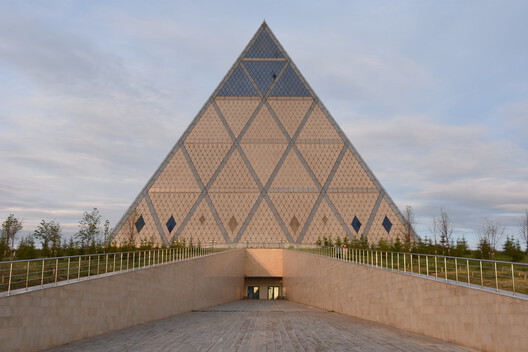
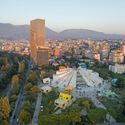
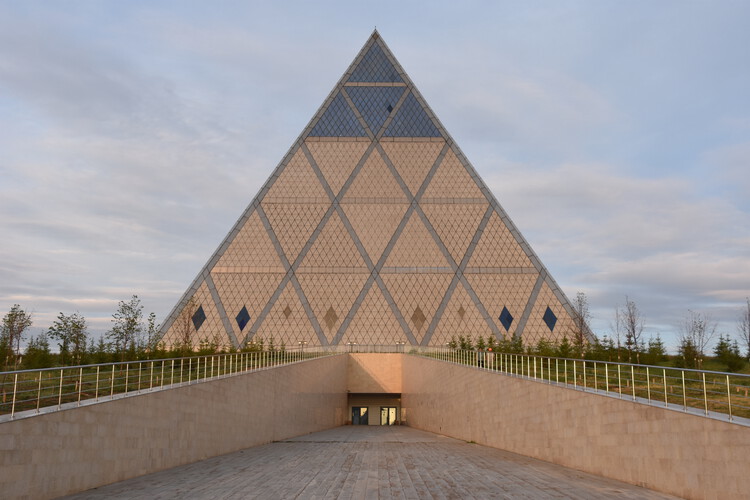
The Pyramid of Tirana opened as a museum to Enver Hoxha in October 1988, three years after his death and three years before the regime collapsed. In the decades that followed, it served as a radio station, a conference venue, a nightclub, and a base for NATO during the Kosovo war. In 2023, MVRDV reopened it as a park and technology school, adding steps to the façades so that the building could be walked over. The inauguration was timed to the Western Balkans Summit on 16 October, a date that some critics pointed out was Hoxha's birthday. Two projects of national self-definition, thirty-five years apart and built on opposite political premises, have used the same structure.
Governments that build for reputation are usually building for an audience somewhere else. The new skyline is rarely for the population that will live around it; it is for a lender, a rating agency, an Olympic committee, a delegation of accession negotiators. Because that audience has to grasp the message quickly, the commission tends to go to the so-called 'star architects' whose names circulate internationally, which is what makes the transaction legible as a transaction. Cities commissioned international offices because of their technical expertise but also for their symbolic value (their ability to signal that a place had arrived, that it was open, that it belonged to a global conversation). But political alignments last an electoral cycle or two, while the buildings that encode them are designed to stand for decades. Whatever a state constructs to persuade a particular audience at a particular moment will outlive the moment, the audience, and frequently the government, and since a building can only be reinterpreted, successor administrations tend to rename, repurpose, or simply stop mentioning them, which is how the physical evidence of an abandoned political program accumulates in city centers.


