1. ArchDaily
  2. MVRDV

MVRDV: The Latest Architecture and News

Tirana Architecture City Guide: Negotiating Identity Between Socialism and Urban Reinvention

Subscriber Access | 

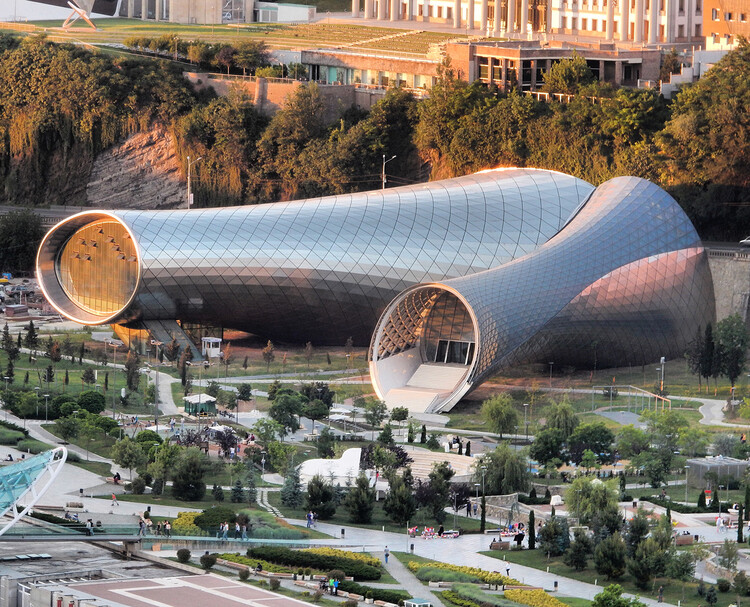
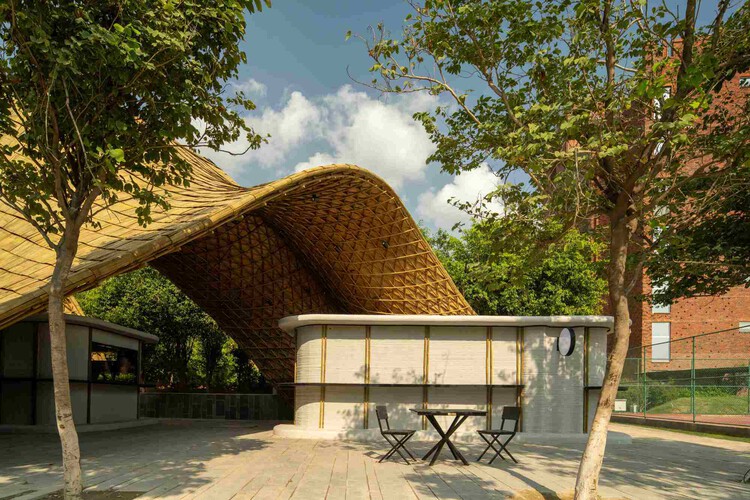
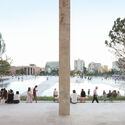
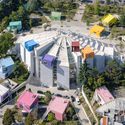
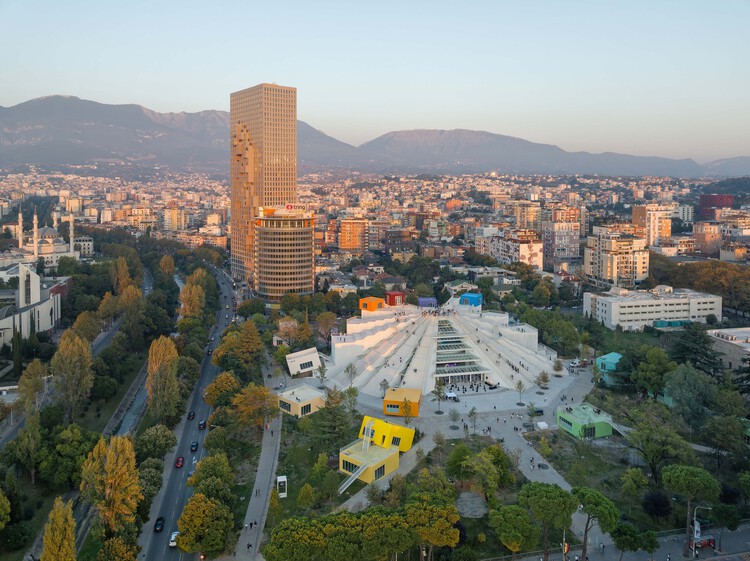
Located at the intersection of Adriatic landscapes and Balkan geopolitics, Tirana has undergone one of the most accelerated urban transformations in Europe over the last three decades. Once defined by rigid socialist planning and political isolation, the city has progressively reoriented itself through a combination of informal growth, international investment, and strategic urban interventions that seek to redefine its public image and spatial structure.

Since the early 2000s, a series of urban policies, most notably those initiated during the mayoral tenure of Edi Rama (now Albania prime minister), have promoted the use of color, public space, and architectural experimentation as tools for civic reactivation. Rather than relying solely on masterplans, Tirana's development has operated through interventions, where individual buildings and public spaces act as catalysts within a fragmented urban fabric.

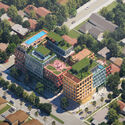
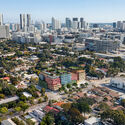
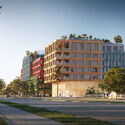
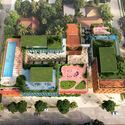
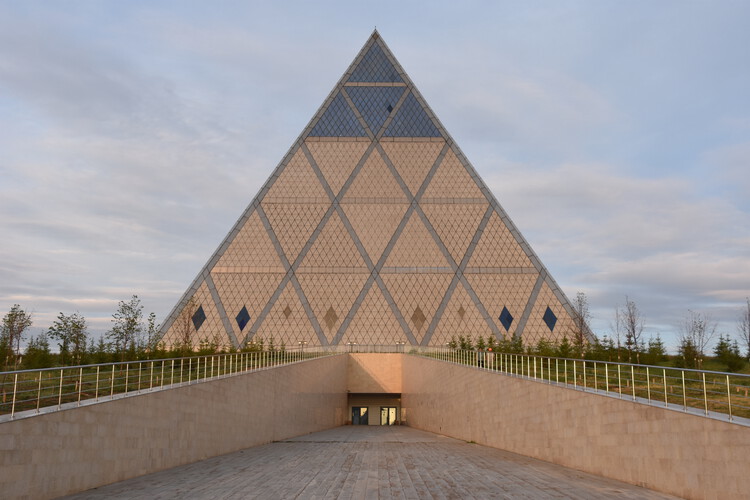
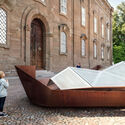
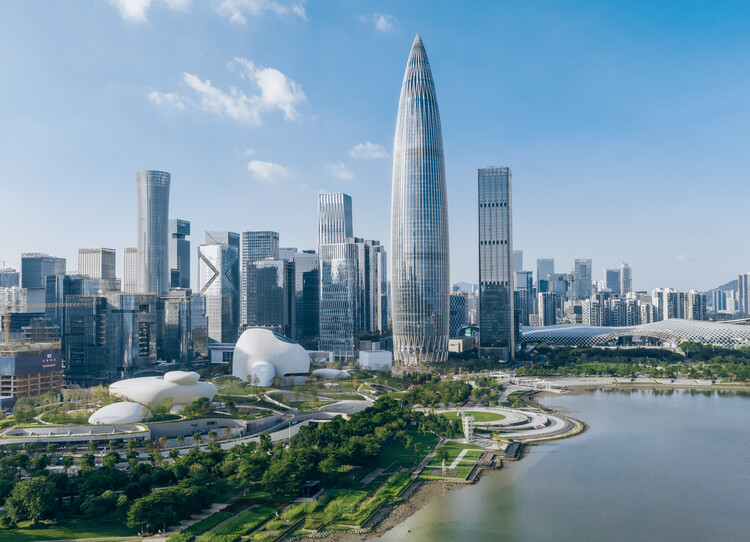
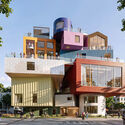
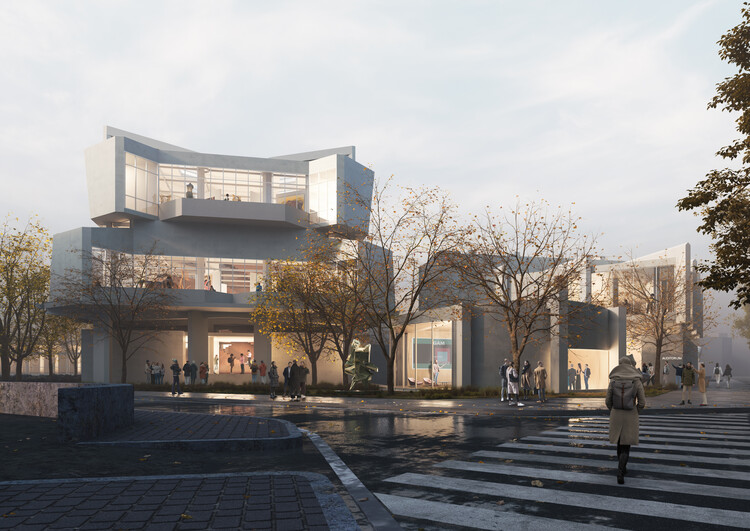
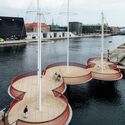
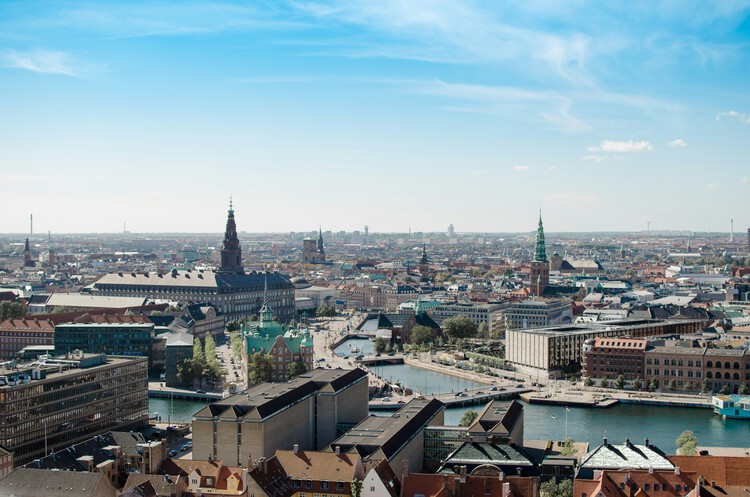
Tirana Architecture City Guide: Negotiating Identity Between Socialism and Urban Reinvention - Image 1 of 4Tirana Architecture City Guide: Negotiating Identity Between Socialism and Urban Reinvention - Image 2 of 4Tirana Architecture City Guide: Negotiating Identity Between Socialism and Urban Reinvention - Image 3 of 4Tirana Architecture City Guide: Negotiating Identity Between Socialism and Urban Reinvention - Image 4 of 4Tirana Architecture City Guide: Negotiating Identity Between Socialism and Urban Reinvention - More Images+ 15

MVRDV and OODA Reveal Landscape-Led Masterplan for Lisbon’s Marvila Riverfront Regeneration

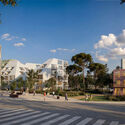
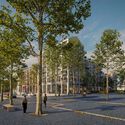
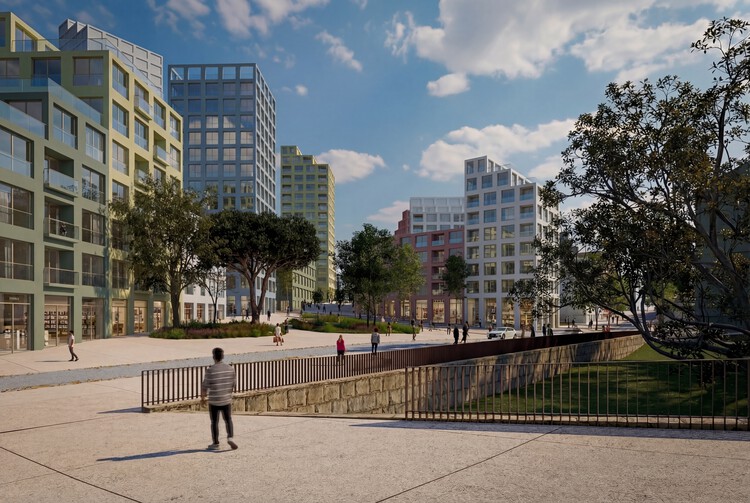
MVRDV and OODA have revealed a new masterplan for the regeneration of a vacant 28-hectare site between Marvila and Beato on Lisbon's riverfront. Recently approved by the Lisbon City Council, the project was developed in collaboration with LOLA Landscape Architects and Thornton Tomasetti to transform the area into a landscape-led urban district. Titled The Marvila Masterplan, the proposal establishes a framework for introducing 1,400 homes alongside public facilities, commercial spaces, and services within a fragmented and largely abandoned territory. The project is a private initiative led by the principal landowner and developed in coordination with the Lisbon City Council and Infraestruturas de Portugal.

MVRDV and OODA Reveal Landscape-Led Masterplan for Lisbon’s Marvila Riverfront Regeneration - Image 1 of 4MVRDV and OODA Reveal Landscape-Led Masterplan for Lisbon’s Marvila Riverfront Regeneration - Image 2 of 4MVRDV and OODA Reveal Landscape-Led Masterplan for Lisbon’s Marvila Riverfront Regeneration - Image 3 of 4MVRDV and OODA Reveal Landscape-Led Masterplan for Lisbon’s Marvila Riverfront Regeneration - Image 4 of 4MVRDV and OODA Reveal Landscape-Led Masterplan for Lisbon’s Marvila Riverfront Regeneration - More Images+ 18

MVRDV Obtains Construction Permit for Low-Carbon Mixed-Use Tour & Taxis Towers in Brussels

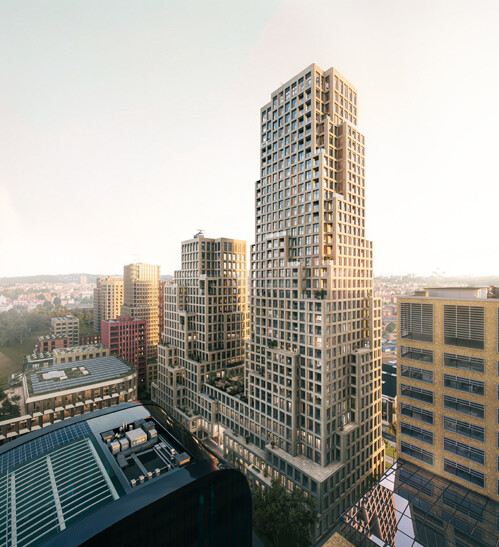
Rotterdam-based firm MVRDV has announced a new milestone in the development of its Tour & Taxis Towers, a mixed-use project in Brussels, Belgium. The design was commissioned by real estate investor and developer Nextensa in 2021, within the framework of a site-specific land use masterplan also designed by MVRDV. The two-tower project combines offices, housing, and public amenities across 58,000 m², forming a landmark in the neighbourhood and reaching 126 metres at its highest point. Recently granted construction permission, the project is designed to reduce embodied carbon through the use of a hybrid structure and lightweight façade elements, aiming to minimize the use of concrete in both the structure and foundations. From the early stages, the firm has employed its CarbonSpace software to guide these decisions.
MVRDV Obtains Construction Permit for Low-Carbon Mixed-Use Tour & Taxis Towers in Brussels - Image 1 of 4MVRDV Obtains Construction Permit for Low-Carbon Mixed-Use Tour & Taxis Towers in Brussels - Image 2 of 4MVRDV Obtains Construction Permit for Low-Carbon Mixed-Use Tour & Taxis Towers in Brussels - Image 3 of 4MVRDV Obtains Construction Permit for Low-Carbon Mixed-Use Tour & Taxis Towers in Brussels - Image 4 of 4MVRDV Obtains Construction Permit for Low-Carbon Mixed-Use Tour & Taxis Towers in Brussels - More Images+ 37

MVRDV, Diamond Schmitt, and Two Row Architect Reveal Design for the Temerty Building at the University of Toronto

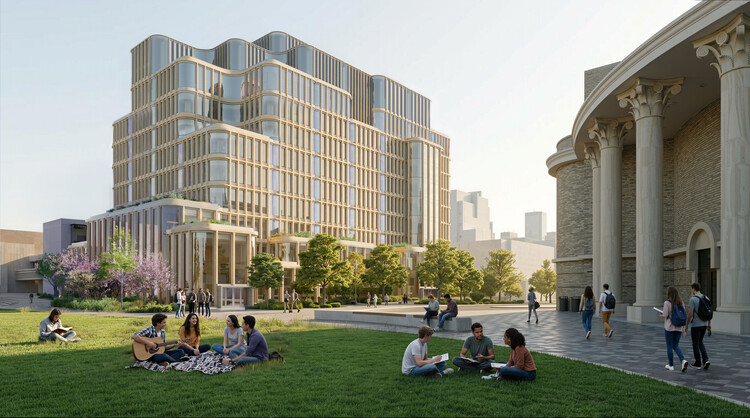
The University of Toronto has revealed the design for the Temerty Building, a new facility for health research and education at the heart of the university campus. The project was designed by MVRDV and Diamond Schmitt Architects in collaboration with Two Row Architect. It builds on a previous collaboration between the first two offices at the University of Toronto Scarborough campus, scheduled for completion in late 2026. The project was first introduced in Temerty Medicine's 2018-2023 Academic Strategic Plan and envisions a 36,000-square-metre extension to the university's Medical Sciences Building, including laboratories for higher education, classrooms, and shared spaces. Work on site is expected to begin in the second half of 2026, starting with preparatory work in July.

MVRDV, Diamond Schmitt, and Two Row Architect Reveal Design for the Temerty Building at the University of Toronto - Image 1 of 4MVRDV, Diamond Schmitt, and Two Row Architect Reveal Design for the Temerty Building at the University of Toronto - Image 2 of 4MVRDV, Diamond Schmitt, and Two Row Architect Reveal Design for the Temerty Building at the University of Toronto - Image 3 of 4MVRDV, Diamond Schmitt, and Two Row Architect Reveal Design for the Temerty Building at the University of Toronto - Image 4 of 4MVRDV, Diamond Schmitt, and Two Row Architect Reveal Design for the Temerty Building at the University of Toronto - More Images+ 11

What Lies Beneath: 10 Projects Reshaping the Ground Level

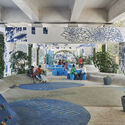
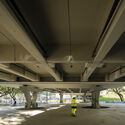
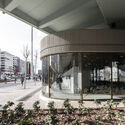
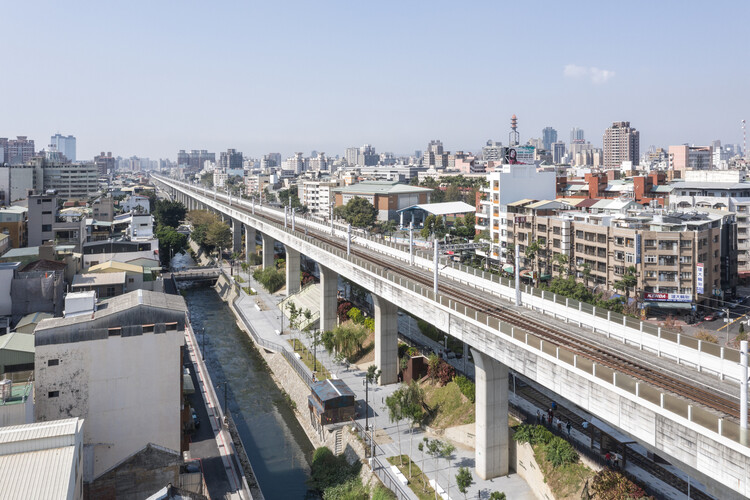
Architecture has long been drawn to the idea of lightness. From early modernist experiments that sought to preserve landscapes, elevating buildings has been understood as a way to preserve the ground while maintaining continuity across the terrain. Volumes are lifted on columns, infrastructures detach circulation from the surface, and entire programs are suspended above the ground.

This was formalised in the early twentieth century through Le Corbusier's concept of the pilotis, which proposed the liberation of the ground floor from enclosure. By raising buildings on columns, architects sought to maintain continuity with the terrain, allowing movement, vegetation, and collective use to unfold beneath constructed volumes. The building would occupy the air, while the ground would remain open, accessible, and shared.

What Lies Beneath: 10 Projects Reshaping the Ground Level - Image 1 of 4What Lies Beneath: 10 Projects Reshaping the Ground Level - Image 2 of 4What Lies Beneath: 10 Projects Reshaping the Ground Level - Image 3 of 4What Lies Beneath: 10 Projects Reshaping the Ground Level - Image 4 of 4What Lies Beneath: 10 Projects Reshaping the Ground Level - More Images+ 19

Mapping the Technosphere: Architecture as an Interface Between Systems and Territories

Architecture can no longer be conceived as an isolated object, detached from the technical networks that sustain contemporary life — a condition that calls for new readings and approaches. It is within this context that, in March, ArchDaily’s monthly theme focused on The Technosphere, a topic both broad and inherently complex. Drawing on the concept of the technosphere, coined by geoscientist Peter Haff to describe the totality of human-made artifacts, a landscape emerges in which contemporary life is deeply intertwined with machines, data, and energy networks.

Mapping the Technosphere: Architecture as an Interface Between Systems and Territories - Image 1 of 4Mapping the Technosphere: Architecture as an Interface Between Systems and Territories - Image 2 of 4Mapping the Technosphere: Architecture as an Interface Between Systems and Territories - Image 3 of 4Mapping the Technosphere: Architecture as an Interface Between Systems and Territories - Image 4 of 4Mapping the Technosphere: Architecture as an Interface Between Systems and Territories - More Images+ 11

No Solid Ground: Three Approaches to Building Below Sea Level in Rotterdam

Architects carefully calibrate their relationship to the earth, adjusting foundations to soil, groundwater, climate, risk, and culture. Driven timber piles, rammed-earth platforms, and poured concrete slabs are each a response to a specific set of ground conditions, and each shapes the architecture that rises from it. The way a building meets the earth determines its durability and its limits because foundations are among the most consequential design choices an architect makes.

The city of Rotterdam sits approximately one meter below sea level, an organizing condition that shapes daily life in the Netherlands' second-largest city and is a growing preoccupation amid unstable coastal conditions. The city occupies the delta of the Rhine and Maas rivers, a landscape that was never naturally dry but has been kept functional through centuries of hydraulic intervention. The water boards in this region are among the oldest democratic institutions in the world, created in the thirteenth century to manage shared water drainage and still operating today as elected bodies with technical capacity. As sea levels rise and rainfall across Northern Europe grows less predictable and more extreme, Rotterdam faces a significantly increased risk of coastal storm surges and urban flooding driven by overwhelmed drainage infrastructure.

No Solid Ground: Three Approaches to Building Below Sea Level in Rotterdam - Image 16 of 4No Solid Ground: Three Approaches to Building Below Sea Level in Rotterdam - Image 57 of 4No Solid Ground: Three Approaches to Building Below Sea Level in Rotterdam - Image 25 of 4No Solid Ground: Three Approaches to Building Below Sea Level in Rotterdam - Image 54 of 4No Solid Ground: Three Approaches to Building Below Sea Level in Rotterdam - More Images+ 65

Imported Futures: Global Architecture Shaping Albania’s Urban Transformation

Subscriber Access | 

In recent years, Albania has undergone a rapid and visible transformation, emerging as one of the most active urban environments in Southeast Europe. This growth is not only reflected in the expansion of its built fabric but also in the scale and ambition of new architectural interventions that seek to redefine the country's image. Across its territory, a series of large developments, cultural institutions, and infrastructural projects are being introduced as part of a broader effort to reposition Albania and its capital, Tirana, within regional and international networks.

A significant number of these interventions are being designed by internationally recognized architectural offices, whose presence has become a defining characteristic of the city's current phase of development. Rather than relying primarily on incremental or locally embedded processes, Tirana's transformation is increasingly shaped through externally authored visions that introduce new formal languages, typologies, and urban strategies. These projects often operate as singular objects or large-scale fragments, contributing to a landscape where the city is assembled through distinct and highly visible gestures.

Imported Futures: Global Architecture Shaping Albania’s Urban Transformation - Image 1 of 4Imported Futures: Global Architecture Shaping Albania’s Urban Transformation - Image 2 of 4Imported Futures: Global Architecture Shaping Albania’s Urban Transformation - Image 3 of 4Imported Futures: Global Architecture Shaping Albania’s Urban Transformation - Image 4 of 4Imported Futures: Global Architecture Shaping Albania’s Urban Transformation - More Images+ 26

A New Standard for High-Performance, Energy-Generating Facades

 | Sponsored Content

​​The Myron and Berna Garron Health Sciences Complex (SAMIH), at the University of Toronto Scarborough, was shaped by a clear and non-negotiable mandate: at least 20% of the building's energy consumption had to be generated from renewable sources installed on-site. To meet this ambitious requirement, the university partnered early with Mitrex, a manufacturer specializing in building-integrated photovoltaics (BIPV), to explore how solar technology could move beyond the roof and become embedded within the architecture itself—positioning the project within a broader shift toward performance-driven sustainable architecture. The 63,000-square-foot facility houses teaching, research, and clinical training programs dedicated to educating future healthcare professionals. Designed by MVRDV in collaboration with Diamond Schmitt Architects, the project initially followed a conventional path, pairing a restrained facade with rooftop photovoltaic panels.

Snøhetta, BIG, and MVRDV Collaborate on New Coastal Neighborhood in Istanbul, Türkiye

Located in Istanbul, Türkiye, an 84-hectare neighborhood is currently under development in the Riva area of Beykoz along the city's Black Sea coast. The master plan has been developed by an international design team including Snøhetta, Bjarke Ingels Group, and MVRDV, alongside local practices KEYM, DB Architects, Rasa, and Bilgin Architects. Known as Ion Riva, the project is conceived as a landscape-led residential community that integrates housing, cultural facilities, and public programs within an ecological framework shaped by the meeting of forest, river, and sea. The first phase of the development, which has received planning permission and is currently under construction, will deliver 969 homes designed for approximately 3,000 residents, with the first completed residences expected to be occupied in 2027.

Snøhetta, BIG, and MVRDV Collaborate on New Coastal Neighborhood in Istanbul, Türkiye - Image 1 of 4Snøhetta, BIG, and MVRDV Collaborate on New Coastal Neighborhood in Istanbul, Türkiye - Image 2 of 4Snøhetta, BIG, and MVRDV Collaborate on New Coastal Neighborhood in Istanbul, Türkiye - Image 3 of 4Snøhetta, BIG, and MVRDV Collaborate on New Coastal Neighborhood in Istanbul, Türkiye - Image 4 of 4Snøhetta, BIG, and MVRDV Collaborate on New Coastal Neighborhood in Istanbul, Türkiye - More Images+ 17

Rotterdam’s Sustainability Landmark and Brisbane’s 2032 Olympic Stadium: This Week’s Review

Architecture this week reflects the intersections of legacy, authorship, and social responsibility, as practices navigate questions of identity, recognition, and public engagement. Legal rulings, major competition shortlists, and large-scale urban proposals illustrate how architecture continues to operate across cultural, institutional, and environmental arenas. From sustainability-driven landmarks and transformative waterfront developments to iconic commercial towers, projects demonstrate approaches to ecological strategies and public programming. At the same time, global observances such as World Hearing Day highlight how spatial design shapes inclusion and accessibility, reminding the profession that the built environment can influence participation, learning, and well-being for diverse communities.

Rotterdam’s Sustainability Landmark and Brisbane’s 2032 Olympic Stadium: This Week’s Review - Image 1 of 4Rotterdam’s Sustainability Landmark and Brisbane’s 2032 Olympic Stadium: This Week’s Review - Image 2 of 4Rotterdam’s Sustainability Landmark and Brisbane’s 2032 Olympic Stadium: This Week’s Review - Image 3 of 4Rotterdam’s Sustainability Landmark and Brisbane’s 2032 Olympic Stadium: This Week’s Review - Image 4 of 4Rotterdam’s Sustainability Landmark and Brisbane’s 2032 Olympic Stadium: This Week’s Review - More Images+ 11

MVRDV, Heatherwick Studio, and Mecanoo Among Five Shortlisted Teams for Shift Sustainability Landmark in Rotterdam

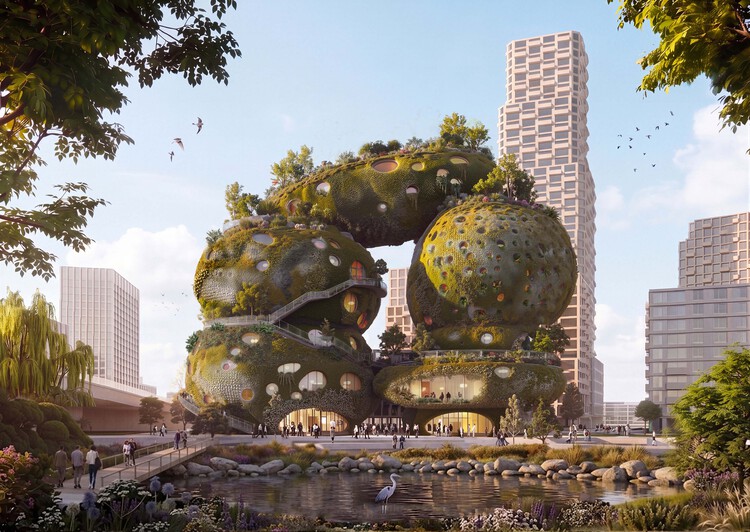
Shift, a company offering digital programs to reduce carbon emissions through individual behavior change, has announced the five finalist teams advancing to Stage Two of its international architecture competition. Launched in January 2025, the Shift International Architecture Competition called for proposals to design "the Shift Landmark": a 25,000 to 30,000 m² building in Waterkant, a new waterfront district in southern Rotterdam. The project includes a hotel, a conference and meeting center, and a sustainable food court. Its objective is to set a new standard for a purpose-driven destination that turns circular living into "something individuals, companies, and organisations can feel, experience, and act on." The five shortlisted design concepts reflect different visions of sustainability and climate action, developed by teams led by the European offices of MVRDV (Netherlands), Heatherwick Studio (United Kingdom), Office for Political Innovation (Spain), Mecanoo (Netherlands), and Ecosistema Urbano (Spain).
MVRDV, Heatherwick Studio, and Mecanoo Among Five Shortlisted Teams for Shift Sustainability Landmark in Rotterdam - Image 1 of 4MVRDV, Heatherwick Studio, and Mecanoo Among Five Shortlisted Teams for Shift Sustainability Landmark in Rotterdam - Image 2 of 4MVRDV, Heatherwick Studio, and Mecanoo Among Five Shortlisted Teams for Shift Sustainability Landmark in Rotterdam - Image 3 of 4MVRDV, Heatherwick Studio, and Mecanoo Among Five Shortlisted Teams for Shift Sustainability Landmark in Rotterdam - Image 4 of 4MVRDV, Heatherwick Studio, and Mecanoo Among Five Shortlisted Teams for Shift Sustainability Landmark in Rotterdam - More Images+ 25

ArchDaily’s Readers Select Who Should Win the 2026 Pritzker Prize

As the architecture community looks ahead to the announcement of the 2026 laureate of the Pritzker Architecture Prize, anticipation once again gathers around what is widely regarded as the profession's highest honor. Founded in 1979 by Jay Pritzker and administered by the Hyatt Foundation, the prize recognizes a living architect whose body of work demonstrates a consistent and significant contribution to humanity and the built environment.

ArchDaily’s Readers Select Who Should Win the 2026 Pritzker Prize - Image 1 of 4ArchDaily’s Readers Select Who Should Win the 2026 Pritzker Prize - Image 2 of 4ArchDaily’s Readers Select Who Should Win the 2026 Pritzker Prize - Image 3 of 4ArchDaily’s Readers Select Who Should Win the 2026 Pritzker Prize - Image 4 of 4ArchDaily’s Readers Select Who Should Win the 2026 Pritzker Prize - More Images+ 7

MVRDV Begins Construction on the EU TUMO Convergence Center in Yerevan, Armenia

MVRDV has started construction on the EU TUMO Convergence Center, a new educational and research facility in Yerevan, Armenia. Located in Tumanyan Park, the five-story building will expand TUMO's campus, providing spaces for free technology and creative education for teenagers and adults, alongside research and co-working areas for technology and design companies. Positioned on a hilly outcrop above the Hrazdan River Gorge, the project responds to the surrounding topography while establishing visual connections with the city, the gorge, and Mount Ararat. Construction officially commenced on 24 February, with local and international representatives in attendance.

MVRDV Begins Construction on the EU TUMO Convergence Center in Yerevan, Armenia - Image 1 of 4MVRDV Begins Construction on the EU TUMO Convergence Center in Yerevan, Armenia - Image 2 of 4MVRDV Begins Construction on the EU TUMO Convergence Center in Yerevan, Armenia - Image 3 of 4MVRDV Begins Construction on the EU TUMO Convergence Center in Yerevan, Armenia - Image 4 of 4MVRDV Begins Construction on the EU TUMO Convergence Center in Yerevan, Armenia - More Images+ 4

Henning Larsen Launches OpenDetail as Digital Platforms Expand Carbon-Focused Tools for the Built Environment

As the building industry continues to account for a significant share of global carbon emissions, digital platforms are increasingly being developed to support carbon reduction across different stages of the design and construction process. These initiatives range from material-focused knowledge databases to project life-cycle guidance and early-stage embodied carbon assessment tools. While differing in scope and methodology, they commonly aim to improve access to technical knowledge, clarify responsibilities across the value chain, and facilitate more informed decision-making in the built environment. Recently, Henning Larsen launched OpenDetail, joining related efforts by Grimshaw and MVRDV to address decarbonization through shared digital infrastructure.

Henning Larsen Launches OpenDetail as Digital Platforms Expand Carbon-Focused Tools for the Built Environment - Image 1 of 4Henning Larsen Launches OpenDetail as Digital Platforms Expand Carbon-Focused Tools for the Built Environment - Image 2 of 4Henning Larsen Launches OpenDetail as Digital Platforms Expand Carbon-Focused Tools for the Built Environment - Image 3 of 4Henning Larsen Launches OpenDetail as Digital Platforms Expand Carbon-Focused Tools for the Built Environment - Image 4 of 4Henning Larsen Launches OpenDetail as Digital Platforms Expand Carbon-Focused Tools for the Built Environment - More Images+ 10

The OBEL Award Reveals "Systems’ Hack" as the Theme for Its 2026 Edition

©OBEL Foundation

The OBEL Foundation has announced "Systems' Hack" as the focus of its 2026 cycle, setting the conceptual framework that will guide the foundation's activities and the selection of the next OBEL Award. Founded in 2019, OBEL recognises architecture's potential to act as a tangible agent of positive social and ecological change, supporting approaches that expand how the built environment is defined and shaped. The 2026 theme calls on architecture to critically engage with the systems that underpin contemporary society, including infrastructure, energy, food, water, education, and information, and to examine how these interconnected networks might be reconfigured in response to accelerating global challenges.

The OBEL Award Reveals "Systems’ Hack" as the Theme for Its 2026 Edition - Image 1 of 4The OBEL Award Reveals "Systems’ Hack" as the Theme for Its 2026 Edition - Image 2 of 4The OBEL Award Reveals "Systems’ Hack" as the Theme for Its 2026 Edition - Image 3 of 4The OBEL Award Reveals "Systems’ Hack" as the Theme for Its 2026 Edition - Image 4 of 4The OBEL Award Reveals Systems’ Hack as the Theme for Its 2026 Edition - More Images+ 3

Civic Architecture Opens to the City as Global Attention Turns to Africa: This Week’s Review

This week's news compilation opens with two international commemorations, the International Day for Clean Energy and the International Day of Education, alongside a major archaeological discovery in Fano, Italy, where excavations have revealed a basilica described by Vitruvius, linking contemporary architectural discourse with deep historical continuity. Across this week's broader architecture news landscape, a central theme emerges around the advancement of civic architecture conceived as open, publicly engaged infrastructure, with cultural and institutional projects increasingly designed to strengthen their relationship with the city and everyday urban life. At the same time, renewed global attention turns toward Africa, where large-scale transport infrastructure and the conservation of modernist landmarks reflect interests in the region and the reassessment of the continent's architectural heritage. Complementing these narratives, this week's highlights also include a new model for car-free urban districts, co-designed public landscapes grounded in indigenous knowledge, and a residential development responding to regional context, reflecting how architecture is negotiating public space, civic responsibility, and territorial identity across diverse geographies.

Civic Architecture Opens to the City as Global Attention Turns to Africa: This Week’s Review - Image 1 of 4Civic Architecture Opens to the City as Global Attention Turns to Africa: This Week’s Review - Image 2 of 4Civic Architecture Opens to the City as Global Attention Turns to Africa: This Week’s Review - Image 3 of 4Civic Architecture Opens to the City as Global Attention Turns to Africa: This Week’s Review - Image 4 of 4Civic Architecture Opens to the City as Global Attention Turns to Africa: This Week’s Review - More Images+ 32

MVRDV and Buro Happold Reveal Design for the Lampegiet Theatre in Veenendaal, Netherlands

Designed by MVRDV in collaboration with Buro Happold, the new Lampegiet Theatre in Veenendaal, the Netherlands, is scheduled to replace the existing theatre building from 1988. Approved by the Veenendaal City Council in January 2026, the project is expected to begin construction in 2027 and reach completion in 2029. Conceived as a contemporary cultural venue that responds to both current performance requirements and the city's historical identity, the new theatre introduces a compact, multi-volume composition wrapped in a porous ceramic facade that allows the building to act as an illuminated urban landmark.

MVRDV and Buro Happold Reveal Design for the Lampegiet Theatre in Veenendaal, Netherlands - Image 1 of 4MVRDV and Buro Happold Reveal Design for the Lampegiet Theatre in Veenendaal, Netherlands - Image 2 of 4MVRDV and Buro Happold Reveal Design for the Lampegiet Theatre in Veenendaal, Netherlands - Image 3 of 4MVRDV and Buro Happold Reveal Design for the Lampegiet Theatre in Veenendaal, Netherlands - Image 4 of 4MVRDV and Buro Happold Reveal Design for the Lampegiet Theatre in Veenendaal, Netherlands - More Images+ 3