1. ArchDaily
  2. Politics

Politics: The Latest Architecture and News

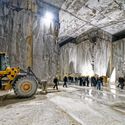
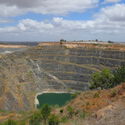
Unearthing the Ground: Architecture and the Politics of Soil

Subscriber Access | 

What architecture leaves in the ground outlasts what it puts in the air. A demolished building disappears from the skyline in a matter of days, but its foundations remain embedded in the soil for generations. The contamination caused by an industrial complex does not clear when the complex is torn down. The legal boundaries inscribed across colonial territory do not dissolve when the colonial administration ends. The ground holds what architecture quickly forgets.

This is what makes soil so uncomfortable as a subject. The discipline tends to orient itself upward, toward the form, the façade, the spatial experience of inhabitation. The ground is where architecture begins and, in a certain sense, where it ends: the point at which building becomes geology, legal title becomes territorial claim, and construction becomes extraction. Treating soil as a medium rather than a datum means acknowledging that the acts of building carry consequences that run deeper than the visible object above grade.

Unearthing the Ground: Architecture and the Politics of Soil - Imagen 1 de 4Unearthing the Ground: Architecture and the Politics of Soil - Imagen 2 de 4Unearthing the Ground: Architecture and the Politics of Soil - Imagen 3 de 4Unearthing the Ground: Architecture and the Politics of Soil - Imagen 4 de 4Unearthing the Ground: Architecture and the Politics of Soil - More Images+ 20

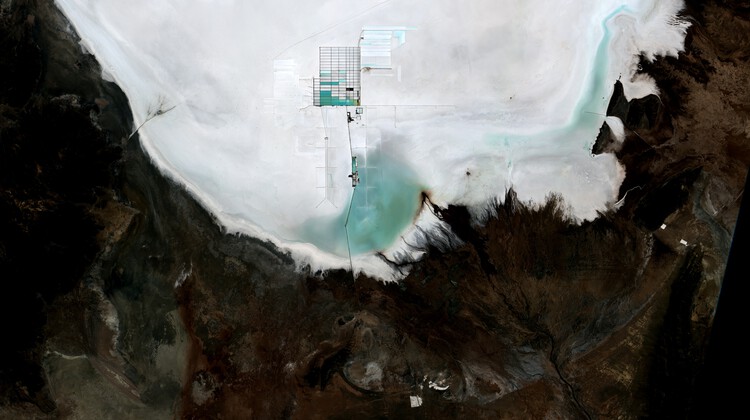
Unearthing the Ground: Architecture and the Politics of Oil

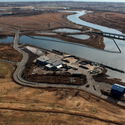
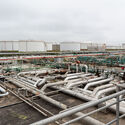
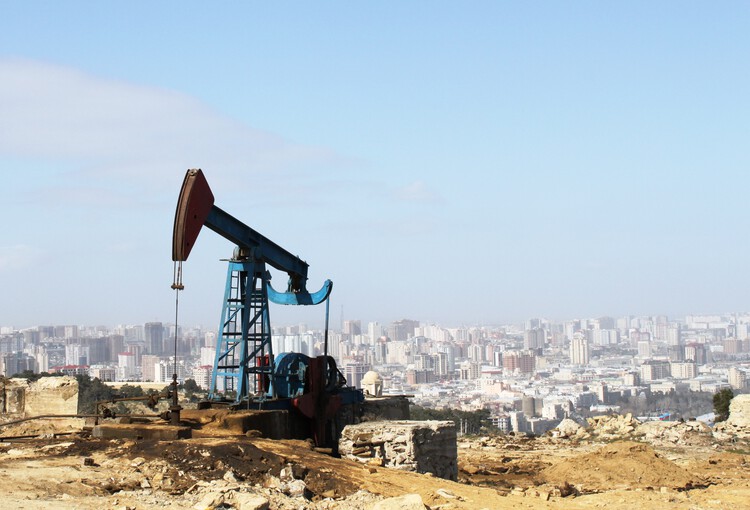
Beneath the ground lies a material that has quietly shaped the architecture of the modern world. Petroleum is rarely discussed within architectural discourse, yet the extraction, circulation, and consumption of oil have profoundly reorganized the spatial logic of territories. Pipelines, refineries, drilling platforms, ports, highways, and petrochemical complexes form a vast infrastructural landscape that sustains contemporary life, composing a dispersed architecture of energy.

Throughout the twentieth and twenty-first centuries, oil became the material foundation of industrial society. It fueled transportation, powered factories, and supported the growth of cities whose spatial organisation depended on continuous energy flows. Yet the infrastructures that enable these flows rarely become objects of architectural inquiry. Attention remains largely directed toward form, typology, or urban density, while the material systems that sustain these environments tend to remain displaced within the discipline.

Unearthing the Ground: Architecture and the Politics of Oil - Image 1 of 4Unearthing the Ground: Architecture and the Politics of Oil - Image 2 of 4Unearthing the Ground: Architecture and the Politics of Oil - Image 3 of 4Unearthing the Ground: Architecture and the Politics of Oil - Image 4 of 4Unearthing the Ground: Architecture and the Politics of Oil - More Images+ 15

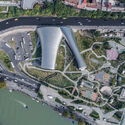
The Aesthetics of Power: Soviet Modernism Meets Uzbek Tradition in Tashkent’s Palace of Peoples’ Friendship

Subscriber Access | 

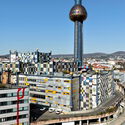
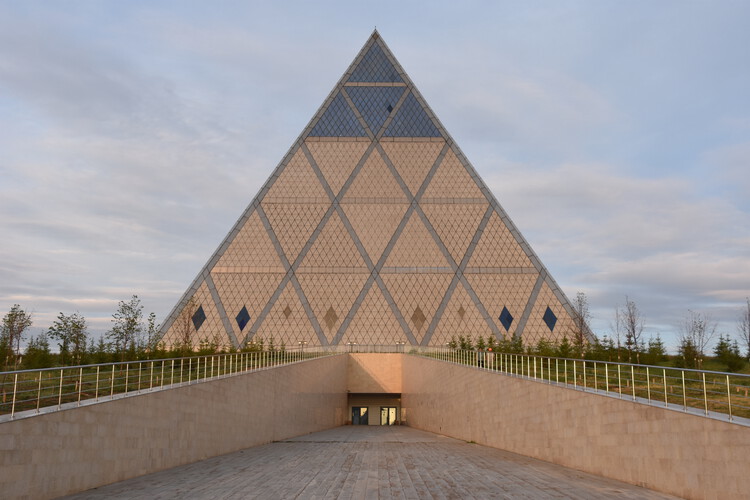
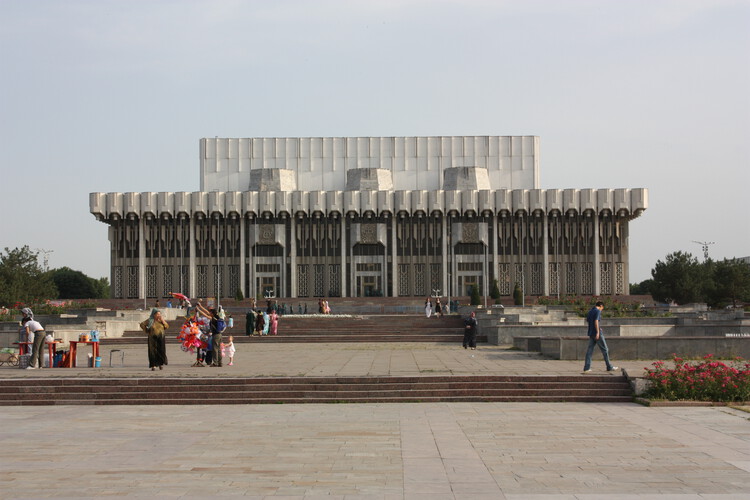
Tashkent, the capital of Uzbekistan and one of the oldest cities in Central Asia, has long been shaped by a hybrid culture. Located at a strategic point along the Silk Road, the city developed an architectural tradition defined by inner courtyards, domes, decorative ceramics, and Islamic geometric patterns. The annexation by the Russian Empire in the 19th century introduced administrative buildings, orthogonal squares, and straight avenues, creating a dual urban fabric — between the “old” Eastern city and the “new” European one — in which contrasts and overlaps became the norm.

During the Soviet period, when Tashkent became the capital of the Uzbek Soviet Socialist Republic and received intense migration from across the union, the city was transformed into a modernist showcase. The coexistence between Islamic heritage and the ideology of socialist progress found a new inflection point with the 1966 earthquake, whose destruction triggered a large-scale reconstruction effort involving architects from across the USSR. Massive housing complexes, cultural institutions, and monumental buildings emerged, reinterpreting local motifs through ideological and technological language. It was in this context that the Palace of Peoples’ Friendship took shape.

The Aesthetics of Power: Soviet Modernism Meets Uzbek Tradition in Tashkent’s Palace of Peoples’ Friendship - Image 1 of 4The Aesthetics of Power: Soviet Modernism Meets Uzbek Tradition in Tashkent’s Palace of Peoples’ Friendship - Image 2 of 4The Aesthetics of Power: Soviet Modernism Meets Uzbek Tradition in Tashkent’s Palace of Peoples’ Friendship - Image 3 of 4The Aesthetics of Power: Soviet Modernism Meets Uzbek Tradition in Tashkent’s Palace of Peoples’ Friendship - Image 4 of 4The Aesthetics of Power: Soviet Modernism Meets Uzbek Tradition in Tashkent’s Palace of Peoples’ Friendship - More Images+ 3

September Editorial Topic: Architecture Without Limits

Architects today work across many worlds: from designing furniture, landscapes, and urban blocks to creating film sets, photographs, and videos. They restore and retrofit old buildings rather than build anew, while also writing, researching, and publishing. Some design virtual spaces for video games or speculate on habitats in outer space and underwater. Others engage directly with society through politics, activism, or community projects. Many experiment with biology, test new materials, and step into the role of scientist. Architects are decolonizing old narratives and decarbonizing the construction industry, and by weaving together personal passions with pressing social and environmental challenges, they are pushing the limits of the profession and expanding its scope.

With so many changes in the profession, especially in recent years, one may ask: How is the role of the architect evolving in response to global crises and shifting societal needs? In what ways can interdisciplinarity expand the scope and impact of architectural practice? And what skills beyond traditional design are becoming essential for architects in today's world?

Playgrounds as Political Spaces: Negotiating Risk, Space, and Childhood

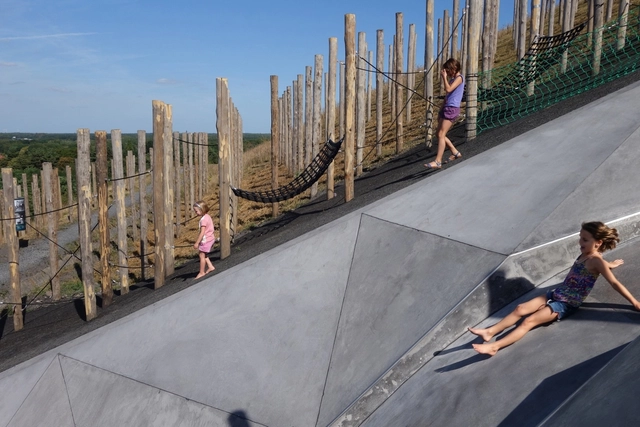
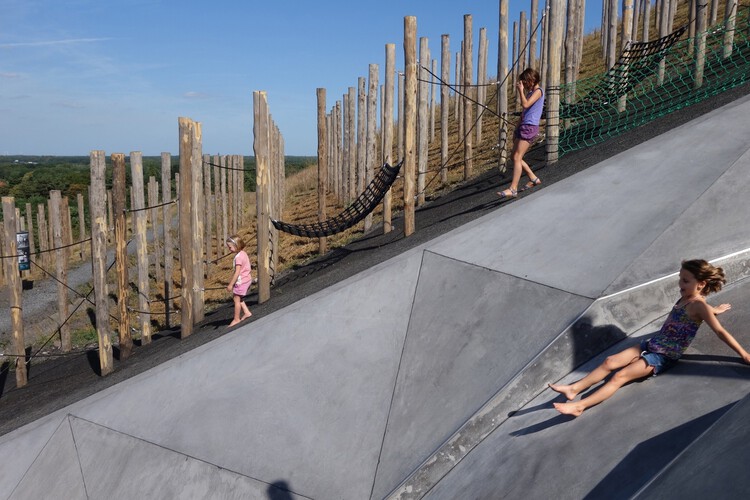
Playgrounds are spatial instruments through which society projects its expectations on childhood, testing the boundaries between control and autonomy, exposure and protection. They regulate how children relate to space, to others, and their bodies — encoding, often invisibly, social norms, fears, and aspirations. In this sense, playgrounds are not peripheral spaces of leisure; they are political constructs shaped by specific ideologies about what childhood is and how it should unfold. Since 1989, the right to play has been formally recognised in the United Nations Convention on the Rights of the Child, affirming that play is a fundamental part of human development. To design a playground is not only to draw lines on a plan or to install equipment in a park; it is to define the conditions under which play is permitted, imagined, or constrained.

Playgrounds as Political Spaces: Negotiating Risk, Space, and Childhood - Image 1 of 4Playgrounds as Political Spaces: Negotiating Risk, Space, and Childhood - Image 2 of 4Playgrounds as Political Spaces: Negotiating Risk, Space, and Childhood - Image 3 of 4Playgrounds as Political Spaces: Negotiating Risk, Space, and Childhood - Image 4 of 4Playgrounds as Political Spaces: Negotiating Risk, Space, and Childhood - More Images+ 21

Albania Pavilion Explores the Intersections of Architecture, History, and Identity at the 2025 Venice Biennale

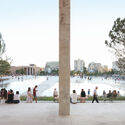
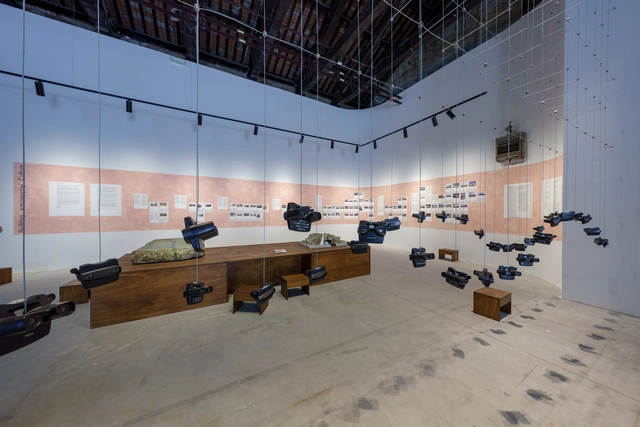
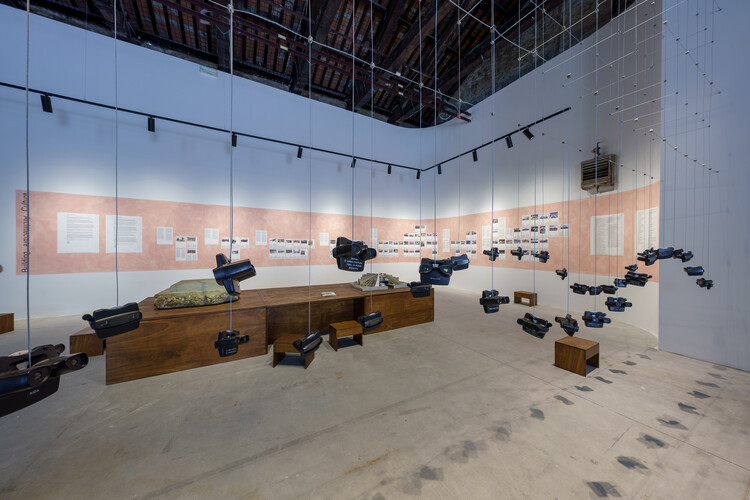
Curated by Anneke Abhelakh, the Albania Pavilion at the 2025 Venice Architecture Biennale, titled "Building Architecture Culture", explores how the country's architecture embodies its political, cultural, and social transformations. Albania's built environment reflects a layered history, from Ottoman and Italian rule to communist isolation and post-socialist transformation, each leaving visible marks on its cities and public spaces. The pavilion examines how architecture both responds to and shapes collective memory, public space, and civic engagement, framing these questions through past, present, and future perspectives.

Albania Pavilion Explores the Intersections of Architecture, History, and Identity at the 2025 Venice Biennale - Image 1 of 4Albania Pavilion Explores the Intersections of Architecture, History, and Identity at the 2025 Venice Biennale - Image 2 of 4Albania Pavilion Explores the Intersections of Architecture, History, and Identity at the 2025 Venice Biennale - Image 3 of 4Albania Pavilion Explores the Intersections of Architecture, History, and Identity at the 2025 Venice Biennale - Image 4 of 4Albania Pavilion Explores the Intersections of Architecture, History, and Identity at the 2025 Venice Biennale - More Images+ 25

Learning from Global Architecture Exhibitions: Resource Efficiency, Vernacular Intelligence, and Social and Environmental Advocacy

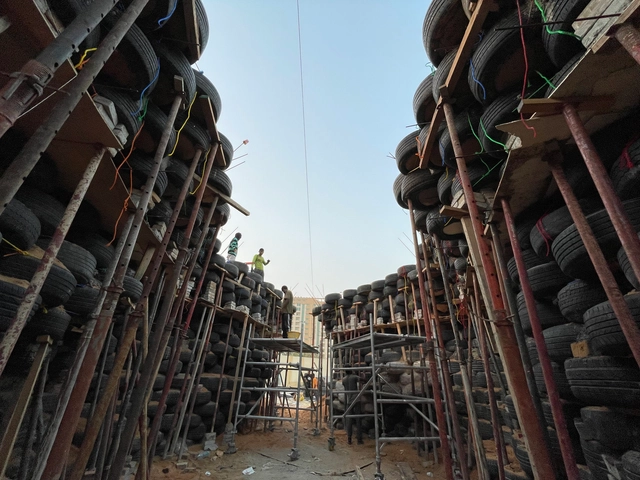
Over the past year, architecture exhibitions have significantly addressed pressing global issues such as climate change, resource scarcity, and social advocacy. According to the Harvard Graduate School of Design, architecture exhibitions can foster dynamic engagement with contemporary issues, serving as platforms for experimentation and critique. These events, such as the Venice Architecture Biennale, Sharjah Architecture Triennial, Milan Design Week, and Concéntrico, serve as essential platforms for creatives to showcase and explore new ideas. Moreover, they have been instrumental in addressing the urgent challenges posed by the climate crisis by promoting sustainable practices.

Learning from Global Architecture Exhibitions: Resource Efficiency, Vernacular Intelligence, and Social and Environmental Advocacy - Image 1 of 4Learning from Global Architecture Exhibitions: Resource Efficiency, Vernacular Intelligence, and Social and Environmental Advocacy - Image 2 of 4Learning from Global Architecture Exhibitions: Resource Efficiency, Vernacular Intelligence, and Social and Environmental Advocacy - Featured ImageLearning from Global Architecture Exhibitions: Resource Efficiency, Vernacular Intelligence, and Social and Environmental Advocacy - Image 3 of 4Learning from Global Architecture Exhibitions: Resource Efficiency, Vernacular Intelligence, and Social and Environmental Advocacy - More Images+ 9

Floods in Rio Grande do Sul: The Tragedy of Non-Resilient Cities

Subscriber Access | 

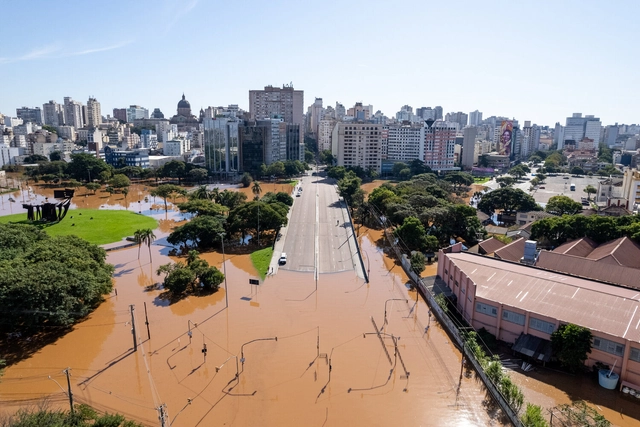
The world has changed, and accepting this fact is no longer a matter of choice but survival. Our rainfall patterns, periods of drought, average temperatures, sea levels—everything is in constant flux. The denialist stance of many countries, including Brazil, has led to catastrophic situations like the one we are facing now.

The floods that devastated the southern region of the country in recent days cannot be considered isolated incidents. Due to global warming, climate events like this will become increasingly frequent. In other words, unfortunately, we cannot prevent them from happening, but we can—and must—make our cities more resilient to these situations.

Floods in Rio Grande do Sul: The Tragedy of Non-Resilient Cities - Image 1 of 4Floods in Rio Grande do Sul: The Tragedy of Non-Resilient Cities - Image 2 of 4Floods in Rio Grande do Sul: The Tragedy of Non-Resilient Cities - Image 3 of 4Floods in Rio Grande do Sul: The Tragedy of Non-Resilient Cities - Image 4 of 4Floods in Rio Grande do Sul: The Tragedy of Non-Resilient Cities - More Images+ 11

Places of Protest in Africa: Public Spaces for Engaging & Fostering Democracy

Subscriber Access | 

Protest has always been a powerful tool for creating change, and public spaces provide a platform for social engagement in societies. As part of the International Day of Democracy, we examine Africa, its series of emerging protests in the past year, and how citizens in various countries question political justice, demand better living standards from their government, and interrogate their nation’s sovereignty. With demonstrations ranging from organized large-scale marches to smaller spontaneous outbursts, residents of these countries have explored public spaces in symbolic and significant ways to amplify their voices. These spaces include public squares with cultural and historical meaning, sites of political buildings, or makeshift protest areas such as roads and open areas. Through this, African cities show how people make these spaces their own and how the power of their conglomeration cannot be ignored in unwrapping the democratic essence of public spaces.

Places of Protest in Africa: Public Spaces for Engaging & Fostering Democracy - Image 1 of 4Places of Protest in Africa: Public Spaces for Engaging & Fostering Democracy - Image 2 of 4Places of Protest in Africa: Public Spaces for Engaging & Fostering Democracy - Image 3 of 4Places of Protest in Africa: Public Spaces for Engaging & Fostering Democracy - Image 4 of 4Places of Protest in Africa: Public Spaces for Engaging & Fostering Democracy - More Images+ 6

The Energy Efficiency Policy Package: Key Catalyst for Building Decarbonisation and Climate Action

Subscriber Access | 

The buildings and construction sectors are key players in the fight against climate change –Combined, they are responsible for 30% of global final energy consumption and 27% of total energy sector CO2 emissions. Further, energy demand from buildings and construction continues to rise, driven by improved access to energy in developing countries, growing need for air conditioning, greater ownership and use of energy-consuming appliances, and a rapid growth in global floor area. Without targeted policy actions, the energy used in buildings could increase up to around 70% in 2050.

Brazil Congress Attack: The Symbolic Consequences of the 2023 January Invasion

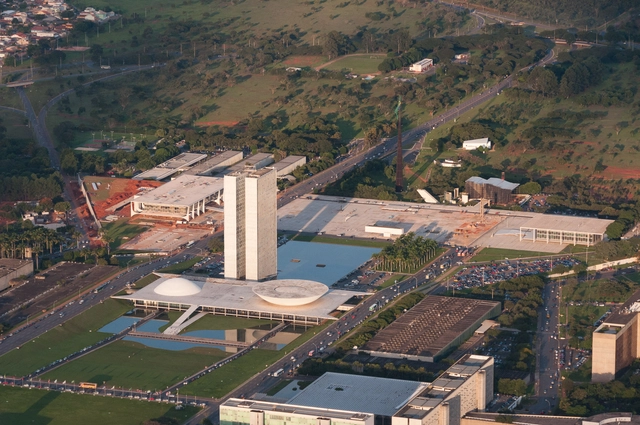
Few places in the world have an overlap of complexities as intense as Brasília. Even so, its architecture symbolizes the Republic and democracy of Brazil, and any act of attack on these symbols carries meanings and consequences for Brazilian memory and cultural heritage. The terrorist acts of January 2023 destroyed part of the heritage and raised questions beyond objects and architecture, touching on education, culture, and national political capital.

Whom Does Architecture Serve Today?

In 1969, ‘The Architects' Resistance’, a collective of students from Yale University, Columbia University, and the Massachusetts Institute of Technology (MIT), published a manifesto titled ‘Architecture: whom does it serve?’

With this manifesto, the group sought to place the practice of architecture in a broader economic, social and environmental context than the one taught in their university lecture rooms. In just two and a half pages, we find a powerful call to reclaim a more social and ecologically conscious architecture. It unambiguously denounces the role architecture played during those years as a practice in service to those in power while adding that “the architect's submission to the system begins with the belief that they possess special skills and knowledge that are inaccessible to the general public.”

What is Architectural Forensics?

Subscriber Access | 

The term ‘Architectural Forensics’ varies in definition. In short, it refers to the investigation of the built environment, whether that be in relation to crime and injustice or an investigative process to discover the root cause of damage and deterioration in buildings. Often forensic architects are invited to identify potential issues and advise in how to avoid them. The role of this architect is to remain unbiased, identify issues within construction, determine potential causes and suggest solutions. They are to uncover factual evidence, which may aid in future construction or provide answers to issues associated with a particular built environment.

What is Architectural Forensics? - Image 1 of 4What is Architectural Forensics? - Image 2 of 4What is Architectural Forensics? - Image 3 of 4What is Architectural Forensics? - Image 4 of 4What is Architectural Forensics? - More Images

A 2021 Moment In Architecture That May Define The Future

Some years end up being cultural pivot points. 2021 was one such year, with COVID-19 as the first existential threat to our culture since World War II. Architecture will change as a result, and may evolve in public perception to value motivations as a criteria for understanding it, versus valuing outcomes as the validation of any particular aesthetic.

A 2021 Moment In Architecture That May Define The Future - Image 1 of 4A 2021 Moment In Architecture That May Define The Future - Image 2 of 4A 2021 Moment In Architecture That May Define The Future - Image 3 of 4A 2021 Moment In Architecture That May Define The Future - Image 4 of 4A 2021 Moment In Architecture That May Define The Future - More Images+ 1

The Spatial Stories of Ousmane Sembène

When examining the world of African cinema, there are few names more prominent than that of Senegalese director Ousmane Sembène. His films ‘La Noire de…’ and ‘Mandabi’, released in 1966 and 1968 respectively, are films that tell evocative stories on the legacies of colonialism, identity, and immigration. And whilst these two films are relatively slow-spaced, ‘slice-of-life stories, they also offer a valuable spatial critique of the setting where the films are based, providing a helpful framework to understand the intricacies of the post-colonial African city, and the contrast between the African and European metropolises.

The Spatial Stories of Ousmane Sembène - Image 1 of 4The Spatial Stories of Ousmane Sembène - Image 2 of 4The Spatial Stories of Ousmane Sembène - Image 3 of 4The Spatial Stories of Ousmane Sembène - Image 4 of 4The Spatial Stories of Ousmane Sembène - More Images+ 8

The Restroom Pavilion at the 2021 Venice Biennale Displays how Restrooms are Political Battlegrounds

"When we enter the restroom, we are never alone. Instead, we are entangled in a network of bodies, infrastructures, ecosystems, cultural norms, and regulations". Although restrooms are often overlooked facilities that cater to the needs of individuals, they are, however, spaces where gender, religion, race, hygiene, health, and the economy are defined and expressed. For the 17th International Architecture Exhibition at La Biennale di Venezia, Matilde Cassani, Ignacio G. Galán, Iván L. Munuera, and Joel Sanders designed two pavilions that exhibit how restrooms are political architectures, serving as battlegrounds for the world's disputes.

The Restroom Pavilion at the 2021 Venice Biennale Displays how Restrooms are Political Battlegrounds - Image 1 of 4The Restroom Pavilion at the 2021 Venice Biennale Displays how Restrooms are Political Battlegrounds - Image 2 of 4The Restroom Pavilion at the 2021 Venice Biennale Displays how Restrooms are Political Battlegrounds - Image 3 of 4The Restroom Pavilion at the 2021 Venice Biennale Displays how Restrooms are Political Battlegrounds - Image 4 of 4The Restroom Pavilion at the 2021 Venice Biennale Displays how Restrooms are Political Battlegrounds - More Images+ 10

Assault on a Sacred Place

This article was originally published on Common Edge.

For most people, calling a place “sacred” designates it as an important location, one usually associated with spirituality. It might be the setting for religious rituals (the sacred space of a church, synagogue, or mosque), a spot where some event described as “miraculous” has occurred (such as the reported sighting of the Virgin Mary in Lourdes, France, which became a pilgrimage site), or a place which held the body of deity (think of the Church of the Holy Sepulchre in Jerusalem, built upon what is believed the be the tomb of Jesus Christ). 
The Political Dimension of Architecture: Activism Through Design

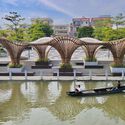
The inertia of politics and governance in a time when major societal changes occur at an increasingly faster pace and the dissatisfaction with the decision process makes room for bottom-up actions, activism and bold endeavours. In the light of so many examples of social activism, do architects have the tools to make their own stand? Does architecture have the power to disrupt the status quo?