1. ArchDaily
  2. Nationalism

Nationalism: The Latest Architecture and News

Subscriber Access

Building a National Image: Architecture, Capital, and Political Power

Audio available

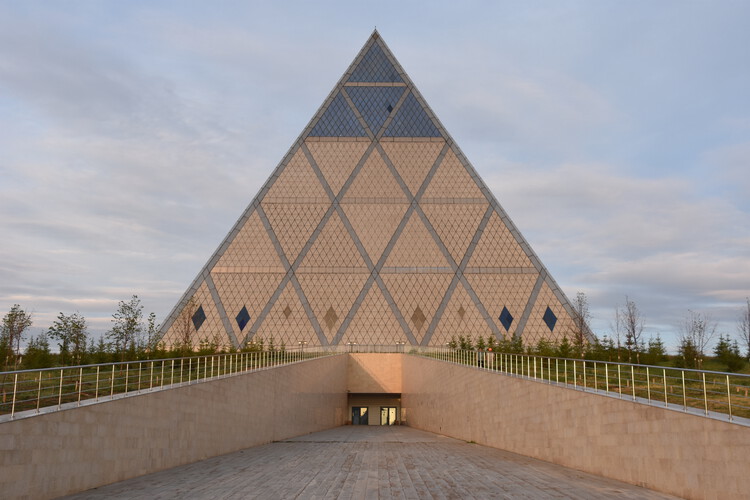
The Pyramid of Tirana opened as a museum to Enver Hoxha in October 1988, three years after his death and three years before the regime collapsed. In the decades that followed, it served as a radio station, a conference venue, a nightclub, and a base for NATO during the Kosovo war. In 2023, MVRDV reopened it as a park and technology school, adding steps to the façades so that the building could be walked over. The inauguration was timed to the Western Balkans Summit on 16 October, a date that some critics pointed out was Hoxha's birthday. Two projects of national self-definition, thirty-five years apart and built on opposite political premises, have used the same structure.
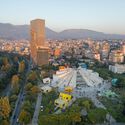
Building a National Image: Architecture, Capital, and Political Power - Imagen 1 de 4Building a National Image: Architecture, Capital, and Political Power - Imagen 2 de 4Building a National Image: Architecture, Capital, and Political Power - Imagen 3 de 4Building a National Image: Architecture, Capital, and Political Power - Imagen 4 de 4Building a National Image: Architecture, Capital, and Political Power - More Images+ 15

Subscriber Access

It’s All in a Cup of Coffee (or, Indeed, Tea): Does Café Culture Embody the Idea of Europe?

Update: On June 24, 2016, 52% of eligible voters in the United Kingdom voted to leave the European Union. This article was published prior to the referendum announcement.

In 2003 George Steiner—a Paris-born, American, UK-based literary critic, philosopher and essayist—gave a lecture in Tilburg, a small Dutch city on the Belgian border. His talk, which he titled “The Idea of Europe,” made some waves in certain circles but, ultimately, wasn't widely discussed. Years later I found a copy of the transcript in Amsterdam’s Athenaeum[1], who had tucked it in the corner of a sunken room on a shelf devoted to "Brexit." I read it the following day while on a train to Brussels.

As I trundled across the Flemish hinterland Steiner’s words, delivered with judicious insight and a reassuring cautionary edge, served as a reminder of one irrevocable fact: that Europe is a continent “of linguistic, cultural, [and] social diversity;” a “mosaic”[2] of communities that have never been united with the same scale and ambition as that of the European Union. But before the contemporary Euro-project, came European café culture.