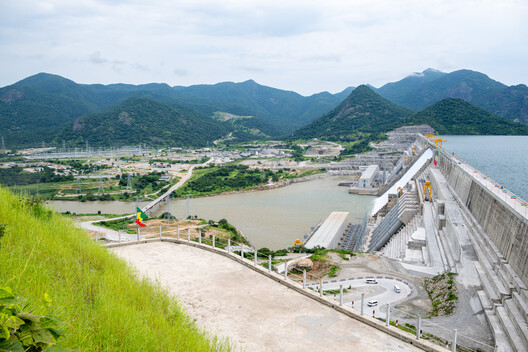
Every large dam divides as much as it connects, and the Grand Ethiopian Renaissance Dam is no exception. A monumental feat of architecture and engineering, the mega-dam has brought everyone together, for better or worse, to interrogate who gets to declare sovereignty over the riches of the river, be it water or momentum, and to challenge colonial-era Nile treaties.
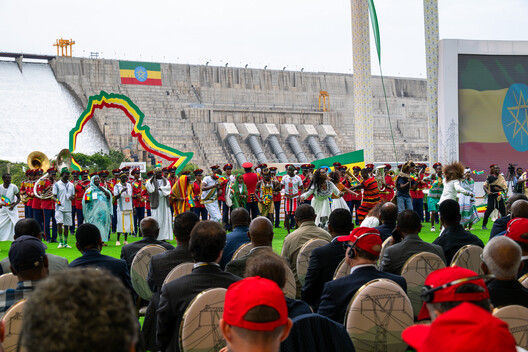
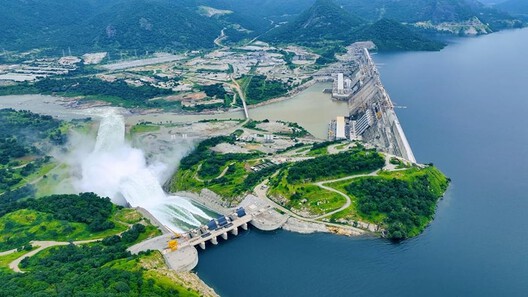
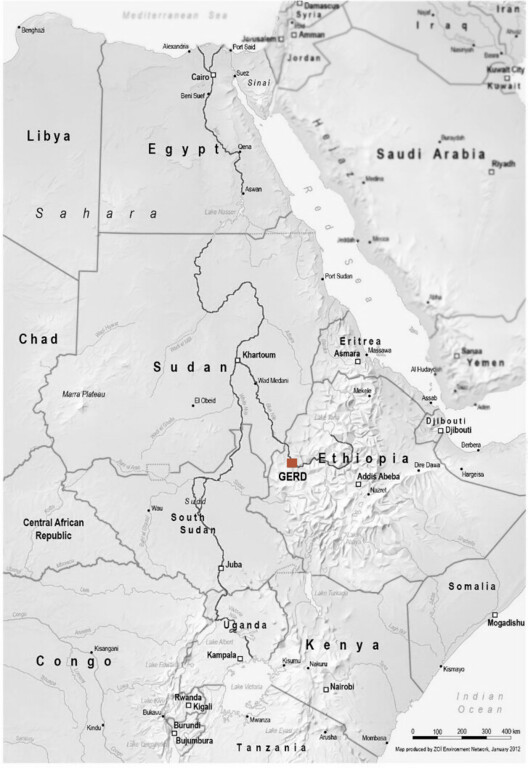
Inaugurated in September 2025, the Grand Ethiopian Renaissance Dam, or GERD, is a grand concrete structure on the Blue Nile in western Ethiopia within the Benishangul-Gumuz region, just 30 kilometers upstream along the river and east of the border with Sudan. It is built as a major source of hydroelectric power, being consistently ranked in the top 3-30 globally, and symbolizes Ethiopia's national sovereignty, rise to exponential economic development, and technological self-determination. So, why has it become the center of a protracted dispute over regional water security and international law between Ethiopia, Sudan, and Egypt?

The Architecture of the Dam
Related Article
Ecologies of Repair: Reconciling Our Relationship with Water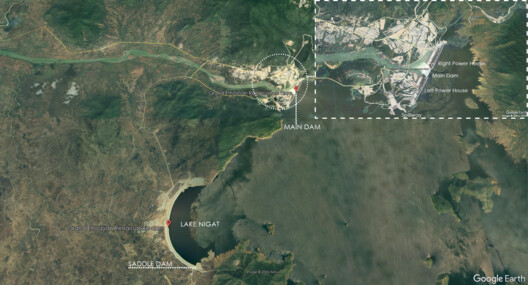
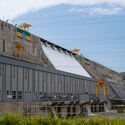
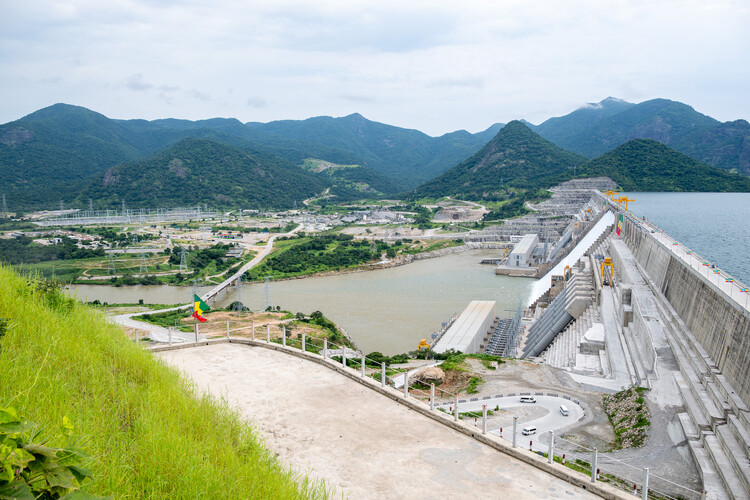
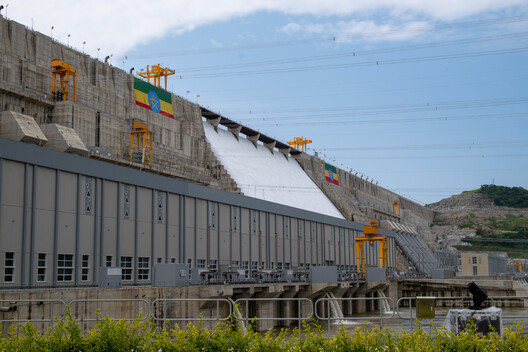
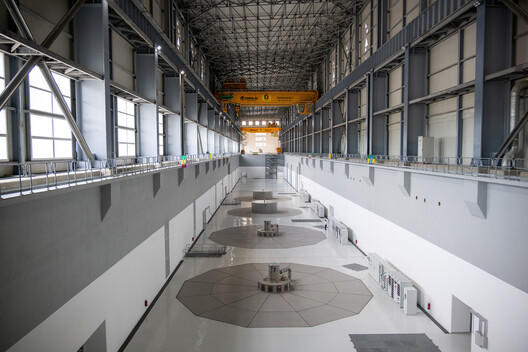
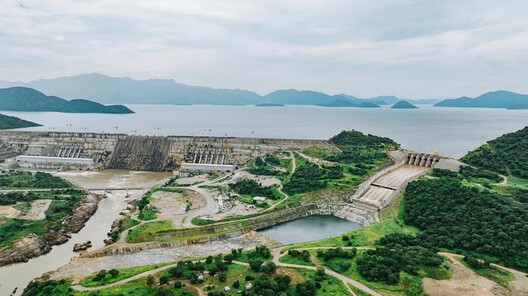
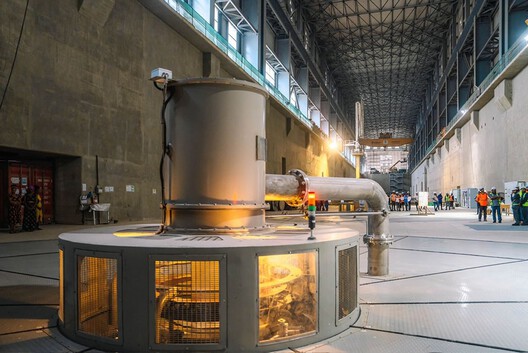
To understand the debate, the architecture must first be outlined. The GERD, a gravity mega-dam built under the management of civil engineering company Webuild (née Salini Impregilo) for the Ethiopian Electric Power, is comprised of a roller-compacted concrete (RCC) main dam, a concrete-faced rockfill saddle dam, and a system of spillways and hydroelectric power stations at the base. Designed for a 6,000 MW capacity, documented as 5,150 MW in recent literature, and meant to double the country's electricity generation, the dam is 1.8 kilometers long and rises to a 175-meter height. The main dam, located only 14 kilometers from Sudan, holds back a reservoir that can contain 74 billion cubic meters of water — named Lake Nigat — that is 3.5 times the surface area of Addis Ababa.
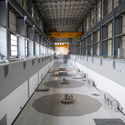
Moreover, the 5-kilometer-long, 50-meter-high saddle dam creates a lower area of the surrounding reservoir basin for passive water retention, where the average annual outflow of the entire reservoir amounts to approximately 50 billion cubic meters of water. The two hydroelectric power stations, flanking the river bank on both sides and combining for 13 Francis turbines, produce an average of 15,700 GWh/year.
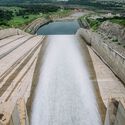
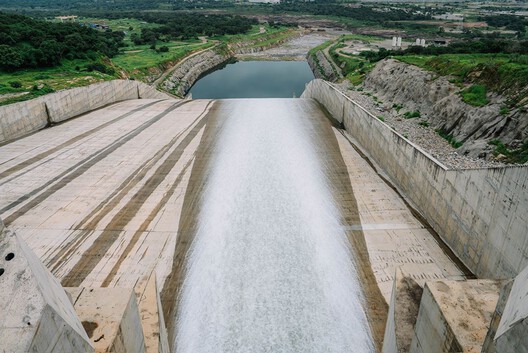
The system of spillways provides safety for the dam by discharging floodwater without causing damage as well as maintaining the reservoir level below the designated threshold. They include a main service-gated spillway, a free-flow crest spillway, and an emergency side-channel ungated spillway capable of handling severe flooding.
Webuild's internal laboratories tested and manufactured the materials for long-term structural stability and mechanical performance. This was achieved through an advanced, internally and internationally researched RCC mix designed with a low cement, low water content, and extended setting times. In addition, an integrated network of galleries in the main dam accommodates high-sensitivity precision instruments including vertical pendula, to monitor hydrostatic pressure, structural shifts, joint integrity and turbine performance in real-time. This continuous operational data is channeled directly into a centralized database at the right bank control center, allowing engineers to conduct proactive maintenance and ensure maximum structural reliability.
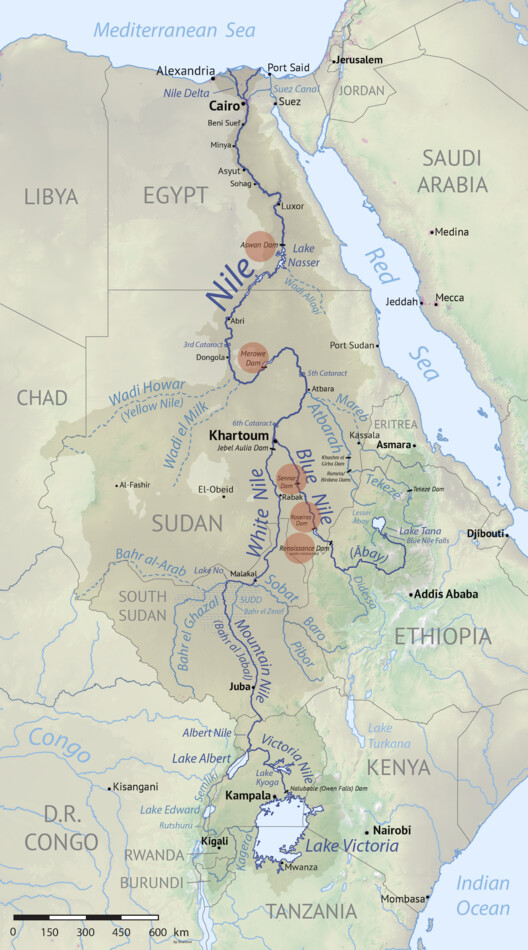
The structural resistance of its reservoir allows the GERD to alter seasonal water patterns, manage floods, and generate hydropower. However, considering its location on an international and transboundary river system, filling the reservoir raises questions regarding water requirements and storage timelines. The project's multi-stage filling cycles have proceeded unilaterally, without transparency between the upstream country and its downstream neighbors, fueling geopolitical tensions. Operating the GERD depends on hydrological regulation, as lack of coordination in operations and transparent data-sharing could disrupt existing downstream infrastructure — a prime example being Sudan's Roseires Dam, due to its proximity to the GERD.
Egypt argues that Ethiopia's unilateral operations can cut down water flow, which is a national threat to its people and economy. It also supports its claims by addressing Ethiopia's "unilateral exploitation" of its transboundary waters in the Omo, Jubba and Shebelle basins, and the harm it causes its neighbors, Somalia and Kenya.
Resolving this issue peacefully would foster vital regional cooperation on the White Nile too, where uncoordinated dam releases from Uganda have triggered downstream flooding in South Sudan, increasing people's displacement and disease outbreaks.
But how did we get here, anyway?
Historical Hegemony
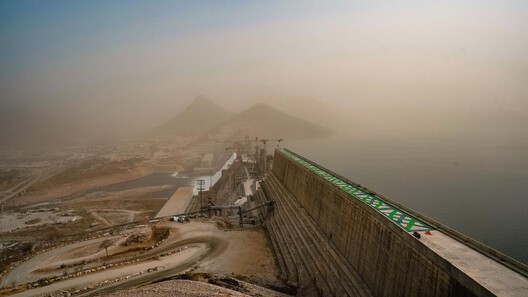
During the initial survey for the GERD, carried out in the 1960s, Ethiopia lacked the internal stability to progress with it. It was kept discreet until sufficient work was done because it was known that its development would carry a heavy geopolitical weight, especially on downstream countries in the basin.
This weight is amplified, considering the Nile Basin countries are 11, some of which are upstream, downstream, or both in relation to other countries. The solely upstream nations include Burundi, Democratic Republic of the Congo, Rwanda, Uganda, Tanzania, Kenya, Eritrea, and Ethiopia, while the sole downstream nation is Egypt. Sudan and South Sudan are both upstream and downstream, with South Sudan being upstream relative to Sudan and Egypt, and downstream relative to Uganda, since the White Nile is sourced by rivers flowing into Lake Victoria. The Blue Nile, supplying 85% of the Nile River, originates at Lake Tana in the Ethiopian Highlands, where it flows into Sudan and finally converges with the White Nile at Khartoum to form the main Nile River flowing through Egypt into the Mediterranean Sea.
Historically, Nile Basin hydropolitics have been shaped by Egypt's hydrohegemony, a legal history formed from a century of colonial-era 'treaties' — the Nile Treaties — towards a multilateral agreement that still conflicts with water rights. The 1902 Anglo-Ethiopian Agreement originally secured Egypt's control of the Nile by restricting Ethiopia from modifying the Blue Nile without British consent. This was further amplified by the 1929 Anglo-Egyptian Treaty — an exchange of notes more than a treaty, which essentially allowed Egypt to veto upstream projects or embark on unilateral development — and the subsequent 1959 Nile Water Agreement, which granted exclusive annual allocations of 55.5 billion cubic meters to Egypt and 18.5 billion cubic meters to Sudan. Reality, however, is more complex: Egypt remains a water-scarce nation, where the Nile supplies more than 90% of its freshwater needs, and approximately 95% of its population lives along its course.
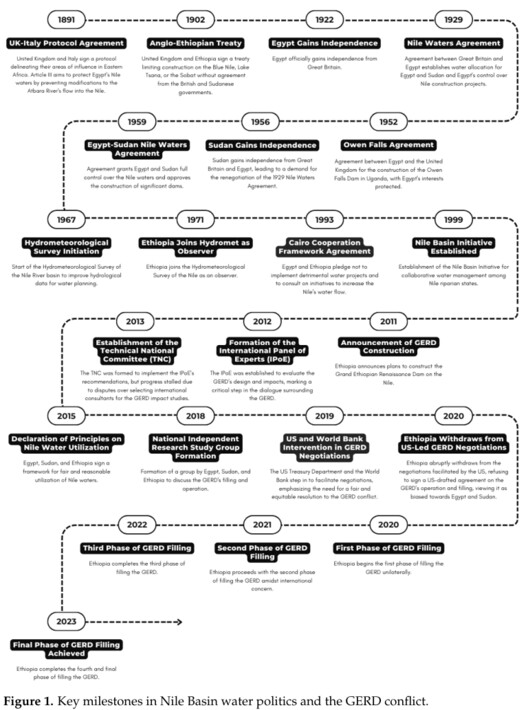
Also, unlike other riparian nations in the basin, Egypt relies on the Nile as an existential lifeline. Since the GERD sits on the Blue Nile, which supplies the vast majority of the Nile's total flow, it signifies a major shift in regional power that ends the 'monopoly' of the river and creates a threat to downstream countries' agriculture and water security, especially during multi-year droughts. To challenge asymmetric control, the Nile Basin Initiative (NBI) was launched in 1999, with the Cooperative Framework Agreement (CFA) following soon after in 2010, one year before the Renaissance Dam's groundbreaking in 2011.
Preoccupied with the internal politics of the Arab Spring, Egypt was unable to effectively oppose or block the project. Its isolation deepened when Sudan softened its earlier objections into a moderate neutrality. Sudan's position has since shifted repeatedly, from rejection to neutrality or support and back again, driven largely by internal fragmentation and domestic politics. The debate over the dam's benefits and drawbacks has also shaped these shifts. On the one hand, the dam promises more stable irrigation, lower dredging costs, and better flood management. On the other, it carries serious long-term risks: floodplains depleted as sediment builds up in the reservoir basin, disrupted local ecosystems, and a lack of cooperation between the three countries.
The pressure culminated in the 2015 Declaration of Principles on GERD, which remains the primary trilateral framework between Ethiopia, Sudan, and Egypt. In it, the three countries acknowledged the dam and committed to the principles of international water law. They have still not reached a binding agreement on how the reservoir is filled or on how to manage droughts.
Divisions persist on a wider scale too. When the Nile Basin Cooperative Framework Agreement (CFA) came into force in October 2024, Egypt and Sudan refused to sign it. Both want to protect their access to a vital resource and the veto rights they claim under colonial-era treaties.
The Architecture of Geopolitics
Concrete structures can control physical water flows, but they rarely can resolve political friction. Ethiopia positions GERD as a shared resource built for its people and neighbors, vowing to export surplus to promote its own economy as well as support the continent, but hydrological uncertainty remains the biggest issue in the absence of a clear, definitive binding agreement meant to operate the dam. An exemplar model for sustainable and equitable transboundary water governance can be found in the Senegal River Basin Development Authority (OMVS) — Organisation pour la mise en valeur du fleuve Sénégal — that utilizes a framework of collaborative benefit-sharing and joint infrastructure ownership.
Ultimately, unlocking the GERD's true potential as a driver of East African economic integration hinges on overcoming impasses to secure its downstream neighbors and provide a new example of equitable water governance, environmental safety and sustained trilateral cooperation. Otherwise, how can shared river basins foster a nation's right to build its economic future against the security of its neighbors?
This article is part of the ArchDaily Topic: The Architecture of Water: Territories, Tensions & Transformations. Every month we explore a topic in-depth through articles, interviews, news, and architecture projects. We invite you to learn more about our ArchDaily Topics. And, as always, at ArchDaily we welcome the contributions of our readers; if you want to submit an article or project, contact us.