Maisa Elamein

Maisa is a Sudanese architectural designer, researcher, and writer. She graduated from the University of Khartoum (UofK-FoA) and is currently an external collaborator at ArchDaily. Her work endeavours to interrogate the powers-that-be shaping the built environment.

BROWSE ALL FROM THIS AUTHOR HERE
↓
Subscriber Access

Art, Architecture, Archaeology: A Refuge for Artists at Amman’s Darat al Funun

Audio available

At a time when public support for the arts is under pressure in many countries, Darat al Funun — literally "House of the Arts" — stands by its long-standing mission to champion artists. "Artists are witnesses of their time," affirms Suha Shoman, its founder. "Maybe Art does not operate change, but it does record it […] it points fingers. At the same time, it speaks of, even if it's so difficult and at times so violent, it speaks of beauty as well."

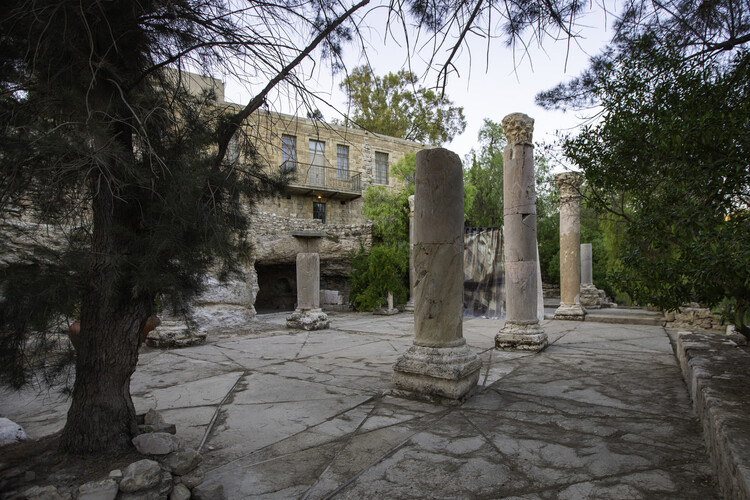
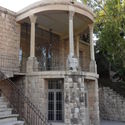
A place where the past remains present, Darat al Funun spreads in the hills of Jabal al Luweibdeh, on a rugged terrain overlooking the eye of downtown Amman, Jordan. Its landscape is warmly inviting and accessible to the public, with a lower entrance in the south and an upper one in the north. Across its cascading terraces, the site is visually permeable as well, demonstrating the foundation's core tenet: art is a civic necessity and a vessel for history.

Art, Architecture, Archaeology: A Refuge for Artists at Amman’s Darat al Funun - 1 的图像 4Art, Architecture, Archaeology: A Refuge for Artists at Amman’s Darat al Funun - 2 的图像 4Art, Architecture, Archaeology: A Refuge for Artists at Amman’s Darat al Funun - 3 的图像 4Art, Architecture, Archaeology: A Refuge for Artists at Amman’s Darat al Funun - 4 的图像 4Art, Architecture, Archaeology: A Refuge for Artists at Amman’s Darat al Funun - More Images+ 12

Dammed Between Energy and Water Scarcity: The Grand Ethiopian Renaissance Dam and the Nile

Audio available

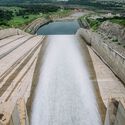
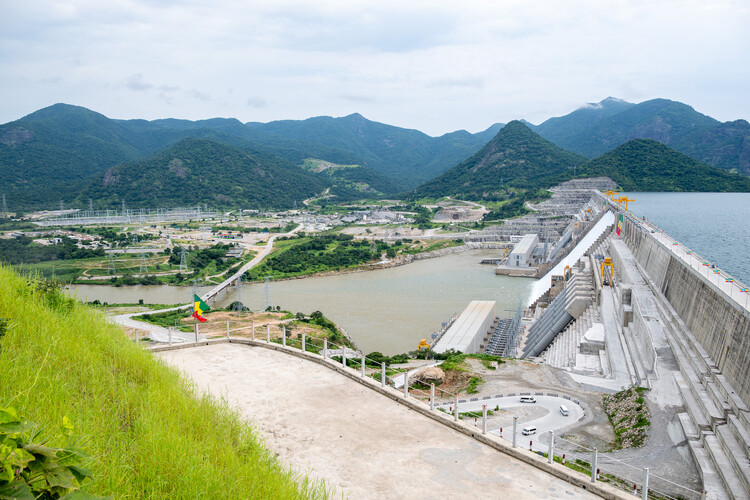
Every large dam divides as much as it connects, and the Grand Ethiopian Renaissance Dam is no exception. A monumental feat of architecture and engineering, the mega-dam has brought everyone together, for better or worse, to interrogate who gets to declare sovereignty over the riches of the river, be it water or momentum, and to challenge colonial-era Nile treaties.

Inaugurated in September 2025, the Grand Ethiopian Renaissance Dam, or GERD, is a grand concrete structure on the Blue Nile, Abay, in western Ethiopia within the Benishangul-Gumuz region, just 30 kilometers upstream along the river and east of the border with Sudan. It is built as a major source of hydroelectric power, generating an estimated 51.5% of total national output in 2025/26, and symbolizes Ethiopia's national sovereignty, rise to exponential economic development, and technological self-determination. So, why has it become the center of a protracted dispute over regional water security and international law between Ethiopia, Sudan, and Egypt?

Dammed Between Energy and Water Scarcity: The Grand Ethiopian Renaissance Dam and the Nile - Imagen 1 de 4Dammed Between Energy and Water Scarcity: The Grand Ethiopian Renaissance Dam and the Nile - Imagen 2 de 4Dammed Between Energy and Water Scarcity: The Grand Ethiopian Renaissance Dam and the Nile - Imagen 3 de 4Dammed Between Energy and Water Scarcity: The Grand Ethiopian Renaissance Dam and the Nile - Imagen 4 de 4Dammed Between Energy and Water Scarcity: The Grand Ethiopian Renaissance Dam and the Nile - More Images+ 10

Architecture as Translation: Africanfuturism in Folklore, Film, and Speculative Art

Audio available

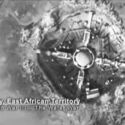
"Take your dream suppressants." The opening line in Wanuri Kahiū's Pumzi, directed at our protagonist Asha, enforces the order of severing ties with hopeful futures and ancestral memories in pasts shared to compel her focus on the perpetual present in the Maitu Community's heterotopia of an enclave. The bird's-eye view shot of the Maitu reveals a sterile, drone-like structure with a panoptic sphere at its center where normal human behavior is medicalized. The layout is built around closed-loop recycling systems as apt as a self-sufficient organism, designed to escape the toxic environment of a sickly Earth, where every pipe and corridor is engineered to harvest human excretion for water generation, thereby absorbing the roles of nature and state both. The community's architecture perfectly translates the film's message with its physicality.

Across folklore, film, and art, the same move recurs: architecture translates an elsewhere, whether ancestral, spiritual, or speculative, into form that can be seen or entered. The sections below follow that translation from the Kasubi Tombs to Kizazi Moto, and show that the elsewhere is a way of reading the present.

Architecture as Translation: Africanfuturism in Folklore, Film, and Speculative Art - Imagen 1 de 4Architecture as Translation: Africanfuturism in Folklore, Film, and Speculative Art - Imagen 2 de 4Architecture as Translation: Africanfuturism in Folklore, Film, and Speculative Art - Imagen 3 de 4Architecture as Translation: Africanfuturism in Folklore, Film, and Speculative Art - Imagen 4 de 4Architecture as Translation: Africanfuturism in Folklore, Film, and Speculative Art - More Images+ 7

Subscriber Access

Built to Exclude: Colonial Violence and Urban Ecologies in Africa

Audio available

Colonial violence in African cities bled through the political dimensions into the spatial realm. It is infused into street grids, land tenure systems, drainage infrastructure and residential zones that continue to organize inequality and displacement today. Kinshasa, Khartoum, and Kampala each carry this afterlife in their urban morphology, at once historical artifacts and an active structure; shaping who has access to services, who occupies flood-prone land, and catalyzing a deepening climate instability that forces this apparatus into entirely new dimensions - including geological ones.

Built to Exclude: Colonial Violence and Urban Ecologies in Africa - Image 1 of 4Built to Exclude: Colonial Violence and Urban Ecologies in Africa - Image 2 of 4Built to Exclude: Colonial Violence and Urban Ecologies in Africa - Image 3 of 4Built to Exclude: Colonial Violence and Urban Ecologies in Africa - Image 4 of 4Built to Exclude: Colonial Violence and Urban Ecologies in Africa - More Images+ 22