The Architecture of Water

ArchDaily Topic

A curated selection of articles, interviews, and essays exploring our enduring gravitation toward water.

In the Wake of the 2024 Floods in Southern Brazil: Restore the Past or Rethink the Future?
In the Wake of the 2024 Floods in Southern Brazil: Restore the Past or Rethink the Future?

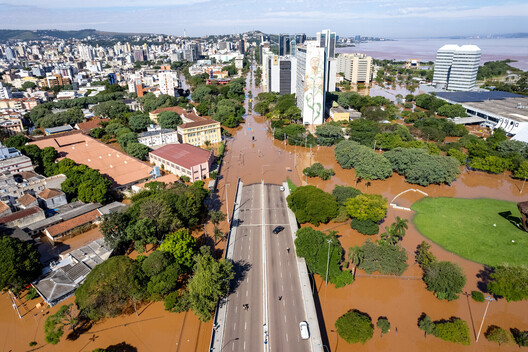
In May 2024, the floods that hit Rio Grande do Sul exposed a contradiction common to contemporary cities. Many were built alongside rivers and shaped by their presence, yet spent decades trying to control water without incorporating its dynamics into urban planning. Extreme weather events will intensify that vulnerability. More than two years later, reconstruction in the Brazilian state has progressed, infrastructure has been restored, and new protection strategies are taking shape. But are these cities rebuilding their relationship with water, or only restoring the systems that failed?

Read more »
Planned Overflow: How Singapore Balances Floods, Canals, and Public Space

Planned Overflow: How Singapore Balances Floods, Canals, and Public Space

At Bishan–Ang Mo Kio Park in Singapore, a river does not occupy a fixed boundary. Under ordinary conditions, water moves through a naturalized channel bordered by grass, planting, and paths that bring visitors close to the river. During heavy rainfall, water spreads into the surrounding park, which is designed to accommodate flows beyond the capacity of the narrower channel. What appears to be a public landscape is also working infrastructure. Singapore's approach retains drainage engineering while assigning a wider role to the land around it.

Read more »

From Coastal Reclamation to Data Centers: How India's Architecture Grows Around Water

From Coastal Reclamation to Data Centers: How India's Architecture Grows Around Water

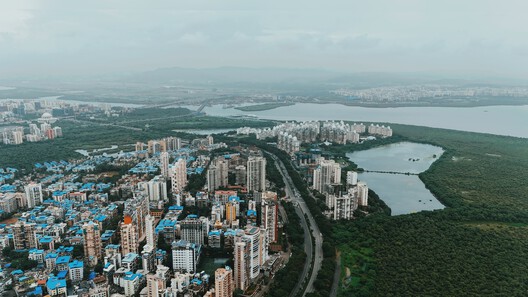
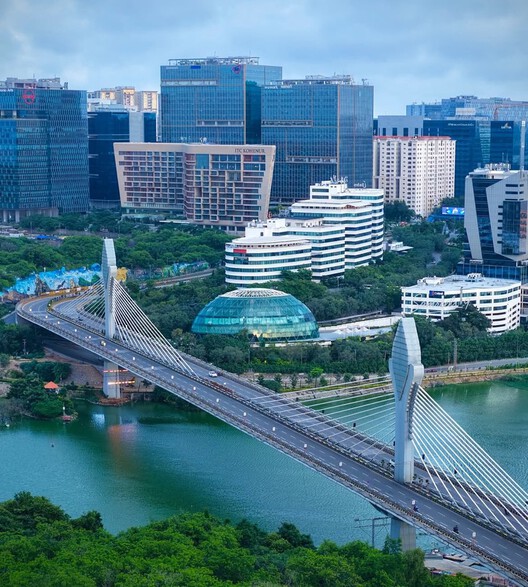
Architecture has treated water either as a backdrop or a problem: a view to be framed, a hazard to be drained, or a utility to be connected. In contemporary India, a more consequential relationship takes shape. Water remains a shared ecological resource, yet the land and infrastructure around it are increasingly financed and defended as economic assets. Coastlines are extended to carry traffic and lake edges become lucrative development zones. The decision to do so passes through multiple institutions with different vocabularies, thereby challenging who determines how water and its surroundings are used, and who faces the consequences.

Read more »

Unearthing the Ground: Architecture and the Politics of Water

Unearthing the Ground: Architecture and the Politics of Water

When the Ostrogoths besieged Rome in 537 AD, their first military act was to cut the aqueducts. Eleven gravity-fed channels supplied the city with up to a million cubic meters of water per day, more than enough to sustain a population of over a million, fill the public baths, and scour the sewers. Without the aqueducts, Rome became a fortified enclosure around a contaminated river, proving that water was essential to the city's existence.

Read more »

Impermanence by Design: An Architectural History of Antarctica

Impermanence by Design: An Architectural History of Antarctica

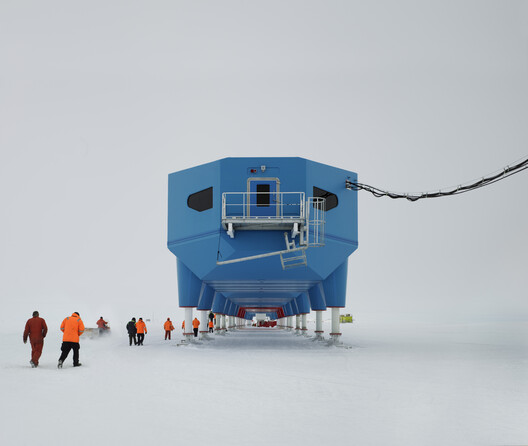
"Antarctica is known through narratives," states Victoria Nuviala Antelo during the lecture on Inhabiting the Extreme: An Architectural Biography of Antarctica, presented at the Buenos Aires International Architecture Biennial. Indeed, throughout architectural history, numerous stories, experiences, ways of inhabiting, and building practices have often been excluded from official narratives. Buried beneath thick layers of ice, the history of Antarctic architecture tells a story of impermanence. The ice surrounding the continent expands and contracts each year, doubling its surface area, while the species that inhabit it migrate and return according to their life cycles. Ice covers structures as katabatic winds erase the traces of more than 200 years of human presence. Explorations, settlements, architectural interventions, and ways of inhabiting remain concealed within one of the most extreme landscapes on the planet.

Read more »

From Hiding to Civic Presence: How Wastewater Plants Entered the City

From Hiding to Civic Presence: How Wastewater Plants Entered the City

When London's main drainage was completed north of the Thames in 1868, the Metropolitan Board of Works marked the occasion with a banquet held inside a sewage pumping station. Abbey Mills had been built over the previous three years by the engineer Joseph Bazalgette, working with the architect Charles Driver, laid out on a cruciform plan with eight beam engines, two on each arm. Its style has been read as Byzantine, Italian Medieval, Russian, Ruskinian Gothic and Moorish, and its twin ventilation chimneys, richly ornamented, rose more than sixty meters. The builder called it an elegant structure in a swamp and thought it might pass for a mosque or a temple.

Read more »

The Mangrove as a Wall: Coastal Protection and Urban Development in India

The Mangrove as a Wall: Coastal Protection and Urban Development in India

Along India's coast, the boundary between land and sea is not always a line of concrete. In places, it is a forest of tangled roots, tidal channels, and sediment, a landscape that changes character with the water. Mangroves influence how water moves, how shorelines evolve, and how coastal communities experience flood risk. Their role in coastal protection depends on the width and condition of the forest, the movement of tides, and the accumulation of sediment.

Read more »

Transforming Barcelona's Waterfront: A Story of Urban Renewal

Transforming Barcelona's Waterfront: A Story of Urban Renewal

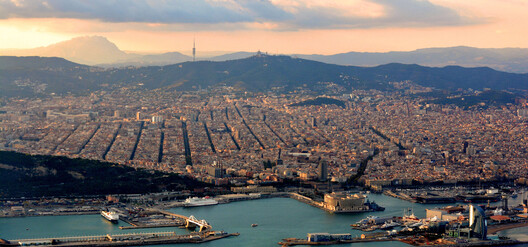
As one walks along the beachfront of Barcelona, the shoreline feels like it has always been there: sand, palm trees, a long promenade, restaurants, shops and modern hotels, when the reality is that it has not always been this way. Until the 1980s, Barcelona's seafront was a working barrier of railway lines, factories and informal housing, and wastewater ran straight into the Mediterranean. Starting in 1987, Barcelona has continuously created large promenades and passages between the city and the sea, creating an environment that today many might read as previously empty space, but is actually the result of decades of infrastructure and social complexity, along with a municipal effort to transform the city's territory and its relationship to the water. Following that transformation raises three questions that frame this article: who was displaced to open the waterfront, who governs it today, and who keeps it standing?

Read more »

The Expanded Scope of the Architect: Moving Windmills Innovation Center

The Expanded Scope of the Architect: Moving Windmills Innovation Center

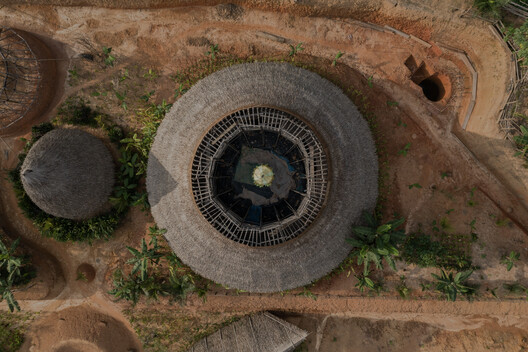
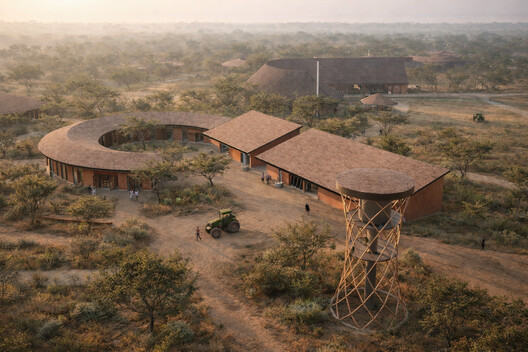
What do architects do? This age-old question reveals the perennial dichotomy between two aspects of building–how to construct, and why to build. Despite its ancient origins and its name deriving from Ancient Greek, the profession is one that has transformed over the centuries. Its present-day form, usually dated to the Italian Renaissance, makes a distinction between the act of building and the intellectual and aesthetic decision-making behind it. However, we may be in the midst of another nascent transformation. The commissioning of architecture has historically remained separate from the practice, but as can be seen in the work of MASS and projects like the Moving Windmills Innovation Center, this distinction is beginning to blur.

Read more »

Architecture Between Land and Water: Design Lessons from the Bayou

Architecture Between Land and Water: Design Lessons from the Bayou

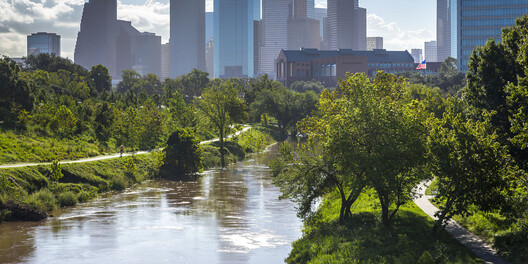
A bayou is a slow-moving body of water, typically a creek or river that winds through low, flat terrain in a broader wetland landscape. Found throughout the Gulf Coast, bayous are distinct from swamps, which contain forested wetlands characterized by standing water, and from marshes, where tall grasses and herbaceous plants grow in saturated soils. The currents of a bayou landscape support biodiverse ecosystems of plants, trees, insects, birds, and fish, while the shifting water levels, saturated ground, humid air, heavy rainfall, and long, hot summers create a blurry environment between land and water, wet and dry, interior and exterior.

Read more »

Making Room for Water: Floodable Parks in Latin America

Making Room for Water: Floodable Parks in Latin America

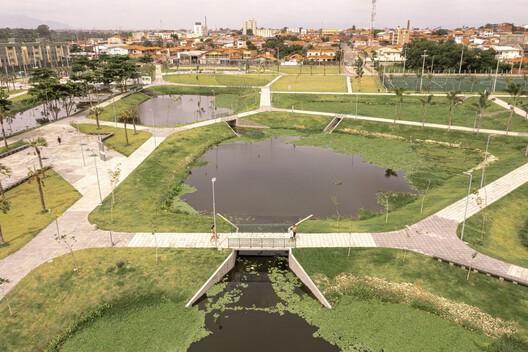
Walk along a river in almost any Latin American city and you will find stretches that have been straightened, lined with concrete, buried beneath roads, or pushed behind industrial areas and residential neighborhoods. Throughout the twentieth century, urban expansion gradually occupied riverbanks and former floodplains, while waterways were redirected or confined within infrastructure intended to control them. Yet the water continued to return. For decades, flooding has been the most frequent natural disaster in Latin America and the Caribbean, according to the Inter-American Development Bank.

Read more »

From Relic to Infrastructure: Can India's Historic Water Systems Work Again?

From Relic to Infrastructure: Can India's Historic Water Systems Work Again?

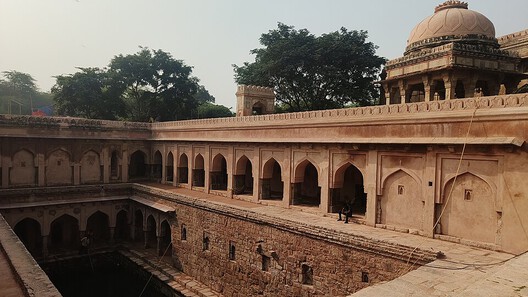
India's stepwells are usually encountered after their useful lives have ended. They are photographed, restored and interpreted as evidence of a water culture that once existed. Beneath the carved stone and descending stairs is a practical question: what happens when a structure built to manage water is put back to work? As Indian cities face water stress, seasonal rainfall and pressure on municipal systems, researchers and restoration efforts are examining whether traditional water structures can function again.

Read more »

The Architecture of Water: ArchDaily's October Editorial Focus

The Architecture of Water: ArchDaily's October Editorial Focus

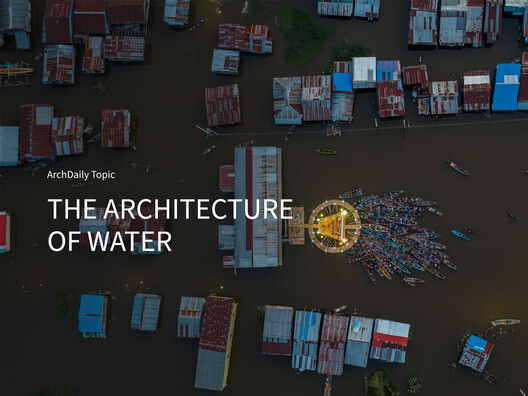
Water is life. Animals, plants, fungi, and bacteria all depend on it: water structures their cells, carries their nutrients, and hosts the chemistry that keeps them alive. Even the rare exceptions confirm the rule. Some seeds and spores can lose nearly all their water and enter a dormancy so deep that their metabolism almost stops, yet it is water that brings them back. In the most literal sense, water connects us.

Read more »