1. ArchDaily
  2. Sub-Saharan Africa

Sub-Saharan Africa: The Latest Architecture and News

Architecture as Translation: Africanfuturism in Folklore, Film, and Speculative Art

Audio available

"Take your dream suppressants." The opening line in Wanuri Kahiū's Pumzi, directed at our protagonist Asha, enforces the order of severing ties with hopeful futures and ancestral memories in pasts shared to compel her focus on the perpetual present in the Maitu Community's heterotopia of an enclave. The bird's-eye view shot of the Maitu reveals a sterile, drone-like structure with a panoptic sphere at its center where normal human behavior is medicalized. The layout is built around closed-loop recycling systems as apt as a self-sufficient organism, designed to escape the toxic environment of a sickly Earth, where every pipe and corridor is engineered to harvest human excretion for water generation, thereby absorbing the roles of nature and state both. The community's architecture perfectly translates the film's message with its physicality.

Across folklore, film, and art, the same move recurs: architecture translates an elsewhere, whether ancestral, spiritual, or speculative, into form that can be seen or entered. The sections below follow that translation from the Kasubi Tombs to Kizazi Moto, and show that the elsewhere is a way of reading the present.


Architecture as Translation: Africanfuturism in Folklore, Film, and Speculative Art - Imagen 1 de 4Architecture as Translation: Africanfuturism in Folklore, Film, and Speculative Art - Imagen 2 de 4Architecture as Translation: Africanfuturism in Folklore, Film, and Speculative Art - Imagen 3 de 4Architecture as Translation: Africanfuturism in Folklore, Film, and Speculative Art - Imagen 4 de 4Architecture as Translation: Africanfuturism in Folklore, Film, and Speculative Art - More Images+ 7

Subscriber Access

Built to Exclude: Colonial Violence and Urban Ecologies in Africa

Audio available

Colonial violence in African cities bled through the political dimensions into the spatial realm. It is infused into street grids, land tenure systems, drainage infrastructure and residential zones that continue to organize inequality and displacement today. Kinshasa, Khartoum, and Kampala each carry this afterlife in their urban morphology, at once historical artifacts and an active structure; shaping who has access to services, who occupies flood-prone land, and catalyzing a deepening climate instability that forces this apparatus into entirely new dimensions - including geological ones.

Built to Exclude: Colonial Violence and Urban Ecologies in Africa - Image 1 of 4Built to Exclude: Colonial Violence and Urban Ecologies in Africa - Image 2 of 4Built to Exclude: Colonial Violence and Urban Ecologies in Africa - Image 3 of 4Built to Exclude: Colonial Violence and Urban Ecologies in Africa - Image 4 of 4Built to Exclude: Colonial Violence and Urban Ecologies in Africa - More Images+ 22

Ecologies of Repair: Reconciling Our Relationship with Water

Audio available

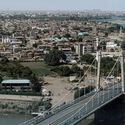
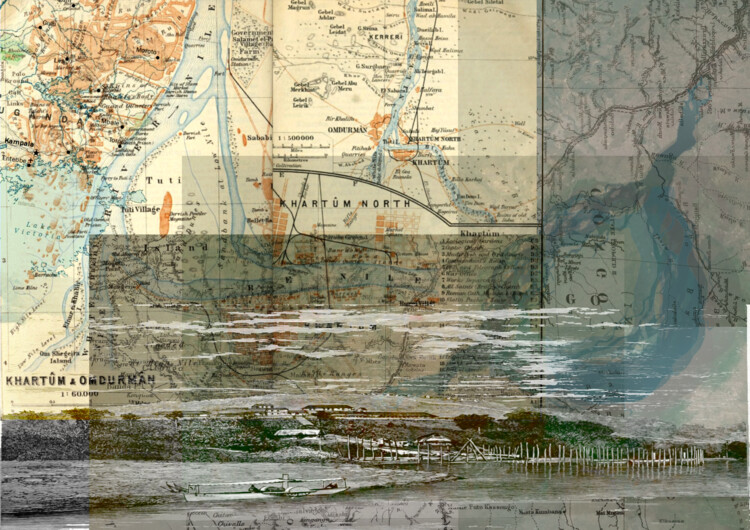
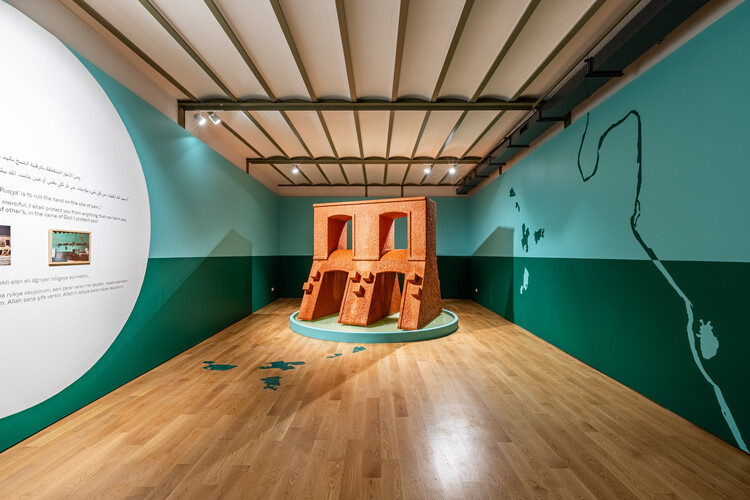
Ola Hassanain is a Sudanese architect and artist operating in the Netherlands, and will be exhibiting at the Pan-African Architecture Biennale in Nairobi, Kenya, later in 2026. All three locations tell stories of the built environment's relationship with water. These illustrate the continuous battles between the amorphous forces of nature that are the rivers and seas, and human attempts to shape and control them. In most cases, they are attempts at extraction. Catastrophes happen as a result of the overreach of these attempts or of their mismanagement, or both.

Ecologies of Repair: Reconciling Our Relationship with Water - Image 1 of 4Ecologies of Repair: Reconciling Our Relationship with Water - Image 2 of 4Ecologies of Repair: Reconciling Our Relationship with Water - Image 3 of 4Ecologies of Repair: Reconciling Our Relationship with Water - Image 4 of 4Ecologies of Repair: Reconciling Our Relationship with Water - More Images+ 10