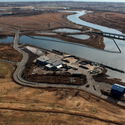
In 1948, Robert Moses established the Fresh Kills Landfill on the western shore of Staten Island. The site, chosen for its remote marshland and cheap land value, was meant to be temporary, but by 1955 it was the largest landfill in the world, receiving up to 29,000 tons of refuse per day at its 1991 peak. By 2001, after more than fifty years of continuous operation, Fresh Kills covered 2,200 acres, roughly three times the area of Central Park, and was, unspectacularly, visible from space. When it started, Moses didn't expect to design a dump but, without calling it that, a new landform with four artificial hills rising up to sixty meters above sea level built entirely from the accumulated residue of eight million daily lives.
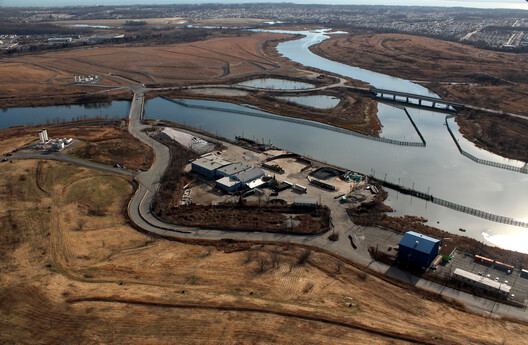
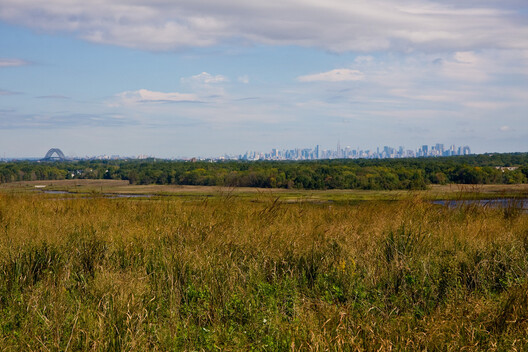
That landform is now, slowly, becoming a park. James Corner Field Operations won the international design competition launched by the city in 2001, producing a master plan called Lifescape that will take thirty years to complete. The landfill's four mounds are being capped, planted, and gradually opened to the public. Methane from decomposing waste is captured and fed into an energy system as the wetlands are being restored around the engineered hills. Evidence of New York's consumption transformed into a feat of ecological engineering and an act of institutional memory management (a way of making a city's most embarrassing landscape slowly look like something it was always meant to be).

The world generates roughly two billion tonnes of municipal solid waste per year, a figure projected to reach three and a half billion by 2050. A significant portion of that volume ends up compressed, layered, and graded into the earth at the urban periphery. The landfill is, in this sense, one of the most common acts of territorial production in the modern world; a new landform, engineered and deliberate, built from the accumulated residue of daily life. Architecture has spent considerable energy thinking about what cities build up; maybe it's time to think more about what they build under.
The Ground
A landfill is one of the few construction projects in which the material and the structure are the same thing. The engineering behind a modern sanitary landfill works from the bottom up: a liner system of compacted clay and high-density polyethylene prevents leachate (the liquid produced by decomposing waste) from contaminating groundwater; a network of pipes collects landfill gas, primarily methane, for energy recovery or controlled burning; drainage systems manage stormwater across slopes designed to shed rather than absorb.
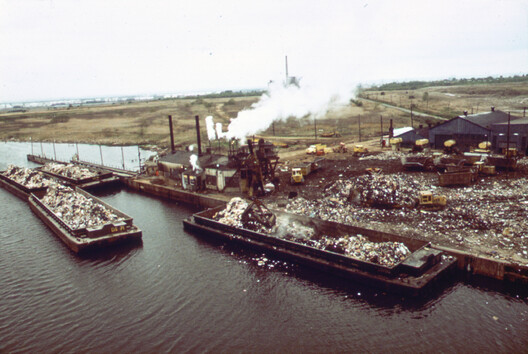
What this engineering conceals is the basic territorial act that landfilling represents. A landfill is not just a place where waste goes; it is a political decision about urban planning, about what ground is worth using for waste. This geopolitical decision has consistently been made in the direction of land that is cheap, peripheral, and inhabited by people who lack the political power to refuse or contest it. Looking again to Fresh Kills, that required a 525-acre landfill gas collection system and a series of geocomposite layers, geomembranes, drainage nets, and protective fill; Robert Moses chose marshland in Staten Island because it was expendable. But in other places, mostly in the Global South (where most landfills are located), communities have not been consulted, and most of the security layers described have not been applied. According to the World Bank, over ninety percent of municipal solid waste in low-income countries is disposed of in open dumpsites or burned in the open air.
The sociologist Robert Bullard, in Dumping in Dixie, documented how hazardous waste facilities, landfills, and industrial sites were disproportionately located in African American communities across the southern United States. Not by accident but through a consistent pattern of regulatory and planning decisions that treated certain neighborhoods as more available for environmental burden than others. Bullard's work established the field of environmental justice, and his central argument (that the geography of waste disposal follows the geography of inequality) has since been replicated in studies across dozens of countries, lending theoretical structure to political movements that had long described the same pattern.
Developing countries account for roughly eighty to ninety percent of the world's mismanaged waste, despite generating far less of it per capita than wealthy nations. The United States, representing four percent of the global population, generates twelve percent of global municipal waste. The infrastructure to manage that waste domestically exists and is regulated and maintained; what is lacking is the political will to confront the full cost of consumption at home, rather than externalizing it toward territories with less capacity to push back. The landfill is, in this sense, one of the most legible maps of global inequality; find the dumpsite, and you find the community whose civil and public power was suppressed.
The Trade
Since the 1980s, wealthy nations have explored a mechanism of international commerce that exported growing quantities of waste to lower-income countries. Around five million tonnes of plastic waste are exported each year globally, with seventy-one percent originating from just ten high-income countries, seven of them European. A 2023 analysis published in Grist found that official UN data undercounts this flow by 1.8 million metric tonnes annually because of "hidden" plastics embedded in textiles, contaminated paper bales, and miscategorized materials. The EU alone ships more than three million kilograms of plastic waste to the Global South every day. This transfer of environmental cost from those who produce it to those who lack the political standing to refuse it is called "waste colonialism".
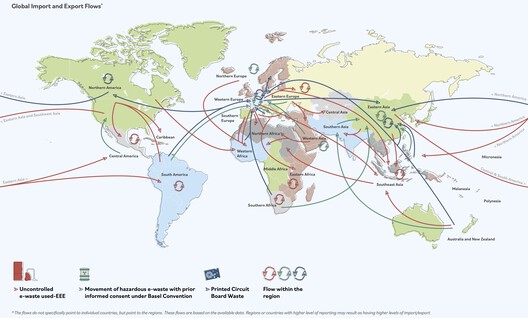
The same logic runs through carbon markets, where wealthy nations and corporations purchase offset credits generated in developing countries, externalizing the cost of compliance toward territories with less capacity to negotiate. The voluntary offset market has grown from two billion dollars in 2020 toward a projected two hundred and fifty billion by 2050, with the primary sources of carbon credit generation concentrated in developing countries whose forests, soils, and land are purchased by corporations in the Global North as a mechanism for avoiding domestic emissions reductions. Researchers have documented land grabs, displacement of Indigenous communities, and restrictions on land access as consistent byproducts of offset projects in Kenya, Tanzania, Uganda, and across sub-Saharan Africa; projects that generate, on average, only 0.08 jobs per hundred hectares of land involved.
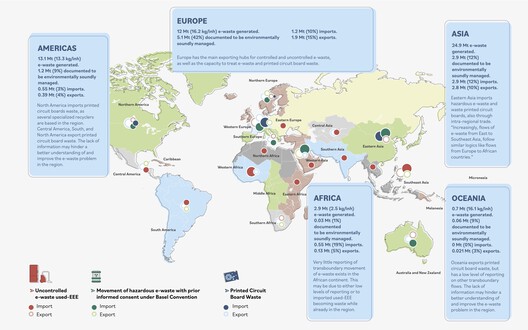
The Basel Convention, adopted in 1989, was the international community's response to a series of egregious cases: the 1988 Koko incident in Nigeria, where Italian companies illegally dumped 3,800 tons of hazardous waste, burying drums of toxic chemicals in a farmer's backyard in exchange for a small monthly payment; and the Khian Sea affair, in which a ship carrying incinerator ash from Philadelphia was refused by multiple countries before dumping its cargo off the coast of Haiti. The convention sought to regulate and, eventually restrict, the trade in hazardous waste from wealthy to less-wealthy nations. Its goals have remained largely unfulfilled. The United States, notably, hasn't even ratified the convention, and sent more than 800 million pounds of plastic waste to Mexico, Malaysia, India, Vietnam, and others in the year following the introduction of stricter rules in 2021.
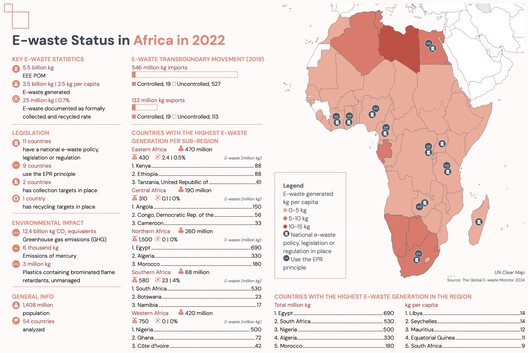
The displacement of the trade accelerated sharply after 2018, when China implemented its National Sword policy and stopped importing plastic waste from foreign countries. For over two decades, China had been the world's largest importer of waste plastics, processing materials that wealthy nations classified as recyclable but that often could not be sorted or sold domestically at a profit. When China closed its ports to these shipments, the trade rerouted to Malaysia, Indonesia, Vietnam, Thailand, and the Philippines, absorbing much of the redirected flow. According to data analyzed by the nonprofit Basel Action Network, Malaysia received 1.4 billion kg of plastic waste annually (between 2021 and 2023); Vietnam received a billion kg and Turkey nearly a billion. Ghana receives approximately 150,000 tonnes of electronics annually, on top of a domestic e-waste stream estimated at 215,000 tonnes per year in total.
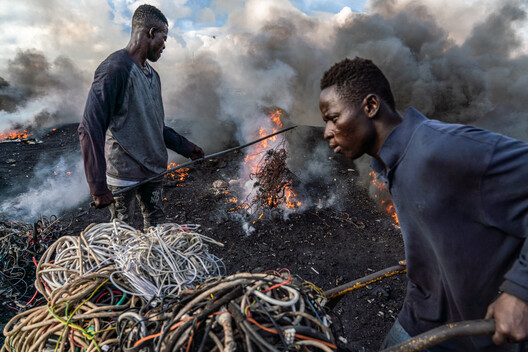
Agbogbloshie, a neighborhood on the Korle Lagoon in Accra, has been described as the world's largest e-waste dump, a "digital dumping ground" processing millions of tons of discarded electronics from Europe and North America. That characterization has since been substantially contested, as repeated studies have found that the scrapyard at Agbogbloshie processes between 10,000 and 13,000 metric tons of e-waste annually (a significant quantity but far below the figures circulated in global media campaigns that served Western environmental narratives). More importantly, the framing of Agbogbloshie as a passive recipient of Northern waste obscures the economic logic and political economy of the site. Alice Mah and Grace Akese have argued that informal recycling provided livelihoods for thousands of migrant workers (an estimated 8,000 workers), organized through its own governance structures, labor hierarchies, and market relationships.
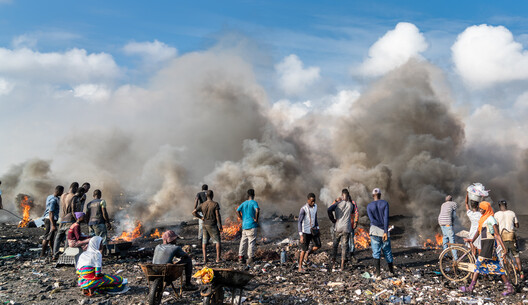
When the Greater Accra Regional Minister demolished the scrapyard in 2021, announcing that he was "taking possession of Agbogbloshie" as part of a sanitation and "beautification" campaign ("Let's Make Accra Work"), researchers noted the parallels with nineteenth-century colonial logics of urban hygiene. The urban geographer Neil Smith called it "urban revanchism", a forceful reclamation of urban space from marginalized groups in the name of order, hygiene, and development.
The Future
A landfill is, among other things, a stratigraphic record of consumption, layering what a city produced, used, and discarded across decades. Archaeologists have long recognized this. William Rathje's Garbage Project, launched at the University of Arizona in 1973, spent decades excavating landfills to study what Americans actually discarded, as opposed to what they reported discarding. Rathje found that newspaper, not food, was the dominant material in American landfills, and that supposedly environmentally conscious decades had left more durable waste than less conscious ones. The landfill, he argued, was a more accurate record of daily life than any survey or census. What the global geography of waste disposal reveals is that the cost of consumption is rarely borne by those who consume.
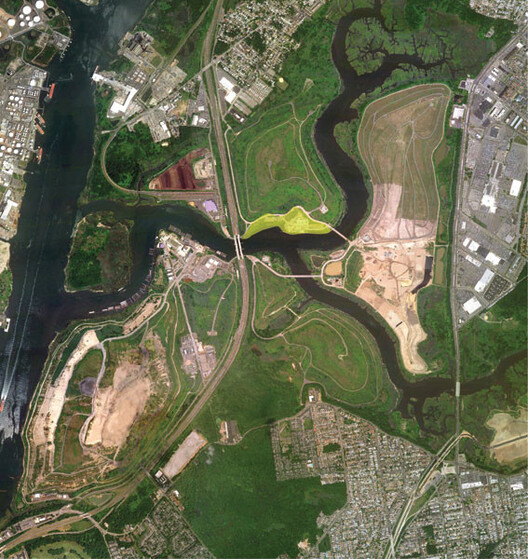
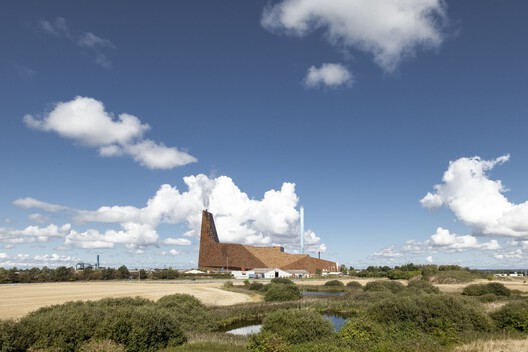
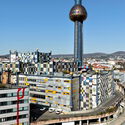
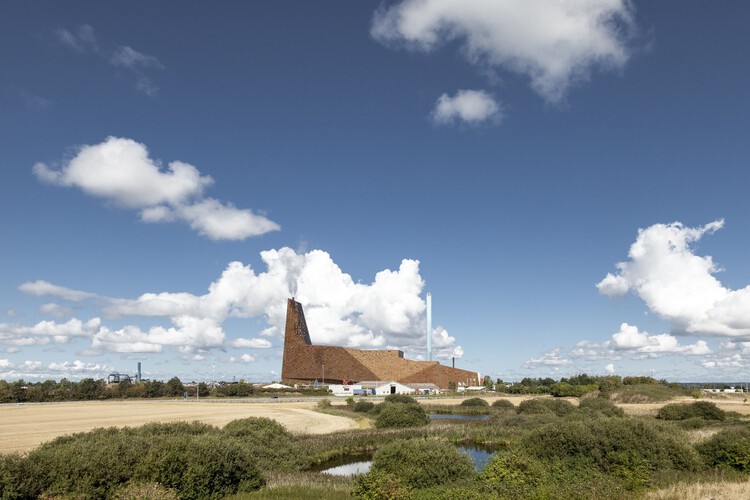
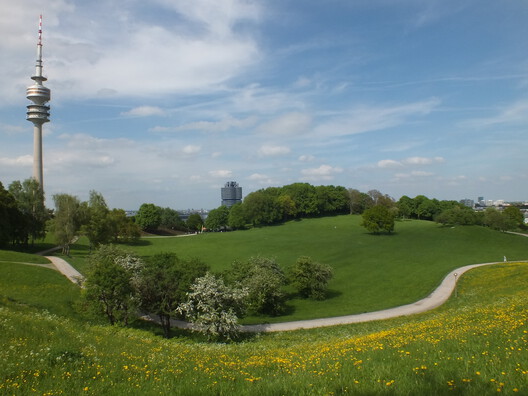
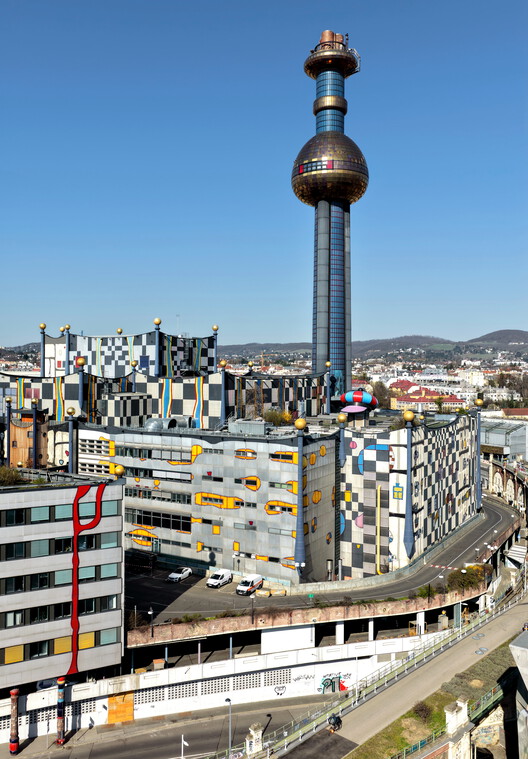
Architecture's role in this geography has been, on its best days, to make the consequence visible. Munich's Olympiapark artificial hills designed with the debris of war; Lisbon's Parque das Nações oil refinery decommissioned in the 1980s whose lands were revitalized for the Expo'98; or the CopenHill waste-to-energy plant in Copenhagen that proposes that waste infrastructure need not be expelled to the periphery. Despite their differences, these are all examples of architecture as a decision about memory, not just material.
According to the World Bank's What a Waste 3.0 report, published in 2026, global waste generation is expected to grow from 2.56 billion metric tonnes in 2022 to 3.86 billion metric tonnes by 2050 (a fifty percent increase under a business-as-usual scenario) with the fastest growth in sub-Saharan Africa and South Asia, the regions least equipped to manage it. Thirty percent of waste generated worldwide is already not managed properly. Rich countries, representing sixteen percent of the global population, produce thirty-four percent of the world's waste. What that trajectory means for architecture is that more waste means more landfills, more incineration plants, more transfer stations, more contaminated ground, more communities asked to host what other communities produce. Whether architecture's response will be to design those facilities better, to make them more visible, or to ask more fundamentally who built the system that requires them in the first place, is a question that each project will answer differently, and none of them will answer completely.
This article is part of the ArchDaily Topic: The Lure of Escapism in Architecture and Alternative Worlds. Every month we explore a topic in-depth through articles, interviews, news, and architecture projects. We invite you to learn more about our ArchDaily Topics. And, as always, at ArchDaily we welcome the contributions of our readers; if you want to submit an article or project, contact us.


