The Lure of Escapism in Architecture

ArchDaily Topic

A curated selection of articles, interviews, and essays exploring how escapism has long shaped architectural imagination.

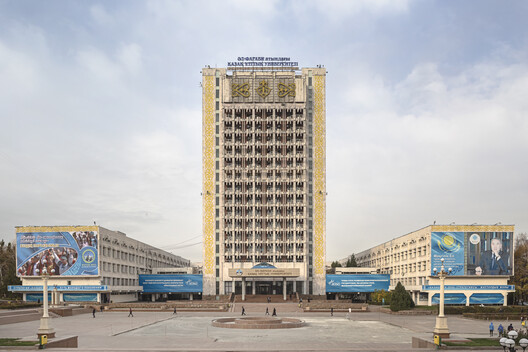
The Future as Propaganda: Soviet Architecture in Kazakhstan and the Imagery of a New Era

The Future as Propaganda: Soviet Architecture in Kazakhstan and the Imagery of a New Era

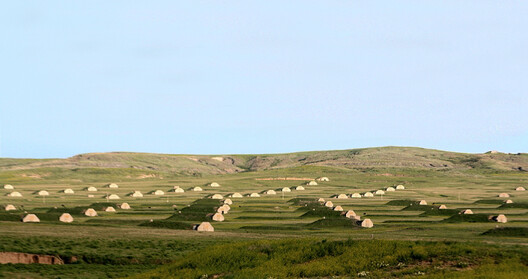
Practically every history book records 1961 as the year man first reached space, an achievement that placed the Soviet Union at the center of the space race. What not everyone knows is that Yuri Gagarin's journey began in a seemingly unlikely place, more precisely in Kazakhstan. From the Baikonur Cosmodrome, Gagarin set off beyond Earth, inaugurating not only a new era of space exploration but also a history of technology and ambition that would transform this landscape.

Read more »

Architecture as Translation: Africanfuturism in Folklore, Film, and Speculative Art

Architecture as Translation: Africanfuturism in Folklore, Film, and Speculative Art

"Take your dream suppressants." The opening line in Wanuri Kahiū's Pumzi, directed at our protagonist Asha, enforces the order of severing ties with hopeful futures and ancestral memories in pasts shared to compel her focus on the perpetual present in the Maitu Community's heterotopia of an enclave. The bird's-eye view shot of the Maitu reveals a sterile, drone-like structure with a panoptic sphere at its center where normal human behavior is medicalized. The layout is built around closed-loop recycling systems as apt as a self-sufficient organism, designed to escape the toxic environment of a sickly Earth, where every pipe and corridor is engineered to harvest human excretion for water generation, thereby absorbing the roles of nature and state both. The community's architecture perfectly translates the film's message with its physicality.

Read more »

Unearthing the Ground: Architecture and the Politics of Waste

Unearthing the Ground: Architecture and the Politics of Waste

In 1948, Robert Moses established the Fresh Kills Landfill on the western shore of Staten Island. The site, chosen for its remote marshland and cheap land value, was meant to be temporary, but by 1955 it was the largest landfill in the world, receiving up to 29,000 tons of refuse per day at its 1991 peak. By 2001, after more than fifty years of continuous operation, Fresh Kills covered 2,200 acres, roughly three times the area of Central Park, and was, unspectacularly, visible from space. When it started, Moses didn't expect to design a dump but, without calling it that, a new landform with four artificial hills rising up to sixty meters above sea level built entirely from the accumulated residue of eight million daily lives.

Read more »

Beyond the Bunker: Lessons from Survivalist Architecture on Resilience

Beyond the Bunker: Lessons from Survivalist Architecture on Resilience

"Let us take a hard look at the facts." With this direct and hardly reassuring sentence, the director of the Office of Civil and Defense Mobilization opened The Family Fallout Shelter, a 32-page manual published by the U.S. government in 1959 amid Cold War tensions. The document taught families how to build shelters capable of protecting them from radioactive fallout after a possible nuclear attack and, through technical drawings and sketches, outlined solutions using concrete blocks, walls filled with earth or sand, underground structures, and ventilation systems. It was a survival manual that, in many ways, also functioned as a construction manual.

Read more »

Escapism from the Streets: How Air-Conditioning Reshaped the Asian City

Escapism from the Streets: How Air-Conditioning Reshaped the Asian City

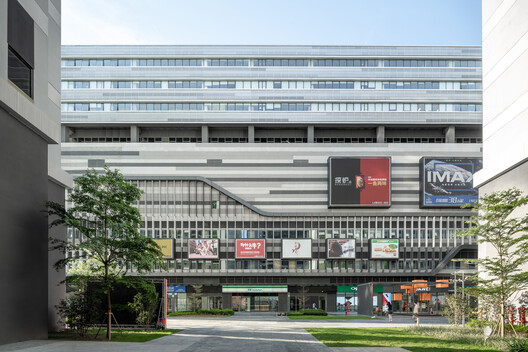
In many Asian cities, the summer climate can increasingly be experienced from a distance. In Hong Kong, it is possible to move from an apartment tower through a podium mall, enter the Mass-Transit-Railway system (MTR), arrive beneath another commercial complex, and continue through enclosed footbridges or underground passages while encountering remarkably little of the atmosphere outside. Heat, humidity, rain, and seasonal variation remain present, but they can be largely bypassed through a continuous network of conditioned interiors.

Read more »

From Buildings to Worldbuilding: Designing the Narratives of Space

From Buildings to Worldbuilding: Designing the Narratives of Space

The most innovative and impactful design projects arise from the intersection of different fields. The architecture community has always borrowed from, or been inspired by, other forms of cultural production such as film, photography, literature, and theatre. In the theatricality of Baroque churches and the cinematic sequences of contemporary museums, architects have looked beyond the building itself to understand how space can shape a story and construct an experience.

Read more »

From Seasonal Escape to Permanent Elsewhere: Movement and Architecture in the Gulf

From Seasonal Escape to Permanent Elsewhere: Movement and Architecture in the Gulf

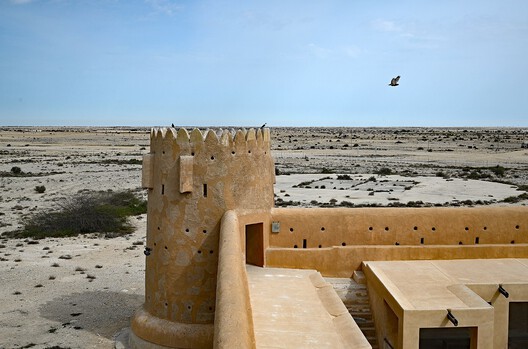
For many communities across the Gulf, leaving home once formed part of inhabiting it. Families moved between desert pastures, coastal settlements, wells, fishing grounds, and pearling ports according to season and livelihood, returning repeatedly to places already known through use. In Qatar, historical accounts describe autumn and winter movement through al-barr, the desert, followed by a return toward coastal settlements as the summer pearling season began. The National Museum of Qatar represents this history through a yearly calendar of movement between desert and sea. 

Read more »

Between Burning Forests and Utopian Cities: Designing the Climate Transition

Between Burning Forests and Utopian Cities: Designing the Climate Transition

There is no shortage of ways to imagine what the world will look like after a climate catastrophe. Genres of movies and novels have been built around the question of what happens when contemporary safeguards fail, from dystopian fiction and post-apocalyptic literature to disaster films, graphic novels, and video games. Burning forests, submerged cities, abandoned infrastructure, resource scarcity, and mass displacement are a familiar visual and narrative vocabulary. We have become remarkably fluent in imagining the consequences of a world that fails to respond to climate change.

Read more »

The Sacred Ordinary: Studio Ghibli and the Ritual of Coming Home

The Sacred Ordinary: Studio Ghibli and the Ritual of Coming Home

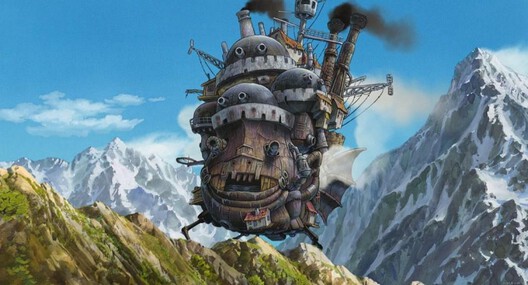
Every evening when we get home, without ceremony, we perform a small rite. We arrive at a door, we open it, and we step through into a space that belongs to us in a way no other space does. It is such a mundane act that we rarely notice it has a structure at all, and yet philosophers and anthropologists have written entire books describing these psychological structures. Interestingly, visual works such as the animated worlds of Studio Ghibli seem to reflect this dynamic to create worlds which contain architecture and layouts that provide a path to escape by tapping into our memories in a legible yet enchanted form.

Read more »

Architectural Heterotopias: Temporary Installations as Alternative Worlds

Architectural Heterotopias: Temporary Installations as Alternative Worlds

While complex, layered with meaning, and categorized into various forms, heterotopia, a concept developed by the philosopher Michel Foucault, can broadly be understood as the manifestation of alternative realities. Unlike utopias – idealized, unreachable non-places – heterotopias are tangible, real-world spaces that operate according to their own internal logic, offering a lived alternative to dominant spatial and cultural paradigms.

Read more »

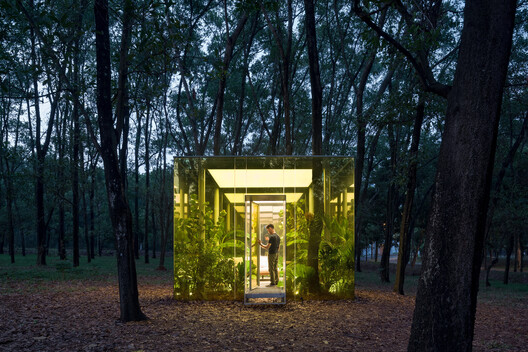
What Are Architects Escaping From? Ambition and Avoidance in Designing for Remote Sites

What Are Architects Escaping From? Ambition and Avoidance in Designing for Remote Sites

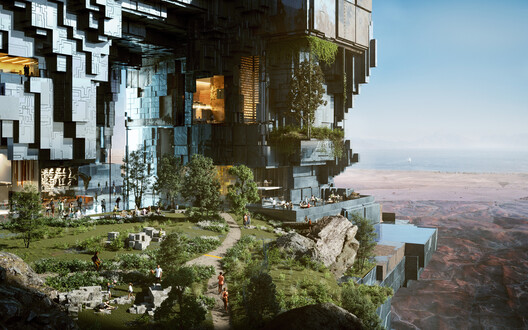
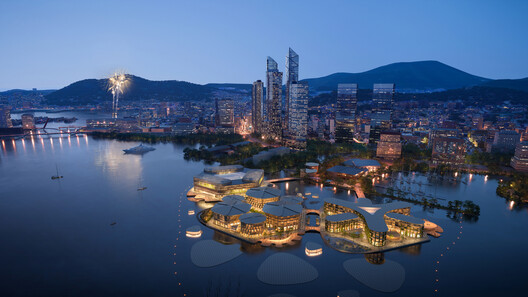
Ask an architect what the hardest problem in the discipline is right now. The block of unmaintained postwar housing two streets from their office rarely comes up. What comes to their mind is the pressure differentials on Mars, or the tensile loads on a floating platform; because unclaimed ground has no one to negotiate with, no history to answer to, no tenant to remember the last renovation, which makes it considerably easier to design for.

Read more »

Beyond the Replica: Digital Heritage and the Limits of Preservation

Beyond the Replica: Digital Heritage and the Limits of Preservation

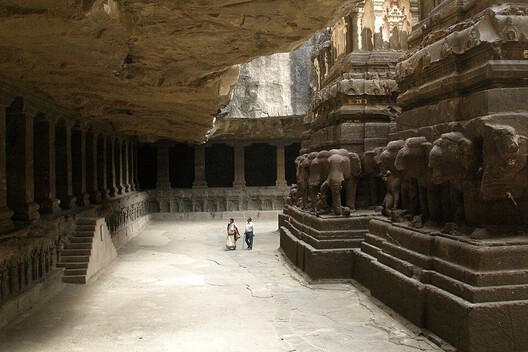
A cave in Maharashtra can now be entered without travelling to it. Through a virtual reality experience developed around Ajanta, visitors can move through a digitally reconstructed version of the caves from somewhere else entirely. The project raises an architectural question: if architecture is experienced through movement, scale, sequence and perception, what happens when those experiences can be recreated outside the physical site? IITM Pravartak's Digital Ajanta project uses 3D scanning, filming, modelling and virtual reality to document the caves and translate that record into an immersive experience.

Read more »

Digital Worlds and the Limits of Frictionless Space: Rethinking Scale and Materiality

Digital Worlds and the Limits of Frictionless Space: Rethinking Scale and Materiality

Historically, the way we design has been closely linked to the way we build. Architecture moved through physical testing, trial and error, projection drawings, mock-ups, and physical models: each introducing a new layer of abstraction, but still remaining tied to material, scale, and construction. The introduction of CAD significantly changed this dynamic. At first, it was largely understood as the computerization of precise geometry for construction. Over time, however, digital tools moved earlier into the design process, replacing sketching, physical trial and error, model-making, and other forms of thinking that had once kept scale and material close at hand.

Read more »

From Oculus to Orbit: The Symbolism of the Circle in Architecture

From Oculus to Orbit: The Symbolism of the Circle in Architecture

Throughout the history of architecture, the circle has been associated with multiple meanings—from the cosmic geometry of ancient temples and the oculus of classical buildings to the rose windows of Gothic cathedrals and the portholes of ships. However, in the 20th century, the circle acquired a new cultural meaning. As aviation, space exploration, and technological innovation transformed the way society imagined the future, circular forms began to evoke machines, spacecraft, capsules, and even new forms of habitation.

Read more »