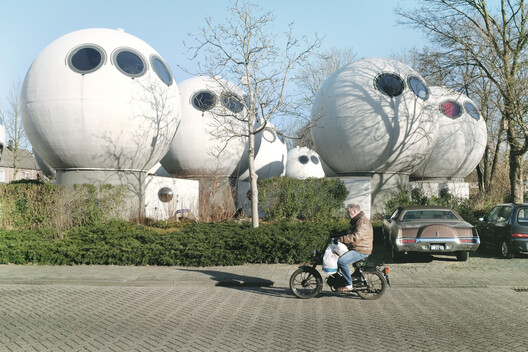
Throughout the history of architecture, the circle has been associated with multiple meanings—from the cosmic geometry of ancient temples and the oculus of classical buildings to the rose windows of Gothic cathedrals and the portholes of ships. However, in the 20th century, the circle acquired a new cultural meaning. As aviation, space exploration, and technological innovation transformed the way society imagined the future, circular forms began to evoke machines, spacecraft, capsules, and even new forms of habitation.
The use of circular geometry has endured over the centuries, acquiring new meanings and symbolizing new codes. To begin, we need only look back to the Roman Pantheon, which has been admired and studied for more than two millennia because of the monumental scale of its dome and its celestial geometry. Originally commissioned by Marcus Agrippa, it was inaugurated in 27 BCE. However, after a fire in 80 CE, its reconstruction was undertaken by Emperor Domitian. The building would burn again in 110 CE, and this time its new design was commissioned by Emperor Hadrian.
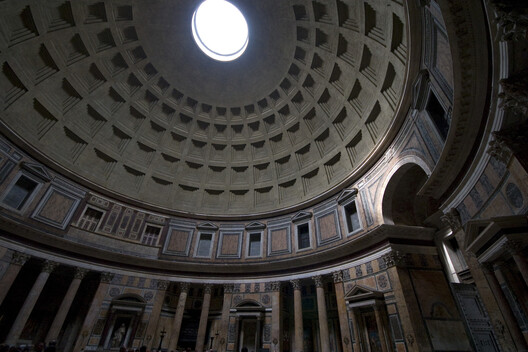
Conceived as a massive drum crowned by a dome, its interior creates a space bathed in natural light entering through a 9-meter-wide oculus, illuminating alternating triangular and rounded altars that define the perimeter of the room. The sphere established an analogy with the heavens, contained within the Pantheon's concrete walls. The cosmic implications of this geometry honored the gods and the heavens through its symbolic design while simultaneously glorifying the Roman Empire itself.
Related Article
Circular Openings: From Boats to Contemporary Architecture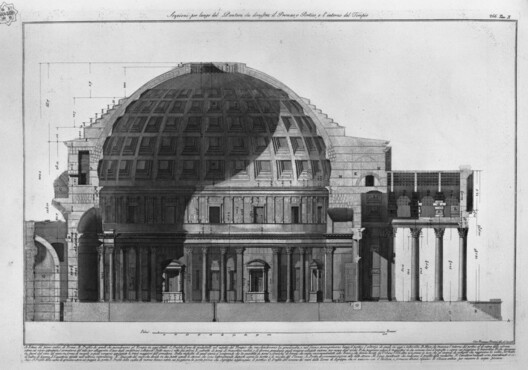
Unlike the Roman oculus, the rose window in medieval architecture emerged around 1135, when Abbot Suger decided to begin construction of the new monumental entrance to the Abbey Church of Saint-Denis. As the Metropolitan Museum of Art explains in "The Royal Abbey of Saint-Denis in the Time of Abbot Suger (1122–1151)," the rose window was positioned below the crenellations and was the first known example of the element being integrated into the design of a church's western façade, although it would eventually become a defining feature of Gothic architecture. At Saint-Denis, the rose window opened onto an upper central chapel on the western side of the structure, from which it could also be seen from the eastern choir. A circular solar disk of this type was incorporated into the western apse wall of Worms, another of the Rhenish imperial basilicas. There, it framed the emperor when he sat on his throne at the western end of the nave.
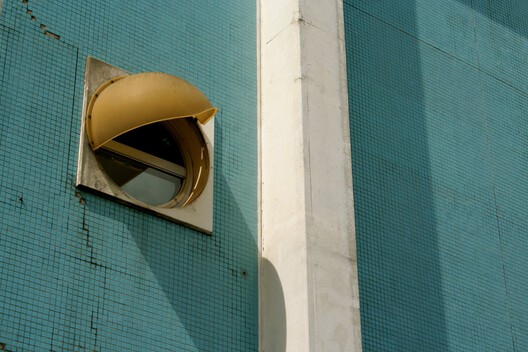
But how did the circle in architecture eventually become associated with navigation, machinery, engineering, and mobility? As Colin Bisset explains, in the 16th century, King Henry VIII of England ordered the installation of new cannons on his warships. Because they were too large to be positioned at the bow or stern, openings had to be created along the sides of the ships to accommodate them. The French word porte, meaning door or opening, was used to describe these apertures until they eventually became known as portholes.
As circular openings cut into the exterior walls of ships, industrial chambers, aircraft, buildings, and even some spacecraft, portholes are commonly associated with naval construction, providing light and ventilation to interior spaces while being designed to withstand harsh marine environments. In architecture, however, the term refers more broadly to circular windows.
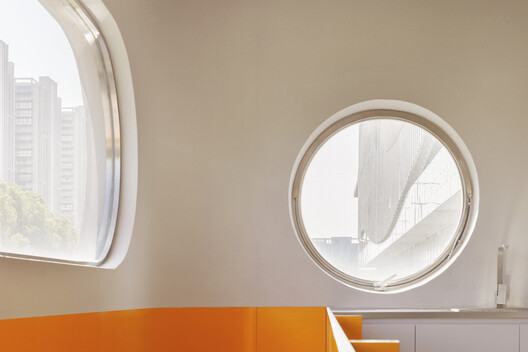
Unlike square openings, circular apertures offer greater structural integrity, which is why passenger ships can be equipped with portholes without compromising their structural stability or buoyancy. This also makes them ideal for applications exposed to extreme external pressure, which is why they are frequently found in submarines and space stations. In such cases, conventional glass can be replaced with high-tech, pressure-resistant materials such as acrylic or quartz.
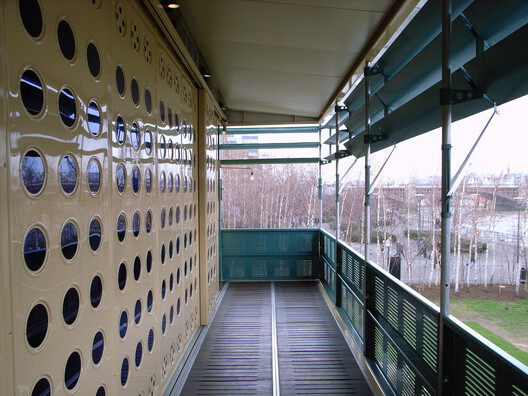
Portholes gained wider popularity during the Art Deco period, and Le Corbusier's 1923 book Toward an Architecture encouraged architects to look to ships for design inspiration. In it, he developed the concept of the house as a "machine for living" and introduced the Modulor. Among the French architects who embraced round windows were Georges-Henri Pingusson, who used them during the 1920s, and Jean Prouvé, who incorporated them into the design of his prefabricated "Tropical House."
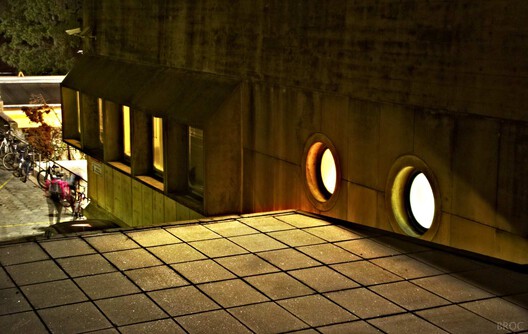
Clorindo Testa, meanwhile, built model ships from a very young age, and his passion for them would later be reflected in the design of the Naval Hospital in Buenos Aires. Designed around 1970 in collaboration with Héctor Lacarra and Juan Genoud, the building's formal appearance recalls a warship, with round windows arranged like the portholes of a vessel and even a rooftop water tank resembling a ship's control tower. However, this is not the only one of his works to feature portholes. The Mariano Moreno National Library, for example, combines large glazed openings with smaller windows—including portholes, square, and rectangular openings—creating different framed views of the exterior.
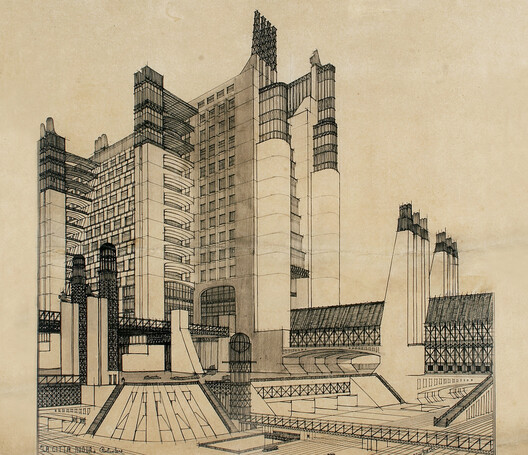
Thus, the early 20th century saw the circle acquire a new cultural meaning as Futurist architects began to conceive of buildings as dynamic, technological environments rather than static compositions. In 1914, Italian architect and urban planner Antonio Sant'Elia wrote the Manifesto of Futurist Architecture, emphasizing the movement's general principles and, among other ideas, proclaiming:
"That Futurist architecture is the architecture of calculation, of audacious temerity and simplicity; the architecture of reinforced concrete, iron, glass, cardboard, textile fiber, and all substitutes for wood, stone, and brick, which make it possible to achieve maximum elasticity and lightness…"
In fact, films such as Jacques Tati's Mon Oncle satirized windows by making them resemble eyes, while highlighting the contrasts between two worlds, two ways of living, and two different ways of understanding the city and architecture in the late 1950s. While one world reflected a form of modernity fueled by futuristic optimism, the other represented the traditional city. As circular windows became associated with machines and technological spaces, they gradually acquired a futuristic meaning. Their aesthetic evolved throughout the 1920s and 1940s, reaching new heights during the Space Age of the 1950s through the 1970s.
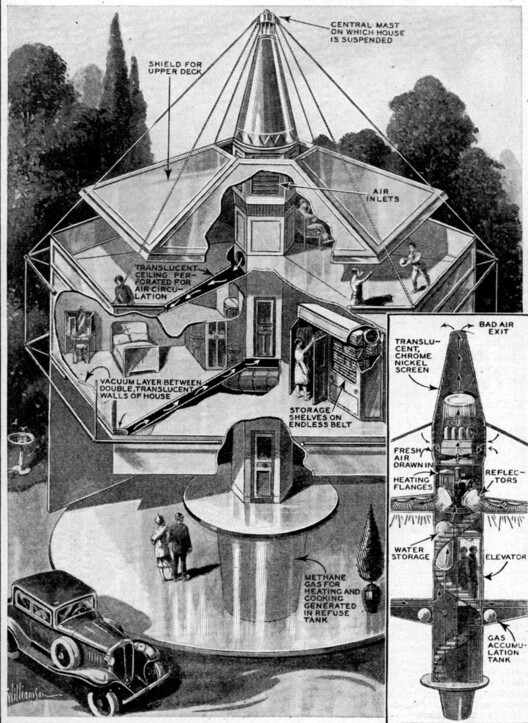
As a renowned Futurist committed to developing innovative solutions to humanity's problems, Buckminster Fuller became a pioneer of sustainable design and renewable energy and later participated in Habitat I, the United Nations' first conference on human settlements. Around 1920, Fuller sought to create a self-sufficient, sustainable single-family home—the living machine of the future. Although the Dymaxion House was never built, its design demonstrated groundbreaking and influential innovations in prefabrication and sustainability. The house would not only have been exemplary in terms of self-sufficiency, but could also have been mass-produced, flat-packed, and shipped around the world. Its potential could have helped address the postwar housing shortage through the incorporation of new materials, sustainable technologies, and simplified assembly and mass-production processes.
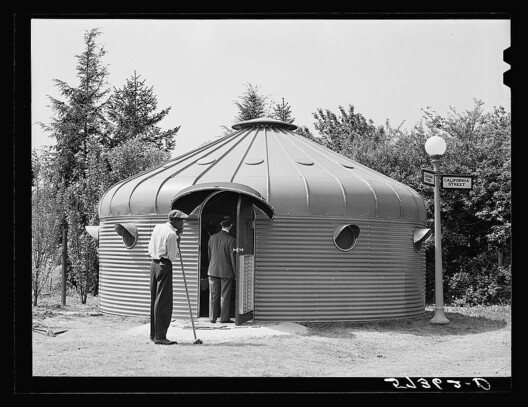
However, in an era of rapid technological advances and groundbreaking achievements, the Space Age aesthetic transformed the modern worldview, leaving an indelible mark on architecture and interior design. The circle became increasingly associated with spacecraft, submarines, aircraft, and capsules, and as journeys beyond Earth's atmosphere began to be imagined, architecture responded by proposing new forms of habitation. Experimental architects and collectives such as Archigram challenged conventional notions of the building, the house, and the city, seeking to connect technology with human life and encourage new perspectives on the architectural profession.
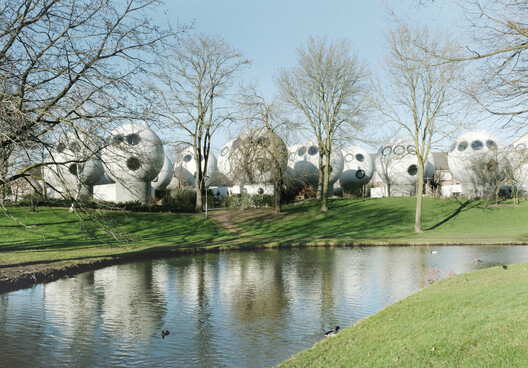
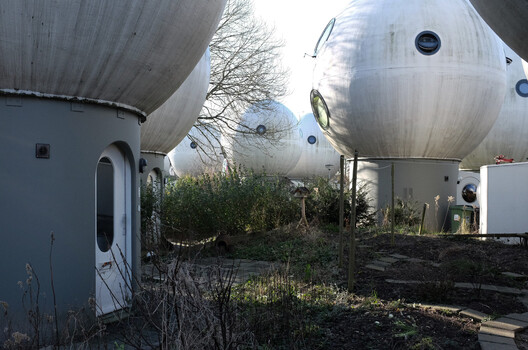
For example, the Bolwoningen community in the Dutch city of Den Bosch emerged from a relatively unknown architectural experiment led by Dries Kreijkamp, who sought to introduce a new morphological solution for housing and establish a new residential typology. Built in 1984, this group of spherical houses with round windows challenged existing paradigms by experimenting with new ways of inhabiting space. Beyond the sustainable advantages offered by spherical structures in terms of assembly and prefabrication, as well as their low energy consumption and ease of maintenance, Kreijkamp argued that round forms represent the most organic form of living: "We live on a sphere, we are born out of a sphere…why not live in a sphere?"
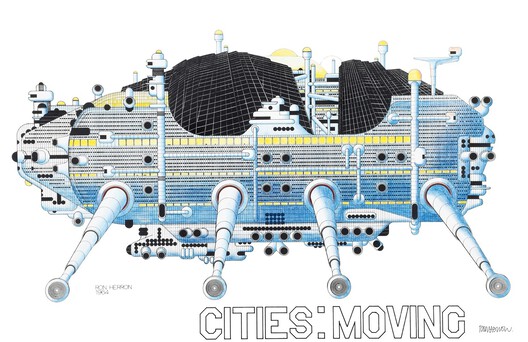
Just as Archigram believed that life was moving at such a rapid pace that it became necessary to rethink new and diverse ways of inhabiting space, many contemporary architects are now reconsidering how they conceive and design architecture in response to today's context and users' needs. From the sacred and cosmic to the technological and futuristic, the symbolic meaning of the circle has continuously evolved throughout history, becoming integrated into the visual language of Futurism and speculative architecture through its associations with machines, vehicles, and the exploration of new worlds.
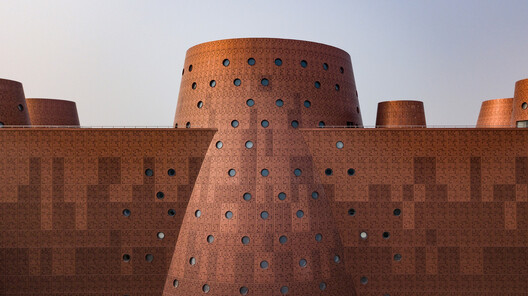
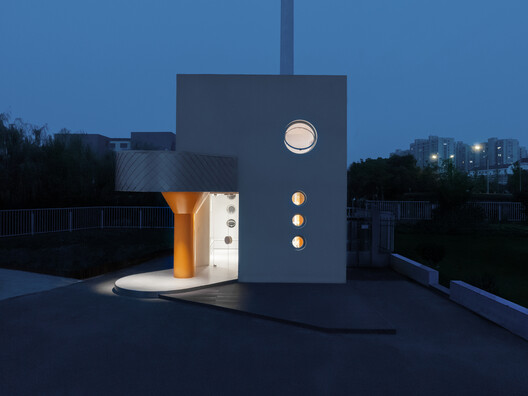
Architects, designers, and artists have progressively reinterpreted this ancient geometric form as a symbol of technological progress and life beyond conventional architectural boundaries. But does it still carry the same futuristic connotations today? Contemporary architecture continues to incorporate circular windows, cylindrical volumes, domes, and capsule-like spaces, but their symbolism has evolved. What was once associated with technological optimism and space exploration now evokes ideas of resilience, ecological systems, circular economies, alternative forms of habitation, and even a renewed relationship with the natural environment.
This article is part of the ArchDaily Topic: The Lure of Escapism in Architecture and Alternative Worlds. Every month we explore a topic in-depth through articles, interviews, news, and architecture projects. We invite you to learn more about our ArchDaily Topics. And, as always, at ArchDaily we welcome the contributions of our readers; if you want to submit an article or project, contact us.


