1. ArchDaily
  2. Environmental Justice

Environmental Justice: The Latest Architecture and News

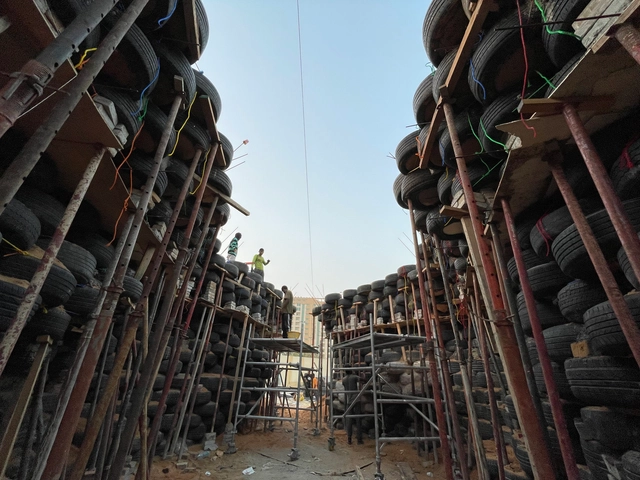
Unearthing the Ground: Architecture and the Politics of Soil

Subscriber Access | 

What architecture leaves in the ground outlasts what it puts in the air. A demolished building disappears from the skyline in a matter of days, but its foundations remain embedded in the soil for generations. The contamination caused by an industrial complex does not clear when the complex is torn down. The legal boundaries inscribed across colonial territory do not dissolve when the colonial administration ends. The ground holds what architecture quickly forgets.

This is what makes soil so uncomfortable as a subject. The discipline tends to orient itself upward, toward the form, the façade, the spatial experience of inhabitation. The ground is where architecture begins and, in a certain sense, where it ends: the point at which building becomes geology, legal title becomes territorial claim, and construction becomes extraction. Treating soil as a medium rather than a datum means acknowledging that the acts of building carry consequences that run deeper than the visible object above grade.

Unearthing the Ground: Architecture and the Politics of Soil - Imagen 1 de 4Unearthing the Ground: Architecture and the Politics of Soil - Imagen 2 de 4Unearthing the Ground: Architecture and the Politics of Soil - Imagen 3 de 4Unearthing the Ground: Architecture and the Politics of Soil - Imagen 4 de 4Unearthing the Ground: Architecture and the Politics of Soil - More Images+ 20

Design as Repair: How Architecture Is Advancing Environmental Justice

Subscriber Access | 

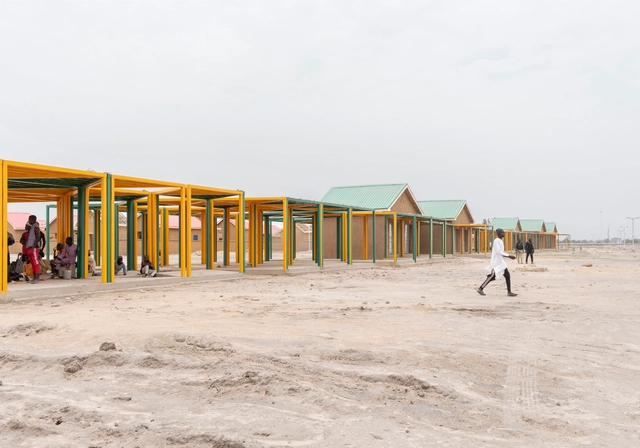
Environmental justice confronts a simple but uncomfortable truth: the benefits and burdens of the environment are not shared equally. Marginalized communities bear a disproportionate share of polluted air, unsafe water, toxic land uses, extreme heat, and the accelerating risks of climate change in cities around the world. These are the consequential products of decades of policy decisions, investment patterns, exclusionary planning practices, and planning choices that have consistently favored certain communities over others.

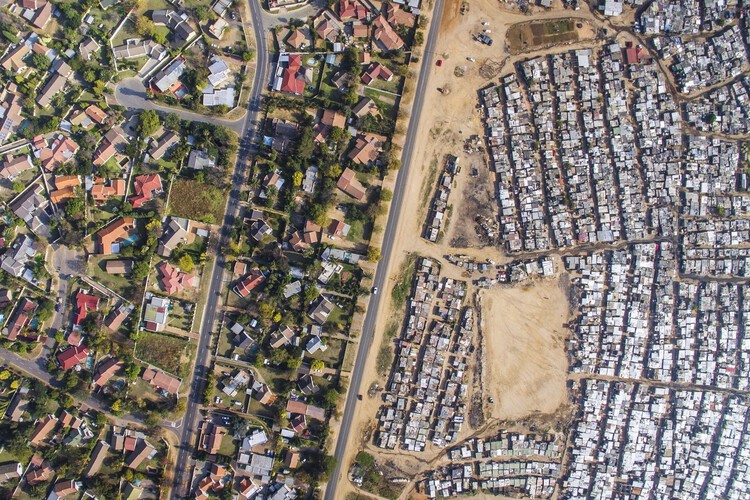
In cities and landscapes alike, these injustices are written into the physical fabric of places, even revealing extreme differences in environmental conditions between neighborhoods and districts. Dense neighborhoods with little tree canopy, for example, absorb and hold heat, exposing residents to higher rates of heat-related illness. Highways, industrial corridors, ports, and waste facilities cluster near low-income neighborhoods and communities of color, shaping conditions of health, air and soil quality, and long-term safety.

Design as Repair: How Architecture Is Advancing Environmental Justice - Image 1 of 4Design as Repair: How Architecture Is Advancing Environmental Justice - Image 2 of 4Design as Repair: How Architecture Is Advancing Environmental Justice - Image 3 of 4Design as Repair: How Architecture Is Advancing Environmental Justice - Image 4 of 4Design as Repair: How Architecture Is Advancing Environmental Justice - More Images+ 35

Mobility Justice: Urban Equity in an Era of Innovation

Subscriber Access | 

Every city contains two transportation systems. One is the visible network of roads, rail lines, sidewalks, and bus routes mapped in planning documents. The other is the invisible geography of privilege and exclusion embedded within it: the neighborhoods that received highways instead of parks, the communities whose bus routes were cut, the sidewalks that abruptly end at the edge of a district. For many years, built-environment professionals have treated infrastructure as a technical challenge. Mobility justice insists it is, fundamentally, a political one.

Mobility Justice: Urban Equity in an Era of Innovation - Image 1 of 4Mobility Justice: Urban Equity in an Era of Innovation - Image 2 of 4Mobility Justice: Urban Equity in an Era of Innovation - Image 3 of 4Mobility Justice: Urban Equity in an Era of Innovation - Image 4 of 4Mobility Justice: Urban Equity in an Era of Innovation - More Images+ 25

The Temperature of Inequality: Rethinking Urban Surfaces for a Changing Climate

Subscriber Access | 

Cities bring together the best and worst of the human condition. They concentrate opportunities for work, social networks, and cultural production, but they also expose deep social inequalities. Among the many forms of urban exclusion are limited access to transportation, housing, leisure, or safety issues. One form that is rarely discussed is thermal inequality. In lower-income neighborhoods, where there are fewer trees, parks, and permeable surfaces, heat accumulates and thermal discomfort dominates, resulting in higher energy consumption and health risks. As concern about the climate crisis grows, this discussion becomes more urgent: extreme heat is no longer just a climatic phenomenon but also a spatial expression of inequality.

Learning from Global Architecture Exhibitions: Resource Efficiency, Vernacular Intelligence, and Social and Environmental Advocacy

Over the past year, architecture exhibitions have significantly addressed pressing global issues such as climate change, resource scarcity, and social advocacy. According to the Harvard Graduate School of Design, architecture exhibitions can foster dynamic engagement with contemporary issues, serving as platforms for experimentation and critique. These events, such as the Venice Architecture Biennale, Sharjah Architecture Triennial, Milan Design Week, and Concéntrico, serve as essential platforms for creatives to showcase and explore new ideas. Moreover, they have been instrumental in addressing the urgent challenges posed by the climate crisis by promoting sustainable practices.

Learning from Global Architecture Exhibitions: Resource Efficiency, Vernacular Intelligence, and Social and Environmental Advocacy - Image 1 of 4Learning from Global Architecture Exhibitions: Resource Efficiency, Vernacular Intelligence, and Social and Environmental Advocacy - Image 2 of 4Learning from Global Architecture Exhibitions: Resource Efficiency, Vernacular Intelligence, and Social and Environmental Advocacy - Featured ImageLearning from Global Architecture Exhibitions: Resource Efficiency, Vernacular Intelligence, and Social and Environmental Advocacy - Image 3 of 4Learning from Global Architecture Exhibitions: Resource Efficiency, Vernacular Intelligence, and Social and Environmental Advocacy - More Images+ 9

The Loeb Fellowship at Harvard GSD Announces the Selection for the Class of 2025

The Harvard Graduate School of Design (Harvard GSD) has announced the Class of 2025 Loeb Fellows. Ten practitioners and activists from around the world have been selected to join the Loeb Fellowship program to expand their careers and advance their programs and initiatives focused on equity, resilience, and collective action.

The ten selected practitioners are mid-career professionals coming from diverse backgrounds. Each one has been recognized for initiating practices that are transforming public spaces and urban infrastructures, addressing public health concerns and environmental injustices, as well as housing needs and efforts to preserve the cultural, natural, and architectural heritage of diverse regions from all continents.

The Loeb Fellowship at Harvard GSD Announces the Selection for the Class of 2025 - Image 1 of 4The Loeb Fellowship at Harvard GSD Announces the Selection for the Class of 2025 - Image 2 of 4The Loeb Fellowship at Harvard GSD Announces the Selection for the Class of 2025 - Image 3 of 4The Loeb Fellowship at Harvard GSD Announces the Selection for the Class of 2025 - Image 4 of 4The Loeb Fellowship at Harvard GSD Announces the Selection for the Class of 2025 - More Images+ 7

Narratives on the Precariousness of the Built Environment: Architectural Themes at the 2024 Whitney Biennial

Subscriber Access | 

Art can be a catalyst for architects to see the built environment through a different lens. It provides a unique opportunity to delve into the viewpoints of trained architects who have transitioned into the visual arts and artists who explore cities and their inner workings through their personal stories.

Located in New York City, the Whitney Biennial is considered the most important and longest-running survey of contemporary art in the United States. Along with the Venice Biennale, it is considered one of the world's most important recurring art exhibitions. This year's theme, "Even Better Than the Real Thing," delves into concepts of identity and bodily autonomy, amplifying the voices of those historically marginalized. This includes looking at stories that study the connection between personal narratives and growing feelings of precariousness surrounding the constructed world. These are artists from this year's Whitney Biennial touching on topics related to architecture and cities.

Narratives on the Precariousness of the Built Environment: Architectural Themes at the 2024 Whitney Biennial - Image 1 of 4Narratives on the Precariousness of the Built Environment: Architectural Themes at the 2024 Whitney Biennial - Image 2 of 4Narratives on the Precariousness of the Built Environment: Architectural Themes at the 2024 Whitney Biennial - Image 3 of 4Narratives on the Precariousness of the Built Environment: Architectural Themes at the 2024 Whitney Biennial - Image 4 of 4Narratives on the Precariousness of the Built Environment: Architectural Themes at the 2024 Whitney Biennial - More Images

It’s Time for Africa to Chart Its Own Climate Change Agenda

This article was originally published on Common Edge.

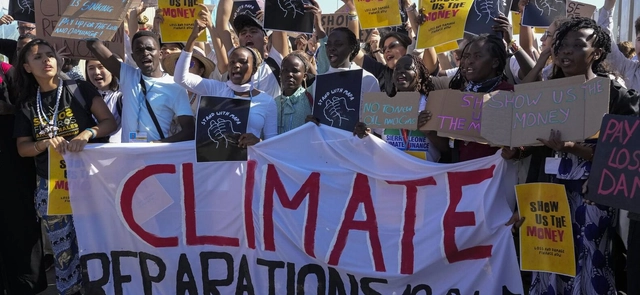
Last November, the annual climate conference COP 27 came to a close in Sharm el-Sheikh with a tentative agreement, reached at the last moment, to set up a “loss and damage” climate fund for Africa and other developing countries. For Africans, this was cause for muted celebration, because for generations the continent has built its climate change agenda almost exclusively around the pursuit of climate justice, a desire to enforce liability on the industrialized nations responsible for the bulk of global carbon emissions. All of this has unfolded, in a sort of willful blindness, while a majority of Africans struggled with the most prosaic challenges: inefficient urban sanitation; poor stormwater management; a paucity of water, sanitation, and hygiene facilities; willful and unabated deforestation; and environmental degradation.

Lets Broaden the Definition of Environmental Justice

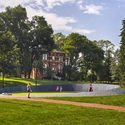
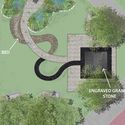
Tragedy, protest, insurrection, and political turmoil have led to a renewed awareness of racial injustice and democratic instability. These issues create new challenges for users and designers of public spaces in America. Cultural spasms have resulted in contested public spaces — sites of killings, protests in streets and parks, and forgotten burial grounds. These spaces need a new form of environmental justice.

Lets Broaden the Definition of Environmental Justice - Image 1 of 4Lets Broaden the Definition of Environmental Justice - Image 2 of 4Lets Broaden the Definition of Environmental Justice - Image 3 of 4Lets Broaden the Definition of Environmental Justice - Image 4 of 4Lets Broaden the Definition of Environmental Justice - More Images+ 4

U.S. EPA: Creating Equitable, Healthy, and Sustainable Communities: Strategies for Advancing Smart Growth, Environmental Justice, and Equitable Development

Subscriber Access | 

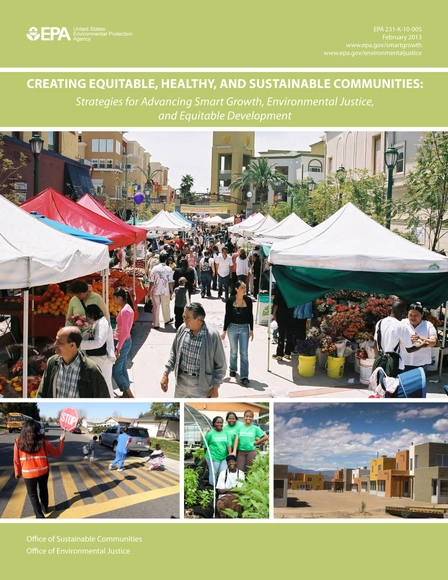
The U.S. Environmental Protection Agency has released an extensive new publication that serves as a guide for low-income, minority, tribal and overburdened communities to build smart, environmentally just, and equitable developments using strategies that are accessible and affordable. The guidelines build upon precedents of past successes within struggling communities, whether these struggles are in the face of discrimination, social or economic prejudices, or environmental injustive. The EPA identifies seven common elements that have been illustrated in in-depth case studies of communities that have struggled with those very issues. By targeting community groups, governmental agencies, private and non-profit partners, regional and local planners and residents of these communities, the EPA's smart growth guide for "Creating Equitable, Healthy and Sustainable Communities: Strategies for Advancing Smart Growth, Environmental Justice, and Equitable Development" seeks to bring access to valuable information about the inherent possibilities to creating healthful, sustainable, and prosperous communities under a variety of circumstances.

Join us after the break for a breakdown of the EPA's findings and how they address equitability in community development.