1. ArchDaily
  2. Ecological Architecture

Ecological Architecture: The Latest Architecture and News

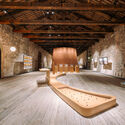
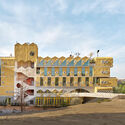
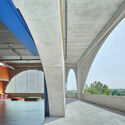
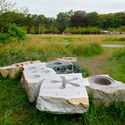
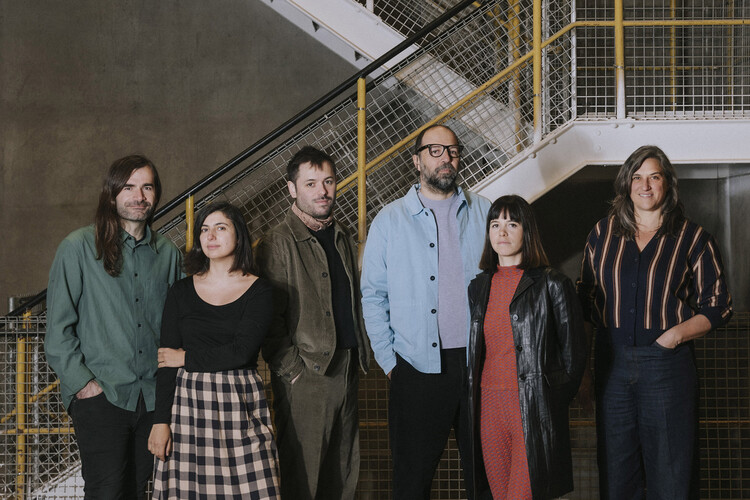
Venice Biennale 2027's "Do Architecture" and an Earth-Built Cinema in Ghana: This Week’s Review

This week's stories reveal a growing focus on reconnecting design with physical reality, whether through construction, landscape, public space, or collective participation. From the curatorial direction of the upcoming Venice Architecture Biennale 2027 to internationally recognized projects addressing flood resilience, affordable housing, and ecological restoration, many of the week's discussions challenged architecture's increasing detachment from material, environmental, and social conditions. At the same time, major cultural interventions, temporary structures, and public forums explored how institutions and civic spaces can become more accessible, adaptable, and engaged with everyday urban life.

Venice Biennale 2027's "Do Architecture" and an Earth-Built Cinema in Ghana: This Week’s Review - Image 1 of 4Venice Biennale 2027's "Do Architecture" and an Earth-Built Cinema in Ghana: This Week’s Review - Image 2 of 4Venice Biennale 2027's "Do Architecture" and an Earth-Built Cinema in Ghana: This Week’s Review - Image 3 of 4Venice Biennale 2027's "Do Architecture" and an Earth-Built Cinema in Ghana: This Week’s Review - Image 4 of 4Venice Biennale 2027's Do Architecture and an Earth-Built Cinema in Ghana: This Week’s Review - More Images+ 9

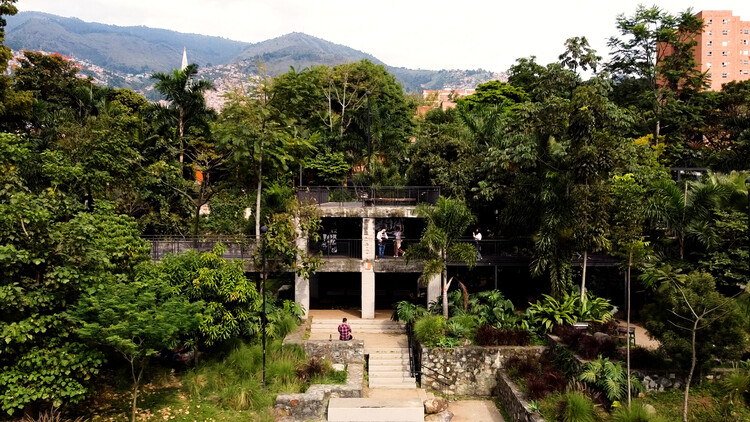
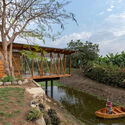
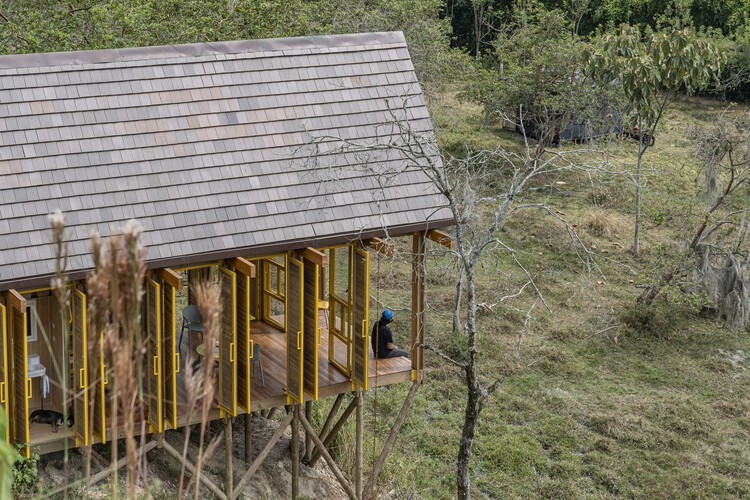
Above Water, Slope, and Forest: Elevated Architecture in Latin America

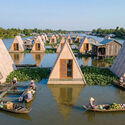
In Latin America, the ground is rarely just a surface to build on. It can be a river edge, a steep slope, a humid forest floor, a floodable landscape, or a territory under ecological pressure, and in many cases, it carries a history of communities that already knew how to respond to it, building on stilts, on platforms, over water, long before contemporary architecture asked the same questions.

These projects continue that conversation. They engage with conditions that move, absorb, erode, and grow, rather than treating the ground as something to level or control. Elevation allows architecture to adapt without fully taking over: water can pass below, vegetation can remain, and slopes can keep their original condition. In each case, the decision to rise is tied to something specific: water, humidity, topography, vegetation, or ecological recovery, and the knowledge of how to build within it and not against it.

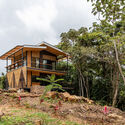
Above Water, Slope, and Forest: Elevated Architecture in Latin America - Image 1 of 4Above Water, Slope, and Forest: Elevated Architecture in Latin America - Image 2 of 4Above Water, Slope, and Forest: Elevated Architecture in Latin America - Image 3 of 4Above Water, Slope, and Forest: Elevated Architecture in Latin America - Image 4 of 4Above Water, Slope, and Forest: Elevated Architecture in Latin America - More Images+ 12

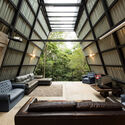
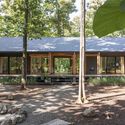
Adaptive Cabins in Costa Rica: Designing for Humidity and Ventilation in the Jungle

Subscriber Access | 

Costa Rica is a small country in Central America, internationally renowned for its tourism, biodiversity, and tropical climate. Given this context, tropical design strategies for hotel design are often more studied, but residential cabin projects can represent a more surgical approach to understanding the landscape. Often situated in remote forest or jungle locations, these cabins, apart from the common tropical design strategies, have to prioritize long-term durability and low-maintenance costs, particularly in regions where access for repairs is logistically difficult. This necessitates a design philosophy that favors both structural and climatic resilience.

Building in this context requires precise design responses to two primary environmental stressors: extreme precipitation and high humidity. Costa Rica's tropical climate, while varying by altitude, generally delivers an average monthly rainfall exceeding 150 mm in many regions. This constant water load can create a "wet-bulb" effect, where stagnant, saturated air accelerates interior material degradation and creates physiological discomfort for the inhabitants. To design effectively under these conditions, contemporary cabin architecture employs a three-fold strategy of minimal site invasion, the creation of thermal gradients, and passive climate mitigation.

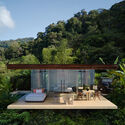
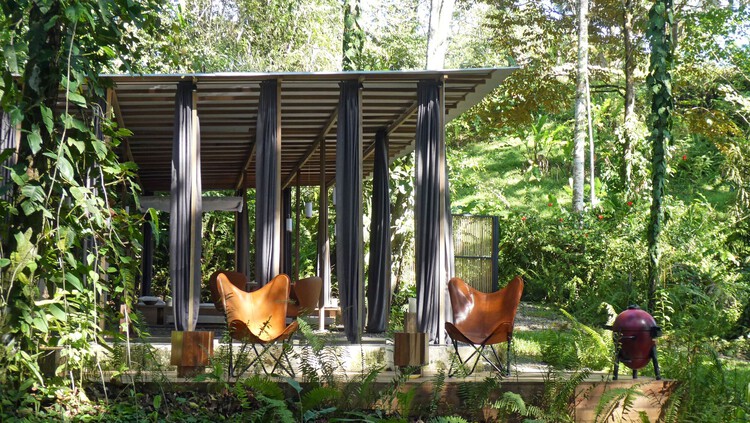
Adaptive Cabins in Costa Rica: Designing for Humidity and Ventilation in the Jungle - Image 1 of 4Adaptive Cabins in Costa Rica: Designing for Humidity and Ventilation in the Jungle - Image 2 of 4Adaptive Cabins in Costa Rica: Designing for Humidity and Ventilation in the Jungle - Image 3 of 4Adaptive Cabins in Costa Rica: Designing for Humidity and Ventilation in the Jungle - Image 4 of 4Adaptive Cabins in Costa Rica: Designing for Humidity and Ventilation in the Jungle - More Images+ 2

Rethinking Architecture at the Scale of Planetary Systems

Architecture has traditionally been described as a discipline concerned with space, form, and material presence. Yet this understanding becomes increasingly limited when confronted with the conditions that shape contemporary construction. Buildings no longer emerge from a stable relationship between site, program, and material. Instead, they are produced within a dense web of technological systems that operate across territorial, ecological, and temporal scales. Energy networks, data infrastructures, extraction processes, and global logistics shape architecture as decisively as climate or urban context.

Seen from this angle, architecture is less a discrete object than a moment within a larger technical field. Supply chains, data systems, automated maintenance, and energy grids do not sit "behind" the built environment. In a certain way, they influence what can be built, what is affordable, how buildings perform over time, and what kinds of waste they produce. When architecture is assessed primarily through form, it risks overlooking the systems that condition its production and afterlife.

Rethinking Architecture at the Scale of Planetary Systems - Image 1 of 4Rethinking Architecture at the Scale of Planetary Systems - Image 2 of 4Rethinking Architecture at the Scale of Planetary Systems - Image 3 of 4Rethinking Architecture at the Scale of Planetary Systems - Image 4 of 4Rethinking Architecture at the Scale of Planetary Systems - More Images+ 30

Snøhetta, BIG, and MVRDV Collaborate on New Coastal Neighborhood in Istanbul, Türkiye

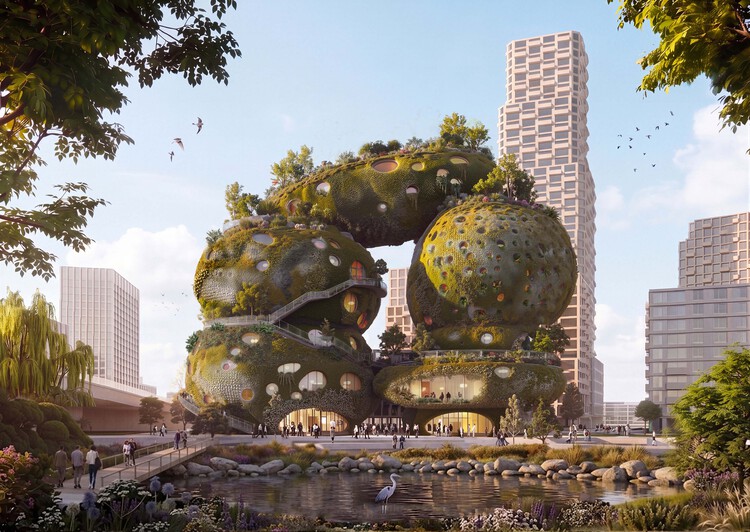
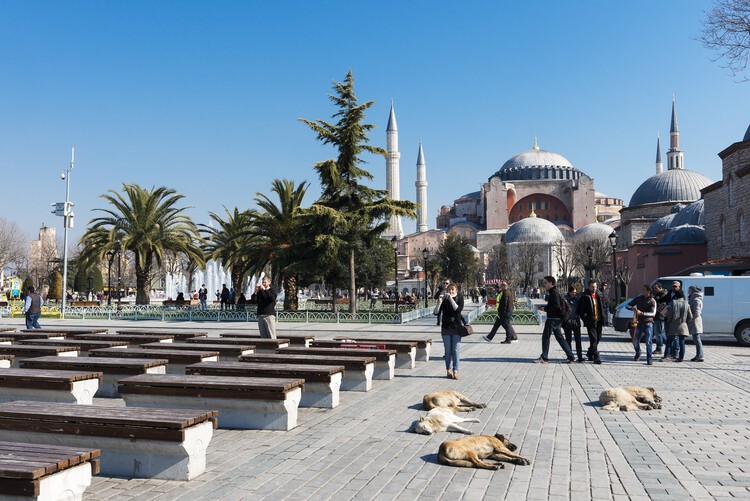
Located in Istanbul, Türkiye, an 84-hectare neighborhood is currently under development in the Riva area of Beykoz along the city's Black Sea coast. The master plan has been developed by an international design team including Snøhetta, Bjarke Ingels Group, and MVRDV, alongside local practices KEYM, DB Architects, Rasa, and Bilgin Architects. Known as Ion Riva, the project is conceived as a landscape-led residential community that integrates housing, cultural facilities, and public programs within an ecological framework shaped by the meeting of forest, river, and sea. The first phase of the development, which has received planning permission and is currently under construction, will deliver 969 homes designed for approximately 3,000 residents, with the first completed residences expected to be occupied in 2027.

Snøhetta, BIG, and MVRDV Collaborate on New Coastal Neighborhood in Istanbul, Türkiye - Image 1 of 4Snøhetta, BIG, and MVRDV Collaborate on New Coastal Neighborhood in Istanbul, Türkiye - Image 2 of 4Snøhetta, BIG, and MVRDV Collaborate on New Coastal Neighborhood in Istanbul, Türkiye - Image 3 of 4Snøhetta, BIG, and MVRDV Collaborate on New Coastal Neighborhood in Istanbul, Türkiye - Image 4 of 4Snøhetta, BIG, and MVRDV Collaborate on New Coastal Neighborhood in Istanbul, Türkiye - More Images+ 17

Gateway in Lunar Orbit: Extending Architecture Beyond Earth

The concept of the technosphere provides a framework for understanding the scale of human impact on Earth. The term was coined by Peter K. Haff, and it is defined as the global network of human-made artifacts: a physical layer of infrastructure, buildings, vehicles, and machinery that functions alongside the biosphere and atmosphere. Currently estimated at 30 trillion tons, this human-constructed mass is dominated by the built environment. In this context, architecture serves as the primary interface, shaping how technology interacts with local ecologies. However, it seems that soon, the Technosphere will no longer be confined to the terrestrial surface. Through NASA's Artemis program, this network of human-made mass is expanding beyond Earth's atmosphere and is looking to establish new orbital infrastructure that represents the first permanent off-world extension of this man-made system.

Gateway in Lunar Orbit: Extending Architecture Beyond Earth - Image 1 of 4Gateway in Lunar Orbit: Extending Architecture Beyond Earth - Image 2 of 4Gateway in Lunar Orbit: Extending Architecture Beyond Earth - Image 3 of 4Gateway in Lunar Orbit: Extending Architecture Beyond Earth - Image 4 of 4Gateway in Lunar Orbit: Extending Architecture Beyond Earth - More Images+ 3

Beyond the Classroom: Six Unbuilt Projects Rethinking Educational Architecture

Subscriber Access | 

Educational architecture remains an exploratory ground for unbuilt exploration, offering insight into how learning environments can evolve alongside changing social, ecological, and pedagogical values. In this Unbuilt edition, submitted by the ArchDaily community, the selected projects bring together a range of proposals that examine schools, libraries, nurseries, and academic centers as spatial frameworks for care, knowledge, and collective growth. Rather than treating education as a fixed program housed within singular buildings, these projects approach learning spaces as adaptive environments shaped by landscape, climate, and human interaction.

Across varied geographies, from Mediterranean hillsides and Central European courtyards to tropical cities and distributed campus models, the proposals explore diverse architectural responses to contemporary education. They range from child-scaled kindergartens organized around trees and cloisters to libraries conceived as civic landscapes, biodiversity-centered academic buildings, and schools imagined as walkable urban systems.

Beyond the Classroom: Six Unbuilt Projects Rethinking Educational Architecture - Image 15 of 4Beyond the Classroom: Six Unbuilt Projects Rethinking Educational Architecture - Image 21 of 4Beyond the Classroom: Six Unbuilt Projects Rethinking Educational Architecture - Image 34 of 4Beyond the Classroom: Six Unbuilt Projects Rethinking Educational Architecture - Image 29 of 4Beyond the Classroom: Six Unbuilt Projects Rethinking Educational Architecture - More Images+ 31

The OBEL Award Reveals "Systems’ Hack" as the Theme for Its 2026 Edition

©OBEL Foundation

The OBEL Foundation has announced "Systems' Hack" as the focus of its 2026 cycle, setting the conceptual framework that will guide the foundation's activities and the selection of the next OBEL Award. Founded in 2019, OBEL recognises architecture's potential to act as a tangible agent of positive social and ecological change, supporting approaches that expand how the built environment is defined and shaped. The 2026 theme calls on architecture to critically engage with the systems that underpin contemporary society, including infrastructure, energy, food, water, education, and information, and to examine how these interconnected networks might be reconfigured in response to accelerating global challenges.

The OBEL Award Reveals "Systems’ Hack" as the Theme for Its 2026 Edition - Image 1 of 4The OBEL Award Reveals "Systems’ Hack" as the Theme for Its 2026 Edition - Image 2 of 4The OBEL Award Reveals "Systems’ Hack" as the Theme for Its 2026 Edition - Image 3 of 4The OBEL Award Reveals "Systems’ Hack" as the Theme for Its 2026 Edition - Image 4 of 4The OBEL Award Reveals Systems’ Hack as the Theme for Its 2026 Edition - More Images+ 3

Designing With Living Systems: Discover the Works of Yong Ju Lee Architecture

What does it mean to practice ecological responsibility beyond performance metrics or carbon calculations? How can fabrication become a design method rather than a final outcome? Founded in Seoul, Yong Ju Lee Architecture is a practice led by architect and researcher Yong Ju Lee. Across installations, research-driven proposals, and cultural projects, the studio positions architecture as an experimental discipline rooted in making: a process in which design emerges from material behavior, prototyping, and fabrication logic as much as from drawing or representation. Bridging professional practice and academia, his work consistently expands the architectural toolkit through computational design, experimental material research, and an evolving commitment to ecology as a responsibility and a design driver. In 2025, the studio was selected as a winner of the ArchDaily Next Practices Awards.

Designing With Living Systems: Discover the Works of Yong Ju Lee Architecture - Image 1 of 4Designing With Living Systems: Discover the Works of Yong Ju Lee Architecture - Image 2 of 4Designing With Living Systems: Discover the Works of Yong Ju Lee Architecture - Image 3 of 4Designing With Living Systems: Discover the Works of Yong Ju Lee Architecture - Image 4 of 4Designing With Living Systems: Discover the Works of Yong Ju Lee Architecture - More Images+ 21

Unearthing the Ground: Architecture and the Politics of the Subterranean

Subscriber Access | 

Beneath the visible surface of cities lies an invisible architecture. Subways, tunnels, water systems, data cables, and bunkers form a dense network that sustains urban life while remaining largely unseen. The ground beneath our feet is not a void but a complex territory that holds the infrastructures, memories, and anxieties of our age. In recent years, as land becomes scarce and climate pressures intensify, architects and urbanists have turned their gaze downward, rediscovering the subterranean as both a physical and conceptual frontier. To design underground is to engage with the unseen mechanisms that shape the world above.

The subterranean has long been a site where architecture intersects with politics, technology, and belief. From the catacombs of Rome to the industrial subways of modernity, descent has symbolized both protection and exposure. Twentieth-century urbanism transformed this gesture into a system: metros, shelters, and utilities redefined the city section as an instrument of governance. Beneath the promise of efficiency and progress, the underground absorbed the anxieties of an era of war, surveillance, and collapse. Its evolution reveals not only how societies build, but also how they fear.

Today, the ground has become the new frontier of urban expansion and ecological adaptation. As digital infrastructures, energy systems, and climatic buffers migrate below grade, architecture confronts a space both technical and metaphysical — essential yet marginal, invisible yet decisive. To think in sections rather than in plan is to recognise that contemporary cities no longer exist solely in their skylines but also in their depths. The challenge for architecture is not only to occupy that space, but to render it legible, to turn the unseen into knowledge, and the hidden into a new terrain of design.

Unearthing the Ground: Architecture and the Politics of the Subterranean - Image 1 of 4Unearthing the Ground: Architecture and the Politics of the Subterranean - Image 2 of 4Unearthing the Ground: Architecture and the Politics of the Subterranean - Image 3 of 4Unearthing the Ground: Architecture and the Politics of the Subterranean - Image 4 of 4Unearthing the Ground: Architecture and the Politics of the Subterranean - More Images+ 36

Howard Waterfall Retreat Competition: Buildner’s Winners Explore Multigenerational Living and Topography

 | Sponsored Content

Buildner has announced the results of the Howard Waterfall Retreat architecture competition, an international design challenge developed in close collaboration with the Howard Family Trust. The competition invited architects and designers to propose a multi-generational family retreat set within a privately owned, forested landscape in Northwestern Pennsylvania, centered on the dramatic presence of Howard Falls and the surrounding gorge.

Rather than prescribing a singular architectural solution, the brief emphasized a careful dialogue between architecture and nature. Participants were asked to consider how a retreat could balance shared and private living, respond to steep topography and water systems, and integrate sustainably within a sensitive ecological setting. The project also called for an interpretation of family legacy, encouraging designers to acknowledge the history of the site and the original summer cottage while imagining a retreat capable of evolving across generations.

Local Knowledge and Ecological Context: City Making Lessons from Chicago’s Wild Mile

Subscriber Access | 

For more than a century, residents of growing American cities reshaped their rivers to serve industrial and manufacturing needs. Waterways were straightened, deepened, paved, or buried to support shipping routes and to move materials efficiently across regions. These transformations created an urban landscape in which rivers were treated as productive infrastructure rather than as living ecological systems.

This approach left a lasting imprint. Riparian habitats disappeared, water quality declined, regional biodiversity grew vulnerable, and communities grew accustomed to river corridors dominated by steel walls and concrete channels. The industrial reshaping of rivers in places such as Chicago, Los Angeles, and the Mississippi basin created durable patterns of development that still influence how cities function today.

Local Knowledge and Ecological Context: City Making Lessons from Chicago’s Wild Mile - Image 1 of 4Local Knowledge and Ecological Context: City Making Lessons from Chicago’s Wild Mile - Image 2 of 4Local Knowledge and Ecological Context: City Making Lessons from Chicago’s Wild Mile - Image 3 of 4Local Knowledge and Ecological Context: City Making Lessons from Chicago’s Wild Mile - Image 4 of 4Local Knowledge and Ecological Context: City Making Lessons from Chicago’s Wild Mile - More Images+ 7

The Architecture of Restraint: When Choosing Not to Build Becomes Design

In a world facing ecological exhaustion and spatial saturation, the act of building has come to represent both creation and consumption. For decades, architectural progress was measured by the new: new materials, new technologies, new monuments of ambition. Yet today, the discipline is increasingly shaped by another form of intelligence, one that values what already exists. Architects are learning that doing less can mean designing more, and this shift marks the emergence of what might be called an architecture of restraint: a practice defined by care, maintenance, and the deliberate choice not to build.

The principle recognizes that the most sustainable building is often the one that already stands, and that transformation can occur through preservation, repair, or even absence. Choosing not to build becomes a political and creative act, a response to the material limits of the planet and to the ethical limits of endless growth. That Architecture moves beyond the production of new forms to embrace continuity, extending the life of structures, materials, and memories that already inhabit the world.

The Architecture of Restraint: When Choosing Not to Build Becomes Design - Image 1 of 4The Architecture of Restraint: When Choosing Not to Build Becomes Design - Image 2 of 4The Architecture of Restraint: When Choosing Not to Build Becomes Design - Image 3 of 4The Architecture of Restraint: When Choosing Not to Build Becomes Design - Image 4 of 4The Architecture of Restraint: When Choosing Not to Build Becomes Design - More Images+ 33

From Bangkok to Florence: 6 Unbuilt Public Space Projects Rethinking Community, Ecology, and Urban Identity

Subscriber Access | 

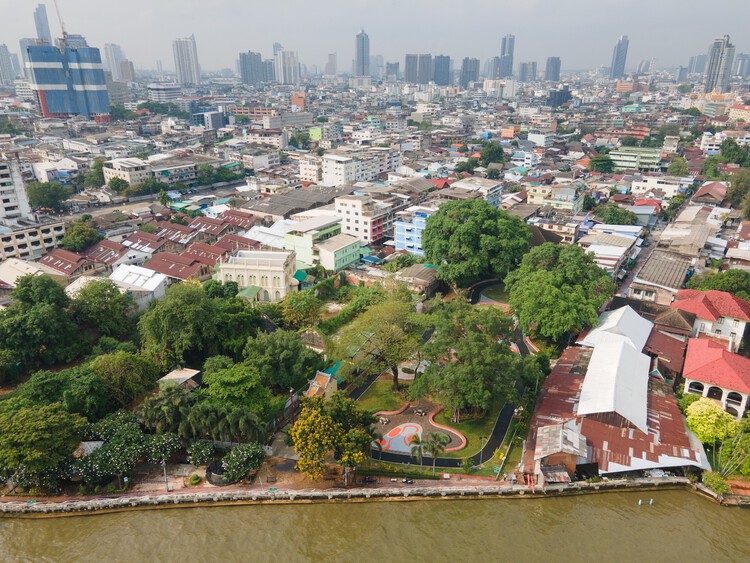
Public spaces remain some of the most dynamic sites for unbuilt architectural experimentation, revealing how cities and architects can imagine accessibility, gathering, and civic identity. In this curated Unbuilt edition, submitted by the ArchDaily community, the selected proposals examine parks, pedestrian corridors, cultural landscapes, and open-access urban environments that invite people to meet, move, rest, and participate in collective life. Rather than treating public space as leftover terrain, these projects position it as essential infrastructure—shaping urban health, memory, and social interaction.

From Bangkok to Florence: 6 Unbuilt Public Space Projects Rethinking Community, Ecology, and Urban Identity - Image 19 of 4From Bangkok to Florence: 6 Unbuilt Public Space Projects Rethinking Community, Ecology, and Urban Identity - Image 22 of 4From Bangkok to Florence: 6 Unbuilt Public Space Projects Rethinking Community, Ecology, and Urban Identity - Image 32 of 4From Bangkok to Florence: 6 Unbuilt Public Space Projects Rethinking Community, Ecology, and Urban Identity - Image 26 of 4From Bangkok to Florence: 6 Unbuilt Public Space Projects Rethinking Community, Ecology, and Urban Identity - More Images+ 30

Beyond Human-Centered Architecture: Designing Spaces with Other Species

Subscriber Access | 

As architecture moves beyond human-centered design, new practices are rethinking coexistence as an ethical and ecological framework. From political infrastructures to habitats, these approaches invite us to imagine architecture as a shared living system.

Modern architecture has long been written through an anthropocentric lens, placing the human at its center and rendering other species invisible. Yet this paradigm continues to shift, as architects and researchers redefine the role of design in more-than-human worlds. Studios such as Office for Political Innovation, Studio Ossidiana, and Husos Architects are questioning human-centered narratives and reframing design as a shared practice between species. In this context, architecture is no longer a tool of control but a medium for coexistence, a discipline that mediates between species, environments, and cultures.

Beyond Human-Centered Architecture: Designing Spaces with Other Species - Image 6 of 4Beyond Human-Centered Architecture: Designing Spaces with Other Species - Image 10 of 4Beyond Human-Centered Architecture: Designing Spaces with Other Species - Image 23 of 4Beyond Human-Centered Architecture: Designing Spaces with Other Species - Image 4 of 4Beyond Human-Centered Architecture: Designing Spaces with Other Species - More Images+ 23

Ammodo Architecture Awards 2025 Announces 26 Recipients for Socially and Ecologically Responsible Design

The second edition of the Ammodo Architecture Award has recognized 26 recipients for their contributions to socially and ecologically responsible design. Selected from 168 submissions spanning over 60 countries, the laureates represent a wide range of practices, from established offices to emerging collectives and community-led initiatives. Each recipient receives a grant ranging from €10,000 to €150,000 to support the continued development of their projects. Beyond recognition and financial support, the Ammodo Architecture initiative also functions as a knowledge platform, connecting awardees across regions and facilitating the exchange of ideas on key themes identified by the advisory committee.

Ammodo Architecture Awards 2025 Announces 26 Recipients for Socially and Ecologically Responsible Design  - Image 1 of 4Ammodo Architecture Awards 2025 Announces 26 Recipients for Socially and Ecologically Responsible Design  - Image 2 of 4Ammodo Architecture Awards 2025 Announces 26 Recipients for Socially and Ecologically Responsible Design  - Image 3 of 4Ammodo Architecture Awards 2025 Announces 26 Recipients for Socially and Ecologically Responsible Design  - Image 4 of 4Ammodo Architecture Awards 2025 Announces 26 Recipients for Socially and Ecologically Responsible Design  - More Images+ 21

From Rapidity to Specificity: Multiple Dimensions of Shenzhen's Architectural Development

Subscriber Access | 

Shenzhen is China's first Special Economic Zone(SEZ), serving as a window for China's Reform and Opening-up and an emerging immigrant city. It has evolved into an influential, modern, and international metropolis, creating the world-renowned "Shenzhen Speed" and earning the reputation of the "City of Design." Architectural design stands as the most intuitive expression of Shenzhen's spirit of integration and innovation. Over the past decade (2015-2025), the development of urban architecture in Shenzhen has closely integrated with its open and inclusive urban character, ecological advantages of being nestled between mountains and the sea, and the local spirit of blending traditional culture with innovative technology, showcasing Shenzhen's unique charm and robust vitality across multiple dimensions.

From Rapidity to Specificity: Multiple Dimensions of Shenzhen's Architectural Development  - Image 1 of 4From Rapidity to Specificity: Multiple Dimensions of Shenzhen's Architectural Development  - Image 2 of 4From Rapidity to Specificity: Multiple Dimensions of Shenzhen's Architectural Development  - Image 3 of 4From Rapidity to Specificity: Multiple Dimensions of Shenzhen's Architectural Development  - Image 4 of 4From Rapidity to Specificity: Multiple Dimensions of Shenzhen's Architectural Development  - More Images+ 51

Shifting Sediments: Rivers as an Architectural and Cultural Catalyst

Subscriber Access | 

Rivers generate a distinct typology of architecture bound by design threads of material practice, environmental adaptation, cultural symbolism, and imagination. Each river system produces a unique ecosystem where water, soil, vegetation, and settlement converge to form a living network. Designing within this environment requires a capacity to read movement rather than resist it, to build on uncertain ground, and to understand permanence as a balance in motion. Unlike the fixed horizon of the sea, the river is never still. It teaches architects to think in gradients rather than boundaries, and to design as part of an evolving landscape.

Shifting Sediments: Rivers as an Architectural and Cultural Catalyst - Image 1 of 4Shifting Sediments: Rivers as an Architectural and Cultural Catalyst - Image 2 of 4Shifting Sediments: Rivers as an Architectural and Cultural Catalyst - Image 3 of 4Shifting Sediments: Rivers as an Architectural and Cultural Catalyst - Image 4 of 4Shifting Sediments: Rivers as an Architectural and Cultural Catalyst - More Images+ 8