1. ArchDaily
  2. Waste Management

Waste Management: The Latest Architecture and News

From Asbestos to Fungi: Eight New Materials Made from Waste and Living Matter

Audio available

Architecture is, above all, a material reality. The materials that surround us are the result of a chain of constructive, economic, aesthetic and, in more contemporary examples, environmental considerations. Decisions are shaped by available technology, manageable technique, time-related expectations and regulatory frameworks. To face the pressures on our built environment, those multidimensional conditions must change through what we call innovation: the tangible creation of new products and strategies with problem-solving capabilities. Matter is the general term for physical substance that has mass and takes up space. When matter is given a specific type, form, or useful application, it becomes material. Material transformation therefore requires going beyond recycling and reuse: combining existing matter to create new materials that open up new possibilities for construction. The research presented below suggests that demonizing existing materials is unnecessary as long as this capacity for innovation exists.

Unearthing the Ground: Architecture and the Politics of Waste

Audio available

In 1948, Robert Moses established the Fresh Kills Landfill on the western shore of Staten Island. The site, chosen for its remote marshland and cheap land value, was meant to be temporary, but by 1955 it was the largest landfill in the world, receiving up to 29,000 tons of refuse per day at its 1991 peak. By 2001, after more than fifty years of continuous operation, Fresh Kills covered 2,200 acres, roughly three times the area of Central Park, and was, unspectacularly, visible from space. When it started, Moses didn't expect to design a dump but, without calling it that, a new landform with four artificial hills rising up to sixty meters above sea level built entirely from the accumulated residue of eight million daily lives.

That landform is now, slowly, becoming a park. James Corner Field Operations won the international design competition launched by the city in 2001, producing a master plan called Lifescape that will take thirty years to complete. The landfill's four mounds are being capped, planted, and gradually opened to the public. Methane from decomposing waste is captured and fed into an energy system as the wetlands are being restored around the engineered hills. Evidence of New York's consumption transformed into a feat of ecological engineering and an act of institutional memory management (a way of making a city's most embarrassing landscape slowly look like something it was always meant to be).

Unearthing the Ground: Architecture and the Politics of Waste - Image 1 of 4Unearthing the Ground: Architecture and the Politics of Waste - Image 2 of 4Unearthing the Ground: Architecture and the Politics of Waste - Image 3 of 4Unearthing the Ground: Architecture and the Politics of Waste - Image 4 of 4Unearthing the Ground: Architecture and the Politics of Waste - More Images+ 10

Subscriber Access

From Overlooked Waste to Circular Opportunity: Plastics in Construction

Like the famous Russian Matryoshka doll, opening a package often feels like uncovering endless layers. Inside a cardboard box, there might be molded Styrofoam, then several plastic air pillows, and finally, individual plastic wrapping around each piece. Even a small product can leave behind a trail of plastic waste far larger than its size. Now imagine this logic applied to a construction site where every component, every delivery of materials, often arrives wrapped in multiple layers of protection. What already seems excessive in retail becomes monumental when repeated daily on large construction projects.

From Overlooked Waste to Circular Opportunity: Plastics in Construction - Image 1 of 4From Overlooked Waste to Circular Opportunity: Plastics in Construction - Image 2 of 4From Overlooked Waste to Circular Opportunity: Plastics in Construction - Image 3 of 4From Overlooked Waste to Circular Opportunity: Plastics in Construction - Image 4 of 4From Overlooked Waste to Circular Opportunity: Plastics in Construction - More Images+ 3

Subscriber Access

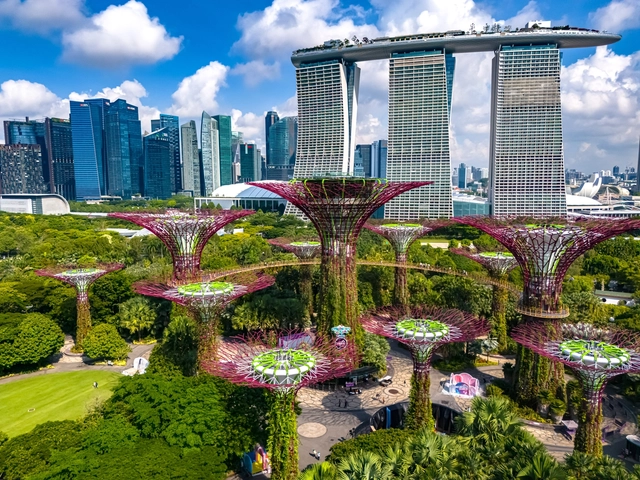
Zero Waste Cities: Urban Strategies from San Francisco and Singapore

With expanding urban populations and evolving consumption patterns, cities are faced with challenges pertaining to waste management. Traditional approaches centered on collection and disposal currently seem inadequate in the face of serious environmental concerns and resource scarcity. Waste management has become a focused topic to address, being introduced as a key strategy towards circular economies. The Zero Waste concept hopes to transform the way cities manage urban waste and build supportive cultures around it.
Zero Waste Cities: Urban Strategies from San Francisco and Singapore  - 1 的图像 4Zero Waste Cities: Urban Strategies from San Francisco and Singapore  - 2 的图像 4Zero Waste Cities: Urban Strategies from San Francisco and Singapore  - 3 的图像 4Zero Waste Cities: Urban Strategies from San Francisco and Singapore  - 4 的图像 4Zero Waste Cities: Urban Strategies from San Francisco and Singapore  - More Images+ 5

Subscriber Access

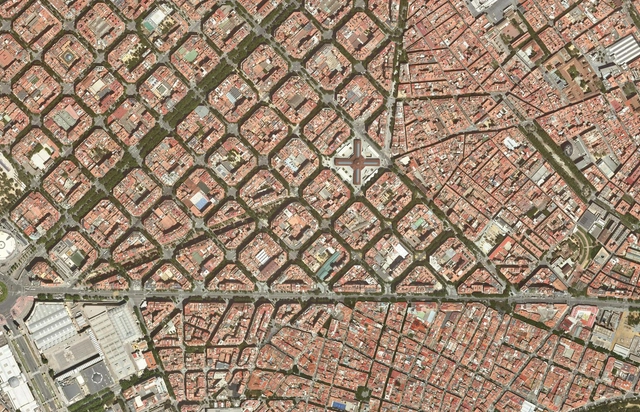
The Future of Smart Cities: How Digital Technologies are Transforming Urban Living in Barcelona and Dublin

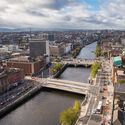
As the world witnesses an unprecedented exodus from rural to urban areas, cities face a monumental challenge: how to accommodate a constantly growing population? This phenomenon, characterized by rapid population growth and increasing density, puts pressure on resources, infrastructure, and urban services. As significant problems demand even larger solutions, it becomes necessary, more than ever, to rethink the tools at our disposal. In this challenging context, the rise of emerging technologies such as the Internet of Things (IoT), data analytics, and artificial intelligence (AI) presents itself as a light at the end of the tunnel. These technologies, initially conceived to simplify everyday tasks and facilitate communication, are potential instruments that enable an effective response to contemporary urban challenges.

The Future of Smart Cities: How Digital Technologies are Transforming Urban Living in Barcelona and Dublin - 5 的图像 4The Future of Smart Cities: How Digital Technologies are Transforming Urban Living in Barcelona and Dublin - 2 的图像 4The Future of Smart Cities: How Digital Technologies are Transforming Urban Living in Barcelona and Dublin - 1 的图像 4The Future of Smart Cities: How Digital Technologies are Transforming Urban Living in Barcelona and Dublin - 4 的图像 4The Future of Smart Cities: How Digital Technologies are Transforming Urban Living in Barcelona and Dublin - More Images+ 4

Repurposing Discarded Waste Materials Into a 100%* Recycled Washbasin

 | Sponsored Content

Producing sustainable materials and products demands constant analysis of how we conserve resources and manage waste effectively. This unfolds within a scenario where the environmental impacts of global warming and the climate crisis are becoming increasingly evident. In that context, sustaining the dialogue on waste disposal is fundamental to positively impacting our environment and maximizing circular economy opportunities.

Embracing this perspective and demonstrating a commitment to sustainability through waste reduction and resource conservation, VitrA has created an entire washbasin with 100%* recycled waste materials, including discarded ceramics from its production process. This innovative product has been designed to have a minimal environmental impact and reduce the global warming potential of its production by 30% per product, transforming materials once considered waste into valuable resources.

Walk on Waste: Weaving Waste into Stylish Floorings and Rugs

 | Sponsored Content

In contemporary architecture, recycling has evolved from a desirable to an unavoidable necessity. This change is mainly due to the growing climate crisis, accentuated by the constant presence of waste (for which no use has been found beyond the initial one).

This approach has stimulated the creation of innovative materials to reuse waste in various contexts. A notable example is the case of woven flooring and rugs, where Bolon took a step forward in 1949 by transforming textile waste into stylish products. Since then, they have continued to innovate in materials, fusing the traditional flooring branch with sustainable creative design.

"3-Minute Pavilion" by WallMakers Explores Waste and Material Scarcity at the Sharjah Triennial 2023

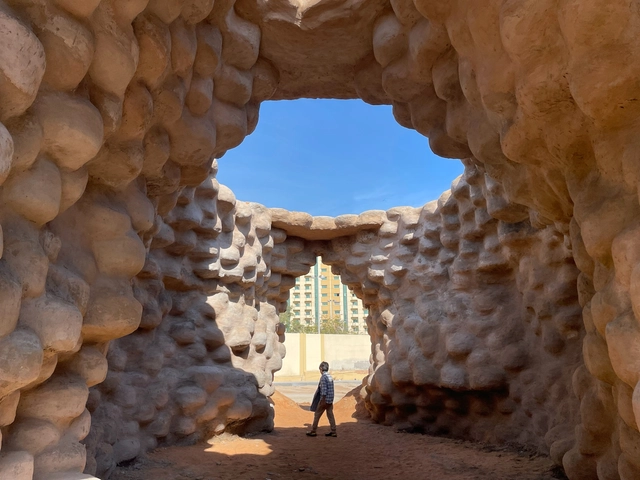
The Sharjah Architecture Triennial opened on November 11, 2023, with the theme of The Beauty of Impermanence: An Architecture of Adaptability. Curated by Tosin Oshinowo, the program focused heavily on the Global South and alternative models the region can provide in the future. As part of the Triennial, the “3-Minute Corridor” pavilion by WallMakers explores our waste on a global scale, exploring methodologies of material reuse.

"3-Minute Pavilion" by WallMakers Explores Waste and Material Scarcity at the Sharjah Triennial 2023 - Image 1 of 4"3-Minute Pavilion" by WallMakers Explores Waste and Material Scarcity at the Sharjah Triennial 2023 - Image 2 of 4"3-Minute Pavilion" by WallMakers Explores Waste and Material Scarcity at the Sharjah Triennial 2023 - Image 3 of 4"3-Minute Pavilion" by WallMakers Explores Waste and Material Scarcity at the Sharjah Triennial 2023 - Image 4 of 43-Minute Pavilion by WallMakers Explores Waste and Material Scarcity at the Sharjah Triennial 2023 - More Images+ 3

Rethinking the Biennale: In Conversation with Anh-Linh Ngo, Curator of the German Pavilion at the 2023 Venice Biennale

The German Pavilion Open for Maintenance / Wegen Umbau geöffnet at this years 18th International Architecture Exhibition – La Biennale di Venezia was curated by ARCH+ and Summacumfemmer Büro Juliane Greb. At its core, the exhibition addresses the resource problem and the material cycles of the biennale. Inside the pavilion is a functioning workshop dedicated to applying these concepts of care, repair, and maintenance to Venice onsite. In Venice, ArchDaily had the chance to speak with the co-curator Anh-Linh Ngo, where he discussed the different aspects of the German Pavilion.

Rethinking the Biennale: In Conversation with Anh-Linh Ngo, Curator of the German Pavilion at the 2023 Venice Biennale - Imagen 8 de 4Rethinking the Biennale: In Conversation with Anh-Linh Ngo, Curator of the German Pavilion at the 2023 Venice Biennale - Imagen 7 de 4Rethinking the Biennale: In Conversation with Anh-Linh Ngo, Curator of the German Pavilion at the 2023 Venice Biennale - Imagen 6 de 4Rethinking the Biennale: In Conversation with Anh-Linh Ngo, Curator of the German Pavilion at the 2023 Venice Biennale - Imagen 5 de 4Rethinking the Biennale: In Conversation with Anh-Linh Ngo, Curator of the German Pavilion at the 2023 Venice Biennale - More Images+ 16

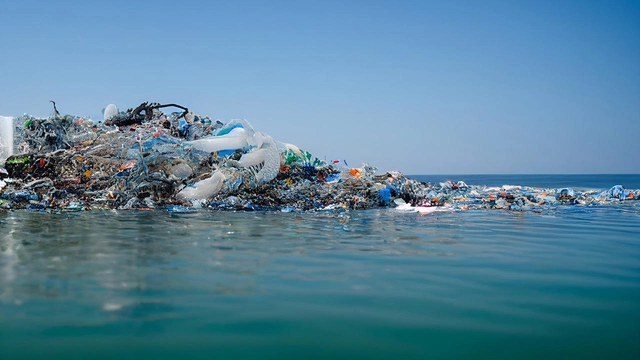
The Story of the World's Largest Floating Plastic Island (and What to Do With It)

Environmental issues urgency and increasing temperatures on the planet are nothing new. There are many factors contributing to environmental degradation. However, two can be viewed as representative of critical points in the current world system: plastic and waste disposal, better known as garbage.

The environmental crisis cannot be attributed solely to these two examples. They are used here as examples to mobilize issues involving multiple agents, materials, and diverse methods. These issues lead to devastating consequences, increasingly irreversible.

Subscriber Access

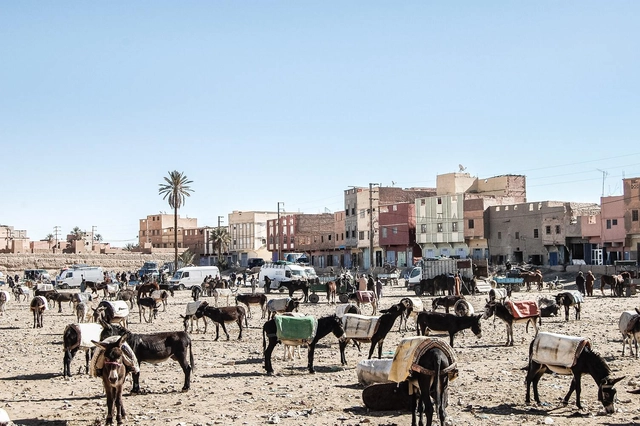
How Will We Live With Livestock?

As populations continue to migrate from rural to urban areas, space is at a premium. Many settlements are becoming ever-more congested – with adequate, affordable housing in short supply and transport systems struggling to serve their respective residents. But as much the conversation about urbanization is about people, it is sometimes also about the animals that come with those people – urban livestock that play a key role at providing sustenance on an individual level, in addition to becoming an avenue for communal trade.

How Will We Live With Livestock? - Image 1 of 4How Will We Live With Livestock? - Image 2 of 4How Will We Live With Livestock? - Image 3 of 4How Will We Live With Livestock? - Image 4 of 4How Will We Live With Livestock? - More Images+ 4

Subscriber Access

A City's Trash is Not It's Treasure: How is New York Tackling its Garbage Issues?

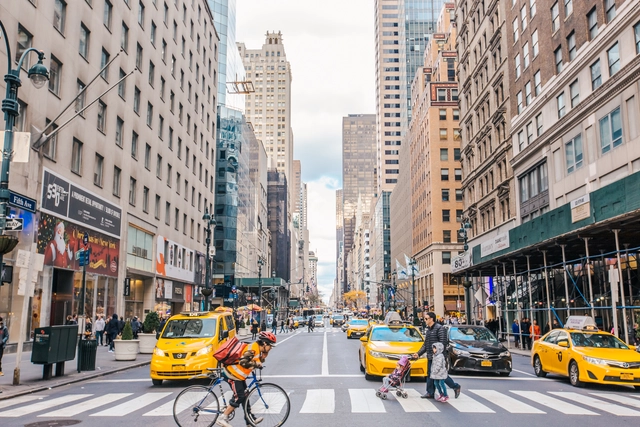
The scene is almost identical, no matter which borough of New York City you’re in. Narrow sidewalks are lined by mountains of trash bags and other large objects, waiting for their turn to be taken away by the fleet of sanitary workers and trucks who will dispose of them. Large rodents seek shelter in their temporary plastic homes, feeding on discarded scraps, becoming a regular sighting for New York City residents. The City That Never Sleeps has a bigger problem than the flashing lights and noisy streets- it’s all of the trash that’s left to sit out on the sidewalks.

A City's Trash is Not It's Treasure: How is New York Tackling its Garbage Issues? - Image 1 of 4A City's Trash is Not It's Treasure: How is New York Tackling its Garbage Issues? - Image 2 of 4A City's Trash is Not It's Treasure: How is New York Tackling its Garbage Issues? - Image 3 of 4A City's Trash is Not It's Treasure: How is New York Tackling its Garbage Issues? - Image 4 of 4A City's Trash is Not It's Treasure: How is New York Tackling its Garbage Issues? - More Images

What Do We Do With Waste? The Circular Economy and the Global South

A lot of people around the world would agree that we are currently in a climate emergency. The IPCC report, released last year, makes for difficult reading. Practitioners in the built environment have taken to direct climate action, with organizations such as ACAN and Architects Declare fostering carbon literacy and calling for designers to re-evaluate how they practice.

What Do We Do With Waste? The Circular Economy and the Global South - Image 1 of 4What Do We Do With Waste? The Circular Economy and the Global South - Image 6 of 4What Do We Do With Waste? The Circular Economy and the Global South - Image 2 of 4What Do We Do With Waste? The Circular Economy and the Global South - Image 3 of 4What Do We Do With Waste? The Circular Economy and the Global South - More Images+ 7

Circular Economy in Urban Design: Sustainability and Community Involvement

Circular Economy in Urban Design: Sustainability and Community Involvement - Featured Image
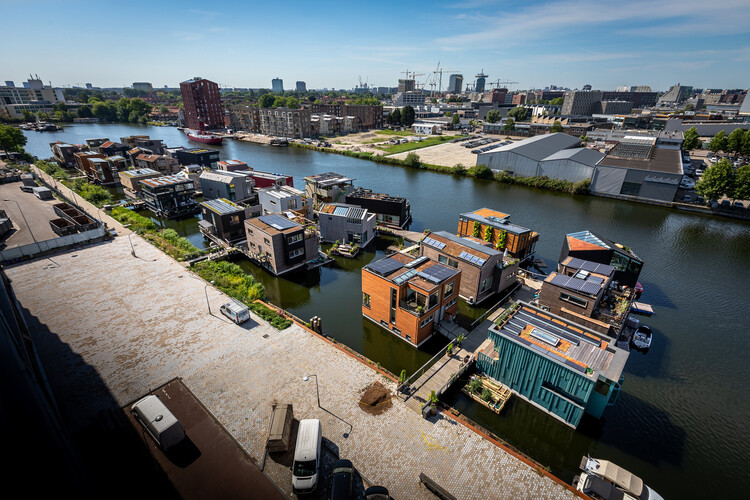
Schoonschip by Space&Matter. Image © Isabel Nabuurs

While circular economy is often discussed in relation to the architectural object through the lens of material recycling, design for disassembly, and material passports, the framework is most fully enacted at the neighbourhood and city scale. Whether it is visions of circular communities that hint at some level of self-sufficiency or policies set in motion by cities, urban-scale projects exemplify the guiding principles of the circular economy, providing a glimpse into what a fully-fledged version of it might look like. The following explores the strategies used in circular urban environments, from architecture and construction materials to energy production, waste management and food production, as well as the processes and operations that govern these designs, providing insights into the conditions that inform circularity. 

Circular Economy in Urban Design: Sustainability and Community Involvement - Image 1 of 4Circular Economy in Urban Design: Sustainability and Community Involvement - Image 2 of 4Circular Economy in Urban Design: Sustainability and Community Involvement - Image 3 of 4Circular Economy in Urban Design: Sustainability and Community Involvement - Image 4 of 4Circular Economy in Urban Design: Sustainability and Community Involvement - More Images+ 1

The Eco-Friendly Floating Cities of the Future

As the world population grows, designers look to develop the seas. Architecture and planning firm, URBAN POWER strategically designed nine man-made islands off the southern coast of Copenhagen to combat many of the city’s impending challenges. The islets, called Holmene, address demands for tech space, fossil-free energy production, flood barriers, and even public recreation space.

"Plastic Island" Imagines the Possibilities of Reusing Oceanic Waste in Architecture

"Plastic Island" Imagines the Possibilities of Reusing Oceanic Waste in Architecture - Image 4 of 4
Courtesy of Emily-Claire Goksøyr

With rising sea levels and incessant consumption of plastic, the state of the earth's oceans is rapidly deteriorating. Instead of discarding or burning this plastic, architects Erik Goksøyr and Emily-Claire Goksøyr questioned whether any architectural potential exists in this neglected material. By conducting an extensive material study, the duo designed three prototypes to postulate this theory. 

Though starting out as a humble thesis, this project is being actualized under the organization, Out of Ocean. From the shores of the Koster Islands in Sweden, plastic samples were collected and studied for their various material performance in areas such as color, texture, light, and translucency.

"Plastic Island" Imagines the Possibilities of Reusing Oceanic Waste in Architecture - Image 2 of 4"Plastic Island" Imagines the Possibilities of Reusing Oceanic Waste in Architecture - Image 1 of 4"Plastic Island" Imagines the Possibilities of Reusing Oceanic Waste in Architecture - Image 4 of 4"Plastic Island" Imagines the Possibilities of Reusing Oceanic Waste in Architecture - Image 3 of 4Plastic Island Imagines the Possibilities of Reusing Oceanic Waste in Architecture - More Images+ 31

New Photographs Explore BIG’s Waste-to-Energy Plant as Ski Slope Roof is Installed

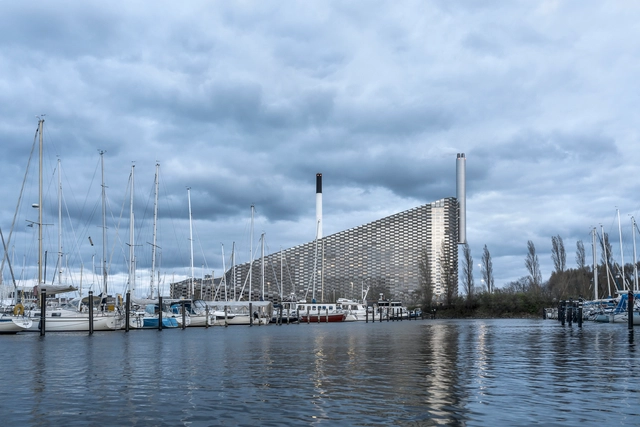
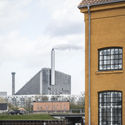
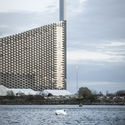
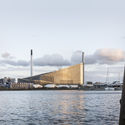
Photographer Aldo Amoretti has captured new images of one of 2018’s most awaited projects, as the BIG designed Amager Bakke Waste-to-Energy Plant takes shape in Copenhagen, complete with an SLA-designed park and ski slope. The images show to the completed power plant, which opened in March 2017, while work progresses on the 170,000-square-foot (16,000-square-meter) park and ski slope that will cap the scheme.

Initially master planned by BIG, the unique design seeks to reclaim a typically unused element of a building for the public through the introduction of the nature-filled program. During summer months, the SLA-designed rooftop activity park will provide visitors with hiking trails, playgrounds, fitness structures, trail running, climbing walls, and of course, incredible views. In the winter, the park will be joined by over 1,640 feet (500 meters) of ski slopes designed by BIG.

New Photographs Explore BIG’s Waste-to-Energy Plant as Ski Slope Roof is Installed - 1 的图像 4New Photographs Explore BIG’s Waste-to-Energy Plant as Ski Slope Roof is Installed - 2 的图像 4New Photographs Explore BIG’s Waste-to-Energy Plant as Ski Slope Roof is Installed - 3 的图像 4New Photographs Explore BIG’s Waste-to-Energy Plant as Ski Slope Roof is Installed - 4 的图像 4New Photographs Explore BIG’s Waste-to-Energy Plant as Ski Slope Roof is Installed - More Images+ 40

6 Compete to Design World's Largest Waste-to-Energy Plant in Shenzhen

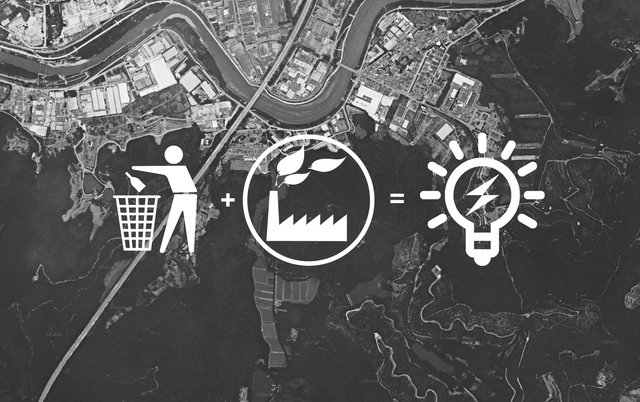
Six teams have been shortlisted to design the world's largest waste-to-energy plant in Shenzhen, China: Arup, Atkins, AECOM, Gerber Architekten, Schmidt Hammer Lassen with Gottlieb Paludan Architects, and local firm Tanghua Architects. Aiming to manage Shenzhen's growing population (and waste accumulation), the "Shenzhen East Waste-to-Energy Plant" plans to incinerate 5000 tonnes of waste daily and generate an estimated 550 million kWh per year.