1. ArchDaily
  2. thesis

thesis: The Latest Architecture and News

The Project as Argument: What is Architectural Thinking?

Architecture is shaped not only by buildings, but by the ideas that make them possible. Before the constraints of capital, regulation, and procurement, there is a moment when architecture is allowed to think aloud. The first confrontation with this fertile moment usually takes place in academia, in the thesis. It is not merely a requirement for graduation, but a space of speculative freedom where architecture formulates hypotheses, builds arguments, and tests positions.

For many, it is also the first opportunity to think beyond the structure of academic programs — a first chance to explore something more personal, unresolved, or even unreasonable. While often seen as an endpoint, the thesis is better understood as a beginning: the first engagement with architecture as a form of reasoning, where the project is not yet a response, but a question.

The Project as Argument: What is Architectural Thinking? - Image 1 of 4The Project as Argument: What is Architectural Thinking? - Image 2 of 4The Project as Argument: What is Architectural Thinking? - Image 3 of 4The Project as Argument: What is Architectural Thinking? - Image 4 of 4The Project as Argument: What is Architectural Thinking? - More Images+ 27

The Second Studio Podcast: Preparing for Architecture Thesis

The Second Studio Podcast: Preparing for Architecture Thesis - Featured Image
© The Second Studio Podcast

The Second Studio (formerly The Midnight Charette) is an explicit podcast about design, architecture, and the everyday. Hosted by Architects David Lee and Marina Bourderonnet, it features different creative professionals in unscripted conversations that allow for thoughtful takes and personal discussions.

A variety of subjects are covered with honesty and humor: some episodes are interviews, while others are tips for fellow designers, reviews of buildings and other projects, or casual explorations of everyday life and design. The Second Studio is also available on iTunes, Spotify, and YouTube.

This week David and Marina discuss undergraduate architecture thesis projects and studios, covering the differences between thesis projects, capstone projects, and dissertations; how to select a thesis topic; how to choose the right studio/professor; the value of doing a thesis; the unique challenges of thesis; and more.

Charles Correa’s 1955 Master Thesis Uses Animated Film to Explain Public Participation in Urban Processes

Subscriber Access | 

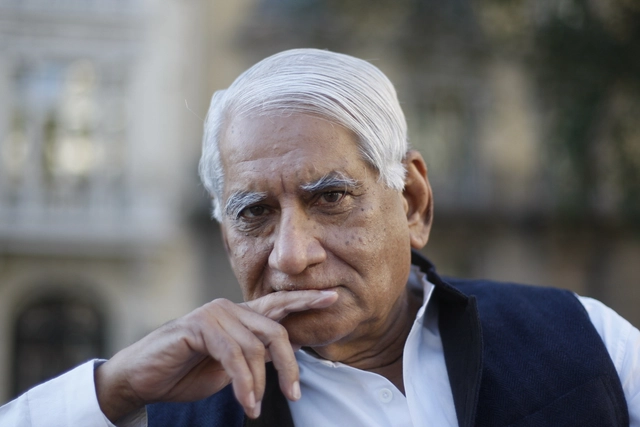
Charles Correa Foundation has recently released several snippets of ‘You & Your Neighbourhood’, Charles Correa’s 1955 Master Thesis at MIT, an animation film for which the architect was scriptwriter, animator, photographer and director. The thesis put forward the idea of a participatory process for the betterment of neighbourhoods, with a strong emphasis on creating a framework for improving urban conditions in a bottom-up approach.

Call for Submissions: Architecture Thesis of the Year | ATY 2020

The Charette has launched ‘Architecture Thesis of the Year | ATY 2020’ - an international architecture thesis competition that aims to extend appreciation to the tireless effort and exceptional creativity of student thesis in the fields of Architecture, Urban Design, Landscape, and Restoration. We seek to encourage young talent in bringing their path-breaking ideas to the forefront on a global scale.

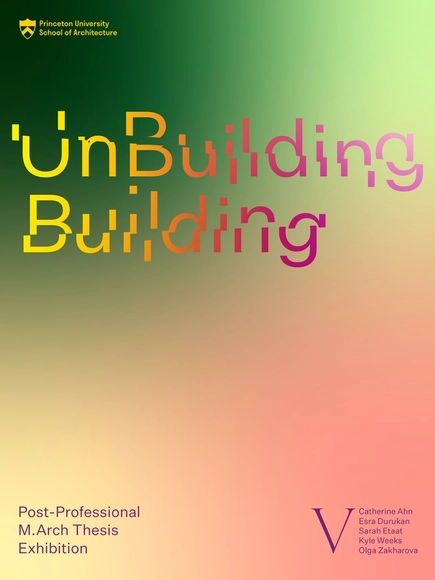
UnBuilding Building | 2020 Post-Professional M.Arch Thesis Virtual Exhibition

Princeton School of Architecture is pleased to announce UnBuilding Building, an online exhibition by the 2020 Post-Professional M.Arch Thesis class coordinated by Professor Jesse Reiser. The website showcases projects by five students—Catherine Ahn, Esra Durukan, Sarah Etaat, Kyle Weeks, and Olga Zakharova—collectively named "V".

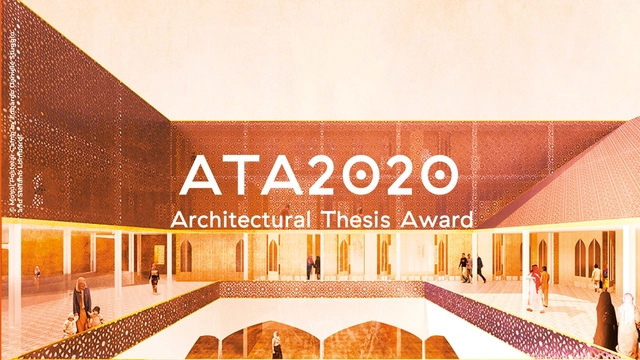
Architectural Thesis Award - ATA2020

Archistart promotes the fourth Architectural Thesis Award, the international thesis award, launched with the aim of promoting, rewarding and giving visibility to young talents in architecture.

Prize-Winning Harvard GSD Thesis Questions the Skin-Deep Application of Vernacular Design

Each year, the Boston Society of Architects offers the James Templeton Kelley Prize to the best final design project for the MArch degree at the Harvard Graduate School of Design. This year, the March II recipient was Ziwei Song for their thesis titled “Not so skin deep: vernacularism in XL” for exploring alternative ways of integrating the Chinese vernacular with modern “XL” developments.

Ziwei’s thesis sought to re-approach the typical developer project in China, and demonstrate the capacity of the vernacular image to positively-effect the sequence, perception, and exposure of space. To test this, the project was placed on Chongqing, a typical second-tier city in China with a concentration of XL developer projects.

Prize-Winning Harvard GSD Thesis Questions the Skin-Deep Application of Vernacular Design - Image 1 of 4Prize-Winning Harvard GSD Thesis Questions the Skin-Deep Application of Vernacular Design - Image 2 of 4Prize-Winning Harvard GSD Thesis Questions the Skin-Deep Application of Vernacular Design - Image 3 of 4Prize-Winning Harvard GSD Thesis Questions the Skin-Deep Application of Vernacular Design - Image 4 of 4Prize-Winning Harvard GSD Thesis Questions the Skin-Deep Application of Vernacular Design - More Images+ 14

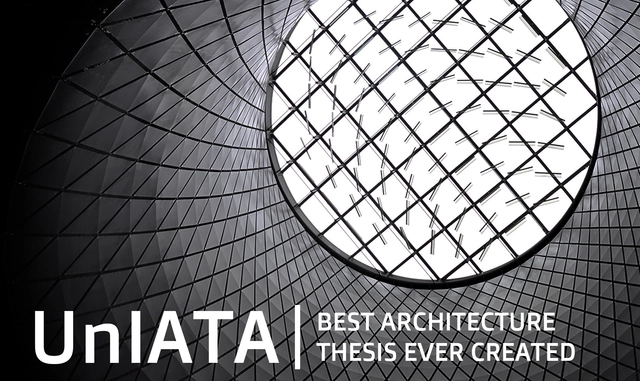
UnIATA - Unfuse International Architecture Thesis Awards 2018

UNFUSE serves as a platform to create a global community of architects and designers who are pushing the boundaries of architecture discipline to enrich our built environment. At UNFUSE we promote exceptional works, ideas, experimentations in the field of architecture, landscape, urban Design, society, culture and ecology.

"Faith Estates" Proposes a New Approach to Religious Pilgrimage by Excavating Holy Sites

Subscriber Access | 
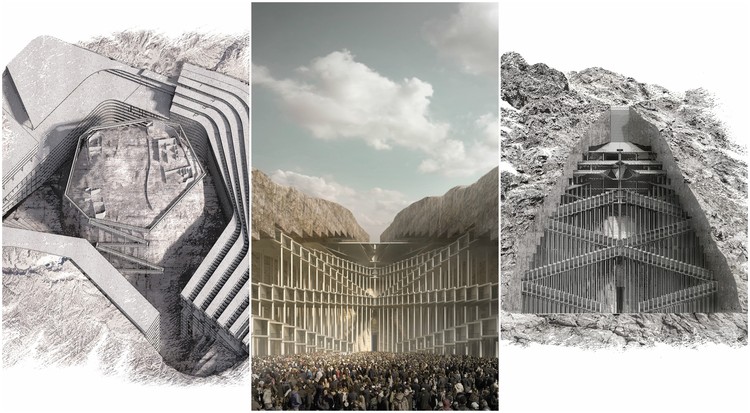
"Faith Estates" Proposes a New Approach to Religious Pilgrimage by Excavating Holy Sites - Image 6 of 4
Machaerus religious development. Image © Akarachai Padlom, Eleftherios Sergios, Nasser Alamadi

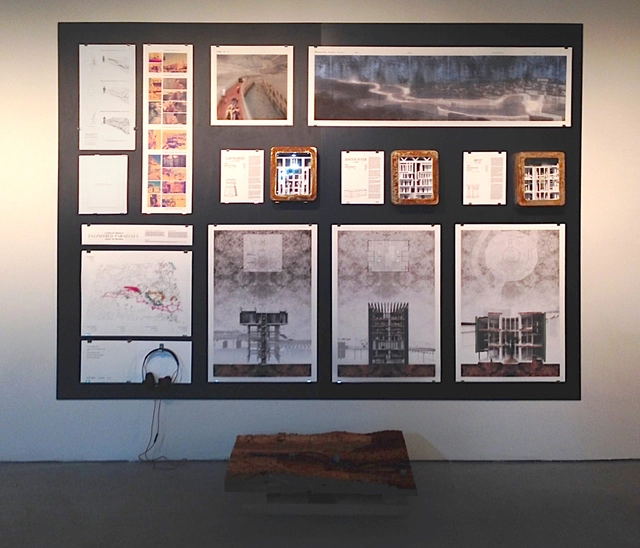
In a time of what seems to be ever-increasing religious and political conflict, Bartlett students Akarachai Padlom, Eleftherios Sergios, and Nasser Alamadi instead chose to focus on collaboration between religions in their thesis project entitled “Faith Estates,” which outlines a new method of mass religious tourism. In an area around the Dead Sea characterized by disputed boundaries and conflicting ownership claims, the group aims to reimagine the relationship between the world’s three monotheistic religions, but also to rethink the relationship between religion, tourism, and the landscape. The design consists of large-scale excavation sites which form tourist resorts along a pilgrimage route with the goal of forming a mutually beneficial relationship.

"Faith Estates" Proposes a New Approach to Religious Pilgrimage by Excavating Holy Sites - Image 1 of 4"Faith Estates" Proposes a New Approach to Religious Pilgrimage by Excavating Holy Sites - Image 2 of 4"Faith Estates" Proposes a New Approach to Religious Pilgrimage by Excavating Holy Sites - Image 3 of 4"Faith Estates" Proposes a New Approach to Religious Pilgrimage by Excavating Holy Sites - Image 4 of 4Faith Estates Proposes a New Approach to Religious Pilgrimage by Excavating Holy Sites - More Images+ 14