1. ArchDaily
  2. New York City

New York City: The Latest Architecture and News

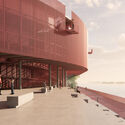
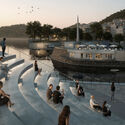
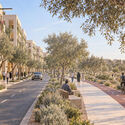
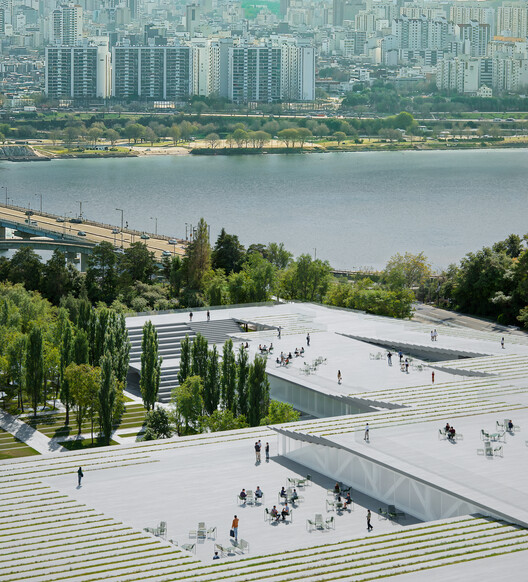
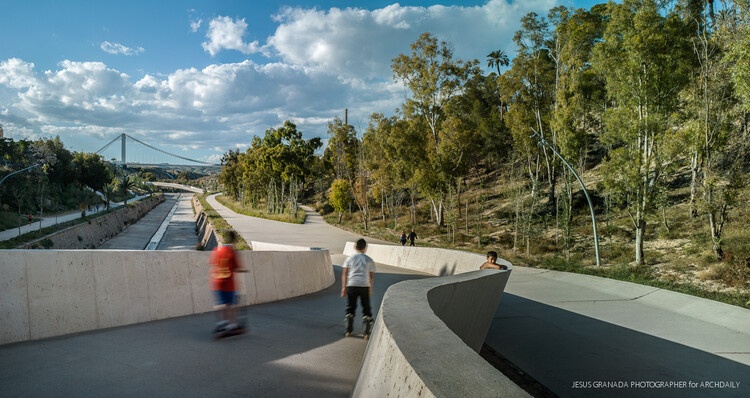
The Metrics We Use Decide the Cities We Build: Urban Indicators and Lived Experience

Subscriber Access | 

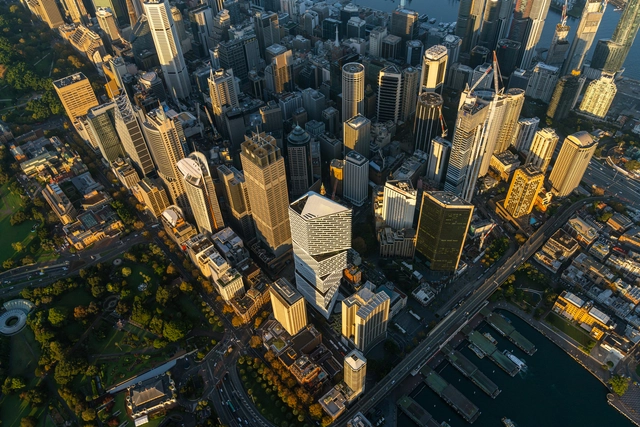
Modern cities are running on performance indicators. They move millions of people each day, concentrate capital, separate land uses, and sustain complex systems of logistics and consumption. In that sense, the city functions as a system to be continually adjusted and optimized.

Today's dominant metrics are familiar and widely witnessed: vehicles per hour, average commute times, floor area ratios, parking turnover, housing starts, and tax revenue per parcel of land. These figures describe a city that is legible through efficiency. They are inherited from an industrial logic, where urban space is treated more like a production mechanism than a lived-in environment. In this framing, cities begin to mimic the needs and metrics of a machine.
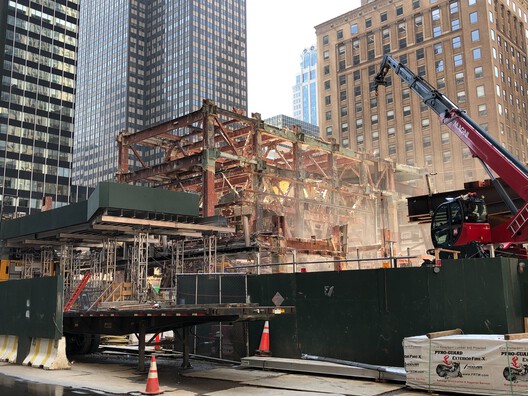
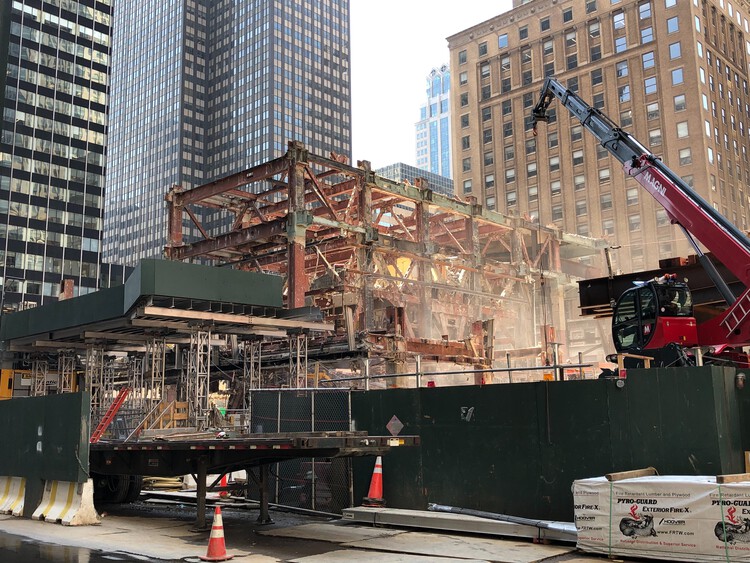
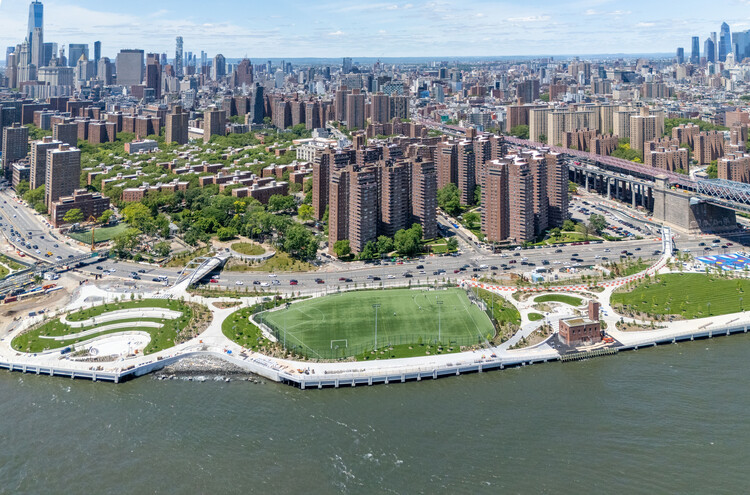
The Metrics We Use Decide the Cities We Build: Urban Indicators and Lived Experience - Image 1 of 4The Metrics We Use Decide the Cities We Build: Urban Indicators and Lived Experience - Image 2 of 4The Metrics We Use Decide the Cities We Build: Urban Indicators and Lived Experience - Image 3 of 4The Metrics We Use Decide the Cities We Build: Urban Indicators and Lived Experience - Image 4 of 4The Metrics We Use Decide the Cities We Build: Urban Indicators and Lived Experience - More Images+ 2

Rethinking the High-Rise: 5 Unbuilt Towers from the ArchDaily Community

Subscriber Access | 

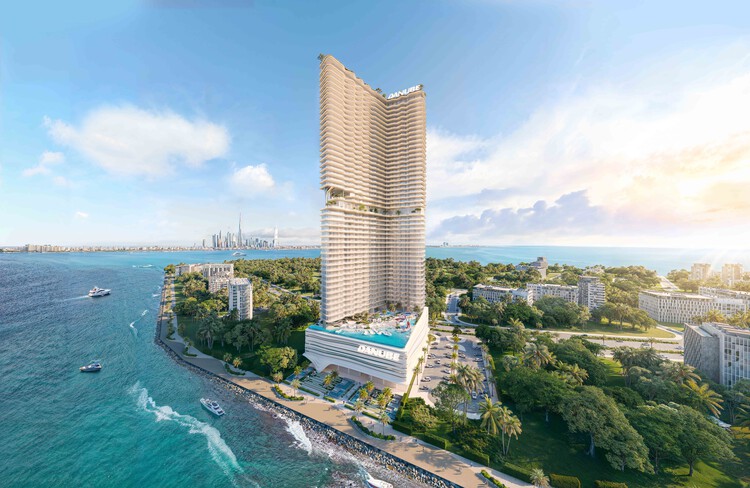
High-rise architecture continues to serve as a primary tool for accommodating density in rapidly evolving urban environments. Traditionally defined by efficiency and repetition, the tower is increasingly being reexamined as a more complex spatial and organizational system. Across different geographies, architects are testing how vertical structures can move beyond singular functions to incorporate layered programs, environmental strategies, and new forms of occupation.

The following selection brings together unbuilt projects submitted by the ArchDaily community, highlighting a range of approaches to the contemporary tower. From mixed-use developments and residential high-rises to speculative ecological proposals, these works reflect an ongoing shift in how vertical architecture is conceived. These towers engage with broader questions of privacy, coexistence, adaptability, and urban integration.

Rethinking the High-Rise: 5 Unbuilt Towers from the ArchDaily Community - Image 9 of 4Rethinking the High-Rise: 5 Unbuilt Towers from the ArchDaily Community - Image 17 of 4Rethinking the High-Rise: 5 Unbuilt Towers from the ArchDaily Community - Image 28 of 4Rethinking the High-Rise: 5 Unbuilt Towers from the ArchDaily Community - Image 7 of 4Rethinking the High-Rise: 5 Unbuilt Towers from the ArchDaily Community - More Images+ 27

Peterson Rich Office Designs Permanent Galleries for Brooklyn Museum’s African Art Collection

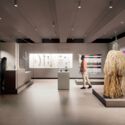
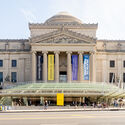
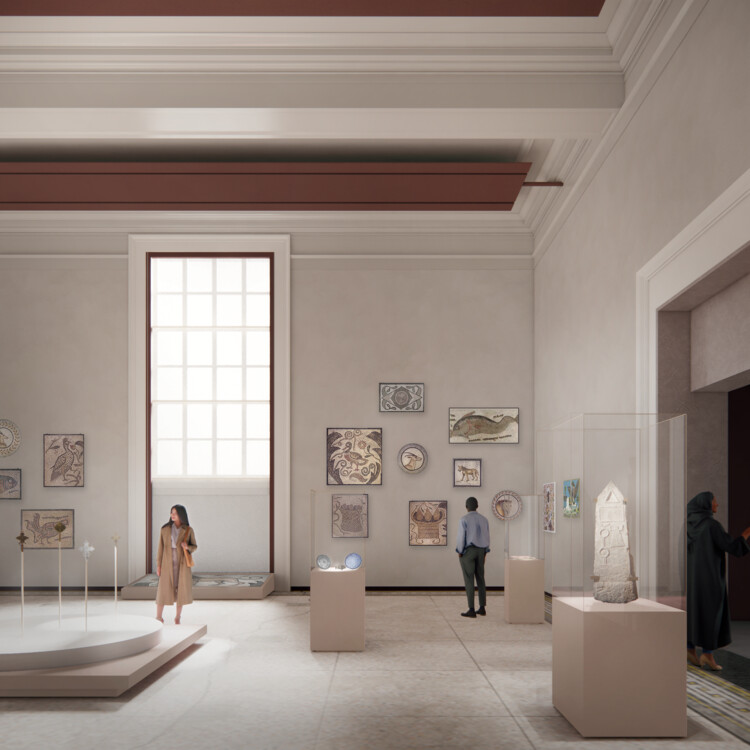
New York's Brooklyn Museum has announced the extension of its neoclassical building, a New York City–designated landmark, to include new galleries dedicated to its historic African art collection. The project to renovate and create permanent galleries was designed by the Brooklyn-based architectural firm Peterson Rich Office (PRO), with prior experience in contemporary exhibition spaces, in consultation with Beyer Blinder Belle Architects & Planners on the museum's historic preservation. The project transforms previously underutilized spaces that served as on-site storage, marking a new milestone in a series of renovations of an institution with over 200 years of history. For the first time, the museum's Egyptian art galleries will connect to the new African galleries, uniting North Africa with the rest of the continent to offer visitors a cohesive vision of Africa's rich artistic legacy.

Peterson Rich Office Designs Permanent Galleries for Brooklyn Museum’s African Art Collection - Image 1 of 4Peterson Rich Office Designs Permanent Galleries for Brooklyn Museum’s African Art Collection - Image 2 of 4Peterson Rich Office Designs Permanent Galleries for Brooklyn Museum’s African Art Collection - Image 3 of 4Peterson Rich Office Designs Permanent Galleries for Brooklyn Museum’s African Art Collection - Image 4 of 4Peterson Rich Office Designs Permanent Galleries for Brooklyn Museum’s African Art Collection - More Images

Modular Installation Reimagines Unfinished Structures at Limbo Museum in Accra, Ghana

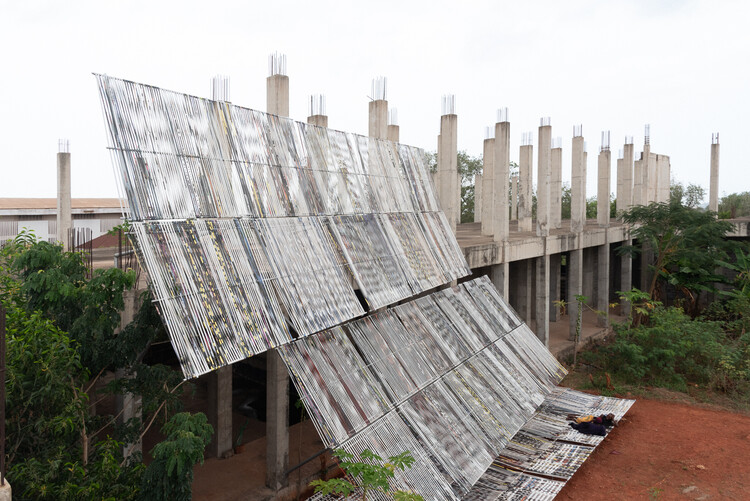
The recently opened Limbo Museum in Accra, Ghana, inaugurated a two-part architectural installation by TAELON7 on March 12th, led by architect Juergen Benson-Strohmayer. The installation was commissioned by the museum in partnership with Art Omi, a not-for-profit arts center in New York's Hudson Valley. The project is the first commission of a collaboration between the two institutions and will be installed in both locations, Accra and New York. Titled Limbo Engawa, the modular, lightweight structure dialogues with the formerly abandoned Brutalist building housing the museum, transforming its skeletal concrete structure and its surrounding land into spaces for use, care, and encounter. The project reflects on the boundaries between unfinished urban architecture and the landscape, foregrounding the labor and stewardship often invisible in both urban and institutional contexts, and asserting that even incomplete or overlooked sites are vessels of civic possibility.

Modular Installation Reimagines Unfinished Structures at Limbo Museum in Accra, Ghana - Image 1 of 4Modular Installation Reimagines Unfinished Structures at Limbo Museum in Accra, Ghana - Image 4 of 4Modular Installation Reimagines Unfinished Structures at Limbo Museum in Accra, Ghana - Image 5 of 4Modular Installation Reimagines Unfinished Structures at Limbo Museum in Accra, Ghana - Image 23 of 4Modular Installation Reimagines Unfinished Structures at Limbo Museum in Accra, Ghana - More Images+ 27

From Diplomacy to Mobility: Six Legislative Responses Cities Are Using to Confront Climate Change

From building codes to mobility restrictions and new diplomatic roles within city governments, climate policy is increasingly being shaped at the local level through a widening range of legislative and institutional tools. Cities as varied as Sydney, Boston, New York, Paris, Miami, and dozens across Latin America are adopting targeted strategies that reflect their distinct environmental pressures and governance structures. These initiatives range from all-electric and net-zero construction requirements, to traffic-control measures designed to curb the social costs of private vehicle use, to emerging forms of urban diplomacy that coordinate responses to rising temperatures and biodiversity loss. Together, these approaches illustrate how territorial management is evolving in response to the accelerating climate crisis, and how local governments are experimenting with regulation and collaboration to confront challenges that are at once global and deeply place-specific.

From Diplomacy to Mobility: Six Legislative Responses Cities Are Using to Confront Climate Change - Image 1 of 4From Diplomacy to Mobility: Six Legislative Responses Cities Are Using to Confront Climate Change - Image 2 of 4From Diplomacy to Mobility: Six Legislative Responses Cities Are Using to Confront Climate Change - Image 3 of 4From Diplomacy to Mobility: Six Legislative Responses Cities Are Using to Confront Climate Change - Image 4 of 4From Diplomacy to Mobility: Six Legislative Responses Cities Are Using to Confront Climate Change - More Images+ 1

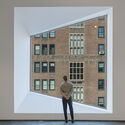
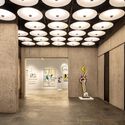
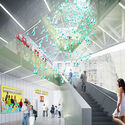
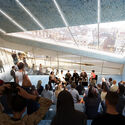
The New Museum Expansion by OMA Opens on March 21 with Exhibition on Humanity

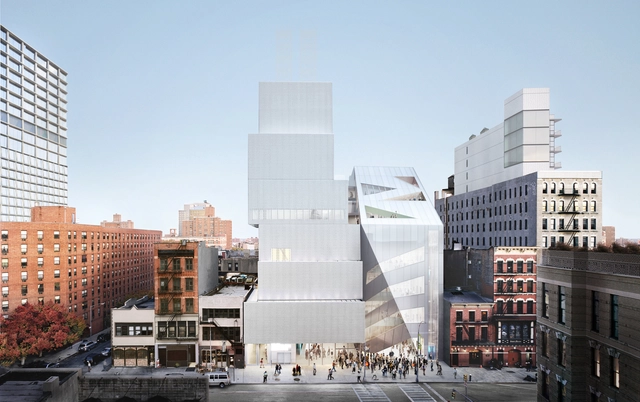
The New Museum is the only museum in New York City dedicated exclusively to contemporary art. From its beginnings as a one-room office on Hudson Street to the inauguration of its first freestanding building on the Bowery, designed by SANAA in 2007, it has evolved into a center for exhibitions, research, and documentation on international living artists. In 2017, Shohei Shigematsu and Rem Koolhaas of OMA were selected to design the New Museum's expansion. The first design images were released in 2019. On January 13, the Museum announced that its 60,000-square-foot expansion, designed in collaboration with Cooper Robertson, will open on March 21, 2026, with an exhibition exploring the very definition of humanity.

The New Museum Expansion by OMA Opens on March 21 with Exhibition on Humanity - Image 1 of 4The New Museum Expansion by OMA Opens on March 21 with Exhibition on Humanity - Image 2 of 4The New Museum Expansion by OMA Opens on March 21 with Exhibition on Humanity - Image 3 of 4The New Museum Expansion by OMA Opens on March 21 with Exhibition on Humanity - Image 4 of 4The New Museum Expansion by OMA Opens on March 21 with Exhibition on Humanity - More Images+ 4

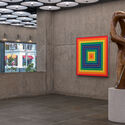
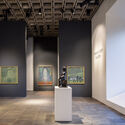
High Museum of Art Announces Touring Exhibition on Isamu Noguchi’s Design Work

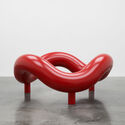
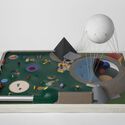
The High Museum of Art in Atlanta will present Isamu Noguchi: "I am not a designer" from April 10 to August 2, 2026. The exhibition examines the design work of Isamu Noguchi (1904–1988) across sculpture, furniture, lighting, landscape, and stage design, marking his first major design-focused retrospective in nearly 25 years. Following its presentation in Atlanta, the exhibition will travel to the Peabody Essex Museum in Salem, Massachusetts, from September 19, 2026, to January 3, 2027, and to the Memorial Art Gallery of the University of Rochester in spring 2027.

High Museum of Art Announces Touring Exhibition on Isamu Noguchi’s Design Work - Image 1 of 4High Museum of Art Announces Touring Exhibition on Isamu Noguchi’s Design Work - Image 2 of 4High Museum of Art Announces Touring Exhibition on Isamu Noguchi’s Design Work - Image 3 of 4High Museum of Art Announces Touring Exhibition on Isamu Noguchi’s Design Work - Image 4 of 4High Museum of Art Announces Touring Exhibition on Isamu Noguchi’s Design Work - More Images+ 4

Who Owns Public Space? Three Active Models of Shared Management Shaping Urban Commons in Europe and New York

Public space is often understood as belonging to no one in particular, collectively accessible yet institutionally maintained, yet a growing number of initiatives are challenging this assumption by testing shared management and distributed ownership models. In Paris, Adoptez un banc introduces a sponsorship-based approach, allowing individuals and groups to support temporarily and symbolically claim responsibility for historic public furniture without compromising its collective use. Elsewhere in the city, community gardens operating under the Main Verte framework demonstrate a self-managed model, in which public and private landowners retain ownership while delegating day-to-day control to citizen associations for food production and shared use. In New York, Common Corner represents a third pathway, based on institutional collaboration and participatory design, where public agencies, nonprofits, designers, and residents co-produce public space within a public housing context. Taken together, these three cases suggest that care, authorship, and responsibility can be distributed across citizens and institutions, producing more resilient, locally grounded urban environments.

Meganom Nears Completion of 262 Fifth Avenue Residential Skyscraper in New York City

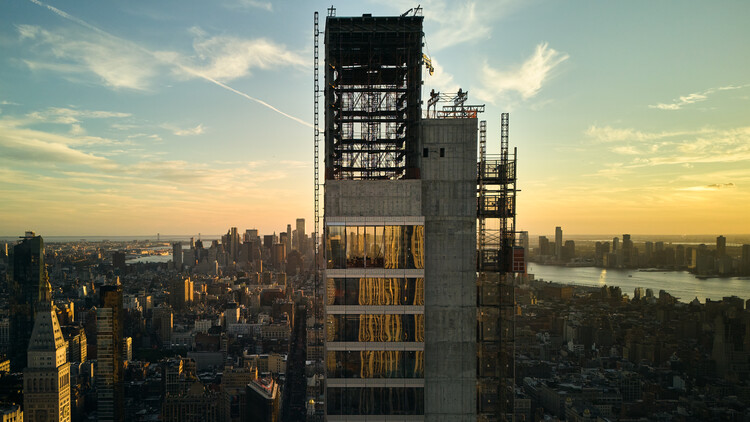
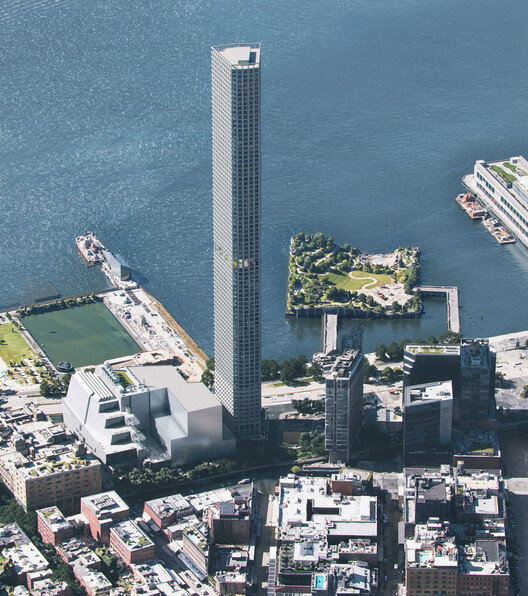
Moscow-based architecture, urban design, and research practice Meganom is nearing completion of its residential skyscraper at 262 Fifth Avenue in Manhattan, New York City. Designed for client Five Points Development, the project dates back to 2015 and brings together an international team that includes Norm Architects as interior architect, SLCE Architects as architect of record, and untitled architecture overseeing architectural supervision and project management. Rising 860 feet over 52 stories, the tower contains 26 residential units within approximately 140,000 square feet and draws conceptual inspiration from aeronautics, envisioning apartments as elevated "shelves" that frame expansive views of the city.

Meganom Nears Completion of 262 Fifth Avenue Residential Skyscraper in New York City - Image 1 of 4Meganom Nears Completion of 262 Fifth Avenue Residential Skyscraper in New York City - Image 2 of 4Meganom Nears Completion of 262 Fifth Avenue Residential Skyscraper in New York City - Image 3 of 4Meganom Nears Completion of 262 Fifth Avenue Residential Skyscraper in New York City - Image 4 of 4Meganom Nears Completion of 262 Fifth Avenue Residential Skyscraper in New York City - More Images+ 12

“Supertall for All”: Powerhouse Company Proposes Equitable Mixed-Income Skyscraper in New York City

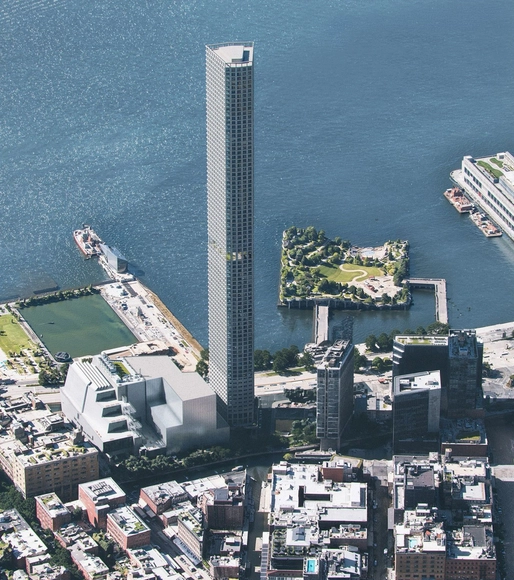
In January 2025, New York City Mayor and the New York City Economic Development Corporation (NYCEDC) announced new steps in the reimagining of Gansevoort Square, a 66,000-square-foot site located on Little West 12th Street between Washington Street and 10th Avenue in Manhattan's Meatpacking District. The redevelopment of the site aims to integrate a mix of affordable housing for New Yorkers, new retail space for residents and visitors, and opportunities to expand the Whitney Museum of American Art and the High Line. The Request for Proposals outlined a vision for up to 600 units of mixed-income housing, with a goal of 50 percent of the total units being permanently affordable, along with ground-floor commercial space. International architectural practice Powerhouse Company recently revealed its competition proposal, exceeding these demands with 1,000 rental homes in a supertall tower, half affordable and half market-rate, mixed equally throughout the building's full height.

“Supertall for All”: Powerhouse Company Proposes Equitable Mixed-Income Skyscraper in New York City - Image 1 of 4“Supertall for All”: Powerhouse Company Proposes Equitable Mixed-Income Skyscraper in New York City - Image 2 of 4“Supertall for All”: Powerhouse Company Proposes Equitable Mixed-Income Skyscraper in New York City - Image 3 of 4“Supertall for All”: Powerhouse Company Proposes Equitable Mixed-Income Skyscraper in New York City - Image 4 of 4“Supertall for All”: Powerhouse Company Proposes Equitable Mixed-Income Skyscraper in New York City - More Images+ 8

Visualizing an Art Deco Icon: The Reimagined Waldorf Astoria

 | Sponsored Content

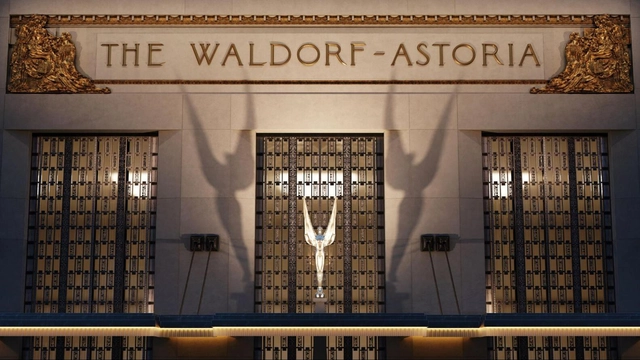
The quintessential symbol of Manhattan, Waldorf Astoria New York officially reopened for the public this year after an extensive renovation. Over its long history, the property has undergone numerous transformations, from its 19th-century beginnings to the modern landmark that stands between Park Avenue and Lexington Avenue.

Reimagining a building that pioneered modern hospitality—a jewel in New York's skyline—posed a challenge that required close collaboration between preservationists, 3D visualizers, architects, and designers. Together, they worked to preserve its protected architectural heritage while meeting contemporary expectations for craftsmanship and comfort.

The Studio Museum in Harlem Opens Its First Purpose-Built Home by Adjaye Associates

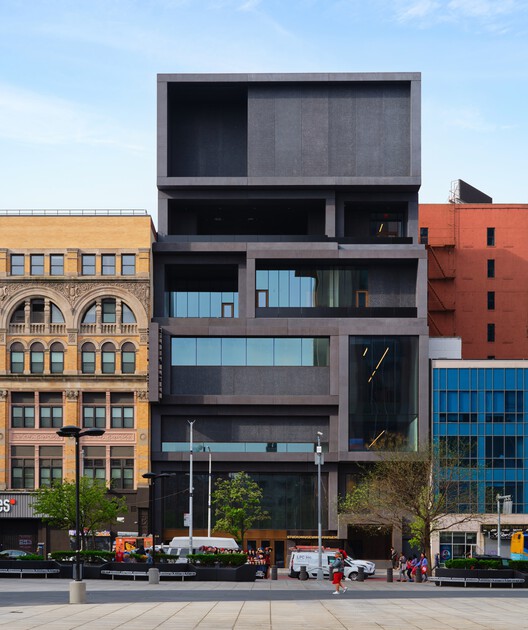
The Studio Museum in Harlem is preparing to open its new purpose-built home to the public on November 15 with a Community Day celebration. Designed by Adjaye Associates in collaboration with Cooper Robertson, the seven-story, 82,000-square-foot building is located on West 125th Street in Harlem, New York City. Serving as a major institution dedicated to artists of African descent, the museum's new facility marks the first structure in its fifty-seven-year history conceived specifically for its mission. The opening signals a new chapter for the museum's engagement with art, education, and the local community through expanded spatial and programmatic capacities.

The Studio Museum in Harlem Opens Its First Purpose-Built Home by Adjaye Associates - Image 1 of 4The Studio Museum in Harlem Opens Its First Purpose-Built Home by Adjaye Associates - Image 2 of 4The Studio Museum in Harlem Opens Its First Purpose-Built Home by Adjaye Associates - Image 3 of 4The Studio Museum in Harlem Opens Its First Purpose-Built Home by Adjaye Associates - Image 4 of 4The Studio Museum in Harlem Opens Its First Purpose-Built Home by Adjaye Associates - More Images

Exhibition at Paul Rudolph’s Modulightor Building in New York Unites Works of Architectural Art from Gehry, Rossi, and More

An exhibition of architectural drawings and photographs, titled "Architecture = Art: The Susan Grant Lewin Collection," is now on view at Paul Rudolph's Modulightor Building in Manhattan, New York. Hosted by the Paul Rudolph Institute for Modern Architecture (PRIMA), the collection brings together works by prominent architects, including Eileen Gray, Daniel Arsham, Frank Gehry, Jesse Reiser, Hani Rashid, Steven Holl, Aldo Rossi, Michael Graves, James Wines, Stanley Tigerman, John Hejduk, among others. The drawings are accompanied by a selection of photographs by architectural photographers such as Ezra Stoller, Robin Hill, Norman McGrath, Paul Clemence, and others. The exhibition opened on July 2 and will remain on view until September 20, 2025.

Exhibition at Paul Rudolph’s Modulightor Building in New York Unites Works of Architectural Art from Gehry, Rossi, and More - Image 1 of 4Exhibition at Paul Rudolph’s Modulightor Building in New York Unites Works of Architectural Art from Gehry, Rossi, and More - Image 2 of 4Exhibition at Paul Rudolph’s Modulightor Building in New York Unites Works of Architectural Art from Gehry, Rossi, and More - Image 3 of 4Exhibition at Paul Rudolph’s Modulightor Building in New York Unites Works of Architectural Art from Gehry, Rossi, and More - Image 4 of 4Exhibition at Paul Rudolph’s Modulightor Building in New York Unites Works of Architectural Art from Gehry, Rossi, and More - More Images+ 16

Public Pools as Public Spaces: The Role of Swimming and Bathing in Cities

When one thinks of public spaces, the image of a pool rarely comes to mind. Public spaces are the center of civic life, places where most interactions, activities, and behaviors follow strict social and cultural norms to ensure the safety and comfort of all users. In contrast, swimming and bathing represent something more intimate and primordial, a sensorial experience distinct from any other. In addition to the health benefits, the act of floating in space creates a break from everyday life and its constraints.

As social spaces, public baths, and pools offer an even more unusual experience. Here, regular conduct rules and norms no longer apply. Social nudity becomes the new norm, and, as people strip off their clothes, they also lose their status markers, transforming the pool into an egalitarian oasis. Across history, these often-discredited spaces offered a heightened social experience, fostering connections and bringing a new element to dense urban environments. As a typology present since antiquity, public baths and pools have also been a disputed space, as a manifestation of difficult topics such as gender and racial segregation, gentrification, and surveillance in contrast to the freedom they promise.

Public Pools as Public Spaces: The Role of Swimming and Bathing in Cities - Image 1 of 4Public Pools as Public Spaces: The Role of Swimming and Bathing in Cities - Image 2 of 4Public Pools as Public Spaces: The Role of Swimming and Bathing in Cities - Image 3 of 4Public Pools as Public Spaces: The Role of Swimming and Bathing in Cities - Image 4 of 4Public Pools as Public Spaces: The Role of Swimming and Bathing in Cities - More Images+ 13

"Luxury Without Context Is Just Excess": Elisa Orlanski Ours on Bridging Design Vision with Market Realities

Subscriber Access | 

In the complex ecosystem of architectural development, where innovative concepts meet market realities, a distinct role exists to bridge diverse professional interests and realize impactful spaces. Elisa Orlanski Ours exemplifies this function. This is the domain of Elisa Orlanski Ours, a designer, educator, and industry leader. As Chief Planning & Design Officer at Corcoran Sunshine Marketing Group, Elisa founded her department two decades ago. Now, her extensive portfolio spans condominium skyscraper master plans and individual branded villas across continents, including significant New York City developments like Hudson Yards and 220 Central Park South, as well as international developments in collaboration with prominent architectural firms like SHoP Architects, BIG, Herzog & de Meuron, Adjaye Associates, and SO-IL. Her strategic perspective on bringing projects from schematic phase to final sale provides valuable insights into the industry's intricate workings. ArchDaily's Managing Editor, Maria-Cristina Florian, had the opportunity to discuss these critical topics with Elisa in the following interview.

"Luxury Without Context Is Just Excess": Elisa Orlanski Ours on Bridging Design Vision with Market Realities - Image 1 of 4"Luxury Without Context Is Just Excess": Elisa Orlanski Ours on Bridging Design Vision with Market Realities - Image 2 of 4"Luxury Without Context Is Just Excess": Elisa Orlanski Ours on Bridging Design Vision with Market Realities - Image 3 of 4"Luxury Without Context Is Just Excess": Elisa Orlanski Ours on Bridging Design Vision with Market Realities - Image 4 of 4Luxury Without Context Is Just Excess: Elisa Orlanski Ours on Bridging Design Vision with Market Realities - More Images+ 31

NYC’s First River-Based, Water-Filtering Pool Takes Shape at Pier 35

Friends of + POOL has announced the next steps in the realization of New York City's first water-filtering floating swimming pool, to be installed at Pier 35, north of the Manhattan and Brooklyn Bridges. The project seeks to provide safe public access to swimming in the city's rivers by integrating a custom-designed filtration system into a floating pool structure. Installation at Pier 35 is scheduled for May 2026, when the pool will enter its final phase of evaluation. Public access will be contingent on the successful completion of large-scale filtration testing and the full build-out of the facility for safe public use.

NYC’s First River-Based, Water-Filtering Pool Takes Shape at Pier 35 - Image 1 of 4NYC’s First River-Based, Water-Filtering Pool Takes Shape at Pier 35 - Image 2 of 4NYC’s First River-Based, Water-Filtering Pool Takes Shape at Pier 35 - Image 3 of 4NYC’s First River-Based, Water-Filtering Pool Takes Shape at Pier 35 - Image 4 of 4NYC’s First River-Based, Water-Filtering Pool Takes Shape at Pier 35 - More Images+ 4

On Juneteenth, Discover 8 Museums and Cultural Institutions Dedicated to African American History and Culture

Subscriber Access | 

Juneteenth, observed annually on June 19th, commemorates the emancipation of enslaved African Americans in the United States, marking a moment of liberation and reflection on a complex and often overlooked history. Originally celebrated in Texas, Juneteenth has grown to symbolize broader themes of freedom, resilience, and cultural identity, fostering conversations about justice and representation. This day also presents an opportunity to highlight the ways in which architecture can serve as a medium for preserving and presenting African American history and cultural values.

Architecture, beyond its functional and aesthetic qualities, can reflect and collect narratives, values, and hidden histories, giving a tangible and visual presence to communities often underrepresented in cityscapes. Buildings dedicated to African American history and culture become physical landmarks that anchor these stories within the daily life of cities. They serve as places of learning, reflection, and celebration, creating meaningful spaces that engage the public and foster a sense of communal identity.

On Juneteenth, Discover 8 Museums and Cultural Institutions Dedicated to African American History and Culture - Image 1 of 4On Juneteenth, Discover 8 Museums and Cultural Institutions Dedicated to African American History and Culture - Image 2 of 4On Juneteenth, Discover 8 Museums and Cultural Institutions Dedicated to African American History and Culture - Image 3 of 4On Juneteenth, Discover 8 Museums and Cultural Institutions Dedicated to African American History and Culture - Image 4 of 4On Juneteenth, Discover 8 Museums and Cultural Institutions Dedicated to African American History and Culture - More Images+ 9

BIG and Dencityworks Design New Mixed-Use Waterfront Tower in Brooklyn, New York

The proposed mixed-use tower at 175 Third Street is the fifth building planned across four sites within the Gowanus Wharf development in Brooklyn, New York. With views toward Manhattan and the Statue of Liberty, the 1,080,000 sq ft proposal includes affordable housing, retail and artist spaces, fitness areas, social and entertainment spaces, culminating in a rooftop with lounging zones and an outdoor pool. The project also envisions a 28,000-sq-ft public waterfront esplanade designed by Field Operations, intended to contribute to the ecological rehabilitation of the Gowanus Canal, continuing the broader transformation of this industrial neighborhood. Other project collaborators include dencityworks | architecture, AKRF, bucharest.studio, DeSimone, Ettinger Engineering Associates, Fried Frank, Hatfield Group, Impact Environmental, and Jenkins and Huntington.

BIG and Dencityworks Design New Mixed-Use Waterfront Tower in Brooklyn, New York - Image 1 of 4BIG and Dencityworks Design New Mixed-Use Waterfront Tower in Brooklyn, New York - Image 2 of 4BIG and Dencityworks Design New Mixed-Use Waterfront Tower in Brooklyn, New York - Image 3 of 4BIG and Dencityworks Design New Mixed-Use Waterfront Tower in Brooklyn, New York - Image 4 of 4BIG and Dencityworks Design New Mixed-Use Waterfront Tower in Brooklyn, New York - More Images+ 2