1. ArchDaily
  2. New York

New York: The Latest Architecture and News

Marian Goodman Gallery New York / studioMDA

Marian Goodman Gallery New York  / studioMDA - Exterior Photography, Gallery, FacadeMarian Goodman Gallery New York  / studioMDA - Interior Photography, GalleryMarian Goodman Gallery New York  / studioMDA - Interior Photography, GalleryMarian Goodman Gallery New York  / studioMDA - Interior Photography, GalleryMarian Goodman Gallery New York  / studioMDA - More Images+ 15

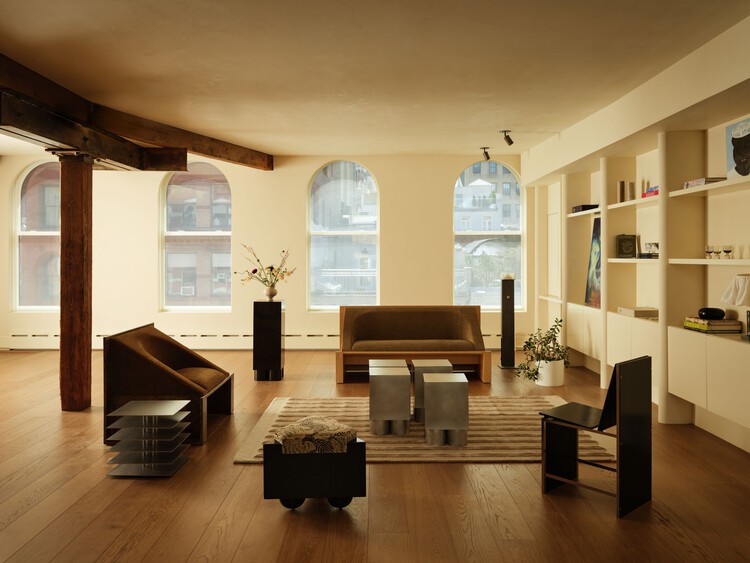
Tribeca Residence / Muqaddas Akkari Studio

Tribeca Residence / Muqaddas Akkari Studio - Interior Photography, Apartment Interiors, LightingTribeca Residence / Muqaddas Akkari Studio - Interior Photography, Apartment Interiors, Stairs, LightingTribeca Residence / Muqaddas Akkari Studio - Interior Photography, Apartment Interiors, Kitchen, Countertop, ChairTribeca Residence / Muqaddas Akkari Studio - Interior Photography, Apartment Interiors, Lighting, ChairTribeca Residence / Muqaddas Akkari Studio - More Images+ 22

  • Area Area of this architecture project Area:  4200 ft²
  • Year Completion year of this architecture project Year:  2025
  • Manufacturers Brands with products used in this architecture project
    Manufacturers:  Allied Maker, Apparatus Studio, Daikon Studio, Human Home, In Common WIth

Studio Gang Completes the Samuel H. Scripps Theater Center for Hudson Valley Shakespeare in New York

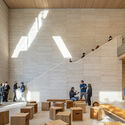
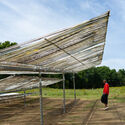
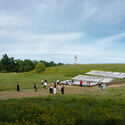
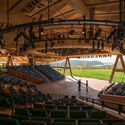
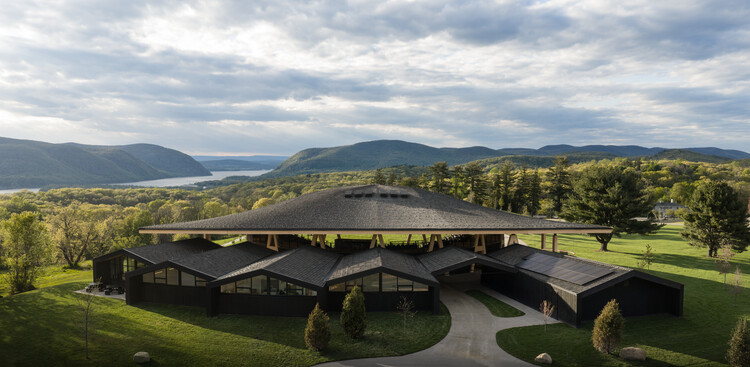
Hudson Valley Shakespeare has opened the Samuel H. Scripps Theater Center in Garrison, New York, marking the completion of a six-year project that establishes the company's first permanent home. The new campus, designed by Studio Gang in collaboration with Nelson Byrd Woltz Landscape Architects, expands the organization's long-standing open-air performance model into a permanent cultural and educational facility integrated within the Hudson Valley landscape. Construction began in September 2024 following several years of planning and fundraising.

Studio Gang Completes the Samuel H. Scripps Theater Center for Hudson Valley Shakespeare in New York - Imagem 1 de 4Studio Gang Completes the Samuel H. Scripps Theater Center for Hudson Valley Shakespeare in New York - Imagem 2 de 4Studio Gang Completes the Samuel H. Scripps Theater Center for Hudson Valley Shakespeare in New York - Imagem 3 de 4Studio Gang Completes the Samuel H. Scripps Theater Center for Hudson Valley Shakespeare in New York - Imagem 4 de 4Studio Gang Completes the Samuel H. Scripps Theater Center for Hudson Valley Shakespeare in New York - More Images+ 5

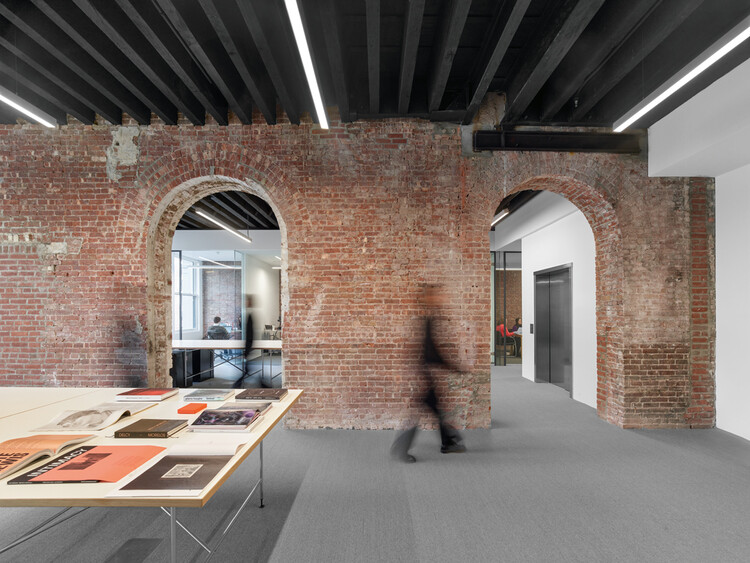
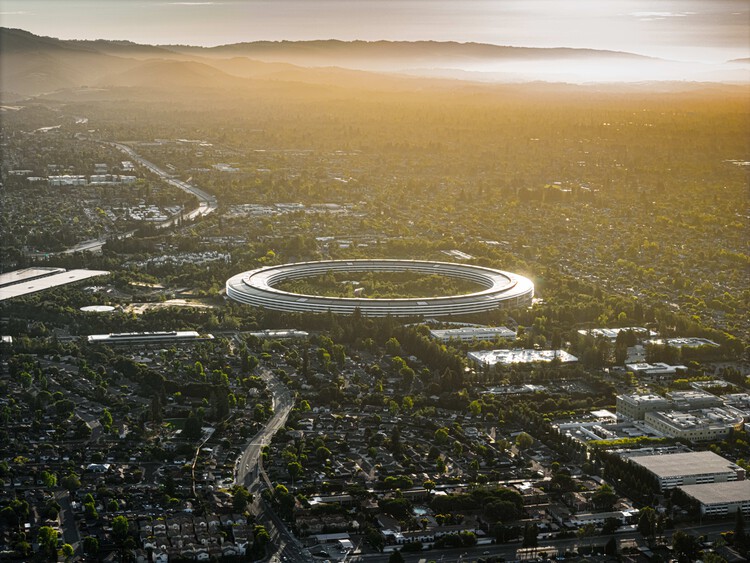
Designing a Brand: How Apple Built an Architectural Language of Glass and Order

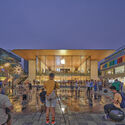
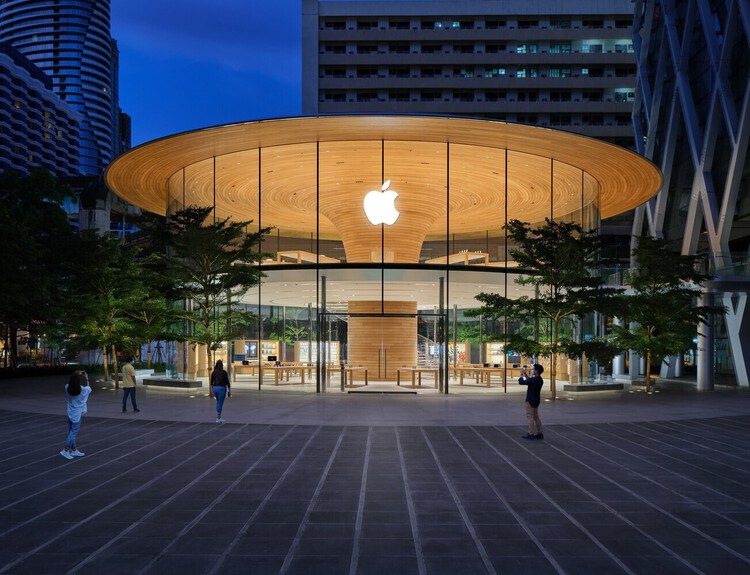
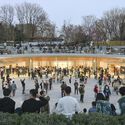
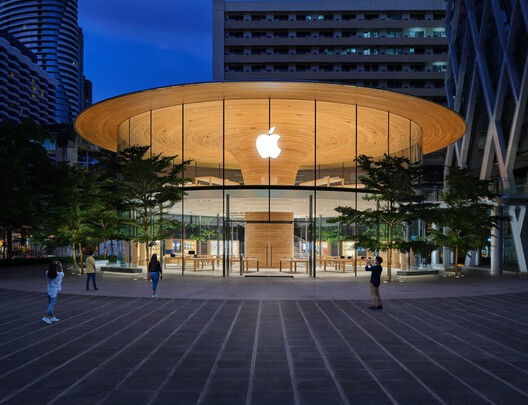
In 2026, Apple marked fifty years since its founding. Over the past two decades, Apple has developed a consistent architectural language that extends its brand into the built environment, transforming stores, workplaces, and public-facing spaces into active components of its identity. These environments guide movement, frame interaction, and condition the ways in which users encounter both products and the company itself.

From the handheld device to the urban interior, Apple has sought to maintain a high degree of control over form, material, and experience. Architecture becomes part of this system when the company begins to define how it is perceived and engaged with in physical space. Research on retail environments has shown how spatial layout, visibility, and circulation patterns can shape behavior and interaction, turning architecture into an interface between brand and user.

Designing a Brand: How Apple Built an Architectural Language of Glass and Order - Imagen 1 de 4Designing a Brand: How Apple Built an Architectural Language of Glass and Order - Imagen 2 de 4Designing a Brand: How Apple Built an Architectural Language of Glass and Order - Imagen 3 de 4Designing a Brand: How Apple Built an Architectural Language of Glass and Order - Imagen 4 de 4Designing a Brand: How Apple Built an Architectural Language of Glass and Order - More Images+ 10

From London to Houston: Four Ongoing Pedestrianisation Initiatives Shaping More Walkable Cities

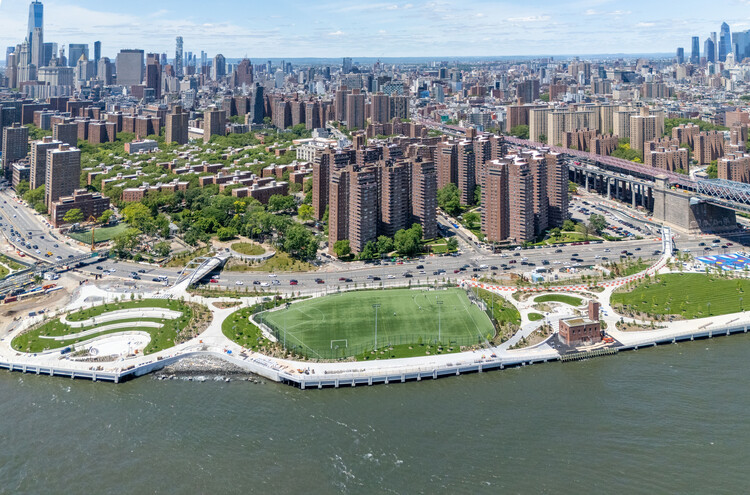
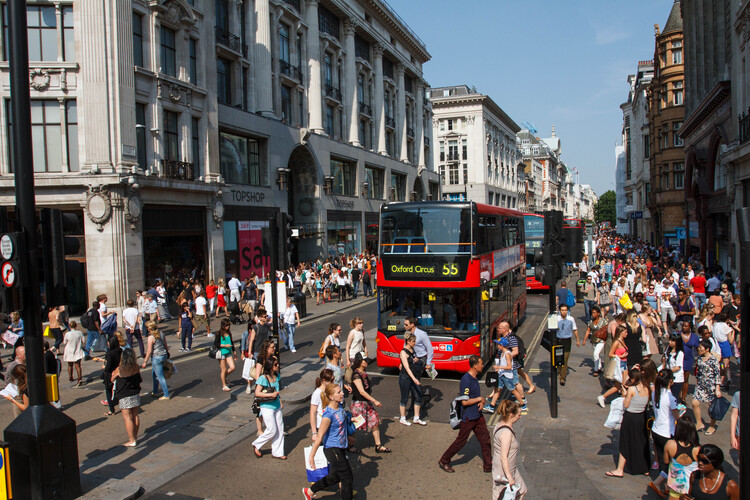
Across Europe and North America, pedestrianisation is increasingly being deployed as a context-specific urban strategy shaped by distinct economic, social, and spatial pressures. As cities continue to reassess the role of streets in the wake of economic shifts, climate pressures, and changing mobility patterns, pedestrianisation is emerging as a tool in current urban transformation efforts. Across London, New York, Houston, and Stockholm, ongoing pedestrian-first projects are testing different pathways toward more resilient and walkable cities, ranging from statutory planning and capital construction to research-driven visioning. London's Oxford Street is advancing through consultation and governance reform to address retail decline; New York's Paseo Park is moving from a temporary pandemic intervention into permanent infrastructure; Houston is accelerating the pedestrianisation of its downtown core in preparation for a global sporting event; and Stockholm's Superline is using design research to rethink the future of an inner-city motorway. These initiatives reveal how pedestrianisation is being actively negotiated, designed, and built today, adapting to local motivations while converging on a shared objective of streets that perform as resilient public spaces rather than traffic conduits.

From London to Houston: Four Ongoing Pedestrianisation Initiatives Shaping More Walkable Cities - Image 2 of 4From London to Houston: Four Ongoing Pedestrianisation Initiatives Shaping More Walkable Cities - Image 3 of 4From London to Houston: Four Ongoing Pedestrianisation Initiatives Shaping More Walkable Cities - Image 1 of 4From London to Houston: Four Ongoing Pedestrianisation Initiatives Shaping More Walkable Cities - Image 8 of 4From London to Houston: Four Ongoing Pedestrianisation Initiatives Shaping More Walkable Cities - More Images+ 12

Peterson Rich Office Designs Permanent Galleries for Brooklyn Museum’s African Art Collection

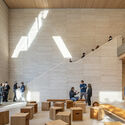
New York's Brooklyn Museum has announced the extension of its neoclassical building, a New York City–designated landmark, to include new galleries dedicated to its historic African art collection. The project to renovate and create permanent galleries was designed by the Brooklyn-based architectural firm Peterson Rich Office (PRO), with prior experience in contemporary exhibition spaces, in consultation with Beyer Blinder Belle Architects & Planners on the museum's historic preservation. The project transforms previously underutilized spaces that served as on-site storage, marking a new milestone in a series of renovations of an institution with over 200 years of history. For the first time, the museum's Egyptian art galleries will connect to the new African galleries, uniting North Africa with the rest of the continent to offer visitors a cohesive vision of Africa's rich artistic legacy.

Peterson Rich Office Designs Permanent Galleries for Brooklyn Museum’s African Art Collection - Image 1 of 4Peterson Rich Office Designs Permanent Galleries for Brooklyn Museum’s African Art Collection - Image 2 of 4Peterson Rich Office Designs Permanent Galleries for Brooklyn Museum’s African Art Collection - Image 3 of 4Peterson Rich Office Designs Permanent Galleries for Brooklyn Museum’s African Art Collection - Image 4 of 4Peterson Rich Office Designs Permanent Galleries for Brooklyn Museum’s African Art Collection - More Images

New Museum of Contemporary Art / OMA

New Museum of Contemporary Art / OMA - Exterior Photography, Museum, CityscapeNew Museum of Contemporary Art / OMA - Interior Photography, MuseumNew Museum of Contemporary Art / OMA - Interior Photography, Museum, StairsNew Museum of Contemporary Art / OMA - Exterior Photography, MuseumNew Museum of Contemporary Art / OMA - More Images+ 21

New York, United States

Foster + Partners’ Two World Trade Center Revealed in New Renderings, Construction to Begin in 2026

Updated renderings for Two World Trade Center, the final commercial tower planned for the World Trade Center campus in Lower Manhattan, have been unveiled by Foster + Partners in collaboration with developer Silverstein Properties. Rising 373 meters at 200 Greenwich Street, the 55-story skyscraper will occupy a central position within the site, directly across from Santiago Calatrava's Oculus transportation hub and adjacent to the Perelman Performing Arts Center, completing the commercial edge of the master plan. The tower is set to become the new global headquarters of American Express, which will serve as the building's sole owner and occupant. Completion is currently anticipated in 2031, with construction scheduled to begin in spring 2026.

Foster + Partners’ Two World Trade Center Revealed in New Renderings, Construction to Begin in 2026 - Image 1 of 4Foster + Partners’ Two World Trade Center Revealed in New Renderings, Construction to Begin in 2026 - Image 2 of 4Foster + Partners’ Two World Trade Center Revealed in New Renderings, Construction to Begin in 2026 - Image 3 of 4Foster + Partners’ Two World Trade Center Revealed in New Renderings, Construction to Begin in 2026 - Image 4 of 4Foster + Partners’ Two World Trade Center Revealed in New Renderings, Construction to Begin in 2026 - More Images+ 1

Mutation Methods

Mutation Methods:
Exhibition by Andreas Palfinger and Aysin Bahar Sahin

Experimentation, Learning, and Evolution in Architectural Design: Get to Know WORKac

Subscriber Access | 

WORKac is a New York-based firm founded in 2003 by Amale Andraos and Dan Wood. The firm has always believed in "the power of architecture and design to engage in environmental and social concerns, and to create new possibilities for the future." In that sense, the firm's principals define their approach to architecture as a constant evolution. For them, it is a continuous process of learning, questioning, and relearning, which is nurtured through the firm's engagement in local culture, climates, and histories, as well as discourse in the fields of ecology, landscape, and urbanism. In this way, they are able to bring these topics together with a focus on public, cultural, and civic projects that aim to reinvent how people live, work, and experience the world.

Experimentation, Learning, and Evolution in Architectural Design: Get to Know WORKac  - Image 1 of 4Experimentation, Learning, and Evolution in Architectural Design: Get to Know WORKac  - Image 2 of 4Experimentation, Learning, and Evolution in Architectural Design: Get to Know WORKac  - Image 3 of 4Experimentation, Learning, and Evolution in Architectural Design: Get to Know WORKac  - Image 4 of 4Experimentation, Learning, and Evolution in Architectural Design: Get to Know WORKac  - More Images+ 6

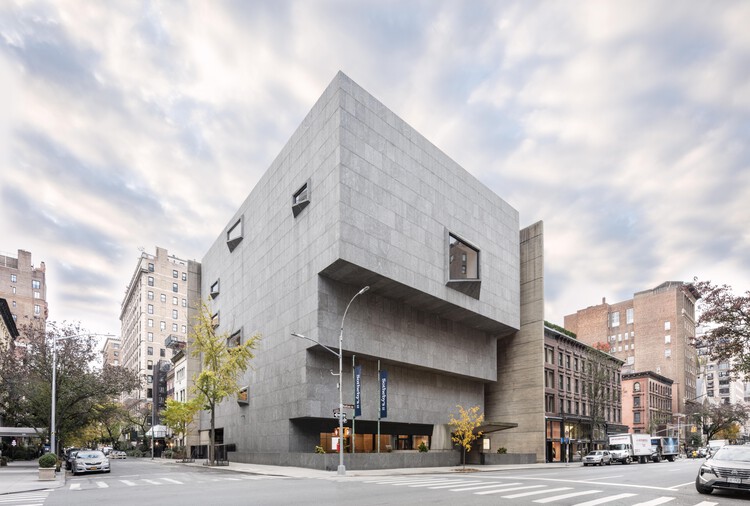
The New Museum Expansion by OMA Opens on March 21 with Exhibition on Humanity

The New Museum is the only museum in New York City dedicated exclusively to contemporary art. From its beginnings as a one-room office on Hudson Street to the inauguration of its first freestanding building on the Bowery, designed by SANAA in 2007, it has evolved into a center for exhibitions, research, and documentation on international living artists. In 2017, Shohei Shigematsu and Rem Koolhaas of OMA were selected to design the New Museum's expansion. The first design images were released in 2019. On January 13, the Museum announced that its 60,000-square-foot expansion, designed in collaboration with Cooper Robertson, will open on March 21, 2026, with an exhibition exploring the very definition of humanity.

The New Museum Expansion by OMA Opens on March 21 with Exhibition on Humanity - Image 1 of 4The New Museum Expansion by OMA Opens on March 21 with Exhibition on Humanity - Image 2 of 4The New Museum Expansion by OMA Opens on March 21 with Exhibition on Humanity - Image 3 of 4The New Museum Expansion by OMA Opens on March 21 with Exhibition on Humanity - Image 4 of 4The New Museum Expansion by OMA Opens on March 21 with Exhibition on Humanity - More Images+ 4

Cultural Venues, Fresh Perspectives on Public Space and One Month until the Winter Olympics: This Week’s Review

This week's news compilation brings together current discussions around public and collective space, cultural infrastructure, and long-term urban transformation across diverse geographic contexts. From shared management models redefining public space ownership in cities such as Paris and New York, to large-scale event-driven initiatives linked to Milano Cortina 2026 and the World Urban Forum in Baku, the selected projects and initiatives highlight how governance, culture, and infrastructure intersect in contemporary practice. These themes are further developed through a mix of strategic planning processes, including international test planning efforts in Northern Lviv, and built projects spanning education, culture, and temporary architecture, from a new dental teaching facility in Blantyre, Malawi, to restored and newly opened cultural venues in the United States and Taiwan, and adaptive reuse interventions showcased at the Chicago Architecture Biennial. The international examples outline an architectural landscape shaped by reuse, public engagement, and the evolving role of design in responding to social, cultural, and institutional frameworks.

Cultural Venues, Fresh Perspectives on Public Space and One Month until the Winter Olympics: This Week’s Review - Image 1 of 4Cultural Venues, Fresh Perspectives on Public Space and One Month until the Winter Olympics: This Week’s Review - Image 2 of 4Cultural Venues, Fresh Perspectives on Public Space and One Month until the Winter Olympics: This Week’s Review - Image 3 of 4Cultural Venues, Fresh Perspectives on Public Space and One Month until the Winter Olympics: This Week’s Review - Image 4 of 4Cultural Venues, Fresh Perspectives on Public Space and One Month until the Winter Olympics: This Week’s Review - More Images+ 15

The Egg Performing Arts Center Reopens Following Six-Month Restoration in Albany, New York

The Egg is a performing arts centre located in Albany, within New York's Empire State Plaza, designed by the North American firm Harrison & Abramovitz. Construction began in 1966 and was completed twelve years later, in 1978, with the aim of hosting a broad range of cultural events and performances for New York State residents. Drawing inspiration from Brazilian modernism, the domed, egg-like concrete structure stands out as a striking counterpoint within an otherwise rational urban ensemble. Surrounded by state government towers set in an open plaza and clad in stone, the building's exposed concrete, its seemingly suspended form, and pronounced curved geometry position it as a late example of modernist Brutalism. The venue is currently undergoing restoration and, after six months of renovations, is set to reopen on January 8, 2026, in what has been described as a "refreshed and reimagined" space.

The Egg Performing Arts Center Reopens Following Six-Month Restoration in Albany, New York - Image 1 of 4The Egg Performing Arts Center Reopens Following Six-Month Restoration in Albany, New York - Image 2 of 4The Egg Performing Arts Center Reopens Following Six-Month Restoration in Albany, New York - Image 3 of 4The Egg Performing Arts Center Reopens Following Six-Month Restoration in Albany, New York - Image 4 of 4The Egg Performing Arts Center Reopens Following Six-Month Restoration in Albany, New York - More Images

Who Owns Public Space? Three Active Models of Shared Management Shaping Urban Commons in Europe and New York

Public space is often understood as belonging to no one in particular, collectively accessible yet institutionally maintained, yet a growing number of initiatives are challenging this assumption by testing shared management and distributed ownership models. In Paris, Adoptez un banc introduces a sponsorship-based approach, allowing individuals and groups to support temporarily and symbolically claim responsibility for historic public furniture without compromising its collective use. Elsewhere in the city, community gardens operating under the Main Verte framework demonstrate a self-managed model, in which public and private landowners retain ownership while delegating day-to-day control to citizen associations for food production and shared use. In New York, Common Corner represents a third pathway, based on institutional collaboration and participatory design, where public agencies, nonprofits, designers, and residents co-produce public space within a public housing context. Taken together, these three cases suggest that care, authorship, and responsibility can be distributed across citizens and institutions, producing more resilient, locally grounded urban environments.

From Housing Policy in Europe to Large-Scale Master Planning in Mongolia: This Week’s Review

This week's review focuses on concrete responses to shared urban challenges, including housing affordability, long-term resilience, and the role of cultural and material innovation in shaping cities. The selection spans regulatory measures affecting housing markets in European cities, high-density residential and mixed-income proposals in New York, and major renewal and planning efforts in London, Barcelona, Ulaanbaatar, and Drammen. It also highlights research-driven and built projects in Chicago, Buenos Aires, Las Vegas, and Riyadh that explore circular construction, adaptive reuse, and new models for cultural and public infrastructure. Together, these worldwide projects offer a snapshot of how architecture and urban planning are addressing immediate pressures while laying the groundwork for more resilient and inclusive urban futures across diverse geographic and cultural contexts.
From Housing Policy in Europe to Large-Scale Master Planning in Mongolia: This Week’s Review - Imagen 1 de 4From Housing Policy in Europe to Large-Scale Master Planning in Mongolia: This Week’s Review - Imagen 2 de 4From Housing Policy in Europe to Large-Scale Master Planning in Mongolia: This Week’s Review - Imagen 3 de 4From Housing Policy in Europe to Large-Scale Master Planning in Mongolia: This Week’s Review - Imagen 4 de 4From Housing Policy in Europe to Large-Scale Master Planning in Mongolia: This Week’s Review - More Images+ 17

Meganom Nears Completion of 262 Fifth Avenue Residential Skyscraper in New York City

Moscow-based architecture, urban design, and research practice Meganom is nearing completion of its residential skyscraper at 262 Fifth Avenue in Manhattan, New York City. Designed for client Five Points Development, the project dates back to 2015 and brings together an international team that includes Norm Architects as interior architect, SLCE Architects as architect of record, and untitled architecture overseeing architectural supervision and project management. Rising 860 feet over 52 stories, the tower contains 26 residential units within approximately 140,000 square feet and draws conceptual inspiration from aeronautics, envisioning apartments as elevated "shelves" that frame expansive views of the city.

Meganom Nears Completion of 262 Fifth Avenue Residential Skyscraper in New York City - Imagen 1 de 4Meganom Nears Completion of 262 Fifth Avenue Residential Skyscraper in New York City - Imagen 2 de 4Meganom Nears Completion of 262 Fifth Avenue Residential Skyscraper in New York City - Imagen 3 de 4Meganom Nears Completion of 262 Fifth Avenue Residential Skyscraper in New York City - Imagen 4 de 4Meganom Nears Completion of 262 Fifth Avenue Residential Skyscraper in New York City - More Images+ 12

“Supertall for All”: Powerhouse Company Proposes Equitable Mixed-Income Skyscraper in New York City

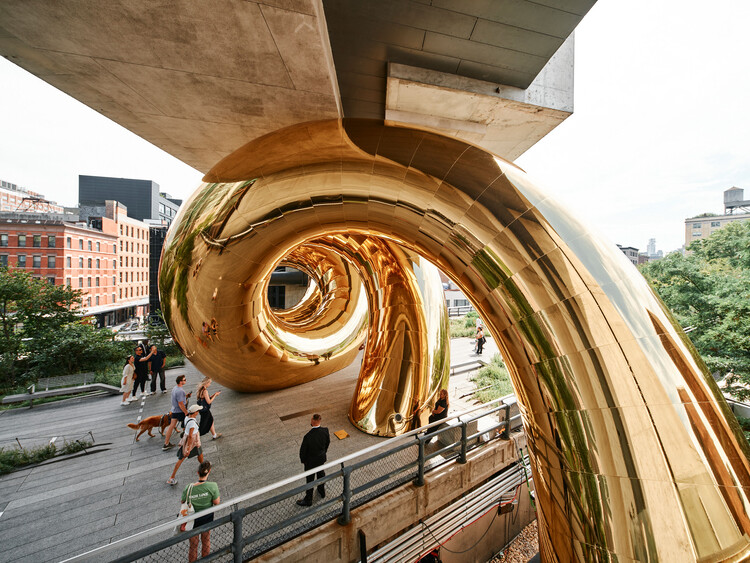
In January 2025, New York City Mayor and the New York City Economic Development Corporation (NYCEDC) announced new steps in the reimagining of Gansevoort Square, a 66,000-square-foot site located on Little West 12th Street between Washington Street and 10th Avenue in Manhattan's Meatpacking District. The redevelopment of the site aims to integrate a mix of affordable housing for New Yorkers, new retail space for residents and visitors, and opportunities to expand the Whitney Museum of American Art and the High Line. The Request for Proposals outlined a vision for up to 600 units of mixed-income housing, with a goal of 50 percent of the total units being permanently affordable, along with ground-floor commercial space. International architectural practice Powerhouse Company recently revealed its competition proposal, exceeding these demands with 1,000 rental homes in a supertall tower, half affordable and half market-rate, mixed equally throughout the building's full height.
“Supertall for All”: Powerhouse Company Proposes Equitable Mixed-Income Skyscraper in New York City - Image 1 of 4“Supertall for All”: Powerhouse Company Proposes Equitable Mixed-Income Skyscraper in New York City - Image 2 of 4“Supertall for All”: Powerhouse Company Proposes Equitable Mixed-Income Skyscraper in New York City - Image 3 of 4“Supertall for All”: Powerhouse Company Proposes Equitable Mixed-Income Skyscraper in New York City - Image 4 of 4“Supertall for All”: Powerhouse Company Proposes Equitable Mixed-Income Skyscraper in New York City - More Images+ 8

130 William High-Rise Residential Tower / Adjaye Associates

130 William High-Rise Residential Tower  / Adjaye Associates - Exterior Photography, Skyscrapers, Arch, Arcade130 William High-Rise Residential Tower  / Adjaye Associates - Skyscrapers130 William High-Rise Residential Tower  / Adjaye Associates - Skyscrapers130 William High-Rise Residential Tower  / Adjaye Associates - Interior Photography, Skyscrapers130 William High-Rise Residential Tower  / Adjaye Associates - More Images+ 17