1. ArchDaily
  2. Urban Planning

Urban Planning: The Latest Architecture and News

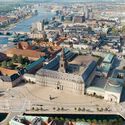
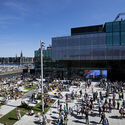
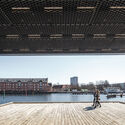
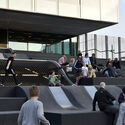
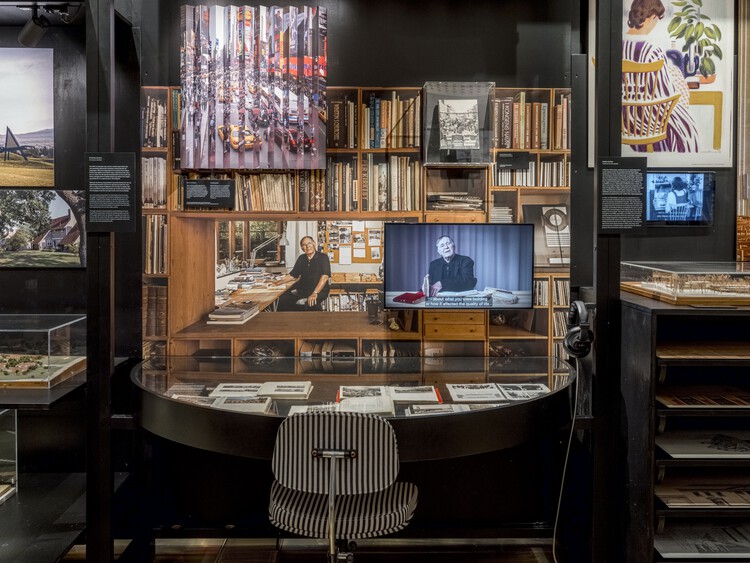
Copenhagen Architecture City Guide: 44 Projects Defining the Capital of Human-Scale Design

Subscriber Access | 

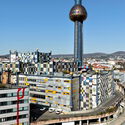
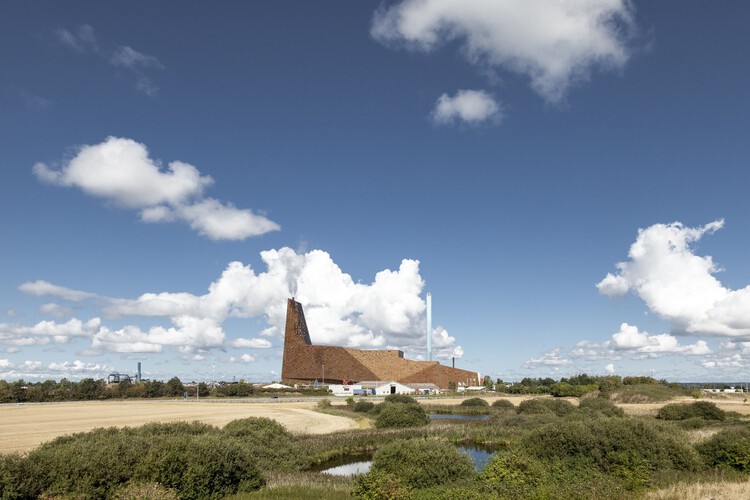
Copenhagen is long famous as the global capital of human-scale design and livability. Today, the city has widened its focus and is an active space where mid-century Scandinavian modernism meets the modern demands of climate adaptability, material circularity, radical conservation, and neighborhood density. During the first-ever Copenhagen Architecture Biennial, in 2025, the city transformed into a global platform for dialogue under the theme "Slow Down," exploring how architecture can respond to global pressures by rethinking the pace of change. And this year's 13th edition of the 3daysofdesign Festival will explore the theme of "Make This Moment Matter", encouraging the global design community to step away from digital noise and mass production to focus on the present.

Copenhagen Architecture City Guide: 44 Projects Defining the Capital of Human-Scale Design - Image 1 of 4Copenhagen Architecture City Guide: 44 Projects Defining the Capital of Human-Scale Design - Image 2 of 4Copenhagen Architecture City Guide: 44 Projects Defining the Capital of Human-Scale Design - Image 3 of 4Copenhagen Architecture City Guide: 44 Projects Defining the Capital of Human-Scale Design - Image 4 of 4Copenhagen Architecture City Guide: 44 Projects Defining the Capital of Human-Scale Design - More Images+ 43

Design as Repair: How Architecture Is Advancing Environmental Justice

Subscriber Access | 

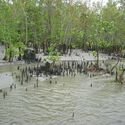
Environmental justice confronts a simple but uncomfortable truth: the benefits and burdens of the environment are not shared equally. Marginalized communities bear a disproportionate share of polluted air, unsafe water, toxic land uses, extreme heat, and the accelerating risks of climate change in cities around the world. These are the consequential products of decades of policy decisions, investment patterns, exclusionary planning practices, and planning choices that have consistently favored certain communities over others.

In cities and landscapes alike, these injustices are written into the physical fabric of places, even revealing extreme differences in environmental conditions between neighborhoods and districts. Dense neighborhoods with little tree canopy, for example, absorb and hold heat, exposing residents to higher rates of heat-related illness. Highways, industrial corridors, ports, and waste facilities cluster near low-income neighborhoods and communities of color, shaping conditions of health, air and soil quality, and long-term safety.

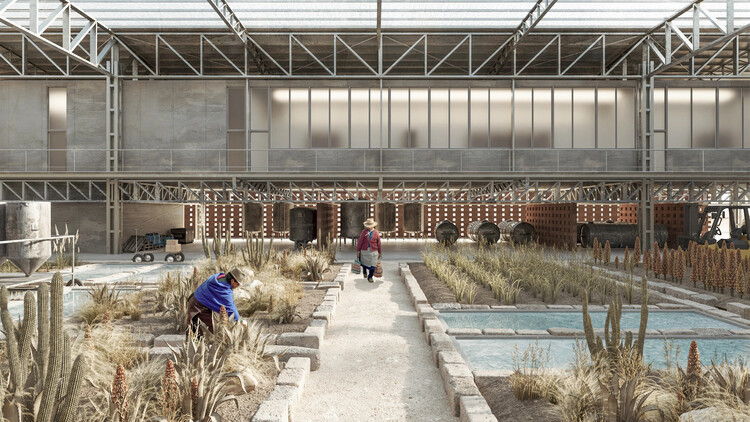
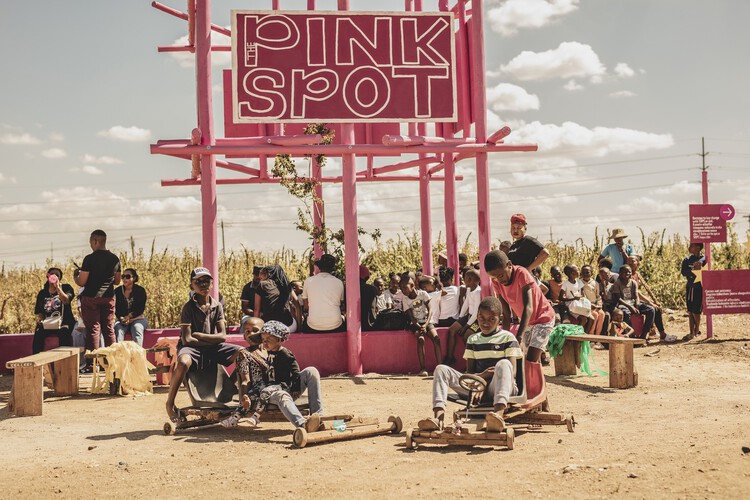
Design as Repair: How Architecture Is Advancing Environmental Justice - Image 1 of 4Design as Repair: How Architecture Is Advancing Environmental Justice - Image 2 of 4Design as Repair: How Architecture Is Advancing Environmental Justice - Image 3 of 4Design as Repair: How Architecture Is Advancing Environmental Justice - Image 4 of 4Design as Repair: How Architecture Is Advancing Environmental Justice - More Images+ 35

From Sacred to Public: 5 Disused Churches Reimagined as Cultural Spaces

Subscriber Access | 

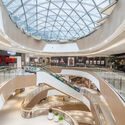
The conversion of disused religious temples through cultural programs constitutes one of the most compelling adaptive reuse strategies in contemporary urban planning. This functional compatibility seems to be rooted in the specific characteristics of churches: their central naves offer large-scale, clear floor plans and monumental cross-sections that easily accommodate the volumetric requirements of museums, theaters, or community hubs. Furthermore, the acoustic properties inherent to their vaulted ceilings, combined with intentional natural lighting filtered through stained glass windows or domes, create the spatial conditions for activities ranging from the performing arts to the exhibition of cultural artifacts. By assuming a public and cultural role, these buildings not only avoid demolition or physical abandonment but also preserve their status as urban and identity landmarks within the city fabric, revitalizing their immediate surroundings without altering their historical significance.

From Sacred to Public: 5 Disused Churches Reimagined as Cultural Spaces  - Image 1 of 4From Sacred to Public: 5 Disused Churches Reimagined as Cultural Spaces  - Image 2 of 4From Sacred to Public: 5 Disused Churches Reimagined as Cultural Spaces  - Image 3 of 4From Sacred to Public: 5 Disused Churches Reimagined as Cultural Spaces  - Image 4 of 4From Sacred to Public: 5 Disused Churches Reimagined as Cultural Spaces  - More Images+ 8

Curatorial Work as City-Making: Design Trust’s Marisa Yiu on Exhibitions and Spatial Agency

Subscriber Access | 

In Hong Kong, where architecture is often driven by real estate logic, infrastructure, and accelerated development, the space for bodily-scaled civic experimentation can be surprisingly narrow. This is where Design Trust has become distinctive. As a grant-making and project-enabling platform, it supports spatial interventions that sit between architecture, research, and public programming—work that is often too modest, collective, or uncertain to fit conventional client–architect pipelines.

At the center of this work is Marisa Yiu, whose leadership positions Design Trust as both an enabler and a cultural actor. Through initiatives such as Micro-Parks Hong Kong, alongside exhibitions and public programs, the organization treats discourse and prototyping as forms of spatial agency, linking designers, communities, institutions, and policy conversations while foregrounding questions of stewardship, maintenance, and the "afterlife" of public space.

Curatorial Work as City-Making: Design Trust’s Marisa Yiu on Exhibitions and Spatial Agency - Image 1 of 4Curatorial Work as City-Making: Design Trust’s Marisa Yiu on Exhibitions and Spatial Agency - Image 2 of 4Curatorial Work as City-Making: Design Trust’s Marisa Yiu on Exhibitions and Spatial Agency - Image 3 of 4Curatorial Work as City-Making: Design Trust’s Marisa Yiu on Exhibitions and Spatial Agency - Image 4 of 4Curatorial Work as City-Making: Design Trust’s Marisa Yiu on Exhibitions and Spatial Agency - More Images+ 19

World Urban Forum 13 Concludes in Baku with Focus on Housing, Resilience, and Urban Inclusion

The thirteenth session of the World Urban Forum (WUF13) concludes today, May 22, in Baku, Azerbaijan, after six days of discussions, exhibitions, and international exchanges centered on the theme "Housing the World: Safe and Resilient Cities and Communities." Co-organized by UN-Habitat and the Government of Azerbaijan, the forum marked the first time the event was held in the Caucasus region, bringing together policymakers, architects, urban planners, academics, and civil society representatives from around the world.

World Urban Forum 13 Concludes in Baku with Focus on Housing, Resilience, and Urban Inclusion - Image 1 of 4World Urban Forum 13 Concludes in Baku with Focus on Housing, Resilience, and Urban Inclusion - Image 2 of 4World Urban Forum 13 Concludes in Baku with Focus on Housing, Resilience, and Urban Inclusion - Image 3 of 4World Urban Forum 13 Concludes in Baku with Focus on Housing, Resilience, and Urban Inclusion - Image 4 of 4World Urban Forum 13 Concludes in Baku with Focus on Housing, Resilience, and Urban Inclusion - More Images+ 2

Architecture and Ideology: How Political Systems Shaped 20th-Century Design

Architecture is often presented as the visible expression of its time, its desires, its faith in progress, its idea of order. Yet this reading tends to flatten the conditions under which buildings are produced. It suggests that architecture follows history when, in many cases, it actively participates in it. Few periods make this more evident than the twentieth century, when architecture became deeply entangled with political programs, economic systems, and competing visions of how collective life should be organized.

What is commonly grouped under the label of Modernism is often described as a coherent project, defined by formal clarity, technological optimism, and a break with historical styles. But this apparent coherence dissolves when we look beyond its canonical centres. The same spatial principles (standardization, functional zoning, industrial production) were adopted in political and economic contexts that differed significantly in their structures and objectives. A static movement unfolded as a flexible system continuously reoriented according to the priorities of each regime. What appeared as a shared language was, in practice, a set of tools applied to distinct agendas.

From Spanish Presidio to the American Grid: The Hispanic Roots of San Diego’s Urban Core

Subscriber Access | 

Very close to the Mexican border, in the southwest corner of the United States, lies the city of San Diego. Its urban history began in 1769 with the arrival of a Spanish military expedition commanded by Gaspar de Portola, which marked the first permanent settlement in the territory that was known as Alta California. However, unlike the more formally urbanized administrative capitals and towns of Mexico and Central America, San Diego was conceived as a frontier outpost. Today, it has become the second-largest city in California, just after Los Angeles, and its urban grid tells a story about the Hispanic heritage that is intertwined with the contemporary cultural environment of the United States.

From Spanish Presidio to the American Grid: The Hispanic Roots of San Diego’s Urban Core - Image 1 of 4From Spanish Presidio to the American Grid: The Hispanic Roots of San Diego’s Urban Core - Image 2 of 4From Spanish Presidio to the American Grid: The Hispanic Roots of San Diego’s Urban Core - Image 3 of 4From Spanish Presidio to the American Grid: The Hispanic Roots of San Diego’s Urban Core - Image 6 of 4From Spanish Presidio to the American Grid: The Hispanic Roots of San Diego’s Urban Core - More Images+ 7

ParkTEA: An ArchDaily Student Project Awards Winner Reimagining the City for Cognitive Diversity

Subscriber Access | 

Public space is often designed around a narrow idea of how people move, interact, and respond to their surroundings. ParkTEA starts from a different position. The city can also make room for those who experience space through different sensory and social conditions.

Developed by Ignacio Martínez Pardo at the Escuela Técnica Superior de Arquitectura de Madrid (ETSAM), the project was conceived within the Master's thesis (Graduate-MHab) program during the 2024 to 2025 academic year, under the guidance of Héctor Fernández Elorza, Jesús Aparicio, Carlos García Fernández, and Jaime Daroca Guerrero. Recognized as one of the winners of the first edition of the ArchDaily Student Project Awards, ParkTEA engages the theme of coexistence through a proposal that brings together care, infrastructure, and urban life.

ParkTEA: An ArchDaily Student Project Awards Winner Reimagining the City for Cognitive Diversity - Image 1 of 4ParkTEA: An ArchDaily Student Project Awards Winner Reimagining the City for Cognitive Diversity - Image 2 of 4ParkTEA: An ArchDaily Student Project Awards Winner Reimagining the City for Cognitive Diversity - Image 3 of 4ParkTEA: An ArchDaily Student Project Awards Winner Reimagining the City for Cognitive Diversity - Image 4 of 4ParkTEA: An ArchDaily Student Project Awards Winner Reimagining the City for Cognitive Diversity - More Images+ 9

After Le Corbusier: How Southeast Asia Turned the Satellite City Into a Transit Megaproject

Southeast Asia is often narrated as a kind of architectural playground—an arena where modern and contemporary ideals have been tested at full scale through singular, iconic buildings. One can trace an easy lineage through names that have helped shape the region's skyline imagination: Paul Rudolph's Lippo Centre in Hong Kong and The Concourse in Singapore, I.M. Pei's OCBC Centre and Hong Kong's Bank of China Tower, Norman Foster's Supreme Court of Singapore and the HSBC Main Building in Hong Kong, Ron Phillips' Hong Kong City Hall, Moshe Safdie's Marina Bay Sands. Yet this familiar history—told through objects, colonialism, authorship, and signature forms—risks missing a deeper, more consequential layer of influence: the planning logics and infrastructural frameworks that have quietly structured how these cities expand, densify, and distribute everyday life.

After Le Corbusier: How Southeast Asia Turned the Satellite City Into a Transit Megaproject - Image 1 of 4After Le Corbusier: How Southeast Asia Turned the Satellite City Into a Transit Megaproject - Image 2 of 4After Le Corbusier: How Southeast Asia Turned the Satellite City Into a Transit Megaproject - Image 3 of 4After Le Corbusier: How Southeast Asia Turned the Satellite City Into a Transit Megaproject - Image 4 of 4After Le Corbusier: How Southeast Asia Turned the Satellite City Into a Transit Megaproject - More Images+ 12

Baku Architecture City Guide: 15 Projects Reframing Azerbaijan’s Capital

Subscriber Access | 

Some cities grow through continuity, others construct themselves through moments of acceleration. Baku, in Azerbaijan, seems to operate somewhere in between. Its historic core, the Icherisheher, still holds a spatial logic that resists expansion: dense, enclosed, defined by proximity and repetition. But just beyond its walls, the city begins to shift. Scale increases, distances expand, and the relationship between buildings becomes less about continuity and more about visibility.

Over the past two decades, Baku has been the site of a deliberate effort to construct an image of itself. Oil wealth provided the means, but architecture became one of its primary tools. Projects such as the Heydar Aliyev Center by Zaha Hadid Architects or the Flame Towers are symbols of this transformation, their forms designed to circulate as much through media as through the city itself. They are precise, controlled, and highly resolved objects. But they also introduce a different urban logic, one that privileges singularity over continuity and positions architecture as an agent of representation.

Baku Architecture City Guide: 15 Projects Reframing Azerbaijan’s Capital - Image 1 of 4Baku Architecture City Guide: 15 Projects Reframing Azerbaijan’s Capital - Image 2 of 4Baku Architecture City Guide: 15 Projects Reframing Azerbaijan’s Capital - Image 3 of 4Baku Architecture City Guide: 15 Projects Reframing Azerbaijan’s Capital - Image 4 of 4Baku Architecture City Guide: 15 Projects Reframing Azerbaijan’s Capital - More Images+ 12

Ideology of Performance: Sustainability and the Limits of Efficiency

This article is part of our new Opinion section, a format for argument-driven essays on critical questions shaping our field.

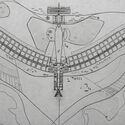
The modern sustainability project is built on the promise that evolving technologies can reconcile urban and economic growth with ecological responsibility. By the metrics developed by the built environment professions and the policies adopted by governments, progress is tangible and accelerating: buildings consume less energy per square foot than they did a generation ago, vehicles emit fewer pollutants per mile, and urban infrastructure is more integrated and measurably cleaner in many cities. And yet total resource consumption continues to rise. Sustainability, as currently practiced across the built environment professions, has become a strategy for optimizing consumption rather than reducing it. Until the profession is willing to question the scale and structure of demand rather than the efficiency with which that demand is met, its most celebrated achievements will continue to fall short of the problem they claim to address.
Ideology of Performance: Sustainability and the Limits of Efficiency - Image 1 of 4Ideology of Performance: Sustainability and the Limits of Efficiency - Image 2 of 4Ideology of Performance: Sustainability and the Limits of Efficiency - Image 5 of 4Ideology of Performance: Sustainability and the Limits of Efficiency - Image 3 of 4Ideology of Performance: Sustainability and the Limits of Efficiency - More Images+ 23

Podium–Tower Urbanism in Southeast Asia: Density, Management, and the Disappearing Street

Subscriber Access | 

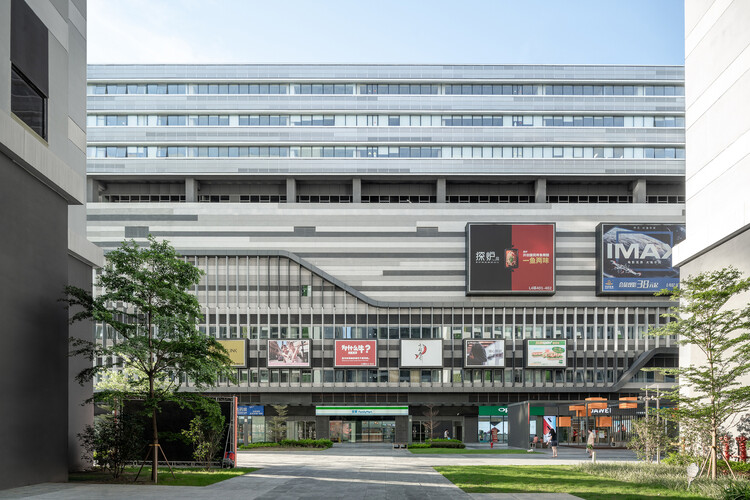
If elevated networks reveal a city that increasingly walks above the street, the podium–tower is the typology that often makes that condition feel inevitable. Across Southeast Asia, podium–tower projects have become one of the dominant languages of metropolitan growth: a system that concentrates housing, jobs, retail, and transit connections into highly legible and managed parcels. From an urban planning perspective, the model can be remarkably effective—absorbing congestion, formalizing circulation, and delivering density quickly. Yet as it spreads, the typology also raises a quieter question: what does it optimize for, and what does it erode—especially at the level of the street, where urban life is meant to be negotiated rather than curated?

At its simplest, the podium–tower is a hybrid structure consisting of a high-coverage, low-rise podium supporting one or more slender vertical towers. The podium typically carries the logistical and commercial weight of the development—retail, parking, loading, drop-offs, back-of-house services, and often amenity decks—while the tower stacks private programs above, whether residential, office, hotel, or mixed use. The promise is twofold: maximize urban density while maintaining a "human-scaled" street wall, and separate the messy logistics of city life from the quieter domain of living and work.

Podium–Tower Urbanism in Southeast Asia: Density, Management, and the Disappearing Street - Image 1 of 4Podium–Tower Urbanism in Southeast Asia: Density, Management, and the Disappearing Street - Image 2 of 4Podium–Tower Urbanism in Southeast Asia: Density, Management, and the Disappearing Street - Image 3 of 4Podium–Tower Urbanism in Southeast Asia: Density, Management, and the Disappearing Street - Image 4 of 4Podium–Tower Urbanism in Southeast Asia: Density, Management, and the Disappearing Street - More Images+ 14

El Pueblo de Los Angeles: The Spanish Origins of LA’s Urban Grid

Subscriber Access | 

Today, the urban form of Los Angeles is characterized by 20th-century sprawl and extensive automotive infrastructure. However, the physical reality of the city's original core reveals a more complex history that is deeply rooted in Hispanic heritage. In fact, Los Angeles did not originate from the standardized American land system that defines most of the United States' territory. Instead, it is a product of the Spanish urban tradition in the Americas, which followed a structure repeated across major cities on the continent. The intersection of these systems created a layered urban geometry and history that remains visible in the city's contemporary street patterns.

When Los Angeles was founded in 1781 as a pueblo by Felipe de Neve, it was an outpost of the Viceroyalty of New Spain. Viceroyalties were political divisions of the Spanish territories in America, and by the late 18th century, New Spain was vast. It stretched from southern Costa Rica, all the way north to Alta California, bordering the east at the Mississippi River and the newly independent United States of America. At this time, Mexico City functioned as the primary administrative and economic hub, leaving frontier regions like Alta California to rely on a specific triad of settlements: missions (religious), presidios (military), and pueblos (civilian).

El Pueblo de Los Angeles: The Spanish Origins of LA’s Urban Grid - Image 1 of 4El Pueblo de Los Angeles: The Spanish Origins of LA’s Urban Grid - Image 2 of 4El Pueblo de Los Angeles: The Spanish Origins of LA’s Urban Grid - Image 3 of 4El Pueblo de Los Angeles: The Spanish Origins of LA’s Urban Grid - Image 4 of 4El Pueblo de Los Angeles: The Spanish Origins of LA’s Urban Grid - More Images+ 5

From Data to Digital Twins: Japan’s PLATEAU Project Offers Open-Access Models of More Than 250 Cities

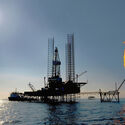
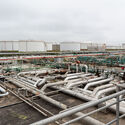
"Map the New World" is the motto of Project PLATEAU, led by Japan's Ministry of Land, Infrastructure, Transport and Tourism (MLIT), to develop and expand access to 3D models representing the diversity of cities across the country. Japan comprises a total of 744 cities, including 14 with populations exceeding one million, 190 with between 100,000 and one million inhabitants, and 540 with populations between 10,000 and 100,000. To date, 3D models of more than 250 cities have been made available as open data through the country's public G-Spatial Information Center, and can also be accessed via an online browser viewer. According to public authorities, the project aims to strengthen urban resilience by providing society with new tools to address local challenges. This involves not only urban space modeling but also collaboration with local governments, private companies, and technology communities. The project also includes a digital reconstruction of the recently closed Osaka World Expo site.

From Data to Digital Twins: Japan’s PLATEAU Project Offers Open-Access Models of More Than 250 Cities - Image 1 of 4From Data to Digital Twins: Japan’s PLATEAU Project Offers Open-Access Models of More Than 250 Cities - Image 2 of 4From Data to Digital Twins: Japan’s PLATEAU Project Offers Open-Access Models of More Than 250 Cities - Image 3 of 4From Data to Digital Twins: Japan’s PLATEAU Project Offers Open-Access Models of More Than 250 Cities - Image 4 of 4From Data to Digital Twins: Japan’s PLATEAU Project Offers Open-Access Models of More Than 250 Cities - More Images+ 1

Cities of the Dead: 10 Projects Exploring Burial Architecture

Subscriber Access | 

Death is a certainty, but its architecture has never been stable. Every period and culture has invented a different way of placing the dead in the world (close or far, visible or screened, monumental or almost anonymous), and those choices have always carried social and political weight. Cemeteries are where that weight becomes legible in space, turning belief and regulation into boundaries, paths, and names.

In that sense, a cemetery behaves like a piece of city-making. It needs access, limits, and an internal order that can grow without losing clarity. It depends on ground and water management as much as on symbolism, and on administration as much as on form. But its real architectural problem is how to make a large, evolving territory readable while preserving the intimacy of a visit. Names must be locatable; routes must remain legible; trees grow, paths shift, stones weather, records accumulate. What looks fixed is, in practice, a living system designed to be used and revisited, long after the first grief has passed.

Cities of the Dead: 10 Projects Exploring Burial Architecture - Image 1 of 4Cities of the Dead: 10 Projects Exploring Burial Architecture - Image 2 of 4Cities of the Dead: 10 Projects Exploring Burial Architecture - Image 3 of 4Cities of the Dead: 10 Projects Exploring Burial Architecture - Image 4 of 4Cities of the Dead: 10 Projects Exploring Burial Architecture - More Images+ 14

The Line at a Crossroads: Revisiting NEOM's Vision for a Utopian City

In 2023, ArchDaily's editor-in-chief sat down with Tarek Qaddumi, Executive Director of the Line Design at NEOM, at the closing of the Line Exhibition in Riyadh. Qaddumi described a layered, three-dimensional city organized around the idea of a "five-minute sphere" of access: walkable communities stacked vertically, connected by high-speed rail, freed from cars and conventional street infrastructure, and designed to coexist symbiotically with the surrounding natural landscape. It was a compelling vision, and in the context of the moment, it was simultaneously credible and appealing. For architects and urban thinkers grappling with the failures of twentieth-century city-building, the ideas articulated were worth engaging and planning.

The Line at a Crossroads: Revisiting NEOM's Vision for a Utopian City - Image 1 of 4The Line at a Crossroads: Revisiting NEOM's Vision for a Utopian City - Image 2 of 4The Line at a Crossroads: Revisiting NEOM's Vision for a Utopian City - Image 3 of 4The Line at a Crossroads: Revisiting NEOM's Vision for a Utopian City - Image 4 of 4The Line at a Crossroads: Revisiting NEOM's Vision for a Utopian City - More Images+ 5

Unearthing the Ground: Architecture and the Politics of Oil

Beneath the ground lies a material that has quietly shaped the architecture of the modern world. Petroleum is rarely discussed within architectural discourse, yet the extraction, circulation, and consumption of oil have profoundly reorganized the spatial logic of territories. Pipelines, refineries, drilling platforms, ports, highways, and petrochemical complexes form a vast infrastructural landscape that sustains contemporary life, composing a dispersed architecture of energy.

Throughout the twentieth and twenty-first centuries, oil became the material foundation of industrial society. It fueled transportation, powered factories, and supported the growth of cities whose spatial organisation depended on continuous energy flows. Yet the infrastructures that enable these flows rarely become objects of architectural inquiry. Attention remains largely directed toward form, typology, or urban density, while the material systems that sustain these environments tend to remain displaced within the discipline.

Unearthing the Ground: Architecture and the Politics of Oil - Image 1 of 4Unearthing the Ground: Architecture and the Politics of Oil - Image 2 of 4Unearthing the Ground: Architecture and the Politics of Oil - Image 3 of 4Unearthing the Ground: Architecture and the Politics of Oil - Image 4 of 4Unearthing the Ground: Architecture and the Politics of Oil - More Images+ 15

Architects Office Designs World Trade Center Biotic Mixed-Use Complex in Brasília’s Parque Tecnológico

Located within the Parque Tecnológico de Brasília, the World Trade Center Biotic is a mixed-use development designed by Brazilian studio Architects Office as part of the district's broader urban expansion. The project is part of the master plan developed in 2020 by Carlo Ratti Associati and is currently being developed. Conceived as a multi-program complex, the proposal brings together offices, residential units, a hotel, retail spaces, and shared facilities within a single urban framework. The project occupies a site of approximately 70,000 square meters and is planned to reach about 180,000 square meters of built area, with an estimated 150,000 square meters expected to be completed by 2030.

Architects Office Designs World Trade Center Biotic Mixed-Use Complex in Brasília’s Parque Tecnológico - Image 1 of 4Architects Office Designs World Trade Center Biotic Mixed-Use Complex in Brasília’s Parque Tecnológico - Image 2 of 4Architects Office Designs World Trade Center Biotic Mixed-Use Complex in Brasília’s Parque Tecnológico - Image 3 of 4Architects Office Designs World Trade Center Biotic Mixed-Use Complex in Brasília’s Parque Tecnológico - Image 4 of 4Architects Office Designs World Trade Center Biotic Mixed-Use Complex in Brasília’s Parque Tecnológico - More Images+ 8