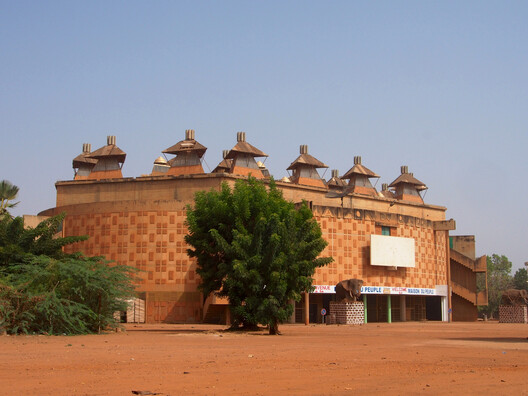
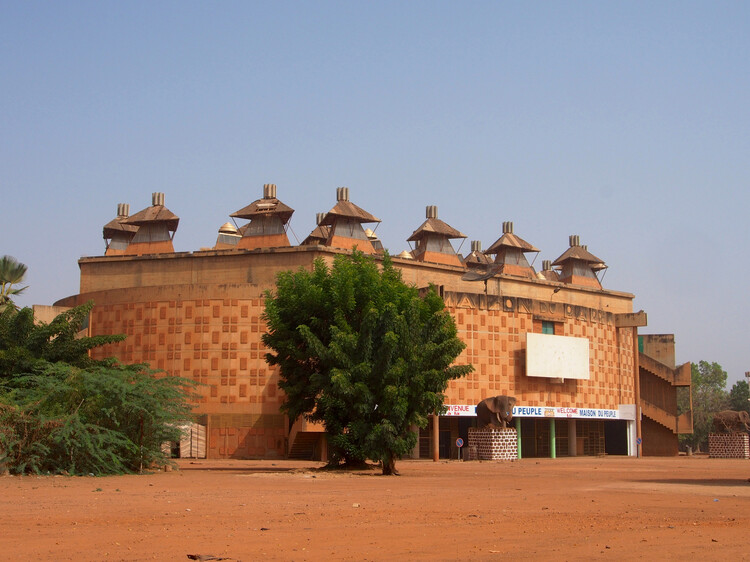
When African countries gained independence from European colonial rule during the mid-twentieth century, nation-building involved more than establishing new governments and political institutions. Newly sovereign states also needed to establish a built identity that could distinguish them from their colonial past, and architecture became an important tool in this process. Across the continent, monumental civic buildings, universities, conference centers, and cultural institutions were commissioned to embody progress and national unity. Yet this created a fundamental contradiction: many of these buildings adopted modernist and Brutalist architectural languages that had originated in Europe, while some were even designed by architects from former colonial powers. The Maison du Peuple in Ouagadougou, Burkina Faso, provides a particularly revealing example of how an architectural language associated with Europe could be appropriated and transformed into an expression of postcolonial independence.
The country known today as Burkina Faso came under French rule in 1901 after the Mossi resistance was overcome and Ouagadougou was captured. The colony of French Upper Volta was formed and incorporated into the French West Africa federation. In 1960, it gained independence along with sixteen other African states, and the Republic of Upper Volta was created. The name change to Burkina Faso would come later under the presidency of Thomas Sankara in 1984.


