1. ArchDaily
  2. Theatre Projects

Theatre Projects: The Latest Architecture and News

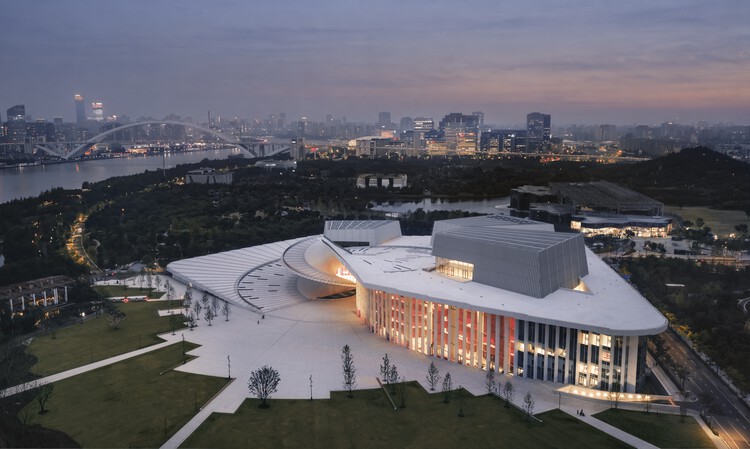
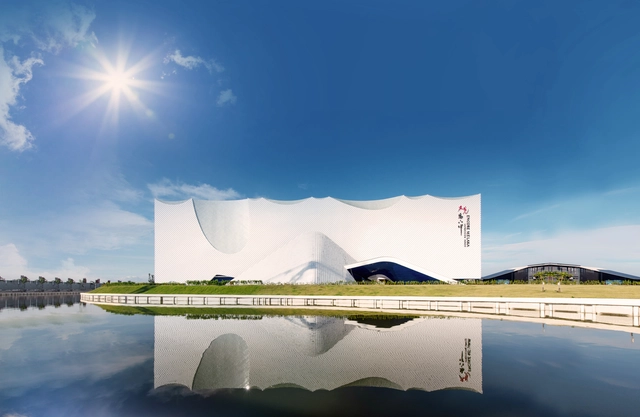
First Look at Snøhetta’s Shanghai Grand Opera House as Construction Nears Completion

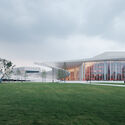
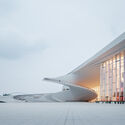
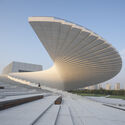
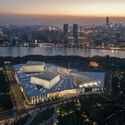
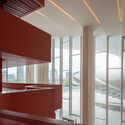
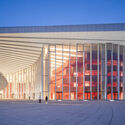
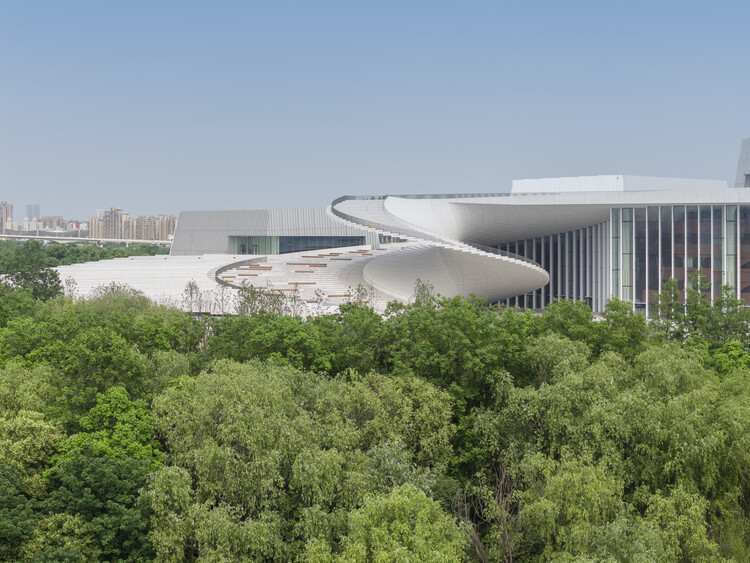
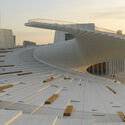
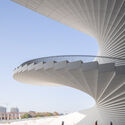
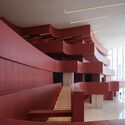
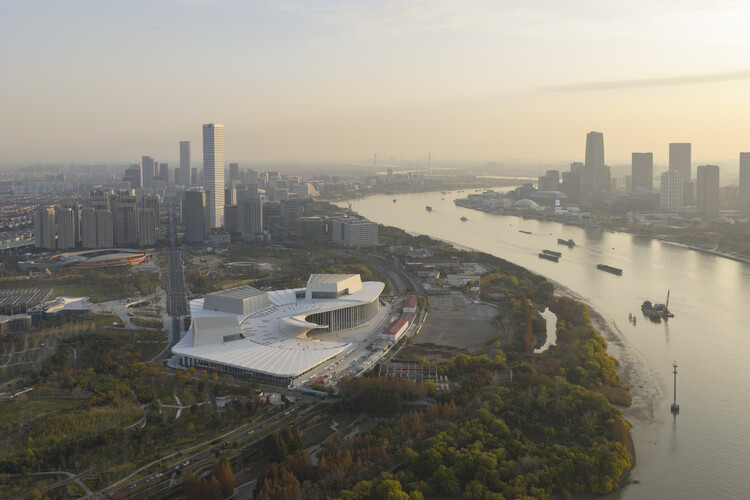
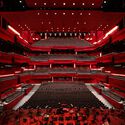
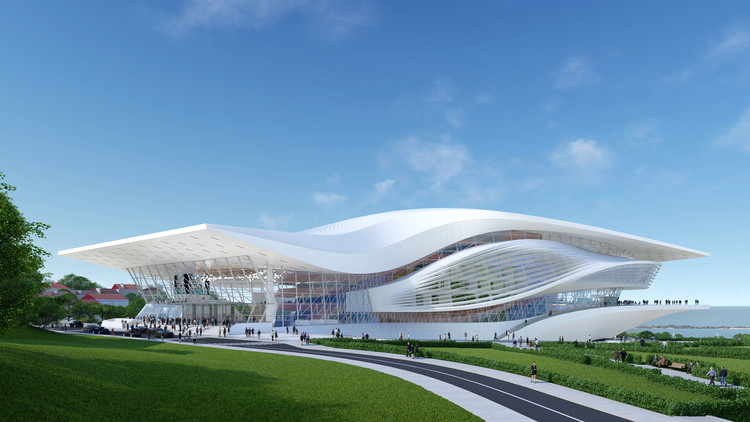
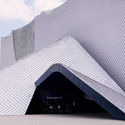
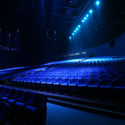
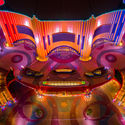
The Snøhetta–designed Shanghai Grand Opera House is nearing completion on the banks of the Huangpu River, with opening anticipated in the second half of 2026. Newly released images document the project as interior works advance and key public spaces take shape. The opera house was first awarded to Snøhetta following an international competition in 2017 and has since been developed by a consortium including East China Architectural Design & Research Institute (ECADI), Theatre Projects, and Nagata Acoustics. Commissioned in 2019, the team has led the project from concept design through construction, integrating architectural, landscape, interior, and acoustic strategies within a unified framework.

First Look at Snøhetta’s Shanghai Grand Opera House as Construction Nears Completion - Image 1 of 4First Look at Snøhetta’s Shanghai Grand Opera House as Construction Nears Completion - Image 2 of 4First Look at Snøhetta’s Shanghai Grand Opera House as Construction Nears Completion - Image 3 of 4First Look at Snøhetta’s Shanghai Grand Opera House as Construction Nears Completion - Image 4 of 4First Look at Snøhetta’s Shanghai Grand Opera House as Construction Nears Completion - More Images+ 22

Designing for the Performing Arts: Architecture as a Stage for Experience

Subscriber Access | 

Theaters, concert halls, and opera houses are more than just venues — they are meticulously orchestrated environments where architecture, technology, and human emotion converge. Unlike conventional buildings, these spaces must accommodate a dynamic interplay between acoustics, sightlines, stage mechanics, and audience engagement, all while maintaining an architectural identity that resonates with performers and spectators alike. Whether it is the immersive embrace of a vineyard-style concert hall or the grandeur of a proscenium theater, every design decision shapes how performances are experienced and remembered.

The recently published SET PIECES: Architecture for the Performing Arts in Fifteen Fragments by Diamond Schmitt Architects explores these complexities through case studies and reflections. Inspired by its insights, this article examines essential design considerations for performance spaces, from acoustic engineering to the evolving role of theaters in urban life.

Designing for the Performing Arts: Architecture as a Stage for Experience - Image 1 of 4Designing for the Performing Arts: Architecture as a Stage for Experience - Image 2 of 4Designing for the Performing Arts: Architecture as a Stage for Experience - Image 3 of 4Designing for the Performing Arts: Architecture as a Stage for Experience - Image 4 of 4Designing for the Performing Arts: Architecture as a Stage for Experience - More Images+ 60

What is a Vomitorium? 25 Modern Examples of Efficient Traffic Management in Public Buildings and Venues

Subscriber Access | 

The vomitorium and its purpose is one of historical architecture’s most common misconceptions. It’s said that the vomitorium was a room that neighbored Roman feasts, where guests could socially eject the contents of their stomach before returning to the feast with renewed capacity. Although this theory was not entirely based on fiction – as Romans are known to have indeed taken up habitual regurgitation, possibly as a sign of excess wealth – there’s no reason to believe there was a specific room dedicated to the practice.

The original usage of the term ‘vomitorium’ – taken from the same Latin root ‘vomere’ – in fact refers to a room that allows a large building to disgorge itself of its contents. A vomitorium, therefore, is nothing more than a corridor. Specifically, a wide, arterial corridor leading to or from a high-capacity public space such as a theatre, arena, or stadium, designed with the intention to get as many people in or out of the venue as quickly as possible. A well-designed vomitorium, for example, is essential for efficient emergency evacuation procedures, but even during day-to-day activity, the ability to move large numbers of people quickly helps with a venue’s turnover and creates a more pleasant crowd experience.

What is a Vomitorium? 25 Modern Examples of Efficient Traffic Management in Public Buildings and Venues - Image 1 of 4What is a Vomitorium? 25 Modern Examples of Efficient Traffic Management in Public Buildings and Venues - Image 2 of 4What is a Vomitorium? 25 Modern Examples of Efficient Traffic Management in Public Buildings and Venues - Image 3 of 4What is a Vomitorium? 25 Modern Examples of Efficient Traffic Management in Public Buildings and Venues - Image 4 of 4What is a Vomitorium? 25 Modern Examples of Efficient Traffic Management in Public Buildings and Venues - More Images+ 30

Henning Larsen, Architectus, and Arup Selected to Transform the Canberra Theatre Centre in Australia

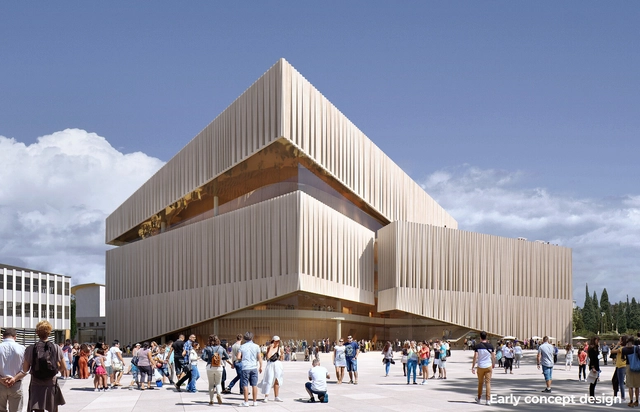
The consortium formed of international studio Henning Larsen, Australian office Architectus, and global consultants Arup has been selected to transform the Canberra Theater Center into a vibrant and inclusive space. The project is developed in consultation with First Nations peoples to ensure that Canberra’s Civic and Cultural District will become a welcoming space for both artists and audiences. The winning tender includes preliminary designs that depict a new theater building to be added to the district, in addition to the renovation of the Courtyard Studio, Canberra Theater, and The Playhouse.

MVRDV Reveals Design for the Extensive Renovation Project of the Koblenz Theater in Germany

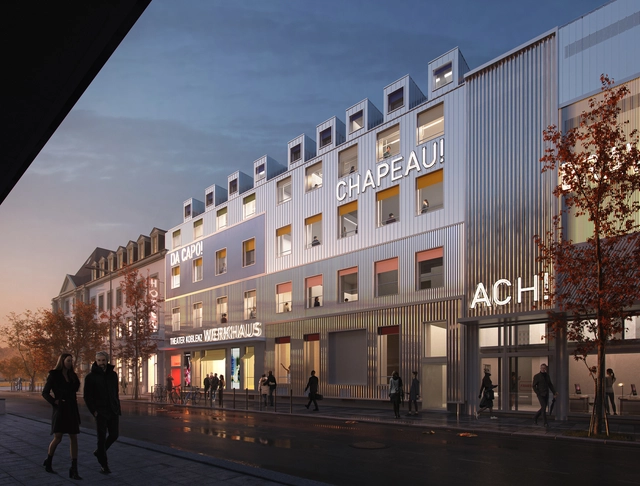
MVRDV has revealed its design for the extensive renovation project of the Theater Koblenz, in Germany. The project includes an interior redesign and a significant backstage element makeover. The proposal, which operates within the confines of the existing structure, balances the many requirements of the brief: history preservation is taken into account alongside essential technical improvements and roof rehabilitation. Additionally, the operations building's façade on Clemensstraße will be renovated to give this backstage entrance a contemporary, expressive appearance that emphasizes its inclusion in the theater complex, clearly separating it from the building's original guest entrance. The repair preserved a significant portion of the structure for future use and used biodegradable materials as much as feasible to reduce carbon emissions.

MVRDV Reveals Design for the Extensive Renovation Project of the Koblenz Theater in Germany - Image 1 of 4MVRDV Reveals Design for the Extensive Renovation Project of the Koblenz Theater in Germany - Image 2 of 4MVRDV Reveals Design for the Extensive Renovation Project of the Koblenz Theater in Germany - Image 3 of 4MVRDV Reveals Design for the Extensive Renovation Project of the Koblenz Theater in Germany - Image 4 of 4MVRDV Reveals Design for the Extensive Renovation Project of the Koblenz Theater in Germany - More Images+ 1

70°N arkitektur, Together with Snøhetta and Artist Joar Nango, Designs a National Theater for the Indigenous Sámi People in Norway

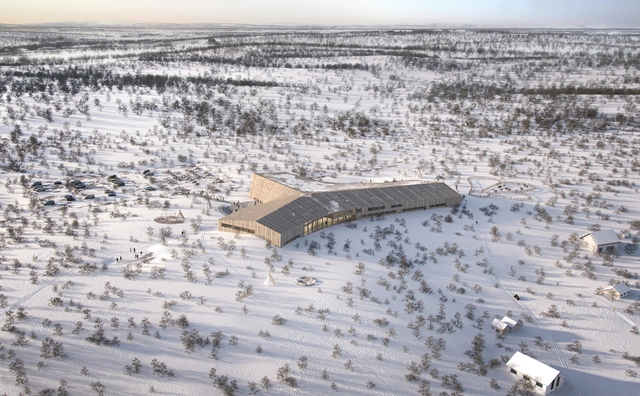
The Sámi National Theater Beaivváš and Sámi High School and Reindeer Husbandry School are two of the most important cultural institutions of Sápmi, a region in northern Norway, Sweden, and Finland traditionally inhabited by the Sámi people. To strengthen the position of the two institutions, a project was initiated in June 2021 to create a shared cultural and educational facility. A design proposal by 70°N arkitektur, in collaboration with Snøhetta and artist and architect Joar Nango, was chosen following a competition. The building, also known as Čoarvemátta, is currently under construction and is expected to be completed by 2024.

How Architecture Communicates the Greater Cultural Context: 4 Projects by Studio Libeskind

Subscriber Access | 

Polish-American architect, artist, professor, and set designer, Daniel Libeskind, founder of Studio Libeskind in 1989, believes that buildings are crafted with perceptible human energy, constructed with the intention to address the greater cultural context in which they are built. His commitment to expanding the scope of architecture reflects his profound interest and involvement in philosophy, art, literature, and music.
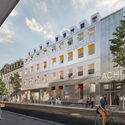

He addresses the notion of drawings being akin to a score, a piece of music that is interpreted by a like-minded community. Proportions, light, and materiality are all implicated in the drawing, and in this same way, buildings are also called to present space, atmosphere, and illuminate the practice.

How Architecture Communicates the Greater Cultural Context: 4 Projects by Studio Libeskind - Image 1 of 4How Architecture Communicates the Greater Cultural Context: 4 Projects by Studio Libeskind - Image 2 of 4How Architecture Communicates the Greater Cultural Context: 4 Projects by Studio Libeskind - Image 3 of 4How Architecture Communicates the Greater Cultural Context: 4 Projects by Studio Libeskind - Image 4 of 4How Architecture Communicates the Greater Cultural Context: 4 Projects by Studio Libeskind - More Images+ 23

The Galiasgar Kamal Tatar State Academy Theatre Competition Announces Finalists

The jury of the Galiasgar Kamal Tatar State Academy Theatre's open competition has announced its list of 8 international finalists. The competition called for the development of an architectural concept that takes into account sustainable development and Kazan's history, creating a theatre that blends harmoniously into its surroundings while becoming a new unique landmark.

The Galiasgar Kamal Tatar State Academy Theatre Competition Announces Finalists - Image 1 of 4The Galiasgar Kamal Tatar State Academy Theatre Competition Announces Finalists - Image 2 of 4The Galiasgar Kamal Tatar State Academy Theatre Competition Announces Finalists - Image 3 of 4The Galiasgar Kamal Tatar State Academy Theatre Competition Announces Finalists - Image 4 of 4The Galiasgar Kamal Tatar State Academy Theatre Competition Announces Finalists - More Images+ 16

Encore Melaka Theatre / ASIMA Architects

Encore Melaka Theatre / ASIMA Architects - Exterior Photography,  Performing Arts Center , FacadeEncore Melaka Theatre / ASIMA Architects - Exterior Photography,  Performing Arts Center Encore Melaka Theatre / ASIMA Architects - Interior Photography,  Performing Arts Center Encore Melaka Theatre / ASIMA Architects - Exterior Photography,  Performing Arts Center Encore Melaka Theatre / ASIMA Architects - More Images+ 28

  • Architects: ASIMA Architects
  • Area Area of this architecture project Area:  28300
  • Year Completion year of this architecture project Year:  2018
  • Manufacturers Brands with products used in this architecture project
    Manufacturers:  AutoDesk, Boral, Fast Flow, Mapei, Mr. Bright Lighting, +2

Stufish Entertainment Architects Design the Chimelong Theatre in China

Stufish Entertainment Architects Design the Chimelong Theatre in China - Image 1 of 4Stufish Entertainment Architects Design the Chimelong Theatre in China - Image 2 of 4Stufish Entertainment Architects Design the Chimelong Theatre in China - Image 3 of 4Stufish Entertainment Architects Design the Chimelong Theatre in China - Image 4 of 4Stufish Entertainment Architects Design the Chimelong Theatre in China - More Images+ 4

Inaugurated recently, The Chimelong Theatre, a circus hall on the island of Hengqin, in Zhuhai, China, was conceived to replace the Chimelong Hengqin International Circus City, damaged by a typhoon in 2016. Imagined by Stufish Entertainment Architects, founded by the late Mark Fisher, the project is one of many permanent entertainment spaces designed by the studio in China.

How the Auditorium at Marrakech’s Yves St Laurent Museum is Designed for Maximum Flexibility

Subscriber Access | 
How the Auditorium at Marrakech’s Yves St Laurent Museum is Designed for Maximum Flexibility - Image 11 of 4
Section

Theatre Projects consultants, together with the architectural office Studio KO, have designed a multipurpose auditorium of 115 seats, with the aim of hosting conferences, screenings, concerts, theater, and cinema.

The auditorium is part of the new Museum Yves Saint Laurent Marrakech, and incorporates a series of elements and technologies that allow for high-quality sound and lighting, as well as ensuring total flexibility of the room to adapt to all required uses.

How the Auditorium at Marrakech’s Yves St Laurent Museum is Designed for Maximum Flexibility - Image 1 of 4How the Auditorium at Marrakech’s Yves St Laurent Museum is Designed for Maximum Flexibility - Image 2 of 4How the Auditorium at Marrakech’s Yves St Laurent Museum is Designed for Maximum Flexibility - Image 3 of 4How the Auditorium at Marrakech’s Yves St Laurent Museum is Designed for Maximum Flexibility - Image 4 of 4How the Auditorium at Marrakech’s Yves St Laurent Museum is Designed for Maximum Flexibility - More Images+ 7