1. ArchDaily
  2. civic architecture

civic architecture: The Latest Architecture and News

The Public Kitchen: How Asian Markets Turn Eating Into Civic Life

Subscriber Access | 
Audio available

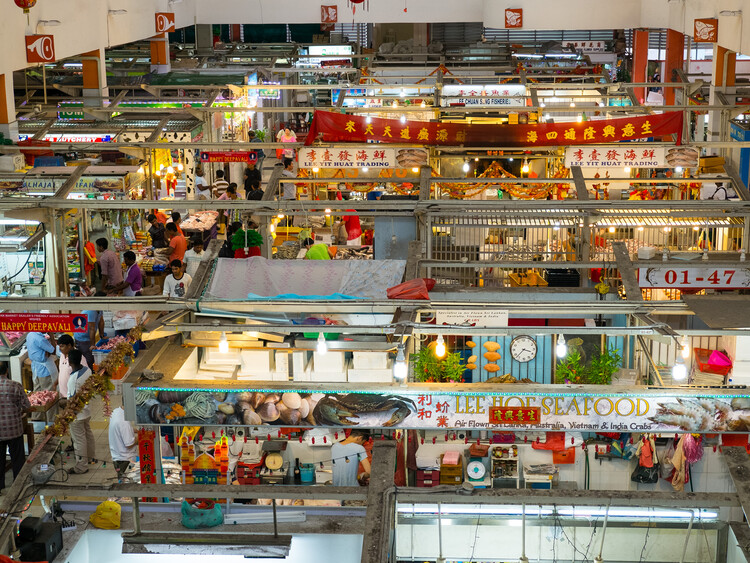
In many Asian cities, eating has never belonged entirely to the private home. It spills into markets, hawker centers, street stalls, and wholesale districts embedded within larger buildings or areas. These are places where the city exchanges information and watches other people pass through. They are not restaurants in the conventional sense, nor are they simply markets. In some way, their vibrancy and usage reflect the society's conditions at that moment. They are public kitchens: shared infrastructures where domestic routines are partially transferred into collective space.

Hong Kong's Municipal Services Buildings and curbside dining are where food is understood not only as culture, but as urban organization. The cooked-food center in the city folds eating into a larger civic machine of wet markets, libraries, and sports halls. The dai pai dong and street-side table, meanwhile, transform the curb into a temporary dining room. Looking beyond Hong Kong, similar questions emerge across the region. How do cities make room for social eating? Where does cooking happen when domestic space is limited? What kind of architecture supports the mess and heat of everyday food?

The Public Kitchen: How Asian Markets Turn Eating Into Civic Life - Image 1 of 4The Public Kitchen: How Asian Markets Turn Eating Into Civic Life - Image 2 of 4The Public Kitchen: How Asian Markets Turn Eating Into Civic Life - Image 3 of 4The Public Kitchen: How Asian Markets Turn Eating Into Civic Life - Image 4 of 4The Public Kitchen: How Asian Markets Turn Eating Into Civic Life - More Images+ 12

The Maison du Peuple: Reclaiming Brutalism for Nation-Building

Subscriber Access | 
Audio available

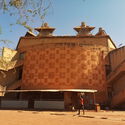
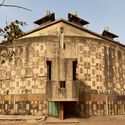
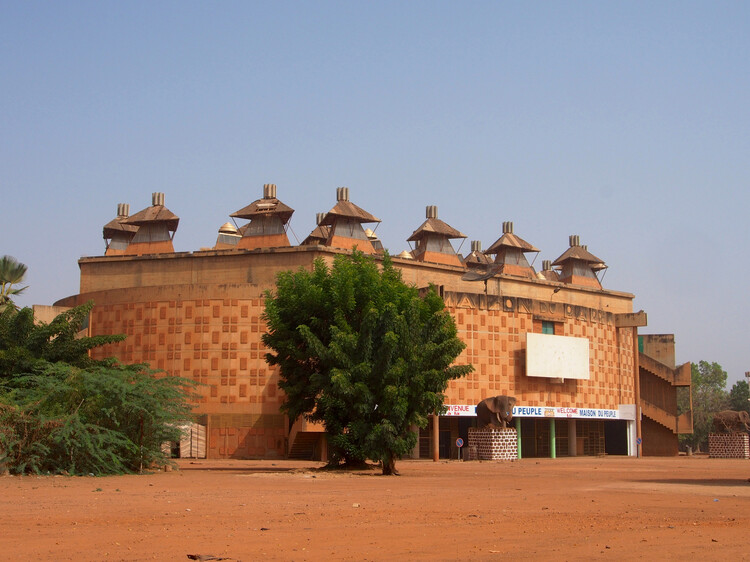
When African countries gained independence from European colonial rule during the mid-twentieth century, nation-building involved more than establishing new governments and political institutions. Newly sovereign states also needed to establish a built identity that could distinguish them from their colonial past, and architecture became an important tool in this process. Across the continent, monumental civic buildings, universities, conference centers, and cultural institutions were commissioned to embody progress and national unity. Yet this created a fundamental contradiction: many of these buildings adopted modernist and Brutalist architectural languages that had originated in Europe, while some were even designed by architects from former colonial powers. The Maison du Peuple in Ouagadougou, Burkina Faso, provides a particularly revealing example of how an architectural language associated with Europe could be appropriated and transformed into an expression of postcolonial independence.

The Maison du Peuple: Reclaiming Brutalism for Nation-Building - Image 1 of 4The Maison du Peuple: Reclaiming Brutalism for Nation-Building - Image 2 of 4The Maison du Peuple: Reclaiming Brutalism for Nation-Building - Image 3 of 4The Maison du Peuple: Reclaiming Brutalism for Nation-Building - Image 4 of 4The Maison du Peuple: Reclaiming Brutalism for Nation-Building - More Images+ 4

Beyond India’s Squares: Where Can Democracy Speak?

Subscriber Access | 
Audio available

Every democracy eventually confronts the same question: where can its citizens speak?

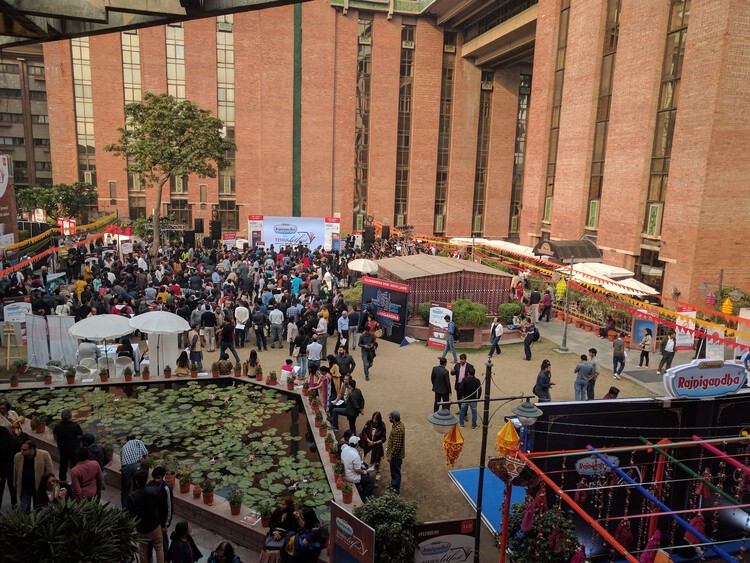
Public squares, marches and demonstrations have served as the most visible and impactful expressions of collective opinion. There persists a growing desire among citizens to be seen and heard in the public domain. Demonstrations, by their very nature, are moments of urgency, emerging when conversations have reached an impasse. While essential to democracy, they cannot be its only language.

Beyond India’s Squares: Where Can Democracy Speak? - Imagen 4 de 4Beyond India’s Squares: Where Can Democracy Speak? - Imagen 1 de 4Beyond India’s Squares: Where Can Democracy Speak? - Imagen 2 de 4Beyond India’s Squares: Where Can Democracy Speak? - Imagen 3 de 4Beyond India’s Squares: Where Can Democracy Speak? - More Images

The Democratic Monument: Adam Nathaniel Furman's Manifesto for a New Type of Civic Center

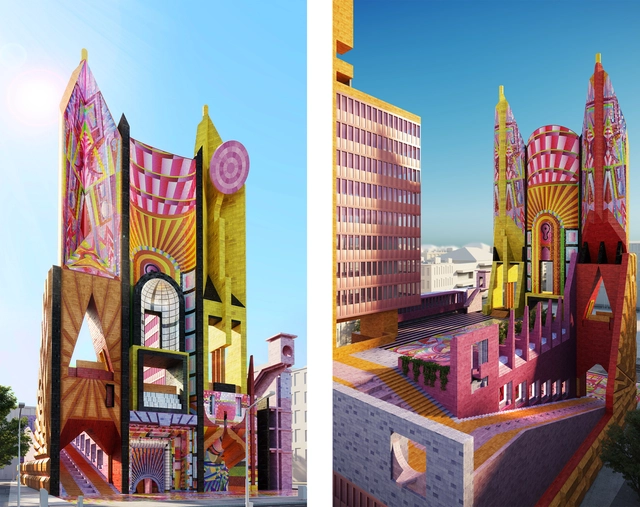
Civic buildings are, as a rule, both austere and intimidating. They are often designed to represent authority above all, taking cues from Classical architectural language to construct an image of power, dominance, and civic unity. Adam Nathaniel Furman, a London-based architect and thinker, has at once eschewed and reengaged this typology in order to propose an entirely new type of civic center ("Town Hall") for British cities. The proposal, which was commissioned by the 2017 Scottish Architectural Fringe as part of a New Typologies exhibition in which architects are imagining "how our shared civic infrastructure will exist in the future, if at all", is currently on display in Glasgow.
By "re-grouping various civic functions into one visually symbolic composition of architectural forms," references and types of ornament and allusions have been configured "depending on the metropolitan area within which it is situated in and embodies." In short, Furman states, the Democratic Monument "is an expression of urban pride, chromatic joy, and architectural complexity" which has universal symbolism but remains a beacon to its vicinity.

The Democratic Monument: Adam Nathaniel Furman's Manifesto for a New Type of Civic Center - Image 1 of 4The Democratic Monument: Adam Nathaniel Furman's Manifesto for a New Type of Civic Center - Image 2 of 4The Democratic Monument: Adam Nathaniel Furman's Manifesto for a New Type of Civic Center - Image 3 of 4The Democratic Monument: Adam Nathaniel Furman's Manifesto for a New Type of Civic Center - Image 4 of 4The Democratic Monument: Adam Nathaniel Furman's Manifesto for a New Type of Civic Center - More Images+ 15

New Mixed-Use Complex Expresses Past, Present, and Future of Chinese Culture

Novotown is China’s latest cultural and creative incubator, designed by Aedas as an iconic destination on Hengqin Island in Zhuhai, China. Located just five minutes from Macau, the 120,000-square meter cultural and entertainment complex aims to straddle the roles of tourist destination and local icon.

New Mixed-Use Complex Expresses Past, Present, and Future of Chinese Culture - Image 1 of 4New Mixed-Use Complex Expresses Past, Present, and Future of Chinese Culture - Image 2 of 4New Mixed-Use Complex Expresses Past, Present, and Future of Chinese Culture - Image 3 of 4New Mixed-Use Complex Expresses Past, Present, and Future of Chinese Culture - Image 4 of 4New Mixed-Use Complex Expresses Past, Present, and Future of Chinese Culture - More Images

AD Classics: Palazzo dei Congressi / Louis Kahn

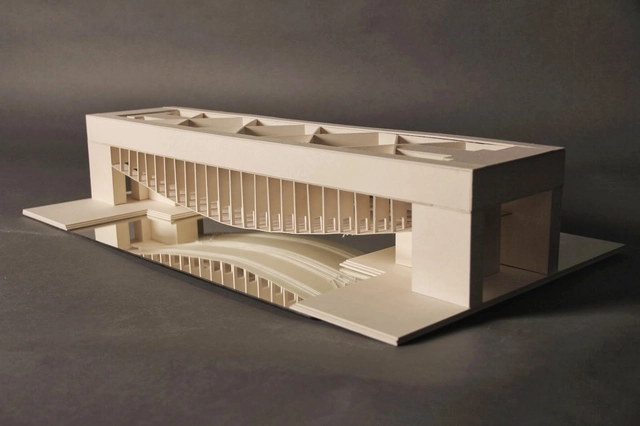
The city of Venice has been caught in a tug of war between progress and traditionalism for many years, and particularly since the construction of a railroad viaduct in 1846 linked the island city to the Italian mainland for the first time in its history.[1] Over a century later, the Venetian government commissioned Louis Kahn to design a new Palazzo dei Congressi for the city; his proposal, while paying respect to the histories of both the Republic of Venice and a unified Italy, could not escape similar controversy.

Has Technology Diminished Our Understanding Of Public Space?

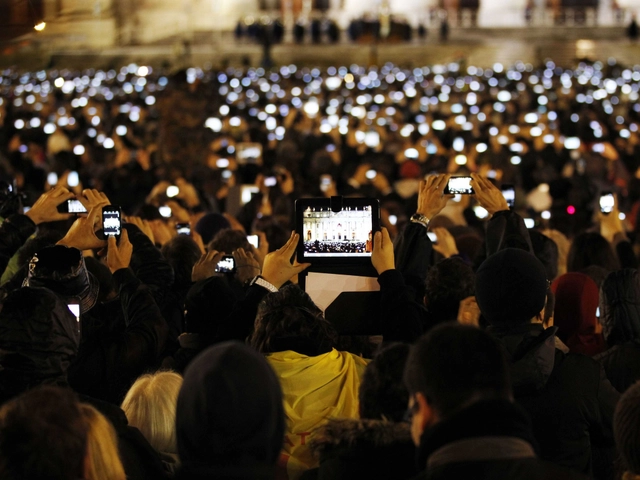
In an article for the Washington Post, Philip Kennicott argues that "technology has scrambled the lines between public and private." He questions whether, in an age of "radical individualism" spurred on by our fascination with solitary communication, our collective understanding and appreciation for the public, civic space has been diminished. Kennitott foreshadows that "one thing is certain: We will live in more crowded spaces, and we will increasingly live indoors, cocooned in climate-controlled zones with a few billion of our closest friends" as rapid urbanisation merges with the changing climate.

Review: 'All Of This Belongs To You' - Civic Urbanism At London's Victoria & Albert Museum

Subscriber Access | 

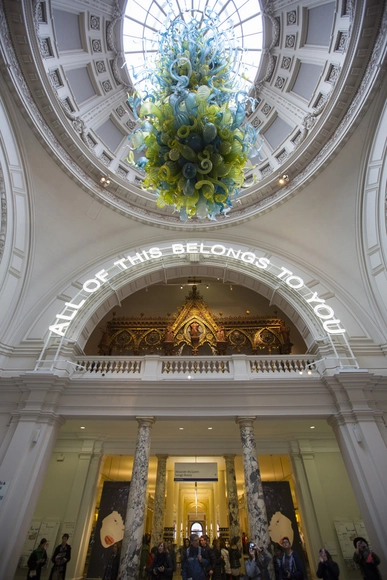
The Victoria and Albert Museum (V&A), named after the Queen and Her Consort, has its foundations in the Great Exhibition of 1851 amidst the wealth, innovation and squalor of the Industrial Revolution. Britain was flooded by prosperity which allowed for the development of major new institutions to collect and exhibit objects of cultural significance or artistic value. The institute’s first director, Henry Cole, declared that it should be “a schoolroom for everyone,” and a democratic approach to its relationship with public life has remained the cornerstone of the V&A. Not only has it always been free of charge but it was also the first to open late hours (made possible by gas lighting), allowing a more comprehensive demographic of visitor.

Their latest exhibition, which opens today, seeks to realign the museum’s vast collection and palatial exhibition spaces in South Kensington with these founding concepts. The interventions of All of This Belongs to You attempt to push the V&A’s position as an extension of London’s civic and cultural built environment to the fore, testing the museum’s ability to act as a 21st century public institution. To do this in London, a city where the notion of public and private is increasingly blurred, has resulted in a sequence of compelling installations which are tied together through their relevance either in subject matter, technique, or topicality.

Review: 'All Of This Belongs To You' - Civic Urbanism At London's Victoria & Albert Museum - Image 1 of 4Review: 'All Of This Belongs To You' - Civic Urbanism At London's Victoria & Albert Museum - Image 2 of 4Review: 'All Of This Belongs To You' - Civic Urbanism At London's Victoria & Albert Museum - Image 3 of 4Review: 'All Of This Belongs To You' - Civic Urbanism At London's Victoria & Albert Museum - Image 4 of 4Review: 'All Of This Belongs To You' - Civic Urbanism At London's Victoria & Albert Museum - More Images+ 4