1. ArchDaily
  2. AD Narrative

AD Narrative: The Latest Architecture and News

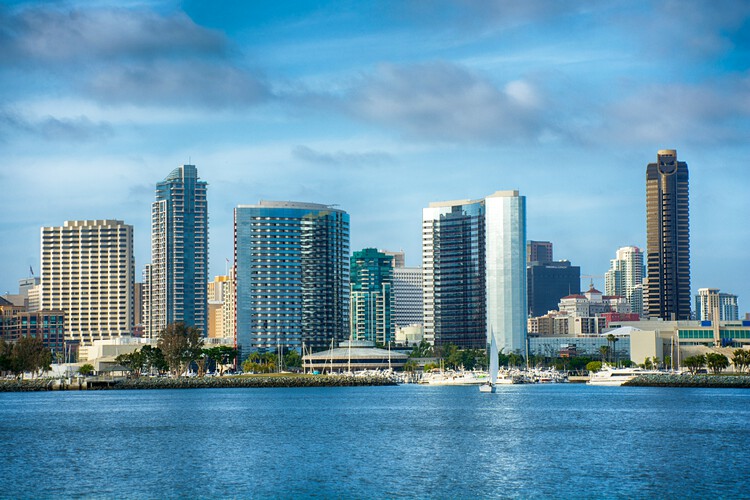
From Spanish Presidio to the American Grid: The Hispanic Roots of San Diego’s Urban Core

Subscriber Access | 

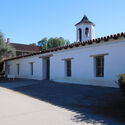
Very close to the Mexican border, in the southwest corner of the United States, lies the city of San Diego. Its urban history began in 1769 with the arrival of a Spanish military expedition commanded by Gaspar de Portola, which marked the first permanent settlement in the territory that was known as Alta California. However, unlike the more formally urbanized administrative capitals and towns of Mexico and Central America, San Diego was conceived as a frontier outpost. Today, it has become the second-largest city in California, just after Los Angeles, and its urban grid tells a story about the Hispanic heritage that is intertwined with the contemporary cultural environment of the United States.

From Spanish Presidio to the American Grid: The Hispanic Roots of San Diego’s Urban Core - Image 1 of 4From Spanish Presidio to the American Grid: The Hispanic Roots of San Diego’s Urban Core - Image 2 of 4From Spanish Presidio to the American Grid: The Hispanic Roots of San Diego’s Urban Core - Image 3 of 4From Spanish Presidio to the American Grid: The Hispanic Roots of San Diego’s Urban Core - Image 6 of 4From Spanish Presidio to the American Grid: The Hispanic Roots of San Diego’s Urban Core - More Images+ 7

Espai Verd: The Habitable Utopia of Valencia’s Green Cathedral

Subscriber Access | 

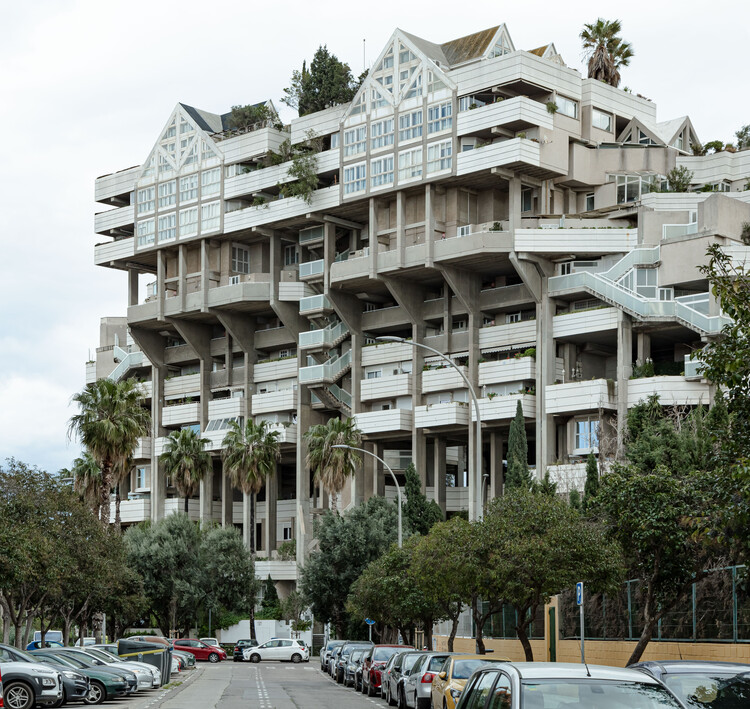
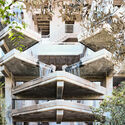
Even the most distracted passerby is captured by the monumental presence of this structure in Valencia’s established Benimaclet neighborhood. Before it, any attempt at rational apprehension quickly dissolves. Its constructive logic seems to escape comprehension as the space unfolds through tensions and deviations, where nothing is immediately given. Between masses of concrete and the insurgent force of vegetation, an almost choreographic play of planes, angles, and rotations emerges. In the vertigo of this encounter, one realizes that the building was not made to be understood, but to be experienced.

Espai Verd: The Habitable Utopia of Valencia’s Green Cathedral - Image 1 of 4Espai Verd: The Habitable Utopia of Valencia’s Green Cathedral - Image 2 of 4Espai Verd: The Habitable Utopia of Valencia’s Green Cathedral - Image 3 of 4Espai Verd: The Habitable Utopia of Valencia’s Green Cathedral - Image 4 of 4Espai Verd: The Habitable Utopia of Valencia’s Green Cathedral - More Images+ 35

Van Wassenhove Residence: Living the Radical Continuity of Juliaan Lampens

Subscriber Access | 

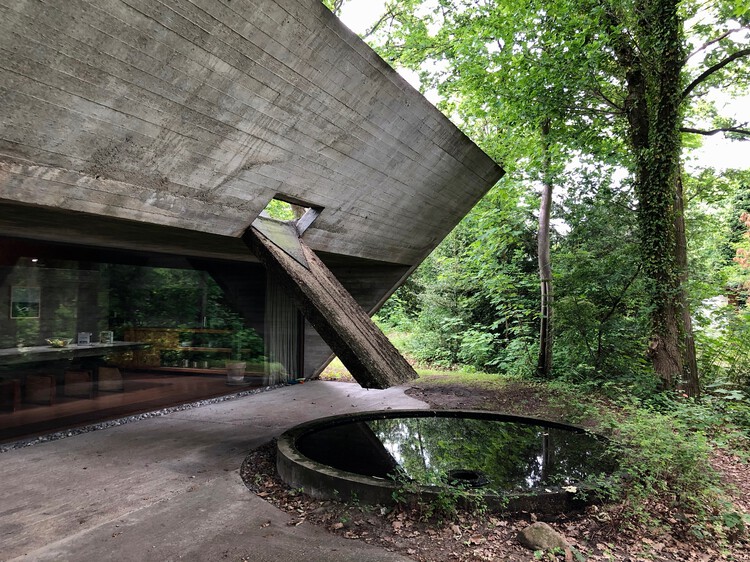
Architectural history often advances through iconic gestures or technological breakthroughs, yet some works remain influential precisely because they resist spectacle. Built between 1972 and 1974 in Sint-Martens-Latem, Belgium, the Van Wassenhove Residence stands as one of those quiet but decisive projects. Conceived as a single, continuous concrete volume set within a wooded landscape, the house challenges conventional ideas of domestic comfort, privacy, and spatial hierarchy. Its presence is direct and uncompromising, yet it avoids monumentality, positioning itself instead as a lived structure shaped by everyday rituals and long-term inhabitation.

The house was designed by Juliaan Lampens, a figure who operated largely outside the dominant architectural narratives of his time. Working mostly in Flanders and often on private commissions, Lampens developed a body of work centered on radical spatial reduction, material honesty, and an almost ethical approach to construction. The Van Wassenhove Residence is frequently described as his most complete work, not because it introduces new ideas, but because it consolidates many of the principles that run consistently through his career.

Van Wassenhove Residence: Living the Radical Continuity of Juliaan Lampens - Image 6 of 4Van Wassenhove Residence: Living the Radical Continuity of Juliaan Lampens - Image 1 of 4Van Wassenhove Residence: Living the Radical Continuity of Juliaan Lampens - Image 3 of 4Van Wassenhove Residence: Living the Radical Continuity of Juliaan Lampens - Image 2 of 4Van Wassenhove Residence: Living the Radical Continuity of Juliaan Lampens - More Images+ 2

El Pueblo de Los Angeles: The Spanish Origins of LA’s Urban Grid

Subscriber Access | 

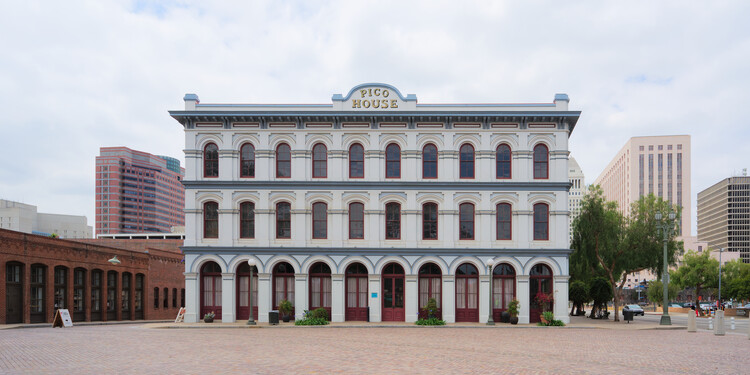
Today, the urban form of Los Angeles is characterized by 20th-century sprawl and extensive automotive infrastructure. However, the physical reality of the city's original core reveals a more complex history that is deeply rooted in Hispanic heritage. In fact, Los Angeles did not originate from the standardized American land system that defines most of the United States' territory. Instead, it is a product of the Spanish urban tradition in the Americas, which followed a structure repeated across major cities on the continent. The intersection of these systems created a layered urban geometry and history that remains visible in the city's contemporary street patterns.
When Los Angeles was founded in 1781 as a pueblo by Felipe de Neve, it was an outpost of the Viceroyalty of New Spain. Viceroyalties were political divisions of the Spanish territories in America, and by the late 18th century, New Spain was vast. It stretched from southern Costa Rica, all the way north to Alta California, bordering the east at the Mississippi River and the newly independent United States of America. At this time, Mexico City functioned as the primary administrative and economic hub, leaving frontier regions like Alta California to rely on a specific triad of settlements: missions (religious), presidios (military), and pueblos (civilian).

El Pueblo de Los Angeles: The Spanish Origins of LA’s Urban Grid - Image 1 of 4El Pueblo de Los Angeles: The Spanish Origins of LA’s Urban Grid - Image 2 of 4El Pueblo de Los Angeles: The Spanish Origins of LA’s Urban Grid - Image 3 of 4El Pueblo de Los Angeles: The Spanish Origins of LA’s Urban Grid - Image 4 of 4El Pueblo de Los Angeles: The Spanish Origins of LA’s Urban Grid - More Images+ 5

Capsule Retreat: Building Through Process in Lebanon’s Mountain Landscape

Subscriber Access | 

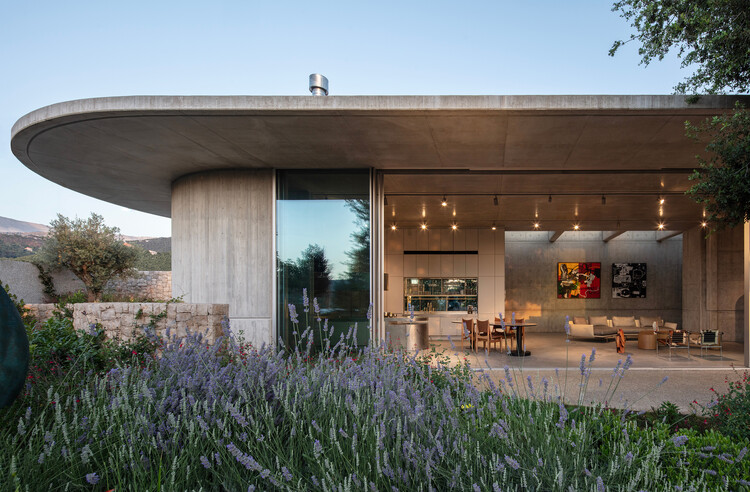
Set within the mountainous landscape of Zabbougha, Lebanon, Capsule Retreat by EAST Architecture Studio is shaped through the process of its making. The project unfolds through material decisions, on-site adjustments, and evolving conditions, allowing construction itself to guide its spatial logic.

The construction process played a central role in defining the project. Built during a period marked by economic collapse, material shortages, and ongoing disruption in Lebanon, the house developed through continuous adaptation. With no general contractor, the architects took on an expanded role, coordinating craftsmen, testing ideas directly on site, and responding to changing constraints. In this context, sociopolitical conditions became not only a challenge but a catalyst for rethinking design. "We were constantly testing ideas on site", say the architects and founders of EAST Architecture Studio, Charles Kettaneh and Nicolas Fayad, "tailoring these decisions economically while exploring what local craft could offer."

Capsule Retreat: Building Through Process in Lebanon’s Mountain Landscape - Featured ImageCapsule Retreat: Building Through Process in Lebanon’s Mountain Landscape - Image 1 of 4Capsule Retreat: Building Through Process in Lebanon’s Mountain Landscape - Image 2 of 4Capsule Retreat: Building Through Process in Lebanon’s Mountain Landscape - Image 3 of 4Capsule Retreat: Building Through Process in Lebanon’s Mountain Landscape - More Images+ 8

Jahad Metro Plaza in Tehran: Reclaiming Infrastructure as Civic Space

Subscriber Access | 

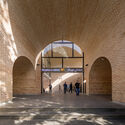
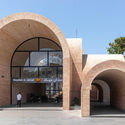
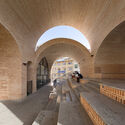
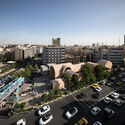
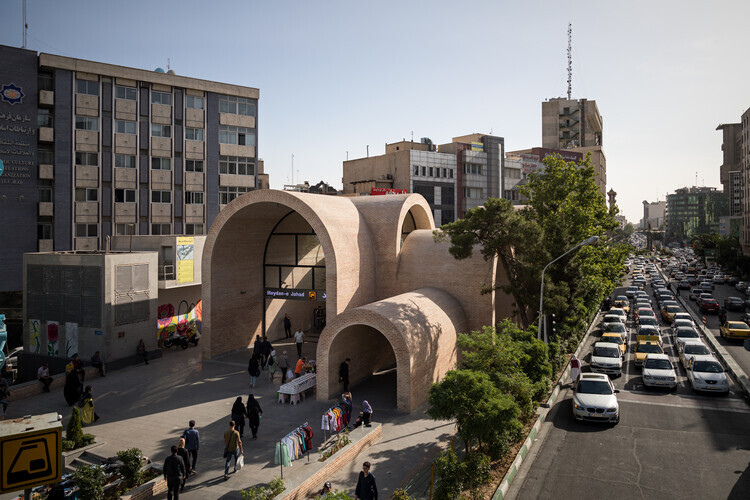
In Iran's capital, Tehran, movement defines the city. Each day, millions navigate a landscape shaped by highways, traffic corridors, and dense urban blocks. Over decades of rapid expansion, infrastructure has become the dominant language of development. Streets prioritize vehicles, sidewalks function as narrow conduits, and many public spaces operate primarily as passages rather than places of gathering. Across parts of West Asia, ongoing conflict has also reshaped the region's urban landscapes, where significant architectural environments have been damaged or transformed. Within this broader context, the preservation and creation of everyday civic space becomes increasingly meaningful. Recognized with the Aga Khan Award for Architecture, the Jahad Metro Plaza project, designed by KA Architecture Studio, demonstrates how modest infrastructural interventions can reshape the civic life of a city.

The metro network plays a central role in Tehran's daily life. It connects distant districts and sustains the rhythms of the metropolis. Yet the places where the underground city meets the surface are rarely conceived as civic environments. Metro entrances typically appear as fragments of infrastructure: stairs descending below ground, surrounded by railings, kiosks, and improvised circulation paths. They function efficiently as thresholds, but seldom as places to remain.

Jahad Metro Plaza in Tehran: Reclaiming Infrastructure as Civic Space - Image 1 of 4Jahad Metro Plaza in Tehran: Reclaiming Infrastructure as Civic Space - Image 2 of 4Jahad Metro Plaza in Tehran: Reclaiming Infrastructure as Civic Space - Image 3 of 4Jahad Metro Plaza in Tehran: Reclaiming Infrastructure as Civic Space - Image 4 of 4Jahad Metro Plaza in Tehran: Reclaiming Infrastructure as Civic Space - More Images+ 10

The Earthen Towers of Shibam: A Vertical City in the Yemeni Desert

Subscriber Access | 

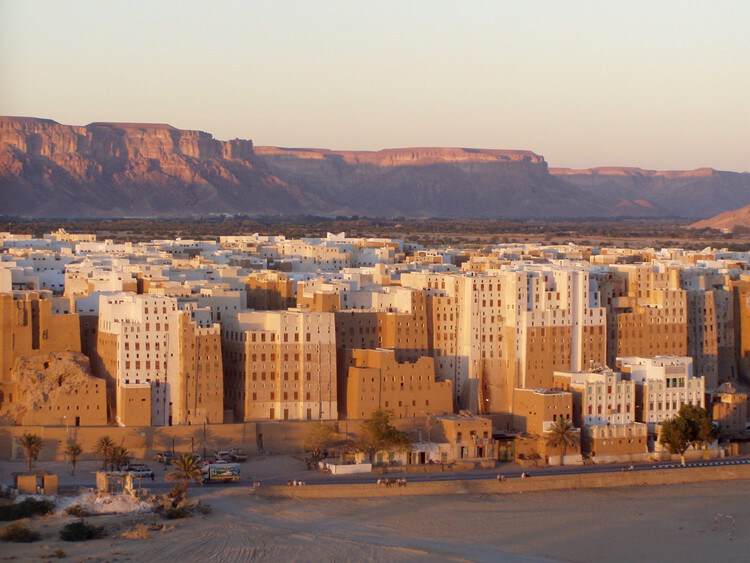
Symbols of technological development and urban density, tall buildings as we know them today emerged in the late nineteenth century, particularly in the United States, as a response to the rapid expansion of urban commerce and the need to grow cities without occupying additional land. The term skyscraper, for instance, was coined in the 1880s and originally referred to buildings with around 10 to 20 stories—an impressive height for the time.

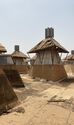
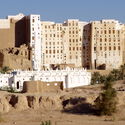
However, the idea of building vertically is much older than the steel-and-glass skyscrapers of modern cities might suggest. Long before the Industrial Revolution, some societies were already experimenting with forms of vertical urbanization as a response to limited space, territorial defense, or environmental adaptation.

The Earthen Towers of Shibam: A Vertical City in the Yemeni Desert - Image 1 of 4The Earthen Towers of Shibam: A Vertical City in the Yemeni Desert - Image 2 of 4The Earthen Towers of Shibam: A Vertical City in the Yemeni Desert - Image 3 of 4The Earthen Towers of Shibam: A Vertical City in the Yemeni Desert - Image 4 of 4The Earthen Towers of Shibam: A Vertical City in the Yemeni Desert - More Images+ 7

Mapping Space Without Sight: Inside SEAlab’s Sensory Architecture

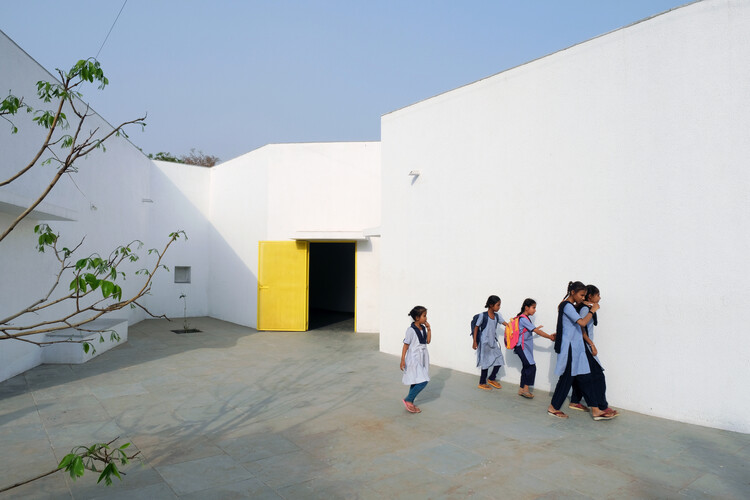
Founded in 2015 in Ahmedabad by Anand Sonecha, SEAlab is a practice shaped by a slow, contemplative engagement with place, proportion, and participation. Recognized as one of the winners of the ArchDaily 2025 Next Practices Awards, the studio builds with simple materials and local techniques, pursuing environments that are experienced as much as they are seen. This ethos became particularly tangible in Gandhinagar, where the School for Blind and Visually Impaired Children did not begin as a purpose-built institution. The school had been operating from an existing primary school building, with classrooms stacked above dormitories and twelve children sharing a single room. Space was limited, and so were growth opportunities. The new academic building was required to expand capacity, improve living conditions, and support greater student independence.

Mapping Space Without Sight: Inside SEAlab’s Sensory Architecture - Image 1 of 4Mapping Space Without Sight: Inside SEAlab’s Sensory Architecture - Image 2 of 4Mapping Space Without Sight: Inside SEAlab’s Sensory Architecture - Image 3 of 4Mapping Space Without Sight: Inside SEAlab’s Sensory Architecture - Image 4 of 4Mapping Space Without Sight: Inside SEAlab’s Sensory Architecture - More Images+ 33

Druzhba Sanatorium: A Soviet Monument Suspended Between Earth and Sea

Subscriber Access | 

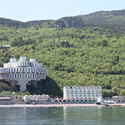
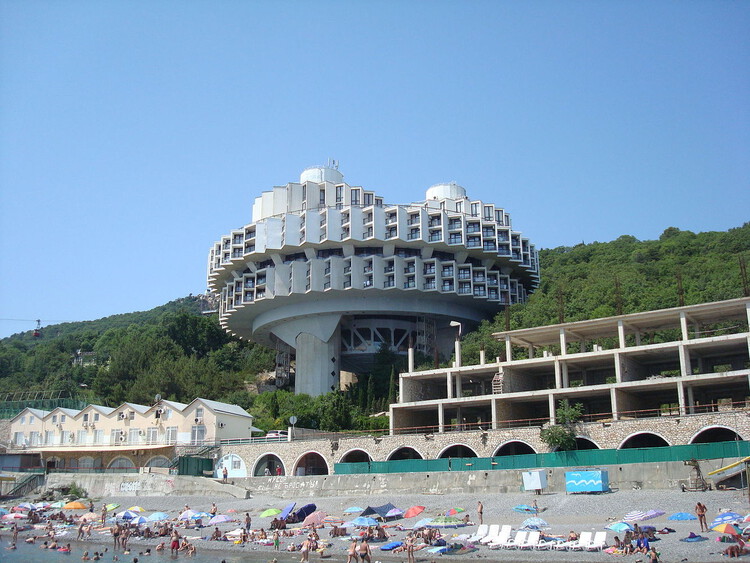
Perched above the cliffs of Crimea, the Druzhba Thermal Sanatorium appears less as a building than as a landed spacecraft. Its circular forms, suspended decks, and spiraling ramps evoke a scene from Andrei Tarkovsky's Solaris (1972), where architecture and psychology merge into a single landscape. Built between 1978 and 1985 by Igor Vasilevsky, the complex was conceived as a thermal resort for workers of the oil industry, part of the Soviet Union's extensive network of sanatoria dedicated to health and recreation.

Beyond its function as a place of recovery, Druzhba, meaning "friendship", embodied a broader political and aesthetic ambition. It sought to merge technological prowess with the restorative ideals of socialist modernity, translating collective well-being into concrete form. Rising from a steep coastal slope overlooking the Black Sea, its massive structure defies gravity, supported by a central concrete core from which radial wings extend like the blades of an enormous gear. Seen from a distance, it feels simultaneously mechanical and organic, a hybrid of infrastructure and landscape.

Druzhba Sanatorium: A Soviet Monument Suspended Between Earth and Sea - Image 1 of 4Druzhba Sanatorium: A Soviet Monument Suspended Between Earth and Sea - Image 2 of 4Druzhba Sanatorium: A Soviet Monument Suspended Between Earth and Sea - Image 3 of 4Druzhba Sanatorium: A Soviet Monument Suspended Between Earth and Sea - Image 4 of 4Druzhba Sanatorium: A Soviet Monument Suspended Between Earth and Sea - More Images+ 16

Revisiting 2025: 20 Classic Projects and Defining Stories in Architecture

Every architectural project is the result of deliberate choices. Beyond form and function, buildings embody technical, political, and cultural decisions that shape their relationship with both their surroundings and the people who inhabit them. ArchDaily’s AD Narratives series explores these processes by bringing together accounts that trace projects from initial conception to built realization. In parallel, the AD Classics series turns to works of historical significance, presenting not only the stories behind these buildings but also technical drawings that allow for a deeper, more informed reading of their architecture.

Revisiting 2025: 20 Classic Projects and Defining Stories in Architecture - Image 1 of 4Revisiting 2025: 20 Classic Projects and Defining Stories in Architecture - Image 2 of 4Revisiting 2025: 20 Classic Projects and Defining Stories in Architecture - Image 3 of 4Revisiting 2025: 20 Classic Projects and Defining Stories in Architecture - Image 4 of 4Revisiting 2025: 20 Classic Projects and Defining Stories in Architecture - More Images+ 18

Wohnpark Alterlaa: Vienna’s Monumental Vision for Everyday Life

Subscriber Access | 

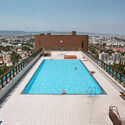
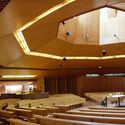
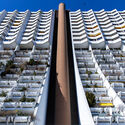
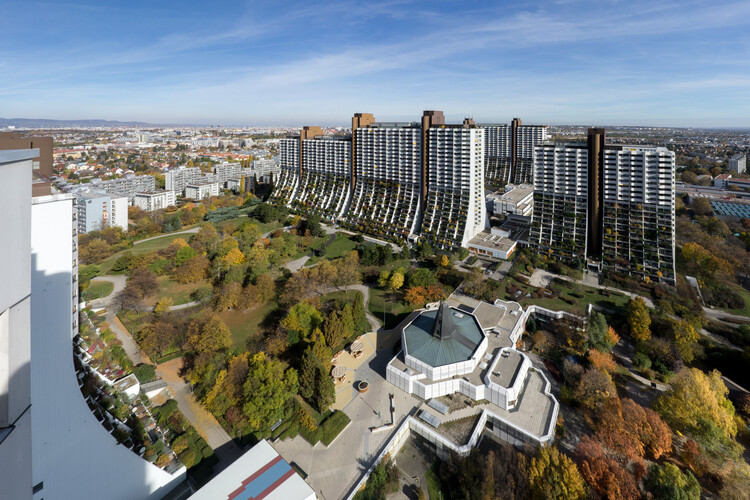
On the southern edge of Vienna, a cluster of monumental terraces rises above the cityscape, their stepped balconies cascading with greenery and their rooftops crowned with swimming pools. This is the Wohnpark Alterlaa, one of the most ambitious social housing projects in postwar Europe. Designed by Austrian architect Harry Glück and built between 1973 and 1985, the complex was founded on a provocative principle: municipal housing should not only provide affordable shelter but also offer the pleasures and amenities usually reserved for the wealthy.

With more than 3,000 apartments housing nearly 9,000 residents, Alterlaa was conceived as a city within the city. Alongside its residential towers, it incorporates shops, schools, medical services, and cultural facilities, ensuring that daily life can unfold entirely within its boundaries. The project reflects a moment of optimism in Vienna's urban policy, when housing was understood as infrastructure for collective well-being rather than as a commodity.

Wohnpark Alterlaa: Vienna’s Monumental Vision for Everyday Life - Image 1 of 4Wohnpark Alterlaa: Vienna’s Monumental Vision for Everyday Life - Image 2 of 4Wohnpark Alterlaa: Vienna’s Monumental Vision for Everyday Life - Image 3 of 4Wohnpark Alterlaa: Vienna’s Monumental Vision for Everyday Life - Image 4 of 4Wohnpark Alterlaa: Vienna’s Monumental Vision for Everyday Life - More Images+ 28

Narratives of Syrian Modernism: Rediscovering the Center for Marine Research

Subscriber Access | 

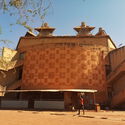
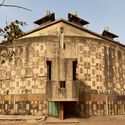
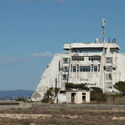
As Syria is emerging from over a decade of conflict at the time of writing, it is an opportunity to rediscover its architectural gems. Just to the north of the country's principal port city of Latakia is a Modernist creation that is the Center for Marine Research. Its pyramidal structure is situated on a prominent headland surrounded by sea on three sides. To the east is a bay with hotels and beaches while to the north and west is the open Mediterranean Sea reaching Turkey and Cyprus beyond. Despite its importance both as a research institution and as a piece of architecture, it lies abandoned and isolated today.

Narratives of Syrian Modernism: Rediscovering the Center for Marine Research - Image 1 of 4Narratives of Syrian Modernism: Rediscovering the Center for Marine Research - Image 2 of 4Narratives of Syrian Modernism: Rediscovering the Center for Marine Research - Image 3 of 4Narratives of Syrian Modernism: Rediscovering the Center for Marine Research - Image 4 of 4Narratives of Syrian Modernism: Rediscovering the Center for Marine Research - More Images+ 9

The Aesthetics of Power: Soviet Modernism Meets Uzbek Tradition in Tashkent’s Palace of Peoples’ Friendship

Subscriber Access | 

Tashkent, the capital of Uzbekistan and one of the oldest cities in Central Asia, has long been shaped by a hybrid culture. Located at a strategic point along the Silk Road, the city developed an architectural tradition defined by inner courtyards, domes, decorative ceramics, and Islamic geometric patterns. The annexation by the Russian Empire in the 19th century introduced administrative buildings, orthogonal squares, and straight avenues, creating a dual urban fabric — between the “old” Eastern city and the “new” European one — in which contrasts and overlaps became the norm.

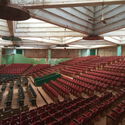
During the Soviet period, when Tashkent became the capital of the Uzbek Soviet Socialist Republic and received intense migration from across the union, the city was transformed into a modernist showcase. The coexistence between Islamic heritage and the ideology of socialist progress found a new inflection point with the 1966 earthquake, whose destruction triggered a large-scale reconstruction effort involving architects from across the USSR. Massive housing complexes, cultural institutions, and monumental buildings emerged, reinterpreting local motifs through ideological and technological language. It was in this context that the Palace of Peoples’ Friendship took shape.

The Aesthetics of Power: Soviet Modernism Meets Uzbek Tradition in Tashkent’s Palace of Peoples’ Friendship - Image 1 of 4The Aesthetics of Power: Soviet Modernism Meets Uzbek Tradition in Tashkent’s Palace of Peoples’ Friendship - Image 2 of 4The Aesthetics of Power: Soviet Modernism Meets Uzbek Tradition in Tashkent’s Palace of Peoples’ Friendship - Image 3 of 4The Aesthetics of Power: Soviet Modernism Meets Uzbek Tradition in Tashkent’s Palace of Peoples’ Friendship - Image 4 of 4The Aesthetics of Power: Soviet Modernism Meets Uzbek Tradition in Tashkent’s Palace of Peoples’ Friendship - More Images+ 3

Quiet Hope: Frank Gehry’s Maggie’s Centre Hong Kong

Subscriber Access | 

Earlier this month, news of Frank Gehry's passing prompted an outpouring of tributes to the architect behind flamboyant museums, concert halls, and sinuous residential complexes. Rather than revisit that well-charted terrain, it is worth pausing on a more contemplative work in his oeuvre: Maggie's Cancer Caring Centre in Hong Kong. Quiet, optimistic, and calibrated for everyday resilience, the building reflects multiple registers of Gehry's intent: a commitment to positivity and survival—and, more personally, an architect's own reckoning with loss and end-of-life care.

The remark reframes Maggie's Hong Kong as more than a commission; it suggests a design process shaped by grief and turned toward comfort, dignity, and the possibility of hope—an ethos that aligns closely with the organization's mission.

Quiet Hope: Frank Gehry’s Maggie’s Centre Hong Kong - Image 1 of 4Quiet Hope: Frank Gehry’s Maggie’s Centre Hong Kong - Image 2 of 4Quiet Hope: Frank Gehry’s Maggie’s Centre Hong Kong - Image 3 of 4Quiet Hope: Frank Gehry’s Maggie’s Centre Hong Kong - Image 4 of 4Quiet Hope: Frank Gehry’s Maggie’s Centre Hong Kong - More Images+ 20

From Legal Constraint to Local Craft: Four Adaptive Projects by messina | rivas in Cunha

The municipality of Cunha, located in the state of São Paulo, Brazil, is a region known for its inland landscape, hilly terrain, and, especially, a major production of nationally renowned ceramics. It is within this context that the office messina | rivas has been working since 2017, with a set of projects located on a farm. Their work, which integrates design and construction in an indissociable manner, results in interventions that reveal a sensitive approach to pre-existing conditions and their surrounding environment.

The relationship between the office, led by architects Francisco Rivas and Rodrigo Messina, and the site began with a small renovation of a guest house for hosting friends. The project resulted in the transformation of two existing bedrooms into suites and the creation of an external kitchen. Since then, growing demands and the need to adapt existing buildings have driven the design of other projects distributed across the same site.

From Legal Constraint to Local Craft: Four Adaptive Projects by messina | rivas in Cunha - Image 1 of 4From Legal Constraint to Local Craft: Four Adaptive Projects by messina | rivas in Cunha - Image 2 of 4From Legal Constraint to Local Craft: Four Adaptive Projects by messina | rivas in Cunha - Image 3 of 4From Legal Constraint to Local Craft: Four Adaptive Projects by messina | rivas in Cunha - Image 4 of 4From Legal Constraint to Local Craft: Four Adaptive Projects by messina | rivas in Cunha - More Images+ 9

The Story of Miyashita Park: Resistance, Partnership, and Publicness

Subscriber Access | 

Urban renewal is inherently fraught—financially complex, politically exposed, stakeholder-dense, and almost guaranteed to leave someone dissatisfied. Precisely for these reasons, many cities default to inertia rather than risk the upheaval that comes with reworking entrenched urban fabrics, their residences, and their dynamics; once the "sleeping bear" is prodded, unexpected complications tend to multiply.

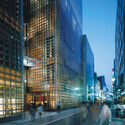
Miyashita Park (Miyashita Kōen), located in Shibuya, Tokyo, crystallizes this dilemma. Its current form—a layered, mixed-use complex balancing commercial activity with a publicly accessible park—emerged from years of negotiation, critique, and recalibration. The result is a distinctive example of a public-private partnership that seeks to align urban amenity, everyday leisure, and economic viability, producing a new piece of city that hosts public life while underwriting its own upkeep.

The Story of Miyashita Park: Resistance, Partnership, and Publicness - Image 1 of 4The Story of Miyashita Park: Resistance, Partnership, and Publicness - Image 2 of 4The Story of Miyashita Park: Resistance, Partnership, and Publicness - Image 3 of 4The Story of Miyashita Park: Resistance, Partnership, and Publicness - Image 4 of 4The Story of Miyashita Park: Resistance, Partnership, and Publicness - More Images+ 24

The Venice Biennale Over Time: Classic Projects and Stories from Architecture’s Most Iconic Exhibition

Since 1895, the Venice Biennale has invited the world to witness the evolving landscape of contemporary art. In 1980, the event expanded its reach with the launch of the Architecture Biennale, which quickly became one of the discipline’s most influential global platforms. Today, alternating annually between contemporary art and architecture, the Biennale affirms itself as a space where disciplines and ideas intersect. Always timely and provocative, it fuels essential debates on the role of art and architecture in the contemporary world. Among its most recent editions are the 17th Architecture Biennale, themed How Will We Live Together? (2021), curated by Hashim Sarkis; The Laboratory of the Future (2023), by Lesley Lokko; and Intelligens. Natural. Artificial. Collective (2025), curated by Carlo Ratti and open to the public until the end of November.

The Venice Biennale Over Time: Classic Projects and Stories from Architecture’s Most Iconic Exhibition - Image 1 of 4The Venice Biennale Over Time: Classic Projects and Stories from Architecture’s Most Iconic Exhibition - Image 2 of 4The Venice Biennale Over Time: Classic Projects and Stories from Architecture’s Most Iconic Exhibition - Image 3 of 4The Venice Biennale Over Time: Classic Projects and Stories from Architecture’s Most Iconic Exhibition - Image 4 of 4The Venice Biennale Over Time: Classic Projects and Stories from Architecture’s Most Iconic Exhibition - More Images+ 10

The Silent Pavilion: Carlo Scarpa and the Giardino delle Sculture at the Venice Biennale

When we think of Venice, familiar images come to mind: Piazza San Marco, winding canals, and the reflection of Byzantine domes on still waters. Few, however, imagine that among those reflections lies a discreet chapter of Italian modernity — the architecture of Carlo Scarpa.

More than an architect, Scarpa was a craftsman of light and matter, a poet of detail who knew how to listen to the Venetian tradition and respond to it with gestures of surprising delicacy. The city where he was born and worked is now an open-air museum of his legacy, including projects such as the Fondazione Querini Stampalia, the Venezuelan Pavilion, the Olivetti Showroom, and, more quietly, the Giardino delle Sculture — a small courtyard hidden in the heart of the Giardini della Biennale.

The Silent Pavilion: Carlo Scarpa and the Giardino delle Sculture at the Venice Biennale - Featured ImageThe Silent Pavilion: Carlo Scarpa and the Giardino delle Sculture at the Venice Biennale - Image 1 of 4The Silent Pavilion: Carlo Scarpa and the Giardino delle Sculture at the Venice Biennale - Image 2 of 4The Silent Pavilion: Carlo Scarpa and the Giardino delle Sculture at the Venice Biennale - Image 3 of 4The Silent Pavilion: Carlo Scarpa and the Giardino delle Sculture at the Venice Biennale - More Images+ 4